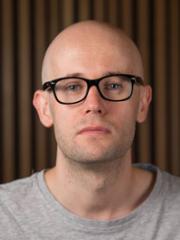
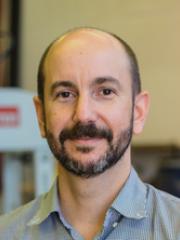
Professor Itai Einav is a renowned academic in civil engineering and geomechanics at The University of Sydney. He serves as Director of SciGEM (Science of Granular and Multiphase Energy Materials) and holds an honorary professorship at University College London. His research focuses on granular materials, particulate systems, and geomechanics, with particular emphasis on breakage mechanics and applications in mining, heat transfer, and fault dynamics. He advises PhD students on topics like robotic navigation inspired by earthworms and soil mechanics. Einav's work bridges fundamental physics and engineering applications, leveraging advanced imaging techniques (e.g., X-ray tomography) and computational models. He is affiliated with The Net Zero Institute and collaborates globally on projects like granular flow dynamics and porous media behavior. Notable contributions include the 2007 development of breakage mechanics theory and innovations in granular rheology and fault modeling.
Dr. Xuzhen He is a Senior Lecturer at the School of Civil and Environmental Engineering, University of Technology Sydney (UTS). He holds a BSc from Tsinghua University and a PhD from the University of Cambridge, where he received the John Winbolt Prize (2015). His research focuses on geotechnics, geomechanics, and numerical methods, with an emphasis on AI integration. Notable contributions include studies on soil erosion, particle segregation, and tunnel engineering. He leads projects funded by ARC, including DECRA (2021) and a Discovery grant (2023). His work bridges experimental and computational approaches, addressing challenges in geotechnical infrastructure and environmental stability. Education: Bachelor of Science, Tsinghua University, China PhD in Civil Engineering, University of Cambridge, UK Research Interests: AI-driven geotechnical analysis (slope stability, tunnelling) Multiscale geomechanical modelling (hypoplasticity, multiphase systems) Numerical methods (DEM, SPH, material point method) Awards: ARC DECRA (2021) John Winbolt Prize (2015) Grants: "Modernise geotechnical investigation and analysis with machine learning" (ARC DP230100678) "Multiscale modelling of fluid–particle transport in porous media" (ARC DE220100763) Labs/Teams: Member of UTS Transport Research Centre (TRC) Associate member of Centre for Advanced Modelling and Geospatial lnformation Systems (CAMGIS)
Christoph Schrank is an Associate Professor at QUT's School of Earth and Atmospheric Sciences, specializing in structural geology and rock physics. His research combines field studies with synchrotron-based experimental techniques to investigate deformation processes in tectonic settings. Research focuses on: Synchrotron analysis of rock deformation Tectonic modeling of fault systems Geothermal energy applications Pattern formation in porous media Publication analysis shows emphasis on experimental rock physics (40%), microstructural analysis (30%), and Precambrian tectonics (20%). His work frequently integrates advanced imaging techniques with mechanical modeling. Funded projects include ARC DP170104550 (pressure waves in earthquake mechanics) and DP140103015 (finite strain modeling). Coordinates Honours program for Earth Science and teaches structural geology field methods.
Prof Adrian Sheppard is a Professor in the Department of Materials Physics at The Australian National University (ANU). He holds a B.Sc. (Hons) from the University of Adelaide and a Ph.D. from ANU. His research focuses on porous media analysis, X-ray tomography, and carbon sequestration, with expertise in fluid dynamics, geologic storage, and advanced imaging techniques. He leads projects on CO2 geostorage, multiphase flow modeling, and high-resolution tomographic imaging. His work bridges materials physics, environmental science, and engineering, addressing challenges in energy storage and climate mitigation. He has supervised numerous research students and collaborates on initiatives like the ARC Training Centre for Multiscale 3D Imaging. Key research interests include pore-scale fluid dynamics, supercritical CO2 behavior, and X-ray microtomography applications. Over 200 publications highlight his contributions to understanding fluid trapping mechanisms, beam hardening correction in tomography, and multiscale imaging techniques. He has pioneered methods for analyzing heterogeneous materials and improving tomographic image quality. His projects span geologic carbon storage, additive manufacturing inspection, and environmental fluid dynamics. Prof Sheppard has secured 26 research grants, including projects on CO2 sequestration, X-ray source optimization, and advanced manufacturing. He advises on imaging technologies and leads ANU's efforts in multiscale materials characterization. His lab focuses on applying cutting-edge imaging tools to solve real-world problems in energy and environmental science.
Dr. Elliot Carr is a Senior Lecturer in the School of Mathematical Sciences at Queensland University of Technology (QUT), Faculty of Science. He holds a PhD in Mathematics from QUT and has been a faculty member since 2015, progressing from Lecturer to his current rank. His research and teaching focus on applied and computational mathematics, with strong interdisciplinary applications. Education: PhD in Mathematics, Queensland University of Technology, 2009–2012 Bachelor of Applied Science (Honours) in Mathematics, QUT, 2008 Bachelor of Mathematics, QUT, 2005–2007 Elliot Carr's research lies at the intersection of applied mathematics and real-world physical systems. His work centers on developing and analyzing mathematical models of advection, diffusion, and reaction processes, particularly in heterogeneous media. He employs both deterministic (PDE-based) and stochastic (random walk) frameworks, contributing to analytical solutions, multiscale modeling, surrogate models, and numerical methods such as finite volume and Newton-Krylov techniques. His research has been applied to diverse fields including groundwater contamination, drug delivery, heat transfer, and tumor spheroid modeling. The latest publications reflect a consistent focus on transport phenomena in complex geometries and heterogeneous environments. Key themes include dual-grid mapping for contaminant transport, analytical modeling of drug release from spherical capsules, thermal diffusivity in shell geometries, and stochastic models of biological systems. His methodological contributions span analytical, numerical, and statistical approaches, demonstrating versatility across applied mathematics. Scientific Awards and Recognitions: JH Michell Medal, ANZIAM (2022) ARC DECRA Fellowship (2015) QUT Outstanding Doctoral Thesis Award (2012) University Medal, QUT (2008) Dean’s Award for top graduate in both Honours and Bachelor programs Keynote and plenary speaker at major conferences including ANZIAM and Forum “Math-for-Industry” Dr. Carr actively supervises PhD and Masters students, with completed and ongoing projects on diffusive transport, tumor modeling, and sports analytics. He has secured competitive research funding, including an ARC Discovery Project on multiscale modeling. His teaching includes computational mathematics, linear algebra, and differential equations, with a focus on MATLAB-based implementation. He is a member of the Australian Mathematical Society (AustMS) and ANZIAM. Research Labs and Teams: While not explicitly tied to a named lab, Carr is part of the broader Applied Modelling and Computation research environment at QUT. He collaborates extensively with researchers such as Ian Turner, Matthew Simpson, and Chris Drovandi, contributing to interdisciplinary teams in mathematical biology, environmental modeling, and statistical computation.
Dr. Yu Jing is a Scientia Senior Lecturer in the School of Minerals and Energy Resources Engineering at the University of New South Wales (UNSW). She holds a PhD in Petroleum Engineering from UNSW and specializes in characterizing subsurface formation rocks to understand underground fluid flow behaviors including natural gas, oil, and groundwater. Education: Doctor of Philosophy, Petroleum Engineering, University of New South Wales, Australia Master of Engineering, Petroleum Engineering, University of New South Wales, Australia Bachelor of Engineering, Petroleum Engineering, Southwest Petroleum University, China Dr. Jing's research focuses on pore-scale characterization of rocks using micro-CT imaging and modeling multiphysics flow transport in underground formations. Her work spans digital core analysis, fractured formation rock characterization, flow simulation of underground fluids, and micro-CT imaging techniques. She has developed computational tools like DigiCoal for coal core characterization. Her publication portfolio shows a strong trend toward advanced imaging techniques for understanding coal properties, particularly related to carbon sequestration, coalbed methane extraction, and fluid flow in fractured media. Recent work emphasizes multiscale modeling approaches and experimental validation of transport phenomena in porous media. Scientific Awards: Asian-Australian Leadership Award Finalist in Education, Science & Medicine (2024) The Rising Stars, Asian Deans' Forum (2023) Equity & Diversity Excellence Award - UNSW (2020) Future Women Leaders Conference Award - UNSW (2019) Scientia Fellowship - UNSW (2019) Dr. Jing actively supervises numerous PhD students working on diverse topics from CO2 geosequestration to critical metal recovery. She has secured significant research funding including ARC Research Hub for Fire Resilience Infrastructure ($4.9 million), UNSW-Chinese Academy of Sciences Collaboration Grant, and multiple ANSTO Australian Synchrotron Beamtime grants. Her professional engagement includes serving as Associate Editor for the Journal of Energy Engineering and as Communication Officer for the InterPore Australian Chapter. She leads research activities through the MUTRIS research group (www.mutris.unsw.edu.au), focusing on digital core analysis, fractured media characterization, and subsurface flow simulation. Her work bridges fundamental research with practical applications in energy transition and sustainable resource extraction.
Associate Professor Saiied Aminossadati is a faculty member at the University of Queensland's School of Mechanical and Mining Engineering, with affiliate positions at the Future Autonomous Systems and Technologies (FAST) and Centre for Multiscale Energy Systems. He holds a BEng (1989), MEng (1994), and PhD (1999) in Mechanical Engineering, along with a Graduate Certificate in Higher Education. His research focuses on thermofluids, mine ventilation systems, computational fluid dynamics applications in mining, fibre-optic sensing technologies, and gas management systems. Specific interests include porous media flow, underground mine ventilation optimization, energy systems modeling, and industrial fluid dynamics. With 180+ publications spanning mining ventilation, energy systems, and fluid mechanics, recent work demonstrates strong emphasis on computational modeling of industrial processes. Research trends show increasing focus on renewable energy applications (solar collectors, nanofluids), mining safety (methane dispersion, aerosol transmission), and sustainable resource recovery (plastic depolymerization, hydraulic fracturing). He has secured 16 research grants totaling $2.65M and serves as academic advisor for 26 research higher degree students (18 graduated, 8 current). Keynote speaker at international conferences including Mine Ventilation Symposium (2009) and Fibre Optic Sensing Conference (2015). Reviewer for 30+ international journals in mechanical and mining engineering disciplines.
Dr. Travis Mitchell is a Lecturer at the School of Mechanical and Mining Engineering , The University of Queensland , and an affiliate of the Centre for Multiscale Energy Systems . He holds a PhD in Multiphase Computational Fluid Dynamics and dual degrees in Mechanical Engineering (BE Hons) and Mathematics (BSc). Education: PhD in Multiphase Computational Fluid Dynamics, The University of Queensland BE (Hons) in Mechanical Engineering, The University of Queensland BSc in Mathematics, The University of Queensland Research Interests focus on numerical modeling of multiphase fluid dynamics in porous media , with applications spanning CO2 electrolysis , hydrogen production via methane pyrolysis , biomedical fluid-structure interaction , and geomechanical fracture analysis . His methodological expertise includes Lattice Boltzmann techniques and high-performance computing . Recent Work Trends encompass multiphase transport in fractured media , gas diffusion electrode optimization , fiber-based air filter design , and thermocapillary flow modeling , reflecting his interdisciplinary impact in energy, health, and resource engineering. Scientific Recognition includes the ICMMES-CSRC Award for multiphase lattice Boltzmann research and an EAIT Citation for Excellence in Student Learning (2023) . Teaching Portfolio includes coordination of MECH2700: Computational Engineering and Data Analysis and lectures in MECH3780: Computational Mechanics and MECH6480: Computational Fluid Dynamics .
Dr. Mahyar Madadi is a Research Fellow at the Australian National University , affiliated with the Materials Physics department. His work focuses on computational analysis of porous and granular materials using advanced imaging techniques like X-ray tomography. Research Interests Dr. Madadi's research spans multiple disciplines including Materials Physics , Geophysics , and Computational Modeling . Key areas of investigation include pore-scale fluid dynamics, elastic properties of granular media, and microstructural analysis of carbonates and foams. Publications His work demonstrates strong expertise in digital rock physics and computational materials science , with significant contributions to understanding relationships between microstructure and macroscopic properties in diverse systems from geological formations to synthetic foams.
Associate Professor Furqan Hussain is a distinguished academic at the University of New South Wales, Faculty of Engineering, specializing in petroleum engineering and carbon sequestration research. Based in the Tyree Energy and Technology Building at the Kensington Campus, he leads cutting-edge research in CO 2 geosequestration and enhanced oil recovery techniques. PhD in Petroleum Engineering from the University of New South Wales, Sydney, Australia BSc and MSc in Petroleum Engineering from the University of Engineering & Technology, Lahore, Pakistan Professor Hussain's research focuses on CO 2 geosequestration in aquifers and hydrocarbon reservoirs, with particular emphasis on enhancing feasibility in heterogeneous and low-pressure formations. His groundbreaking work includes the discovery of water-saturated CO 2 injection into oil reservoirs to simultaneously improve oil recovery and CO 2 storage capacity. His expertise spans petroleum engineering, carbon capture utilization and sequestration (CCUS), and laboratory investigation of CO 2 injection processes. His recent publications demonstrate a strong focus on addressing mobility control challenges in high-pressure reservoirs, pore heterogeneity effects in carbonate rocks, and fines migration phenomena during water injection. These works represent significant contributions to both petroleum engineering and environmental sustainability through carbon management. Professor Hussain is actively involved in research supervision, focusing on experimental investigation of CO 2 injectivity and trapping, co-optimization of CO 2 storage and oil recovery, and related areas including CO 2 -water wettability and trapping mechanisms. A spatio-temporal partitioning approach to colloidal flows in porous media (Australian Research Council / Discovery Project, 2020-2022) Multiscale physics for enhanced oil recovery (University of Adelaide / ARC Linkage Project, 2020-2023) Low Salinity Fines-Assisted Waterflooding (Wintershall Holding Gmbh, 2019-2021) EOR assessment phase-1 (Bridgeport Energy Limited, 2019-2021) Core testing – Boggabri Mine (Boggabri Coal Operations, 2019-2020) He teaches core petroleum engineering courses including PTRL 3001 Reservoir Engineering B and PTRL3040 Numerical Reservoir Simulation, integrating his research expertise into the classroom while exploring innovative teaching methods to enhance student engagement in engineering education.
Dr. Thierry Bore is a Senior Research Fellow at the School of Civil Engineering , University of Queensland, specializing in electromagnetic measurement methods for civil and geotechnical applications. He obtained his PhD from Conservatoire National des Arts et Metiers in Paris and focuses on dielectric spectroscopy for moisture and density analysis in porous media like concrete and clayrock. Key research areas: Electromagnetic monitoring systems CO2 mineralisation in ultramafic rocks Time-domain reflectometry for soil studies Dielectric modeling of cementitious materials His recent publications (2023-2025) emphasize broadband dielectric characterization , CO2 sequestration geomechanics , and multiscale particle migration analysis , with applications in mining residue, nuclear waste, and sustainable construction. Collaborations span Australia, New Zealand, and international conferences like ISEMA. Scientific recognition ARC DECRA Fellowship Multiple competitive grants (Technological Resources Pty Ltd, Geosyntec, Australian Coal Association) As associate advisor, he supervises PhD candidates in topics including bauxite residue behavior , soft soil improvement , and multi-physics CO2 mineralisation . His lab develops non-invasive sensors for real-time monitoring of soil organic carbon and slurry pipelines.
Qinfu Hou is a Lecturer and Research Fellow in Monash University's Department of Chemical and Biological Engineering. His research develops multiscale modeling techniques to understand granular and multiphase flows for energy-efficient processes across chemical, metallurgical, and environmental applications. Research areas include heat/mass transfer in fluidized beds, multiphase flow dynamics, granular segregation, numerical method development, and cloud-based process optimization. With over 70 publications and A$2.5M+ in research funding, Hou has developed virtual reactor models and process scaling approaches adopted in metallurgy and materials processing. His work on solar evaporators and waste valorization demonstrates commitment to sustainable engineering solutions. Notable mentorship outcomes include students receiving the Fell Consulting Prize (Jannatul Azmir), JITRI Fellowship (Yongli Wu), and Best Engineering Thesis in Brazil (Lucas Massaro Sousa). His publications show consistent themes: 1) Computational modeling of industrial reactors, 2) Particle-fluid interaction mechanics, 3) Process intensification strategies, and 4) Sustainable resource recovery. Recent work advances solar desalination and biomass processing technologies.
Associate Professor Jonathan Tran is an Academic Lead for Engineering International Research and Innovation at RMIT University's School of Engineering. He specializes in sustainable digital construction and leads the Post-Carbon Research Centre as Deputy Director. His research focuses on 3D-printed smart materials, biomimetic structures, and innovative lightweight materials for extreme loading protection. He has pioneered advanced 3D printing techniques and biomimetic designs recognized with awards such as the 'Highly Commendable Paper Award' at the 12th International Conference on Shock & Impact Loads on Structures. Tran's work spans computational mechanics, composite materials, and additive manufacturing. He serves on editorial boards for journals like Virtual and Physical Prototyping and standards committees (ASTM, RILEM). His contributions address challenges in construction sustainability, energy efficiency, and material innovation. He is open to supervising Masters and PhD students in these areas. Key Projects: 3D-printed Bouligand concrete panels, lunar regolith sintering, and sustainable ceramic tiles with recycled waste. Grants & Funding: ARC Discovery Project, mRNA Victoria, and industry partnerships. Labs/Teams: Research group focused on smart materials and bioinspired fabrication within RMIT's Post-Carbon Research Centre. Tran has over 140 peer-reviewed publications and 6 book chapters, with media coverage in outlets like Reuters and New York Post. His work bridges advanced materials science with real-world construction applications, emphasizing environmental and structural resilience.
Professor Alexander Scheuermann serves as the Director of Teaching & Learning and a Professor at the School of Civil Engineering, The University of Queensland. His office is located in Room 440:1 of the Advanced Engineering Building (49). His research spans geotechnical engineering, soil mechanics, hydraulic processes, and electromagnetic measurement techniques, with a strong focus on experimental and computational methods. His research interests include: Geotechnical Sensing : Pioneering electromagnetic methods (TDR, dielectric spectroscopy) for real-time soil state monitoring. Porous Media Dynamics : Investigating fluid flow, particle migration, clogging, and gas transport in soils and granular materials. Unsaturated Soil Behavior : Characterizing soil water retention, shrinkage, and hydraulic properties under transient conditions. Internal Erosion : Studying suffusion, filtration, and particle transport mechanisms in earth structures. Geoenvironmental Processes : Analyzing iron precipitation, mineral clogging, and reactive transport in subsurface systems. Analysis of his 15 most recent articles reveals a dominant focus on experimental and computational geomechanics. Key trends include advanced characterization of granular material behavior (breakage, permeability), innovative applications of electromagnetic sensing (spatial TDR, dielectric spectroscopy), pore-scale modeling of multiphase flow and clogging, and field-scale investigation of coastal groundwater processes. Computational methods like Lattice Boltzmann and DEM are frequently employed alongside sophisticated laboratory experiments. Professor Scheuermann collaborates extensively within international research groups, particularly in geotechnical engineering, environmental hydrology, and electromagnetic measurement communities. His work contributes significantly to infrastructure resilience and environmental geotechnics.
Dr. Christopher Leonardi is an Associate Professor and Director of Teaching and Learning at the School of Mechanical and Mining Engineering, The University of Queensland (UQ). He is affiliated with the Centre for Multiscale Energy Systems and has extensive industry experience as an engineering consultant with Rockfield Technologies Australia. PhD in Computational Mechanics, University of Wales, Swansea BE(Hons) in Mechanical Engineering, James Cook University (First Class Honours, University Medal) Research Interests focus on computational models for fluid-solid interactions, including: Suspension Transport Porous Media Flow Multiphase Flows Poromechanics Applications in Coal Seam Gas (CSG) and Hydrogen Production His work spans unconventional reservoirs, mineral extraction, and hydrogen formation via methane pyrolysis, utilizing methods like Lattice Boltzmann, Discrete Element, and Finite Element Analysis. Collaborations include Pawsey Supercomputing Centre. Scientific Awards include: Australian Awards for University Teaching (AAUT) Citation, 2019 UQ Citation for Outstanding Contributions to Student Learning, 2018 Advance Queensland Industry Research Fellowship (Mid-Career) Teaching involves coordinating MECH3780 Computational Mechanics and lecturing ENGG1001 Programming for Engineers . His team includes postdoctoral and postgraduate researchers, with significant industry partnerships.