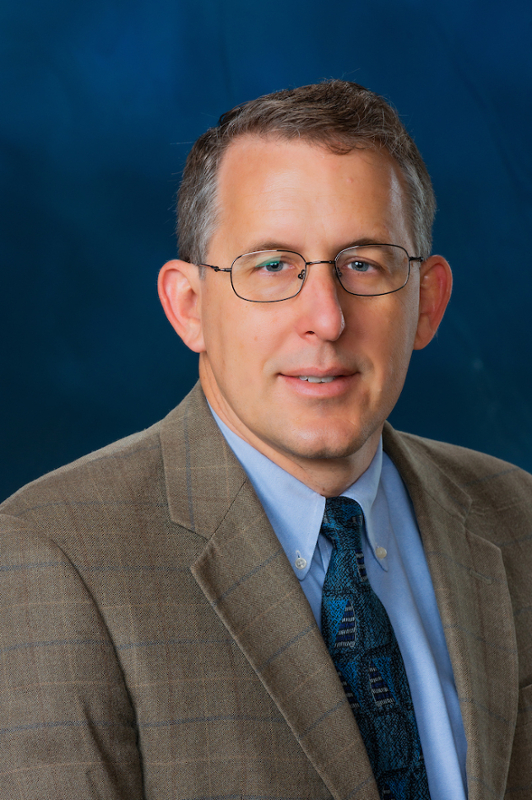
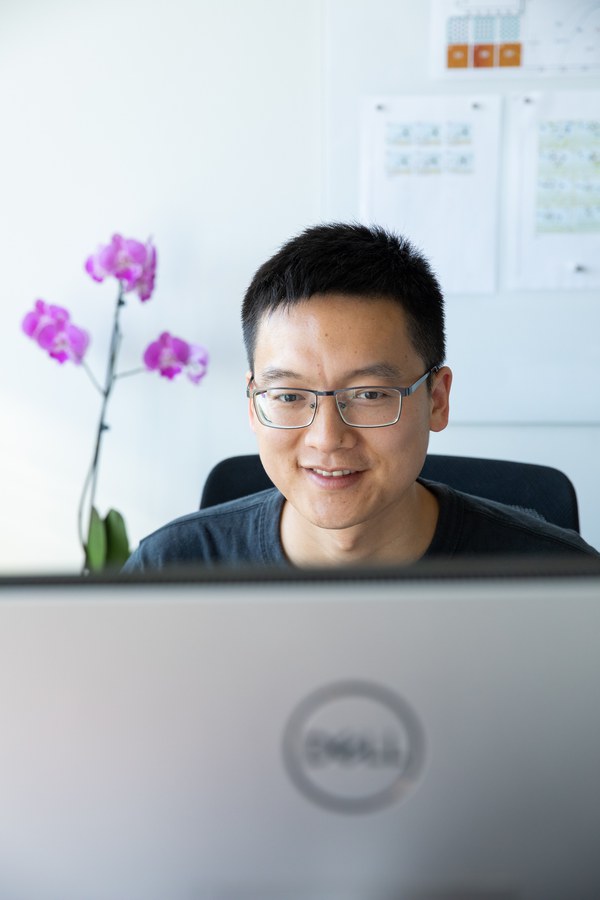
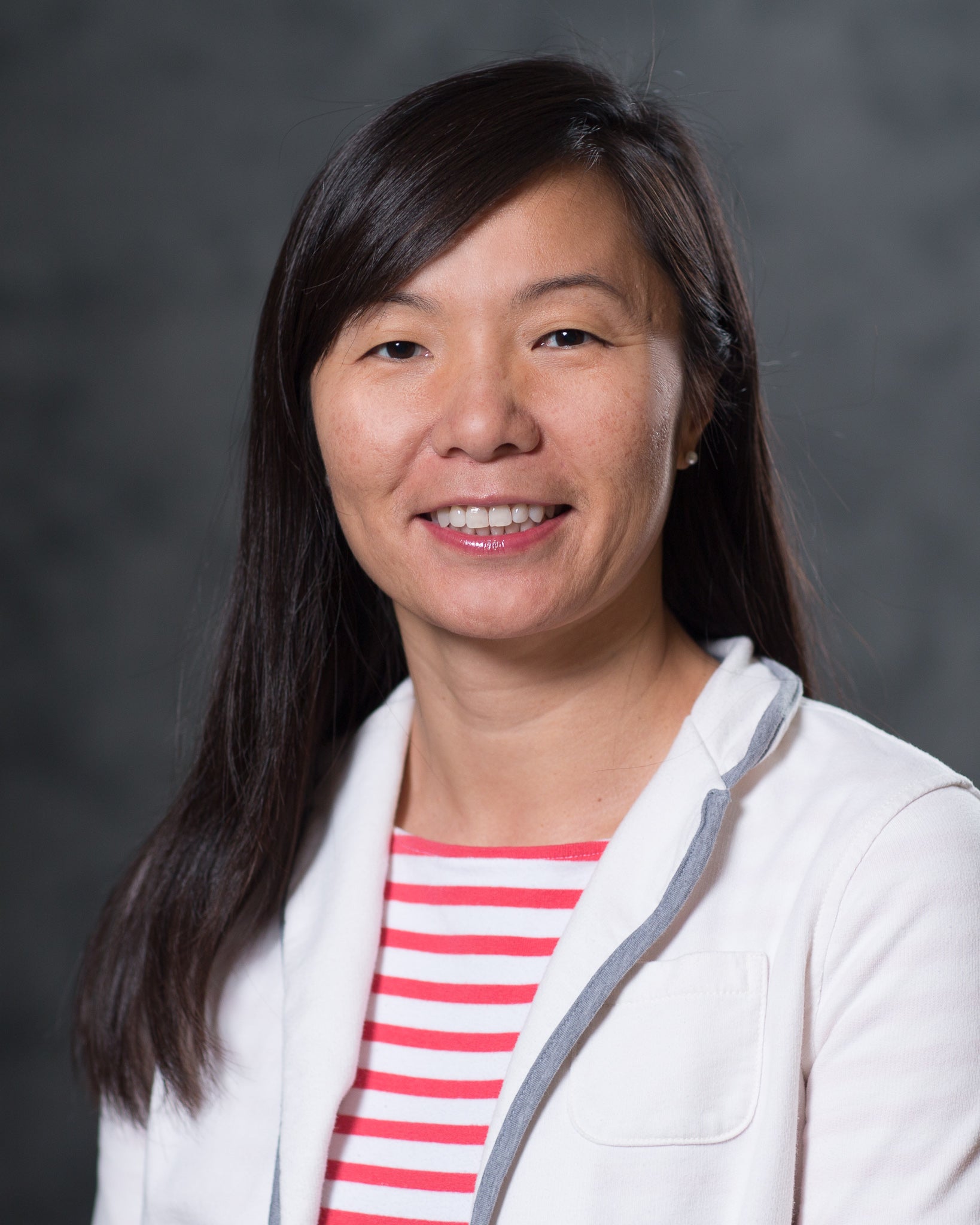
Robert L. Jackson is a Professor in the Department of Mechanical Engineering at Auburn University, College of Engineering. He serves as Editor-in-Chief of the ASME Journal of Tribology, highlighting his leadership in the field. His research focuses on tribology, contact mechanics, friction, wear, lubrication, and electrical contacts, with applications in machine design and electrified systems. His research interests include: Nano, Micro, and Macro Scale Contact Friction, Wear, and Lubrication (Tribology) Electrically Induced Bearing Damage Electrical Contacts and Lubricant Additives Surface Texturing and Nano-lubricants Multiscale/Multiphysics Modeling Design of Machine Components His recent publications reveal a strong trend in the performance of electric vehicle motor greases, electro-pitting, electrical discharge modeling, and mixed lubrication in rolling and sliding contacts. He investigates the role of nanoparticles, surface roughness, and thermal effects in tribological systems. His work spans experimental, analytical, and computational approaches, with a focus on real-world engineering applications such as EVs, connectors, and bearings. He actively mentors graduate students, including current advisees Loren Baugh, Jack Janik, and Sudip Saha. His past students have gone on to careers in industry and academia at organizations like Intel, Amazon, Tesla, and universities in China and India. He has collaborated extensively with researchers on topics ranging from articular cartilage biomechanics to nanocomposite lubricants and electrical connector reliability.
Hans Van Oosterwyck serves as a full Professor in the Department of Mechanical Engineering at KU Leuven's Faculty of Engineering Sciences. He leads the Prometheus-Mechanobiology subdivision and actively contributes to the iSi Health and LIMNI research institutes, driving interdisciplinary work at the engineering-biology interface. His research centers on cellular mechanobiology in vascular and musculoskeletal pathologies, with pioneering work in traction force microscopy and organ-on-chip systems . Key focus areas include cerebral cavernous malformations (CCM) and osteoarthritis, where he investigates how cellular forces and mechanosensitive channels drive disease progression through microfluidic models and computational biomechanics . Analysis of his 2023-2025 publications reveals a dominant trend toward 3D force measurement techniques in disease modeling, particularly using degradable hydrogels for chondrocyte studies and vessel-on-chip platforms for CCM. Over 60% of recent work targets CCM pathomechanics, emphasizing Piezo/TRPV channels and cellular force dynamics. Prof. Van Oosterwyck directs multiple FWO-funded projects including "Cerebrale caverneuze misvormingen op een chip" (2023-2026) and "De relatie tussen osteoarthritis en krachten" (2023-2027). His team develops advanced tools like the Confocal BioAFM nano-opto-mechanical platform for multiscale biological analysis. He heads the Prometheus-Mechanobiology subdivision within KU Leuven's Biomechanics unit, leveraging collaborations through iSi Health for physics-based in silico health modeling and LIMNI for micro-nano technology integration. This ecosystem enables translational research from cellular mechanics to clinical applications.
Dr. Yumeng Li is an Assistant Professor at the University of Illinois at Urbana-Champaign, Department of Industrial and Enterprise Systems Engineering. Prior to this, he was an Assistant Professor at Wichita State University and a Postdoctoral Researcher at Vanderbilt University. Ph.D., Aerospace Engineering, Virginia Tech (2014) M.S., Naval Architecture and Ocean Engineering, Huazhong University of Science and Technology (2009) B.S., Naval Architecture and Ocean Engineering, Huazhong University of Science and Technology (2007) Dr. Li’s research focuses on uncertainty quantification in multiscale simulation, physics-based machine learning, surrogate modeling, and integrated computational material engineering. His work bridges computational modeling with experimental validation in material design and digital manufacturing. His publications span topics like corrosion modeling, additive manufacturing, battery systems, polymer crystallization, and life cycle assessment. Recent works emphasize multi-physics simulations, adaptive machine learning, and sustainable material design. Dr. Li teaches courses including SE 310 (Design of Structures & Mechanisms), SE 410 (Component Design), and SE 598 (Machine Learning in Material Design).
Dr. Paride Azzari is a researcher in the Sustainable Food Processing group at ETH Zurich , focusing on interdisciplinary approaches at the intersection of food science, biophysics, and soft matter physics. His work emphasizes scalable and sustainable bioprocessing techniques, particularly for microalgae and plant-based proteins. Key Research Areas : Pulsed electric field processing, liquid-liquid crystalline phase separation, and viscoelastic material behavior. Methodologies : Multiphysics simulations, experimental rheology, and open-source software development (e.g., Extrudion for tensile testing analysis). Recent publications highlight his contributions to optimizing biocompound extraction, understanding amyloid fibril organization, and advancing environmental bioremediation using agricultural waste. Notably, his work bridges fundamental soft matter research with industrial food processing applications.
Dr. Travis Mitchell is a Lecturer at the School of Mechanical and Mining Engineering , The University of Queensland , and an affiliate of the Centre for Multiscale Energy Systems . He holds a PhD in Multiphase Computational Fluid Dynamics and dual degrees in Mechanical Engineering (BE Hons) and Mathematics (BSc). Education: PhD in Multiphase Computational Fluid Dynamics, The University of Queensland BE (Hons) in Mechanical Engineering, The University of Queensland BSc in Mathematics, The University of Queensland Research Interests focus on numerical modeling of multiphase fluid dynamics in porous media , with applications spanning CO2 electrolysis , hydrogen production via methane pyrolysis , biomedical fluid-structure interaction , and geomechanical fracture analysis . His methodological expertise includes Lattice Boltzmann techniques and high-performance computing . Recent Work Trends encompass multiphase transport in fractured media , gas diffusion electrode optimization , fiber-based air filter design , and thermocapillary flow modeling , reflecting his interdisciplinary impact in energy, health, and resource engineering. Scientific Recognition includes the ICMMES-CSRC Award for multiphase lattice Boltzmann research and an EAIT Citation for Excellence in Student Learning (2023) . Teaching Portfolio includes coordination of MECH2700: Computational Engineering and Data Analysis and lectures in MECH3780: Computational Mechanics and MECH6480: Computational Fluid Dynamics .
Alberto Tibaldi is an Associate Professor at the Department of Electronics and Telecommunications (DET) of Politecnico di Torino. He belongs to the College of Electronic, Telecommunications and Physics Engineering and the Microwave and Optoelectronics Group (MOG) at DET. His work focuses on physics-based modeling of semiconductor devices, with participation in international projects like EU MIRACLE and the Collaborative Research Alliance (CRA) for electronic materials modeling. Key Research Areas: Efficiency/reliability of LEDs and UV-LEDs Far-infrared image sensors Multiphysics CAD of VCSELs Si and III-V photonic integrated circuits His publications span optoelectronic device modeling, including NEGF-drift-diffusion approaches and plasmonic-organic hybrid modulators. Awards include the Premio 'Optime' (2012) and NEMO2014 Honorable Mention (2014). Scientific Affiliations: National Research Council (CNR-IEIIT) (2019-) Multiscale Modeling of Electronic Materials (MSME) (2016-) EU MIRACLE Project (2021-)
Dr. Jun Huang is an Assistant Professor at Forschungszentrum Jülich, leading the Helmholtz Young Investigator Group focused on the 'Theory of Electrocatalytic Interfaces.' He is affiliated with the Institute of Energy Technologies (IET), specifically in the department of Theory and Computer-Based Modelling of Materials in Energy Technology. His research centers on theoretical electrocatalysis and electrochemical interfaces, with expertise in: Electrical double layer phenomena and capacitance behavior Density-potential functional theory for metal-solution interfaces Multiscale modeling of electrochemical reaction environments Electrocatalyst design through computational methods Ion transport and interfacial structuring in energy systems His recent publications demonstrate a strong focus on developing fundamental theoretical frameworks for understanding electrocatalytic interfaces, with recurring themes in double-layer effects, reaction kinetics, and computational method development. The work bridges theoretical electrochemistry with applications in energy conversion and storage. Major recognitions include: Helmholtz Young Investigator Group Grant European Research Council Starting Grant Dr. Huang leads a computational research group developing advanced theoretical models to decipher electrocatalytic processes. His team focuses on creating predictive frameworks for interfacial reactions relevant to energy technologies.
Gianluca Cusatis is a Professor of Civil and Environmental Engineering at Northwestern University, with a courtesy appointment in Mechanical Engineering. He leads research in multiscale mechanics of infrastructure materials, focusing on constitutive modeling of concrete, cementitious composites, and wood. His work bridges computational modeling, experimental validation, and material innovation. He holds a Ph.D. and Laurea from Politecnico di Milano, Italy. Research interests include quasi-brittle material behavior, 3D concrete printing, infrastructure durability (e.g., alkali-silica reaction), and wood mechanics. He directs the Multiscale Mechanics of Infrastructure Materials (M2IM) group, collaborating with institutions like the University of Maine. Key achievements include pioneering the Lattice Discrete Particle Model (LDPM) and advancing understanding of cement hydration expansion via the Shard Test. Awarded ASCE/EMI Fellow, Cusatis serves on professional boards (ASCE Engineering Mechanics Institute, ACI Committees). His lab integrates advanced facilities for structural testing, 3D printing, and environmental control. Major projects include sustainable timber structure design, Martian concrete for extraterrestrial habitats, and mesoscale modeling of composite materials.
Lucy Zhang is a Professor and Associate Dean for Research Innovations, Partnerships, and Workforce Development at Rensselaer Polytechnic Institute (RPI). She holds a Ph.D. from Northwestern University and previously served as an assistant professor at Tulane University before Hurricane Katrina. Her primary affiliation is in the Department of Mechanical, Aerospace, and Nuclear Engineering, with a secondary affiliation in Biomedical Engineering within the School of Engineering. Dr. Zhang’s research focuses on computational mechanics, particularly fluid-structure interactions, computational biomechanics, and multiphysics-multiscale simulations. Her work bridges engineering and biomedical applications, including aerodynamics, cardiovascular modeling, and material corrosion analysis. Notable contributions include the development of the OpenIFEM software framework for fluid-structure interaction simulations and studies on respiratory droplet dynamics during pandemics. Her recent research integrates machine learning with fluid dynamics solvers, explores material degradation under extreme conditions, and addresses challenges in neurorehabilitation modeling through NSF-funded initiatives. Dr. Zhang collaborates across disciplines, leveraging high-performance computing and numerical methods to solve complex engineering and biomedical problems. Her NSF grant on fibrous material performance under real-world conditions underscores her commitment to translational research.
Miriam Schulte is a Professor at the University of Stuttgart’s Institute for Parallel and Distributed Systems, leading the Institute for the Simulation of Large Systems. She holds a Carl von Linde Junior Fellowship and has held academic roles since 2002, including heading the CFD Group at TUM. Her expertise spans computational fluid dynamics (CFD), high-performance computing (HPC), and numerical methods for PDE solvers. She earned her diploma (1997) and PhD (2001) in mathematics from TUM, followed by habilitation in Computer Science (2010). Her research focuses on optimizing algorithms for efficient simulation software, integrating mathematics and computer science. Key areas include fluid-structure interactions, multi-physics coupling, and scalable parallel computing. She has contributed to frameworks like Peano for adaptive Cartesian grids and developed methodologies for partitioned fluid-structure interaction simulations. Publications highlight advancements in HPC, multi-physics coupling, and parallel algorithms. Awards include the Bayerische Begabtenfoerderung (1993–1997). Her work bridges computational methods with real-world applications, emphasizing scalability and efficiency in large-scale simulations.
Paolo Manfredi is a Full Professor at the Department of Electronics and Telecommunications (DET) of Politecnico di Torino, Italy. He actively contributes to the EMC Group (Electromagnetic Compatibility) and serves as an Associate Editor for journals including IEEE Journal on Multiscale and Multiphysics Computational Techniques and International Journal of Circuit Theory and Applications. His research focuses on uncertainty quantification in circuits, surrogate modeling , machine learning applications, and signal integrity analysis . He leads projects on compact dynamical modeling of complex systems and stochastic analysis of interconnects. Recent publications highlight advancements in active learning for PCB line uncertainty quantification, connector degradation impacts on microwave signals , and SPICE-compliant IC model compression , reflecting his expertise at the intersection of electrical engineering and data science . Scientific Awards: Best Paper Award EPEPS (2010, 2013) Premio Optime (2010) URSI Young Scientist Award (2011) Honorable Mention - IMS (2011) He supervises PhD students in projects spanning 5G/6G metasurfaces , power cable corrosion assessment , and neural network applications in circuit design.
Marco Ernesto Vallone is a Fixed-term Assistant Professor at the Department of Electronics and Telecommunications (DET) at Politecnico di Torino (PoliTO), where he is also a member of the PhotoNext Interdepartmental Center for Applied Photonics. His academic appointments include membership in the College of Electronic, Telecommunications, and Physics Engineering. He holds national scientific qualifications for Associate Professor positions in Electronics (09/E3), Theoretical Physics of Matter (02/B2), and Experimental Physics of Matter (02/B1). Dr. Vallone's research spans multiple areas of optoelectronics and semiconductor physics, with a particular focus on infrared detectors, light-emitting diodes, silicon photonics, and photodetectors. His work combines theoretical modeling with practical applications, specializing in multiphysics CAD of vertical-cavity surface-emitting lasers (VCSELs), efficiency and reliability of visible and UV LEDs, multiscale physics-based modeling of optoelectronic devices, far-infrared image sensor design, and Si and III-V photonic integrated circuits. His research addresses critical challenges in high operating temperature (HOT) infrared detectors, germanium-on-silicon waveguide photodetectors, and plasmonic structures for enhanced optoelectronic performance. His extensive publication record from 2022-2025 demonstrates a consistent research trajectory focused on advancing infrared detection technology, photodetector design, and semiconductor device modeling. His work shows a progression from fundamental quantum mechanical investigations to practical engineering applications, particularly in collaboration with industry partners like Cisco, Huawei, and AIM Infrarot-Module. The research consistently bridges theoretical physics with practical device engineering, with increasing emphasis on plasmonic enhancement techniques and high-temperature operation of infrared detectors. Scientific Qualifications: National Scientific Qualification as Associate Professor in Electronics (09/E3), since November 2020 National Scientific Qualification as Associate Professor in Theoretical Physics of Matter (02/B2), since May 2021 National Scientific Qualification as Associate Professor in Experimental Physics of Matter (02/B1), since May 2021 Dr. Vallone serves as a PhD co-supervisor and Master's thesis co-supervisor, notably guiding Matteo Giovanni Carmelo Alasio's doctoral research on "Ge-on-Si photodetectors for silicon photonics: multiphysics modeling and design." His research funding includes multiple industrial contracts as Principal Investigator with AIM Infrarot-Module, Cisco Systems, and Huawei, focusing on infrared detector design, silicon photonics integration, and laser development. He has also participated in international research collaborations with Boston University, University of Cambridge, University of Padova, and University of Modena and Reggio Emilia, particularly studying GaN/InGaN multi-quantum well LEDs. As a member of the Microwave and Optoelectronics Group (MOG) at DET, Dr. Vallone contributes to the department's research infrastructure while maintaining active industry partnerships that translate academic research into practical applications for telecommunications, defense, and astronomical imaging systems.
Manfred Kaltenbacher is a University Professor at Vienna University of Technology, specifically in the Institute of Fundamentals and Theory in Electrical Engineering. He holds multiple prestigious positions and has received significant recognition including a Doctor Honoris Causa from Budapest University of Technology and Economics and election to the Austrian Academy of Sciences. His research spans computational electromagnetics, acoustics, and materials science with over 200 publications and numerous active research projects. Professor Kaltenbacher's research interests focus on advanced computational methods for electromagnetic and acoustic phenomena. His work encompasses finite element analysis for magnetics and acoustics, hysteresis modeling, aeroacoustics, and computational physics. He has made significant contributions to the simulation of electromagnetic devices, noise propagation, and the development of numerical methods for multiphysics problems. His research bridges theoretical developments with practical engineering applications across multiple domains including Advanced Materials Science, Information and Communication, Mobility & Production, and Sustainable Systems. His recent publications show a strong trend toward integrating machine learning with traditional physics-based modeling, particularly in magnetics and acoustics. There's significant focus on developing advanced numerical methods like the Discontinuous Galerkin method for outdoor noise propagation and improving hysteresis models for electromagnetic devices. His work often addresses multiphysics challenges, combining electromagnetics with acoustics, fluid dynamics, and structural mechanics, with applications spanning from electric motors to noise barriers and energy systems. Professor Kaltenbacher has received notable scientific recognition: Doctor Honoris Causa (Dr. h.c.) from Budapest University of Technology and Economics (2020) Election to the Austrian Academy of Sciences (Österreichische Akademie der Wissenschaft) (2017) He actively leads multiple research projects including "Verlust E-Blech" (focusing on loss models for electrical sheets), "VAMM" (noise barriers), "ECHODA" (energy efficient cooling), and "eMotorWinding" (eMotor winding design). His research funding spans multiple domains including electromagnetics, acoustics, and energy efficiency applications. While the text mentions "Supervised Work (1)", specific student names aren't provided in the available information. Professor Kaltenbacher collaborates extensively across institutions, with recent activities showing collaboration with Budapest University of Technology and Economics and other international partners. His research group appears to focus on computational methods for electromagnetic and acoustic phenomena, with particular expertise in finite element methods and multiphysics simulations, as evidenced by his numerous publications and active projects through 2025.
Marta D'Elia is an Adjunct Professor at Stanford's Institute for Computational and Mathematical Engineering (ICME), specializing in Scientific Machine Learning and nonlocal modeling. Her research develops data-driven algorithms for multiscale/multiphysics simulations, integrating numerical analysis, uncertainty quantification, and fractional calculus. Core applications include subsurface transport, turbulence modeling, image processing, and materials science. She leads innovations in nonlocal operator regression, physics-informed neural networks, and fractional Laplacian formulations. Current work focuses on embedded machine learning for constitutive modeling, Bayesian uncertainty frameworks, and computational homogenization. D'Elia pioneered approaches for nonlocal-to-local model coupling and fractional Helmholtz decompositions, advancing simulation capabilities for anomalous transport phenomena. Her Ph.D. in Applied Mathematics (Emory University) underpins rigorous mathematical foundations, while collaborations with national labs address high-performance computing implementations. Research contributes to open-source scientific software and computational mathematics education through ICME courses on numerical methods and machine learning.
Trisha Sain is an Associate Professor in the Department of Mechanical and Aerospace Engineering at Michigan Technological University. She earned her PhD in Civil Engineering (2008), MSc in Civil Engineering (2003), and BE in Civil Engineering (2001) from Indian institutions. Joined Michigan Tech in August 2016 Previous Assistant Professor at North Carolina A&T State University (2013-2016) Postdoctoral research at University of Michigan (2011-2013) and Technical University of Catalunya (2009-2011) Her research focuses on multiscale/multiphysics modeling of material behavior, including: Fracture, damage, and impact in polymers and composites Biomedical degradation of metallic implants Polymer curing process modeling Phase-field fracture analysis Uncertainty quantification in material models Current trends in her publications include: Developing phase-field models for complex crack propagation in composites Studying thermo-oxidative degradation of polymers Investigating 3D printed polymer architectures Analyzing chemically strengthened glass fracture Creating predictive models for polymer curing Understanding viscoplastic damage in semicrystalline polymers She is supported by grants from: Air Force Office of Scientific Research Army Research Office Her work combines computational modeling with experimental validation, focusing on predictive material behavior under various loading and environmental conditions.