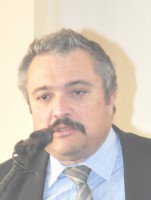
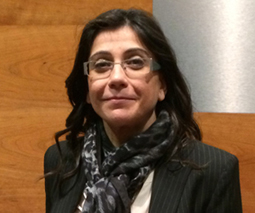
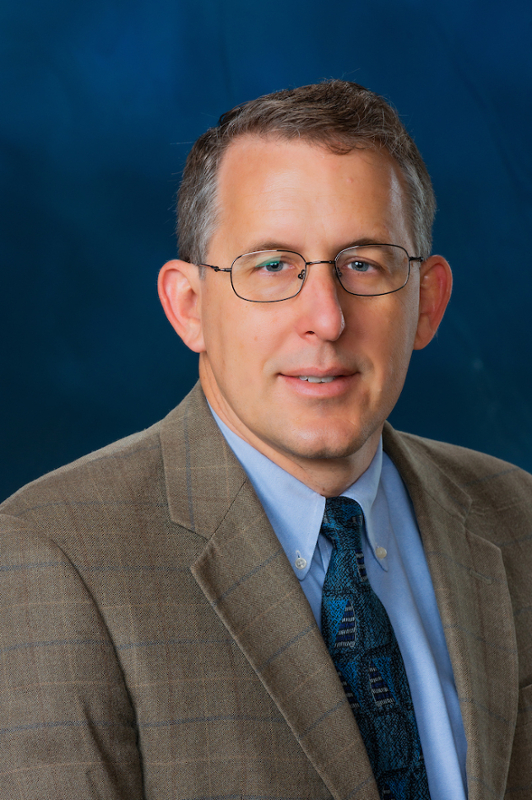
Mauro Rodriguez is an Assistant Professor of Engineering at Brown University's School of Engineering. His research focuses on computational fluid dynamics, multiphase flows, viscoelasticity, and high-performance computing. He holds a position at Barus & Holley 441 and can be reached at mauro_rodriguez@brown.edu. His research interests include studying fluid-structure interactions, cavitation bubble dynamics, and inertial effects in complex fluids. Rodriguez explores applications ranging from biomedical engineering (e.g., pulmonary alveolus deformation under ultrasound) to exascale computing for multiphysics simulations. His work often involves numerical modeling and rheometry techniques to characterize material properties. Recent publications highlight advancements in simulating cavitation phenomena, bubble collapse mechanics, and GPU-accelerated algorithms. Rodriguez’s research bridges theoretical fluid dynamics with practical engineering challenges, leveraging high-performance computing resources to tackle multiscale problems. No scientific awards or grants are explicitly listed in the provided materials. His advising activities and lab affiliations remain unspecified.
Sophia Haussener is an Associate Professor at the Laboratory of Renewable Energy Science and Engineering (LRESE) within the School of Engineering at École polytechnique fédérale de Lausanne (EPFL). She contributes to research in Renewable Energy , Electrochemistry , and Materials Science , with a focus on solar energy conversion and CO2 reduction technologies. Her leadership extends to academic committees such as the Commission des prix de la recherche and Academic Strategy Committee . Her research group explores Multiphysics Modeling , CO2 Electrolysis , and Photoelectrochemical Systems , emphasizing scalability and industrial integration. Recent publications highlight advancements in Gas Diffusion Electrodes , Photostability , and Membrane Engineering , reflecting her interdisciplinary approach to renewable energy solutions. Scientific Awards Yellott Award (2024): ASME Solar Energy Division Cell Press’s 50 Scientists that Inspire (2024) Raymond Viskanta Award (2019): Elsevier & Journal of Quantitative Spectroscopy ABB Forschungspreis (2012) ETH Medal (2011) Dimitris N. Chorafas Prize (2011) PhD Students Agarwal Venu Gopal Delgado Díaz William Orlando Lorenzutti Francesca Mora-Monteros Jérémy Raphaël van Rooij Sarah and 21 others Article Trends Focus on CO2 Electrolysis , Photoelectrochemical Systems , and Multiphysics Modeling Key themes: Gas Diffusion , Membrane Technology , Photostability , and Industrial Integration
Jishan Liu is a Professor in the School of Engineering at The University of Western Australia, specifically within the Civil, Environmental and Mining Engineering department. His academic profile shows extensive research contributions with 241 research outputs and 20 granted research projects. Professor Liu's primary research interests focus on Unconventional Reservoir Multiphysics (URM) with applications to: Coal seam gas extraction Shale gas extraction $$\text{CO}_2$$ sequestration in coal Coal mine safety Caprock sealing safety His specific expertise includes examining the effects of local mass transfer, momentum transfer, and deformation compatibility between rock matrix and fracture on physical processes, and incorporating these into the framework of Geo-Multiphysics. His research contributes to UN Sustainable Development Goals related to energy and environmental sustainability. His work spans across the fields of Energy and Mining and Resources, with specific expertise in Unconventional Gases, Geomechanics, Modelling, Coupled Multiphysics, and Porous Flow. Professor Liu has been involved in significant research projects including: Four Stage Permeability Evolution Theory for Low Permeable Rocks (2020-2024) Impact of coal-fluid interaction on the effectiveness of fracturing during coal seam gas drainage (2014) CarbonNet Dynamic Seal Capacity (2012-2013) Development of a Novel Experimental Approach for the Evolution of Coal and Shale Permeability (2012) Multiscale Dynamics of Ore Body Formation (2010-2015) These projects demonstrate his long-standing commitment to advancing knowledge in reservoir engineering and geomechanics. His recent publications show continued productivity with focus on permeability evolution, coal mechanics, and advanced modeling approaches. His work has garnered significant attention with an h-index of 63 and over 11,815 citations according to Scopus. Professor Liu has supervised 14 research students throughout his career, contributing to the development of the next generation of researchers in his field.
Nicholas Zabaras is a Professor of Uncertainty Quantification and the Director of the Warwick Centre for Predictive Modelling at the University of Warwick. He is a Hans Fischer Senior Fellow at the TUM Institute for Advanced Study (TUM-IAS), hosted by Phaedon-Stelios Koutsourelakis. His research focuses on advancing computational methods for uncertainty quantification, predictive modeling, and multiscale/multiphysics systems. Key areas include Bayesian methods, stochastic modeling, and data-driven approaches for complex materials systems. Education: He holds a diploma in Mechanical Engineering from the National Technical University of Athens (1982), an M.Sc. in Materials Science and Engineering from the University of Rochester (1983), and a Ph.D. in Theoretical and Applied Mechanics from Cornell University (1987). He has held academic positions at the University of Minnesota, Cornell University, and the University of Warwick, where he now leads the Warwick Centre for Predictive Modelling. Research Interests: His work integrates computational mathematics, statistics, and scientific computing to address challenges in materials science, computational physics, and engineering systems. Specific themes include Bayesian uncertainty quantification, high-dimensional modeling, information-theoretic coarse graining, and stochastic model reduction. Awards: He has received the Royal Society Wolfson Research Merit Award (2014), the Michael Tien’72 College of Engineering Teaching Award (2009), and is a Fellow of the American Society of Mechanical Engineers (2006). Labs/Teams: Director of the Warwick Centre for Predictive Modelling, and leader of the Scientific Computing and Artificial Intelligence (SCAI) Laboratory at the University of Notre Dame, focusing on interdisciplinary research in AI-driven predictive modeling and uncertainty quantification.
Prof. Dr. Britta Nestler serves as a Research Unit Chair at the Institute of Nanotechnology (INT) within the Karlsruhe Institute of Technology (KIT), Germany. Leading the Microstructure Simulations research group (INT-MSS), she focuses on computational modeling of mechanical and microstructural properties in materials, with significant contributions to phase-field methodologies for microstructure evolution and materials design. Her research spans computational materials science, phase-field modeling, and multiphysics simulations for energy storage systems. Key interests include chemo-mechanical coupling in multiphase systems, solid-state dewetting phenomena, battery electrode optimization, and microstructure-property relationships in polycrystalline materials. She integrates machine learning and data management frameworks to advance virtual materials design, particularly for post-lithium battery technologies. Recent publications reveal a strong emphasis on phase-field applications for energy materials, with 15+ 2025 articles addressing battery electrode design, structural optimization of porous materials, and multiphysics coupling in electro-chemo-mechanical systems. Her work bridges fundamental thermodynamics with industrial applications, notably in the POLiS Cluster of Excellence for post-lithium storage. Prof. Nestler actively shapes the field through leadership in the GAMM Workshop on phase-field modeling and the Materials/Microstructure Modeling conference. As part of KIT's Institute of Nanotechnology, her INT-MSS group collaborates on virtual materials design initiatives within the MaTeLiS Focus Field and NFDI4Ing research data infrastructure, driving digitalization in engineering sciences.
Prof. Alberto Salvadori is an Associate Professor at the University of Brescia (Italy) and Research Assistant Professor at the University of Notre Dame (USA). He founded and leads the Multiscale Mechanics and Multiphysics of Materials Lab, focusing on computational modeling of complex physical phenomena across multiple scales. He holds a Ph.D. in Structural Engineering from Politecnico di Milano (2000). His research spans: Fracture mechanics and crack propagation in embrittled materials Multiphysics modeling of Li-ion batteries and energy storage systems Mechanobiology of cell motility and protein relocation Machine learning applications in materials science Granular material behavior and powder compaction His publications show strong focus on: Advanced battery technologies and solid-state electrolytes Multiscale computational methods for materials design Biomechanics of cellular processes Innovative fracture propagation algorithms Awards include: Marie Curie Fellowship (2013) from European Union Research funding from: EU Marie-Curie Sklodowska actions University of Notre Dame Italian Ministry of Education Private industry partners He leads the Multiscale Mechanics and Multiphysics of Materials Lab at University of Brescia, collaborating with Cornell Fracture Group and Patient-based Medicine Lab.
Chiara Gastaldi is an Associate Professor at the Department of Mechanical and Aerospace Engineering (DIMEAS) at the Polytechnic University of Turin, specializing in mechanical design and machine construction. Her academic career spans multiple teaching roles across bachelor's, master's, and doctoral programs, with particular focus on sustainable design, mechanical engineering, and computational methods. She serves on the College of Mechanical, Aerospace, and Automotive Engineering and the College of Biomedical Engineering, contributing to curriculum development and academic governance. Dr. Gastaldi's research centers on bearings, friction, multiphysics modeling, and numerical modeling, with emphasis on sustainable and circular design approaches. Her work bridges traditional mechanical engineering with modern computational techniques, focusing on practical applications in aerospace engineering, computational engineering, fluid mechanics, and sustainable design. She leads the ISED (Industrial Systems Engineering and Design) research group, driving innovation in model-based systems engineering applied to sustainable product development. Her recent publications reveal a strong trend toward integrating sustainability principles into mechanical design, particularly through life cycle assessment methodologies applied to human-powered vehicles and circular design strategies. The research demonstrates growing interest in lattice metamaterials, friction modeling, and computational approaches to mechanical design optimization, with applications ranging from turbine blades to hydrogen storage systems. ASME Yetep Award (2016) ASME Yetep Award (2019) Dr. Gastaldi actively supervises multiple PhD students working on sustainable mechanical design, lattice metamaterials, and circular economy approaches. Her research portfolio includes significant projects funded by competitive calls and commercial contracts, such as PRIME for predictive maintenance, mechanical design of metal scrap crushing machines, CO2 footprint assessment of vehicle aftermarkets, and dynamic design of turbine blades with friction contacts for renewable energy applications. She also serves as an Associate Editor for the PROCEEDINGS OF THE INSTITUTION OF MECHANICAL ENGINEERS. PART C, JOURNAL OF MECHANICAL ENGINEERING SCIENCE and participates in scientific committees including the ASME Technical Committee on Sound and Vibration and the International Committee on Joint Mechanics. Through the ISED research group, Dr. Gastaldi leads collaborative efforts in industrial systems engineering and design, with particular emphasis on sustainable and circular approaches to mechanical product development. Her team works closely with industry partners on practical applications of advanced mechanical design principles, while also mentoring the next generation of engineers through student teams like Policumbent, which focuses on human-powered vehicle design.
Sadik Omairey is a Senior Research Fellow at Brunel Composites Centre (BCC), a joint venture between Brunel University London and The Welding Institution (TWI) since June 2019. He serves as technical lead for collaborative projects involving automotive crash structures, all-composites aircraft fuselage assembly, and thermoplastic additive manufacturing. Affiliated with Brunel University London's College of Engineering, Design and Physical Sciences, he represents BCC at academic conferences and contributes to postgraduate student training. His research spans composite materials reliability, metamaterials, biomechanics, and sustainable manufacturing. Key interests include computational homogenization (notably through his EasyPBC tool), crashworthiness optimization, adhesive bonding, and additive manufacturing. His work integrates experimental testing with advanced finite element modeling, focusing on applications in aerospace, automotive, and biomedical engineering. Recent publications (2021-2025) reveal strong trends in multiscale modeling of composites, life cycle analysis for sustainable design, and bio-inspired metamaterials. His collaborative work frequently addresses industrial challenges in automotive crash structures and aircraft fuselage assembly, with growing emphasis on recyclability and environmental impact assessment in materials engineering. Awarded significant professional recognitions: PRINCE2® Foundation Project Management certification (2023) Chartered Engineer and Fellow of IMechE (CEng FIMechE, 2018) Fellow of the Higher Education Academy (FHEA, 2018) Omairey actively supervises postgraduate students and leads multiple funded research projects including HyPStore (hydrogen storage), modular crash boxes, and PADICTON (distortion compensation in additive manufacturing). His work bridges academic research with industrial applications through partnerships with automotive and aerospace sectors. He contributes to BCC and IMM research groups, focusing on experimental validation and computational modeling of advanced composite systems.
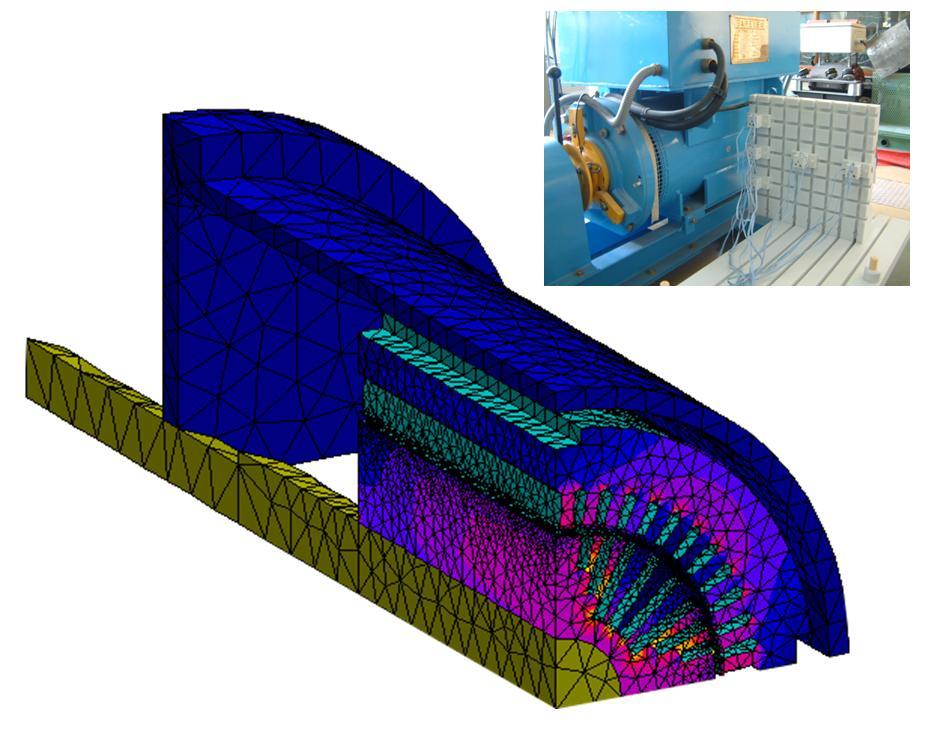
Olivier Chadebec is a CNRS Research Director at G2Elab, the power electrical engineering research department of Université Grenoble Alpes in France. He leads the 'Models, Methods and Methodologies Applied to Electrical Engineering' research team (MAGE group) and the ERT-CMF (Low Magnetic Fields Technological Research Group) at G2Elab. He was involved in creating the International Laboratory 'James Clerk Maxwell' in collaboration with the University of Lyon and Brazilian universities. Chadebec received his engineer and Ph.D. degrees in Electrical Engineering from the Grenoble Institute of Technology in 1997 and 2001. After a post-doctorate with Schneider Electric, he joined CNRS in 2003 as a Research Associate. He received his 'Habilitation à Diriger les Recherches' in 2011 and became a Research Director in 2015. He also spent a year in 2012 as a research associate at the Federal University of Santa Catarina in Brazil. His research focuses on computational electromagnetics applied to electrical energy conversion, developing numerical models, algorithms, and simulation tools for electromagnetic device analysis. His key research areas include finite element methods, integral methods, inverse problems, and low magnetic field metrology. He actively contributes to the development of the MIPSE platform commercialized by Altair Engineering via Flux software. His recent publications (2023-2025) show a strong focus on advanced computational methods for electromagnetic problems, including multiscale modeling, tensor compression techniques, FEM-BEM coupling for magnetoelectric effects, and optimization algorithms for electrical machine design and fuel cell diagnostics. His work demonstrates a consistent progression toward more efficient computational approaches for complex electromagnetic problems. Chadebec has supervised over 30 PhD students since 2006, with thesis topics spanning computational electromagnetics, inverse problems, fuel cell diagnostics, and submarine magnetic signature analysis. His research has significant applications in electrical machine design, fuel cell technology, submarine degaussing, and electromagnetic compatibility. He leads the MAGE research team and the ERT-CMF (Low Magnetic Fields Technological Research Group) at G2Elab, and has been instrumental in developing the MIPSE simulation platform used in industry through collaboration with Altair Engineering.
Stavroulakis Georgios is a Professor at the School of Production Engineering and Management, Technical University of Crete. His research focuses on smart structures, vibration control, finite element methods, and advanced materials. He leads interdisciplinary projects in structural mechanics, acoustics, and computational mechanics with applications in engineering systems and heritage preservation. Key areas include: (1) Development of robust control systems for smart structures, (2) Numerical modeling of masonry and composite materials, (3) Applications of artificial intelligence in structural analysis and material science. Office: Δ5.109, DPEM Building. Research activities emphasize: Active vibration suppression using piezoelectric systems and auxetic materials Advanced finite element analysis for biomedical and historical structures Data-driven computational methods for material characterization Acoustic comfort optimization in urban environments Structural health monitoring through physics-informed neural networks His work bridges traditional engineering disciplines with modern AI tools, addressing challenges in infrastructure resilience and sustainable design. Publications span smart materials innovation, nonlinear mechanics, and heritage building restoration.
Estefanía Peña is a Full Professor (Catedrática de Universidad) at the University of Zaragoza's School of Engineering and Architecture, Department of Mechanical Engineering. She leads research in computational biomechanics with a focus on vascular tissues and medical device interactions. Key roles include coordination of the Mechanical, Naval and Aerospace Engineering Subarea for Spain's Ministry of Science (2022–present) and Deputy Director of the Aragón Institute of Engineering Research (I3A, 2015–2019). Educational Background: Ph.D. Mechanical Engineering, University of Zaragoza (2004) M.Sc. Mechanical Engineering, University of Zaragoza (2000) Research Interests: Computational mechanics of soft biological tissues, multiscale modeling of inelastic effects, atherosclerosis progression, drug delivery systems, and experimental biomechanics. Her work bridges computational models with clinical applications, particularly in cardiovascular diseases and medical devices. Notable Achievements: Recipient of major awards including the Spanish ECCOMAS Best PhD Thesis Award (2005) and Young Research Medal from the Royal Society of Engineering (2015). Supervised over 25 PhD and M.Eng. students, focusing on atherosclerosis mechanics, drug-eluting stents, and fascia biomechanics. Grants & Collaborations: Active in EU and national projects, collaborating with institutions like TU Dortmund, Stanford University, and KTH Royal Institute of Technology. Research emphasizes translational medicine and computational modeling. Labs/Teams: Leads the Biomedical Engineering Division at I3A, part of CIBER-BBN (Spanish Biomedical Engineering Network). Her lab integrates experimental and numerical methods to study vascular mechanics and tissue engineering.
Charles Dorn is an Assistant Professor in the Department of Aeronautics and Astronautics at the University of Washington. His research focuses on structural mechanics, architected materials, and reconfigurable systems. Prior to UW, he was a Postdoctoral Fellow at ETH Zurich (2021–2024), and completed his PhD in Space Engineering at Caltech (2021), with additional degrees from Ecole Polytechnique and UW-Madison. Education: PhD, Space Engineering, California Institute of Technology, 2021 M.S., Multiphysics and Multiscale Modeling, Ecole Polytechnique, 2018 M.S., Space Engineering, Caltech, 2017 B.S., Engineering Mechanics, UW-Madison, 2016 Research Interests: His work bridges mechanics, computation, and design to create structures with extreme properties like wave steering and shape reconfiguration. Key areas include mechanical metamaterials, origami-inspired systems, and spatially graded metamaterials for vibration suppression. Recent projects explore inverse design methods and multi-configuration rigidity. Key Achievements: Developed ray-tracing tools for elastic waves in graded metamaterials Winner of 2018 R&D 100 Award for video-based vibration measurement techniques Collaborated with industry leaders like Prof. Sergio Pellegrino (Caltech) and Prof. Dennis Kochmann (ETH Zurich) Labs/Teams: Leads a research group at UW focused on advanced structural architectures and their applications across aerospace, robotics, and electronics.
Mina Karimi is a Postdoctoral Scholar Research Associate in the Department of Mechanical and Civil Engineering at California Institute of Technology (Caltech). She is part of the Bhattacharya group, advised by Professor Kaushik Bhattacharya. Her research focuses on computational mechanics, poromechanics, and Bayesian inference applied to porous media systems. Key areas include reactive flow modeling, multiscale simulations, and data-driven approaches for subsurface engineering challenges. Her work integrates advanced computational methods with geomechanical and materials science problems, emphasizing energy systems and environmental applications. Recent studies explore carbon sequestration mechanisms, chemo-poro-mechanical coupling, and high-dimensional parameter estimation using Bayesian frameworks. She also investigates crack-healing phenomena in shape memory alloy composites and develops accelerated micromechanical models for solute transport. Publications span topics from machine learning-enhanced groundwater modeling to Hessian-informed sampling techniques for high-dimensional inverse problems. Her research bridges theoretical developments with practical applications in subsurface energy storage, geological carbon sequestration, and material behavior under extreme conditions. Advising is conducted under the mentorship of Prof. Bhattacharya, with affiliations to the Resnick Sustainability Institute at Caltech. Current efforts emphasize computational tools for poromechanics and uncertainty quantification in complex multiphase systems.
Dr. Wieslaw K Binienda is a Professor of Civil Engineering at the University of Akron's College of Engineering and Polymer Science, where he has served since 1988. He co-directs the Gas and Turbine Research and Testing Laboratory. His expertise spans fracture mechanics, composite materials characterization, and computational methods like FEA and CFD. He has received prestigious awards including the NASA 'Turning Goals Into Reality Award' and ASCE's Richard R. Torrens Award for editorial leadership. Education: Ph.D., Mechanical Engineering, Drexel University (1987) M.S., Mechanical Engineering, Drexel University (1985) B.S./M.S., Motor Vehicles and Heavy Duty Machines, Warsaw Polytechnic University (1980) Research Interests: Focuses on advanced composite materials' mechanical behavior under extreme conditions, including high-energy impact, thermal cycling, and dynamic loading. Specializes in failure analysis using multiscale modeling and experimental validation. Active in aerospace applications like turbine durability and structural safety. Awards: NASA 'Turning Goals Into Reality Award' ASCE Aerospace Division 2010 Outstanding Professional Service Award ASCE 2013 Richard R. Torrens Award Fellow, American Society of Civil Engineers (ASCE) Lab & Collaborations: Leads the Gas and Turbine Research and Testing Laboratory, advancing turbine blade containment, impact analysis, and material testing. Collaborates with industry on aviation safety and composite material innovations.
Robert L. Jackson is a Professor in the Department of Mechanical Engineering at Auburn University, College of Engineering. He serves as Editor-in-Chief of the ASME Journal of Tribology, highlighting his leadership in the field. His research focuses on tribology, contact mechanics, friction, wear, lubrication, and electrical contacts, with applications in machine design and electrified systems. His research interests include: Nano, Micro, and Macro Scale Contact Friction, Wear, and Lubrication (Tribology) Electrically Induced Bearing Damage Electrical Contacts and Lubricant Additives Surface Texturing and Nano-lubricants Multiscale/Multiphysics Modeling Design of Machine Components His recent publications reveal a strong trend in the performance of electric vehicle motor greases, electro-pitting, electrical discharge modeling, and mixed lubrication in rolling and sliding contacts. He investigates the role of nanoparticles, surface roughness, and thermal effects in tribological systems. His work spans experimental, analytical, and computational approaches, with a focus on real-world engineering applications such as EVs, connectors, and bearings. He actively mentors graduate students, including current advisees Loren Baugh, Jack Janik, and Sudip Saha. His past students have gone on to careers in industry and academia at organizations like Intel, Amazon, Tesla, and universities in China and India. He has collaborated extensively with researchers on topics ranging from articular cartilage biomechanics to nanocomposite lubricants and electrical connector reliability.