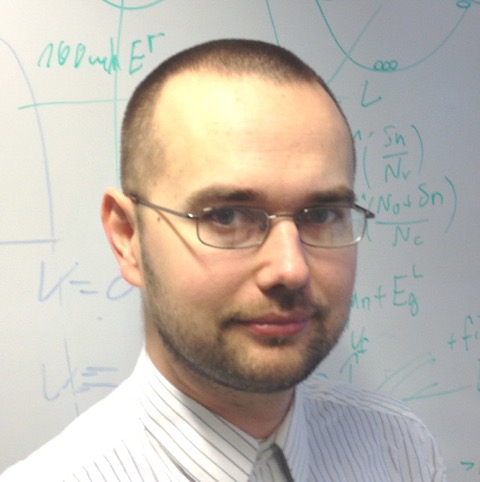
Dr. Igor Chernyavsky is a Senior Lecturer in Applied Mathematics at the Department of Mathematics, The University of Manchester. His research focuses on complex living systems, particularly transport phenomena and biofluid dynamics in tissue physiology. He leads projects in continuum mechanics, mathematics in life sciences, and uncertainty quantification. His work contributes to UN Sustainable Development Goals through initiatives like Digital Futures, Christabel Pankhurst Institute, and Henry Royce Institute. Research interests include placental hemodynamics, biomimetic models, and multiscale modeling of biological systems. Key projects involve placental circulation modeling for stillbirth prediction, umbilical cord dynamics, and microfluidic studies of blood flow in porous media. He collaborates on placental imaging, bioreactor engineering, and clinical placentology. Recent publications highlight placental oxygenation, umbilical cord solute transfer, and robust fabrication of PDMS microcapsules mimicking red blood cells. His work bridges experimental and theoretical approaches, emphasizing clinical translation. He supervises PhD students and leads grants totaling £ millions, including Maternal & Fetal Health Research Centre (2018-2035) and ROBUST-BIOPRINT (2023-2025). He actively seeks collaborations in biomaterials, fluid dynamics, and biomedical engineering. Labs/teams: Continuum Mechanics Group, Mathematics in Life Sciences Team, and Uncertainty Quantification & Data Science Group.
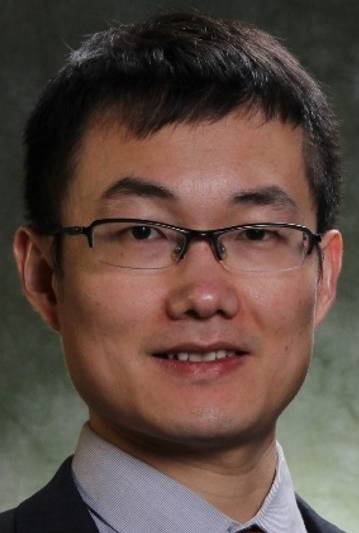
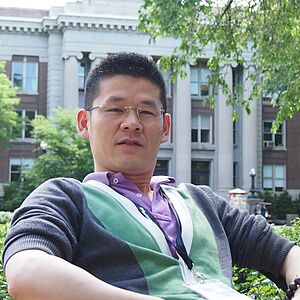
Pu Zhang is an Associate Professor and Undergraduate Studies Director in the Department of Mechanical Engineering at Binghamton University (State University of New York at Binghamton). He leads the Composite and Architected Materials Group, focusing on advanced materials research. Previously, he held postdoctoral positions at the University of Manchester and earned his PhD from the University of Pittsburgh, with earlier degrees from Hunan University. Education background includes a B.S. and M.S. in Mechanics from Hunan University (China), followed by a Ph.D. in Mechanical Engineering from the University of Pittsburgh (USA). His research interests revolve around the mechanics, design, and manufacturing of composite and architected materials, particularly those incorporating liquid metals. Key areas include: Development of soft conductive composites and metamaterials Advanced manufacturing techniques like additive manufacturing and hybrid methods Multiscale and multiphysics modeling for material behavior prediction Recent publications highlight advancements in liquid metal-based composites, additive manufacturing innovations, and multiscale modeling approaches. These works address challenges in material fabrication, characterization, and application in fields like soft robotics and wearable electronics. He has received notable recognitions, including the NSF CAREER Award (2022) and the Watson Early-Stage Distinguished Research Award (2024). Zhang has taught courses such as Intro to Solid Mechanics and Mechanics of Composites. He has mentored over seven PhD and MS students and holds multiple patents. His research is supported by NSF, IEEC, and industry partnerships. His lab, the Composite and Architected Materials Group, fosters interdisciplinary research in soft functional materials and advanced manufacturing technologies.
Jacob Merson is an Assistant Professor in the Department of Mechanical, Aerospace, and Nuclear Engineering at Rensselaer Polytechnic Institute (RPI). He is affiliated with the Scientific Computation Research Center (SCOREC) and the Center for Materials, Devices, and Integrated Systems (CMDIS). His primary research focuses on High Performance Computing (HPC), with a particular emphasis on multiscale and multiphysics simulations. Key areas include fusion energy systems, plasma physics, and biomaterials modeling, leveraging machine learning and advanced computational frameworks. His work integrates cutting-edge tools like the XGC plasma simulation code and the PCMS parallel coupler, supporting digital twin development for fusion energy applications. He has contributed to open-source frameworks for fibrous materials modeling and unstructured mesh tools for energy systems. His research bridges computational methods with practical engineering challenges in fusion, biomechanics, and materials science. Notable contributions include machine learning approaches for constitutive modeling of fibrous materials and plasma turbulence studies in stellarator configurations. His articles emphasize fusion energy innovation, biomaterials mechanics, and HPC workflows. Merson collaborates extensively on multimodel simulation integration and has pioneered tools like Benesh for in situ workflow coordination. Despite his prolific research output, no specific grants or student advisees are explicitly listed in the provided materials.
Virginie Ehrlacher is a Professor at CERMICS, École des Ponts ParisTech (ENPC), France. She specializes in applied mathematics with a focus on high-dimensional problems, numerical analysis, and computational modeling. Her work bridges quantum chemistry, materials science, and machine learning through innovative mathematical frameworks. Education includes: PhD in Mathematics (2012) from ENPC: Mathematical models in quantum chemistry and uncertainty quantification Habilitation (2020) from Université Paris-Dauphine: Mathematical and numerical analysis of high-dimensional and multiscale problems in materials science Research spans multiscale modeling, tensor decompositions for high-dimensional systems, cross-diffusion equations, and scientific machine learning. Her work frequently addresses challenges in quantum mechanics, materials science, and computational physics using advanced numerical techniques. Publications emphasize: Algorithms for high-dimensional PDEs and eigenvalue problems Model reduction techniques (tensor networks, reduced basis methods) Cross-diffusion systems with biological/physical applications Neural networks for scientific computing Awards and distinctions: Irène Joliot-Curie Prize (2023) Chevalier de l’Ordre National du Mérite (2025) Leadership includes: ERC Starting Grant HighLEAP (2023–2028) ERC Synergy project EMC2 (2020–2026) ANR JCJC project COMODO (2019–2023) She co-leads the EMS Topical Activity Group on Scientific Machine Learning. Affiliated with the CERMICS laboratory, she collaborates on interdisciplinary teams tackling multiscale and data-driven modeling challenges.
Professor S. Jon Chapman is a faculty member at the Mathematical Institute, University of Oxford, holding the position of Professor of Mathematics and its Applications. He is affiliated with the Oxford Centre for Industrial and Applied Mathematics research group. His educational background includes a DPhil, MA, and BA. Research interests span diverse areas of applied mathematics and scientific modeling: Industrial mathematics and mathematical modeling Partial differential equations and asymptotic methods Fluid dynamics and turbulence theory Biophysical applications including tumor growth and tissue modeling Electromagnetic scattering and superconductivity Materials science and energy systems Publication analysis reveals two primary trends: Recent work (2025) focuses on electrochemical systems (battery modeling, gas-induced bulging) and biological applications (organoid models). Earlier influential publications established expertise in pattern formation, fluid dynamics (ship waves, spiral waves), and transport phenomena in biological systems. Mathematical techniques consistently feature multiscale analysis, asymptotic methods, and nonlinear modeling. Awards and honors recognizing scholarly contributions: Naylor Prize (2015) Julian Cole Prize (2002) Whitehead Prize (1998) Richard C. DiPrima Prize (1994) Johnson Mathematical Prize (1992) No information is available regarding student advising, grants, or laboratory affiliations.
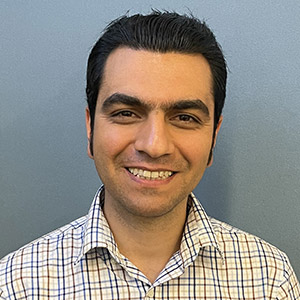
Davood Pourkargar is an Assistant Professor in the Tim Taylor Department of Chemical Engineering at Kansas State University. He is also a Graduate Faculty Member at the Food Science Institute and a Faculty Researcher at the Johnson Cancer Research Center. His work focuses on integrating data with first-principle models to understand complex systems across multiple scales. Ph.D. in Chemical Engineering from Pennsylvania State University (2015) M.S. in Process Simulation and Control from Sharif University of Technology (2010) B.S. in Chemical Engineering from Sharif University of Technology (2008) His research interests span computational multiscale modeling, digital twin development, applied artificial intelligence, and optimization-based control of complex process networks. Dr. Pourkargar's work integrates process systems engineering with artificial intelligence to address challenging problems in chemical, biological, energy, and food systems. He develops intelligent frameworks for controlling complex process networks, designing cyber-physical architectures for smart manufacturing, and advancing system identification using machine learning and process data analytics. A significant aspect of his research involves physics-informed machine learning applied to cancer dynamics modeling and drug distribution in the human body. Dr. Pourkargar's publication record shows a strong focus on predictive modeling and control of chemical processes, particularly ammonia synthesis systems, polysilicon reactor systems, and food extrusion processes. His recent work increasingly incorporates machine learning techniques, especially transformer architectures and physics-informed approaches, applied to both traditional chemical processes and emerging areas like organ-on-a-chip systems for drug discovery. 2024 Carl R. Ice College of Engineering Outstanding Assistant Professor Award NSF EPSCoR Research Fellowship 2023 Kansas EPSCoR First Award AFOSR Faculty Fellowship Big XII Faculty Fellowship Robert F. Smith School Distinguished Junior Researcher Award from Cornell University (2017) O. Hugo Schuck Best Paper Award (2014) Dr. Pourkargar has successfully mentored numerous graduate students through their master's and doctoral research, with several receiving departmental and college-level awards. His research has been supported by significant grants from the National Science Foundation, Kansas EPSCoR, and K-State's Global Food Systems initiative. His lab has presented extensively at major conferences including AIChE Annual Meetings and American Control Conferences. The Intelligent Systems and Process Systems Laboratory (ISPSL) led by Dr. Pourkargar operates computational and experimental facilities in Durland Hall. The lab is expanding into robotic additive manufacturing and autonomous biomanufacturing, supported by research infrastructure grants. The group maintains active collaborations with the Johnson Cancer Research Center and the Terasaki Institute for Biomedical Innovation.
Professor Siegfried Müller is a full professor at the Institute for Geometry and Practical Mathematics within the Faculty of Mathematics, Computer Science and Natural Sciences at RWTH Aachen University. His research focuses on developing advanced numerical methods for solving complex fluid dynamics problems, with particular expertise in conservation laws, adaptive multiscale techniques, and multiphase flow modeling. He maintains an active research program with numerous publications in leading computational mathematics journals and collaborates extensively with researchers across multiple institutions. Professor Müller's research interests span a wide range of computational mathematics topics including Conservation Laws, Finite Volume Schemes, Discontinuous Galerkin Methods, Adaptive Multiscale Techniques, and specialized applications in Fluid Dynamics. His work demonstrates particular strength in developing numerical methods for two-phase flow systems, transpiration cooling applications, and surface lubrication phenomena. His research bridges theoretical mathematical analysis with practical engineering applications, particularly in aerospace and mechanical engineering contexts. His recent publications reveal a strong focus on advancing numerical techniques for hyperbolic conservation laws, with increasing emphasis on stochastic methods, multilevel approaches, and coupled system modeling. His work spans both theoretical developments in numerical analysis and practical applications in fluid dynamics, with particular attention to multiphase flow systems and cooling technologies. The publications show a clear progression toward more complex, high-dimensional problems and increasingly sophisticated numerical techniques to address computational challenges. Professor Müller has led and participated in numerous research projects funded by German research organizations including DFG Priority Programmes, BMBF projects, and DFG Research Training Groups. His projects have focused on hyperbolic balance laws, adaptive numerical methods, transpiration cooling, and textured surface lubrication. He has organized multiple workshops on multiresolution methods and active drag reduction, demonstrating leadership in his research community. Professor Müller's research group at RWTH Aachen collaborates closely with engineering departments and industry partners to apply advanced numerical methods to practical engineering challenges. His team has developed specialized computational tools for simulating complex fluid phenomena, particularly in aerospace applications where cooling technologies and fluid-structure interactions are critical. The group maintains strong connections with international research communities in computational mathematics and fluid dynamics.
Dr. Amirreza Khodadadian is a Lecturer in Mathematics at the School of Computer Science and Mathematics, Keele University, since August 2023. He holds a Ph.D. from the University of Vienna (2017), followed by postdoctoral positions at the Technical University of Vienna and Leibniz University Hannover. His research focuses on uncertainty quantification, numerical methods for stochastic PDEs, finite element methods, computational mechanics, and machine learning applications in nanoelectronics and biological systems. Key research interests include Bayesian inversion, multiscale modeling, reduced-order methods, and the design of nanoscale sensors. He has collaborated with institutions like the University of Oxford and secured an Austrian Science Fund (FWF) grant (476k€) for nanozyme sensor research. Dr. Khodadadian mentors postdoctoral researchers, including Dr. Samaneh Mirsian, and actively publishes in top-tier journals such as Journal of Computational Physics and Computer Methods in Applied Mechanics and Engineering . His work bridges applied mathematics with engineering challenges, emphasizing efficient numerical algorithms for real-world problems like battery degradation, groundwater contamination, and biomedical sensor optimization. Recent projects involve machine learning integration for enhanced predictive modeling. Education: Ph.D. in Mathematics, University of Vienna, Austria (2017) Postdoctoral Fellowships: TU Vienna (2018), Leibniz University Hannover (2018–2022) Grants/Awards: Austrian Science Fund (FWF) Grant: Single Atom Catalysts as Nanozymes in FET Sensors (2023) Advising: Postdoctoral Mentor: Dr. Samaneh Mirsian (Keele University) Dr. Khodadadian’s publications span computational mechanics, stochastic modeling, and interdisciplinary applications, reflecting his expertise in translating mathematical theory into practical engineering solutions.
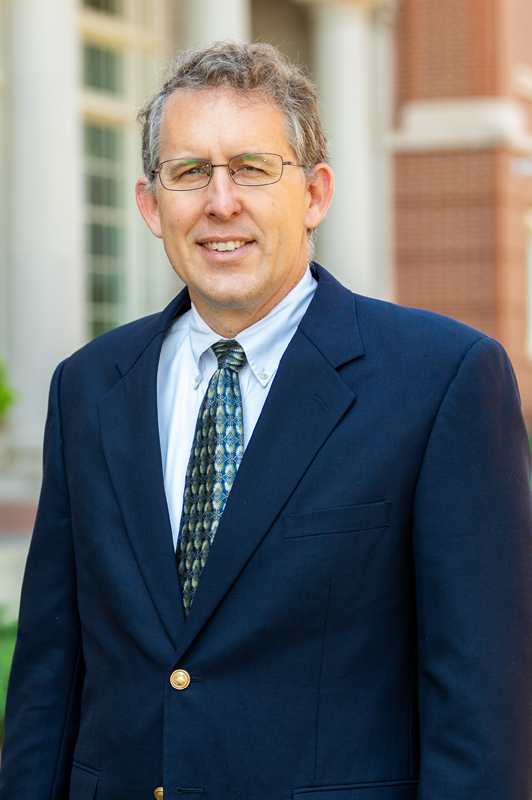
Robert Jackson is the Albert Smith Jr. Professor in the Department of Mechanical Engineering at Auburn University’s Samuel Ginn College of Engineering. He holds a Ph.D., M.S., and B.S. in Mechanical Engineering from the Georgia Institute of Technology and is a leading researcher in tribology, contact mechanics, friction, wear, and lubrication. He serves as Editor-in-Chief of the ASME Journal of Tribology and leads a research group focused on multiscale modeling, electrical contact reliability, and sustainable biolubricants. His research interests include: tribology, friction, wear, surface engineering, surface fatigue, lubrication, nano-lubricants, surface texturing, and multiphysics modeling. He applies these to challenges in electric vehicles, aerospace systems, and biomedical devices. His work integrates experimental validation with finite element and statistical modeling to understand contact behavior across scales. His recent publications focus on electrical erosion in EV bearings, nanoparticle-enhanced greases, mixed lubrication models, and biolubricants from waste oil. These works reflect a strong trend toward sustainable engineering, advanced materials, and predictive modeling in mechanical systems. His interdisciplinary approach bridges mechanical, materials, and electrical engineering. ASME Fellow Fellow, Society of Tribologists and Lubrication Engineers (STLE) Ralph Beard Memorial Academic Award Editor-in-Chief, ASME Journal of Tribology Dr. Jackson advises graduate students such as Jack Janik and collaborates with researchers on projects involving electrical connectors, solenoid valves, and biolubricant development. His lab engages in both fundamental contact mechanics and applied industrial problems. He leads the tribology minor and student sections of ASME and STLE at Auburn.
Dr. Yu Jing is a Scientia Senior Lecturer in the School of Minerals and Energy Resources Engineering at the University of New South Wales (UNSW). She holds a PhD in Petroleum Engineering from UNSW and specializes in characterizing subsurface formation rocks to understand underground fluid flow behaviors including natural gas, oil, and groundwater. Education: Doctor of Philosophy, Petroleum Engineering, University of New South Wales, Australia Master of Engineering, Petroleum Engineering, University of New South Wales, Australia Bachelor of Engineering, Petroleum Engineering, Southwest Petroleum University, China Dr. Jing's research focuses on pore-scale characterization of rocks using micro-CT imaging and modeling multiphysics flow transport in underground formations. Her work spans digital core analysis, fractured formation rock characterization, flow simulation of underground fluids, and micro-CT imaging techniques. She has developed computational tools like DigiCoal for coal core characterization. Her publication portfolio shows a strong trend toward advanced imaging techniques for understanding coal properties, particularly related to carbon sequestration, coalbed methane extraction, and fluid flow in fractured media. Recent work emphasizes multiscale modeling approaches and experimental validation of transport phenomena in porous media. Scientific Awards: Asian-Australian Leadership Award Finalist in Education, Science & Medicine (2024) The Rising Stars, Asian Deans' Forum (2023) Equity & Diversity Excellence Award - UNSW (2020) Future Women Leaders Conference Award - UNSW (2019) Scientia Fellowship - UNSW (2019) Dr. Jing actively supervises numerous PhD students working on diverse topics from CO2 geosequestration to critical metal recovery. She has secured significant research funding including ARC Research Hub for Fire Resilience Infrastructure ($4.9 million), UNSW-Chinese Academy of Sciences Collaboration Grant, and multiple ANSTO Australian Synchrotron Beamtime grants. Her professional engagement includes serving as Associate Editor for the Journal of Energy Engineering and as Communication Officer for the InterPore Australian Chapter. She leads research activities through the MUTRIS research group (www.mutris.unsw.edu.au), focusing on digital core analysis, fractured media characterization, and subsurface flow simulation. Her work bridges fundamental research with practical applications in energy transition and sustainable resource extraction.
Dr. Dirk Peschka is a researcher at the Weierstrass Institute for Applied Analysis and Stochastics (WIAS) in Berlin, Germany, where he contributes to the Partial Differential Equations Research Group (FG1) . He is affiliated with the Berlin Mathematics Research Center MATH+ , the Society for Applied Mathematics and Mechanics (GAMM) , and the German Physical Society (DPG) . Research Interests Mathematical modeling of fluid dynamics and materials science using partial differential equations (PDEs). Applications in thin film dynamics, semiconductor devices, and reactive multiphase flows. Development of gradient flow frameworks and thermomechanical models via GENERIC formalism. Analysis of contact line behavior, dewetting processes, and fluid-structure interaction. Numerical methods for semiconductor simulations and geoscience applications. Publications Trends His recent work (2022–2025) emphasizes energy-based modeling of thin films, reactive flows, and semiconductor degradation. Key themes include contact line dynamics, gradient flows, and multiscale analysis of materials and fluid systems. Memberships Weierstrass Institute for Applied Analysis and Stochastics (WIAS) Berlin Mathematics Research Center MATH+ Society for Applied Mathematics and Mechanics (GAMM) German Physical Society (DPG)
Wanqing Shen is an active Associate Professor (Maître de Conférences-HDR) at the Polytechnic School of Lille, University of Lille, specializing in Civil Engineering within the Department of Civil Engineering. They hold an accreditation to supervise research (HDR) and are affiliated with UMR 9013 - Laboratory of Multiphysics Multiscale Mechanics. 2018: Habilitation à diriger des recherches (HDR), "Nonlinear behavior of heterogeneous porous materials", University of Lille 2011: Ph.D., "Micro-macro modeling of mechanical behavior for ductile porous materials: application to the Callovo-Oxfordian argillite", University of Lille 2008: Master in Civil Engineering, University of Lille Professor Shen's research focuses on the mechanical behavior of heterogeneous porous materials, with expertise in micromechanics, multiscale modeling, and Thermo-Hydro-Chemo-Mechanical coupling in geomaterials. Their work bridges theoretical mechanics with practical civil engineering applications, particularly in understanding rock and soil behavior through advanced numerical methods and constitutive modeling. The research has significant implications for underground engineering and geological material analysis. Shen serves as Associate Editor for "AI & Materials" and as Academic Editor for "Deep Underground Science and Engineering", while also contributing to the editorial boards of "Rock Mechanics Bulletin" and the Early Career Editorial Board of "Deep Underground Science and Engineering". These roles reflect their standing in the mechanics and civil engineering research community. Prize of Excellent Scientific Research and Supervision (2021) Prize of Excellent Scientific Research and Supervision (2017) Chinese Government Award For Outstanding Self-Financed Students Abroad (2011) Allocations de Recherche du Ministère de l'Enseignement Supérieur et de la Recherche (2008) As an educator, Shen has served as Pedagogical Head and Head of Engineer Project for GC5 since 2020, and previously for GC3 (2015-2019). They teach advanced courses including Micromechanics (Master 2), Constitutive Laws (Master 1), and various engineering mechanics courses. From 2020-2022, they co-led the GEOM research group (Multiphysics Couplings and Multiscale Approaches in Geomaterials) within LaMcube, demonstrating active leadership in their research community.
Professor Luming Shen is a distinguished academic in the School of Civil Engineering at The University of Sydney. With over two decades of experience in mechanical behavior of materials research, he leads cutting-edge investigations at the intersection of civil engineering, materials science, and computational mechanics. His work spans multiple scales from nano to macro, focusing on fundamental understanding that can be applied to real-world engineering challenges in water purification, structural safety, and sustainable infrastructure. Professor Shen's educational background includes: Bachelor's degree in Building Engineering from Tongji University, China Master's degree in Structural Engineering from Tongji University, China PhD in Civil Engineering from the University of Missouri-Columbia, USA Professor Shen's research focuses on the mechanics and behaviors of materials across multiple scales. His primary interest lies in understanding both brittle materials (concrete, rock, glass) and ductile materials (aluminum, titanium, metals). Two major thrusts of his work include nano-mechanics and materials research, particularly developing carbon nanotube membranes for water purification, and studying novel composite materials under impact and extreme loading conditions for applications in blast-resistant structures and vehicle safety. He employs high-performance computing for molecular and macro-level analyses, complemented by physical laboratory testing. Professor Shen's extensive publication record demonstrates a consistent focus on multiscale modeling of materials behavior, with recent work emphasizing granular materials dynamics, carbon nanotube applications, 3D-printed concrete technology, and energy storage systems. His research shows a clear evolution toward increasingly complex multiphysics problems that integrate mechanical, thermal, and fluid dynamics phenomena at multiple scales. The interdisciplinary nature of his work bridges civil engineering, materials science, computational mechanics, and environmental engineering, with applications spanning from fundamental material science to practical civil infrastructure solutions. Professor Shen actively supervises multiple research students, including Yifang Cao working on 3D printing concrete, Jiangshuai Meng studying granular materials under impact loads, and Runda Wang applying machine learning to rock burst prediction. His research is supported by access to advanced computational resources and laboratory facilities at The University of Sydney, particularly through his membership in The University of Sydney Nano Institute. The university has provided specialized space and equipment necessary for conducting physical tests on materials under high-speed impact conditions. Professor Shen maintains active laboratory facilities for conducting physical tests on materials under various loading conditions, particularly high-speed impact testing. His work is supported by computational resources for molecular dynamics and multiscale modeling. As a member of The University of Sydney Nano Institute, he collaborates with interdisciplinary researchers working at the nanoscale, particularly in applications related to water purification technologies using carbon nanotube membranes.
Tony Lelièvre is a Professor of Applied Mathematics at the Ecole Nationale des Ponts et Chaussées, part of the Institut Polytechnique de Paris. He holds a PhD (2004) and Habilitation (2009), specializing in multiscale modeling, molecular simulation, and stochastic processes. His research focuses on free energy computations, numerical analysis of complex fluids, and computational statistical physics. He co-authored two books and over 100 papers, receiving significant awards like the ERC Consolidator Grant (2013-2019) and the Grand prix Alcan. Lelièvre has organized numerous international workshops and serves on editorial boards of journals like ESAIM:M2AN and SIAM/ASA Journal of Uncertainty Quantification. His work bridges applied mathematics, numerical analysis, and computational science with applications in materials science and industrial fluid dynamics. Education: PhD in Applied Mathematics, 2004 Habilitation à Diriger des Recherches, 2009 Research Interests: Multiscale modeling of complex fluids Molecular dynamics and free energy calculations Stochastic methods for metastable systems Numerical analysis of PDEs and SDEs Computational statistical physics Recent Contributions: His work on adaptive biasing force methods and hybrid Monte Carlo techniques has advanced the simulation of rare events and free energy landscapes. He contributed to variance reduction techniques in molecular simulations and mathematical analysis of parallel replica algorithms. Awards: ERC Consolidator Grant (2013-2019), Prix CS 2002, Grand prix Alcan (2010), Ordway Visiting Professorship (2012-2013), and several teaching awards. Professional Activities: Organized major conferences like CEMRACS 2013 and IPAM Long Program on Energy Landscapes (2017). Co-edits journals and authored influential textbooks on magnetohydrodynamics and free energy computations.
Igor V. Pivkin is a full professor at the Institute of Computing within the Faculty of Informatics at the University of Lugano (USI). He holds a B.Sc. and M.Sc. in Mathematics from Novosibirsk State University, followed by an M.Sc. in Computer Science and a Ph.D. in Applied Mathematics from Brown University. Before joining USI, he was a Postdoctoral Associate at MIT's Department of Materials Science and Engineering. His research focuses on multiscale/multiphysics modeling , numerical methods, and large-scale simulations of biological and physical systems. Key areas include biophysics, cellular/molecular biomechanics, stochastic modeling, and coarse-grained molecular simulations. He leverages high-performance computing and particle-based methods to address complex biological phenomena. His work spans diverse applications, including cancer cell dynamics, bioleaching bacterial biofilms, and erythrocyte mechanics in human spleen circulation. He has pioneered computational tools such as the Bayesian recursive global optimizer (BaRGO) and the in-silico lab-on-a-chip framework, enabling petascale simulations of microfluidic systems at cellular resolution. Pivkin collaborates extensively with institutions like the SIB Swiss Institute of Bioinformatics and has contributed to advancing methodologies for multi-model scientific simulations. His research integrates experimental data with computational models to bridge gaps between microscopic and macroscopic biological processes.