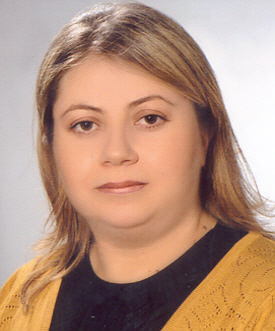
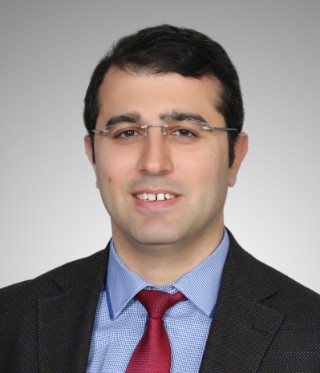
Prof. Dr. Emine Erçelebi is a full-time faculty member at Gaziantep University Faculty of Engineering, Department of Food Engineering . With over 25 years of academic experience, her research focuses on nanoemulsions, food preservation, and rheological properties of food systems. PhD (2007) : Food Engineering, Gaziantep University MS (2000) : Food Engineering, Gaziantep University BS (1997) : Food Engineering, Gaziantep University Her research program investigates: Stability and functionality of nanoemulsions for food applications Thermal degradation kinetics of natural food pigments Hydrocolloid effects on food rheology and texture Encapsulation techniques for bioactive compounds Physicochemical properties of fruit concentrates Recent publications demonstrate strong focus on nanoemulsions (2018-2024), fruit concentrate stability (2013-2020), and hydrocolloid applications (2016-2022). She has mentored 5 graduate students to completion and served as Domestic Erasmus Coordinator (2010-2014). Project Leadership : 2 completed research projects including a TÜBİTAK-funded study on protein-hydrocolloid systems Teaching : Delivers English-language courses in Analytical Chemistry, Instrumental Analysis, and Physical Properties of Foods (2014-2020)
Professor Vakur B. Erturk is a distinguished faculty member in the Department of Electrical and Electronics Engineering at Bilkent University's Faculty of Engineering. With a PhD from The Ohio-State University (2000), his academic journey spans over two decades of impactful research and teaching. His research focuses on advanced computational electromagnetics, specializing in closed-form Green's function representations, conformal antenna design, structural health monitoring systems, and metamaterial applications. His work bridges theoretical electromagnetics with practical engineering solutions, particularly in wireless sensing and high-frequency electromagnetic analysis. Professor Erturk's publication record demonstrates consistent innovation, with recent work emphasizing efficient computational methods like the multilevel fast multipole algorithm (MLFMA) for multiscale electromagnetic problems. His research shows strong continuity in antenna theory while expanding into metamaterial-inspired sensors and structural monitoring systems. Best master thesis award (1996) He actively mentors graduate students, with over 30 PhD and MSc graduates who have contributed significantly to fields including computational electromagnetics, antenna design, and wireless sensor development. His research group maintains strong collaborations with institutions like Middle East Technical University and researchers in metamaterials and structural health monitoring. Professor Erturk teaches core courses including Microwave Engineering, Antenna Engineering, and Computational Methods in Electromagnetics, shaping the next generation of electrical engineers through rigorous theoretical and practical instruction.
Hüsnü Dal is a Professor at Middle East Technical University (METU) in Ankara, Turkey, specializing in computational mechanics of materials. His research bridges engineering and biomedical applications through advanced computational modeling techniques. Education: Bachelor's Degree, Middle East Technical University, 2001 Master's Degree, University of Stuttgart, 2005 PhD, Dresden University of Technology, 2011 Research Focus: Prof. Dal's work centers on computational micromechanics, multiscale and multifield problems, and materials theory. He investigates fracture in multiphysics media with applications in lithium-ion batteries and tissue mechanics, developing novel constitutive models for complex material behaviors under extreme conditions. His research integrates thermomechanical coupling, viscoplasticity, and data-driven approaches to solve engineering challenges in both synthetic polymers and biological systems. Publication Trends: Recent publications (2023-2025) reveal a dominant focus on data-driven constitutive modeling and phase-field fracture methods. His work spans rubber mechanics, polymeric foams, biological tissues, and battery materials, characterized by strong interdisciplinary connections between materials science, biomechanics, and computational engineering. Key themes include anisotropic hyperelasticity, thermo-viscoplastic fracture, and spatial property variations in additively manufactured materials.
Dr. Ali Javili is an Associate Professor at Bilkent University's Department of Mechanical Engineering. He holds a Dr.-Ing. in Mechanics from the University of Erlangen-Nuremberg (2012), M.Sc. in Computational Engineering from Ruhr-University Bochum (2007), and B.Sc. in Mechanical Engineering from Sharif University of Technology (2003). His research focuses on computational multi-physics and multi-scale understanding of complex materials with emphasis on lower-dimensional energetics. Research interests span computational continuum mechanics, interfaces and interphases, instability analysis across scales, nanomechanics, fracture mechanics, surface elasticity theory, multi-scale formulation, multi-physics modeling, biomechanics, smart materials, metamaterials, peridynamics, and applied mathematics. Recent publications demonstrate advanced work in peridynamics, surface elasticity, nonlocal interfaces, and computational frameworks for material modeling. Articles consistently develop theoretical foundations and computational methods for complex material behaviors.
Ceyhun Burak Akgül is a Part-Time Lecturer specializing in Computer Vision, Machine Learning, and Statistical Data Analysis. His research focuses on interdisciplinary applications of visual data processing, including medical imaging and 3D object recognition. He maintains a personal website at cba-research.com and can be contacted at cb.akgul@gmail.com . His work spans topics such as image captioning, visual dictionaries, and symbolic feature detection. Key contributions include developing algorithms for action recognition using depth cameras and frameworks for leaf and object recognition. His research also integrates medical applications, such as analyzing Alzheimer’s patient movements and automated diagnosis using imaging data. Akgül’s publications frequently address challenges in 3D shape descriptors, feature selection, and interdisciplinary methodologies. His recent work includes exploring visual dictionaries and improving image processing techniques through model-driven approaches. His academic contributions are evident in journals like the Journal of Visual Communication and Image Representation, and he has participated in competitions like SHREC. Despite his extensive publication record, no formal awards or grants are explicitly mentioned in the provided data.
Mine Çağlar is a Professor in the Department of Mathematics at Koç University, specializing in probability theory and stochastic processes with applications in mathematical finance and risk analysis. Her work addresses fundamental problems in Markov additive processes, Lévy processes, and Brownian motion, contributing to both theoretical advances and practical financial modeling. Her academic credentials include: PhD in Statistics and Operations Research from Princeton University (1997) Master’s in Industrial Engineering from Bilkent University (1991) B.A. in Industrial Engineering from Middle East Technical University (1989) Professor Çağlar’s research centers on extreme event analysis in stochastic processes, particularly maximum drawdown, maximum loss, and optimal stopping problems. She investigates path properties of spectrally negative Lévy processes and develops mathematical frameworks for degenerate market models. Her work bridges abstract probability theory with real-world financial applications, including risk management and hedging strategies. Recent publications demonstrate sustained innovation in stochastic analysis, with a focus on long-time behavior of complex processes and boundary-crossing phenomena. Analysis of her 15 most recent publications (2018–2024) reveals a cohesive research trajectory emphasizing Markov additive processes (40% of articles), Lévy process extremes (30%), and financial applications (20%). Key methodological trends include path decomposition techniques, Monge-Ampère equations on Wiener space, and stochastic flow modeling. Her work increasingly integrates fluid dynamics concepts like Çinlar models for turbulence simulation, reflecting interdisciplinary expansion into applied mathematics. Her scholarly recognition includes: Hayri Körezlioğlu Research Award (2013) Parlar Foundation Research Incentive Award (2005)
Prof. Dr. Senol Ataoglu is a Professor in the Department of Civil Engineering at Istanbul Technical University (ITU). He holds administrative roles including Vice Rector (2024–present) and Acting Dean (2020–2020). His expertise includes Structural Mechanics, Numerical Modeling, Solid Mechanics, and Buried Pipes. He has advised numerous graduate students on topics like composite materials, thermal stress analysis, and pipeline design. His research focuses on civil infrastructure durability, material behavior under extreme conditions, and innovative engineering solutions for urban systems. He has published over 38 peer-reviewed articles and contributed to projects such as the 2017 BAP-funded study on concrete shear strength. Education: PhD in Structural Engineering from ITU (1997–1999). Academic career spans roles from Research Assistant (1993) to Professor (2017–present). He has served on editorial boards, including the El-Cezeri Journal of Science and Engineering, and holds patents in plastic pipe design. His work emphasizes practical applications in earthquake-resistant construction, utility tunnel systems, and composite material analysis. Recent research highlights include post-earthquake building assessments in Hatay, stress analysis of pretensioned structures, and utility tunnel applications for natural gas pipelines. He actively collaborates internationally and mentors students via thesis supervision, covering structural analysis, material characterization, and computational methods.
Assoc. Prof. Dr. Murat Ergün currently serves at Istanbul Technical University's Faculty of Civil Engineering, Department of Civil Engineering, specializing in transportation planning, traffic engineering, and sustainable infrastructure. He holds a PhD in Transportation Engineering and has contributed extensively to urban mobility, pavement engineering, and risk assessment in transportation systems. PhD (1993): Transportation Engineering, Istanbul Technical University MSc (1985): Transportation Engineering (Mixed), Istanbul Technical University BSc (1981): Civil Engineering, Uludağ University His research focuses on GIS integration for spatial transport analysis, centroid optimization in planning, and sustainable asphalt materials. Recent projects include risk assessment for urban roadside assets and dynamic creep analysis of polymer-modified asphalt. Collaborations with İ. Adalıoğlu dominate his 2025 publications. Key projects span from 2005 BAP initiatives to 2025 studies on autonomous vehicles in public transport. Though no specific scientific awards are listed, his Scopus h-index of 8 reflects significant scholarly impact.
Gökberk Cinbiş is an Associate Professor at the Department of Computer Engineering, Middle East Technical University (METU), leading research in data-efficient machine learning with minimal supervision. His work spans zero-shot, few-shot, weakly-supervised, and self-supervised learning, with applications in vision-language integration and large-scale image/video understanding. PhD from Université de Grenoble (2014) M.A. from Boston University (2010) His research focuses on generative models, meta-learning, and robust computer vision systems. Recent work explores sparsity in parameter-efficient fine-tuning, token embeddings for vocabulary extension, and domain-aware LoRA components for personalization. Notable trends in his publications include: Advancements in zero-shot and few-shot learning Applications in remote sensing (SAR2ET for evapotranspiration) Meta-learning and hybrid augmentation techniques Sign language recognition and industrial vision benchmarks Scientific honors include: Science Academy - Young Scientist Award (BAGEP 2024) Google Faculty Research Award (2019-2020) Best PhD Thesis Prize by AFRIF (2015) Alper Atalay Best Student Paper Award (2016) He has supervised MSc students Gencer Sumbul and Berkan Demirel, secured TUBITAK grants on meta-learning and any-shot learning, and organized workshops on industrial inspection at CVPR and ECCV. Cinbiş leads METU ImageLab, focusing on computer vision and machine learning.
Kayhan Develi is an Assistant Professor at the Department of Geological Engineering, Faculty of Mines, Istanbul Technical University. He specializes in Rock Mechanics, Fractal Characterization of Discontinuous Media, and Hydraulic Fracturing. His research focuses on fracture mechanics, unconventional hydrocarbon reservoirs, and proppant transportation in fractures. He has received the 1995 Erguvanlı Engineering Geology Award from the Turkish National Committee for International Engineering Geology. Education: PhD in Engineering Geology from Istanbul Technical University (2002-2006). He holds a Master's and Bachelor's in Geological Engineering from Istanbul University and Istanbul Technical University, respectively. Research interests include fractal analysis of rock surfaces, hydraulic fracturing simulations, and multiphase flow in discontinuities. His recent articles explore mineralogical factors in rock damage, proppant transport in rough fractures, and fractal dimension applications in geomechanics. He has led projects on hydraulic fracturing modeling in southeastern Turkey and fracture network characterization in unconventional reservoirs. His work contributes to sustainable development goals related to energy resources and geological engineering solutions.
İlker Temizer is a Professor and Chair of Mechanical Engineering at Bilkent University, where he leads the Computational Multiscale Mechanics Laboratory (CMML). His research focuses on computational mechanics, multiscale-multiphysics modeling of heterogeneous materials, and interface behaviors. Research interests include computational homogenization techniques for materials and interfaces, thermomechanical contact problems, and isogeometric analysis. His work bridges theoretical mechanics with applied engineering solutions. Recent publications emphasize multiscale modeling in density functional theory, hydrodynamic lubrication texture optimization, and smart material design, demonstrating consistent innovation in computational mechanics methodologies.
Res.Asst.Dr. Bahar Ayhan is affiliated with the Department of Civil Engineering at Istanbul Technical University (ITU). Her research focuses on structural mechanics, solid body mechanics, and fracture mechanics. She holds a Ph.D. from École Normale Supérieure de Cachan (2009–2013) and completed a postdoctoral fellowship at Johns Hopkins University (2015–2016). She has been a Research Assistant at ITU since 2007 and has contributed to advanced computational models for material behavior, including damage-plasticity coupling and fracture analysis. Her work spans multiscale analysis, constitutive modeling, and structural failure mechanisms. Educational Background: Ph.D., École Normale Supérieure de Cachan (2013) Master's in Structural Engineering, Istanbul Technical University (2013) Bachelor's in Civil Engineering, Istanbul Technical University (2003) Research Highlights: Her publications address topics such as gradient-enhanced damage models, strain rate effects on concrete, and finite element analysis of composite structures. She collaborates internationally and has presented at conferences like the World Congress on Computational Mechanics (WCCM).
Zuhal Er serves as a Docent (Associate Professor) in the Department of Basic Sciences at Istanbul Technical University, Istanbul, Turkey. With an active research profile spanning from 2005 to 2024, she has established herself as a leading researcher in solar energy engineering and renewable energy systems through 23 research outputs and two major funded projects. Research Interests: Dr. Er's work centers on solar radiation engineering (100% fingerprint match), photovoltaic systems including CdTe/CZTS/CZTSe solar cells (61-100% relevance), and solar collector optimization. Her research extends to computational materials science for energy applications, neutron shielding materials, and hybrid wind-solar systems for practical implementations like water pumping. She integrates engineering principles with materials science to solve real-world renewable energy challenges. Publications and Research Trends: Analysis of her 23 publications reveals a strategic evolution from fundamental solar calculations (2005-2010) toward advanced materials engineering (2015-2024). Recent work (2021-2024) demonstrates strong focus on computational modeling of doped semiconductors, optimization of chalcogenide solar cells, and development of radiation shielding materials, with increasing interdisciplinary collaboration evidenced by international co-authorships. Scientific Awards: THE RUNNERUP FOR THE BEST PAPER (2004) Advising and Grants: Dr. Er has supervised 5 students as indicated by institutional records. She successfully led two significant projects: Güneş radyasyonu tahmini ve PV panellerin bozulma modlarının bir uygulama çalışması (Solar Radiation Forecasting and PV Panel Failure Modes, 2019-2022) and Solar Enerjili Sistemler için Simülasyon ve Hesaplama (Simulation and Calculation for Solar Energy Systems, 2015-2018), demonstrating sustained research leadership in applied renewable energy. Labs and Teams: Her research is conducted within Istanbul Technical University's Department of Basic Sciences infrastructure, with extensive collaborative networks visible in co-authorships spanning computational materials science, photovoltaic engineering, and radiation physics teams across multiple international institutions.
Dr. Emine Sümeyra Turalı-Emre is an Assistant Professor at the Institute of Biomedical Engineering, Bogazici University, where she joined in 2024. She combines expertise in nanotechnology, biomedical engineering, and data science to solve critical healthcare challenges. Previously, she was a Postdoctoral Research Fellow in Chemical Engineering at the University of Michigan (2021-2024) and completed her PhD in Biomedical Engineering from the same institution in 2021. Her educational background includes: PhD in Biomedical Engineering, University of Michigan, 2021 MSc in Biomedical Engineering, University of Michigan, 2015 BSc in Molecular Biology and Genetics, Istanbul University, 2008 Dr. Turalı-Emre's research focuses on engineering inorganic nanoparticles for applications such as drug and gene delivery, antibacterial and anticancer treatments, bone regeneration, and extracellular vesicle capturing for diagnostics. Her work spans chiral nanoparticles, antibacterial nanoparticles, extracellular vesicle capturing, AI-driven nanoparticle-protein interactions, drug and gene delivery systems, cancer therapies, and translational nanotechnology. She approaches biomedical challenges through multidisciplinary collaborations that bridge engineering, life sciences, and computer science. Her recent publications in leading journals like Advanced Materials, Matter, and PNAS demonstrate strong trends in chiral nanomaterials for diagnostics and therapeutics, antibacterial applications against biofilms and antibiotic-resistant bacteria, and the integration of artificial intelligence with nanotechnology. Her work shows a clear progression from fundamental nanoparticle synthesis to translational applications in healthcare. Scientific awards and recognitions include: BioInterfaces Research Community Innovator Award, 2024 Full Member, Sigma Xi, The Scientific Research Honor Society, 2024 Women in Science and Engineering, Cinda Sue Davis STEM Equity Leadership Award (Nominee), 2024 Women in Science and Engineering, Willie Hobbs Moore Achievement Award (Nominee), 2024 Selected Participant, AI in Science & Engineering Summer Academy, 2023 And several other prestigious awards and recognitions Dr. Turalı-Emre is actively involved in mentoring students and fostering interdisciplinary collaboration. She currently leads a TÜBİTAK-BİLGEM project developing an AI-driven database to optimize antibacterial nanoparticles for diagnostics and treatments, in collaboration with Dr. Betül Özateş from the Institute of Data Science and Artificial Intelligence. She has also contributed to Coulter Translational Research Partnership projects focused on extracellular vesicle capture, optimizing RNA isolation from biofilms, and developing antibacterial surfaces using chiral nanoparticles. Her laboratory provides a vibrant environment for undergraduate, graduate, and non-traditional students from various fields, including engineering, life sciences, and computer science, to conduct impactful research and contribute to transformative innovations in healthcare.
Dr. Güven Yapıcı is a Professor and Chair of Mechanical Engineering at Özyeğin University's Faculty of Engineering. He received his Ph.D. in Mechanical Engineering from Texas A&M University in 2007 and completed his undergraduate studies at Boğaziçi University. Research focus: Processing-microstructure-property relationships of structural/smart materials Expertise in severe plastic deformation techniques, multi-scale modeling, and characterization External funding from TÜBİTAK and previous industry collaborations in energy sector He established the Mechanical Engineering Multiscale Experimental and Modeling Facilities (MEMFIS) laboratory at Özyeğin University in 2011. His industrial experience includes actuation system design for high-technology downhole tools in extreme conditions. Dr. Yapıcı has presented research at international conferences such as TMS Annual Meeting (2015), NanoSPD6 (2014), and Thermec (2013).