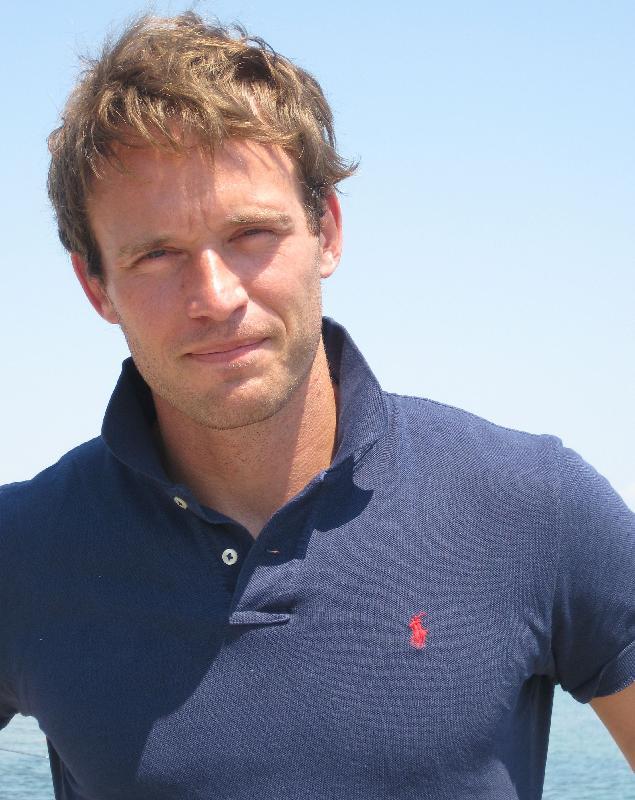
Molly Maleckar is a Research Professor at the Computational Physiology Department of Simula Research Laboratory , Oslo, Norway. Her work bridges computational modeling, cardiac electrophysiology, and biomedical applications, with a focus on arrhythmia mechanisms, fibrosis modeling, and machine learning integration in cardiac risk prediction. Research Interests include: Computational Cardiology Ion Channel Dynamics Machine Learning in Medicine Excitable Tissue Modeling Cardiac Fibrosis Analysis Biomedical Simulation Scientific Contributions span 15+ publications (2018-2024) addressing atrial fibrillation, calcium handling, and AI-driven ECG analysis. Key collaborative projects involve patient-specific ventricular modeling and educational initiatives like the Simula Summer School in Computational Physiology .
Jan Martin Nordbotten is a full-time Professor at the Department of Mathematics, University of Bergen (UiB), with adjunct positions at Princeton University and NORCE. His research focuses on applied mathematics, particularly in porous media, CO2 storage, fluid dynamics, and interdisciplinary applications in hydrology, biomedicine, and ecology. He completed his PhD at UiB in 2004 and became Norway's third youngest professor in 2007. His work emphasizes numerical methods, multiscale modeling, and experimental validation. Affiliations: UiB (full-time), Princeton (adjunct), NORCE (adjunct) Research Group: Center for Sustainable Subsurface Resources Research interests span mathematical modeling of subsurface processes, including flow in fractured media, geomechanics, and phase-field fracture. Notable contributions include analytical and numerical solutions for CO2 leakage, multiphase flow, and development of tools like DarSIA for image processing in porous media. Publications highlight advancements in mixed-dimensional models, finite element methods, and experimental validation of CO2 storage forecasts. His work bridges theoretical mathematics with practical applications in energy and environmental systems.
Professor Inge Hoff is affiliated with the Norwegian University of Science and Technology (NTNU) in the Department of Civil and Environmental Engineering, where he has served since 2009. Prior to this, he held roles as senior researcher and research leader at SINTEF. Research Interests : Materials for road construction, frost protection, laboratory testing, pavement dimensioning, road rehabilitation, state development modeling, ground-penetrating radar surveys, and concrete/natural stone coverings. Students : Mentors active PhD fellows Lisa Hannasvik, Arman Hamidi, Clara Weber, and Shoiab Ahmad. Teaching : Coordinates courses like TBA4204/BYGT1102 Transport Infrastructure , BYGT2204 Road and Railway Construction , and BA8600 Pavement Structure Dimensioning . Recent publications highlight his expertise in granular material behavior, asphalt durability under climate stressors, and advanced structural assessment techniques. Collaborations with international researchers and presentations at major conferences (TRB, International Conference on Bituminous Mixtures) demonstrate his ongoing contributions to road engineering.
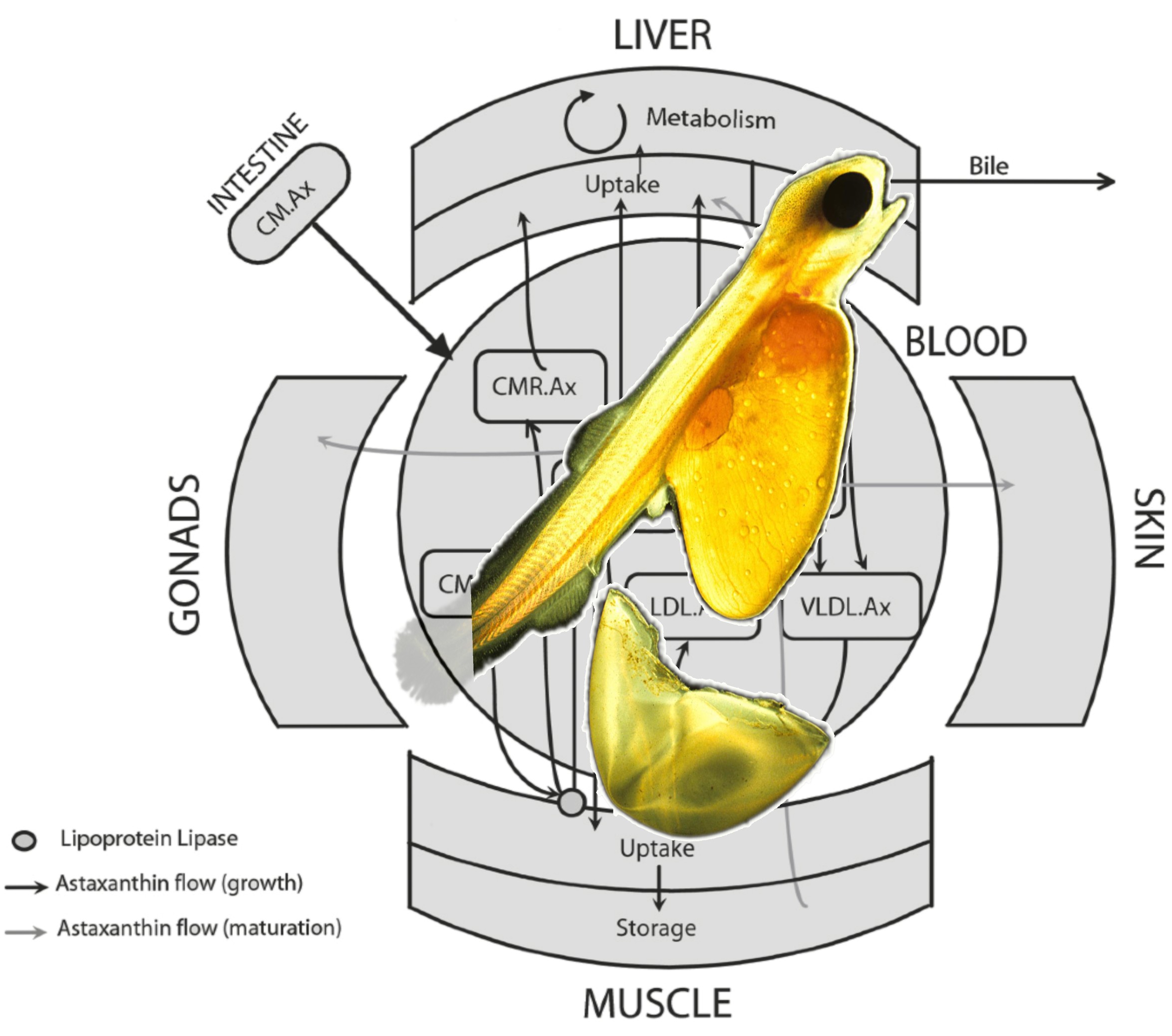
Jon Olav Vik is a Professor at the Norwegian University of Life Sciences (NMBU), affiliated with the Department of Mathematical Sciences and Technology within the Faculty of Science and Technology. He leads the DigiSal project—"Towards the Digital Salmon: From a reactive to a pre-emptive research strategy in aquaculture"—funded under the Research Council of Norway’s Digital Life initiative. He is also a lead modeller in the GenoSysFat project, which aims to enhance omega-3 content in farmed salmon through integrated genomics and systems biology approaches. His research spans systems biology , computational physiology , genotype-phenotype modeling , and ecological dynamics . He works at the intersection of biology, mathematics, and computer programming, developing models to understand how genetics, nutrition, and environment interact in fish and ecological systems. His pedagogical focus includes biostatistics and programming in R, and he teaches courses such as STIN100, STIN300, and STAT100. The 15 most recent publications reflect a consistent focus on systems-level understanding in biology, particularly in salmon aquaculture, metabolic regulation, and genotype-phenotype relationships. These works appear in high-impact journals like Nature , Science , PLOS Computational Biology , and Journal of The Royal Society Interface , demonstrating interdisciplinary reach across computational biology, genomics, ecology, and biostatistics. Key themes include metabolic modeling, microbiome stability, lipidome remodeling, and sensitivity analysis in dynamic models. Jon Olav Vik has contributed to major collaborative efforts including the Infrastructure for Systems Biology Europe (ISBE) , where he helped develop frameworks for "modelling as a service." He has also authored book chapters and technical deliverables on systems biology and modeling practices. He actively supervises students and invites master’s thesis candidates with interests in quantitative biology. While no specific awards are listed, his leadership in national and international research projects underscores his scientific impact. His work supports both fundamental science and sustainable aquaculture innovation.
Alvaro Köhn-Luque is an Associate Professor at the Oslo Center for Biostatistics and Epidemiology, University of Oslo, and Group Leader at the Department of Medical Genetics, Oslo University Hospital. His work bridges mathematical modeling with clinical applications, particularly in cancer research. His academic background includes a PhD in Mathematical and Computational Biology from Complutense University of Madrid (2012), preceded by multiple Master's degrees in Mathematics and Physics from Spanish universities. Dr. Köhn-Luque's research focuses on mathematical oncology , developing computational models to understand cancer dynamics and improve treatment strategies. His work spans multiscale modeling of tumor growth, personalized cancer medicine through computer simulations, and biomarker discovery using machine learning approaches. He has made significant contributions to modeling breast cancer progression and treatment response, particularly in the context of endocrine therapy and CDK4/6 inhibition. His recent publications demonstrate a strong trend toward integrating mechanistic learning approaches that combine mathematical models with machine learning techniques. This hybrid methodology allows for more accurate prediction of treatment outcomes while maintaining biological interpretability. His work frequently involves collaboration with clinical researchers to ensure models are grounded in real patient data and have direct translational potential. Computational modeling of tumor heterogeneity and drug response Development of methods for phenotypic deconvolution in cancer cell populations Integration of multi-omics data for personalized treatment prediction Application of birth-death processes to model tumor evolution Creation of user-friendly computational tools for biomedical researchers Dr. Köhn-Luque has supervised multiple PhD students including Even M Myklebust, Salim Ghannoum, and Xiaoran Lai, and has secured funding for projects including RESCUE, BigInsight, and Integreat. His research demonstrates a consistent trajectory from theoretical mathematical biology toward increasingly clinically relevant applications in personalized cancer medicine.
Pål Stabel Keim is an Associate Professor and Deputy Head of Education at the Department of Electric Energy , Norwegian University of Science and Technology (NTNU) , within the Faculty of Information Technology and Electrical Engineering . His work focuses on high voltage apparatus, electrical machines, and power electronics with a system-oriented perspective. University: NTNU School: Faculty of Information Technology and Electrical Engineering Department: Department of Electric Energy Academic Rank: Associate Professor Keim's research emphasizes insulation design for HVDC, HVAC, and inverter-fed machines, partial discharge analysis, and system-oriented design of electric machines. His work integrates digital tools to enhance electrical system design from generation to consumption. His recent publications explore modular HVDC wind drive trains, multi-agent control systems, aerospace power electronics, and dielectric insulation under combined voltages. These span disciplines including Electrical Engineering , Renewable Energy , and Aerospace Systems . 2015 : Nowitech Innovation award 2016 : Grønn fases energipris Keim has supervised Jaume Martí Cascalló (Master's thesis, 2020) and co-authored extensive research on high-voltage systems. He teaches courses in electrical machines, power systems, and energy infrastructure.
David Landa Marban is a Researcher at NORCE Research AS, affiliated with the Energy and Technology division. His primary focus is on mathematical modeling and simulation of subsurface processes, including applications in CO2 storage (CCS), microbial enhanced oil recovery (MEOR), and microbially induced calcite precipitation (MICP). He has expertise in scientific computing, software development for multi-phase flow and reactive transport, and numerical simulations at pore, core, and field scales. Education: PhD in Applied Mathematics from the University of Bergen (2019), followed by a postdoctoral position at NORCE (2019-2021). Current role as a Research Scientist since 2022. Research interests emphasize computational geosciences, with projects such as MuPSI (multiscale pressure-stress impacts on CO2 storage) and CSSR (sustainable subsurface resources). He develops open-source tools like pyopmspe11 and contributes to frameworks like OPM Flow for reservoir simulation and history matching. Key contributions include modeling pressure interference in CO2 storage, machine-learned near-well models, and data-driven predictions for CO2 EOR. His work bridges lab-scale experiments with field-scale applications, addressing challenges in subsurface energy systems and leakage remediation.
Roger Skjetne is a Professor in Marine Control Engineering at the Norwegian University of Science and Technology (NTNU), affiliated with the Department of Marine Technology under the Faculty of Engineering. His research focuses on autonomous ships, dynamic positioning systems, energy and power management for hybrid-electric vessels, Arctic stationkeeping, and ice management systems. He leads the SFI Autoship research center, which aims to advance autonomous ship technology for safe and sustainable operations in Arctic and maritime environments. Key projects include DigitalSeaIce (multiscale sea ice observation), ENDURE (safety solutions for autonomous ships), and ZEVS (zero-emission passenger vessel systems). His work integrates control systems, robotics, and environmental monitoring to address challenges in marine autonomy and energy efficiency. Skjetne’s research has produced over 150 publications since 2020, with a focus on hybrid control barrier functions, energy optimization, and autonomous navigation. He collaborates with industry partners to translate academic findings into practical maritime solutions.
Professor Ioanna Sandvig is a leading academic at the Norwegian University of Science and Technology (NTNU) , where she serves as group leader of the Integrative Neuroscience Group within the Department of Neuromedicine and Movement Science. She is also President of the Norwegian Neuroscience Society (NNS) and actively participates in international societies including the Federation of European Neuroscience Societies (FENS), Society for Neuroscience (SfN), ALBA Network, and Clinical-Academic Group for Alzheimer's Disease. Research Interests : Her group investigates neuroplasticity mechanisms in CNS damage and repair , focusing on structure-function relationships in biological neural networks under healthy and pathological conditions. They integrate in vivo , in vitro , and computational models to identify adaptive/maladaptive plasticity in neurodegenerative diseases like ALS and Alzheimer's. The research combines connectomics , transcriptional analysis , and geometric network modeling to decode network behaviors. Scientific Contributions : Recent publications explore topics including synaptic transcript dysregulation in ALS, functional complexity of 3D-engineered networks, and platinum microelectrode technologies. Her work demonstrates interdisciplinary approaches bridging neuroscience , bioengineering , and computational systems . Scientific Recognition : President, Norwegian Neuroscience Society (2024) Member, Federation of European Neuroscience Societies Member, Society for Neuroscience Member, ALBA Network Member, Clinical-Academic Group for Alzheimer's Disease Laboratory & Collaborations : The Integrative Neuroscience Group collaborates across NTNU's neuroscience departments and clinical institutions, developing tools for neuroplasticity analysis and contributing to preclinical disease modeling.
Professor Talal Rahman is a faculty member at the Western Norway University of Applied Sciences, where he works in the Department of Computer Science, Electrical Engineering and Mathematical Sciences. His office is located at Bergen KRONSTAD D305, and he can be reached at phone number +47 55 58 72 46. Professor Rahman's research spans several key areas in computational mathematics and scientific computing. His primary research interests include: Scientific Computing Numerical Analysis Numerical Methods for Partial Differential Equations Preconditioning Finite Element with Domain Decomposition Methods Variational Image Processing Artificial Intelligence and Machine Learning applications Professor Rahman's extensive publication record demonstrates a strong focus on domain decomposition methods, particularly Schwarz methods and their applications to multiscale problems. His recent work shows an increasing integration of machine learning techniques with traditional numerical methods, as evidenced by publications on neural network applications for environmental modeling and capelin migration patterns. His research also extends to biomedical applications, including computational analysis of biodegradable materials and bone tissue engineering scaffolds. He has made significant contributions to the development of adaptive preconditioners and parallel algorithms for solving complex numerical problems, with his work on the TV-Stokes model for image processing representing an important contribution to the field of variational image processing. Professor Rahman has supervised numerous research projects and students, though specific student names are not provided in the available information. His research appears to be supported by grants related to computational science and engineering, though specific grant details are not mentioned in the provided text. Based on his research areas, Professor Rahman likely collaborates with various research groups focused on computational science, with potential connections to biomedical engineering labs and environmental research teams studying the Barents Sea ecosystem.
Professor Martin Rypdal is a faculty member at the Faculty of Science and Technology , UiT The Arctic University of Norway, where he has served as Professor and Head of Department of Mathematics and Statistics since 2017. He holds a PhD in mathematics (2008) and a Cand. Scient. in mathematics (2004) from the University of Tromsø. Research Focus: Climate modeling, long-range dependent climate variability, stochastic processes, complex systems, multiscale analysis, and applications in public health (e.g., juvenile idiopathic arthritis, dengue dynamics). Leadership: Leads UiT's initiative on "The Dynamics of the Climate in the Arctic" and co-manages projects funded by the Norwegian Research Council. Outreach: Active science communicator with media appearances on climate and health research, including articles in Science Advances , Nature , and Ecology Letters . His recent publications (2025-2018) span climate science, public health, and statistical physics, emphasizing deep learning applications in paleoclimatology, Arctic sea ice loss, pandemic dynamics, and nonlinear climate responses. Scientific Awards: Recipient of the Faculty Teaching Price (2007, 2015). Supervises 3 PhD students and co-supervises 2, with 16 completed master's students.
Zhiliang Zhang is a Professor of Mechanics and Materials at the Department of Structural Engineering, Norwegian University of Science and Technology (NTNU) . He is renowned for his contributions to fracture mechanics and material science, serving as Editor-in-Chief of Engineering Fracture Mechanics and recipient of the Griffith Medal from the European Structural Integrity Society (ESIS). His research focuses on damage mechanics, hydrogen embrittlement, and anti-icing materials, utilizing experimental and computational approaches. Education: BSc and MSc in Structural Engineering, Tongji University (1985, 1988) PhD in Mechanical Engineering, Lappeenranta University of Technology (1994) Research Interests span damage and fracture mechanics , additive manufacturing (AM) , hydrogen embrittlement , and anti-icing surface development . His work integrates multiscale computational modeling with nanomechanical experiments , addressing challenges in energy, structural integrity, and material design. Publication Trends highlight his expertise in hydrogen embrittlement , gas hydrate adhesion , anti-icing surfaces , and additive manufacturing . His articles in journals like Chemical Reviews and Advanced Materials emphasize predictive modeling , nanoscale characterization , and sustainable material solutions . Scientific Awards include Griffith Medal (2024, ECF24) ESIS Fellow (2014) Norwegian Academy of Technological Sciences membership Academic Service involves external doctoral examinations at institutions like Paris Tech and National University of Singapore, and faculty review roles at Imperial College and University of Michigan. He founded the NTNU Nanomechanical Lab in 2006 and has led 14 externally funded projects totaling over €12 million.
André Brodtkorb is a Professor and Head of the Department of Information Technology at Oslo Metropolitan University. His research spans applied mathematics, numerical analysis, and computational science, focusing on physics simulations and GPU computing. He advocates for open and reproducible research and is actively involved in education and societal engagement through the Academy of Young Researchers (2024-2028). Research Interests: His work integrates applied mathematics and computer science to develop high-performance simulations for environmental phenomena, including ocean currents, volcanic ash dispersion, and coastal flooding. He specializes in GPU-accelerated parallel computing, finite-volume methods, and Python-based scientific programming. Publication Trends: Recent articles highlight advancements in GPU computing efficiency, ocean modeling, and inverse ash transport modeling for volcanic plume forecasting. His research bridges computational methods with real-world environmental challenges. Scientific Awards: Member of the Academy of Young Researchers (2024-2028) Contact Information: Office: Pilestredet 35, 0166 Oslo Phone: +47 456 19 070 (Mobile), +47 672 35 924 (Office) Email: andre.brodtkorb@oslomet.no
Allah Bux is a Research Fellow at the Department of Linguistic, Literary and Aesthetic Studies, University of Bergen. His work focuses on advanced computer vision techniques, medical image analysis, and deep learning applications. He holds expertise in 3D reconstruction, anomaly detection, and surveillance systems. His research interests include developing novel neural network architectures for tasks such as skin cancer diagnosis, head pose estimation, and human action recognition. He also explores spatiotemporal analysis and attention mechanisms in CNN models. Recent trends in his publications emphasize integration of vision transformers, dual attention networks, and transfer learning for solving real-world problems in healthcare, security, and education. No scientific awards or grants are explicitly listed in the provided text. He has no documented advisees. His research involves collaborations in medical imaging, autonomous surveillance systems, and educational data analysis, with a focus on practical applications of AI.
Jon Otto Fossum is a Professor in the Department of Physics at the Norwegian University of Science and Technology (NTNU), Faculty of Natural Sciences. His research focuses on soft and complex condensed matter physics, particularly experimental studies of clay minerals and nanomaterials. Position: Professor Institution: NTNU Department: Physics Research Interests: Fossum investigates the physical properties of clay-based nanomaterials, including CO2 capture, intercalation processes, and self-assembly of colloidal particles. His work spans fundamental physics of nanoscale systems to applied technologies like electromagnetic shielding and drug delivery systems. Publication Trends: His recent articles highlight experiments with synthetic clays, graphene suspensions, and machine learning applications. Topics include CO2 interactions in nanolayered materials, structural coloration, and electromagnetic interference shielding using nanocomposites. Teaching & Supervision: He has advised multiple doctoral dissertations and master's theses, including projects on Pickering emulsions, electric field-induced structuring, and clay-stabilized emulsions. Laboratory: Leads the Soft and Complex Matter Lab , focusing on nanomaterials and their environmental/technological applications.