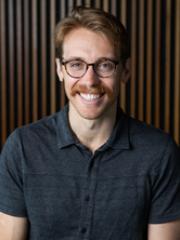
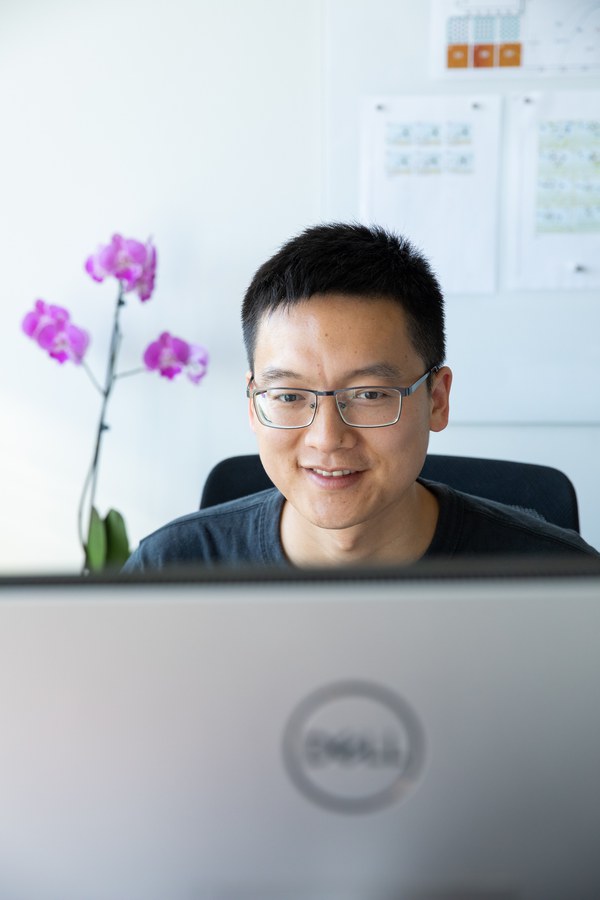
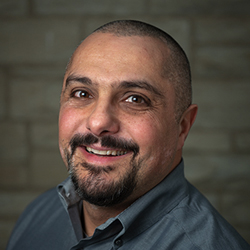
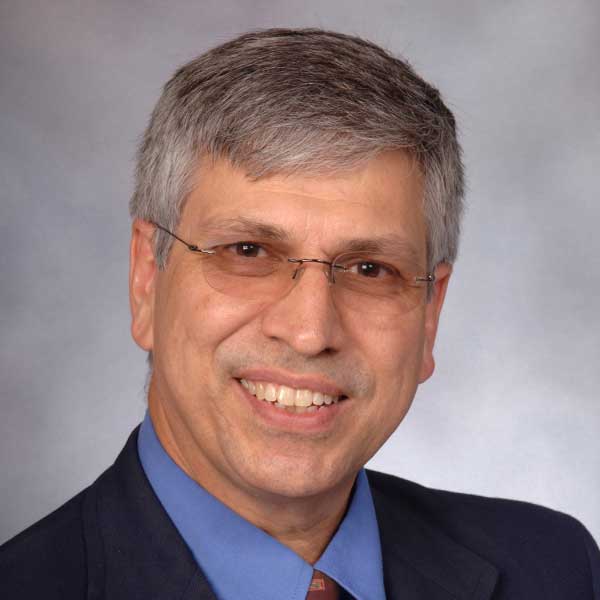
Kimberly See is a Professor of Chemistry at the California Institute of Technology , where she leads the See Group. Her academic journey includes a B.S. in Chemistry from the Colorado School of Mines (2009), a Ph.D. in Materials Chemistry from the University of California, Santa Barbara (2014), and a Visiting Associate position at Caltech (2017). Current Position: Professor of Chemistry (2025–present) Prior Position: Assistant Professor (2017–2025) The See Group specializes in solid-state chemistry , electrochemistry , and energy storage , with a focus on: Structure-property relationships in battery materials Multivalent and multielectron battery chemistry Advanced characterization techniques (e.g., synchrotron, in situ Raman) Redox processes in alkali-rich sulfides and Mg-based systems Recent publications address critical challenges in Na-ion and Mg-ion batteries, superionic conductors, and Li-rich cathodes. The group emphasizes interdisciplinary research combining materials chemistry, analytical chemistry, and electrochemical device design. Collaborative Networks: Co-authors include researchers from Caltech, UCSB, and international institutions Active in developing electrolytes and characterization methods for next-gen batteries
Anima Anandkumar is the Bren Professor of Computing and Mathematical Sciences at the California Institute of Technology (Caltech). She holds a B.Tech from the Indian Institute of Technology Madras (2004) and a Ph.D. from Cornell University (2009). Her research focuses on AI algorithms , Neural Operators , and Tensor Methods for scientific simulations, particularly in climate modeling, flight control, and biomedical applications. Her recent work includes accelerating scientific simulations with Fourier Neural Operators Quantum Chemistry Modeling Climate Forecasting She has received prestigious honors including the IEEE Fellowship Alfred P. Sloan Fellowship NSF Career Award Industry Fellowships from Microsoft, Google, Facebook, and Adobe and is part of the World Economic Forum's Expert Network. Her lab develops AI methods for 45,000x faster weather forecasting Drone landing in extreme winds Drug discovery and protein modeling Quantum chemistry simulations Surgeon performance assessment Robust control systems
Dirk Gillespie serves as The John H. and Margaret V. Krehbiel Professor of Cardiology in the Department of Physiology & Biophysics at Rush Medical College, Rush University. His distinguished career bridges biophysics, cardiology, and theoretical chemistry, with a primary focus on calcium signaling mechanisms in cardiac muscle and nanofluidic systems. Dr. Gillespie's educational background includes: PhD in Physiology & Biophysics from Rush University MS from Northwestern University BA from Johns Hopkins University His research expertise centers on cardiac excitation/contraction coupling , calcium-induced calcium release , calcium channel selectivity , nanofluidics , and classical density functional theory of electrolytes . Through sophisticated mathematical modeling and computational approaches, Dr. Gillespie has made significant contributions to understanding ion channel function, particularly ryanodine receptors that mediate calcium release in cardiac cells. His work provides critical insights into the molecular mechanisms underlying cardiac arrhythmias and potential therapeutic approaches. Analysis of Dr. Gillespie's publication record reveals a consistent research trajectory from fundamental biophysical principles of ion channels toward increasingly sophisticated computational models that integrate multiple physical phenomena. His recent work demonstrates a strategic expansion from cardiac calcium signaling into nanofluidic systems and theoretical electrochemistry, while maintaining the core focus on ion transport phenomena. The publications show a strong emphasis on applying density functional theory to both biological systems and synthetic nanopores, highlighting the interdisciplinary nature of his research program. Dr. Gillespie directs an active research laboratory at Rush University focused on the biophysics of calcium signaling. His laboratory employs a combination of computational modeling, theoretical approaches, and collaborative experimental work to advance understanding of cardiac electrophysiology. The research program has been consistently supported by multiple grants from the National Institutes of Health and other scientific funding agencies, reflecting the significance and impact of his work in the field.
Maria Almarcha is a Postdoctoral Research Fellow at the School of Human Movement and Nutrition Sciences within the Faculty of Health, Medicine and Behavioural Sciences at the University of Queensland. Her research focuses on the intersection of exercise science, human movement, and mental health, with a particular emphasis on personalized exercise prescription and embodied education. Her research interests span exercise science, sports medicine, and human movement, with specific focus on exercise prescription for health, creative dance and its impact on creative potential, transdisciplinary embodied education in STEM, proprioception assessment, and the network physiology of exercise. She investigates how exercise interventions can enhance mental health, interoceptive awareness, and overall well-being, particularly in the context of modern challenges like teleworking. Dr. Almarcha has published 7 journal articles from 2021 to 2024, demonstrating a consistent research trajectory in personalized exercise and embodied approaches. Her work often adopts transdisciplinary methods, integrating perspectives from physiology, psychology, and education to address complex health and movement issues. She is available for supervision of research students, indicating her active role in mentoring the next generation of researchers in her field.
Dr. Travis Mitchell is a Lecturer at the School of Mechanical and Mining Engineering , The University of Queensland , and an affiliate of the Centre for Multiscale Energy Systems . He holds a PhD in Multiphase Computational Fluid Dynamics and dual degrees in Mechanical Engineering (BE Hons) and Mathematics (BSc). Education: PhD in Multiphase Computational Fluid Dynamics, The University of Queensland BE (Hons) in Mechanical Engineering, The University of Queensland BSc in Mathematics, The University of Queensland Research Interests focus on numerical modeling of multiphase fluid dynamics in porous media , with applications spanning CO2 electrolysis , hydrogen production via methane pyrolysis , biomedical fluid-structure interaction , and geomechanical fracture analysis . His methodological expertise includes Lattice Boltzmann techniques and high-performance computing . Recent Work Trends encompass multiphase transport in fractured media , gas diffusion electrode optimization , fiber-based air filter design , and thermocapillary flow modeling , reflecting his interdisciplinary impact in energy, health, and resource engineering. Scientific Recognition includes the ICMMES-CSRC Award for multiphase lattice Boltzmann research and an EAIT Citation for Excellence in Student Learning (2023) . Teaching Portfolio includes coordination of MECH2700: Computational Engineering and Data Analysis and lectures in MECH3780: Computational Mechanics and MECH6480: Computational Fluid Dynamics .
Prof. Dr. Barbara Verfürth is a Professor at the Institute for Numerical Simulation (INS) at the University of Bonn since October 2022. Previously, she served as a Junior Research Group Leader and Tenure-Track Professor at Karlsruhe Institute of Technology (KIT) from 2020-2022, was a PostDoc at the University of Augsburg (2018-2020), and completed her PhD at the University of Münster (2015-2018). Her academic journey demonstrates a strong focus on numerical analysis and computational mathematics. Prof. Verfürth's research interests span several interconnected areas in computational mathematics: Numerical methods for partial differential equations Multiscale (finite element) methods (Numerical) homogenization (Time-harmonic) wave propagation: Helmholtz and Maxwell equations Nonlinear PDEs (nonlinear diffusion, nonlinear Helmholtz) Her recent publications demonstrate a consistent focus on multiscale methods for wave propagation problems, particularly in high-contrast and time-varying media. The research shows strong connections between theoretical numerical analysis and practical applications in metamaterials and wave physics. Her work bridges pure mathematical analysis with computational implementation, often developing novel algorithms for challenging multiscale problems. Prof. Verfürth leads several significant research projects: Homogenization of time-varying metamaterials (Project B4, DFG CRC 1173) Numerical methods for nonlinear, random and dynamical multiscale problems (Project 496556642, DFG Emmy Noether) Previously completed TEEMLEAP - a testbed for exploring machine learning in atmospheric prediction (KIT Future Fields) She is actively involved in academic mentoring, currently advertising for a PhD position focusing on numerical multiscale methods for linear elasticity with high-contrast coefficients. Her teaching includes courses such as "Scientific Computing I" and "Introduction to Numerical Mathematics" at the University of Bonn.
Alberto Tibaldi is an Associate Professor at the Department of Electronics and Telecommunications (DET) of Politecnico di Torino. He belongs to the College of Electronic, Telecommunications and Physics Engineering and the Microwave and Optoelectronics Group (MOG) at DET. His work focuses on physics-based modeling of semiconductor devices, with participation in international projects like EU MIRACLE and the Collaborative Research Alliance (CRA) for electronic materials modeling. Key Research Areas: Efficiency/reliability of LEDs and UV-LEDs Far-infrared image sensors Multiphysics CAD of VCSELs Si and III-V photonic integrated circuits His publications span optoelectronic device modeling, including NEGF-drift-diffusion approaches and plasmonic-organic hybrid modulators. Awards include the Premio 'Optime' (2012) and NEMO2014 Honorable Mention (2014). Scientific Affiliations: National Research Council (CNR-IEIIT) (2019-) Multiscale Modeling of Electronic Materials (MSME) (2016-) EU MIRACLE Project (2021-)
Derek Groen serves as Reader in Computer Science at Brunel University within the College of Engineering, Design and Physical Sciences. He holds additional appointments as an Emeritus Fellow of the EPSRC-funded 2020 Science Network, Fellow of the Software Sustainability Institute, and Visiting Lecturer at University College London's Centre for Computational Science. His academic background includes an MSc in Grid Computing from the University of Amsterdam (2006) and a PhD in Computational Astrophysics from the University of Amsterdam and Leiden University (2010). Prior to joining Brunel in September 2015 as a Lecturer, he held postdoctoral positions on EU projects MAPPER and CRESTA focused on distributed multiscale computing and exascale high-performance computing. Groen's research centers on multiscale modeling and high-performance computing with applications spanning forced migration simulation, cerebral bloodflow modeling, and materials science. His work addresses critical challenges in performance optimization, distributed computing frameworks, and verification/validation methodologies for complex computational systems. Recent projects demonstrate strong interdisciplinary connections between computational science, social dynamics, and public health crises. Analysis of his 15 most recent publications reveals a clear trajectory toward increasingly sophisticated migration modeling tools (Flee 3, P-Flee), enhanced verification frameworks (VECMAtk, FabSim3), and pandemic response applications. His work consistently bridges computational rigor with real-world humanitarian challenges, particularly in forced displacement scenarios and public health emergencies. EPSRC eCSE funding for domain decomposition research Fellow of Software Sustainability Institute Co-author of first feature article in Advanced Materials (2014) with BBC/Daily Telegraph coverage Emeritus Fellow of 2020 Science Network Groen has secured significant research funding from EPSRC, European Commission, and United Nations for projects including SEAVEA (2021-2024), ITFLOWS (2020-2023), and STAMINA (2020-2022). His supervision history includes summer projects resulting in peer-reviewed publications, with current PhD opportunities focused on real-time environmental monitoring, migration modeling, and urban planning simulations. He actively leads Science Hackathons to foster interdisciplinary collaboration and maintains strong ties with EU research consortia through projects like ComPat and HIDALGO. His laboratory work centers on the FabSim automation toolkit and VECMAtk verification framework, supporting a research team that develops scalable solutions for global challenges. Current efforts focus on integrating machine learning with agent-based simulations to improve migration forecasting and pandemic response capabilities.
Dr. Jun Huang is an Assistant Professor at Forschungszentrum Jülich, leading the Helmholtz Young Investigator Group focused on the 'Theory of Electrocatalytic Interfaces.' He is affiliated with the Institute of Energy Technologies (IET), specifically in the department of Theory and Computer-Based Modelling of Materials in Energy Technology. His research centers on theoretical electrocatalysis and electrochemical interfaces, with expertise in: Electrical double layer phenomena and capacitance behavior Density-potential functional theory for metal-solution interfaces Multiscale modeling of electrochemical reaction environments Electrocatalyst design through computational methods Ion transport and interfacial structuring in energy systems His recent publications demonstrate a strong focus on developing fundamental theoretical frameworks for understanding electrocatalytic interfaces, with recurring themes in double-layer effects, reaction kinetics, and computational method development. The work bridges theoretical electrochemistry with applications in energy conversion and storage. Major recognitions include: Helmholtz Young Investigator Group Grant European Research Council Starting Grant Dr. Huang leads a computational research group developing advanced theoretical models to decipher electrocatalytic processes. His team focuses on creating predictive frameworks for interfacial reactions relevant to energy technologies.
Dario Rodighiero is an Assistant Professor of Science and Technology Studies at the University of Groningen's Campus Fryslân, specializing in knowledge design, critical data, and digital humanities. He coordinates the Data Wise minor and teaches in the Data Science and Society program. He holds affiliations as a principal at metaLAB (at) Harvard and a faculty associate at the Berkman Klein Center for Internet & Society. His research bridges design, data, and humanities to map cultural/scientific dynamics through projects like Super-Vision (EPFL history via 8,000 theses) and the Weather Map (controversy analysis). He authored Mapping Affinities: Democratizing Data Visualization (2021) and holds a PhD from EPFL. He has lectured globally (CERN, Ars Electronica) and exhibited at MAXXI and Harvard Art Museums. Education: PhD in Sciences (EPFL), Doctoral Program in Architecture and Sciences of the City. Research Interests : Focuses on visualizing complex systems, interdisciplinary collaboration, digital archives, and controversy mapping. Develops tools for IIIF interfaces, cultural heritage analysis, and pandemic visualization (COVIC project). Grants & Labs : Works with metaLAB on projects like Surprise Machines (Harvard Art Museums) and Curatorial A(i)gents. Affiliated with Edgelands Institute (Fellow) and Freie Universität Berlin (Senior Fellow). Key Projects : Orchestrating Peirce’s PAP Manuscript, 3D Cartography of COVID-19, and the Analogous City digital mapping.
Gianluca Cusatis is a Professor of Civil and Environmental Engineering at Northwestern University, with a courtesy appointment in Mechanical Engineering. He leads research in multiscale mechanics of infrastructure materials, focusing on constitutive modeling of concrete, cementitious composites, and wood. His work bridges computational modeling, experimental validation, and material innovation. He holds a Ph.D. and Laurea from Politecnico di Milano, Italy. Research interests include quasi-brittle material behavior, 3D concrete printing, infrastructure durability (e.g., alkali-silica reaction), and wood mechanics. He directs the Multiscale Mechanics of Infrastructure Materials (M2IM) group, collaborating with institutions like the University of Maine. Key achievements include pioneering the Lattice Discrete Particle Model (LDPM) and advancing understanding of cement hydration expansion via the Shard Test. Awarded ASCE/EMI Fellow, Cusatis serves on professional boards (ASCE Engineering Mechanics Institute, ACI Committees). His lab integrates advanced facilities for structural testing, 3D printing, and environmental control. Major projects include sustainable timber structure design, Martian concrete for extraterrestrial habitats, and mesoscale modeling of composite materials.
Deborah Levin is a Professor in the Department of Aerospace Engineering at the University of Illinois at Urbana-Champaign (UIUC), holding this position since August 2014. Previously, she served as a Professor at The Pennsylvania State University (2007–2014) and an Associate Professor there (2000–2007). Earlier roles include Research Professor and Lecturer at George Washington University (1998–2000) and Research Staff Member at the Institute for Defense Analyses (1979–1998). Her education includes a PhD in Chemistry from Caltech (1979) and a BS in Chemistry from SUNY Stony Brook (1974). Her research focuses on hypersonics, computational fluid dynamics, combustion, and molecular dynamics. Key areas include radiation modeling in hypersonic flows, direct simulation Monte Carlo (DSMC) methods, and plasma physics. She explores phenomena like shock-layer radiation, nonequilibrium flows, and ion thruster plume dynamics. Her work bridges microscale processes (e.g., molecular dynamics) with macroscale fluid dynamics, addressing challenges in aerospace propulsion and thermal protection systems. Recent studies involve kinetic modeling of ion beam neutralization, particulate behavior in high-speed flows, and carbon sputtering in electric propulsion testing. Her publications span journals like Physics of Fluids , Journal of Propulsion and Power , and AIAA Journal , with a focus on advancing predictive capabilities for aerodynamic heating and plasma-material interactions. Levin’s research has been presented at conferences such as the International Symposium on Rarefied Gas Dynamics and the International Electric Propulsion Conference. Her contributions include developing hybrid models for multiscale flows and advancing computational tools for rarefied gas dynamics.
Dr. Matthew Smith is a Master Lecturer and Undergraduate Advisor in the Department of Geological Sciences at the University of Florida, housed within the College of Liberal Arts and Sciences. His primary roles involve teaching and advising undergraduate students. He holds a Ph.D. in Geology/Geochemistry from the University of Florida (1999). His research focuses on geoscience education and igneous petrology, particularly studying crustal accretion at mid-ocean ridges and volcanic systems, utilizing submersibles like Alvin and the Sentry autonomous underwater vehicle in collaborative projects. Education: Ph.D. Geology/Geochemistry, University of Florida, 1999 Research Interests: Construction of oceanic crust at mid-ocean ridges Volcanic systems analysis via geophysical surveys and submersible exploration Geoscience education methodologies Articles: His recent work (2023–2024) spans cosmological studies, galaxy cluster analysis, supernova observations, and Gaia mission data, reflecting a shift toward astrophysical collaborations while maintaining geological expertise. Awards: None explicitly listed in provided texts. Advising/Grants: No formal grant details or advised students listed, though his role involves undergraduate academic advising. Labs/Teams: Active in multidisciplinary groups using advanced observational tools like the South Pole Telescope and Dark Energy Survey instruments.
Prof. Jens Markus Melenk is a Professor of Computational Mathematics at Vienna University of Technology (TU Wien). He holds a PhD in Applied Mathematics from the University of Maryland and has held academic positions at institutions such as ETH Zurich, University of Reading, and several German universities. His research focuses on numerical methods for partial differential equations (PDEs), including finite element methods (FEM), hp-FEM, boundary element methods, and adaptive algorithms. He teaches courses on numerical analysis, PDEs, and computational mathematics, emphasizing topics like elliptic regularity theory, FEM convergence, and a posteriori error estimation. Education: PhD in Applied Mathematics, University of Maryland (1995) Habilitation, ETH Zurich (2000) Master's in Applied Mathematics, University of Maryland (1992) Research Interests: Development and analysis of numerical methods for PDEs hp-FEM and high-frequency Helmholtz problems Adaptive finite element methods and error estimation Homogenization and multiscale problems Computational aspects of continuum mechanics Awards/Grants: Member of SFB 'Taming Complexity in Partial Differential Systems' FWF individual project on H-matrix analysis Completed projects include WWTF 'Light Coupling to Light' and DFG SPP 'Multiscale Problems' Labs/Teams: Involved in research groups at TU Wien's Institute of Analysis and Scientific Computing, focusing on computational mathematics and numerical analysis.
Kenneth R. Cox is a Professor in the Practice of Chemical and Biomolecular Engineering at Rice University's George R. Brown School of Engineering. He holds a PhD from the University of Illinois (1979), an MS from the same institution (1977), and a BSChE from The Ohio State University (1974). Prior to academia, he spent 17 years as a research engineer at Shell Development Company, followed by four years as an associate professor at The Ohio State University. His research focuses on colloidal dynamics, phase equilibria, molecular simulations, and process design, with applications in energy systems and environmental engineering. Dr. Cox specializes in theoretical models such as the Statistical Associating Fluid Theory (SAFT) and classical density functional theory to study complex fluid behavior, including colloidal stability, interfacial phenomena, and carbon capture processes. His work bridges fundamental science and industrial applications, particularly in oil/gas industries and sustainable technologies. Professionally, he has served on editorial boards (e.g., Fluid Phase Equilibria ) and committees (AIChE, CoMSEF), and is a registered professional engineer in Texas. His teaching experience includes courses on transport phenomena, technical communication, and research planning. Recent publications highlight advancements in predicting thermodynamic properties of aqueous electrolytes, modeling CO₂ capture systems, and analyzing phase behavior in multi-component mixtures. His career reflects a strong commitment to both academic research and industrial collaboration.