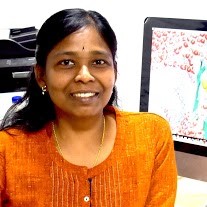
Chongxuan LiuView profile
Academic
Chongxuan Liu is Chair Professor at the Southern University of Science and Technology (SUSTech) , affiliated with the School of Environmental Science and Engineering and the Department of Environmental Science and Engineering. Previously, he served as Chief Scientist at the U.S. Department of Energy's Pacific Northwest National Laboratory (PNNL) from 2006–2016 and as a part-time scientist there since 2015. His research integrates theoretical, experimental, and simulation approaches to study pollutant kinetics, multi-scale reactive transport, microbial community evolution, and nanomaterials for environmental remediation. Ph.D. in Environmental Engineering, Johns Hopkins University M.S. in Low-Temperature Aqueous Geochemistry, University of Alabama M.E. in Hydrogeochemistry and B.S. in Geology, Zhejiang University Liu’s research focuses on environmental geochemistry and biogeochemistry , particularly the kinetics of contaminant transformation , multi-scale reactive transport theories , and microbial/nanomaterial-based remediation technologies . His work addresses uranium, arsenic, and nitrate contamination in groundwater-sediment systems, employing cybernetic modeling, pore-scale simulations, and watershed-scale hydro-biogeochemical studies. His recent publications (2014–2016) emphasize uranium adsorption mechanisms , nanoparticle transport dynamics , and coupled biogeochemical-hydrological processes . Articles span journals like Environmental Science & Technology , Geochimica et Cosmochimica Acta , and Water Resources Research , reflecting expertise in contaminant transport, microbial remediation, and nanotechnology. Scientific accolades include Fellow of the Geological Society of America (2011) U.S. Department of Energy Outstanding Contribution Award (2004) He has authored over 170 peer-reviewed articles, with an H-index of 51 (8,000+ citations), and served as Associate Editor-in-Chief for ACS Earth and Space Chemistry . His lab at SUSTech trains undergraduate, master’s, and Ph.D. students, with recent publications by Li Qianqian (master’s student) and collaborations across environmental molecular sciences, computational modeling, and nanomaterial synthesis.