Ahmed HassanView profile
Associate Professor
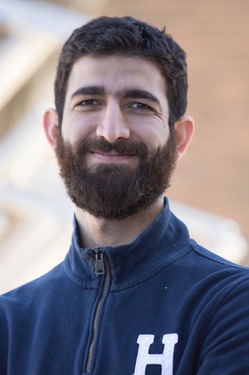
Ahmed Hassan is an Associate Professor in the Department of Electrical Engineering at the University of Missouri-Kansas City (UMKC), School of Science and Engineering. He is the founder and director of the Multidisciplinary Multiscale Electromagnetics Lab (MMEL), where he conducts cutting-edge research in applied electromagnetics with applications in nanotechnology, medicine, and defense. Education: Ph.D. in Electrical Engineering, University of Arkansas, 2010 M.S. in Electronics and Communication Engineering, Cairo University, 2006 B.S. in Electronics and Communication Engineering, Cairo University, 2004 Research Interests: His expertise spans applied electromagnetics, nanoelectromagnetics, bioelectromagnetics, computational electromagnetics, electromagnetic compatibility (EMC), and microwave/terahertz imaging. He employs both computational and experimental methods to solve real-world challenges in materials, biomedical sensing, and defense systems. His work often integrates machine learning and high-performance computing for electromagnetic modeling. Publication Trends: His recent research focuses on carbon nanotubes, plasmonic sensors, UAV electromagnetic compatibility, and biomedical applications of microwaves. He frequently uses characteristic mode analysis, computational modeling, and experimental validation to advance understanding in multiscale electromagnetics. Scientific Awards: University of Arkansas College of Engineering Early Career Alumni Award (2021) IEEE Senior Member (2019) UMKC Chancellor’s Early Career Award for Excellence in Teaching (2018) Elected Full-Member, U.S. National Committee for URSI (2018) CS&EE Excellence in Teaching Award (2017) Sigma Xi Outstanding Poster Award, NIST (2014) Doctoral Academy Fellowship, University of Arkansas (2007–2010) Cairo University Faculty Prize (1999–2004) Advising and Grants: Dr. Hassan has advised numerous PhD and MS students, many of whom have received research grants and awards. His lab is supported by major funding from DARPA, NSF, ONR, NIST, and industry partners like Zoloz. Projects include counter-drone technologies, biometric sensing, and nanoscale electromagnetic modeling. He actively recruits PhD students with strong computational or experimental backgrounds. Labs and Teams: The MMEL Lab is equipped with advanced hardware including vector network analyzers, SEM, and high-performance computing workstations, and software tools like COMSOL, FEKO, CST, and HFSS. The lab fosters interdisciplinary collaboration across engineering, physics, and medicine.