Anaïs Couasnon is a PhD researcher at the Department of Water and Climate Risk, Institute for Environmental Studies (IVM), Vrije Universiteit Amsterdam, part of the Faculty of Science. Her research focuses on compound flood risk modeling, probabilistic methods, and global hazard assessment under climate change. She is supervised by Dr. Philip Ward and Dr. Hessel Winsemius as part of a VIDI project. Education: MSc in Hydraulic Engineering (TU Delft, 2017); BSc in Civil Engineering (McGill University, 2010). Research interests include probabilistic modeling, multivariate dependence analysis, flood risk management, and climate impacts on coastal-riverine interactions. She contributes to global datasets like COAST-RP and socio-hydrological benchmarking. Key activities include: Developing frameworks for compound flood risk assessment Modeling extreme sea-level events and storm surges Collaborating on global hazard frameworks and disaster risk reduction strategies Contributions to datasets include: COAST-RP dataset Panta Rhei socio-hydrological benchmark dataset
Claes Lundström is an Adjunct Professor at Linköping University's Department of Science and Technology (ITN), affiliated with the Media and Information Technology (MIT) school. His primary research focuses on medical imaging, integrating machine learning, visualization, and human-computer interaction in clinical settings. He leads the technical side of digital pathology research at the Center for Medical Image Science and Visualization (CMIV), directing national-scale grants and serving as Arena Director for the Analytic Imaging Diagnostics Arena (AIDA). Since 2010, he has held dual roles as Research Director at Sectra AB and academic researcher, driving innovations that translate into commercial healthcare solutions. Lundström's work spans AI-driven diagnostics, uncertainty visualization, and precision orthopedics, with contributions recognized through leadership in major projects like the €70M BIGPICTURE initiative. His academic credentials include a PhD (2007) and Docent degree (2014), alongside extensive industry collaboration. Education: PhD in 2007 and Docent degree in 2014 from Linköping University. PhD: 2007 Docent: 2014 Research interests emphasize AI integration in diagnostics, particularly digital pathology and medical imaging workflows. His work addresses challenges like domain adaptation in AI models, uncertainty quantification in segmentation tasks, and interactive visualization tools for clinicians. Recent projects include the VAI-B platform for AI validation in breast imaging and the BigPICTURE collaboration for global pathology data sharing. Key grants include leadership roles in national-scale projects, such as the AIDA arena and SCAPIS study-based AI lab. His contributions to AI ethics and clinical adoption include studies on human-AI collaboration and quality assurance frameworks. Lundström also oversees labs like CMIV and AIDA, fostering cross-disciplinary research in medical imaging and AI.
Mark Goldman is a Professor in the Department of Neurobiology, Physiology and Behavior at the University of California, Davis. His research focuses on computational neuroscience, neuroengineering, and the study of neural circuits underlying memory, learning, and sensorimotor control. He is affiliated with the Center for Neuroscience and the Ophthalmology and Vision Science program. His work integrates mathematical modeling with experimental data to understand neural mechanisms in systems such as the cerebellum, oculomotor systems, and reinforcement learning circuits. Key research themes include synaptic plasticity rules, dynamics of neural circuits during memory consolidation, and the interplay between circuit architecture and adaptive behavior. Recent studies explore closed-loop systems, oscillatory mechanisms in short-term memory, and context-dependent neural control. His computational frameworks bridge theoretical neuroscience with experimental observations in both vertebrate and microbial systems. Goldman has contributed to education through innovative course-based research programs combining microbial biology with mathematical modeling. His publications reflect a deep engagement with interdisciplinary methods, including systems theory, machine learning, and biophysical modeling.
Antoine Sanner is a Researcher affiliated with the Institute of Construction Materials (Institute of Building Materials) at ETH Zurich, part of the College of Architecture, Civil and Environmental Engineering. His work focuses on computational mechanics of building materials, surface topography analysis, and adhesion science. He co-developed the dtool and dserver systems to enhance FAIR data practices in research. Research interests include the structural behavior of cement-based materials, mechanisms of material adhesion under varying surface conditions, and multiscale analysis of surface roughness effects. He has also contributed to engineering tools for characterizing surface topography across scales, emphasizing the creation and use of 'digital surface twins' for material studies. His publications consistently explore topics at the intersection of materials science and mechanical engineering, with recent work advancing understanding of surface adhesion dynamics and cement curing processes. No scientific awards are explicitly mentioned in the provided texts. As part of the Professorship for Computational Mechanics of Building Materials, Antoine contributes to research infrastructure and computational methods development. He has no listed advisees or grants, and his role appears to be full-time with no indication of part-time status. He collaborates on projects involving advanced materials characterization, particularly in polycrystalline diamond coatings and bearing component analysis, leveraging both experimental and computational methodologies.
Brian Sellar is a Reader at the University of Edinburgh's School of Engineering, focusing on tidal energy, hydrodynamics, and turbine performance. He holds a PhD and accepts PhD students. His research includes validating tidal turbine models, multi-scale coastal ocean modeling, and turbulence analysis for renewable energy sites. He received the MDPI Energies Editor’s Choice Award in 2021. His work contributes to optimizing tidal energy systems and advancing ocean engineering methodologies.
Prof. Joseph Robson holds the RAEng-DSTL Chair in Alloys for Extreme Environments and is a Professor of Physical Metallurgy at the University of Manchester. His research focuses on microstructural evolution in industrial alloys, particularly aluminum, magnesium, and zirconium, using advanced modeling techniques like Calphad-based thermodynamic and kinetic models. He leads the Light Alloy Processing group and collaborates with institutions like the Henry Royce Institute. Key projects include optimizing microstructures for aerospace, automotive, and nuclear applications through processes like friction stir welding and thermomechanical treatment. Education: BSc in Natural Sciences (Cambridge, 1993), PhD in Metallurgy (Cambridge, 1996). Professional memberships include the Institute of Materials, Minerals and Mining (Fellow, Light Metals Division board member). Research interests span dynamic precipitation behavior, irradiation effects on zirconium alloys, and magnesium alloy strengthening. He has pioneered studies on discontinuous precipitation and its impact on material properties. Awards include the Hume Rothery Award (2015), Grunfeld Medal (2011), and Champion H. Matthewson Award (2017). Advising and grants: Leads major projects like LightForm (EPSRC) and NEWAM (innovative manufacturing). His work addresses challenges in alloy design for extreme environments, with a focus on sustainable materials and advanced processing techniques. Labs/Teams: Active in the Materials Performance Centre and collaborates with industry partners such as Magnesium Elektron and Westinghouse on nuclear materials research.
Professor Ann Muggeridge holds the Proconsul & Chair in Subsurface Physics at Imperial College London's Department of Earth Science & Engineering (Faculty of Engineering). Her research focuses on subsurface fluid flow dynamics, particularly CO2 storage security and reservoir physics. She has held prestigious roles including Chair of the Norwegian IOR Centre's Scientific Advisory Committee (2016-2021) and Technical Committee member for SPE Reservoir Simulation Conferences. Education: D.Phil. in Atmospheric Physics from University of Oxford (1983-1986), B.Sc. (Hons) in Physics from Imperial College London (1980-1983). Professional milestones include BP Technology Fellow (2006-2008) and keynote addresses at major geoscience conferences. Research interests span CO2 geological storage, reservoir heterogeneity effects, and enhanced oil recovery (EOR). Key contributions include dynamic risk mapping for CO2 sites and pore-scale observations of low salinity flooding. Her work integrates computational modeling with field-scale studies to address energy transition challenges. Awards: EAGE IOR Symposium Chair (2013-2019), SPE Technical Committee Member, BP Technology Fellow Labs & Teams: NORMS (Novel Reservoir Modelling & Simulation), Energy Futures Lab Affiliate Grants & Advising: Leads Imperial's Subsurface Physics research group; no listed advisees but mentors through collaborative projects Active in academia as Imperial's Faculty of Engineering Ambassador for Women and Departmental Athena SWAN coordinator, advancing gender equity in STEM.
Roles and Affiliations: David Strong is a Professor of Mathematics at Pepperdine University, affiliated with the Natural Science Division within Seaver College. He holds a PhD in Applied Mathematics from UCLA (1997). Education: - PhD in Applied Mathematics, UCLA, 1997 - MS in Applied Mathematics, UCLA, 1994 - BS in Mathematics, Brigham Young University, 1992 (Summa Cum Laude). Research Interests: Focuses on mathematical software development, image processing, numerical linear algebra, and undergraduate research. His work bridges theoretical mathematics with practical applications, including contributions to computational methods in imaging and iterative solvers for linear systems. Teaching: Teaches courses such as Linear Algebra, Numerical Analysis, and Differential Equations. Develops innovative educational tools like online tutorials for numerical methods. Publications: Active in publishing research on topics like total variation regularization, fixed-point algorithms, and computational mathematics. His work emphasizes interdisciplinary applications of mathematics in science and engineering.
Virginie Ehrlacher Galland is a Professor at CERMICS (Centre d'Enseignement et de Recherche en Mathématiques et Calcul Scientifique) within École des Ponts ParisTech. Her expertise lies in applied mathematics, numerical analysis, and computational physics, with a focus on multiscale problems, quantum chemistry, and uncertainty quantification. She holds a PhD from CERMICS (2012) and a Habilitation (2020) from Université Paris-Dauphine. Her research interests include cross-diffusion systems, reduced basis methods, and optimal transport applications. Key contributions involve numerical methods for electronic structure calculations, homogenization techniques, and adaptive algorithms. She leads the ERC Starting Grant HighLEAP (2023-2028) and contributes to major projects like the ERC Synergy project EMC². Awards: Irène Joliot-Curie Prize (2023), Chevalier de l’Ordre National du Mérite (2025). Grants/Projects: ERC Starting Grant HighLEAP (PI), ERC Synergy EMC² (Member), ANR JCJC COMODO (PI). Her work bridges theoretical analysis and computational methods, addressing challenges in materials science, fluid dynamics, and machine learning applications.
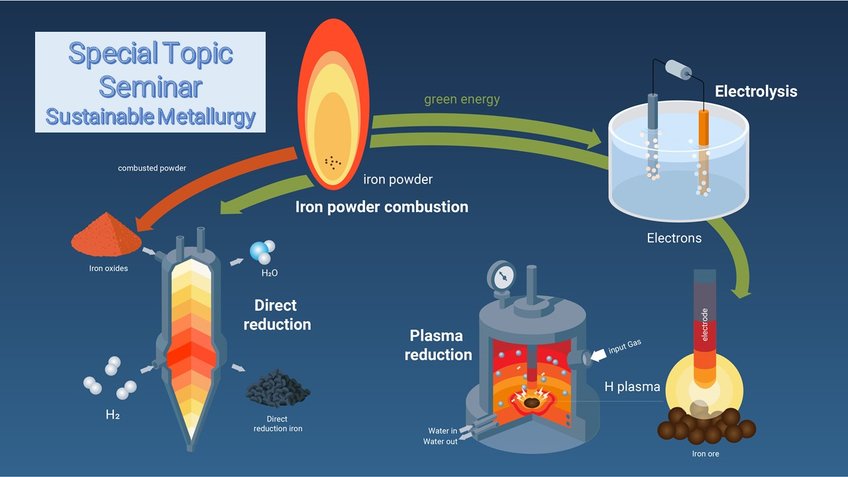
Prof. Wangzhong Mu is a Senior Lecturer (Docent) in the Department of Materials Science and Engineering at KTH Royal Institute of Technology, Stockholm. His research focuses on sustainable metallurgy, microstructure physics, and alloy design. He leads the thermo-physical property analysis section in the Hultgren Lab and is affiliated with Digital Futures at KTH. Educations: PhD in Materials Science, KTH Royal Institute of Technology (2015) MSc/Bachelor's in Materials Science, Northeastern University, China Research Interests: Inclusion engineering and microstructure-property correlations in steels High-entropy alloy design using digital tools (AI/thermodynamic modeling) In-situ characterization via confocal microscopy and multiscale analysis Recycling-oriented steel production and CO2 reduction strategies Grants/Projects (selected): SSF Strategic Mobility Grant (2023-2024): Clean steel for sustainable future VINNOVA Mobility Grant (2022-2024): Hydrogen-based metallurgy STINT Project (2022-2023): Inclusion engineering for green steel EIT RawMaterials (ENDUREIT, 2019-2021): Durable steels at intermediate temperatures Labs/Teams: Hultgren Lab (materials characterization), Digital Futures (AI-driven metallurgy), and international collaborations with Hanyang University (South Korea), IIT Bombay (India), and Tohoku University (Japan).
Dr. Amirreza Khodadadian is a Lecturer in Mathematics at the School of Computer Science and Mathematics, Keele University, since August 2023. He holds a Ph.D. from the University of Vienna (2017), followed by postdoctoral positions at the Technical University of Vienna and Leibniz University Hannover. His research focuses on uncertainty quantification, numerical methods for stochastic PDEs, finite element methods, computational mechanics, and machine learning applications in nanoelectronics and biological systems. Key research interests include Bayesian inversion, multiscale modeling, reduced-order methods, and the design of nanoscale sensors. He has collaborated with institutions like the University of Oxford and secured an Austrian Science Fund (FWF) grant (476k€) for nanozyme sensor research. Dr. Khodadadian mentors postdoctoral researchers, including Dr. Samaneh Mirsian, and actively publishes in top-tier journals such as Journal of Computational Physics and Computer Methods in Applied Mechanics and Engineering . His work bridges applied mathematics with engineering challenges, emphasizing efficient numerical algorithms for real-world problems like battery degradation, groundwater contamination, and biomedical sensor optimization. Recent projects involve machine learning integration for enhanced predictive modeling. Education: Ph.D. in Mathematics, University of Vienna, Austria (2017) Postdoctoral Fellowships: TU Vienna (2018), Leibniz University Hannover (2018–2022) Grants/Awards: Austrian Science Fund (FWF) Grant: Single Atom Catalysts as Nanozymes in FET Sensors (2023) Advising: Postdoctoral Mentor: Dr. Samaneh Mirsian (Keele University) Dr. Khodadadian’s publications span computational mechanics, stochastic modeling, and interdisciplinary applications, reflecting his expertise in translating mathematical theory into practical engineering solutions.
Andres Galvis Rodriguez is a Senior Lecturer at the School of Electrical and Mechanical Engineering, University of Portsmouth. He specializes in multiscale modelling, lithium-ion battery degradation, and micromechanical analysis of heterogeneous materials. His research involves developing novel mathematical models and computational tools, including the BESLE software for boundary element analysis of heterogeneous materials. He collaborates with Brazilian researchers on advancing thermo-elasticity modules for BESLE. Teaching responsibilities include coordinating modules in Solid Mechanics & Dynamics and Engineering Mathematics. His work focuses on finite element and boundary element methods, with applications to battery systems, composite materials, and bone structures. The BESLE software, co-developed by Dr. Galvis Rodriguez, is a pioneering open-source tool for simulating anisotropic and isotropic materials using parallel computing. Current research emphasizes the mechanical behavior of lithium-ion electrodes via homogenization techniques and fatigue analysis in composite-repaired structures. His contributions bridge computational mechanics and materials science, addressing challenges in energy storage and structural integrity.
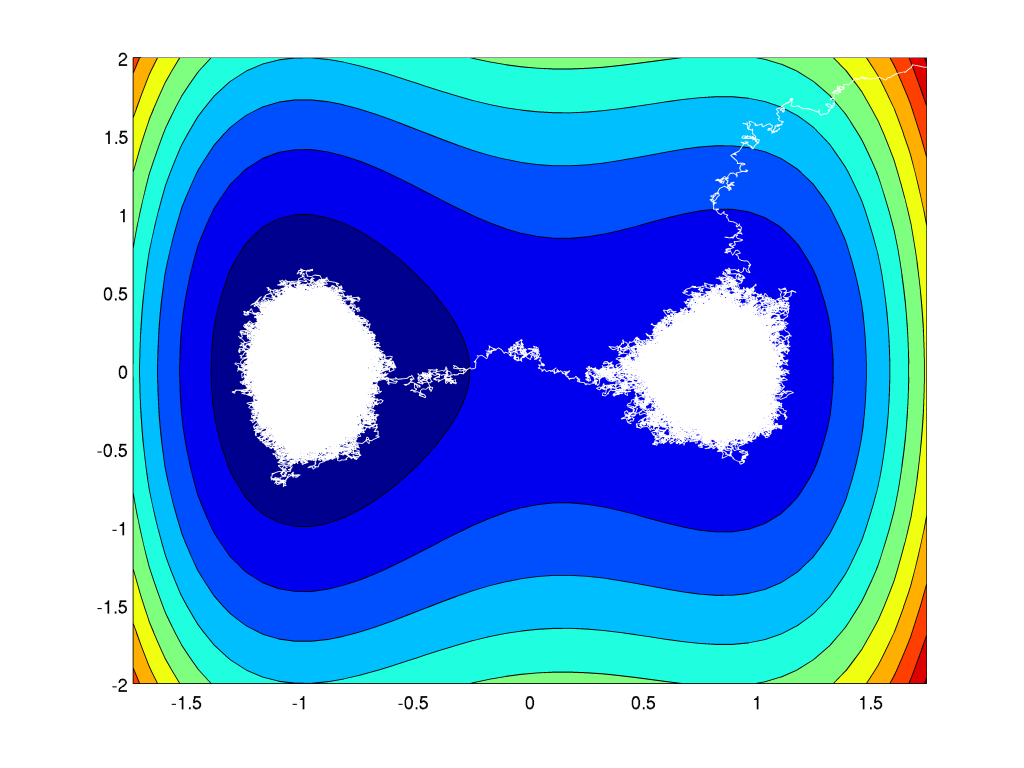
André Schlichting is a Full Professor of Applied Analysis at the University of Ulm, leading the Institute of Applied Analysis since October 2024. Previously, he served as an Associate Professor for Applied Mathematics at the University of Münster (2020–2024) and held postdoctoral and visiting professor roles at institutions including the University of Bonn and RWTH Aachen. His research focuses on the qualitative analysis of complex systems, combining methods from partial differential equations, stochastic analysis, and numerical analysis. Key interests include metastability in statistical mechanics, phase transitions, variational methods, and the longtime behavior of dissipative systems. Education: Habilitation (Facultas Docendi), University of Bonn, 2020 (Phase Transitions in Interacting Systems) PhD in Mathematics, Universität Leipzig, 2012 Diploma in Mathematics, TU Freiberg, 2008 Studies in Mathematics at University of Pavia (Italy) and TU Freiberg Research Interests: His work bridges applied mathematics and theoretical physics, addressing problems in statistical mechanics, stochastic processes, and machine learning. Key areas include: Metastability in molecular and statistical mechanics systems Coarsening and nucleation phenomena in interacting particle systems Variational methods for dissipative evolution equations Entropy methods and functional inequalities (spectral gap, log-Sobolev) Gradient flows and their limits in continuum and discrete settings Discrete and nonlocal dynamics on graphs and data sets Recent Article Trends: His recent work emphasizes gradient flow structures, discretization schemes for PDEs, and metastability in stochastic systems. Notable contributions include analysis of the exchange-driven growth model, McKean-Vlasov equations on manifolds, and covariance-modulated optimal transport. These studies highlight interdisciplinary approaches to bridging discrete and continuum dynamics. Labs/Teams: He leads the Applied Analysis group at Ulm University, focusing on collaborative research in PDEs, stochastic processes, and numerical methods. Active participation in initiatives like the Hausdorff Trimester Program (Bonn) underscores his role in fostering interdisciplinary research networks.
Zdenek Bazant is the McCormick Institute Professor and Walter P. Murphy Professor of Civil and Environmental Engineering at Northwestern University, with courtesy appointments in Mechanical Engineering and Materials Science. He has been at Northwestern since 1969, serving as Director of the Center for Geomaterials (1981–1987) and holding leadership roles in multiple academic organizations. His research focuses on mechanics of materials, fracture, and structural safety, with contributions to probabilistic mechanics, nano-mechanics, and concrete technology. He holds 7 honorary doctorates and prestigious awards including NAS membership, NASAE, and medals from ASME and ASCE. His work includes over 575 refereed articles and 6 books, achieving a Google Scholar H-index of 94 and 39,000 citations. Education: PhD in Prague (1963) Positions: Editor of ASCE Journal of Engineering Mechanics, President of Soc. of Engineering Science, and Founding President of IA-FRAMCOS Research interests span quasibrittle fracture mechanics, size effects, and structural safety. Key contributions include scaling laws for structural strength and microplane models for concrete behavior. His work on hydraulic fracturing and creep in concrete has influenced engineering practices globally. Notable awards include the Timoshenko Medal (ASME), von Karman Medal (ASCE), and Prager Medal (SES). He has been honored with Special Issues of major journals and birthday workshops. Current affiliations include memberships in multiple national academies and editorial roles.
Dr. John Provis is the Group Leader for Cement Systems at the Paul Scherrer Institute (PSI) in the Laboratory for Waste Management (LES). He holds a PhD in Chemical Engineering from the University of Melbourne, Australia, and was previously the Professor of Cement Materials Science and Engineering at the University of Sheffield, UK (2012–2023). His research focuses on cement chemistry, sustainable construction materials, and nuclear waste management, with a strong emphasis on standardization and beamline analysis. Provis has authored over 300 journal articles and secured major grants, including an ERC Starting Grant. He is a Fellow of multiple prestigious societies and has received awards such as the RILEM Robert L'Hermite Medal and a Doctor Honoris Causa from Universiteit Hasselt. He has supervised over 100 PhD/postdoc researchers and serves as an editorial board member for journals like Cement and Concrete Research and Materials and Structures . His research interests span cement durability, geopolymer development, and the environmental impact of construction materials. Provis also advises governments and agencies globally on funding and policy, contributing to projects like the Hanford Nuclear Reservation review. His work bridges academic research with industrial applications, emphasizing innovation in low-carbon materials and waste management solutions.