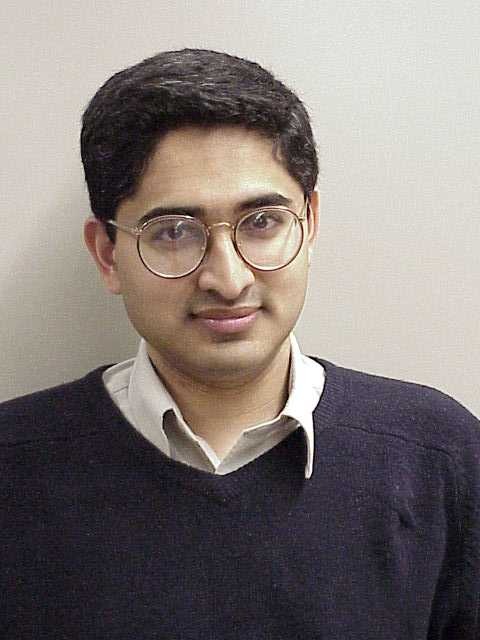
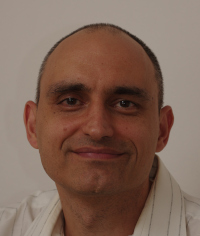
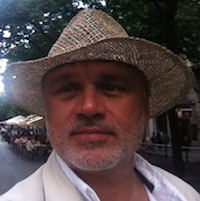
Denis Zorin is a Silver Professor of Computer Science and Mathematics at New York University, serving as Chair of the Department of Computer Science. His research focuses on computer graphics, geometric modeling, fluid/solid simulation, and perceptually based methods for graphics. He leads the Media Research Lab (MRL) at NYU, with a strong emphasis on interdisciplinary work combining theoretical foundations with practical applications in robotics, material science, and computational geometry. Key projects include development of robust simulation frameworks and novel approaches to meshing, parametrization, and microstructure optimization. Research interests span both theoretical advancements and applied solutions, with notable contributions to areas like topology optimization, contact dynamics, and 3D reconstruction. His work bridges computer science, mathematics, and engineering, addressing challenges in both academic and industrial contexts. Articles from 2024–2025 highlight innovations in DSL design for optimization, haptic interfaces, multi-mesh synchronization, and soft robotics actuators. These demonstrate a focus on scalable simulations, geometric algorithms, and real-world applications of computational methods.
Marc Jornet Sanz is a faculty member at the Universitat Politècnica de València, affiliated with the Department of Mathematics in the area of Applied Mathematics. He is an active researcher within the ANIMS group, focusing on numerical analysis, simulation, and multiresolution techniques. His research interests lie primarily in applied mathematics, with a strong focus on stochastic modeling and computational methods for random linear systems. His doctoral work centered on mean square solutions of random models and the computation of their probability density functions, placing him at the intersection of theoretical and computational mathematics. The research conducted by Dr. Jornet Sanz contributes to advancing numerical methods for uncertainty quantification in dynamical systems. His work aligns with interdisciplinary applications involving simulation and data-driven modeling, particularly in contexts requiring robust statistical and numerical frameworks. The ANIMS research group, in which he participates, supports collaborative efforts in numerical analysis, image processing, and high-resolution simulations, fostering innovation in both methodology and application domains.
Hanna Simpson is a researcher actively contributing to the fields of coeliac disease, microbiome analysis, and organ-on-a-chip technology. Her work focuses on understanding strain-level microbial variations in treated coeliac disease patients, leveraging advanced multiresolution analytical methods, and developing human organoid models for disease research. Research Interests: Coeliac disease pathophysiology and treatment Microbiome dynamics and bacterial mutation patterns Organ-on-a-chip platforms for modeling human organs Human organoids in disease research Computational approaches for microbial pattern analysis Publications: Her recent work spans multidisciplinary research at the intersection of gastroenterology and biomedical engineering, with a focus on translational approaches combining dietary adherence studies, microbiome profiling, and cutting-edge organoid technologies.
Astrid Maatman is a researcher at the University of Groningen, specifically affiliated with the University Medical Center Groningen and the Department of Genetics. Her research focuses on the intersection of microbiome science, genomics, and human health. Dr. Maatman's primary research interests include gut microbiome analysis, particularly in relation to celiac disease and blood lipid variation. Her work contributes significantly to understanding how microbial communities influence human health conditions. She employs advanced genomic and multiresolution analysis techniques to examine strain-level variations in microbial populations. Her publications reveal a strong focus on how the gut microbiome impacts specific health conditions, with particular emphasis on celiac disease management and blood lipid regulation. The research demonstrates that microbial communities contribute substantially to variations in human health markers. Dr. Maatman is an active collaborator within the Human Functional Genomics Project, working alongside prominent researchers in the field including Cisca Wijmenga, Alexandra Zhernakova, and Rinse Weersma. Her most recent work (2025) continues to advance strain-level analysis of the microbiome in treated celiac disease patients.
Dimitri Van De Ville is a Full Professor of Bioengineering at École Polytechnique Fédérale de Lausanne (EPFL) and the University of Geneva (UniGE), affiliated with the School of Engineering at EPFL and the Faculty of Medicine at UniGE. He leads the Medical Image Processing Laboratory (MIP:Lab) at Campus Biotech in Geneva and is a key figure at the CIBM Center for Biomedical Imaging. His work bridges signal processing, computational neuroscience, and clinical neuroimaging. Education: M.S. and Ph.D. in Computer Science, Ghent University, Belgium (1998, 2002) Post-doctoral Fellow, Biomedical Imaging Group, EPFL (2002–2005) His research focuses on advancing non-invasive brain imaging through methodological innovations in signal and image processing. He investigates the dynamic and network aspects of brain function using fMRI and EEG, with a special emphasis on dynamic functional connectivity, graph signal processing, and real-time neurofeedback. His work has demonstrated that EEG microstate sequences exhibit scale-free dynamics, linking fast electrophysiological events to slow hemodynamic changes. He pioneered connectivity decoding and contributed to the development of sparsity-based deconvolution methods for fMRI. The recent articles reflect a strong trend toward modeling brain function as a dynamic network process. Key themes include graph signal processing on brain connectomes, decomposition of transient brain activity, and the use of machine learning to decode brain states. His work increasingly integrates structural and functional data to understand brain organization at multiple scales. Scientific Awards: Technical Achievement Award, IEEE EMBS (2024) Fellow, EURASIP (2023) Distinguished Lecturer, IEEE Signal Processing Society (2021–2022) Fellow, IEEE (2020) Leenaards Award (2016) NARSAD Independent Investigator Award (2014) NeuroImage Editors' Choice Award (2013) Pfizer Research Award (2012) Van De Ville has secured substantial research funding through grants such as the SNSF Professorship and has advised numerous researchers. He plays a major role in the scientific community as founding chair of the EURASIP BISA SAT and former chair of the IEEE BISP TC. He has held editorial roles in top journals including IEEE Transactions on Signal Processing , SIAM Journal on Imaging Sciences , and Imaging Neuroscience . He leads the Medical Image Processing Laboratory (MIP:Lab) at Campus Biotech, which specializes in developing advanced signal processing tools for neuroimaging. The lab is part of a broader collaborative ecosystem involving EPFL, UniGE, and the CIBM, fostering interdisciplinary research in biomedical imaging and brain science.
Professor Raviraj Adve is affiliated with the University of Toronto , working in the Department of Electrical and Computer Engineering and cross-listed with the Electromagnetics Group . He holds a PhD in Electrical Engineering from Syracuse University (1996) and previously worked at Research Associates for Defense Conversion Inc. (1997–2000). Education: B.Tech, Indian Institute of Technology Bombay (1990) PhD, Syracuse University (1996) Research Interests span two main areas: Wireless Communications (heterogeneous networks, massive MIMO, cooperative communication, resource allocation) and Radar Signal Processing (waveform diversity, space-time adaptive processing, HF radar systems). His work emphasizes practical algorithm development for real-world constraints. Scientific Contributions include 15 recent articles covering cooperative networks , radar clutter modeling , low-complexity MIMO algorithms , and molecular communication . Notable awards: IEEE Fellow (2017), Young Radar Engineer of the Year (2009), and multiple teaching awards. Leadership Roles: Vice-chair of IEEE Radar Systems Panel, Associate Editor for IEEE Trans. on Aerospace and Electronic Systems , and editorial board member for IET Trans. on Radar, Sonar and Navigation .
Radu-Lucian LUPŞA serves as a Lecturer at Babeş-Bolyai University's Faculty of Mathematics and Computer Science in Romania. His academic career spans over two decades with a consistent focus on computer science, particularly in image processing and graph algorithms. His teaching responsibilities include courses on Graph Algorithms and Parallel and Distributed Programming, demonstrating his expertise across theoretical and applied computer science domains. LUPŞA's research interests center around image processing, with significant contributions to compression methods, dithering algorithms, and multiresolution analysis. His work bridges theoretical computer science with practical applications in graphics and healthcare optimization. The evolution of his research shows a progression from fundamental image compression techniques in the late 1990s to more specialized applications in medical imaging and transportation logistics by the late 2000s. Analysis of his publications reveals strong expertise in computational geometry, algorithm design, and optimization problems. His research demonstrates consistent application of mathematical rigor to practical computing challenges, particularly in the areas of image representation and processing. The interdisciplinary nature of his work is evident in publications spanning computer graphics, healthcare logistics, and mathematical optimization. LUPŞA completed his PhD in 2006 with the dissertation titled Contributions to the analysis, processing and representation of images , which serves as a foundation for his subsequent research trajectory. His academic output shows a period of high productivity between 1996-2008 with publications in respected venues including IEEE conferences and academic journals. As an educator, LUPŞA has developed comprehensive teaching materials for graph algorithms, including lecture notes, practical assignments, and evaluation methods. His teaching approach emphasizes both theoretical foundations and practical implementation, as evidenced by the detailed laboratory assignments and programming tasks he has designed for students.
Nicolai Petkov is a Professor in the Department of Computing Science at the University of Groningen's Faculty of Science and Engineering. He leads research in computer vision, image processing, and computational neuroscience, with a focus on biologically inspired algorithms. His work bridges theoretical neuroscience and practical computer vision applications. His research interests span computer vision, image processing, pattern recognition, computational neuroscience, and biologically inspired computing. Petkov has made significant contributions to contour detection, texture analysis, and visual perception modeling, developing algorithms inspired by the human visual cortex. His work on B-COSFIRE filters has become influential in the field of biologically inspired computer vision. Petkov's publication record shows consistent research output over decades, with recent work focusing on applications in agriculture, robotics, and medical diagnostics. His research demonstrates a progression from theoretical models of visual perception to practical applications in diverse domains. Best paper award for 'Image-based localisation using Gaussian processes' (2016) Best student paper award for 'Contour detection by multiresolution surround inhibition' (2006) Best student paper award for 'Integrated electronic health record database management system' (2015) Top-1% in engineering according to the Essential Science Indicators of the ISI Web of Knowledge Petkov has supervised numerous PhD students and collaborators including George Azzopardi, Nicola Strisciuglio, and Giovanni Papari. His research has received funding for projects in intelligent systems and computer vision applications. He is actively involved in governance at the University of Groningen, having served on the University Council. His laboratory, part of the Intelligent Systems research group, focuses on developing brain-inspired computing approaches with applications ranging from agricultural technology to medical diagnostics and autonomous robotics.
Dr. Leszek Gawrysiak is a University Professor at the Department of Geology, Soil Science and Geoinformation, Maria Curie-Skłodowska University, Lublin. His academic journey includes a Master's (1993) and PhD (2003) in Earth Sciences from the same university, followed by habilitation in 2019. Education: MA in Geography (1993), Maria Curie-Skłodowska University PhD in Earth Sciences (2003), Maria Curie-Skłodowska University Habilitation (2019), Maria Curie-Skłodowska University Research Interests focus on Geomorphology , Geomorphometry , and Geoinformation . His work integrates GIS and remote sensing with field studies to analyze terrain evolution, particularly in loess areas and proglacial environments. Scientific Trends from his 15 most recent publications (2015-2024) reveal expertise in loess topography , proglacial valley dynamics , forest cover monitoring , and geomorphological mapping . Methodologies include multiresolution DTMs , LiDAR , and historical sediment analysis . Awards: Award of the Association of Polish Geomorphologists (2002) Rector Team Award, Maria Curie-Skłodowska University (2010) Rector Individual Award, Maria Curie-Skłodowska University (2013) Scientific Activity includes participation in projects like Extreme meteorological events in Poland and Geopark Małopolski Przełom Wisły development . He has contributed to digital geomorphological cartography and Polish-Belarusian-Ukrainian water policy frameworks.
Junho Kim is a Full-time Lecturer at Dong-Eui University, Korea. His research focuses on computer graphics, particularly in 3D mesh processing and view-dependent streaming of progressive meshes to optimize network communication and memory usage. Email: kim.junho@deu.ac.kr His work in Shape Modeling Applications 2004 introduced a dynamic framework for view-dependent streaming of multiresolution meshes, enabling adaptive detail transmission based on client viewpoints.
Hua-Liang Wei is a Senior Lecturer at the University of Sheffield 's School of Electrical and Electronic Engineering. He leads two innovative research labs: the Dynamical Modelling, Data Mining and Decision Making (3DM) and the Digital Medicine & Computational Neuroscience (DMCN) Research Groups. Specializes in system identification for nonlinear dynamics Develops interpretable AI for healthcare applications Active in space weather and environmental forecasting His methodological expertise spans NARMAX modeling, wavelet neural networks, and multiresolution analysis. Collaborations include Sheffield Teaching Hospitals NHS Trust, multiple University of Sheffield departments (Chemistry, Oncology, Psychology), and international institutions like Beihang University. Scientific Awards include STFC and NERC grants for radiation belt modeling and environmental systems research, EU Horizon 2020 funding, EPSRC Platform grants, Royal Society support, and medical charity partnerships. Recent publications focus on hybrid wavelet-LSTM for wind power forecasting EEG analysis in epilepsy and Alzheimer's domain adaptation for fault diagnosis interpretable models for medical data covering applications from renewable energy to clinical diagnostics.
Jill Naiman is a Teaching Assistant Professor at the School of Information Sciences (iSchool) at the University of Illinois Urbana-Champaign and a Visiting Scholar at the National Center for Supercomputing Applications (NCSA). She holds a PhD in Astronomy & Astrophysics from the University of California, Santa Cruz, where she studied feedback in star clusters and galaxy formation simulations. Prior to her current role, she completed postdoctoral fellowships at the Harvard-Smithsonian Center for Astrophysics, including the National Science Foundation and Institute of Theory and Computation Fellowships. Her research focuses on data visualization , scientific digitization with machine learning , and image processing , particularly in astrophysics. She develops open-source tools for cinematic and interactive visualization of astrophysical simulations, such as AstroBlend and Ytini, and explores methods to extract insights from historical scientific literature through projects like the Reading Time Machine . Her recent publications highlight expertise in astrophysical data analysis , 3D visualization , and software development using tools like Houdini and Blender. These works span adaptive mesh refinement , scientific graphics , and multiresolution data analysis . NASA grant to digitize astrophysical literature National Science Foundation Postdoctoral Fellowship Institute of Theory and Computation Fellowship She actively mentors students, contributes to educational outreach, and teaches courses in Data Visualization and Data Storytelling at the iSchool, including Fall 2025 offerings in IS389JPN, IS445BCG, IS445BCU, IS457BCG, IS457BCU, and IS589JPN.
Karol Dziedziul is an Associate Professor at the Institute of Applied Mathematics within the Faculty of Applied Physics and Mathematics at Gdańsk University of Technology. He serves as Head of the Division of Nonlinear Analysis. His primary affiliations center on advanced mathematical research with interdisciplinary applications spanning statistics and biochemistry. His research focuses on: Wavelet analysis and functional decompositions on Riemannian manifolds/spheres Statistical estimation methods, particularly density smoothness estimation Interdisciplinary applications in biochemistry (catechins, DNA methylation) Analyses of his 15 most recent publications reveal three dominant themes: (1) Theoretical work on orthogonal projections and wavelet frames in non-Euclidean spaces (2021-2023), (2) Methodological innovations in statistical estimation (2014-2019), and (3) Biochemical investigations of plant enzymes and antioxidants (2013-2023). He teaches extensively in mathematics and statistics, with 195 documented courses including: Statistics I/II Risk Management SAS Programming Machine Learning Futures & Derivatives He frequently supervises diploma theses in Financial Mathematics.
Xiaoquan (William) Wen is Professor of Biostatistics in the University of Michigan School of Public Health , Department of Biostatistics. Since earning his PhD in Statistics from the University of Chicago in 2011, he has been a continuous member of the Michigan faculty and is an active contributor to the NIH GTEx Consortium and the Center for Statistical Genetics . Education PhD in Statistics, University of Chicago, 2011 Research Focus Wen’s methodological work lies at the intersection of Bayesian statistics , computational genomics , and probabilistic graphical models . He develops scalable algorithms for Bayesian model comparison and false discovery rate control , with particular emphasis on multi-tissue eQTL discovery , causal inference from high-dimensional omics data, and integrative analysis of genome, transcriptome, and proteome to dissect the molecular basis of complex human traits. Applied domains include functional genomics, pharmacogenomics, immunogenomics, and pediatric gene–environment interactions, where he translates statistical innovation into biologically meaningful insight. Publications Snapshot (2022–2025) Recent work spans large-scale GWAS meta-analyses, single-cell multi-omics, metabolome-wide Mendelian randomization, and robust replicability frameworks. Recurring themes are causal gene prioritization, fine-mapping, and rigorous statistical validation across diverse human tissues and disease contexts. Scientific Awards (no awards explicitly listed in provided text) Grant & Team Activity Wen is an ongoing NIH GTEx project investigator and contributes to the Michigan Center for Statistical Genetics . While explicit grant numbers are absent, his sustained publication stream and consortium involvement indicate active federal and collaborative funding. No advisees are named in the supplied material. Laboratory & Software He maintains an active GitHub repository releasing open-source tools such as BLIMP (Best Linear IMPutation), SLAT (gene- and pathway-level testing), and QuASAR (quantitative allele-specific analysis).
Martin Ehler serves as Associate Professor and Vice-Dean for Teaching at the University of Vienna's Faculty of Mathematics, where he concurrently holds the position of Deputy Head of the Institute of Mathematics. His academic activities are centered at Oskar-Morgenstern-Platz 1, Room 10.128, Vienna, with primary responsibilities spanning research leadership, teaching undergraduate/graduate mathematics courses, and administrative oversight of academic programs. His research program in Computational Harmonic Analysis drives innovations in Mathematical Data Analysis and Medical Image Processing , evidenced by his leadership in the Applied Harmonic Analysis Cluster (AHA) and co-organization of the bi-annual Strobl conference. Core methodologies integrate frame theory, manifold approximation, and spherical design principles to address challenges in neural network stability, medical imaging reconstruction, and signal processing robustness. Analysis of his 2023-2025 publications reveals dominant themes in harmonic analysis applications to deep learning architectures (particularly ReLU-layer injectivity and filterbank design), geometric approximation on manifolds, and medical imaging algorithms. These works demonstrate consistent interdisciplinary collaboration across mathematics, signal processing, and biomedical engineering domains. No scientific awards were documented in the provided materials. While teaching responsibilities for courses like Introduction to Analysis and Mathematics of Data Science are explicitly listed, details regarding graduate student supervision or research grant funding were absent from the source texts. His research ecosystem is anchored in the Applied Harmonic Analysis Cluster (AHA), facilitating cross-institutional collaboration on harmonic analysis applications, with documented partnerships through co-authored publications in venues like IEEE Signal Processing Letters and Mathematics of Computation.