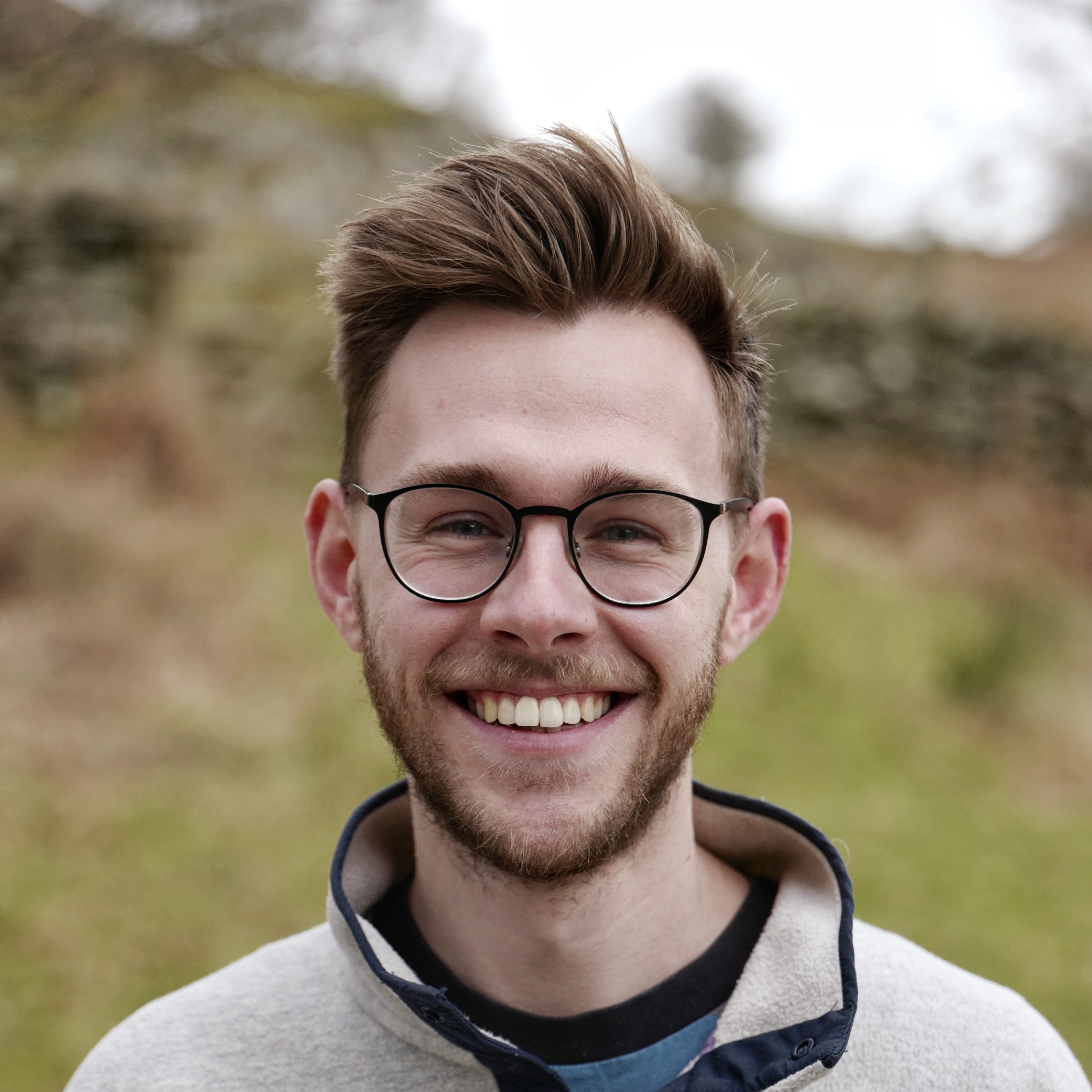
Jing Tang is an Associate Professor at the University of Cincinnati. His research focuses on medical image formation and understanding, particularly in emission tomography imaging and machine learning-driven reconstruction techniques. He holds a PhD in Electrical Engineering from the University of Illinois at Urbana-Champaign. Research Interests: Medical imaging technologies including PET and SPECT, radiation dose reduction in pediatric imaging, outcome prediction in Parkinson’s disease, and integration of machine learning with image analysis. Key Projects: Developed artificial neural network-based methods for dose reduction in PET imaging and predictive models for motor outcomes in neurodegenerative diseases. He has secured multiple grants totaling over $4 million from NIH and NSF, including a current NIH grant exploring dynamic PET for coronary artery disease diagnostics. His work emphasizes translational applications in clinical imaging and patient care. Notable Grants: NIH R01HL170245 (2024-2029), NIH R03EB028070 (2019-2023), NSF CAREER award (2015-2021). Tang’s publications span advanced reconstruction algorithms, multimodal imaging integration (MRI-PET), and AI-driven diagnostics. His research bridges engineering and clinical medicine, addressing critical challenges in diagnostic accuracy and patient safety.
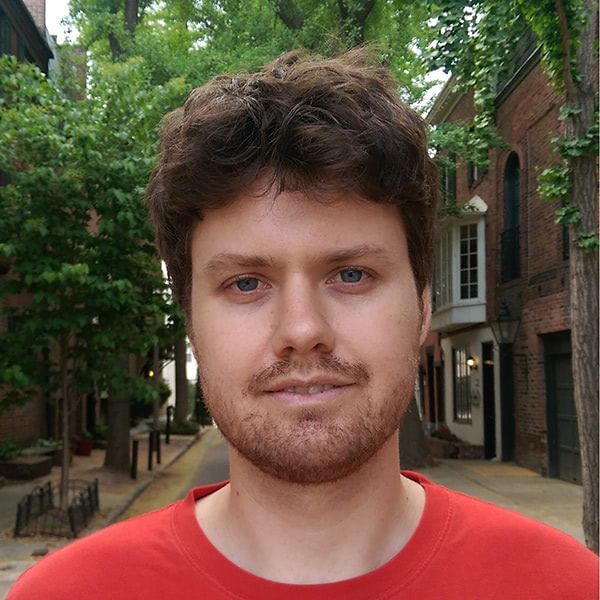
Konrad Abramowicz is an Associate Professor and Head of the Department of Mathematics and Mathematical Statistics at Umeå University. His research focuses on functional data analysis, classification, and local inference procedures in the presence of misalignment, with applications in biomechanics, climate research, and forest growth analysis. He teaches stochastic simulations and parametric modeling methods, emphasizing student development and curiosity-driven learning. Education: University of Wrocław (Poland), with Erasmus exchange to Umeå University Research: Functional data analysis, interdisciplinary collaborations in biomechanics and climate science Awards: Teaching awards for dedication to student mentorship Internationalization: Postdoctoral work in Australia; collaborations with Italy and India; faculty-level international contact Konrad's research spans functional data analysis applied to knee kinematics after ACL injuries, climate reconstruction using sediment data, and statistical methods for forest growth analysis. He developed computational tools like the fiberLD R package for fiber length determination in forestry studies. His recent publications highlight interdisciplinary applications of statistical methods, with a focus on movement pattern analysis, climate modeling, and non-destructive forest assessment. Konrad advocates for international collaboration and adaptive academic practices to address global challenges. Konrad has received teaching awards and is recognized for his supportive approach to students. He actively participates in university initiatives for international student integration and served as international coordinator for academic exchange programs. As a key member of the IceLab interdisciplinary research hub, Konrad bridges statistical methods with applications in biomechanics and environmental science. His work emphasizes the importance of mathematical abstraction in solving real-world problems.
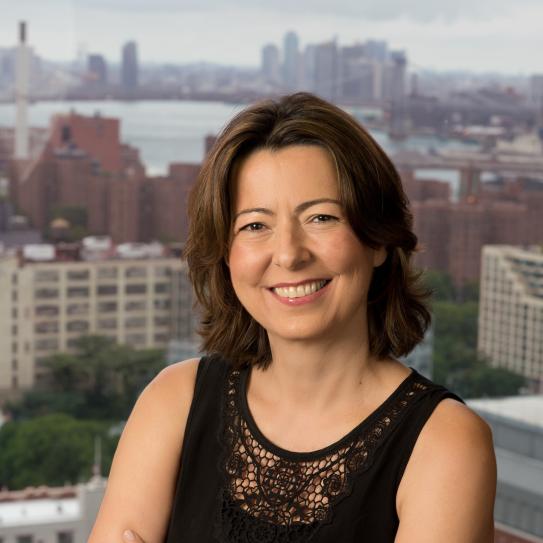
Sara Sjöstedt de Luna is a Professor in Mathematical Statistics at Umeå University's Department of Mathematics and Mathematical Statistics. She is a board member of The Wallenberg AI, Autonomous Systems & Software Program (WASP) and holds the title of Docent. Her research spans functional data analysis, spatial statistics, and their applications in climatology, forestry, and human motor control. Affiliation : Umeå University Department : Mathematics and Mathematical Statistics Research Focus : Functional data analysis, spatial statistics, and interdisciplinary applications in environmental and biomedical domains Her recent work involves developing statistical tools like the fdaMocca and fiberLD R packages, advancing methodologies for clustering functional data with covariates, and refining kriging approaches for spatiotemporal predictions. She has contributed to climate reconstruction using varved lake sediment data and biomechanical analysis of knee kinematics post-injury. Applications of her research include: Climate modeling using historical sediment records Wood fiber length determination for forestry studies Biostatistical analysis of human motor control Sjöstedt de Luna employs both parametric and nonparametric statistical techniques, with a focus on handling dependent data structures, censoring challenges, and algorithm design for complex datasets.
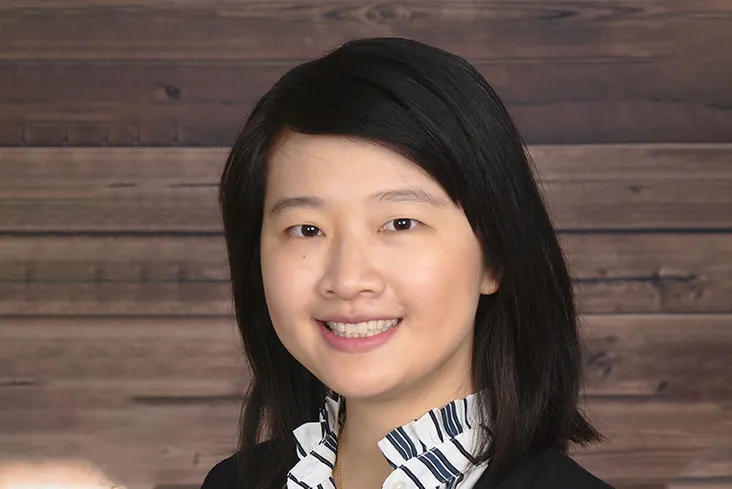
Wasin So is a Professor of Mathematics at San José State University, where he has been a faculty member since 2006. Previously, he served as an Associate Professor at Sam Houston State University from 1999 to 2000, and as an Assistant Professor there from 1992 to 1999. His academic career includes postdoctoral research positions at the Institute for Mathematics and its Applications at the University of Minnesota (1991-1992) and the Center of Linear Structures and Combinatorics at the University of Lisbon (1993). Dr. So received his educational training at prestigious institutions: Ph.D. in Mathematics from the University of California, Santa Barbara (1991) M.Phil. from the University of Hong Kong (1986) B.Sc. from the University of Hong Kong (1983) Professor So's research spans several interconnected areas within pure and applied mathematics. His primary focus is on matrix theory and linear algebra, with significant contributions to quaternion mathematics, graph theory, and numerical analysis. His work on quaternionic matrices has advanced our understanding of non-commutative algebraic structures, while his research on graph spectra has provided insights into the connections between linear algebra and combinatorics. He has also made notable contributions to the theory of matrix exponentials and inequalities, exploring both theoretical foundations and potential applications. An analysis of Professor So's publication record reveals a consistent focus on advanced matrix theory with particular emphasis on non-standard algebraic structures like quaternions. His work bridges pure mathematical theory with potential applications in physics and engineering. The evolution of his research shows progression from foundational work on matrix exponentials and inequalities in the early 1990s to more specialized investigations of quaternionic structures and spectral graph theory in the late 1990s and early 2000s. Among his professional recognitions: Project NExT Fellow (1994-1995) Professor So has taught a wide range of mathematics courses at San José State University, including the Calculus sequence (MATH 30, MATH 32), Discrete Mathematics sequence (MATH 42, MATH 142, MATH 179, MATH 279A, MATH 279B), Linear Algebra sequence (MATH 129A, MATH 129B, MATH 229, MATH 285), Probability and Statistics sequence (MATH 161A, MATH 163), and Applied Math (MATH 203 CAMCOS Project). His teaching portfolio demonstrates expertise across multiple mathematical disciplines and at various levels from undergraduate to advanced graduate courses, with detailed grade distributions provided for his Calculus III courses across multiple semesters. While specific laboratory or research team information is not provided in the available documentation, Professor So's extensive publication record suggests he has likely mentored students and collaborated with colleagues on research projects in matrix theory and related fields, particularly evident through his long-standing engagement with advanced mathematical concepts across nearly two decades of scholarly work.
Peter Zizler is a Professor in the Department of Mathematics & Computing at Mount Royal University. He teaches calculus, linear algebra, and courses in General Education. His research focuses on Linear Algebra, Wavelet Theory, business mathematical modeling, and statistical crime analysis. He holds a PhD from the University of Calgary. His research interests include advanced mathematical techniques such as singular value decomposition, wavelet transforms, and their applications in data science, signal processing, and education. He explores topics like statistical normalization of grades, sports analytics using SVD, and logic-based pedagogy in general education courses. His publications span over two decades, addressing diverse areas from non-stationary filtering to interdisciplinary applications in chemistry and quantum physics. Notable recent work includes leveraging linear algebra for Anscombe’s Quartet construction and analyzing FIFA 2022 data through SVD. Peter has no listed scientific awards or grants. His academic contributions primarily center on teaching and applied mathematical research without direct mention of lab affiliations or student advisement.
Alexander Modell is a Research Fellow in Statistics and Machine Learning at the Department of Mathematics, Imperial College London, holding the Chapman Research Fellowship. His work focuses on AI safety through interpretability research, studying how large language models represent information and reason about the world. He earned his PhD from the University of Bristol with the thesis "Spectral embedding of large graphs and dynamic networks" under Patrick Rubin-Delanchy's supervision, followed by postdoctoral research with Nick Heard on the NeST programme. Modell's research bridges AI interpretability and neuroscience, using reproducible neural network experiments to uncover knowledge representation mechanisms. He investigates mathematical foundations of machine learning with emphasis on clustering, manifold learning, and analysis of dynamic networks. His work aims to detect AI misalignment pre-deployment through "artificial neurosurgeries" to modify system behavior. Recent publications reveal strong trends in representation learning for large language models and dynamic networks, combining statistical thresholding, spectral methods, and geometric approaches to address AI safety challenges and network analysis problems. Scientific recognition includes: Chapman Research Fellowship Notable Paper Award at AISTATS 2023 (top 32 of 496 accepted papers) Modell actively contributes to the research community through invited talks at ISNPS, PopNets, and NeurIPS workshops, with grant support from his Chapman Fellowship enabling foundational work in AI interpretability and statistical machine learning theory.
Matthew McGarry is an Associate Professor of Engineering at the Thayer School of Engineering, Dartmouth College. His research focuses on numerical methods, inverse problems, elastography, and soft tissue imaging, particularly in medical diagnostics. He holds a BE and ME in Mechanical Engineering from the University of Canterbury (2006, 2008) and a PhD in Biomedical Engineering from Dartmouth (2013). His work emphasizes improving imaging techniques like magnetic resonance elastography (MRE) and ultrasound imaging to diagnose diseases through tissue property analysis. Key projects include analyzing arterial compliance, brain mechanics, and white matter structures. McGarry has published extensively on MRE applications, inverse problem formulations, and viscoelastic models. His research bridges biomedical engineering, medical physics, and neuroscience. No specific grants or awards are listed, but his contributions span over a decade in non-invasive diagnostic innovation. He advises graduate students in imaging sciences and collaborates across disciplines. His lab focuses on advancing mechanical imaging modalities for clinical applications.
Jelena Kovačević is Dean Emeritus of the NYU Tandon School of Engineering and the Paulette Goddard Professor of Electrical and Computer Engineering at NYU. She holds a Dipl. Electrical Engineering from the University of Belgrade (1986), and MS/PhD from Columbia University (1988/1991). Her career includes roles at Bell Labs, co-founding xWaveforms, and leadership at Carnegie Mellon University. Her research focuses on biomedical imaging, wavelets, and signal processing. She has pioneered frameworks for graph signal processing and semi-supervised learning, with impactful applications in healthcare and engineering. As Dean, she drove initiatives to double women’s representation in engineering, established interdisciplinary research areas, and secured $59M in annual research expenditures. Awards include IEEE’s EMBS Career Achievement Award and fellowships from IEEE and EUSIPCO. She has authored influential books like Wavelets and Subband Coding and Foundations of Signal Processing , and served as Editor-in-Chief of IEEE Trans. on Image Processing. Her leadership extended to forming the Northeast Regional Deans (NeRDs) council and advancing diversity initiatives like Tandon’s Office of Inclusive Excellence. Education: Columbia University (PhD 1991), University of Belgrade (1986) Key Roles: Dean of NYU Tandon (2018-2024), Carnegie Mellon Department Head (2003-2018) Research: Biomedical imaging, graph signal processing, multiresolution techniques Her awards reflect her technical contributions and leadership, including the Belgrade October Prize, E.I. Jury Award, and recognition for foundational papers in wavelet theory. She has been a plenary speaker at major conferences and a key figure in signal processing and biomedical imaging communities.
Professor Daniela Rosca holds a position at the Department of Mathematics, Technical University of Cluj-Napoca, Romania. Her academic career includes a PhD in Approximation with Wavelets (2004) and a Habilitation Thesis on Wavelets on Two-Dimensional Manifolds (2012). She specializes in wavelet theory, numerical analysis, geometric modeling, and grid generation on manifolds. Research Interests: Her work focuses on wavelet transforms on spheres and other manifolds, geometric mappings (area/volume preservation), numerical approximation methods, and applications in material science and computational geometry. Notable contributions include spherical wavelet bases, equal area projections, and optimal point configurations on spheres. Publications: Over 30 peer-reviewed articles in journals like Applied and Computational Harmonic Analysis, Mathematics and Computers in Simulation, and SIAM Journal on Scientific Computing. Key topics include wavelet analysis on tori/spheres, sparse Legendre expansions, and grid generation in 3D rotation spaces. Books: Authored textbooks on discrete mathematics, integral calculus, and wavelet analysis for academic use in Romania.
Peter Balazs is affiliated with the Faculty of Computer Science , part of an unspecified university, and leads the Research Group Visualization and Data Analysis . His academic title includes Mag. Dr. and Privatdoz. (Privatdozent). He has been active in research since at least 2006, with notable contributions in mathematical analysis and signal processing. Recent activities include a 2021-2025 research project on Nonsmooth Nonconvex Optimization Methods in Acoustics and presentations at international conferences. Research focuses on Fourier multipliers, time-frequency transforms, modulation spaces, and numerical methods for Gabor frame operators. Key publications explore the smoothing effects of the short-time Fourier transform and applications of neural networks in auditory filterbanks. He has collaborated on projects involving acoustic data analysis for deep learning and phase-based scattering transforms. Peter Balazs has organized academic events and contributed to poster sessions on topics like alpha-rectifying frames and time-frequency representations. His work bridges theoretical mathematical analysis with applied signal processing techniques in acoustics and computational engineering.
Lucas Cuadra Rodríguez is a Full Professor in the Department of Signal Theory and Communications at Universidad Alfonso X El Sabio (UAX). He holds a PhD from Universidad Politécnica de Madrid (2004), specializing in intermediate band solar cell development. His research spans quantum dot systems, network science applications in materials and energy systems, and machine learning for environmental and engineering challenges. Key areas include photovoltaic materials, complex network modeling of disordered systems, and renewable energy optimization. Education: Doctorado en Física from Universidad Politécnica de Madrid (2004), supervised by Dr. Antonio Marti Vega and Dr. Antonio Luque López. His work bridges physics, computer science, and engineering, with a focus on interdisciplinary solutions for energy and environmental systems. Research Interests: His primary focus is on developing novel semiconductor solar cell structures, particularly quantum dot-based intermediate band solar cells, and applying network science to study carrier transport in nanomaterials. He also explores machine learning applications in Earth observation, wind energy prediction, and complex system analysis. His recent work emphasizes spatially embedded networks and their relevance to material science and renewable energy infrastructure. Notable Projects: Leading the GHEODE Research Group (Modern Heuristics and Network Design), he investigates optimization algorithms for smart grids and network robustness. Recent studies include modeling electron transport in van der Waals materials and analyzing fog event persistence through nonlinear dynamics. Awards: No specific awards mentioned in the provided text. Advising & Grants: While his PhD supervision details are noted, no current student advisees or grant projects are detailed here. His work often involves collaborative interdisciplinary projects with engineering and environmental science teams. Labs/Teams: Active in the GHEODE Group at UAX, focusing on heuristic algorithms and network-based solutions for engineering challenges.
Xiaoxiao Du is a Lecturer in Robotics and an Assistant Research Scientist at the University of Michigan, affiliated with the Ford Center for Autonomous Vehicles (FCAV). She holds a dual role as a Lecturer in Electrical Engineering and Computer Science (EECS) from 2022 to 2023. Her research focuses on machine learning, sensor fusion, and computer vision for applications in autonomous vehicles, remote sensing, and precision agriculture. She develops methods for data interpretation, integration, and analysis, particularly in pedestrian perception, scene understanding, and trajectory prediction. Her work emphasizes real-world deployments, including human pose prediction and anomaly detection systems. She has contributed to over 20 peer-reviewed publications, with recent trends in cross-spectral fusion (e.g., MambaST), label uncertainty handling (e.g., Bi-Capacity Choquet Integral), and bi-directional trajectory prediction frameworks (e.g., BiPOCO). Her research bridges theoretical advancements with practical implementations in autonomous systems. Dr. Du’s teaching portfolio includes courses related to robotics and machine learning. Her lab collaborations span interdisciplinary projects at FCAV, integrating robotics, AI, and environmental sensing. She actively publishes in top venues like IROS, ICRA, and IEEE journals, maintaining a strong focus on innovation in autonomous perception and decision-making systems.
Michael Engel is a Researcher at the Chair of Remote Sensing Technology, Technical University of Munich since March 2021. He holds a Master's in Materials Science and Engineering (2020) and a Bachelor's in Engineering Science (2018), both from TU Munich, with a focus on Uncertainty Quantification and Bayesian Inverse Problems. His research interests revolve around optimizing objective functions in inverse problems, leveraging methods like Curriculum Learning and Multi-Task Systems via Multiresolution Analysis. He combines classical numerical techniques with machine learning to address challenges in Bayesian problems and regression. Education: Bachelor's in Engineering Science, TU Munich (2018) Master's in Materials Science and Engineering, TU Munich (2020) Research interests include: - Bayesian Inverse Problems - Machine Learning Integration in Numerical Methods - Optimization of Multi-Task Systems - Uncertainty Quantification in Environmental Models Key projects include the Global Earth Monitor (GEM) , aiming to enhance Copernicus data utilization for large-scale environmental monitoring. His publications span remote sensing optimization, wavelet-based sensitivity analysis, and deforestation assessment using multi-sensor data. He contributes to the TU Munich's Engineering Risk Analysis Group and collaborates with the Chair of Numerical Mathematics and Hydrology. His work bridges physical modeling principles with computational efficiency in earth observation systems.
Dr. Dominic Taunton is an Associate Professor in Ship Science and Maritime Engineering at the University of Southampton's School of Engineering and Physical Sciences. He serves as Director of Programmes for Maritime Engineering. His research focuses on optimizing high-speed craft design, experimental hydrodynamics, and integrating human factors into maritime systems. Key projects include improving autonomous surface vehicle performance and applying hydrodynamic principles to sports engineering (e.g., skeleton athletes, swimmers, and sailing). Education: BEng (Hons) Ship Science, University of Southampton (1997) PhD in High-Speed Craft Seakeeping, University of Southampton (2001) Research Interests: Experimental hydrodynamics for maritime artifacts Human-centric ship design methodologies Autonomous systems and wave energy conversion Sports engineering applications (rowing, swimming, sailing) Awards: Lloyd's Register Safety Prize (2007) Royal Institution of Naval Architects Medal of Distinction (2008) Ian Telfer Prize (2005) Calder Prize (2001) Teaching: Leads modules such as Ship Design & Economics, Systems Design for Ships, and Sailing Yacht Design. Supervises PhD students in maritime engineering and autonomous systems. Labs/Teams: Active in the Southampton Marine and Maritime Institute, collaborating on EPSRC-funded projects like WITT wave energy converter and MARTHA autonomy initiatives.
François Chaplais is a faculty member at Mines ParisTech, affiliated with the Centre Automatique et Systèmes (CAS), also known as the Control and Systems Department. He is actively involved in research and teaching, with a focus on wavelets, optimal control, and their applications in aerospace, building thermal systems, and hybrid vehicles. He teaches the course Introduction to Signal Processing at the Master's level. His research interests include: Wavelets and multiresolution analysis Optimal control and time scales Signal processing and filter banks z-transform and convolution operators Nonlinear approximation in 1D and 2D signals Applications in energy and aerospace systems Chaplais has developed extensive educational materials, most notably an online Wavelet Matlab Tutorial , which elaborates on concepts from Stéphane Mallat's seminal book. This tutorial covers signal structures, LTI filters, z-transform, convolution, subsampling, and 2D wavelet applications in image processing such as grayscale and color approximation. He also provides downloadable MATLAB software for wavelet and signal processing applications. His industrial collaborations include work with IFPEN (Institut Français du Pétrole Énergies Nouvelles), indicating applied research in energy systems and control. Although no recent publications or articles are listed in the provided text, his sustained academic output in tutorials and software suggests continued scholarly engagement. There is no mention of formal scientific awards or student advisement in the available information. He maintains an active institutional email and homepage, suggesting ongoing academic affiliation. He leads or contributes to software development efforts, particularly in wavelet-based MATLAB tools, and has contributed to numerical implementations of wavelet transforms, perfect reconstruction filter banks, and edge detection algorithms. His work bridges theoretical signal processing with practical engineering applications.