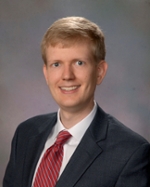
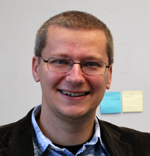
Erik Hoy is an Associate Professor in the Department of Chemistry & Biochemistry at Rowan University, part of the College of Science & Mathematics. He holds a Ph.D. in Physical Chemistry from the University of Chicago and postdoctoral training at Johns Hopkins University and Northwestern University. His research focuses on quantum chemistry methods for studying electron transport, molecular devices, and organic materials. Key areas include developing novel Green’s function approaches combined with high-accuracy quantum chemistry techniques to design quantum sensors, electronic devices, and renewable energy materials. Education: Postdoctoral Associate at Johns Hopkins University and Northwestern University; Ph.D. in Physical Chemistry (University of Chicago); B.S. in Chemistry (Tennessee Tech University). Research Interests: Quantum Chemistry, Electron Transport, Quantum Sensors, Molecular Electronics, Computational Organic Reactions. His group emphasizes high-accuracy electronic structure methods and their application to nanoscale systems, with recent work on molecular junctions and electrocatalysis. Awards: NSF CAREER Award (2024), NSF ExpandQISE Award (2024), Eppley Foundation Grant (2023). His group has secured grants for projects like 'Strongly Correlated Molecular Qubits' and 'Quantum Sensors.' Advising & Grants: Supervises a diverse group of undergraduate and graduate students, including notable advisees such as Grace McGowan and Kale Kroenke. Collaborates with industry and academic partners, such as the Lofland group at Rowan and the Sand group at Butler University. Lab Activities: The Hoy Research Group develops computational tools like pyRUQT and contributes to software like MoleMod. Their work is highlighted in journals like Advanced Functional Materials and Physical Chemistry Chemical Physics .
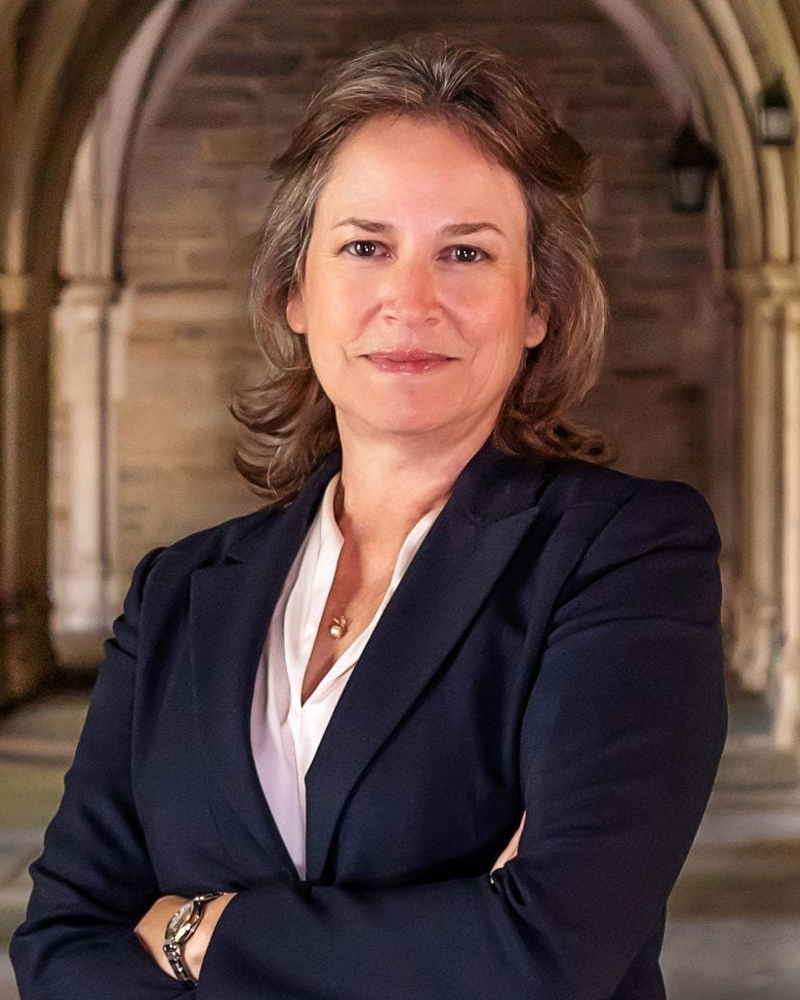
Emily Carter is the Gerhard R. Andlinger Professor in Energy and the Environment at Princeton University, holding joint appointments in Mechanical and Aerospace Engineering, the Andlinger Center for Energy and the Environment, and Applied and Computational Mathematics. She serves as Senior Strategic Advisor and Associate Laboratory Director for Applied Materials and Sustainability Sciences at the Princeton Plasma Physics Laboratory (PPPL). Her research focuses on quantum mechanical simulations for sustainable energy, with emphasis on carbon capture, catalysis, and solar geoengineering. Dr. Carter earned a B.S. in Chemistry from UC Berkeley (1982) and a Ph.D. from Caltech (1987), followed by postdoctoral work at the University of Colorado, Boulder. Her career includes leadership roles as Founding Director of the Andlinger Center (2010–2016) and Dean of Princeton's School of Engineering and Applied Science (2016–2019). At UCLA, she served as Executive Vice Chancellor and Provost (2019–2021). She has been honored with membership in the U.S. National Academies of Sciences, Engineering, and Inventors, as well as the Royal Society. Education: B.S. Chemistry, UC Berkeley, 1982 (Phi Beta Kappa) Ph.D. Chemistry, Caltech, 1987 Research Interests: Carbon capture, sustainable catalysis, electromanufacturing, and solar geoengineering. Develops quantum mechanical methods to design materials for energy applications. Grants & Awards: Over 475 publications, multiple DOE/DOD grants, and fellowships from leading scientific academies. Labs/Teams: Leads the Carter Research Group at Princeton, collaborating across disciplines to advance energy sustainability and environmental solutions.
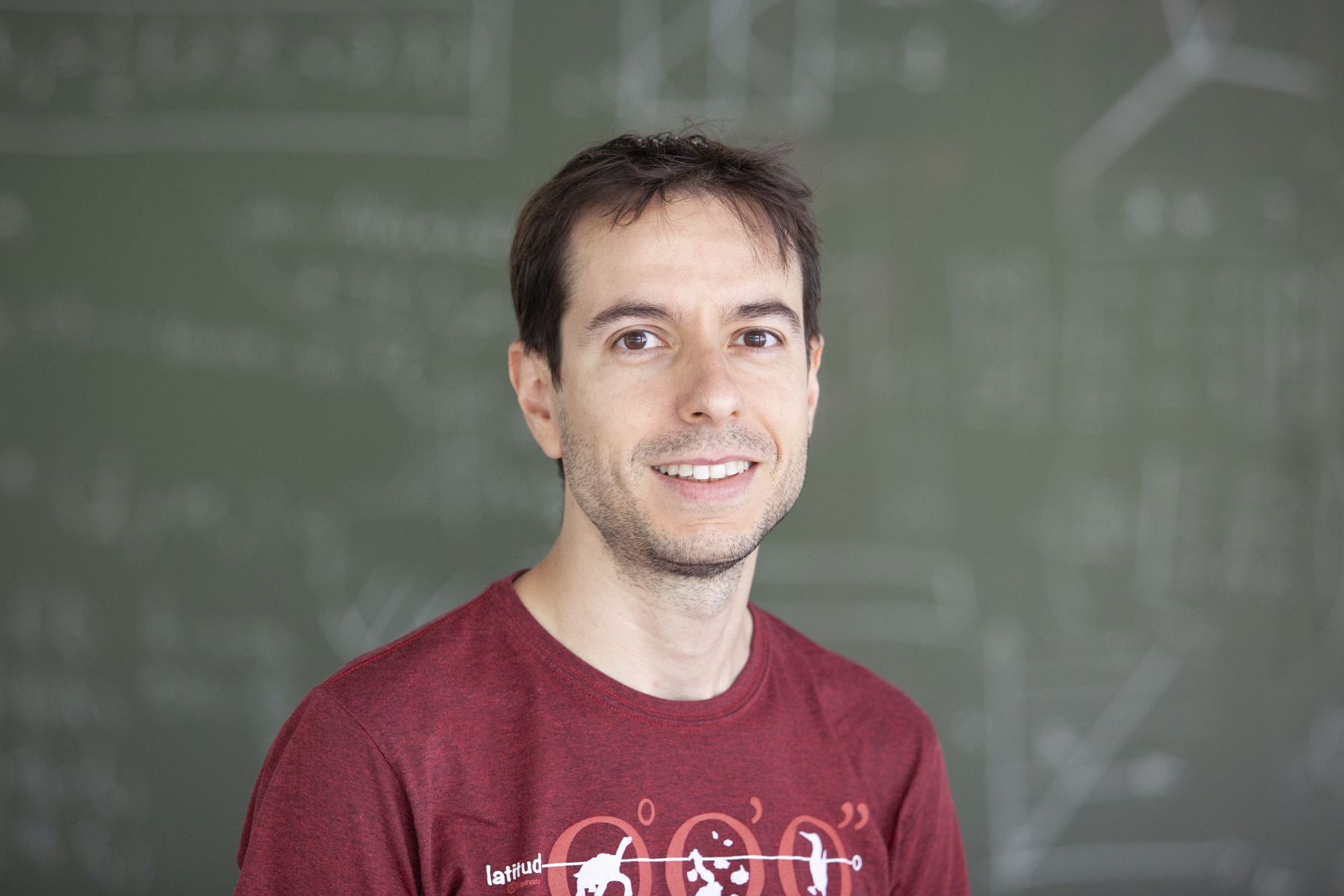
Eduard Matito Gras is an Ikerbasque Research Professor at the Donostia International Physics Center (DIPC), affiliated with the University of the Basque Country (UPV/EHU). His research focuses on developing electronic structure methods, particularly in density functional theory (DFT), density-matrix functional theory (DMFT), and descriptors of chemical bonding and aromaticity. His work includes contributions to nonlinear optical properties, exactly solvable models like the Hooke atom, and the analysis of electron correlation effects. He leads the Quantum Chemistry Development group at DIPC, supervising PhD and postdoctoral researchers. His group actively explores novel density functional approximations and their applications in understanding molecular systems. Notable collaborations include studies on porphyrinoids, tetrahalodiboranes, and aromaticity in extended systems. Recent projects include developing methods to assess excited-state aromaticity and optimizing functional approximations for nonlinear optical properties. Matito has mentored numerous PhD students, including Mauricio Rodríguez Mayorga, Mireia Via Nadal, and Sílvia Escayola. His lab’s work has led to significant advances in computational chemistry, with over 130 publications. Key contributions include the development of electron delocalization indices and the exploration of aromaticity in metal clusters and organic systems. Education: Doctorate in Chemistry (specific details not provided in text). Grants/Awards: Funding from Spanish Government’s Europa Excelencia 2019 grant (EUR2019-103825) and DIPC support. Labs/Teams: Quantum Chemistry Development group at DIPC, collaborating with institutions like Universitat de Girona and the University of Girona.
Mukunda Mandal is a researcher with expertise in materials science and chemistry, focusing on perovskite semiconductors, catalytic processes, and optoelectronic materials. He holds a Ph.D. from the University of Minnesota, Twin Cities, and conducted postdoctoral research at the Max Planck Institute for Polymer Research (MPI-P), Mainz, and later joined ExxonMobil in Bangalore as a research scientist. His research explores the structural and electronic properties of hybrid materials, with applications in solar cells, light-emitting diodes, and nanotechnology. Education: Ph.D. in Chemistry (2020, University of Minnesota), M.Sc. Chemistry (IIT Bombay), B.Sc. Chemistry Honors (Ramakrishna Mission Residential College). Research interests include odd-even effects in perovskite semiconductors, charge transport mechanisms, defect passivation in nanocrystals, and the design of sustainable catalytic systems. His work combines theoretical modeling (e.g., DFT calculations) with experimental techniques like X-ray scattering and fluorescence imaging. Key contributions include optimizing perovskite solar cell interfaces, enhancing LED efficiency via ligand engineering, and studying van der Waals interactions in graphene-based heterostructures. His findings have advanced understanding of material behavior at the nanoscale and their practical applications in energy and optoelectronics.
Elvira Sayfutyarova is an Assistant Professor of Chemistry at Pennsylvania State University, affiliated with the Department of Chemistry. Her research focuses on theoretical and computational chemistry, particularly in enzymatic reaction mechanisms, proton-coupled electron transfer (PCET), and multireference electronic structure calculations. She holds a Ph.D. from Princeton University and conducted postdoctoral research at Yale University. Education: Ph.D. in Theoretical and Computational Chemistry, Princeton University M.Sc. in Chemistry, Lomonosov Moscow State University (Russia) Postdoctoral Research Associate, Yale University Her work explores advanced quantum chemistry methods, including DMRG, multireference approaches, and computational tools like PySCF. Her recent studies investigate PCET in biological systems, reaction pathways in enzymes, and photochemical reactions in conjugated systems. Notable achievements include the ACS Physical Chemistry Division Young Investigator Award and the Wiley Computers in Chemistry Outstanding Postdoc Award. Her research has been published in high-impact journals, focusing on computational methodologies and their applications in understanding complex chemical systems.
Prof. Michele Pavone is a Full Professor of Physical Chemistry at the University of Naples Federico II, leading the MUSICHEM laboratory. His academic career includes roles as Associate Professor (2015–2024) and Researcher (2008–2015). He holds a PhD in Chemical Sciences (2007) and a Laurea in Chemistry (2004), both from the University of Naples Federico II. His research focuses on computational quantum chemistry to study materials for energy applications, including solar cells, batteries, and electrocatalysts. Key contributions include theoretical insights into perovskite materials, sodium-ion battery cathodes, and photocatalytic systems. Pavone has been recognized with awards such as the 2017 Emerging Investigators distinction for energy materials and the 2016 Carla Roetti Prize. Scientific achievements span over 100 publications in journals like Journal of Materials Chemistry A and ACS Applied Materials & Interfaces , with a focus on material interfaces, defect engineering, and energy storage mechanisms. He serves as Principal Investigator for the MUSICHEM lab, collaborating internationally (e.g., Princeton University, ENSCP Paris). Labs/Teams : MUSICHEM Laboratory (University of Naples) Grants : Not explicitly listed but implied through PI roles in major research projects
Michał Hapka is a researcher at the Technical University of Berlin. His work focuses on quantum chemistry and computational methods, particularly in the development of advanced correlation functionals and dispersion energy calculations for complex molecular systems. Research Interests Hapka's research spans quantum chemistry , theoretical chemistry , and computational physics . Key areas include electronic structure theory , dynamic correlation effects , and quantum computing applications in chemical modeling. Publications His recent work addresses challenges in multireference systems , singlet-triplet gaps , and quantum chemistry software development. Notable contributions include a self-adapting correlation functional (2024) and the TREXIO library for quantum data exchange (2023).
Agnieszka Krzemińska-Kowalska is an Assistant Professor at the Institute of Physics, Lodz University of Technology. She specializes in theoretical and computational chemistry, focusing on dispersion interactions, excited-state dynamics, and molecular interactions. Research Interests: Quantum mechanical modeling of dispersion energy Exciton-localized state interactions Theoretical studies of enzyme inhibition mechanisms Computational analysis of molecular systems Recent Publications (2022-2023): Highlighted work includes dispersion energy calculations via Cholesky decomposition, studies on π–π* and n−π* excited states, and theoretical investigations of tyrosinase inhibitors using computational methods.
Richard Dawes is an Assistant Professor at Missouri University of Science and Technology, specializing in theoretical and computational chemistry. His research focuses on developing methods to construct global potential energy surfaces for studying molecular spectroscopy and dynamics relevant to combustion, atmospheric, and interstellar chemistry. He leads research in multistate multireference quantum chemistry and potential energy surface development. Dawes received his Ph.D. from the University of Manitoba in 2005. He then completed postdoctoral work with Prof. Tucker Carrington Jr. at the Université de Montréal and with Prof. Donald L. Thompson on fitting potential energy surfaces. In 2009, he worked with Dr. Ahren W. Jasper at the Combustion Research Facility before joining Missouri University of Science and Technology as an Assistant Professor in 2010. Richard Dawes' research centers on the development of accurate potential energy surfaces to predict and understand molecular spectroscopy and dynamics. His group investigates systems relevant to combustion, atmospheric chemistry, and interstellar environments. They develop interpolative fitting methods that combine hundreds or thousands of individual processors on high-performance computing clusters to automatically refine potential energy surfaces toward negligible error. Their work includes studies of ozone, spin-forbidden chemistry, van der Waals systems, and molecular dimers. A key focus is understanding how molecular dynamics can be sensitive to surface topography, especially at low temperatures. Dawes' recent publications demonstrate a strong focus on potential energy surface development for various molecular systems, with applications spanning atmospheric chemistry, interstellar environments, and combustion processes. His work increasingly incorporates advanced computational methods like Quantum Monte Carlo and multireference approaches to achieve higher accuracy. A notable trend is the application of these methods to study astrochemically relevant molecules and reactions, reflecting growing interest in computational astrochemistry. Early career award by the U.S. Department of Energy (2013) Flygare award lecture Richard Dawes has mentored several graduate students to completion, including Dr. Andrew Powell and Dr. Phalgun Lolur, who have gone on to postdoctoral positions at prestigious institutions. His research has been generously supported by the Department of Energy (DE-SC0010616) and the National Science Foundation (CHE-1300945), reflecting the significance of his work in theoretical chemistry and potential energy surface development. The Dawes Research Group operates at the intersection of theoretical chemistry, quantum dynamics, and high-performance computing. They collaborate with researchers across the globe, including groups in France, China, and Canada, focusing on developing and applying advanced computational methods to solve challenging problems in molecular spectroscopy and dynamics.
Heather J. Kulik is a Full Professor in the Departments of Chemical Engineering and Chemistry at the Massachusetts Institute of Technology (MIT). She received her B.E. from Cooper Union (2004) and Ph.D. from MIT (2009), followed by postdoctoral training at Lawrence Livermore and Stanford. Her research focuses on computational workflows and machine learning for materials discovery, particularly in catalysis and enzyme modeling. Research interests include Electronic structure and density functional theory Machine learning in chemical discovery Transition metal chemistry and catalysis Computational modeling of functional materials Recent publications emphasize Machine learning-driven catalyst optimization Stable metal-organic frameworks (MOFs) Electronic structure of transition metal complexes Enzyme mechanistic modeling Energy materials design Quantum chemistry applications Scientific awards include the NSF CAREER Award (2019), Sloan Research Fellowship (2021), and AIChE CoMSEF Impact Award (2023).
Dimitri Van Neck is a Full Professor (WE05) at Ghent University, Belgium, with his research base at Tech Lane Ghent Science Park (Technologiepark 46, 9052 Zwijnaarde). His academic career spans over three decades with continuous publication output from the 1980s through 2019 across leading physics and chemistry journals including Physical Review B, Journal of Chemical Physics, and Journal of Chemical Theory and Computation. Professor Van Neck's research program centers on theoretical frameworks for quantum many-body systems, with particular emphasis on density matrix theory, tensor network states, and integrable models. His work bridges fundamental theoretical physics with practical applications in quantum chemistry and materials science. Key methodological contributions include the development of three-legged tree tensor network states (T3NS), advanced density matrix embedding techniques, and novel approaches to Richardson-Gaudin integrable models. His research has evolved from nuclear physics in earlier career stages to contemporary focus areas in quantum information-inspired computational chemistry. Analysis of his recent publications (2015-2019) reveals three dominant research threads: (1) Advanced tensor network methodologies for quantum chemistry calculations, (2) Integrable models for topological superconductivity and quantum phase transitions, and (3) Materials science applications focusing on radiation effects in nuclear materials. His work demonstrates exceptional mathematical sophistication while maintaining practical relevance to experimental systems, particularly in understanding strongly correlated electron phenomena. Professor Van Neck maintains an extensive collaborative network across European research institutions, with frequent co-authorship patterns indicating stable research partnerships with S. De Baerdemacker, P. Claeys, P. Bultinck, P.W. Ayers, and S. Wouters. His group appears to develop computational tools like CheMPS2 (a spin-adapted implementation of density matrix renormalization group methods) and contributes to major conferences in quantum chemistry, theoretical physics, and computational materials science.
Shaul Mukamel is the Chancellor Professor of Chemistry at the University of California, Irvine (UCI), with affiliations at the Freiburg Institute for Advanced Studies (FRIAS) in Germany. He holds a Ph.D. from Tel Aviv University (1976) and has held faculty positions at Rice University, the Weizmann Institute, and the University of Rochester. His research focuses on developing computational techniques for ultrafast laser spectroscopy, probing electronic and vibrational dynamics in molecules, and applying these to biophysical systems like protein folding, photosynthetic complexes, and semiconductor nanostructures. He is a recipient of prestigious awards including the Sloan, Dreyfus, Guggenheim, and Alexander von Humboldt Fellowships, and is a Fellow of the American Physical Society and Optical Society of America. Research Interests: His work spans nonlinear optical spectroscopy, attosecond X-ray techniques, quantum coherence in photosynthetic systems, and entangled photon-based spectroscopy. He has pioneered methods for analyzing multidimensional optical signals and simulating energy transfer pathways in biological complexes. Grants & Funding: Supported by NIH, NSF, DOE, and Petroleum Research Fund grants for studies on molecular relaxation, nonlinear optical phenomena, and single-molecule spectroscopy. Awards: OSA Lippincott Award (2015), APS Plyler Prize (2008), and numerous fellowships. His textbook Principles of Nonlinear Optical Spectroscopy (Oxford, 1995) is a seminal reference in the field.
Konrad Patkowski is an Associate Professor in both the Department of Chemistry and Biochemistry and the Department of Physics at Auburn University's College of Sciences and Mathematics (COSAM). He serves as Graduate Program Officer (GPO) for the Chemistry and Biochemistry department. Dr. Patkowski leads a theoretical and computational chemistry research group focused on weak intermolecular interactions and the development of accurate computational methods to study them. Education M.S. in Chemistry, University of Warsaw, Poland (1999) Ph.D. in Chemistry, University of Warsaw, Poland (2004) Postdoctoral Fellow, University of Delaware (2003-2010) Research Interests Dr. Patkowski's research focuses on theoretical and computational study of weak intermolecular interactions, which are fundamental to understanding molecular behavior in various contexts from liquid water properties to protein structure. His work particularly emphasizes: Development of Symmetry-Adapted Perturbation Theory (SAPT) methodology and software Computational studies of molecules physisorbed on metallic and graphite/graphene surfaces Development of ultra-accurate potential energy surfaces for weakly interacting systems His group uses quantum mechanical methods and high-performance computing to investigate the properties of molecules and clusters, with particular emphasis on accurate calculation of interaction energies. Research Trends Dr. Patkowski's recent publications demonstrate a strong focus on advancing computational methods for studying intermolecular interactions, particularly through the development and application of Symmetry-Adapted Perturbation Theory (SAPT). His work spans from fundamental theoretical developments to practical applications in materials science and biochemistry. A significant portion of his recent research involves improving the accuracy and efficiency of computational methods for calculating weak interactions, with applications ranging from gas-phase dimers to more complex systems like metal-organic frameworks and carbon nanotubes. Scientific Awards The OpenEye Outstanding Junior Faculty Award in Computational Chemistry, American Chemical Society (2015) NSF CAREER Award (2014) European Union-funded visiting professorship at Nicolaus Copernicus University, Torun, Poland (2015) Best M.S.c. thesis in Chemistry, Polish Chemistry Society (2000) Bronze Medal, International Chemistry Olympiad, Hong Kong (1994) Bronze Medal, International Mathematical Olympiad, Hong Kong (1994) Advising and Grants Dr. Patkowski has successfully mentored multiple graduate students to completion of their degrees, including Daniel G. Smith (who received the ACS Chemical Computing Group Excellence Award for Graduate Students in 2015) and Sicheng Li. His current research group includes graduate students Jonathan Waldrop, Monika Kodrycka, and Reza Hemmati, as well as postdoctoral researcher Narendra Nath Dutta. His research has been supported by significant grants including an NSF CAREER award (2014) for developing a multireference variant of symmetry-adapted perturbation theory, and funding from the American Chemical Society Petroleum Research Fund for studying hydrocarbon physisorption on carbon nanotubes. Laboratory and Research Team Dr. Patkowski leads a vibrant research group that maintains a high-performance computing cluster with 26 nodes and 544 cores. His group collaborates extensively with researchers worldwide, including institutions in Poland, Taiwan, China, and multiple US universities. The Patkowski lab has made significant contributions to the development of the SAPT (Symmetry-Adapted Perturbation Theory) software suite, which is widely used for calculating intermolecular interaction energies.
Professor Igor Schapiro is a Research Professor at the Faculty of Physics, Technical University of Dortmund. His office is located in room P2-02-422 at Otto-Hahn-Str. 4, 44227 Dortmund, Germany. Professor Schapiro's research focuses on the theoretical and computational description of light-induced processes in condensed matter. His work spans both application and method development: Application: studying excited state reactions in solvated molecules and chromophore-protein complexes as they occur in nature Method development: creating advanced multireference methods for accurate description of electronic wavefunctions at critical points His research group specializes in handling degeneracies of electronic states, particularly conical intersections, which are pivotal in photochemical reaction pathways. They employ multiscale simulation techniques capable of modeling systems with thousands of atoms, bridging quantum mechanical accuracy with computational feasibility for complex biological and chemical systems. Professor Schapiro maintains an active research presence within the Condensed Matter Physics research focus area at TU Dortmund, collaborating with other faculty members in the department. His group's work contributes to fundamental understanding of light-matter interactions with potential applications in photobiology, materials science, and quantum chemistry. For more information about his research activities and group members, visit the Schapiro Group website at https://cmt.physik.tu-dortmund.de/schapiro-group/ .