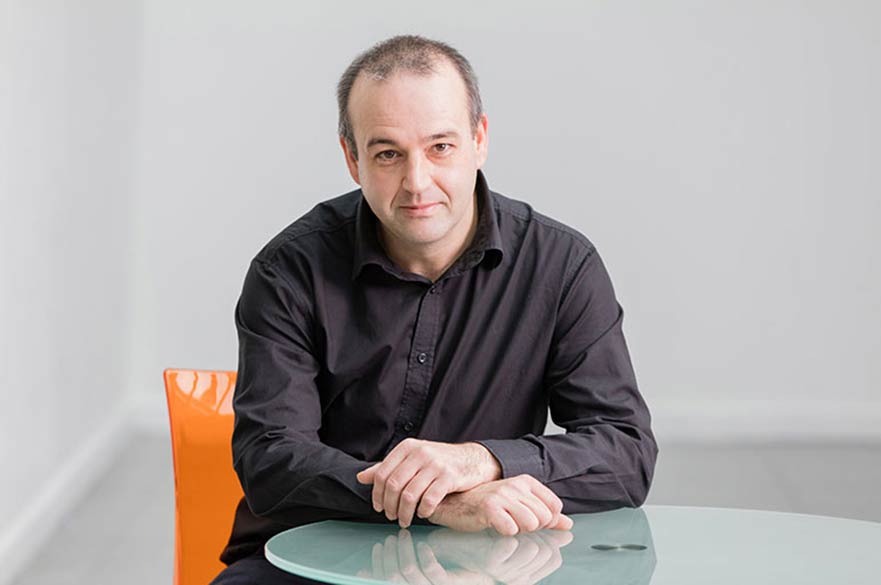
David DownesView profile
Senior Lecturer
David Downes is a Senior Lecturer at the Nottingham School of Art & Design, Nottingham Trent University, where he teaches scripting for animators, procedural animation, and motion capture applications while supporting students across multiple courses. He actively supervises postgraduate research in his specialized domains. His research centers on X-ray systems and image processing for security applications, interaction design, interactive environments, computational creativity, procedural animation, and motion capture. A sustained focus involves developing X-ray imaging systems for security screening, conducted within the Imaging Science Group led by Prof. Paul Evans. This work bridges engineering, computer science, and creative design to solve real-world security challenges. Downes' recent publications (2023-2024) reveal two dominant research trajectories: advanced X-ray imaging techniques (conical shell beam tomography/diffraction for medical/security applications) and machine learning-driven virtual reality exposure therapy for mental health. His work demonstrates interdisciplinary innovation spanning physics, computer vision, and clinical psychology. Professional recognition includes: Fellow of the Higher Education Academy Downes supervises PhD students including Hogg (2024) on focal construct geometry for X-ray diffraction. His research is funded by Defence and Security Accelerator (DASA), EPSRC, US Department of Homeland Security (DHS), and Cranfield University, with collaborations extending to Roma Patel of The Society of British Theatre Design. Key collaborators: Roma Patel (The Society of British Theatre Design) Primary sponsors: DASA, EPSRC, DHS, Cranfield University As a core member of the Imaging Science Group, Downes contributes to internationally recognized research in security-focused X-ray systems. The group maintains active GitHub repositories and ResearchGate presence, with projects emphasizing human-centered design validated through ergonomics studies and real-world security implementations.