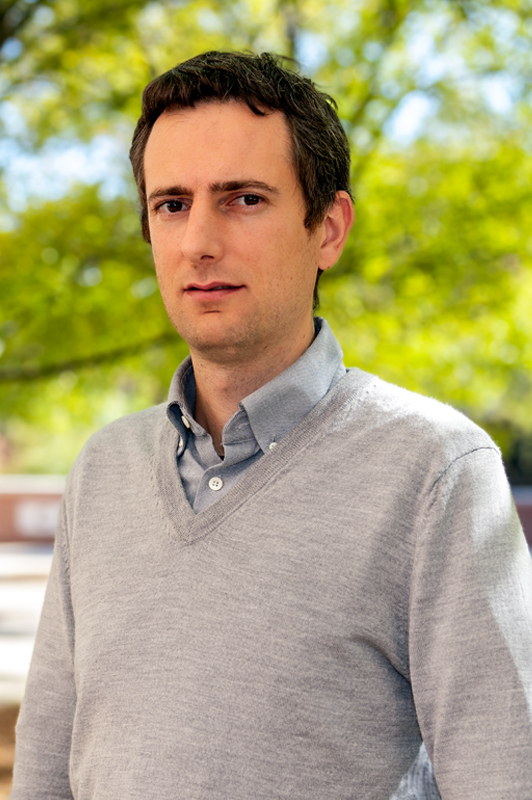
Farbod Farhadi is a researcher at Roger Williams University , affiliated with the School of Business . His work bridges operations research, optimization, and healthcare logistics, with a focus on solving complex scheduling problems in clinical and industrial settings. His research spans multiple domains: Healthcare operations (hemodialysis center scheduling) Lean manufacturing (U-shaped cells, human factors) Air traffic scheduling (branch-and-price algorithms) Metaheuristics for runway and facility location problems Recent publications emphasize exact optimization models, predictive analysis, and practitioner-oriented solutions for technician cost reduction.
Stella Tsotsi serves as Associate Professor and Head of Studies for Area of Responsibility 8 in the Department of Nursing and Health Promotion at Oslo Metropolitan University's Faculty of Health Sciences. A clinical neuropsychologist, her research investigates developmental pathways to child and adolescent psychopathology through the interplay of child self-regulation capacities, parental mental health factors, and biological markers including genetic and epigenetic mechanisms. Her primary research focuses on the co-occurrence of aggression and internalizing difficulties in youth, examining how early life stress, parenting practices, and transgenerational mental health transmission shape socio-emotional development. She specializes in designing early interventions for cognitively disadvantaged children and employs advanced methodologies from large multidisciplinary cohort studies to investigate executive functions, emotion regulation, and temperament as vulnerability factors. Analysis of her 15 most recent publications (2023-2025) reveals consistent emphasis on longitudinal developmental trajectories, with predominant themes including epigenetic mechanisms in stress response, cross-cultural parenting dynamics, and the interplay between biological predispositions and environmental factors. Her work frequently utilizes multi-cohort designs across international collaborations to examine prenatal programming of mental health outcomes. No scientific awards are documented in the available institutional records. Dr. Tsotsi mentors students within her research domain as part of her academic responsibilities, though specific advisee names are not published in institutional materials. Her involvement in large-scale cohort studies across multiple countries indicates participation in significant grant-funded research initiatives, though specific grants aren't detailed in the provided information. She maintains an extensive international research network spanning Montreal, Ottawa, Amsterdam, Rotterdam, Saarbrücken, Manchester, and Singapore, collaborating on projects that investigate how parental mental health and parenting behaviors influence children's emotional competence and psychopathology susceptibility through developmental and epigenetic frameworks.
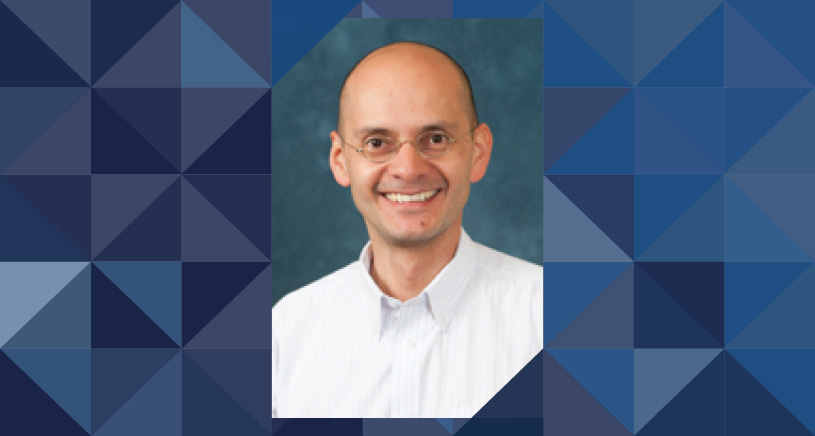
Eduardo Villamor is a Professor in the Department of Epidemiology at the University of Michigan School of Public Health with an extensive research portfolio focused on child health and development. His academic journey spans multiple continents with research conducted in the Middle East, Africa, and Latin America. Currently, he serves as director of the Summer Session in Epidemiology and teaches several advanced epidemiology courses. Dr. Villamor's educational background includes: Medical Degree (MD): National University of Colombia Master of Public Health (MPH): Hebrew University of Jerusalem Doctorate in Nutrition and Epidemiology (DrPH): Harvard University His research program centers on the intersection of perinatal, pediatric, life-course, and nutritional epidemiology. Dr. Villamor investigates causes of adverse pregnancy outcomes, prenatal and childhood determinants of long-term health outcomes, nutrition in child development, and interactions between nutrition and infection. His work spans neurodevelopmental and mental health, clinical epidemiology, and the life-course epidemiology of chronic and infectious disease. Analysis of his recent publications reveals a strong focus on transgenerational health effects, particularly examining how maternal and grandmaternal factors influence child and adolescent health outcomes across multiple generations. His research frequently employs large-scale cohort studies and advanced epidemiological methods to investigate causal relationships between early-life exposures and long-term health trajectories, with particular emphasis on nutritional determinants of health, pregnancy outcomes, and metabolic health. Dr. Villamor is actively involved in graduate education, teaching courses including: EPID673: Epidemiology of Developmental Origins of Health and Disease EPID686: Causal Inference In Epidemiology EPID696: Pregnancy And Perinatal Epidemiology EPID707: Nutritional Epidemiology His research portfolio includes several major projects: The Bogota School Children Cohort (BoSSCo) Transgenerational determinants of pregnancy outcomes and infant health The Nine Mesoamerican Countries Metabolic Syndrome (NiMeCoMeS) Study Early-life causes of neurodevelopmental and mental health outcomes
Kathryn Duncan, DVM, PhD, serves as an Assistant Professor in the Department of Veterinary Pathobiology within the College of Veterinary Medicine at Oklahoma State University. Appointed on January 4, 2024, her research and teaching focus centers on veterinary parasitology with significant contributions to understanding tick-borne diseases and their impact on animal and public health. Doctorate in Veterinary Medicine from the University of Tennessee Residency in Veterinary Parasitology through the National Center for Veterinary Parasitology PhD in Biomedical Sciences from Oklahoma State University Dr. Duncan's research primarily investigates veterinary parasitology with emphasis on tick ecology, vector-borne diseases, and diagnostic methodologies for parasitic infections in companion animals and equines. Her work examines spatial and temporal dynamics of tick populations across North America, the microbiome composition of various tick species, and the prevalence of tick-borne pathogens in different geographic regions. She has conducted extensive field studies on attachment site preferences of ticks on horses and the seasonal patterns of infestation. Analysis of her publication record reveals a focused research trajectory centered on tick-borne diseases, particularly examining Dermacentor variabilis, Amblyomma americanum, and other significant tick vectors. Her research combines rigorous field collection with advanced molecular techniques including PCR, 16S rRNA gene sequencing, and microbiome analysis. Dr. Duncan's work demonstrates particular strength in large-scale epidemiological studies across multiple states, providing valuable insights into the geographic distribution of tick species and associated pathogens. Dr. Duncan teaches PhD Research and Dissertation courses along with Undergraduate Research Problems at Oklahoma State University, where she mentors students in veterinary parasitology research. Her teaching approach emphasizes hands-on research experience and the development of scientific communication skills through written and oral presentations of research findings.
Tamás Terlaky is the Alcoa Endowed Chair Professor at the P.C. Rossin College of Engineering and Applied Science, Lehigh University. He also holds adjunct positions at McMaster University's School of Computational Engineering and Science and the University of Pannonia in Hungary, and serves as a Visiting Professor at Strathclyde University's Department of Management Sciences. Professor Terlaky earned his academic credentials from Eötvös University in Budapest, Hungary, including an M.Sc. in Mathematical Sciences, a Ph.D. in Natural Sciences with specialization in Operations Research, and a Candidate of Mathematical Sciences degree. He further earned a Doctor of the Academy of Sciences from the Hungarian Academy of Sciences and completed his Habilitation at Panon University of Veszprém. Terlaky's research spans multiple areas of optimization and computing. His primary focus is on Quantum Computing Optimization, where he directs the Quantum Computing and Optimization Laboratory (QCOL). He has pioneered work in Interior Point Methods for linear and nonlinear optimization, Semidefinite Optimization, and various applications of operations research in engineering sciences. His research has practical applications in radiation therapy treatment optimization, nuclear reactor core reloading, oil refinery optimization, and VLSI design. Terlaky's work bridges theoretical foundations with real-world engineering problems, making significant contributions to both academic knowledge and practical implementations. Throughout his distinguished career, Professor Terlaky has received numerous prestigious awards and recognitions: Fellow of the Fields Institute Fellow of INFORMS Fellow of SIAM Fellow of IFORS Fellow of the Canadian Academy of Engineering Winner of the INFORMS Daniel H. Wagner Prize for Excellence in Operations Research Practice (2017) Winner of the Outstanding Innovation in Service Science Engineering Award of IISE (2019) MITACS Mentorship Award for distinguished Ph.D. student supervisory record Egerváry Award of the Hungarian Operations Research Society Award of Merit of the Canadian Operations Research Society Hillman Faculty Award, Lehigh University (2023) Professor Terlaky has supervised numerous graduate students, with many receiving prestigious awards for their thesis work. His research has been supported by significant grants including a $2.1 million DARPA grant for research in optimization with Noisy Intermediate-Scale Quantum (NISQ) devices, NSF grants, and collaborations with industry partners like SAS and Mitsubishi Research Labs. As director of the Quantum Computing and Optimization Laboratory (QCOL), Terlaky leads a multidisciplinary team working at the forefront of quantum computing applications. The laboratory focuses on developing new quantum computing techniques for combinatorial optimization problems, creating quantum interior point algorithms, and studying noise control in NISQ devices. Through strong collaborations, QCOL has access to state-of-the-art quantum computing hardware and software.
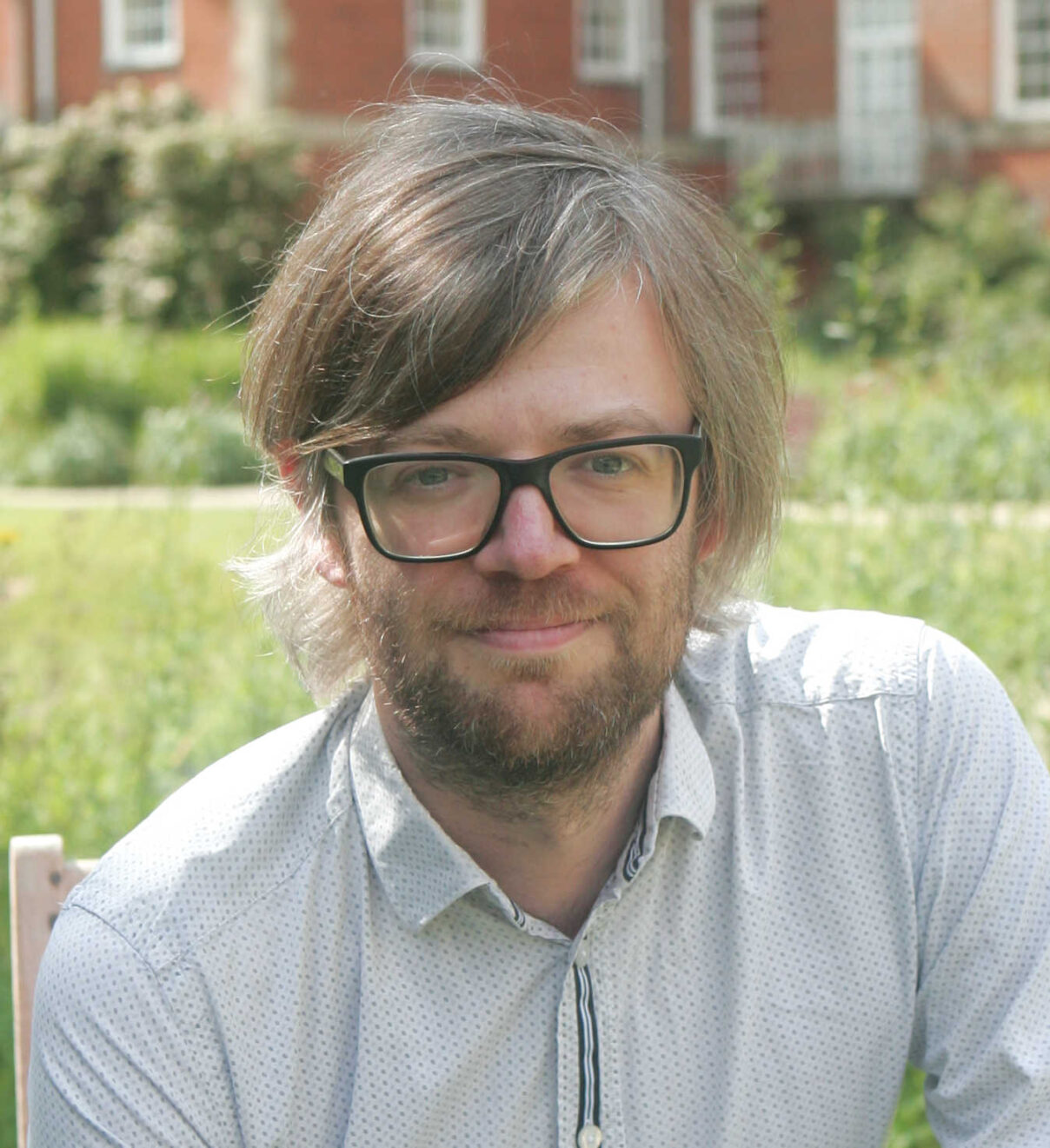
Professor Tom Lancaster holds a prominent position in the Department of Physics at Durham University, serving as both Professor and Deputy Head of Department. He also represents Physics in the Institute of Medieval and Early Modern Studies. His research employs advanced techniques to investigate fundamental phenomena in condensed matter systems, with particular expertise in using muons as microscopic probes of magnetic properties. Professor in the Department of Physics, Durham University Deputy Head of Department, Durham University Department Rep (Physics), Institute of Medieval and Early Modern Studies Lancaster's research spans multiple frontiers of condensed matter physics. He specializes in muon spectroscopy to study collective states of matter including magnets, superconductors, and magnetic glasses. His work explores excitations such as spin waves and vortices across scales from quantum mechanical interactions to polymer chain dynamics. Key focus areas include low-dimensional magnetism in molecular systems, frustrated magnets seeking spin liquid states, and unconventional superconductors where magnetism and superconductivity coexist. His research leverages major international facilities including the ISIS neutron and muon source in the UK and the Swiss Muon Source at the Paul Scherrer Institut. His recent publication record reveals a strong trajectory in topological magnetic phenomena, particularly skyrmions and quantum spin liquids. The work demonstrates sophisticated integration of experimental muon spectroscopy with computational methods and theoretical frameworks. His research frequently addresses complex magnetic phase diagrams, dimensional effects in quantum magnets, and the interplay between crystal structure and magnetic properties in novel materials. 2020: President of the International Society for Muon Spectroscopy Professor Lancaster mentors graduate students including Nathan Bentley and Samuel Ladd. He has made significant scholarly contributions through textbooks including 'Muon Spectroscopy: an introduction' (Oxford University Press, 2021), 'General Relativity for the Gifted Amateur' (2025), and 'Quantum Field Theory for the Gifted Amateur' (2014). His research program benefits from access to world-leading facilities and maintains active international collaborations across the muon spectroscopy community. As a key member of Durham University's Muon group, Lancaster contributes to a vibrant research ecosystem focused on applying muon techniques to cutting-edge problems in quantum materials. His work bridges experimental investigation with theoretical understanding, particularly in the areas of quantum magnetism and topological phenomena, maintaining strong connections with both particle physics facilities and condensed matter theory.
Lena Sheveleva is a Senior Lecturer at Cardiff Business School, Cardiff University, where she has been teaching since completing her PhD at Penn State University in 2014. Her academic position places her at the intersection of economic theory and practical business applications, with a strong focus on international trade dynamics and data-driven analysis. Education: PhD in Economics, Pennsylvania State University BA in Mathematics, American University in Bulgaria BA in Economics, American University in Bulgaria Dr. Sheveleva's research program bridges traditional economic frameworks with modern data science methodologies. Her work examines how multi-product firms operate in global markets, how governmental trade policies affect business decisions, and how economic principles can inform data science applications in business contexts. She applies econometrics and machine learning to large-scale datasets for predictive modeling, causal inference, and business analytics, with particular emphasis on workforce productivity and resource allocation problems. Her recent publications demonstrate a clear trajectory toward integrating economic theory with practical business analytics, focusing on worker productivity, multi-product export strategies, and the impact of trade policies on firm behavior. This research combines rigorous theoretical frameworks with empirical analysis of real-world business challenges. Scientific Recognition: Journal reviewer for American Economic Journal: Microeconomics and Economics Letters Recipient of multiple research grants including ESRC Business Boost and Seed Fund projects Cardiff-Xiamen Mobility Grant recipient (suspended due to Coronavirus) Dr. Sheveleva actively supervises postgraduate students and serves as a valuable resource for research projects examining the intersection of economics and business analytics. Her current work with co-author Jiangyang Wang on non-tariff measures demonstrates her ongoing commitment to understanding how trade policies affect importing firms. She also explores how economic principles can inform data science applications in fraud detection, worker productivity optimization, and pricing strategy development.
Bart de Smit is a Professor of Algebra and Number Theory at the Mathematical Institute of Leiden University's Faculty of Science. He serves as Vice Dean and Director of Education for the Faculty of Science, where as a member of the Faculty Board he is responsible for bachelor's and master's education within the faculty. His research spans multiple domains in mathematics with a distinctive focus on: Algebraic Number Theory Geometric Transformations Mathematical Analysis of Visual Art Conformal Mappings and Symmetry De Smit is internationally recognized for his groundbreaking work on Escher's Print Gallery , where he applied mathematical principles to analyze and complete Escher's artwork that contained a mysterious blank spot. His research revealed the mathematical structure behind what's now known as the 'Droste effect' in Escher's work - a recursive visual phenomenon involving scaling symmetry. This interdisciplinary research culminated in a significant publication in the Notices of the American Mathematical Society in 2003. The publication and related work demonstrate de Smit's innovative approach that bridges pure mathematics with visual arts, using a five-step mathematical process to unravel, redesign, tile, convert, and complete Escher's work. His methodology combined complex analysis, image processing, and geometric transformations to solve what had been an artistic mystery. As an academic leader, de Smit oversees educational programs while maintaining active research involvement with the ALGANT (Algebra, Geometry, And Number Theory) program and the Intercity seminar ABC focusing on the ABC conjecture. His academic mentorship includes supervising PhD candidates such as Pavel Solomatin and Qijun Yan in advanced mathematical research.
Dr. Gleb Kotoousov is a Researcher at the Institute of Theoretical Physics within the Faculty of Mathematics and Physics at Leibniz University Hannover. His office is located in Building 3701, Room 224 at Appelstraße 2, 30167 Hanover, Germany. He maintains an active research profile with collaborations extending to Rutgers University. Dr. Kotoousov's research focuses on integrable or exactly solvable models in field theory and statistical mechanics. His work explores critical phenomena through the scaling limit of integrable, critical 1+1 dimensional quantum spin chains, employing the ODE/IQFT correspondence to study non-rational CFTs with continuous critical exponent spectra. His research has significant applications in string theory (particularly AdS/CFT correspondence) and condensed matter systems with disorder. His work bridges theoretical physics with multiple mathematical disciplines including algebra, topology, geometry and mathematical analysis. His recent publications demonstrate consistent contributions to understanding quantum spin chains, chiral field theories, and vertex models through integrability approaches. His research methodology combines advanced mathematical techniques with physical insights to tackle complex problems in low-dimensional quantum systems. Dr. Kotoousov participates in academic supervision, mentoring undergraduate and post-graduate students at both Leibniz University Hannover and Rutgers University. During the Winter 2024/2025 semester, he taught the Masters course 'Quantum Field Theory' at Leibniz University Hannover, demonstrating his commitment to advanced physics education. Based at the Institute of Theoretical Physics, Dr. Kotoousov contributes to one of Leibniz University Hannover's key research areas that connects with the university's strengths in Quantum Optics and Gravitational Physics, where over 350 researchers work at the interface of light, gravity, space, time and matter.
Brenna Morse is a Professor of Nursing at the MGH Institute of Health Professions in Boston. She specializes in pediatric pain management, nursing education, and complex healthcare systems. Dr. Morse holds multiple certifications, including Family Health Nursing, Pain Management, and School Nursing, and has been recognized as a Fellow of both the National Academy of School Nursing and the American Academy of Nursing. Her career spans clinical practice, research, and education, with a focus on improving care accessibility for children with complex conditions. Education: BS in Nursing (University of Massachusetts Lowell, 2011); MS in Nursing (University of Massachusetts Boston, 2013); PhD in Population Health Nursing (University of Massachusetts Boston, 2015); MS in Family Health Nursing (University of Massachusetts Lowell, 2021). Research interests center on pediatric pain assessment, school nursing workforce development, and nursing education innovations. She has led projects such as the U.S. School Nursing Job Analysis and the GRASP algorithm for diagnosing pain in medically complex children. Her work emphasizes collaboration with families and interdisciplinary teams to create equitable healthcare systems. Dr. Morse has received grants for training complex care nurses in Massachusetts and was part of a team awarded $1 million for this initiative. Her awards include recognition from the Massachusetts Association of Colleges of Nursing and the American Academy of Nursing. She mentors emerging nurse scientists and actively supports nursing leadership development.
Davide Guzzetti is an Associate Professor in the Department of Aerospace Engineering at Auburn University , where he combines expertise in astrodynamics with cutting-edge technologies like machine learning and immersive computing. Ph.D. in Aeronautics and Astronautics, Purdue University M.S. in Space Engineering, Politecnico di Milano & Torino B.S. in Aerospace Engineering, Politecnico di Milano His research focuses on space mission design and astrodynamics , particularly in cislunar environments and highly elliptical orbits. He leads innovative projects applying machine learning to satellite systems, virtual reality to trajectory design, and origami-inspired engineering to spacecraft deployables. Recent publications reflect trends in orbital mechanics , autonomous space systems , and human-machine collaboration for space mission planning. His work spans technical analysis of self-folding polymers, game-theoretic approaches to satellite constellation competition, and immersive visualization tools for multi-body dynamics. NASA Early Career Faculty Award (2025) Ginn Faculty Achievement Fellow (2025) Guzzetti's research has secured multiple grants including a NASA EPSCoR award for studying microgravity effects on self-folding polymer sheets and a NASA Innovative Advanced Concepts (NIAC) award for space-based self-assembling antenna arrays. He also contributes to educational innovations through Massive Open Online Courses (MOOCs) and elementary education outreach programs in spacecraft dynamics. His laboratory develops interactive solutions for astrodynamics applications, integrating immersive computing with intelligent systems to enhance space mission design processes. Current projects include studying resilience of deployable space structures and optimizing autonomous path-planning for asteroid proximity operations.
Ke He is a prolific researcher with over 15 publications between 2008 and 2025, focusing on machine learning , network security , and signal processing . His work spans multiple domains including Massive MIMO systems , hyperspectral imaging , network intrusion detection , and human-computer interaction through capacitive touchscreen research. His recent publications highlight expertise in dynamic system modeling with applications to fractional-order financial risk systems and neurobiological models . He has pioneered graph-based intrusion detection techniques and 3D finger pose estimation methods. While his institutional affiliation isn't explicitly stated in the DBLP data, his collaborative work appears across institutions in China , Singapore , and Australia . Ke He's research interests intersect mathematical modeling , deep learning , and system optimization . He has contributed to underwater acoustic signal processing , edge computing , and robust antenna selection algorithms. His work demonstrates consistent application of nonlinear dynamics and topological data analysis to practical engineering problems.
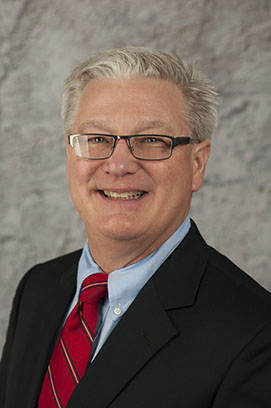
Dr. Stephen B. Shiring is a Professor and Assistant Chairperson in the Department of Hospitality and Employment Relations at Indiana University of Pennsylvania (IUP), within the Eberly College of Business. He holds an EdD from the University of Pittsburgh (1995), an MBA from IUP (1985), and a BS in Food Service Management from IUP (1981). His research focuses on linking historical shifts in hospitality delivery systems to contemporary business models, emphasizing entrepreneurial innovations in food, beverage, and lodging industries. Dr. Shiring has authored multiple books on catering, including the widely used Professional Catering: The Modern Caterer's Guide to Success , along with instructor manuals and test banks. His scholarly contributions include groundbreaking historical analyses of hospitality education and industry development, published in journals like Journal of Hospitality and Tourism Research . Professional Affiliations: Member of CHRIE, ACPHA (volunteer evaluator), CMAA, NRA, PRLA, AHLA. Awards: 2022 Distinguished Faculty Award, Melvin Jones Fellowship, multiple advising and teaching awards from IUP. Advocacy: Spearheaded scholarships through the Pittsburgh Club Managers Foundation (PCMF) and supported student career services. His work bridges historical industry insights with modern practices, impacting both academia and industry through training programs, conference presentations, and collaborative research. Dr. Shiring actively contributes to accreditation processes, ensuring educational programs meet industry standards.
Lea Hirsch is an Assistant Professor, Teaching Stream at the University of Toronto Mississauga (UTM), affiliated with the Department of Chemical and Physical Sciences. Her research focuses on discovering and characterizing exoplanets using radial velocity and direct imaging methods, with particular emphasis on planetary orbits, brown dwarfs, and the effects of binary star systems on planet formation. She holds a Ph.D. from the University of California, Berkeley (2018). Her research interests include studying exoplanet demographics, occurrence rates, and the dynamics of planets in binary systems. She investigates how binary companions influence planetary formation and stability, leveraging statistical comparisons between single and binary star systems. She emphasizes innovative teaching methods in astronomy courses, integrating computational skills and problem-based learning. Lea collaborates extensively with projects like the TESS-Keck Survey and the California Legacy Survey, contributing to large-scale exoplanet detection and cataloging efforts. Her work bridges observational astronomy with planetary science, addressing fundamental questions about our galactic neighborhood and the prevalence of Earth-like worlds.
Bianca Schroeder is a Full Professor and Canada Research Chair in the Computer Science Department at the University of Toronto, with a joint appointment as Associate Department Chair in the Computer and Mathematical Sciences Department at the University of Toronto Scarborough. She leads the computer systems and networks research group and previously completed postdoctoral research at Carnegie Mellon University under Garth Gibson, following her doctorate from Carnegie Mellon supervised by Mor Harchol-Balter. Her research focuses on the design, implementation, and analysis of large-scale computer systems, with particular emphasis on storage systems, data centers, system reliability, and resource allocation. She applies techniques from statistics, machine learning, and data mining to solve real-world problems in collaboration with industry partners including Microsoft, Google, and NetApp. Her work combines empirical analysis of production systems with innovative solutions for enhancing reliability and efficiency. Schroeder's publications demonstrate a consistent focus on understanding system failures through large-scale field studies, developing practical solutions for storage reliability, and optimizing resource management in data-intensive environments. Her research spans hardware reliability (DRAM errors, disk failures), storage systems, data center management, and scheduling algorithms. Major Scientific Awards: Sloan Research Fellow Outstanding Young Canadian Computer Science Prize Ontario Early Researcher Award NSERC Accelerator Award Two-time IBM PhD Fellowship winner Five best paper awards and two Test of Time Awards She actively recruits graduate students for projects in data center technologies, storage systems, and reliability engineering. Her research is supported by the Canada Research Chair program and industry partnerships. She has chaired multiple prestigious conferences including Usenix FAST'14 and ACM Sigmetrics'14.