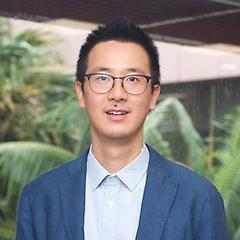
Lei Chen is a Chair Professor at the Department of Computer Science and Engineering , Hong Kong University of Science and Technology (HKUST) , where he serves as Director of the Big Data Institute . He received his PhD from the University of Waterloo after completing BS and MS degrees at Tianjin University and Asian Institute of Technology , respectively. As an IEEE Fellow and ACM Distinguished Scientist , his research spans Data-Driven Machine Learning , Crowdsourcing-based Data Processing , Uncertain Databases , and Knowledge Graphs . His work on graph neural networks , spatial crowdsourcing , and privacy-preserving systems has earned multiple best paper awards at top venues like VLDB , SIGMOD , and KDD . Current research focuses on agentic neural graph databases and large language model optimization . His 15 most recent publications (2022-2025) address: Secure spatial query systems (Hu-Fu) Decentralized graph neural network training (Sancus) Explainable AI frameworks Temporal graph learning Polynomial activation functions for weather forecasting Knowledge graph applications in recommender systems Scientific Awards: VLDB Best Research Paper (2022) SIGMOD Test-of-Time Award Google Faculty Award (2013) Multiple conference best paper awards He has supervised 40+ PhD/MPhil students , many of whom now hold academic/research positions at institutions like BeiHang University , Sun Yat-sen University , and Huawei Noah's Ark Lab . His group ( Database Research Group ) leads projects in graph neural networks , knowledge graphs , and blockchain systems .
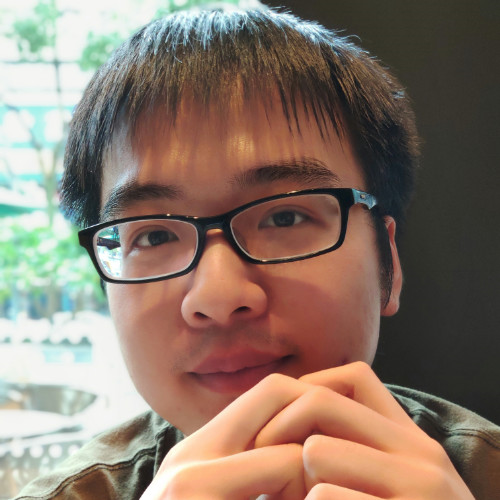
Rongmao Chen is a Professor at the College of Computer Science and Technology , National University of Defense Technology , China. He earned his Ph.D. from University of Wollongong, Australia (2016), following B.Eng and M.Eng at NUDT (2011, 2013). As a visiting researcher at COSIC, KU Leuven (2019-2020), he collaborated with Prof. Bart Preneel . Research Focus: Public-key cryptography, network security, and privacy-preserving protocols Key Contributions: Subversion-resilient encryption, reverse firewalls, and leakage-resilient key exchange Editorial Roles: IEEE TDSC (2024-), IACR Communications in Cryptology (2025), JCST Young Editorial Board (2023-) His recent works explore quantum-resistant cryptography (CRYPTO 2025, ASIACRYPT 2024), privacy-preserving machine learning (S&P 2025), and blockchain security (IEEE TIFS 2025). He serves on program committees of ACM CCS , PKC , and CT-RSA conferences. Awards & Recognitions: NSFC Excellent Young Scholar (2021) ACM SIGSAC China Rising Star (2020) Best Student Paper Award, ACISP 2018 Outstanding Advisor (National College Student Information Security Contest, 2017 & 2023) Young Elite Scientists Sponsorship, CAST (2018)
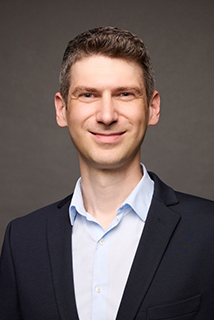
Dr. Jie (Jack) Yang is a Lecturer in Database Systems & Big Data at the School of Computing and Information Technology, University of Wollongong. He holds a PhD from the same institution. His research focuses on Natural Language Processing (NLP), including Large Language Models (LLMs), Multimodal NLP, Machine Reading Comprehension, and Knowledge Graph applications across domains like Education, Healthcare, and Finance. He is affiliated with the Association for Computational Linguistics (ACL) and IEEE. Research Interests Dr. Yang's work emphasizes theoretical advancements and practical solutions in NLP. His recent projects include developing robust document retrieval systems, adversarial detection techniques, and enhancing AI models' robustness through masking and contrastive learning. He collaborates on applications like automated postural assessment using CNNs and AI-driven educational tools. Grants & Projects He leads projects such as AMKD.AI (Knowledge Graph toolkit), Next-Gen AIOT (interactive kiosks), and AI4U (AI competency initiatives). His funded research spans areas like LLM-based tourism data management, cybersecurity for AI models, and healthcare NLP applications. Teaching & Supervision Dr. Yang coordinates courses like Advanced Programming (CSCI851/CSCI251) and supervises PhD/Master’s students in topics like LLM explainability, skeleton-based action recognition, and adversarial learning. He emphasizes practical industry alignment in education and research. Labs & Teams He contributes to interdisciplinary teams advancing AI in education, healthcare, and industry collaboration through initiatives like the Telstra-UOW AIOT Hub and UOW’s Pretrained Language Models (PLMs) for medical document processing.
Ruihong Qiu is a Lecturer at the School of Electrical Engineering and Computer Science, The University of Queensland, with an ARC DECRA fellowship (2025-2027). Research focuses include graph neural networks, large language models, and sequential data modeling. Research Interests: Advanced graph neural network techniques Recommender systems using reinforcement learning Time series foundation models Legal case retrieval with text-attributed graphs Recent Research Trends: Publications emphasize graph condensation for continual learning, OOD detection in graph models, and LLM integration for legal and public health applications. Scientific Recognition: ARC Discovery Early Career Researcher Award ATSE Tech Bridge Grant Supervision & Collaboration: Currently supervising multiple PhD students across topics including legal case retrieval, graph representation learning, and time series analysis, typically in collaboration with Professor Helen Huang and other co-advisors.
Brendan McKay is a Professor in the School of Computing at the Australian National University (ANU), where he conducts research at the intersection of mathematics and computing. His work is deeply rooted in combinatorics, graph theory, and probabilistic methods in discrete structures. His research interests span a wide range of topics in discrete mathematics, including random graphs , asymptotic enumeration , Hamiltonian cycles , planar and bipartite graphs , matrix theory , and computational combinatorics . His work often combines theoretical depth with algorithmic applications, particularly in the analysis of complex networks and discrete systems. The recent publications (2015–2025) reflect a sustained focus on asymptotic enumeration techniques, structural properties of graphs, and algorithmic challenges in graph isomorphism and distance queries. Key themes include the use of probabilistic tools (e.g., cumulant expansions, martingales), enumeration under degree constraints, and symmetry-preserving operations on maps. His collaborations frequently involve researchers such as Mikhail Isaev, Catherine Greenhill, and Qing Wang. Scientific Awards and Recognitions: Fellow, Australian Mathematical Society (2000 → …) Fellow, Australian Academy of Science (1997 → …) McKay has led and co-led several major research projects, including Deep Learning for Graph Isomorphism and Hypergraph models for complex discrete systems , demonstrating leadership in both theoretical and applied directions. He has not explicitly listed advisees, but his role as Principal Investigator (PI) on multiple projects indicates active mentorship and grant leadership. His work often involves interdisciplinary applications in bioinformatics and network science. He is associated with research groups and projects focused on graph algorithms , random discrete structures , and computational combinatorics , often in collaboration with the mathematical sciences community at ANU and beyond.
Sebastian Baltes is a Professor of Software Engineering at the University of Bayreuth, Germany, and an Adjunct Professor at the University of Adelaide, Australia. His research focuses on empirical studies of software developers' work habits, tool/process improvements, and bridging empirical research with industrial practice. He holds a PhD from the University of Trier and has industry experience at SAP and QAware. He teaches courses on Software Engineering, Advanced SE, and related topics across multiple universities, including University of Bayreuth, Trier, and Adelaide. His research emphasizes data-driven decision-making and has led to influential work on test flakiness, Stack Overflow code reuse, and developer demographics. His academic contributions span over 50 publications in venues like ICSE, FSE, and Empirical Software Engineering. He leads the Software Engineering Group at Bayreuth and actively contributes to the SE community through editorial roles and industry collaborations.
Prof. Zahir Tari is a leading international expert in Computer Science, currently serving as a Professor at the School of Computing Technologies at RMIT University. He holds a prominent role as Research Director of the Centre of Cyber Security Research and Innovation (CCSRI) and has been appointed to the ARC College of Experts (2022-2024). Research Interests : Prof. Tari specializes in designing innovative solutions for large-scale systems including Cloud, Edge, and IoT environments, with particular emphasis on cybersecurity, performance optimization, and reliability of critical systems like SCADA and Smart Grids. His work integrates mathematical models with computational approaches to address complex security and scalability challenges. Research Trends : Recent publications highlight his leadership in blockchain-based energy trading privacy, cross-domain access control systems, IoT security frameworks, and federated learning approaches for vulnerability detection. His work combines theoretical rigor with practical implementations in domains ranging from healthcare to military applications. Scientific Recognition : Member, ARC College of Experts (2022-2024) Supervision & Funding : Prof. Tari has successfully supervised 31 PhD students to completion and secured over AUD 21 million in research funding through prestigious grants including an ARC Research Hub, CRC-P, multiple ARC Discovery Projects, and industry partnerships with organizations like Siemens. His research has produced 279 publications with an h-index of 49 and over 10,800 citations.
Professor Robert Fitch is a distinguished academic leader and one of Australia's foremost authorities in robotics at the University of Technology Sydney (UTS), where he serves as Professor in the School of Mechanical and Mechatronic Engineering. He holds significant leadership roles as Director of the NSW Defence Innovation Network and was previously Director of UTS Tech Lab and Head of School of Mechanical and Mechatronic Engineering from 2019-2023. His career bridges academia, research, and industry collaboration to develop engineering solutions for tomorrow's societal challenges. PhD from Dartmouth College (1998-2004) Former Senior Research Fellow at Australian Centre for Field Robotics, University of Sydney Current Director of NSW Defence Innovation Network (since 2023) Founding Co-Director of NSW Space Research Network (2021-2023) Professor Fitch specializes in autonomous field robotics, developing outdoor robotic systems for diverse industry applications from agriculture to aeronautics, environmental science to space exploration. His research spans multiple domains including multi-robot coordination, hydrogen storage systems, maritime robotics, and AI-driven automation. He operates at the critical nexus of academia, research, and industry, collaborating with businesses and government organizations to deliver innovative solutions to complex real-world challenges. His work demonstrates exceptional translational impact, turning academic research into commercial ventures and practical applications. His recent publications reveal a strong focus on advancing robotics through novel planning algorithms for multi-robot systems operating in complex environments. There's a clear trend toward practical applications in maritime operations, hydrogen energy storage, and warehouse automation, reflecting his commitment to solving real-world engineering challenges. His research integrates theoretical advances with industry needs, particularly in marine robotics, autonomous systems for agriculture, and energy storage technologies. Professor Fitch's work has received significant recognition with numerous accolades and extensive media coverage including appearances on ABC's flagship 7.30 program, Weekend Australian, BBC, and The Hindu. His research has been featured in over 15 news outlets and blogged about extensively, demonstrating its broad societal impact. He has graduated 20 PhD students who are now leading work in field robotics, mechanical and mechatronic engineering, and autonomous systems. Since 2011, he has secured nearly $30 million in grants funding over 50 projects, including major collaborations with industry partners like Space Machines Company, Advanced Navigation, and Australian Wool Innovation. His leadership has been instrumental in growing startups from small beginnings to significant operations, such as Space Machines Company which launched the largest Australian-made satellite into orbit aboard a SpaceX transporter in March 2024. Professor Fitch leads the UTS Robotics Institute and has been instrumental in establishing collaborative spaces like UTS Tech Lab, which has fostered successful partnerships with multiple companies. His work with Wildlife Drones demonstrates how academic research can translate into successful commercial ventures, having grown from research projects into an established business. His leadership extends to numerous industry and academic organizations, boards, and committees, where he serves as director, chair, and co-chair.