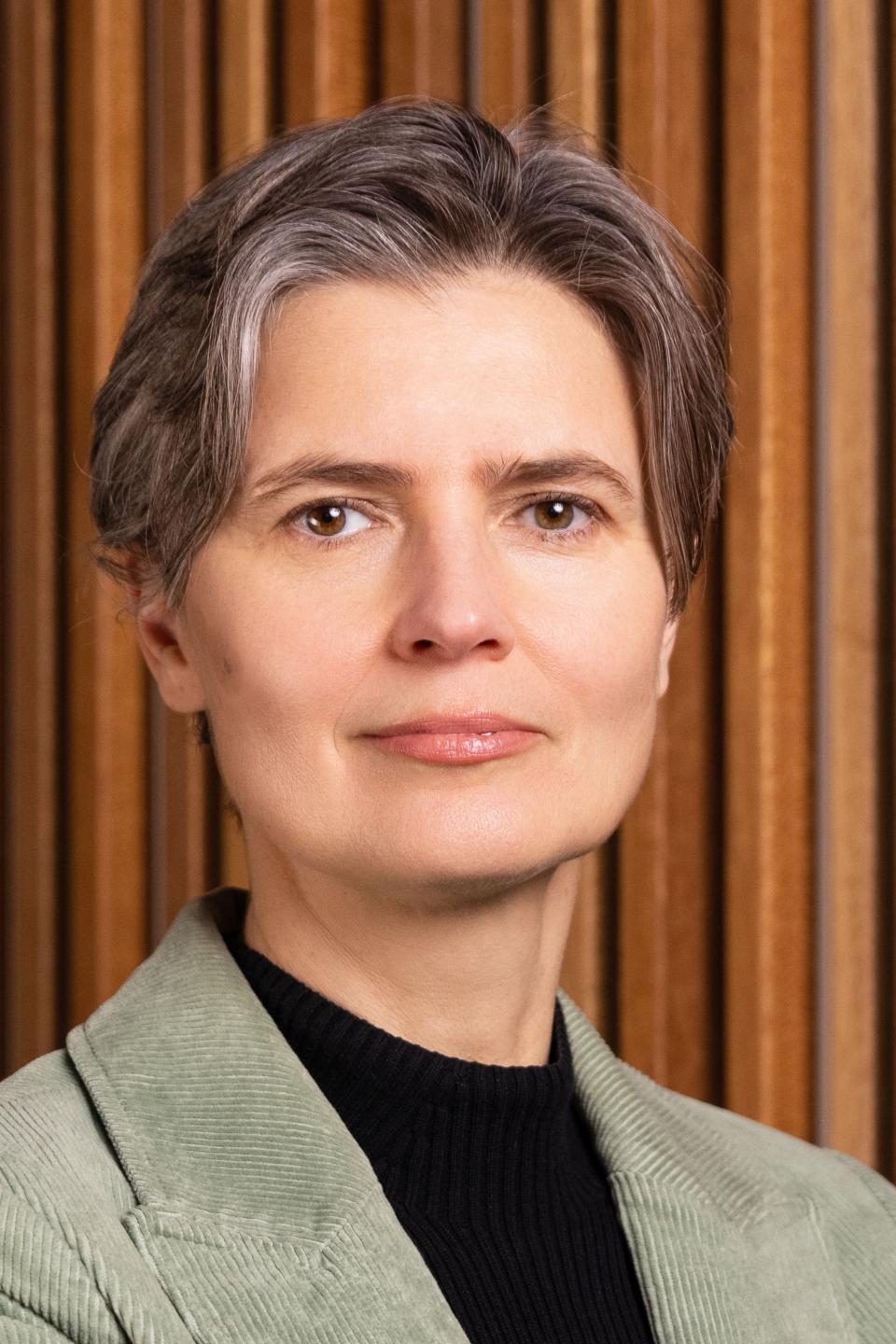
Kyle Moore is a Lecturer in Digital Media at Swinburne University of Technology's School of Social Sciences, Media, Film and Education. He holds a PhD in media and communications from the University of Sydney, focusing on games in urban environments. Current research: Mobile gaming distributions, location-based technology, augmented reality, and digital play cultures Teaching areas: Social media networks, media industries, and data communication Supervision: Available for PhD/Master's candidates in mobile technology and digital cultures His research explores intersections between location-based games and urban environments, examining how digital play shapes public space representation and access. Recent publications include analyses of Pokémon GO's haptic effects and Fortnite's cultural impact. Current grant: Supporting resilient HIV-positive community connections on digital platforms and technologies (2025-2026) at Swinburne University. Previously published in top-tier journals like Games and Culture , Convergence , and Media International Australia .
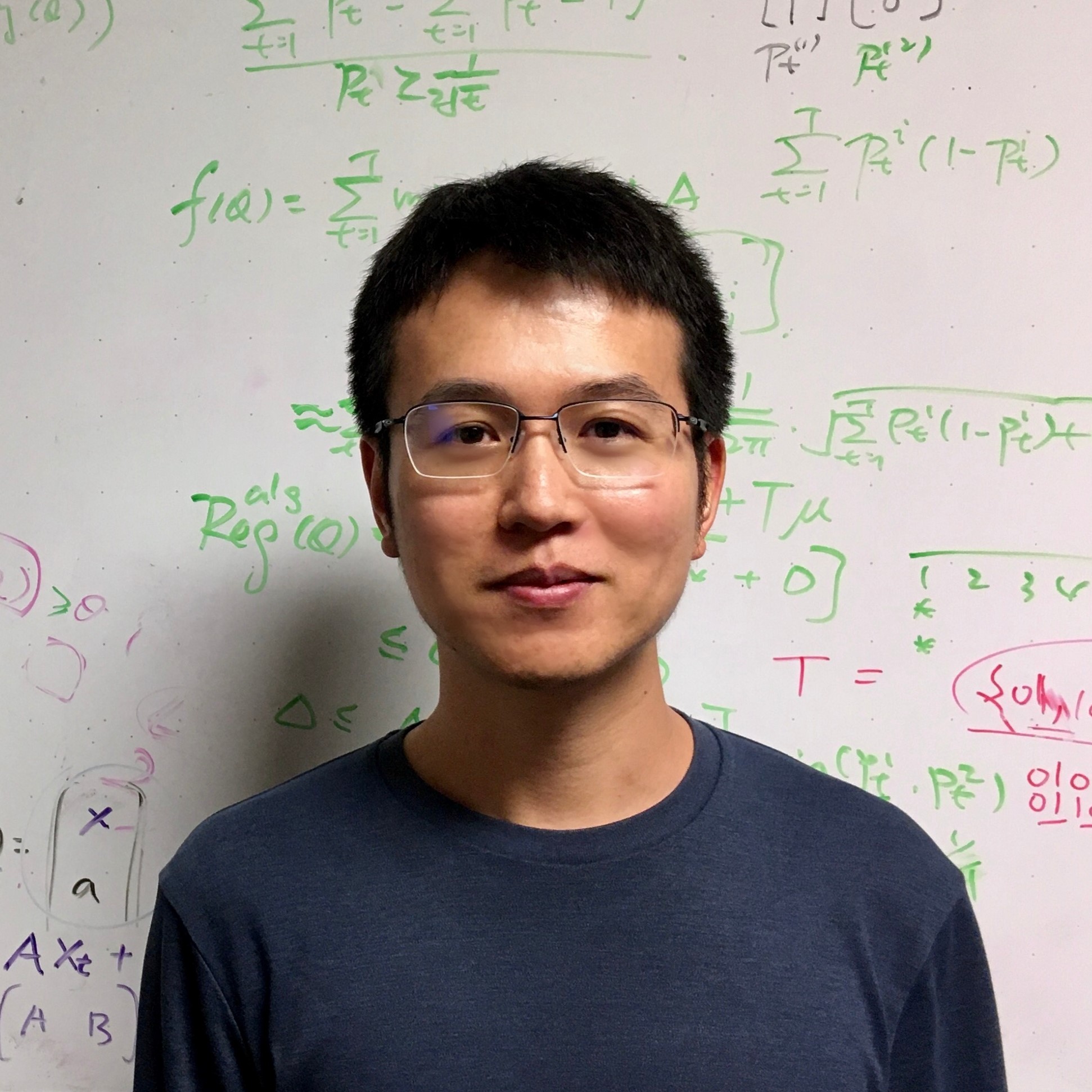
Professor Peter Chin is a Professor of Engineering at Dartmouth College and Director of the Learning, Intelligence + Signal Processing (LISP) Lab. He holds affiliations with the Thayer School of Engineering and serves as Associate Editor of IEEE Transactions on Computational Social Systems. His research bridges signal processing, machine learning, game theory, and differential geometry, with applications in cybersecurity, healthcare, and network analysis. Education: Bachelor of Science in Electrical Engineering, Computer Science, and Mathematics from Duke University (1993) Doctor of Philosophy in Mathematics from MIT (1998) Research Interests: Chin’s work focuses on fundamental questions at the intersection of machine learning, game theory, and signal processing. His lab explores topics like adversarial defense mechanisms, topological machine learning, and computational neuroscience. Recent projects include cybersecurity resilience modeling, medical imaging enhancements via GANs, and multi-agent reinforcement learning frameworks. Publications Trends: His most recent articles address cutting-edge challenges in cybersecurity (e.g., autonomous defense systems), medical AI (e.g., Alzheimer’s classification), and adversarial robustness. A notable 2025 focus is on quantitative resilience modeling for cyber defense, reflecting growing demand for AI-driven security solutions. Awards: Faculty Scholar Award, Duke University George Sherred III Award, Duke University Julia Dale Memorial Award, Duke University Grants & Leadership: Recipient of DARPA cybersecurity research grants Co-chair for SPIE/DSS Cyber Sensing Conference (2013–2020) Developed novel compressive sensing microscope for biological imaging LISP Lab: This interdisciplinary lab pioneers projects like nFlip (multiplayer security game models) and topological machine learning frameworks, emphasizing practical applications of theoretical advancements.
Adriana Iamnitchi is a Full Professor and Key Domain Chair for Computational Science at Maastricht University's Faculty of Science and Engineering, affiliated with the Department of Advanced Computing Sciences. Her research focuses on computational social science, social media dynamics, and misinformation detection. Her primary research interests include: Analysis of coordinated information campaigns across social platforms Development of LLM-based synthetic data generation for social media research Polarization quantification in multi-community networks Policy compliance frameworks for digital regulation (e.g., EU's Digital Services Act) Ethical AI applications for content moderation and transparency Her recent publications (2023-2025) demonstrate strong focus on: Cross-platform disinformation detection using multimodal embeddings Generative AI for synthetic social media datasets Quantitative analysis of toxicity monetization in creator economies Regulatory compliance automation for content transparency
Kerstin Radde-Antweiler is a full Professor of Religious Studies at the University of Bremen , where she has held a chair in Media and Religion since 2018. She serves as Deputy Spokeswoman of ZeMKI (Center for Media, Communication and Information Research) and Chairwoman of the Tenure Boards at the university. Her research focuses on deep mediatization of religious practices, digital gaming cultures , and media appropriation in religious contexts . Radde-Antweiler leads international projects such as ReCov19 (funded by the Trans-Atlantic Platform ) and Video Game Development in Asia (funded by Beethoven 2 ). She founded the International Academy of the Study of Gaming and Religion and chairs the Network of German-speaking Researchers on Religion and Culture in Times of Deep Mediatization (GeNet-ISMRC). She also contributes to the University of Zürich's Digital Religion(s) research group . Her recent publications analyze digital gaming as a transformative religious space , media settlers in mediatized religion, and value formations in gamevironments . She emphasizes interdisciplinary approaches combining religious studies, media theory, and computational analysis. Her work appears in journals like Religion , Media and Communication , and Gamevironments .
Haipeng Luo is an Associate Professor at the Thomas Lord Department of Computer Science, University of Southern California, holding the IBM Early Career Chair. He previously worked as a Postdoctoral Researcher at Microsoft Research, NYC, and has held visiting roles at Google and Amazon. His research focuses on developing practical machine learning algorithms with strong theoretical guarantees, particularly in online learning, bandit problems, reinforcement learning, and game theory. PhD in Computer Science, Princeton University (2011–2016) BSc in Computer Science, Peking University (2007–2011) His work spans adversarial and stochastic environments, addressing challenges in reinforcement learning, game dynamics, calibration, and omniprediction. Recent publications highlight advancements in regret minimization, game equilibrium computation, and robust optimization frameworks. Key contributions include algorithms for zero-sum games, bandit problems with feedback graphs, and theoretical analyses of convergence properties in multi-agent systems. Scientific accolades include Best Paper Awards at COLT 2021, COLT 2018, NeurIPS 2015, and ICML 2015. He has received prestigious grants such as the NSF CAREER Award (2020), Google Faculty Research Award (2020), and NSF CRII Award (2018). His students have secured academic and industry positions, and he actively teaches graduate courses in machine learning and online optimization.
Prof. Jan-Niklas Voigt-Antons is a Professor of Applied Computer Science specializing in Immersive Media at Hamm-Lippstadt University of Applied Sciences. His work focuses on Extended Reality (XR), Virtual Reality (VR), Augmented Reality (AR), and their applications in healthcare, education, and human-machine interaction. He holds a Dr.-Ing (Engineering Doctorate) and has extensive industry experience with organizations like Daimler AG, Telekom Innovation Laboratories, and the German Research Center for Artificial Intelligence (DFKI). Research interests include user experience (UX) design, emotion analysis in virtual environments, and accessibility for aging populations. He has led projects on wearable health tech, AR/VR usability, and immersive training systems. Notable areas of impact include developing guidelines for inclusive XR interfaces and advancing telemedicine through immersive technologies. Prof. Voigt-Antons has collaborated with Charité – Universitätsmedizin Berlin on healthcare applications and has contributed to standardization efforts in telecommunications. His technical competencies include agile project management, statistical analysis, and mobile application development for iOS/Android. He advises on UX evaluations, usability testing, and physiological data analysis for industry partners. Key achievements include creating the Story Time Dataset for video quality research and developing the ColorTable system for flavor perception studies. His work emphasizes real-world deployment, with projects addressing mobility challenges for seniors in rural areas and improving dementia care through tablet-based interventions.
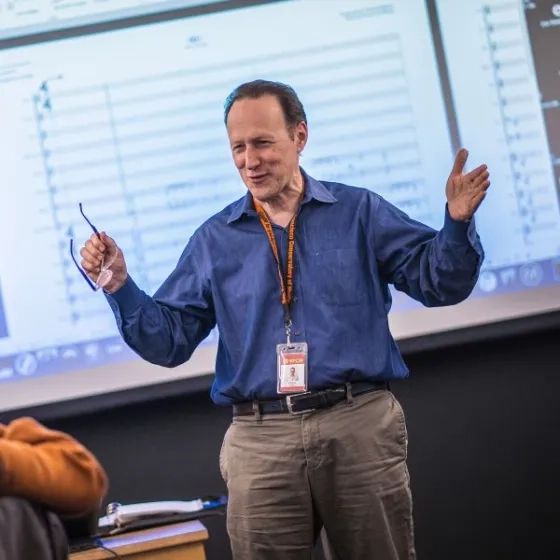
Lennie Moore serves as a faculty member in the Technology and Applied Composition (TAC) program at the San Francisco Conservatory of Music (SFCM), where he teaches Applied Lessons, Tools, Techniques and Analysis, and Orchestration for the Media Composer. With decades of experience as a composer, arranger, and orchestrator for video games, commercials, film, and television, Moore brings real-world industry expertise to his academic role. His teaching extends beyond SFCM, having developed and taught courses in Composing for Video Games at USC and UCLA Extension. Moore's research interests focus on the complex puzzle of video game scoring, emphasizing the deconstructionist approach required for interactive media. His work explores how to break down compositions into vertical layers and horizontal procedural components that can be implemented into music playback systems in real-time based on player choices. He specializes in open-world environments where music must smoothly transition through different game areas. His passion for building computers and video games outside of traditional music informs his innovative approach to media composition. His recent work includes the 2024 release of Outcast: A New Beginning , a sequel to his groundbreaking 1999 score for the original Outcast game, which was one of the first live orchestra and choir scores in gaming history. This new project involved approximately two hours and fifteen minutes of music with complex interactive elements, recorded during the pandemic with remote sessions. Best Soundtrack Album, G.A.N.G. Awards, 2011 Best Interactive Score, G.A.N.G. Awards, 2011 Best Audio — Other, G.A.N.G. Awards, 2008 Moore actively mentors students in the TAC program, with notable alumni including Kyle Randall (winner of the American Prize in composition), Shengyuan Li (Top 10 Finalist in the Berlin International Film Scoring Competition 2023), and Shawne Workman (now SFCM TAC faculty). His 2023 album Mentors pays tribute to his influences including Weather Report, Steps Ahead, Arif Mardin, Michael Gibbs, Don Grolnick, David Mash, Nick & Andy, Ken Kraintz, and Toshiko Akiyoshi. Moore emphasizes to students that 'Failure is an option' and encourages them to consider 'Who am I as an artist?' early in their development.
Gita Reese Sukthankar is a Professor in the Department of Computer Science at the University of Central Florida (UCF) , where she directs the Intelligent Agents Lab . Her research focuses on activity and plan recognition , with applications in multi-agent systems, robotics, and human-robot interaction. She earned her Ph.D. from the Robotics Institute at Carnegie Mellon University and joined UCF in fall 2007. Research Interests: Her work spans activity recognition , intent inference , multi-agent coordination , and human-robot teams . She has applied these techniques to domains such as adversarial games (e.g., military simulations, Unreal Tournament), assistive technologies, and cooperative robotics. Her research integrates AI, machine learning, and probabilistic models to understand and predict complex team behaviors. Publication Trends: Her publications emphasize spatio-temporal modeling , probabilistic graphical models (e.g., HMMs, CRFs) , and multi-agent plan recognition . She frequently publishes in top venues like AAMAS, AAAI, and ICRA, with a focus on robust recognition of team behaviors, transfer learning, and real-world AI applications. Scientific Awards: NSF CAREER Award (2009) AFOSR Young Investigator (2009) ONR Summer Faculty Fellow (2008) UCF Faculty Excellence for Doctoral Mentoring (2012) CECS Dean's Research Professorship (2013) AAAI Senior Member (2021) ACM and IEEE Senior Member Advising and Grants: She mentors graduate students in AI and robotics and has led research funded by DARPA, AFOSR, and ONR. Her lab develops systems for intelligent agents that can understand and collaborate with humans. She has served on numerous program committees and editorial boards, including ACM Transactions on Autonomous and Adaptive Systems . She teaches courses such as Intelligent Systems , Robotics , and Machine Learning , and has been recognized for both research and teaching excellence. Labs and Teams: She leads the Intelligent Agents Lab at UCF, which focuses on data-driven social informatics and AI for human-agent teams. Her group collaborates with researchers in robotics, computer vision, and cognitive science to build adaptive, intelligent systems.
Dr. Irene Ye Yuan is an Assistant Professor in the Department of Computing and Software at McMaster University's Faculty of Engineering, with a joint appointment as Associate Member of the McMaster School of Biomedical Engineering. Her research focuses on Human-Computer Interaction (HCI) and Social Computing , specifically designing technology for collaborative social experiences like intergenerational communication and remote play. Education Ph.D. in Computer Science, University of Minnesota M.S. in Human-Computer Interaction and Design, University of Washington Research Focus Dr. Yuan's work integrates ethnographic, design, and mixed methods to develop frameworks for multimodal interactions that foster meaningful social connections. Key domains include: Technology for intergenerational relationships Remote collaboration tools Embodied interaction systems Educational technology (VR/AR pedagogy) Publication Trends Her recent publications (2019-2024) in top-tier venues like CHI and CSCW emphasize socially connected experiences , with recurring themes of remote collaboration, intergenerational communication, and tangible interfaces. Methodologies blend qualitative analysis with system prototyping. Awards Three CHI Honorable Mentions IMWUT Distinguished Paper Award IDC Best Paper Award Academic Activities Dr. Yuan leads the ESI Lab at McMaster, focusing on Engaging Social Interactions. She teaches CAS 731: Social and Collaborative Computing and actively recruits graduate students for projects involving qualitative methods, system building, and empowerment of vulnerable groups (older adults/children).
Vianney Perchet is an Associate Professor and Permanent Member at CREST, ENSAE Paris, specializing in the intersection of machine learning, game theory, and economics. His research spans theoretical foundations to practical applications in recommender systems and user behavior modeling, with a concurrent part-time role as principal researcher at Criteo AI Lab focusing on exploration efficiency. His research interests bridge mathematics, computer science, and economics, emphasizing reinforcement learning, social learning, online matching, bandit problems, and auction theory. Key contributions address optimal algorithm convergence rates, non-clairvoyant scheduling, fair resource allocation, and asynchronous multiplayer bandits, demonstrating strong interdisciplinary integration across theoretical and applied domains. Recent publications at NeurIPS, ICML, and AISTATS reveal a cohesive trend toward learning-augmented algorithms for scheduling and allocation problems, with growing emphasis on fairness constraints, communication limitations, and partial prediction scenarios. This work consistently connects theoretical guarantees with real-world economic and technical applications. No scientific awards were explicitly documented in the provided materials. Perchet advises 5 active PhD students on reinforcement learning, social learning, and online matching/bandits, while 4 former students have completed doctorates on bandits and auction theory. His industry collaboration with Criteo AI Lab provides practical validation for theoretical frameworks in recommender systems. As a core CREST research center member, he actively participates in academic initiatives including the Mediterranean Game Theory Symposium, Games and AI Summer School, and Learning in Games workshops, fostering cross-institutional collaboration in algorithmic economics.
Stef Aupers serves as Professor of Media Culture at KU Leuven's Institute for Media Studies within the Faculty of Social Sciences. His research centers on cultural sociology of media, examining meaning production, representation, and consumption in contemporary digital cultures with particular focus on conspiracy theories, game studies, and religious mediatization. His primary research domains include: Conspiracy Theory Discourse in Digital Spaces Digital Game Culture and Social Dynamics Religion-Media Intersections Popular Culture Analysis Mediatization of Modern Myth Analysis of his 2021-2025 publications reveals consistent exploration of how conspiracy theorists construct worldviews through digital platforms, the commodification of religion in gaming ecosystems, and socio-technical exclusion mechanisms. His work demonstrates methodological sophistication in analyzing YouTube/Reddit communities, audiovisual rhetoric, and epistemological boundary work between mainstream and alternative knowledge systems. Aupers actively contributes as keynote speaker, conference organizer, and academic journal reviewer, with expertise spanning media analysis, conspiracy culture interpretation, and science-religion discourse. His research provides critical frameworks for understanding contemporary digital culture's most contentious phenomena through cultural sociological lenses.
Stavrakakis Ioannis is a Professor at the Department of Informatics and Telecommunications, School of Science, University of Athens, where he has served since 2002. He previously held academic positions at Northeastern University (1994-1999) and University of Vermont (1988-1994). Ph.D., Electrical Engineering (1988), University of Virginia Diploma, Electrical Engineering (1983), Aristotle University of Thessaloniki His research focuses on network resource allocation algorithms , cooperative content dissemination , mobile ad hoc networks , and privacy-aware protocols . He leads the Advanced Networking Research (ANR) Group. Recent publications highlight trends in AI-driven network optimization , edge computing for VR , drone-assisted sensor networks , and privacy in vehicular systems . Key themes include game theory applications, energy-efficient protocols, and distributed learning frameworks. Contact: ioannis@di.uoa.gr
Robin J. S. Sloan is a Professor of Game Design and Culture at Abertay University, based in the Faculty of Design, Informatics and Business within the Department of Games and Arts. He is a Research Leader for the Faculty and leads the Art and Design research portfolio for the Research Excellence Framework (REF). Sloan also plays a key role in the Abertay Game Lab, a practice-research collective focused on games innovation. Education: PhD in Computer Animation (Emotional Avatars), Abertay University, 2011 PGCE in Higher Education Teaching, 2010 BA (Hons) in Computer Arts, 2005 His research lies at the intersection of game design, digital art, and cultural studies, with a focus on practice-based research exploring media archaeology, technological nostalgia, and the aesthetics of retro gaming. He investigates imbalance, frustration, and the use of retro elements to critique contemporary politics and culture. His work extends to game accessibility, inclusive design, and game production studies. The 15 most recent publications reflect a strong trend in critical game design, feminist pedagogy, international collaboration (particularly UK-China), and the cultural and psychological dimensions of gaming. His work combines theoretical rigor with creative practice, evident in both academic outputs and digital artifacts. Scientific Awards and Recognition: Senior Fellow of the Higher Education Academy (SFHEA) Member, AHRC Peer Review College Member, UKRI Talent Peer Review College Sloan has supervised nine postgraduate research students to completion and is currently accepting PhD proposals in game design, game art, fan cultures, and computer arts. He has secured over £5.97 million in research funding from bodies including AHRC, EU Commission, Wellcome Trust, and British Academy. His leadership in projects such as InGAME and Living Histories of Sugar underscores his impact on both academic and industry-facing research. He is actively involved in public engagement through lectures, exhibitions, and outreach events, and contributes to the academic community as an editorial board member for the Journal of Gaming and Virtual Worlds and as an external examiner for multiple institutions.
Dr. Malcolm Heywood is a Professor in the Faculty of Computer Science at Dalhousie University, Halifax, Canada. He leads the Network Information Management and Security (NIMS) Lab and is actively involved in research on genetic programming, coevolution, reinforcement learning, and big data analytics. His research interests span: Genetic Programming and Evolutionary Computation Coevolution and Competitive Learning Problem Decomposition and Hierarchical Models Streaming Data Analysis and Anomaly Detection Network Security and Insider Threat Detection Reinforcement Learning in Games (Atari, ViZDoom, Dota 2) Dr. Heywood's recent publications focus on emergent behaviors in reinforcement learning using Tangled Program Graphs (TPG), benchmarking genetic programming for streaming data, and applications in cybersecurity and computational finance. His work demonstrates a strong trend toward scalable, efficient evolutionary models for complex, real-world problems. His scientific awards include: Silver placed at Human-Competitive (Humies) Competition (2018) Best Paper at EuroGP (2017) Best Paper at DETA track, ACM GECCO (2017) Best Paper at RWA track, ACM GECCO (2018) Nomination for Best Paper at DETA track, ACM GECCO (2019) He has supervised numerous graduate students, including PhD and Master's candidates, many of whom have continued research in evolutionary computation. His lab has developed open-source code distributions for Tangled Program Graphs and Symbiotic Bid-Based GP. Dr. Heywood teaches courses in Computer Organization, Introduction to AI with Gaming Applications, and Genetic Algorithms and Programming.
Bettina Kemme is a Professor in the School of Computer Science at McGill University, Montreal, Canada. She leads the Distributed Information Systems Lab (DISL) and specializes in large-scale data management, distributed systems, and cloud computing. Her academic roles include teaching COMP 512 (Distributed Systems) and COMP 421 (Database Systems). Education: Diplom (M.Sc. equivalent) in Computer Science, Friedrich-Alexander University, Erlangen, Germany (1996) PhD in Computer Science, Swiss Federal Institute of Technology (ETH), Zurich, Switzerland (2000) Research Interests: Distributed systems, cloud-native data management, in-database analytics (AIDA project), monitoring-as-a-service frameworks, and scalable pub/sub systems for online games. Current projects focus on integrating machine learning with databases, cloud performance monitoring using SDN, and sustainable data systems for data science. Lab & Collaborations: Leads the Distributed Information Systems Lab (DISL) with active projects in distributed databases, cloud computing, and game systems. Collaborates on EU-Canada initiatives like the SustainSys program for sustainable data infrastructure. Advising: Supervises PhD and M.Sc. students in topics like monitoring frameworks (Mona ElSaadawy), in-database ML (Winnie He), and distributed systems (Maximilian Schiedermeier). Alumni include over 50 researchers from PhD candidates to undergraduate researchers.