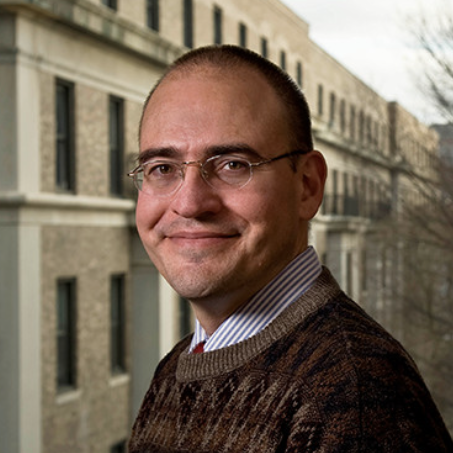
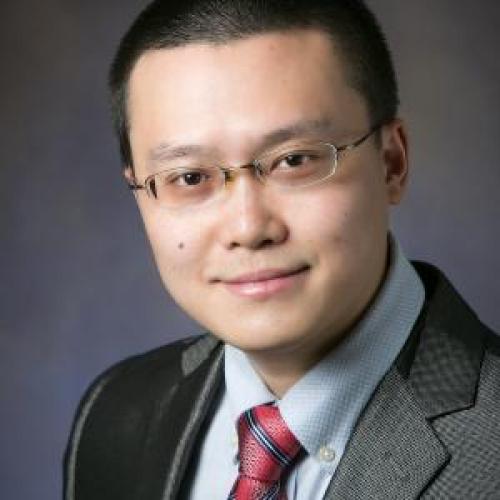
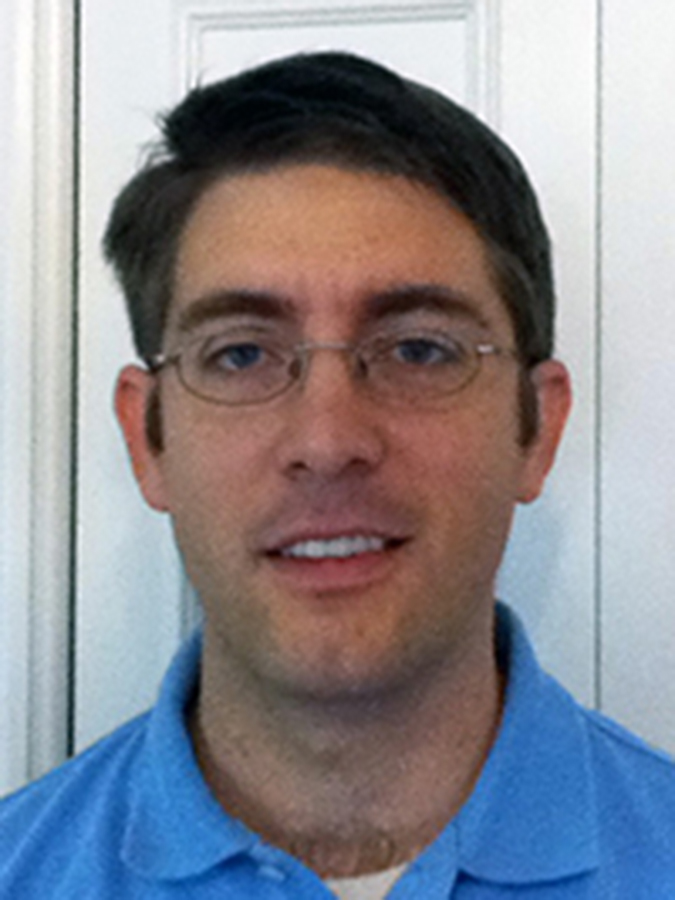
Kazuki Maeda is an Assistant Professor in the School of Aeronautics and Astronautics at Purdue University. He holds a Ph.D. from the California Institute of Technology (2018), an M.S. from Caltech (2014), and a B.S. from The University of Tokyo (2013). His research focuses on complex flow dynamics, rocket propulsion, hypersonics, and cyberphysical integration, combining physics-based modeling, high-performance computing, and machine learning. He leads the Maeda Research Group, which develops advanced frameworks for simulating and optimizing engineering systems. Key awards include the Richard Bruce Chapman Memorial Award and Stanford-CTR Postdoctoral Fellowship. Research interests emphasize propulsion systems, high-speed flows, and computational methods. Publications span bubble dynamics, reactive shock waves, and neural network applications in flow analysis. The group collaborates on heterogeneous computing frameworks for combustion and fluid dynamics simulations. Prospective students and postdocs are encouraged to apply through Purdue’s AAE programs. Awards: Richard Bruce Chapman Memorial Award, Funai Foundation Scholarship, Stanford-CTR Fellowship Labs/Teams: Maeda Research Group (Complex Flow & Cyber-physical Laboratory) Grants: Not explicitly listed, but research is supported by institutional and collaborative initiatives.
R. Byron Pipes is the John L. Bray Distinguished Professor of Engineering at Purdue University, with joint appointments in the Schools of Aeronautics and Astronautics, Chemical Engineering, and Materials Engineering. He specializes in composites design, manufacturing simulation, and multiscale modeling. His research focuses on the influence of manufacturing processes on composites microstructure and structural performance, particularly in additive manufacturing and discontinuous prepreg platelet composites. Dr. Pipes holds a MSE from Princeton University (1969) and a PhD from the University of Texas at Arlington (1972). He has held prominent roles, including Executive Director of the Composites Manufacturing Simulation Center and leadership in the Institute for Advanced Composites Manufacturing Innovation (IACMI). He has been recognized with prestigious awards such as National Academy of Engineering membership (1987), Royal Society of Engineering Sciences (1995), and Fellowships in ASC, ASME, and SAMPE. His work spans advanced manufacturing science, composites certification processes, and the development of the Composites Design and Manufacturing HUB (cdmHUB). Current projects include additive manufacturing of composites and the Indiana Center of Excellence under the IACMI. His research emphasizes predictive modeling of material behavior during processing, including thermal effects, fiber orientation, and structural performance.
David Kay is an Associate Professor in the Department of Computer Science at the University of Oxford, specializing in computational biology and numerical analysis. He holds a D.Phil. from Leicester University and has held academic positions at UMIST and Sussex before joining Oxford in 2007. His research focuses on developing numerical schemes for partial differential equations (PDEs), particularly in modeling cardiac and pulmonary systems. Education: B.Sc. (First Class) in Mathematics (Leicester, 1992), D.Phil. in Numerical Analysis (Leicester, 1997). Postdoctoral roles at UMIST (1996–1998) and Oxford (1999). Became University Lecturer at Sussex (1999) before moving to Oxford as a University Lecturer in Computational Biology (2007). Research Interests: Multiphysics interaction in heart/lungs, finite element methods for cardiac bidomain equations, multiscale lung models, stochastic ion channel dynamics, and numerical cell movement models. Applications include asthma pathophysiology, cardiac electrophysiology, and drug safety assessment. Key Projects: Co-developed the Chaste open-source software library for biological simulations, focusing on cancer, heart, and soft tissue modeling. Active in the AirPROM Synergy project on COPD. Grants & Funding: Supervised over 15 Ph.D. students and secured funding via EPSRC, BBSRC, and industry partnerships (e.g., Fujitsu, GE Healthcare). Current funding opportunities available for postgraduate researchers. Labs/Teams: Leads computational biology research in Oxford’s Department of Computer Science, collaborating with clinical teams to bridge mathematical modeling and biomedical applications.
Prof Youguang Guo is a Professor of Electrical Machines and Drives at the School of Electrical and Data Engineering, University of Technology Sydney (UTS). He holds a PhD from UTS (2004) and has been affiliated with UTS since 2008, progressing from Research Fellow to his current role. His primary research areas include advanced electrical machine design, electromagnetic materials characterization, and motor drive optimization. He has authored over 600 refereed papers and led numerous funded projects, including grants on electric vehicle motors and high-efficiency drives. Education: B.E. (1985), M.E. (1988) from Huazhong University of Science and Technology, and PhD (2004) from UTS. Prior roles include teaching and research at HUST (China) and UTS’s Centre for Electrical Machines and Power Electronics. Research focuses on high-power-density motors, magnetic materials under rotational fields, and data-driven methods. Recent articles emphasize wind turbine power curve modeling, space target de-tumbling, and thermal analysis using transfer learning. His work integrates machine learning and optimization for energy systems. Awards include the ASEMD2023 Distinctive Research Contribution Award. He supervises PhD/Master’s students in topics like flywheel energy storage and PMSM efficiency. Active in editorial roles for IEEE Transactions, Energies, and conference proceedings. Collaborative projects include development of low-rare-earth motors and sovereign propulsion systems. His labs focus on electromagnetic design and advanced materials testing.
Philippe Geubelle is the Bliss Professor and Executive Associate Dean in the Grainger College of Engineering at the University of Illinois at Urbana-Champaign (UIUC). He holds affiliate roles in Mechanical Science and Engineering (MSE) and Theoretical and Applied Mechanics (TAM). His academic journey includes a Ph.D. in Aeronautics from the California Institute of Technology (1993), an M.S. from the same institution (1989), and a B.S. in Mechanical Engineering from the Catholic University of Louvain (1988). Geubelle's research focuses on advanced materials and manufacturing, particularly computational design of self-healing materials, fracture mechanics, and frontal polymerization. He pioneered energy-efficient manufacturing techniques for thermoset composites and developed models for microvascular materials. His work integrates computational mechanics, high-performance computing, and experimental validation. Key areas of expertise include: computational material design, multi-scale modeling, aeroelasticity, and failure analysis of composite systems. His research has led to innovations in morphogenic composites, patterned crystalline domains, and additive manufacturing via frontal polymerization. Geubelle has authored over 300 publications and holds patents in self-healing composites and shock-boundary layer interaction control. He has received numerous awards, including the Bliss Professorship (2011), ASME Fellow (2009), and NSF CAREER Award (1998). He leads interdisciplinary initiatives at UIUC, including roles in budget reform, faculty governance, and engineering education. His service spans national committees, professional societies (ASME), and space grant programs.
April Novak is an Assistant Professor at the University of Illinois at Urbana-Champaign (UIUC) in the Department of Nuclear, Plasma, and Radiological Engineering. She holds a joint appointment at the National Center for Supercomputing Applications (NCSA). Her research focuses on multiphysics modeling, thermal-hydraulics, and advanced reactor design, particularly using the MOOSE computational framework. She earned her PhD in Nuclear Engineering from UC Berkeley (2020) and a BS from UIUC (2015). Dr. Novak’s work emphasizes porous media modeling for pebble bed reactors (PBRs), conjugate heat transfer, and Monte Carlo transport methods. She has validated models against experiments like SANA and contributed to tools like Pronghorn and Cardinal. Her research integrates high-performance computing (HPC) for reactor simulations, with recent projects on lead-cooled fast reactors and sodium fast reactor bypass flows. Recipient of the R&D 100 Award (2023) and the Innovations in Nuclear Technology Award (2018), her teaching accolades include the Students' Award for Excellence in Undergraduate Teaching (2024). She advises on multiphysics coupling between neutronics and thermal-hydraulics and collaborates on the Virtual Test Bed (VTB) for advanced reactor models.
Richard Braatz is the Edwin R. Gilliland Professor of Chemical Engineering at the Massachusetts Institute of Technology (MIT), part of the School of Engineering. His research focuses on control systems design, multi-scale simulation, and advanced manufacturing systems, particularly in biopharmaceuticals and energy storage. He has made significant contributions to battery technology, mRNA production, and process optimization. Education includes a Ph.D. from Caltech (1993), M.S. from Caltech (1991), and B.S. from Oregon State University (1988). He has authored over 300 publications and holds numerous honors, including membership in the National Academy of Engineering and multiple industry awards for innovation and education. Research interests span control systems, data analytics, and machine learning applied to chemical and biological manufacturing. His lab develops models for viral vector production, battery degradation, and continuous pharmaceutical processes. Collaborations include work on mRNA lipid nanoparticle formulations and fast-charging protocols for lithium-ion batteries.
Raúl A. Radovitzky is the Jerome C. Hunsaker Professor in Aeronautics and Astronautics at MIT, and Associate Director of the MIT Institute for Soldier Nanotechnologies. He holds a Civil Engineer degree from the University of Buenos Aires (1991), an S.M. from Brown University (1995), and a Ph.D. from Caltech (1998). His research focuses on computational solid mechanics, fluid-structure interaction, hypersonic vehicle thermal protection systems, multiscale modeling, and high-performance computing. Key research areas include computational mechanics of materials under extreme conditions, multiscale modeling, and parallel computing. He leads the Hypersonics Research Lab and is affiliated with the Institute for Soldier Nanotechnologies and the Center for Computational Science and Engineering. Notable awards include the MIT AIAA Teaching Award (2021, 2016), Arthur C. Smith Award (2021), and Alan J. Lazarus Advising Award (2018). His work spans theoretical and applied mechanics, with applications in aerospace engineering, materials science, and biomedical safety. He has pioneered numerical methods for fracture mechanics and peridynamics, contributing to advancements in computational modeling of complex systems.
Victor Calo is the John Curtin Distinguished Professor at Curtin University's School of Elec Eng, Comp and Math Sci (EECMS) within the Faculty of Science and Engineering. He holds the CSIRO Professorial Chair in Computational Geoscience and leads the Centre for Optimisation and Decision Science. His work focuses on advancing high-performance computing (HPC) tools for geomechanics, fluid dynamics, and multiphysics modeling in resource extraction industries. Calo earned a Civil Engineering degree from the University of Buenos Aires, followed by a Master’s in Geomechanics and Ph.D. in Civil and Environmental Engineering from Stanford University. Research Interests : Geomechanics, fluid dynamics, flow in porous media, phase separation, HPC, multiphysics modeling, block copolymer self-assembly, and numerical methods for engineering systems. His research emphasizes developing open-source software to democratize advanced computational techniques. Key Achievements : Highly Cited Researcher (2013), 170+ peer-reviewed publications, 2 patents, and over 18 invited talks/keynotes in 2 years. His work bridges computational methods with geoscience applications, including reservoir simulation and material science. Grants & Collaborations : CSIRO Chair endowment, collaborations with KAUST (e.g., Center for Numerical Porous Media), and partnerships in multiphase flow modeling. Active in organizing mini-symposia at international conferences. Labs/Teams : Leads the Computational Geoscience group at Curtin, focusing on HPC-driven solutions for resource extraction challenges and materials science problems.
Colin Denniston is a Professor in the Department of Physics & Astronomy at Western University. His research focuses on multiscale modeling of soft matter systems, including complex fluids, liquid crystals, colloidal suspensions, and polymer dynamics. He specializes in developing novel numerical methods for simulating micro/nano-fluidic systems and studying material properties during curing processes. Key research areas include: Molecular dynamics simulations of polymerization reactions Hydrodynamic interactions in confined flows Photonic band gap engineering using colloidal crystals Interfacial dynamics in coupled lattice-Boltzmann and molecular dynamics frameworks His work bridges theoretical physics, computational modeling, and materials engineering. Notable contributions include advancements in LAMMPS integration for fluid simulations and studies on defect-bonded colloidal structures in cholesteric phases. The Denniston Group actively explores applications in advanced composites and nanotechnology. Professional activities include leading the Denniston Group at Western University and collaborating on projects involving fiber-reinforced polymers for aerospace/automotive industries. He accepts graduate student applications year-round.
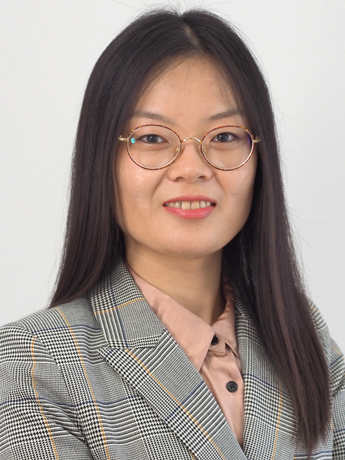
Dr. Shunyu Liu is an Assistant Professor in the Department of Automotive Engineering at Clemson University's College of Engineering, Computing and Applied Sciences. She holds a Ph.D. in Mechanical Engineering from Purdue University (2020), an M.S. in Materials Science from North China Electric Power University (2015), and a B.E. in Materials Science and Engineering from the same institution (2012). Dr. Liu directs research in the Additive Manufacturing and Advanced Materials Laboratory. Her research focuses on: Laser-based additive manufacturing of metallic materials Multiscale microstructure modeling of solidification processes Development of high-performance alloys and composites Process-structure-property relationships in manufactured materials Her publications demonstrate expertise in computational modeling of manufacturing processes, experimental characterization of material properties, and development of novel metallic materials including high-entropy alloys and metallic glass composites.
Dr. Qiushi Chen is a Professor of Civil Engineering at Clemson University's College of Engineering, where he leads the Computational Geomechanics Lab. His research spans multiple interdisciplinary fields including computational mechanics, geotechnical engineering, and materials science with applications in biomass processing, extraterrestrial exploration, and earthquake engineering. Dr. Chen received his B.S. in Civil Engineering from Shanghai Jiaotong University (2006), followed by an M.S. (2009) and Ph.D. (2011) in Theoretical and Applied Mechanics with a focus on Geomechanics from Northwestern University. His academic journey has positioned him at the intersection of computational science and practical engineering applications. His primary research interests include computational geomechanics, discrete and finite element methods, extraterrestrial regolith characterization, biomass feedstock preprocessing, and liquefaction hazard assessment. Dr. Chen's work integrates advanced computational techniques with experimental validation to address complex engineering challenges across multiple scales - from particle-level interactions to regional hazard mapping. His research group develops sophisticated numerical models that bridge the gap between theoretical mechanics and practical engineering solutions. Analysis of Dr. Chen's recent publications reveals a strong focus on computational methods for granular materials, with particular emphasis on discrete element modeling (DEM) applications. His work spans terrestrial applications in biomass processing and earthquake engineering to extraterrestrial applications involving lunar and Martian regolith. The integration of machine learning techniques with traditional computational mechanics represents an emerging trend in his research, enabling more efficient and accurate modeling of complex material behaviors. Dr. Chen actively contributes to the professional community as an Associate Member of the American Society of Civil Engineers, Member of the Engineering Mechanics Institute, Member of the Geo-Institute, Member of the Soil Properties and Modeling Committee (ASCE), and Vice-Chair of the Computational Geotechnics Committee (ASCE). In addition to his research, Dr. Chen teaches courses including Introduction to Geotechnical Engineering, Inelastic Materials Modeling, and Computational Mechanics of Granular and Porous Materials. He mentors graduate students interested in computational geomechanics, which sits at the interface of geotechnical engineering, applied mechanics, computational science, and material science. The Computational Geomechanics Lab, directed by Dr. Chen, maintains active research programs in multiple areas including biomass feedstock modeling, extraterrestrial regolith characterization, multiscale liquefaction hazard mapping, and multiphysics problems in porous geomaterials. The lab's work is supported by various funding sources including the U.S. Department of Energy, NSF, NASA, and other federal agencies.
Kuldeep Singh is an Assistant Professor of Earth Sciences at Kent State University , affiliated with the Environmental Science and Design Research Institute . His research focuses on integrating geology, rock mechanics, and fluid dynamics to study physio-chemical processes in porous media, with applications to CO₂ storage, contaminant hydrology, and reservoir engineering. Education: Ph.D., Geoscience, The University of Texas at Austin (2013) M.S., Geological Science, Indiana University at Bloomington (2007) M.Sc., Geology, University of Delhi, India (2001) B.Sc., Geology (Honors), University of Delhi, India (1998) Research Interests: Computational fluid dynamics and digital rock physics Multiscale multiphysics upscaling Reactive transport in porous media Flow dynamics of multiphase systems Environmental geochemistry and contaminant transport Geomechanical characterization of subsurface systems Publications Trends: Recent work emphasizes pore-scale modeling of CO₂ storage, sedimentary structure impacts on permeability, and hyporheic zone dynamics. Key themes include non-Darcy flow regimes, boundary slip effects, and pH-dependent dissolution processes. Advising & Grants: Active in mentoring graduate students and securing funding for projects related to porous media characterization and environmental fluid dynamics. Labs & Affiliations: Core member of Kent State’s Environmental Science and Design Research Institute, collaborating on interdisciplinary projects addressing environmental challenges.
Su Yan is an Associate Professor and Director of Graduate Studies in Howard University's Department of Electrical Engineering and Computer Science. He directs the IBM-HBCU Quantum Center and leads research in computational electromagnetics, nonlinear multiphysics modeling, and machine learning-enhanced simulations. His group develops extreme-scale algorithms for electromagnetic systems with applications in RF devices, quantum technologies, and computational imaging. Current projects involve AI-accelerated metasurface design, microwave-assisted hydrogen generation, and randomized multiscale solvers. Honors include DOE/NSF Early Career Awards, ACES Early Career Award, and IEEE prize papers. He currently advises 9 PhD students and has graduated multiple doctoral candidates in computational electromagnetics. Research Grants: DOE Early Career Award for randomized multiscale algorithms NSF CAREER for neural network-enhanced RF device simulation NSF grants for AI-enhanced metasurfaces and hydrogen catalyst design Ansys collaboration on non-conforming solvers
Robert Kirby is a Professor of Mathematics and Undergraduate Advisor at Baylor University, affiliated with the College of Arts & Sciences and the Department of Mathematics. He holds a Ph.D. from the University of Texas at Austin (2000) and has held academic positions at Texas Tech University, the University of Chicago, and as a Dickson Instructor. His research focuses on automating numerical methods for partial differential equations (PDEs), including finite elements, preconditioners for multiphysics problems, and high-performance computing. Kirby's research interests bridge mathematics and computer science, emphasizing the development of efficient algorithms for PDE simulation using domain-specific languages, Bernstein polynomials, and multicore architectures. His work integrates theoretical analysis with practical software implementation in projects like FEniCS and Firedrake. His publications consistently address finite element methods, numerical stability, and computational efficiency. Recent articles emphasize automated time-stepping, domain truncation, and preconditioning techniques, reflecting a trend toward scalable and user-friendly tools for scientific computing. Grants and Advising: Kirby has secured significant funding, including NSF awards for automated algorithms and Sandia National Laboratory contracts. He advises doctoral students in mathematics and computing, with alumni at Amazon, NSA, and academia. Grants include: NSF CCF award 1117794: Metanumerical computing ($500k) NSF CCF award 0830655: Automated intrusive algorithms ($270k) DOE Early Career Award: Automatic parallel finite elements ($300k) He leads collaborations on open-source projects (FEniCS, Firedrake) and develops tools like FIAT and Irksome to streamline finite element workflows.