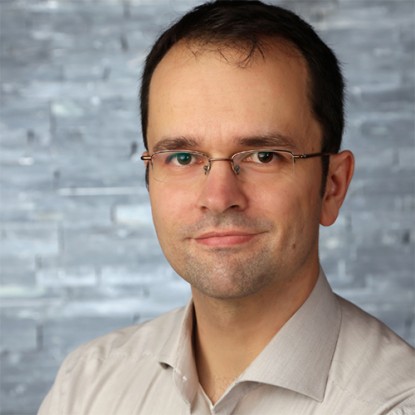
Matthias NienhausView profile
Professor
Prof. Dr.-Ing. Matthias Nienhaus is a full Professor at Saarland University, serving as the Chair of Drive Technology within the Faculty of Engineering. He leads a research group focused on advanced drive systems, including active magnetic bearings, sensorless control, and electromechanical design. His teaching includes courses such as Drive System Technology - Components , and he supervises student theses in mechatronic systems. University: Saarland University School: Faculty of Engineering Position: Professor and Chair Holder Research Focus: Electric Drives, Magnetic Bearings, Sensorless Control His research interests lie in the development and optimization of mechatronic drive systems, particularly in the areas of active magnetic bearings (AMBs), sensorless position detection, and control strategies for electric motors. He investigates novel control methods such as sliding-mode and super-twisting control, as well as applications in Vernier motors and Foucault pendulum drives. His work integrates modeling, simulation, and experimental validation. The recent publications highlight a strong trend in control engineering for magnetic bearings, emphasizing robustness, sensorless operation, and optimization techniques. These works apply advanced control algorithms like particle swarm optimization and super-twisting sliding mode control to improve stability and performance in high-precision drive systems. Prof. Nienhaus actively supervises student research and final theses, guiding projects in areas such as torque motor test benches, electromagnetic actuators, and optimization of electric machines. While no specific grants are listed, his work implies ongoing research funding through university and likely national or industrial sources. He leads the Drive Technology research group (Lehrstuhl für Antriebstechnik) at Saarland University, which includes scientific staff and alumni working on cutting-edge topics in electric drives and mechatronics. The team utilizes simulation tools like Comsol Multiphysics and Ansys Maxwell, and develops embedded control systems for experimental validation.