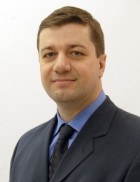
Dr. Jasmin Smajic is Professor at ETH Zürich's Department of Information Technology and Electrical Engineering, leading theoretical and simulation research in electromagnetics. His work bridges computational methods with applications in plasmonics and photonics. Research expertise includes: Plasmonic device design and modeling High-frequency semiconductor structures Sub-terahertz communication systems Computational electromagnetics Multiphysics simulation techniques Recent innovations include plasmonic hybrid receivers, terahertz wireless links, and ultra-wideband modulators. Dr. Smajic has received multiple FUTUR Technology Transfer Awards for industrial applications of electromagnetic simulation tools.
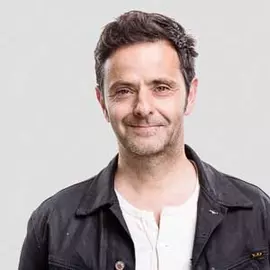
Dominik André Strebel is a Lecturer at the Department of Mechanical and Process Engineering at ETH Zürich, affiliated with the Chair of Building Physics. His research focuses on urban climate modeling, mesoscale meteorology, and machine learning applications in environmental systems. He holds a MSc in Engineering (Energy and Environment) from HSR Rapperswil (now OST), where his studies emphasized climate models for renewable energy forecasting and Smart Grids. His Master’s thesis involved developing a coupled climate and multiphysics model for overhead power lines in collaboration with Swissgrid, alongside improving weather forecasts using UAV data integration in WRF models. Research Interests: Urban Heat Island simulation and mitigation Mesoscale meteorological modeling (WRF, COSMO) Machine learning for urban climate analysis High-Performance Computing (HPC) and Data Science GIS and mathematical modeling for urban environments Key Contributions: Developed frameworks coupling WRF-UCM-SOLWEIG for thermal comfort mapping at city scale Advanced methods for quantifying urban climate drivers (e.g., LCZ analysis) Improved mesoscale predictions using hybrid ML and sensor data Explored intra-urban warming patterns in heatwaves across multiple cities Current Projects: Hybrid machine learning-mesoscale modeling for urban climate prediction Mapping heat exposure indices in mid-latitude cities Urban morphology clustering for identifying heat-vulnerable neighborhoods
Dr. Xiang-Zhao Kong is a Lecturer at the Institute of Geophysics, ETH Zurich, within the Department of Earth and Planetary Sciences (D-EAPS). He holds a PhD in Environmental Engineering from ETH Zurich (2010), where he was awarded the ETH Medal for his dissertation. His career includes postdoctoral research at the University of Minnesota and a Research Fellowship at the University of Queensland before returning to ETH Zurich in 2015. His research focuses on geothermal energy, flow and transport processes in porous media, reactive transport modeling, and subsurface engineering. Key areas include fractured formations, geothermal reservoir optimization, and CO₂ sequestration. He employs advanced computational methods like lattice-Boltzmann solvers and machine learning for subsurface flow modeling and reservoir characterization. Dr. Kong’s work bridges experimental and theoretical approaches, with notable contributions to mineral precipitation dynamics, fluid-rock interactions, and phase transition fracturing. His publications span geothermal systems, carbon capture, and subsurface energy storage. Recent efforts emphasize de-risking CO₂-Plume Geothermal (CPG) technologies and advancing fracture modeling via neural networks. Awards: ETH Medal for PhD Dissertation (2011) Teaching: Leads the 'Groundwater' course (Autumn Semester 2025).
Prof. François Avellan is a prominent academic at École Polytechnique Fédérale de Lausanne (EPFL), affiliated with the School of Basic Sciences and the Department of Mechanical Engineering. His research focuses on hydraulic machinery, particularly Francis turbines, Pelton turbines, and cavitation phenomena. Key areas include CFD simulations, turbine design optimization, and hydropower system analysis. He leads projects like DuoTurbo (counter-rotating hydroturbines for energy recovery) and investigates fluid-structure interactions in off-design turbine operations. His work bridges experimental fluid mechanics with computational modeling, addressing challenges in renewable energy and grid stability. Education details are not explicitly provided in the text, but his extensive scholarly output indicates a strong academic background in mechanical engineering and fluid dynamics. Collaborations with institutions like the Laboratory of Hydraulic Machines (LMH) and the Swiss Federal Institute of Technology underscore his interdisciplinary involvement. Research interests emphasize cavitation dynamics, turbine instability mechanisms, and hydroacoustic resonance prevention. Recent studies explore part-load resonance risks, vortex rope behavior, and the integration of emerging hydropower technologies. His contributions span both fundamental and applied research, impacting turbine efficiency, energy recovery systems, and sustainable energy solutions. Publications highlight advancements in CFD validation, particle-based methods for erosion prediction, and predictive control of unstable flows. Innovations like the Y-junction hydraulic short-circuit and variable-speed pump-turbine simulations demonstrate practical applications of his research. Ongoing work includes multiscale erosion modeling and strategic hydropower potential assessments for Switzerland. Laboratory affiliations include the Laboratory of Hydraulic Machines (LMH), where experimental facilities support his investigations into turbine dynamics and fluid mechanics. His research directly informs industrial practices in hydropower plant design and operational reliability.
Dr. Lukas Keller is a Researcher at the Zurich University of Applied Sciences (ZHAW), School of Engineering, within the Department of ICP Multiphysics Modeling and Imaging. He leads multiple projects focused on clay rock characterization, including ongoing work on fracture sealing in clay rock and completed studies on gas transport mechanisms in clay materials. His research centers on the geophysical and mechanical properties of clay formations, particularly Opalinus Clay. Key interests include 3D microstructure analysis using X-ray computed tomography (XCT), hydromechanical behavior of fractures, permeability modeling, and pore-scale simulations. His work bridges experimental data with computational approaches to understand fluid flow, elastic properties, and transport phenomena in geological materials. Keller's publications (2014-2023) demonstrate consistent focus on clay microstructure, digital rock physics, and multiscale modeling. Recent articles explore pore geometry effects on rock elasticity, anisotropy in shale mechanics, and advanced tomography techniques. His research provides critical insights for applications in nuclear waste containment and geotechnical engineering.
Mamzi Afrasiabi is a Lecturer at the Department of Mechanical and Process Engineering, ETH Zurich. His research focuses on computational mechanics, fluid dynamics, and advanced manufacturing technologies. Computational Mechanics & Fluid Dynamics Manufacturing Process Simulation Multiphysics and Multiscale Modeling High-Performance Computing (HPC) Scientific Machine Learning (SciML) Dr. Afrasiabi holds a GRA Fellowship and Zienkiewicz Scholarship , with editorial roles in journals like the International Journal of Hydromechatronics . He received the CIRP Best Paper Award and is a Corporate Member of the International Academy for Production Engineering (CIRP).