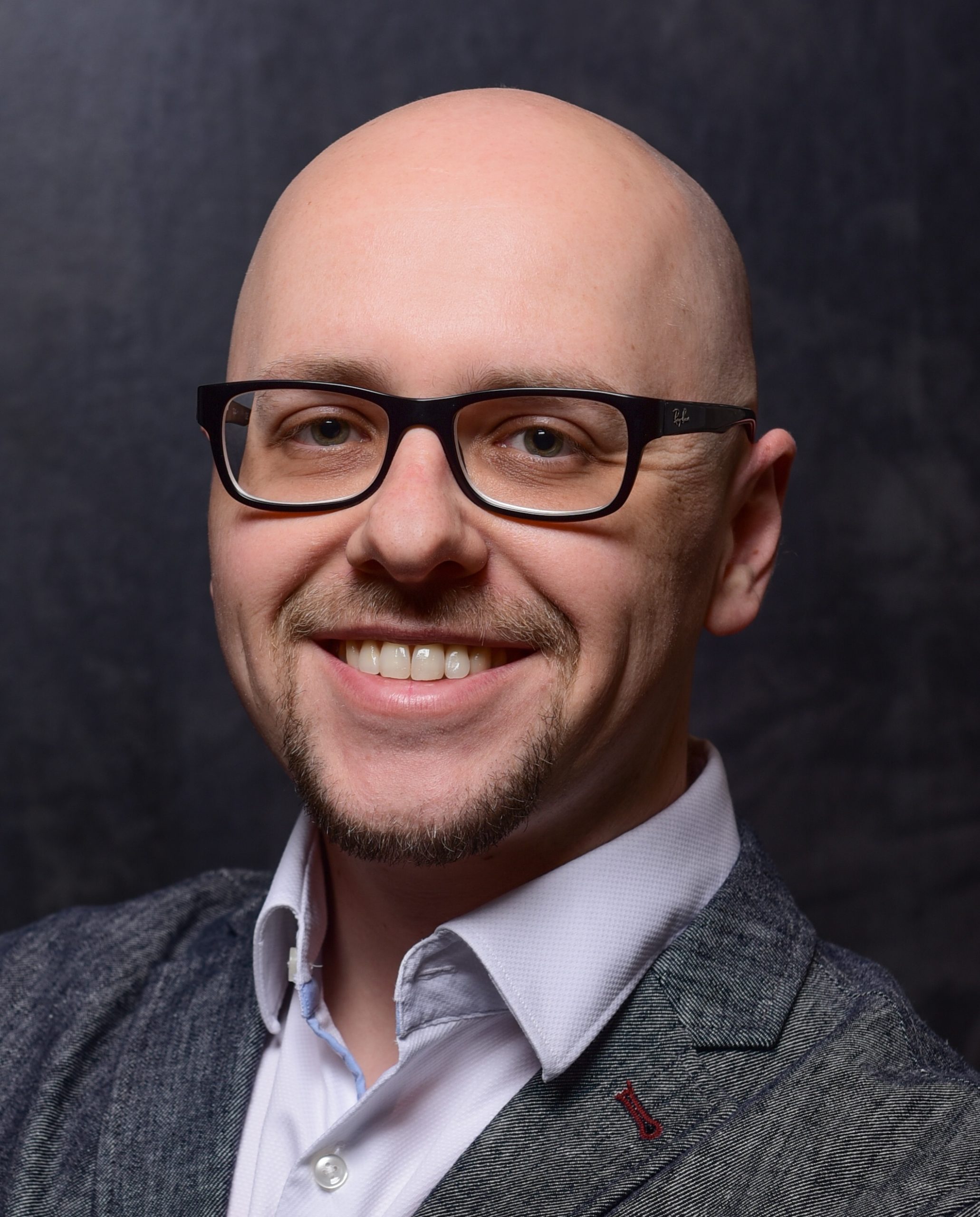
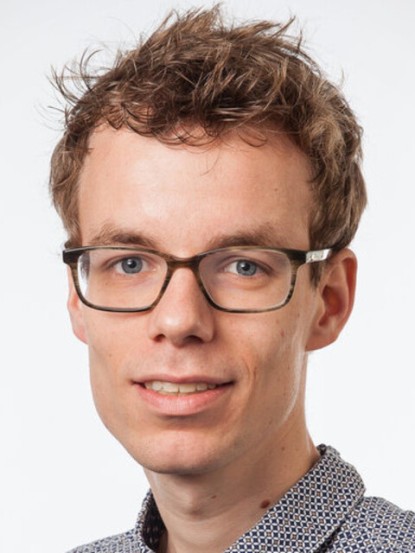
Sebastian Wohner is a researcher at the Chair of Computer Graphics and Visualization (Prof. Westermann) at the Technical University of Munich. His work focuses on advanced visualization techniques, machine learning applications in graphics, and GPU-accelerated algorithms for 3D design and simulation. He actively contributes to projects such as the NVIDIA CUDA Research Center and ERC-funded initiatives like SaferVis and realFlow, emphasizing real-time liquids and safer visualization systems. His research interests span 3D Gaussian splatting, topology optimization, neural fields for statistical dependencies, and spatio-temporal flow visualization. He has pioneered methods for compressing meteorological ensembles and accelerating novel view synthesis in consumer devices. Wohner also explores GPU-based linear algebra optimizations and efficient rendering techniques for ribbons and twisted lines. In teaching, he leads courses on game physics, visual data analytics, deep learning in computer graphics, and topology optimization. Notable contributions include the development of the Particle Engine and Bunny Demo applications, as well as advancements in differentiable rendering and robotic perception systems. His work bridges theoretical foundations with practical implementations in both academia and industry.
Roles and Affiliations: PD Dr. Dmitry N. Chigrin is a Senior Lecturer at RWTH Aachen University's Department of Physics and the independent Research Group Leader of the 'Theory of Complex Materials' at DWI – Leibniz Institute for Interactive Materials. He holds a Heisenberg Fellowship from the DFG (German Research Foundation). PhD in Electrical Engineering (2004, University of Wuppertal) Habilitation in Theoretical Physics (2014, Friedrich Schiller University Jena) Research Interests: Chigrin focuses on theoretical and computational physics of complex artificial systems, including phase-change materials (e.g., Ge-Sb-Te), reconfigurable metamaterials, and multiphysics simulations of nanostructured systems. His work spans plasmonics, photoacoustic imaging, and hydrogel-based micro-robotics. He develops models for phase transitions, thermal-electromagnetic coupling, and nanoparticle synthesis in hydrogels. Publications and Impact: His recent articles emphasize practical applications of phase-change materials for tunable metasurfaces and biomedical imaging. Key contributions include optimizing nanoparticle geometries for photoacoustic imaging and tailoring infrared resonances in metamaterials. Awards and Recognition: Recipient of the Heisenberg Fellowship (2017), highlighting his international standing in theoretical physics. Grants and Collaborations: Active in funded projects like 'Graphene-enabled active terahertz photonics.' Collaborates with institutions such as the University of Jena and international research groups on topics like plasmonic nanostructures and hydrogel systems. Labs and Teams: Leads the 'Theory of Complex Materials' group at DWI, focusing on interdisciplinary research at the intersection of physics, materials science, and engineering.
Dr. Sebastian Kuckuk is a researcher and head of training at the Erlangen National High Performance Computing Center (NHR@FAU), Friedrich-Alexander-Universität Erlangen-Nürnberg. He is affiliated with the Department of Computer Science and contributes to the Chair of System Simulation. His work bridges research, training, and software development in high-performance computing. Education: PhD in Computer Science, Friedrich-Alexander-Universität Erlangen-Nürnberg (2019) His research focuses on enhancing performance portability and programmer productivity using domain-specific languages, code generation, automatic parallelization, and GPU programming. These techniques are applied to develop massively parallel numerical solvers for computational fluid dynamics, particularly for the shallow water equations. He is a core developer of the ExaStencils framework, which enables automated generation of efficient multigrid solvers for structured and patch-structured grids. Analysis of his recent publications (2020–2025) reveals a consistent focus on code generation, GPU acceleration, and solver optimization for fluid dynamics problems. Key themes include heterogeneous computing, block-structured grids, and adaptive methods. His work integrates advanced compiler techniques with numerical mathematics to improve scalability and performance on modern HPC architectures. Scientific Recognition: NVIDIA Deep Learning Institute (DLI) University Ambassador Certified Instructor for DLI courses in GPU programming and CUDA He actively contributes to teaching and training through courses such as Programming Techniques for Supercomputers and High-End Simulation in Practice . He conducts workshops and tutorials on GPU programming and performance optimization. While no formal students are listed, his mentoring role is evident through collaborative research and training activities. He has no recorded grants in the provided text, but his involvement in NHR and KONWIHR projects indicates active participation in funded HPC initiatives. Laboratories and Projects: Lead developer of ExaStencils , a code generation framework for multigrid solvers Contributor to GHODDESS , a module for higher-order discretizations in shallow water modeling Active in NHR@FAU and KONWIHR projects focused on GPU computing and performance optimization
Marek Behr is a Professor (C4/W3) and Chairholder at the Chair for Computational Analysis of Technical Systems within the Faculty of Mechanical Engineering at RWTH Aachen University since 2004. He also holds an Adjunct Professorship at Rice University’s Department of Chemical and Biomolecular Engineering since 2005. His academic leadership roles include serving as Founding Director of the Center for Simulation and Data Science (CSD) since 2018, President of the German Association for Computational Mechanics (GACM) since 2021, and Executive Council Member of the International Association for Computational Mechanics (IACM) since 2020. He coordinates the International Research Training Group 2379 Modern Inverse Problems with the University of Texas at Austin. Behr’s research focuses on computational fluid dynamics (CFD) , biomedical engineering , and finite element methods , with applications in cardiovascular modeling, multiphysics systems, and manufacturing processes. His work bridges engineering and medicine, addressing challenges like in-stent restenosis, hemolysis prediction, and advanced material processing. He has an h-index of 45 (Google Scholar) and over 3,600 citations. Teaching responsibilities include courses such as Simulation Methods in Mechanical Engineering , Parallel Computing in Computational Mechanics , and Finite Elements in Fluids . His research group actively collaborates with institutions like the Jülich-Aachen Research Alliance (JARA) and the Oden Institute . Recent publications emphasize computational models for cardiovascular devices, machine learning in structural health monitoring, and advanced manufacturing simulations, reflecting his interdisciplinary approach to solving complex engineering problems.
Dr. Michael Schlottke-Lakemper is a Professor of High-Performance Scientific Computing at the University of Augsburg, Faculty of Mathematics, Natural Sciences, and Materials Engineering. He previously held positions as an Interim Professor of Computational Mathematics at RWTH Aachen University (2022–2024) and led a research group at the High-Performance Computing Center Stuttgart (HLRS) from 2021 to 2024. His career includes postdoctoral roles at the University of Cologne and RWTH Aachen University/FZ Jülich. Education: Ph.D. in Mechanical Engineering, RWTH Aachen University (2017) Diplom in Aerospace Engineering, University of Stuttgart (2011) His research focuses on adaptive multi-physics simulations, research software engineering for high-performance computing (HPC), and scientific machine learning. Applications span fluid mechanics, aeroacoustics, and astrophysics, with recent work emphasizing robust high-order summation-by-parts methods and Julia-based computational frameworks like Trixi.jl and TrixiParticles.jl. His publications highlight advancements in discontinuous Galerkin methods, entropy stable schemes, and HPC optimization for compressible flows. Scientific contributions include Developing dynamic load balancing algorithms for multiphysics simulations Creating hybrid computational aeroacoustics methods Advancing Julia's adoption in HPC communities Improving error-based step size control in numerical solvers Current teaching activities include graduate seminars on Maschinelles Lernen in Theorie und Praxis and undergraduate courses in Numerische Lineare Algebra . He leads a research team at the University of Augsburg with collaborators across Germany, including Simon Candelaresi, Valentin Churavy, and Niklas Neher.
Camilo Fernando Silva Garzon is a Privatdozent (PD) and academic researcher at the Department of Thermofluid Dynamics at the Technical University of Munich (TUM). He holds the title of Dr. habil., indicating he has completed his habilitation, the highest academic qualification in the German system. Working under the supervision of Prof. Wolfgang Polifke, he is actively involved in cutting-edge research in thermoacoustics and combustion dynamics. Dr. Garzon's research spans multiple areas of thermo-fluid dynamics with a particular focus on thermoacoustic instabilities, flame modeling, and combustion dynamics. His work combines theoretical approaches with computational methods to address complex problems in energy systems. He has developed innovative techniques for modeling flame response, thermoacoustic interactions, and entropy wave generation in combustion systems. His research has significant applications in gas turbine design, aero-engine development, and sustainable combustion technologies. Analysis of his recent publications reveals a strong trend toward integrating machine learning with traditional combustion modeling approaches. His work increasingly focuses on uncertainty quantification, nonlinear dynamics, and the development of reduced-order models for complex thermo-fluid systems. He has made significant contributions to understanding intrinsic thermoacoustic instabilities and developing new methodologies for flame response modeling. His research shows a clear progression from fundamental theoretical work toward practical applications in gas turbine and aero-engine technologies. Dr. Garzon has established a robust collaborative network, frequently publishing with researchers from TUM and international institutions. His work appears in top journals including Combustion and Flame, Journal of Engineering for Gas Turbines and Power, and Proceedings of the Combustion Institute. He has contributed significantly to advancing the understanding of thermoacoustic phenomena and combustion dynamics through both theoretical developments and practical applications.
Dr. Veronika Singer is a Postdoctoral Researcher (Akademische Rätin a.Z.) at the Chair of Statics and Dynamics, Technical University of Munich, working under Prof. Dr.-Ing. habil. Roland Wüchner since October 2024. Previously, she served as an Academic Councillor at the Chair of Structural Analysis under Prof. Dr.-Ing. Kai-Uwe Bletzinger from December 2020 to September 2024, and as a Research Assistant from April 2017 to November 2020. Her educational background includes: M.Sc. in Civil Engineering from Technical University of Munich (2014-2017), with thesis on 'Detailed lateral-torsional buckling investigations of steel profiles and frame systems' B.Sc. in Civil Engineering from Technical University of Munich (2010-2014), with thesis on 'Beam elements for linearly variable cross-sections' Dr. Singer's research focuses on advanced computational methods for structural analysis, particularly the Material Point Method (MPM) and its applications in natural hazard simulation. She has pioneered innovative coupling strategies between MPM and Finite Element Method (FEM), as well as MPM and Discrete Element Method (DEM), to address complex multiphysics problems involving large deformations. Her work has significant applications in simulating granular mass flows and designing protective structures against natural disasters, contributing to improved infrastructure resilience. Her publication record shows a consistent trajectory of high-impact research in computational mechanics, with a concentration on partitioned coupling approaches that enable more efficient and accurate simulations of complex engineering problems. The research demonstrates increasing sophistication in handling boundary conditions, large deformations, and multiphysics interactions. Her scientific contributions have been recognized with multiple teaching awards: Doce et Delecta, 3rd prize for Statics 1 in the 'NextGen & Young Talents' category (July 2025) Doce et Delecta, 1st Prize for Statics 2 (July 2024) Certificate of University Teaching at Bavarian Universities (December 2022) Multiple previous Doce et Delecta awards (2018, 2019) Dr. Singer actively supervises student theses across computational mechanics topics, with over 20 completed projects ranging from element formulation to natural hazard simulation. She is involved in research projects including CoDA, MistralWind, WINSENT, and FlexWing, focusing on advanced computational methods for structural analysis and natural hazard mitigation. She is an integral member of the Chair of Statics and Dynamics research team, collaborating on developing more reliable simulation tools for civil engineering applications, particularly in natural hazard contexts. Her work bridges theoretical computational mechanics with practical engineering solutions for infrastructure protection.
Sebastian Pröll is a Researcher at the Chair of Numerical Mechanics within the Institute for Computational Mechanics at the Technical University of Munich (TUM), where he has served as a Research Associate since 2018 after completing his Master of Science in Mechanical Engineering at TUM. Education: 2018: Master of Science (M.Sc.) in Mechanical Engineering, Technical University of Munich 2015: Bachelor of Science (B.Sc.) in Mechanical Engineering, Technical University of Munich His research centers on computational mechanics for metal additive manufacturing, specializing in powder bed fusion process simulation at the part scale. Key focus areas include thermo-structure interaction modeling, material behavior characterization, and high-performance computing implementations using matrix-free methods. He actively develops scientific software as maintainer of the 4C multiphysics library and contributor to the deal.II finite element framework. Publications from 2020-2024 demonstrate consistent advancement in metal additive manufacturing simulation capabilities, with recent 2024 works achieving breakthroughs in scan-resolved microstructure prediction for full-scale parts. His research integrates constitutive modeling, efficient numerical schemes, and high-performance computing to address industrial-scale challenges, complemented by foundational contributions to the deal.II library ecosystem. No scientific awards are documented in the available information. Pröll has supervised diverse student projects including bachelor's/master's theses and term papers on additive manufacturing topics such as microstructure prediction, sensitivity analysis, and simulation visualization. Notable examples include high-performance microstructure prediction (2023) and global sensitivity analysis (2023) projects. Grant funding details are not specified in the source material. He operates within Prof. Wolfgang A. Wall's Chair of Numerical Mechanics at TUM's Garching campus, contributing to both internal research teams and international open-source communities through his maintenance of the 4C library and deal.II contributions.
Marco ten Eikelder is a postdoctoral researcher and teacher in the Numerical Mechanics group at the Technical University of Darmstadt. His work centers on numerical analysis and mathematical modeling of partial differential equations, with applications in computational mechanics and fluid dynamics. He develops advanced discretization techniques, including finite element and isogeometric analysis methods, to improve the accuracy and stability of computer simulations for complex mechanical systems. His educational qualifications are as follows: B.S. in GitHub, GitHub University, 2012 M.S. in Jekyll, GitHub University, 2014 Ph.D. in Version Control Theory, GitHub University, expected 2018 Ten Eikelder's primary research interests include: Computational Mechanics Numerical Analysis Fluid Dynamics Partial Differential Equations Finite Element Methods Isogeometric Analysis His research aims to develop thermodynamically consistent models for multiphase flows, eliminate numerical artifacts such as the Gibbs phenomenon, and create efficient discretization techniques for both incompressible and compressible flows. Recent work extends to multiscale-multiphysics frameworks for biological applications, such as liver tissue modeling. The trends in his publications over the last few years show a progression from foundational work on energy stability in stabilized methods to advanced modeling of multiphase flows and biomechanical systems. Key themes include phase-field modeling, divergence-conforming discretizations, and the integration of variational multiscale methods with entropy principles for discontinuity capturing. No scientific awards are mentioned in the provided information. Teaching and professional activities: Teaches undergraduate and workshop courses in numerical analysis Active presenter at international conferences including ECCOMAS, GAMM, and USNCCM Member of 43 different Slack teams (indicating active collaboration) He is affiliated with the Numerical Mechanics research group at TU Darmstadt, which focuses on the development and analysis of numerical methods for engineering problems.
Dierk Raabe serves as Professor at RWTH Aachen University and Director of the Department of Microstructure Physics and Alloy Design at the Max Planck Institute for Sustainable Materials in Düsseldorf. His leadership spans computational materials science, sustainable metallurgy, and advanced alloy development, with emphasis on creating innovative materials for energy, mobility, and health applications through physics-based design approaches. Raabe earned his academic credentials at RWTH Aachen University, completing his Diploma (1984-1990, summa cum laude), Dr.-Ing. (1990-1992, summa cum laude), and Habilitation (1992-1997) in Metallurgy and Metal Physics. Prior to his doctoral studies, he attended Musikhochschule Rheinland (1983-1984) for music education. His research centers on integrating thermomechanical processing, atomic-scale characterization, and computational modeling to develop next-generation materials. Key focus areas include atom probe tomography, crystal plasticity finite element modeling, high-entropy alloys, and sustainable metallurgical processes. Raabe pioneered the DAMASK simulation toolbox for crystal mechanics and multiphysics property prediction. His distinctive approach combines theory, characterization, and development to invent alloys with exceptional strength, ductility, and damage tolerance while addressing hydrogen embrittlement and decarbonization challenges. Recent publications (2025) reveal strong emphasis on sustainable metallurgy, particularly hydrogen-based iron reduction and high-entropy alloy design. His team investigates atomic-scale hydrogen barriers, plasma reduction of iron ores, and sustainable aluminum recycling. The work bridges fundamental atomic phenomena with industrial applications for CO2-free metal production, showcasing his leadership in transforming materials science toward circular economy principles. Gottfried-Wilhelm-Leibniz Prize (2004) ERC Advanced Grants (2012, 2022) Acta Materialia Gold Medal (2022) Lee Hsun Lecture Award (2008) Weinberg Lecture Award (2011) Multiple Best-Paper Awards across major materials journals Membership in German National Academy of Sciences Leopoldina Raabe has supervised over 70 PhD students, many now holding leadership positions in global industry and academia. His research is supported by major grants including two ERC Advanced Grants and extensive industrial collaborations focused on sustainable materials development. He previously served on the German Science Council (2010-2016) and chaired RWTH Aachen's University Council (2012-2016). Leading the Department of Microstructure Physics and Alloy Design at the Max Planck Institute, Raabe directs teams combining experimental characterization (including state-of-the-art atom probe tomography) with computational modeling. Current flagship projects include CO2-free metal production through hydrogen plasma reduction and designing high-performance sustainable alloys, with the DAMASK simulation platform serving as a cornerstone for multi-scale materials design.
Matthias Hettel is a Higher Academic Councillor and Senior Scientist at the Institute for Chemical Technology and Polymer Chemistry, Karlsruhe Institute of Technology (KIT). His research focuses on computational fluid dynamics (CFD), combustion phenomena, and reactor engineering. He holds a Diploma in Mechanical Engineering (1990, specializing in Energy Technology and Fluid Dynamics) and a PhD in Chemical Engineering (2006, thesis on flame dynamics and numerical analysis). His work spans reactive/non-reactive flow modeling, catalytic systems (e.g., monolith reactors), fixed-bed reactor design, and numerical methods like CFD-DEM coupling. Notable contributions include the DUO simulation framework for multiphysics modeling and optimization of industrial reactors. He has received the Posterpreis der Fachgruppe Reaktionstechnik (2014) for his work on coupled 2D/3D CFD modeling of catalytic reactors. Key research areas include: combustion dynamics, fluidized bed reactors, emission control systems, and microfluidic tissue engineering. His interdisciplinary projects bridge chemical engineering, environmental science, and biomedical applications.
Dr.-Ing. Ingor Theodor Baumann is a Senior Lecturer at the Technische Universität Dresden , affiliated with the Faculty of Electrical Engineering and Information Technology . Since 2016, he has held a Privatdozent position, and since 2012, he has been a Research Associate at the Chair of Electromagnetic Theory. PhD in Microwave Engineering (2012) Habilitation in Computational Electromagnetics (2016) Focus on numerical methods for electromagnetic simulation Research Interests include electromagnetic field theory , microwave engineering , and computational electromagnetics . His work addresses substrate noise coupling , antenna arrays , and EMC challenges in automotive and RF systems. Recent Publications emphasize hybrid simulation methods , non-destructive testing , and microwave device modeling , with applications in terahertz imaging and automotive radar . Best Paper Awards (2015, 2016) Contact: igor.baumann@tu-dresden.de
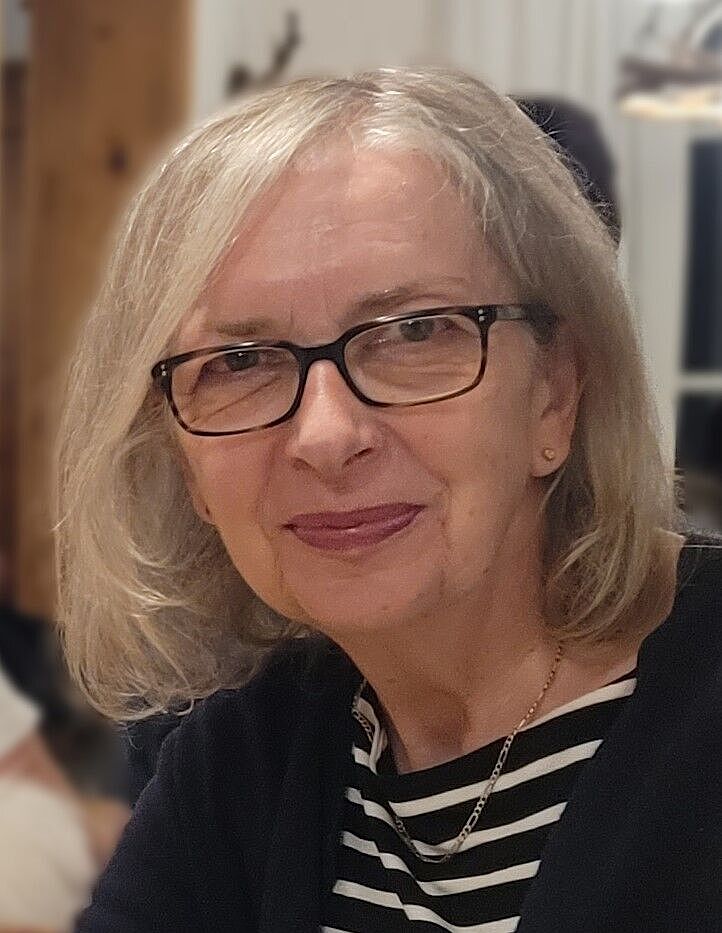
Prof. Dr. rer. nat. habil. Ursula van Rienen is a faculty member at the University of Rostock, holding the Chair of Theoretical Electrical Engineering within the Interdisciplinary Faculty (INF). Her research bridges accelerator physics and biomedical engineering, focusing on electromagnetic field simulations and their interactions with biological tissues. Main Research Areas: Accelerator Physics: Beam dynamics, high-frequency structures, and superconducting cavities in colliders. Biomedical Engineering: Computational modeling of electric fields in deep brain stimulation, bone regeneration, and cartilage tissue engineering. Scientific Contributions: Her work includes publications on multiphysics simulations, impedance analysis, and neural networks, with a focus on translating electromagnetic theory to medical applications like electrical implants. She leads the DFG Collaborative Research Centre SFB 1270 ELAINE on electrically active implants and participates in international collaborations such as the International Muon Collider Collaboration. Teaching: Courses include Theoretical Electrical Engineering , Computational Modeling of Physiological Systems , and Advanced Electromagnetic Simulation . Contact: ursula.van-rienen@uni-rostock.de | Room Ex 105a, Rostock.
Prof. Dr.-Ing. Jörg Franke is a Professor at the Department of Mechanical Engineering, Friedrich-Alexander University Erlangen-Nürnberg, leading the Institute for Factory Automation and Production Systems (FAPS). His research spans manufacturing systems, production technologies, and sustainable industrial practices, with a strong focus on electric mobility and data-driven production optimization .
Prof. Dr. Thomas Wick is a Professor at the Institute of Applied Mathematics within the Faculty of Mathematics and Physics at Leibniz University Hannover. He holds leadership roles, including Executive Director of the Institute and membership in the Executive Board and Faculty Council. His research focuses on numerical methods for coupled nonlinear partial differential equations, multiphysics systems (e.g., fluid-structure interaction, phase-field fracture), adaptive finite element techniques, and robust solvers. Key projects include the DFG-funded SPP 1962 and SPP 1748 initiatives, the PhoenixD Cluster of Excellence, and international collaborations like the Indo-German Higher Education Partnership. He has received grants from DFG, DAAD, and the Alexander von Humboldt Foundation. His work emphasizes algorithm design, error control, and computational efficiency in engineering and scientific applications. Research Interests: Numerical modeling of coupled PDE systems, multiphysics phenomena, phase-field fracture, adaptivity, and optimization. Projects include CoMeTeNd (IRTG 2657/1), PhoenixD Task Group S4, and Strukturerhaltende Adaptive Enriched Galerkin Methods. Scientific Awards: Feodor Lynen Fellowship, DFG Projects, DAAD grants. Collaborations span Germany, Austria, India, Peru, and France. Publications highlight advancements in phase-field fracture, fluid-structure interaction, and adaptive methods. His contributions address challenges in mesh adaptivity, error estimation, and high-performance computing.