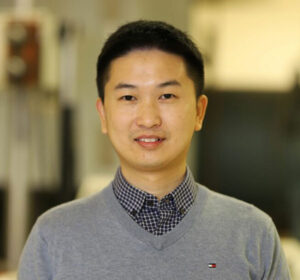
Dr. Ivana Kovacevic is a Lecturer at the Department of Information Technology and Electrical Engineering at ETH Zürich. Her research focuses on power electronics, semiconductor device modeling, and electromagnetic analysis of wide bandgap devices. ETH Zürich, Department of Information Technology and Electrical Engineering Contact: kovacevic@aps.ee.ethz.ch Her research explores SiC power MOSFETs, emphasizing their dynamic performance, reliability, and optimization through advanced modeling techniques like the Partial Element Equivalent Circuit (PEEC) method. She investigates parasitic extraction, thermal behavior, and stability issues in power modules, contributing to design improvements for high-efficiency systems. Her publications highlight trends in electromagnetic modeling, device-circuit interactions, and reliability analysis under extreme conditions. Key subfields include gate resistance dynamics, frequency-dependent capacitances, and multi-chip module design. Current projects involve virtual prototyping for power electronics and mission profile-based optimization of wearable power systems.
Dr. Dave Novog is a Professor and NSERC Industrial Research Chair in the Department of Engineering Physics at McMaster University. He specializes in nuclear safety analysis, reactor physics, and thermalhydraulics, with a focus on advanced computational methods and interdisciplinary energy systems. His research emphasizes improving safety margins through best-estimate predictions and uncertainty quantification, alongside experimental studies on boiling phenomena and fuel-coolant interactions. He teaches ENG PHYS 715: Advanced Nuclear Reactor Thermal Hydraulics and ENGPHYS 2NE3: Thermal Systems Design . Dr. Novog is actively involved in the Small Modular Advanced Reactor Training (SMART) program and collaborates on initiatives like the Community Energy Transition Workshop, focusing on energy sovereignty for Indigenous and remote communities. He has been featured in media discussions on nuclear innovations and safety, including coverage in Maclean's and CTV News. His research also explores parallel processing applications in safety analysis, risk-informed decision-making, and the transition to zero-emission energy systems. He holds office at NRB 119 and is currently accepting graduate students.
James Bain is a Professor in the Electrical and Computer Engineering (ECE) Department at Carnegie Mellon University, with a courtesy appointment in the Department of Materials Science and Engineering. He serves as Associate Director of the Data Storage Systems Center (DSSC) within the College of Engineering. B.S. in Materials Science and Engineering from the University of Pennsylvania (1988) M.S. (1991) and Ph.D. (1993) in Materials Science and Engineering from Stanford University His research spans magnetic, optical, electrical, thermal, and mechanical devices for information storage. Current programs focus on heat-assisted magnetic recording and resistive switches for memory and reconfigurable electronics, with interdisciplinary applications in energy security, industrial decarbonization, and nanofabrication. His work intersects materials science , electrical engineering , and nanotechnology . Scott Institute Seed Grant (2018) for energy research Member of Materials Research Society and IEEE Magnetics, Electron Devices, and Photonics Societies Bain has co-authored over 225 publications and leads research at the interface of data storage and energy systems . He actively contributes to multiphysics modeling, nanoscale thermal transport, and phase-change materials. His lab is affiliated with Carnegie Mellon’s Data Storage Systems Center, advancing technologies for grid-interactive and high-performance buildings.
Rajeev Jaiman is a Professor in the Department of Mechanical Engineering at the University of British Columbia's Faculty of Applied Science. A graduate of IIT Bombay (B.Tech) and the University of Illinois at Urbana-Champaign (M.S., Ph.D. in Aerospace Engineering), he holds the NSERC/Seaspan Industrial Research Chair in Intelligent and Green Marine Vessels (IGMVs) and is recognized as a SNAME Fellow. PhD in Aerospace Engineering from University of Illinois, Urbana-Champaign Senior Member of AIAA and member of APS, ASME, SNAME, and USACM His research focuses on fluid-structure interaction , computational mechanics , and data-driven modeling for marine/aerospace applications. Current work includes: High-fidelity multiphysics simulations Machine learning integration for fluid dynamics Phase-field methods for interface capturing Bio-inspired structural optimization Flow control techniques for vortex-induced vibration Recent publications emphasize graph neural networks for fluid dynamics prediction, phase-field modeling of complex interactions, and machine learning applications in multiphase flows. Research trends show strong interdisciplinary connections between computational mechanics, ocean engineering, and data science. Scientific awards include: NSERC/Seaspan Industrial Research Chair Fellow of The Society of Naval Architects and Marine Engineers (SNAME) As director of the Computational Multiphysics Laboratory, he develops high-performance computing frameworks for marine , aerospace , and biomechanics applications. His work spans numerical algorithms, HPC-based solvers, and bio-inspired design optimization.
Dr James Campbell is a Reader in Structural Integrity at Brunel University London's Department of Mechanical and Aerospace Engineering within the College of Engineering, Design and Physical Sciences. With a PhD in hypervelocity impact on spacecraft and 20+ years of experience leading multidisciplinary projects, he specializes in non-linear numerical methods (FE and SPH), structural integrity, and impact analysis across aerospace, defense, and automotive sectors. BEng in Aeronautical Engineering, Imperial College London MSc and PhD in Astronautics and Space Engineering, Cranfield University His research focuses on: Transient response of materials/structures (e.g., space debris impact, aircraft crashworthiness) Meshless methods like Smoothed Particle Hydrodynamics (SPH) Constitutive models for isotropic/orthotropic materials Fluid-structure interaction in ditching and extreme wave events Recent work trends include space debris removal tools, composite material development for offshore energy, and advanced SPH algorithms for impact simulations. Awards include the Derek George Astridge Safety in Aerospace Award (2009) and Royal Institute of Naval Architects Medal (2010). He supervises PhD/MSc students and delivers CPD courses for industry (Boeing, Leonardo). Research group: IMM (International Marine and Offshore). Collaborations include Airbus, DLR, and ESA.
Thomas Brunet is a researcher at the University of Bordeaux, specializing in physical acoustics and functional materials for acoustics. His work spans ultrasound physics, material characterization, and advanced modeling/simulation techniques. Key collaborations with research groups: APY (Physical Acoustics) , Functional Materials for Acoustics , and GCE (Civil and Environmental Engineering) . Focus areas: acoustic metamaterials , Anderson localization , contactless micromanipulation , and viscoelastic wave propagation . His publications (over 30 in the last decade) demonstrate expertise in ultrasonic imaging, nanophononics, and multiphysics problems involving mechanical, thermal, and fluid interactions. Collaborative projects include DuMAS (Sustainability of Materials) , IMC (Mechanical Engineering) , and MPI (Materials-Procedes-Interactions) initiatives. No formal awards or student advising details are publicly available in the provided data.
Dr. Zhen Li is an Assistant Professor in the Department of Mechanical Engineering at Clemson University's College of Engineering, Computing and Applied Sciences. He joined Clemson in August 2019 after serving as a research associate professor at Brown University and a postdoctoral research associate at University of California, Merced. Education: Ph.D. in Fluid Mechanics, Shanghai University, 2012 MS in Fluid Mechanics, Shanghai University, 2008 BS in Engineering Mechanics, Wuhan University, 2005 Dr. Li's research focuses on multiscale modeling of soft matter, complex fluids, biophysics, and collective dynamics using both bottom-up (coarse-grained molecular modeling) and top-down (from continuum descriptions to fluctuating hydrodynamics) approaches, along with high-performance computing. His work spans mathematical theory for coarse-graining and model reduction, statistical methods and machine-learning approaches applied to multiscale modeling, memory effects in complex fluids, and concurrent coupling of heterogeneous solvers for scale-bridging. Analysis of Dr. Li's recent publications reveals a strong trend toward integrating machine learning with traditional computational methods, particularly neural operators for multiscale problems. His work spans diverse applications from bubble dynamics and blood flow to materials science and bioprinting, demonstrating the versatility of his computational approaches across multiple disciplines in engineering and physics. Awards and Recognition: CECAS Dean's Professor Award (2024) Award of Excellence - Junior Faculty (2021-2022) Best Research Poster Award at SC19 (2019) 2nd Place Award of Best Poster Presentation at DOE/EFRC AIM for Composites meeting (2024) Dr. Li actively mentors PhD students including Miles Lu, Ryan Wan, Haizhou Wen, and Ali Mohammadi, who have published significant research in computational mechanics. His research is supported by multiple grants including an NSF Elements grant as PI for 'SciMem: Enabling High Performance Multi-Scale Simulation on Big Memory Platforms', an NSF CDS&E grant as co-PI for 'HAM3R: Heterogeneous Automated Management of Multiscale Methods and Resources', a DOE/EFRC grant as Thrust lead co-PI for 'AIM for Composites', and a NASA EPSCoR grant as Science-PI. Dr. Li leads the MuthComp (Multiscale theory and Computation) research group, which focuses on developing interfaces between Engineering, Applied Mathematics, Physics-based Machine Learning, and High Performance Scientific Computing. The group has active collaborations with institutions including Idaho National Laboratory, University of Tokyo, and Brown University, and has developed open-source software including USERMESO for GPU-accelerated DPD simulations.
Eirik Keilegavlen is a Researcher at the Department of Mathematics, University of Bergen. His primary research focuses on developing mathematical models, numerical methods, and simulation tools for multiphysics processes in porous media, particularly in geothermal energy, CO 2 storage, and subsurface energy systems. He leads the development of the open-source software PorePy, designed for simulating processes in fractured porous media. His work emphasizes coupled problems involving fluid flow, heat transfer, and mechanical deformation. Key research interests include: Mathematical modeling of coupled thermal-hydro-mechanical processes Numerical discretization methods for fractured media Development of open-source simulation tools Applications in geothermal energy extraction and carbon sequestration Recent publications highlight advancements in: Uncertainty quantification for CO 2 leakage Viscous fingering in fractured reservoirs Automated solver selection for multiphysics systems Collaborations involve interdisciplinary teams addressing challenges in geothermal reservoir stimulation, fault mechanics, and high-performance computing. His work bridges theoretical developments with practical applications in energy and environmental systems.
Prof. Thomas Weiland is a Full Professor of Computational Electromagnetics at the Technische Universität Darmstadt since 1989. His research focuses on numerical methods, computational engineering, and multiphysics simulation techniques, particularly in accelerator physics and beam dynamics. He holds a Dr.-Ing. from TU Darmstadt and has held postdoctoral and research positions at CERN and TU Darmstadt. His work includes pioneering contributions to electromagnetic field simulations, including advanced finite element methods, discontinuous Galerkin techniques, and boundary element approaches. Education highlights include his Diplom in Electrical Engineering from TU Darmstadt (1975) and a Habilitation in Experimental Physics from the University of Hamburg (1984). His research spans computational electromagnetics, accelerator physics, and numerical methods for electromagnetic field problems. Notable areas of innovation include transparent boundary conditions, eigenmode calculations, and high-performance simulation frameworks for rotating systems and particle accelerators. His publications emphasize advancements in electromagnetic simulation tools, such as the MagPEEC method and Trefftz-discontinuous Galerkin approaches. Collaborative projects include modeling RF photoinjectors for light sources and electrohydrodynamic droplet dynamics. Technical contributions also extend to wake field analysis in particle accelerators and SAR distribution studies in bioelectromagnetics. Research interests further include multiphysics coupling (thermal-electromagnetic effects in surge arresters), stochastic modeling of electromagnetic systems, and field-circuit co-simulation techniques. His work addresses challenges in large-scale eigenvalue problems, adaptive mesh optimization, and high-precision numerical methods for complex geometries.
Wenbo Duan is a Senior Lecturer and MSc Programme Leader in Mechanical Engineering at the University of Hertfordshire. He holds a PhD from the University of Manchester (2010) and previously served at Brunel University London as a Research Fellow, Senior Research Fellow, and Technical Advisor. His research focuses on advanced non-destructive testing techniques, including ultrasonic and guided wave methods, finite/spectral element modeling, and acoustic communication in industrial pipelines. He specializes in numerical simulations of wave propagation in complex media, defect detection, and signal processing innovations. Education: PhD in Mechanical Engineering, University of Manchester (2010) MSc in Engineering BSc (Distinguished) in Engineering Research Interests: Ultrasonic Non-Destructive Testing (NDT) Guided Wave Defect Detection Piezoelectric-Structure Coupling Acoustic Communication in Pipes Multiphysics Spectral Element Modeling Fluid-Structure Interaction Analysis Key Projects (2021–2025): "Noise Cancelling for Powered Air Purifying Respirators" (PI) "Guided Wave Inspection in Fluid-Filled Wells" (PI) "Assessing the Impact of Strain on Temperature Readings" (Co-Investigator) Advisees & Grants: No specific advisees listed. Active in securing research funding for NDT and acoustics-related projects. Labs & Teams: Involved in the Centre for Engineering Research at the University of Hertfordshire, focusing on computational mechanics and industrial applications.
Mine Çağlar is a Professor in the Department of Mathematics at Koç University, specializing in probability theory and stochastic processes with applications in mathematical finance and risk analysis. Her work addresses fundamental problems in Markov additive processes, Lévy processes, and Brownian motion, contributing to both theoretical advances and practical financial modeling. Her academic credentials include: PhD in Statistics and Operations Research from Princeton University (1997) Master’s in Industrial Engineering from Bilkent University (1991) B.A. in Industrial Engineering from Middle East Technical University (1989) Professor Çağlar’s research centers on extreme event analysis in stochastic processes, particularly maximum drawdown, maximum loss, and optimal stopping problems. She investigates path properties of spectrally negative Lévy processes and develops mathematical frameworks for degenerate market models. Her work bridges abstract probability theory with real-world financial applications, including risk management and hedging strategies. Recent publications demonstrate sustained innovation in stochastic analysis, with a focus on long-time behavior of complex processes and boundary-crossing phenomena. Analysis of her 15 most recent publications (2018–2024) reveals a cohesive research trajectory emphasizing Markov additive processes (40% of articles), Lévy process extremes (30%), and financial applications (20%). Key methodological trends include path decomposition techniques, Monge-Ampère equations on Wiener space, and stochastic flow modeling. Her work increasingly integrates fluid dynamics concepts like Çinlar models for turbulence simulation, reflecting interdisciplinary expansion into applied mathematics. Her scholarly recognition includes: Hayri Körezlioğlu Research Award (2013) Parlar Foundation Research Incentive Award (2005)
Herbert Steinrück is an Associate Professor at Vienna University of Technology (TU Wien) since 1997, with multiple affiliations across the university's engineering departments. His primary appointments include the Institute of Fluid Mechanics and Heat Transfer (E307), Institute for Analysis and Scientific Computing (E322), and Institute of Engineering Design and Product Development (E101). He leads research in the Computational Fluid Mechanics research area (E322-02). Steinrück completed his Dipl.-Ing. in Mathematics at TU Wien in 1983, followed by his Dr. techn. degree between 1983-1985. He served as a Research Assistant from 1983-1989 at the Institute of Fluid Mechanics and Heat Transfer, then worked as a University Assistant from 1992-1997 before achieving Habilitation in 1991. His international experience includes a Visiting Scientist position at IBM Thomas Watson Research Center in 1989-1990. His research focuses on Computational Fluid Dynamics, Wave Dynamics, and Combustion Engineering . Steinrück's work spans rotary and gravity waves in cylindrical containers, flame propagation in confined spaces, dust explosions, and flow-induced vibrations. His approach combines experimental validation with asymptotic analysis and numerical simulation, particularly examining stability characteristics and excitation mechanisms in complex fluid systems. Recent work shows increasing focus on multiphysics problems involving fluid-structure interaction. Analysis of his 15 most recent publications reveals consistent work in wave dynamics (particularly rotary waves in cylindrical containers), with expanding applications to combustion phenomena and structural interactions. His research demonstrates strong continuity in fundamental fluid mechanics while adapting to address practical engineering challenges in compressor design, explosion safety, and aeroelasticity. Steinrück has mentored numerous graduate students through thesis supervision, with documented advisees working on topics including hydroelastic gear lubrication, circulating condensate films, dental air turbines, and flow-induced vibrations in U-beams. His collaborative work extends to conference organization, including editing proceedings for the EFRC Conference series.
Niclas Jansson is a researcher at the PDC Center for High Performance Computing at KTH Royal Institute of Technology. He holds an M.S. in Computer Science (2008) and a Ph.D. in Numerical Analysis (2013) from KTH. His career spans roles such as postdoctoral researcher at RIKEN Advanced Institute for Computational Science (2013-2016) and visiting scientist at RIKEN (2018-2021), where he contributed to the Japanese exascale program Flagship 2020. A core focus of his research involves extreme-scale computing and numerical method development. He is a key developer of RIKEN's multiphysics framework CUBE , the HPC branch of FEniCS , and the spectral element flow solver Neko . His work is currently supported by a Swedish Research Council Starting Grant aimed at enhancing high-order spectral element methods for exascale fluid simulations. Niclas has published extensively on topics such as GPU acceleration , adaptive finite element methods , in situ visualization , and extreme-scale turbulence modeling . He also teaches Computational Fluid Dynamics (SG2212) at KTH.
Yeqing Wang is an Assistant Professor at Syracuse University, affiliated with the Syracuse University Composite Materials Lab (SU-CML). His research focuses on composite materials' mechanics, durability, advanced manufacturing, and multiphysics modeling. He holds a Ph.D. from the University of Iowa. Research Interests: Dr. Wang investigates composite materials' failure mechanisms under extreme conditions (e.g., lightning strike, laser ablation) using mathematical and experimental approaches. His work aims to develop durable, bioinspired multifunctional composites and optimize manufacturing processes. Awards: Ralph E. Powe Junior Faculty Enhancement Award (2020) Graduate & Professional Student Government Travel Award (2016) IWEA Conference Research Poster Competition Second Place (2014) James F. Jakobsen Graduate Conference First Place (2013) Iowa EPSCoR Poster Competition First Place (2013) ASC Technical Conference Best Paper Award (2012) Labs & Teams: A core member of SU-CML, founded in 1990, which explores composites for aerospace, energy, and infrastructure applications. Research emphasizes both fundamental science and engineering solutions for advanced composite structures.
Sheldon Andrews is an Associate Professor of Software Engineering and IT at École de technologie supérieure (ETS) in Montreal, Canada, with an adjunct appointment in Computer Science at McGill University. He is a member of the Multimedia Research Laboratory and has established himself as a leading researcher in physics-based computer animation and simulation. Andrews earned his Ph.D. in Computer Science from McGill University (2015), MASc in Electrical and Computer Engineering from the University of Ottawa (2007), and B.Eng. in Computer Engineering from Memorial University (2004). His academic journey reflects a strong foundation in both theoretical and applied aspects of computer engineering and graphics. His research focuses on real-time physics simulation, articulated mechanism simulation, 3D character animation, motion capture, computational contact mechanics, and virtual environment modeling. Andrews' work bridges the gap between theoretical physics and practical applications in computer graphics, with particular emphasis on creating physically plausible animations that can run in real-time. His research has significant implications for video games, virtual reality, and robotics applications. Analysis of his recent publications (2022-2025) reveals a strong trend toward increasingly sophisticated physics-based character animation techniques, with growing integration of machine learning approaches. His work spans multiple subfields including collision detection, deformable object simulation, vehicle physics, and reinforcement learning for character control, demonstrating both breadth and depth in his research program. VRIPHYS 2012 best paper award for 'Policies for goal directed multi-finger manipulation' Andrews has advised numerous graduate students through their PhD and Master's degrees, with many going on to positions at major companies like DNEG, CM Labs Simulations, and AMD. His professional service is extensive, having served as Program Chair for SCA 2025 and MIG 2024, Conference Chair for I3D 2019, and on program committees for major conferences including SIGGRAPH, SCA, and MIG for multiple years. He has also been active in the Montreal SIGGRAPH Chapter as Secretary from 2018-2021. As a core member of the Multimedia Research Laboratory, Andrews collaborates with researchers across multiple disciplines to advance the state of the art in physics-based simulation. His lab maintains strong industry connections, including a visiting researcher position at Roblox Research, ensuring that theoretical advances translate to practical applications in gaming and virtual environments.