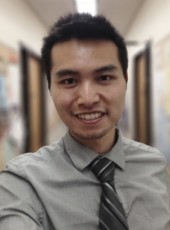
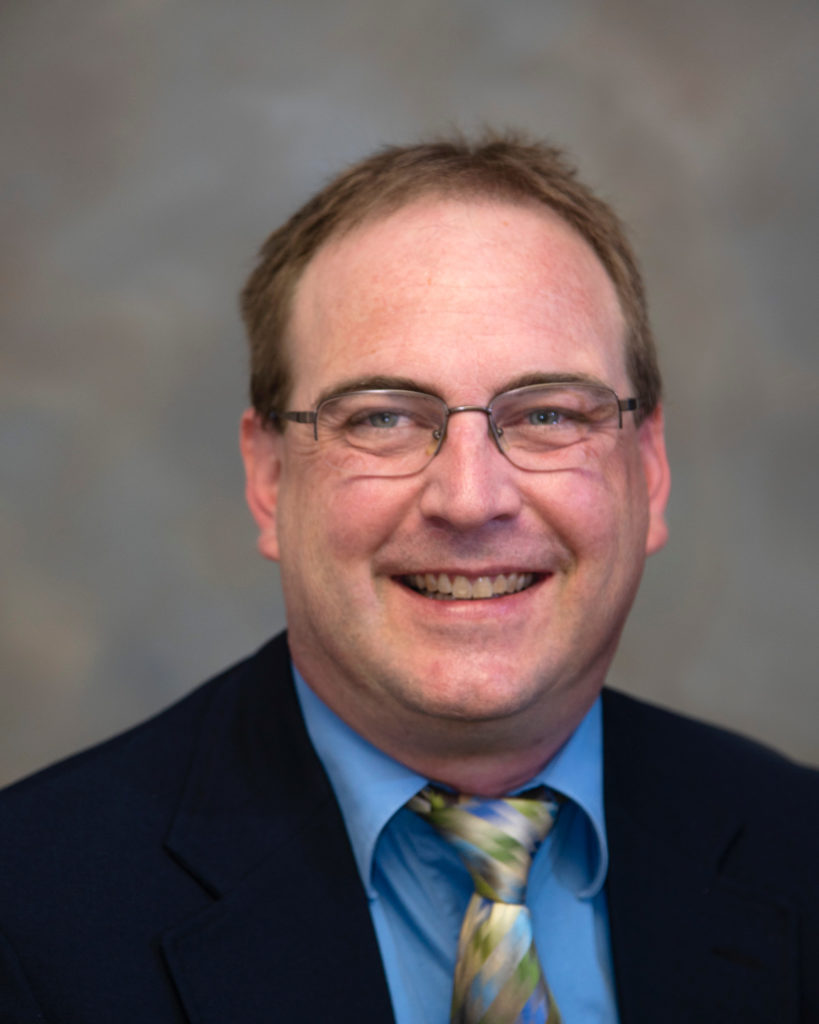
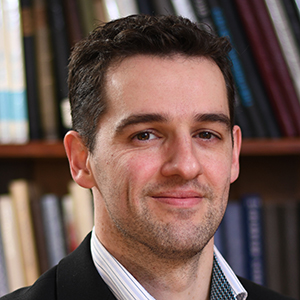
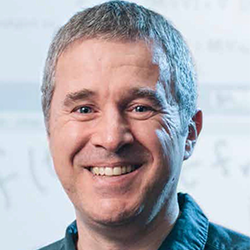
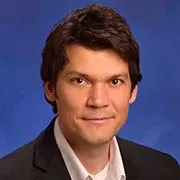
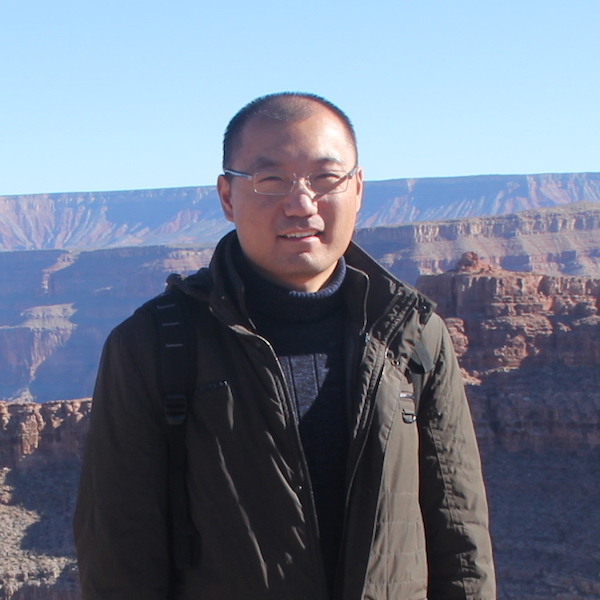
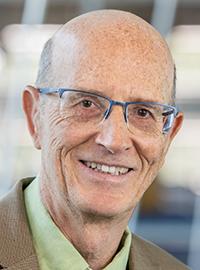
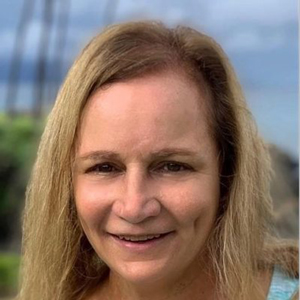
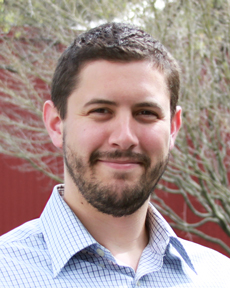
Zhen Liu is an Adjunct Associate Professor in the Department of Civil, Environmental, and Geospatial Engineering at Michigan Technological University. His research integrates multiphysics modeling, AI, and geotechnical engineering for intelligent infrastructure and system resilience. Teaching includes soil mechanics, foundation engineering, AI applications, and numerical simulations. Recent publications focus on machine learning in geosystems, pavement management, and computational methods.
Trevor M. Moeller is the Jack D. Whitfield Professor and Associate Professor in the Mechanical, Aerospace, and Biomedical Engineering (MABE) Department at the University of Tennessee Space Institute (UTSI). He holds a Ph.D. (1998), M.S. (1993), and B.S. (1991) in Mechanical Engineering from the University of Tennessee and Rose-Hulman Institute of Technology, respectively. His research focuses on plasma physics, electromagnetics, and high-speed propulsion systems, with particular emphasis on electric propulsion, high-temperature plasmas, and advanced manufacturing for aerospace applications. Moeller has secured over $8M in grants, leading projects on electrospray thrusters, hypersonic flow environments, and space environment simulations. He has authored/co-authored over 70 peer-reviewed articles and one patent, and serves on committees for AIAA and IEEE. Education: B.S., Mechanical Engineering, Rose-Hulman Institute of Technology, 1991 M.S., Mechanical Engineering, University of Tennessee, 1993 Ph.D., Mechanical Engineering, University of Tennessee, 1998 Research Interests: High-temperature plasmas, rocket propulsion, electric propulsion devices, electromagnetic acceleration, and plasma diagnostics. Current projects include developing electrospray thrusters and mitigating cryodeposition in vacuum chambers. Publications reflect contributions to computational fluid dynamics, plasma modeling, and experimental propulsion studies. His lab, the Computational and Experimental Aerospace Research (CEAR) group, utilizes advanced facilities like wind tunnels and vacuum chambers, alongside the TEMPEST simulation software. Moeller advises numerous graduate students and collaborates with agencies like AFRL, AFOSR, and DOD. His work addresses challenges in space environment simulation and propulsion system optimization.
Andrew Osborne is an Assistant Professor in the Department of Mechanical Engineering at the Colorado School of Mines. He holds a Ph.D. in Nuclear Physics from the University of Glasgow (2006) and has a unique interdisciplinary background, including a postdoctoral research period at the University of Texas at Austin (2009-2014) and a Research Assistant Professor appointment at the Colorado School of Mines before joining the faculty in 2018. Education: Ph.D. in Nuclear Physics (2006), University of Glasgow, Scotland. Osborne's research focuses on applying high performance computing and reactor theory to model coupled multiphysics phenomena in nuclear reactor systems. His work spans advanced reactor design, hybrid energy systems , numerical methods , and software engineering for scientific applications. Recent publications highlight his innovative integration of machine learning techniques with Monte Carlo simulations for nuclear reactor analysis, exploration of space nuclear power systems , and contributions to renewable energy integration and radiation detection technologies. Osborne's scholarly output demonstrates expertise in computational modeling of fast reactors , neutron transport , and fission wave dynamics . His interdisciplinary approach bridges nuclear engineering, data science, and energy systems analysis, with applications ranging from Earth-based sustainability to Martian colonization energy solutions. He actively contributes to nuclear safety and security through work on radiation source localization in urban environments and nuclear nonproliferation technologies. His software development background informs research on computational efficiency and robust simulation methods . Contact information: osbornea@mines.edu , Office: Brown Hall W370A, Phone: 303-384-2003
Xiangmin (Jim) Jiao is an Associate Professor in the Department of Applied Mathematics and Statistics at Stony Brook University, affiliated with the Computer Science Department and the Institute for Advanced Computational Science. He holds a B.S. from Peking University, M.S. from UC Santa Barbara, and Ph.D. in Computer Science from UIUC. His research focuses on high-performance geometric and numerical computing, including algorithms and software for dynamic surfaces, mesh optimization, and multiphysics coupling in applications like computational fluid dynamics and biomedical engineering. He has received awards such as the Outstanding Teacher Award (2010-2012) and the David J. Kuck Outstanding Ph.D. Thesis Award (2001). His teaching spans courses like AMS 527 (Numerical Methods) and AMS 561 (Computational Science). Key research contributions include work on finite element methods, preconditioning techniques, and surface reconstruction. He has led projects on adaptive mesh refinement and multilevel linear solvers, with applications in climate modeling and structural mechanics. His lab, the Numerical Geometry Group (NumGeom), develops open-source software tools for numerical simulations. Collaborations include interdisciplinary work in biomedical computing and climate science. Recent research emphasizes robust numerical methods for singular systems and high-order surface integration techniques.
Raymond J. Spiteri is a Professor in the Department of Computer Science at the University of Saskatchewan, where he also directs the Centre for High-Performance Computing. His research spans numerical analysis, scientific computing, and applied mathematics, with a focus on developing numerical methods and software for differential equations, computational fluid dynamics, and exascale computing. He has led projects funded by Mprime and Mitacs, collaborating with industries like AFCC and Ballard Power. Education: Ph.D. in Mathematics (Institute of Applied Mathematics), University of British Columbia, 1997 B.Sc. (Hons.) in Applied Mathematics (Theoretical Physics), University of Western Ontario, 1990 Postdoctoral Fellow, School of Computer Science, McGill University, 1997–1999 Research Interests: Numerical methods for ODEs/DAEs/PDEs, including Runge-Kutta and SSP methods High-performance computing and parallel programming Applications in fluidized bed simulation, cardiac electrophysiology, and climate modeling Software development for scientific computing (e.g., problem-solving environments) Recent Article Trends: Advancements in implicit-explicit methods and operator-splitting techniques Computational modeling of cardiac arrhythmias and electrochemical systems Large-scale simulations for environmental and geophysical processes High-performance computing optimizations for exascale architectures Grants & Leadership: Director of the Centre for High-Performance Computing (College of Arts and Science) Executive Committee member of WestGrid/Compute Canada Past leader of the Mprime project on fuel cell simulation and transport phenomena Labs & Teams: Research is conducted in the Numerical Simulation Laboratory, focusing on interdisciplinary projects with industrial and academic partners.
Reza Barati is the Don W. Green Professor of Chemical and Petroleum Engineering and Director of the Tertiary Oil Recovery Program (TORP) at the University of Kansas. His research bridges industry and academia, focusing on enhanced oil recovery (EOR), hydraulic fracturing technologies, nanoparticle applications, and unconventional reservoir characterization. Research areas include fracture conductivity improvement using nanoparticles, waterless fracturing with CO2 foam, hydrocarbon gas huff-n-puff for shale recovery, and CO2 mobility control. His lab features advanced coreflooding systems, fracture conductivity measurement equipment, and HPHT analysis capabilities supported by major industry donations. He has secured significant research funding from NSERC, DOE, and industry partners. Teaching includes petroleum engineering design, well logging, unconventional resources, and water management courses. He developed KU's SPE PetroBowl team and organized international symposia on reservoir wettability.
Dr. Manika Prasad Summary Dr. Manika Prasad is a Professor in the Geophysics Department at the Colorado School of Mines (Mines), serving as Director of the Mines CCUS Innovation Center and Director of the Center for Rock & Fluid Multiphysics. Her expertise spans multidisciplinary geosciences, with focus areas including rock and fluid properties, multiphysics phenomena, CO2 sequestration, and advanced materials characterization. She leads major initiatives like the DOE SMART program and has contributed to projects such as lunar regolith studies and groundwater accessibility in rural communities. Education: B.S. in Geology, St. Xavier’s College, Bombay, India (1978) M.S. and Ph.D. in Geophysics, University of Kiel, Germany (1983 and 1990) Research Interests: CO2 storage mechanisms and capacity assessment Rock physics of shales, clays, and sandstones Nano/microscale characterization via NMR, SEM, and CT imaging Geophysical exploration for sustainable resource management Machine learning applications in reservoir modeling Labs & Centers: Mines CCUS Innovation Center (CO2 storage solutions) Center for Rock & Fluid Multiphysics (interdisciplinary rock-fluid interactions) Bakken Research Consortium (shale reservoir studies) Recognition: 2022 Martin Luther King, Jr. Award for leadership in advancing equity and innovation in geoscience education and research. Advising & Grants: Dr. Prasad has secured federal grants (e.g., DOE) and collaborates with industry partners on CCUS and unconventional reservoir projects. Her work emphasizes ethical geoscience practices and global water access initiatives.
Steve Wise is a Professor of Mathematics and Associate Head for Research and Development at the University of Tennessee, Knoxville. He holds a PhD from the University of Virginia (2003) and has been at UT since 2007. His research focuses on numerical analysis, partial differential equations, and applications in soft matter physics and kinetic theory, with emphasis on developing efficient numerical methods for complex fluid systems and interface dynamics. He is co-author of Classical Numerical Analysis: A Comprehensive Course (Cambridge, 2023). Education: BS in Mathematics (Clarion University, 1996), MS in Mathematics (Virginia Tech, 1998), PhD in Engineering Physics (University of Virginia, 2003). Research interests include multi-phase flows, moving boundary problems, nonlinear PDEs, and mathematical biology. He has advised numerous PhD students and has been recognized as a Web of Science Highly Cited Researcher (2020, 2022). Teaching includes courses on PDEs, numerical analysis, and multigrid methods. His YouTube channel WiseAppliedMaths features lecture series on asymptotic analysis and numerical methods. Recent work includes collaborations on phase-field crystal models, kinetic theory, and energy-stable numerical schemes. Key Contributions: Textbook on numerical analysis, development of convex-splitting schemes, energy-stable finite element methods for phase-field systems. Labs/Teams: Active in UT’s Mathematics Department research groups, contributing to interdisciplinary initiatives in applied mathematics and computational science.
Athos Nathanail is a Research Fellow at the Colorado School of Mines, specializing in multidisciplinary research combining machine learning and artificial intelligence with geology, focusing on rock, sediment, and fluid properties. His work bridges computational methods with geological applications, including synthetic dataset creation and reservoir engineering. Education: BS from the University of Wyoming, followed by MS and PhD from Heriot-Watt University. His research emphasizes machine learning applications in geology, such as fossil image analysis and sedimentary structure detection, alongside computational creativity in scientific domains. His publications include peer-reviewed articles on synthetic datasets for geology and machine learning methodologies. He contributes to research centers like the Mines CCUS Innovation Center (MCIC) and the Center for Rock & Fluid Multiphysics (CRFM).
Chen Huang is an Associate Professor in the Department of Scientific Computing at Florida State University (FSU), within the College of Arts and Sciences. His research focuses on computational materials science, particularly developing multiphysics methods for high-accuracy materials simulations and advancing orbital-free density functional theory (DFT) for large-scale studies of functional materials like metal alloys and lithium battery components. Huang holds a Ph.D. in Physics from Princeton University and a B.Sc. in Physics from Tsinghua University, China. Education Ph.D. in Physics, Princeton University B.Sc. in Physics, Tsinghua University Research Interests Development of novel multiphysics methods for oxide interface electronic structure predictions Orbital-free DFT advancements for scalable simulations of functional materials Electronic structure calculations and materials modeling Publications Trends Huang's recent work emphasizes improving DFT methodologies through embedded cluster approximations, analytical force calculations, and optimized effective potentials. His studies address challenges in simulating metals, catalytic reactions, and optoelectronic materials, with applications in energy storage and quantum chemistry. Key contributions include enhancing computational efficiency for large-scale systems and refining electron correlation treatments. Awards No specific scientific awards mentioned in the provided materials. Advising & Grants Current advisee: Mani Tyagi (Ph.D. student since 2023) Past students: Yu-Chieh Chi (UCSB Research Computing Consultant), Maliheh Shaban Tameh (ASU Postdoc) Former postdoc: Albert Dearden (2014-2015) Labs & Teams Huang leads the HUANG GROUP , focusing on computational materials science and DFT methodological advancements through the PROFESS software suite. The group collaborates on embedded cluster density approximations and high-accuracy electronic structure simulations.
Theo Siegrist is a Professor of Chemical & Biomedical Engineering and Materials Science & Engineering at the FAMU-FSU College of Engineering. He holds a joint appointment with the National High Magnetic Field Laboratory (Condensed Matter Science) and serves on the Department Graduate Committee. His research focuses on structural analysis of nanoscale materials, crystal growth, and advanced material characterization using techniques like X-ray diffraction. He earned his Ph.D. in Solid State Physics from ETH Zurich and has held roles at Bell Laboratories and Lund University. Research Interests: Organic semiconductors Crystal growth mechanisms Structure-property relationships in crystalline materials Advanced magnetic materials Key Achievements: Fellow of the American Physical Society (2006) Humboldt Research Fellow (2008) Over 150 peer-reviewed publications Current Projects: Exploring magnetophoresis dynamics in porous media, optimizing thermoelectric properties of heavy-fermion compounds, and developing novel perovskite-based optoelectronic materials.
Alessandro Reali is a Professor of Solid and Structural Mechanics at the Department of Civil Engineering and Architecture (DICAr), University of Pavia. He also holds roles as Dean of DICAr, Rector's Delegate for International Research, and affiliate at IAS-TUM (Technical University of Munich) and IMATI-CNR. His research focuses on computational mechanics, advanced materials, isogeometric analysis, and biomechanics, with applications in structural engineering, additive manufacturing, and biomedical modeling. Key achievements include: Elected Fellow of the European Academy of Sciences (2023) Recipient of the 2020 Euler Medal (ECCOMAS) 2010 ERC Starting Grant for ISOBIO project 2018 and 2016 Highly Cited Researcher (Clarivate) Research interests include phase-field modeling, fracture mechanics, and patient-specific forecasting of prostate cancer growth using imaging-informed biomechanical models. He leads the Computational Mechanics & Advanced Materials Group at the University of Pavia and has developed open-source tools like GeoPDEs for isogeometric analysis. Grants and collaborations span European and international institutions, emphasizing interdisciplinary applications in engineering, medicine, and environmental sustainability. His work bridges computational methods with real-world challenges in healthcare, manufacturing, and structural safety.
Dr. Khalid Saleh is a Senior Lecturer in Mechanical Engineering at the School of Engineering, University of Southern Queensland. His research focuses on fluid dynamics, icing phenomena in aircraft engines, computational fluid dynamics (CFD), and thermal engineering. He holds a PhD from USQ (2013) and an MSc from Al-Nahrain University (2002). Dr. Saleh teaches courses in heat transfer, fluid mechanics, and computational methods. He is affiliated with the Institute for Advanced Engineering and Space Sciences (IAESS) and has conducted pioneering work on ice crystal icing wind tunnels and supersonic flow analysis using advanced diagnostics like TDLAS. His research interests span multiphase flows, nanofluids, and renewable energy systems, with applications in aerospace and industrial engineering. He has supervised over 10 doctoral students in areas including ejector performance optimization and hybrid nanomaterials. His recent publications emphasize machine learning integration in fluid dynamics and hydrogen fuel utilization in engines. Research affiliations: Institute for Advanced Engineering and Space Sciences (IAESS) Key research tools: CFD simulations, experimental wind tunnels, and optical diagnostics (TDLAS) Key projects: Variable geometry ejector design, ice accretion monitoring systems, and eco-hybrid composite materials Dr. Saleh's work bridges theoretical fluid mechanics with practical engineering solutions, contributing to aerospace safety and sustainable energy technologies.
Dr. Alice Koniges is a computational scientist at the University of Hawaii at Manoa and Maui High Performance Computing Center. She specializes in modeling complex physical phenomena using advanced HPC techniques, with research interests spanning emerging architectures, machine learning, and partial differential equations. Her career includes roles at Berkeley Lab and joint appointments with UC Berkeley and UCLA. She leads the ALE-AMR code development team, which models plasma, fluid, and solid interactions in high-energy density regimes. As a DOE Exascale project PI, she achieved milestones in supercomputing performance and secured multimillion-dollar contracts. Previously, she served as Head of Institutional Computing at Livermore Lab, fostering industry partnerships through CRADAs. Education: PhD in Applied and Computational Mathematics from Princeton University (first woman recipient), MSE and MA from Princeton, and BA from UC San Diego. Over 100 technical papers, two HPC books, and 1,500+ citations highlight her scholarly impact. She has mentored >15 postdocs and graduate students, emphasizing HPC's practical applications. Recent work includes coastal aquifer management models and epidemiological studies of pandemic spread in island environments. Her research bridges computational methods with real-world challenges, such as fusion energy simulations and climate modeling. The PISALE codebase and ALE-AMR framework are core to her contributions. Current focus areas include exascale computing readiness, multiphysics integration, and optimizing HPC for next-gen architectures.
Liam Stanton is an Associate Professor of Applied Mathematics at San Jose State University (SJSU), part of the College of Science. He holds a Ph.D. in Applied Mathematics from Northwestern University (2009), an M.S. from the same institution (2005), and a B.S. in Physics & Mathematics from Boston College (2004). His research focuses on multiscale modeling of non-equilibrium many-body systems, with applications in physics and biology. Key areas include mathematical modeling of plasma dynamics, transport phenomena, and stochastic approaches in biological systems. Stanton’s work emphasizes analytical and computational methods, including molecular dynamics, density functional theory, and continuum mechanics. His recent studies explore plasma transport in high-energy-density systems, inertial confinement fusion, and biophysical modeling of cellular membranes. He has developed novel algorithms for hydrodynamic density functional theory and machine learning-driven surrogate models to bridge scales in complex systems. His publications span plasma physics, computational methods, and interdisciplinary applications, reflecting a commitment to advancing both fundamental theory and practical simulation techniques. Stanton collaborates widely, contributing to projects like the Cimarron Initiative for large-scale plasma simulations. He is actively involved in teaching and mentoring, though no student names are publicly listed. Office hours are held Monday-Thursday 9am–12:30pm/1:30pm–4pm and Friday 9am–12:30pm.