Dr. Rob Mestrom is an Assistant Professor at the Electromagnetics Research Group, Department of Electrical Engineering, Eindhoven University of Technology (TU/e). With over 15 years of experience in multiphysics modeling and electromagnetic applications, he focuses on medical neuromodulation using transcranial magnetic stimulation (TMS) and transcranial direct current stimulation (tDCS) , alongside deep hyperthermia optimization for oncology treatments. 2005 MSc in Mechanical Engineering (cum laude), TU/e 2009 PhD in Dynamics & Control, TU/e His research combines electromagnetic field modeling with thermal and acoustic properties to develop personalized medical treatments , particularly for neurological disorders. Key projects include: Polynomial Chaos Expansion methodologies for uncertainty quantification in LIFUS applications Development of quantitative multinuclear MRI techniques for dielectric tissue characterization Investigations into peripheral nerve contributions in tDCS mechanisms He contributes to public-private partnerships through Health Holland collaborations and serves on the Dutch Health Council's Electromagnetic Fields Committee since 2017.
Prof. Dr. Dirk Reith is a Research Professor at the Department of Engineering and Communication , Bonn-Rhein-Sieg University of Applied Sciences. He serves as Director of the Institute of Technology, Resource Conservation and Energy Efficiency (TREE) and holds roles such as Senior Consultant at Fraunhofer SCAI and Presidential Representative for Institutional Research Collaborations. Reith is also a Faculty Advisor for the BRS Motorsport (Formula Student) team. Education: Physics and Mathematics at Johannes Gutenberg University Mainz and Uppsala University, Sweden. Research Focus: Molecular simulations of soft materials (polymers, ionic liquids), computational fluid dynamics (Lattice-Boltzmann), fluid-structure interaction, and innovative engineering education methods like Problem-Based Learning (PBL) and peer mentoring. Leadership: Director of TREE Institute, co-founder of Digital Twin-4-Multiphysics Lab (Fraunhofer SCAI, Reinold Hagen Foundation), and active in interdisciplinary projects such as PAExSiDur (polymer aging), KIMODE (AI-optimized design), and UMMBAS (molecular modeling for biochemical applications). Awards: Recipient of the 2020 Teaching Prize at H-BRS for integrating peer teaching in Formula Student projects. Collaborations: Visiting Professor at UC Davis (2017), partnerships with GKN Driveline, Yarmouk University, and DFG-funded initiatives. Reith's work bridges computational methods, sustainability, and education, with projects like TRE³L (hydrogen energy lab) and ROFEE (resource-efficient e-mobility) highlighting his commitment to applied research and resource conservation.
Dr. Chérif Larouci is an Associate Professor and researcher at ESTACA (Higher School of Aeronautics and Space), where he has served as a teacher-researcher since 2002. Currently, he leads the Embedded Systems and Energy for Transport (S2ET) division, a position he has held since 2013. His academic career at ESTACA also included heading the Command and Systems Team from 2006 to 2013. In 2012-2013, he obtained Authorization to Supervise Research at the University of Paris-Sud 11. Dr. Larouci's educational background includes a PhD in Electrical Engineering from the National Polytechnic Institute of Grenoble (INPG) in 2002, with a thesis on "Design and optimization of static converters for power electronics; Application to sinusoidal absorption structures." Prior to that, he earned an Advanced Studies Diploma (DEA) in Electrical Engineering at INPG (1998-1999) and an Engineering Diploma from the National Polytechnic School of Algiers, specializing in Electrotechnics (1993-1998). His research focuses on power electronics, embedded systems, and energy management for transportation systems, particularly electric vehicles. Dr. Larouci's work spans multiple domains including power converter design, fault-tolerant control systems, energy management strategies, and multiphysical optimization of automotive components. His research has significant applications in electric vehicles, autonomous vehicles, more-electric aircraft, autonomous drones, and various electric transportation systems. Analysis of his recent publications reveals a strong emphasis on optimization techniques for power electronics in transportation applications. His work increasingly integrates multidisciplinary approaches, combining electrical engineering with mechanical, thermal, and control aspects. Recent trends show growing focus on sustainable transportation solutions, battery management systems, and intelligent energy management for electric mobility. His research bridges theoretical developments with practical automotive applications, often involving industry collaborations. IEEE Senior Member (elevated in March 2012) Member of the publication committee of the 3EI journal since 2004 Reviewer for numerous international journals and conferences Expert evaluator for collaborative projects (FUI, ANR, H2020, ADEME, regional projects) Dr. Larouci actively participates in research funding and collaboration through various channels. He has been involved in numerous research contracts and collaborative projects with industry partners. His leadership extends to coordinating the S2ET division, which comprises 20 teacher-researchers, 20 PhD students, and 6 technical and administrative support staff. He also contributes to strategic research directions as a member of several competitive clusters including MOVEO/Nextmove, ID4Car, and Astech. The S2ET division under Dr. Larouci's leadership serves as a comprehensive research environment focusing on embedded systems and energy solutions for transportation. The division maintains strong industry connections and participates in multiple national and European research initiatives. Current research directions emphasize electrification of transportation, autonomous vehicle systems, and sustainable mobility solutions, with particular attention to power electronics and energy management challenges.
David LE TOUZÉ is a Professor of Fluid Mechanics and Director of the Research Laboratory in Hydrodynamics, Energetics & Atmospheric Environment (LHEEA) at Centrale Nantes. His research focuses on advanced computational methods in fluid dynamics, particularly Smoothed Particle Hydrodynamics (SPH) and its applications to ocean engineering, wave-structure interactions, and multiphase flows. Research Interests: Prof. LE TOUZÉ's work spans: Development of high-fidelity SPH algorithms for complex fluid-structure interactions Hydrodynamic modeling of offshore structures and wave energy converters Numerical wave tanks and experimental validation techniques Multi-scale coupling methodologies (SPH-FEM, SPH-FV) Free-surface flows and multiphase systems Publication Focus: His recent publications demonstrate strong emphasis on: 1) SPH methodology enhancements for industrial applications, 2) Experimental-computational synergy in marine hydrodynamics, and 3) Novel approaches to modeling fluid-elastic systems. Dominant themes include wave-structure interactions, particle method optimizations, and marine renewable energy applications. Laboratory Leadership: Directs the LHEEA laboratory, coordinating research in hydrodynamic systems, atmospheric environment studies, and marine renewable energy technologies through the MÉLUHSINE IIHNÉ research group.
Michele Goano is a Full Professor in the Department of Electronics and Telecommunications (DET) at the Polytechnic University of Turin. He serves as Coordinator of the Doctoral School in Electrical, Electronics and Communications Engineering and is a member of both the PhotoNext Interdepartmental Center for Applied Photonics and the Doctoral School Council. His contact information includes phone number +39 0110904142 and email michele.goano@polito.it. Professor Goano's research spans multiple areas of optoelectronics and semiconductor physics. His primary interests include multiscale physics-based modeling of optoelectronic devices, far-infrared image sensor design, Si and III-V photonic integrated circuits, multiphysics CAD of vertical-cavity surface-emitting lasers (VCSELs), efficiency and reliability of visible and UV light-emitting diodes, and full-band Monte Carlo electron transport simulation. His work connects fundamental semiconductor physics with practical device applications, particularly in photonics and optoelectronics. His publication record shows consistent contributions to the field since the early 2000s, with recent work focusing on silicon photonics, infrared detectors, and advanced modeling of LED efficiency issues. The publications demonstrate a progression from fundamental band structure calculations to applied device modeling and optimization, with strong industry connections through commercial research contracts. Professor Goano actively supervises numerous PhD students across multiple research areas including radiation detectors, silicon photomultipliers, photonic integrated circuits, and semiconductor device modeling. He has secured significant research funding through both competitive international grants and commercial research contracts, particularly in the areas of infrared detector technology and silicon photonics. He is a member of the Microwave and Optoelectronics Group (MOG) within DET and has coordinated the Doctoral School in Electrical, Electronics and Communications Engineering for multiple cycles. His teaching portfolio includes courses on semiconductor device CAD, electronic transport in semiconductors, and specialized topics like VCSELs.
Professor Boris Balakin is affiliated with the Department of Mechanical Engineering and Maritime Studies at Western Norway University of Applied Sciences (HVL). His research focuses on multiphysics phenomena in industrial systems, including boiling, heat transfer, multiphase flows, turbulence, electrochemistry, and particle deposition. Specializes in CFD-DEM, Eulerian two-fluid, and VOF methods for multiphase flow modeling. Investigates renewable energy applications like nanosystems for solar and geothermal energy. Conducts non-invasive experimental validation using CT and PEPT techniques. Research Trends: Recent publications emphasize nanofluids for solar thermal systems, CFD modeling of industrial multiphase flows, and flow assurance in pipelines. Key subfields include photothermal conversion, particle agglomeration, and erosion analysis. Academic Leadership: Supervises PhD candidates in projects related to heat transfer, CFD modeling, and flow assurance. Teaches advanced courses like MAS536 CFD in Energy Technology and contributes to research groups on Solar Nano and Nanofluids for Energy and Process Technology .
Xiang Zhang serves as Associate Professor in the Department of Mechanical Engineering at the University of Wyoming, where he has held a faculty position since 2019. He directs the Computations for Advanced Materials and Manufacturing Laboratory (CAMML), focusing on establishing microstructure-processing-performance relationships through advanced computational models. His work bridges material microscale phenomena with structural-scale applications in high-performance materials and manufacturing processes. His educational foundation includes: Ph.D. in Civil Engineering from Vanderbilt University (2017) M.S. in Solid Mechanics from Beihang University (2012) B.S. in Engineering Mechanics from Northeastern University (2009) Dr. Zhang's research centers on multiscale and multiphysics computational modeling, with emphasis on deformation and damage mechanisms in metals and composites. His group develops crystal plasticity finite element models, interface-enriched generalized finite element methods (IGFEM), and reduced-order homogenization techniques. Current projects target frontal polymerization for composite 3D printing, metal additive manufacturing, and microstructure-informed material design. This work integrates computational modeling with experimental validation to solve challenges in structural integrity and manufacturing efficiency. Recent publications (2019-2023) reveal strong thematic continuity in multiscale modeling of composite manufacturing processes, particularly frontal polymerization applications in 3D printing. His work consistently connects microscale material behavior (e.g., crystal plasticity, interface damage) with structural performance through reduced-order modeling frameworks. Key journals include Computer Methods in Applied Mechanics and Engineering , Composite Science and Technology , and Additive Manufacturing , demonstrating cross-disciplinary impact in computational mechanics and materials engineering. His honors include: NSF CAREER Award (2023) for multiscale modeling of hybrid composites Dolling & Scott Faculty Research Award (2022) Multiple national conference awards including Melosh Medal Finalist (2017) Student paper competitions at Engineering Mechanics Institute (2016) Dr. Zhang actively mentors graduate researchers through CAMML, currently advising three PhD students and one MS student, with eight alumni completing degrees under his supervision. His NSF CAREER grant enables integrated research, education, and workforce development partnerships with Idaho National Laboratory, industry collaborators, and university centers including the School of Computing and Advanced Research Computing Center. The lab maintains strong industry connections for technology transfer in advanced manufacturing. The CAMML laboratory operates within the University of Wyoming's R1 research infrastructure, maintaining collaborations with Vanderbilt University, University of Illinois, and national laboratories. Current projects involve metal 3D printing, frontal polymerization composites, and reduced-order modeling frameworks, supported by state-of-the-art computational resources. The team actively recruits graduate students for positions requiring expertise in computational mechanics, materials science, and programming.
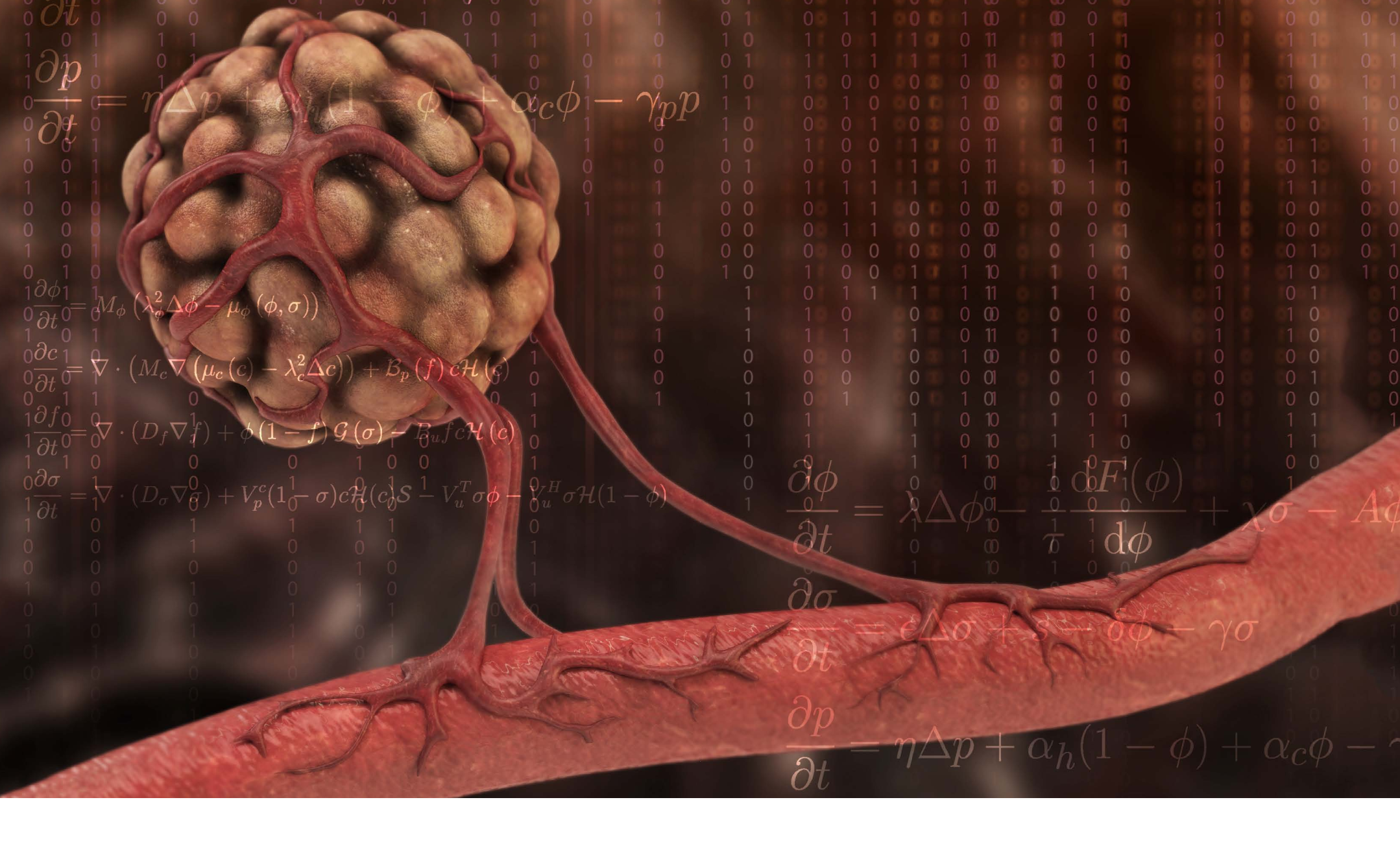
Hector Gomez is a Professor of Mechanical Engineering and Courtesy Professor of Biomedical Engineering at Purdue University’s School of Mechanical Engineering. He leads the Gomez Lab, focusing on computational mechanics, multiphase systems, and biomedical applications. His research bridges engineering and medicine through advanced modeling of interface problems, including tumor growth, fluid-structure interaction, and biomechanics. Education: Ph.D. in Civil Engineering from Universidade da Coruña, Spain. He also holds a Civil Engineering degree from the same institution. His work integrates isogeometric analysis, phase-field methods, and high-performance computing. Research Interests: Modeling multiphase and multiphysics systems using phase-field methods; isogeometric methods in fluid/solid mechanics; tumor growth simulation; computational fluid-structure interaction. His lab collaborates on prostate cancer growth forecasts using MRI data and personalized biomechanical models. Key Achievements: ERC Starting Grant (2012), MIT Technology Review Innovators Under 35 (2014), Princess of Girona Scientific Award (2017), USACM Fellow (2023). His team develops open-source tools for multiphysics simulation. Grants & Funding: Includes ERC grants, USACM awards, and Purdue University faculty scholarships. Active in computational oncology, drug delivery (subcutaneous injection modeling), and soft material mechanics. Labs/Teams: Gomez Lab at Purdue, specializing in computational engineering and medicine. Collaborations with biomedical researchers and industry on personalized medicine and medical device design.
Ganesh Subbarayan is the James G. Dwyer Professor of Mechanical Engineering at Purdue University, affiliated with the School of Mechanical Engineering. His roles include leading the Institute for Advanced System Integration and Packaging (ASIP) and the Center for Heterogeneous Integration Research in Packaging (CHIRP). He holds a B.Tech. from IIT, and M.S. and Ph.D. from Cornell University. His research focuses on computational and experimental solid mechanics, particularly in fatigue, fracture, and multi-physics phase evolution. Key areas include advanced electronics packaging, solder joint reliability, and thermomechanical behavior. Techniques employed include Finite Element Analysis (FEA), Isogeometric Analysis (IGA), and machine learning for multiphysics modeling. Recent work emphasizes heterogeneous integration challenges, real-time thermal simulations, and non-destructive material characterization. His publications span 20+ years, addressing topics like solder microstructure evolution, electromigration, and thermal management in 3D packaging. Prof. Subbarayan has contributed to over 100 peer-reviewed articles and holds leadership in interdisciplinary research initiatives at Purdue. His lab, HiDAC, develops novel methods for analyzing complex material systems.
Kazuki Maeda is an Assistant Professor in the School of Aeronautics and Astronautics at Purdue University. He holds a Ph.D. from the California Institute of Technology (2018), an M.S. from Caltech (2014), and a B.S. from The University of Tokyo (2013). His research focuses on complex flow dynamics, rocket propulsion, hypersonics, and cyberphysical integration, combining physics-based modeling, high-performance computing, and machine learning. He leads the Maeda Research Group, which develops advanced frameworks for simulating and optimizing engineering systems. Key awards include the Richard Bruce Chapman Memorial Award and Stanford-CTR Postdoctoral Fellowship. Research interests emphasize propulsion systems, high-speed flows, and computational methods. Publications span bubble dynamics, reactive shock waves, and neural network applications in flow analysis. The group collaborates on heterogeneous computing frameworks for combustion and fluid dynamics simulations. Prospective students and postdocs are encouraged to apply through Purdue’s AAE programs. Awards: Richard Bruce Chapman Memorial Award, Funai Foundation Scholarship, Stanford-CTR Fellowship Labs/Teams: Maeda Research Group (Complex Flow & Cyber-physical Laboratory) Grants: Not explicitly listed, but research is supported by institutional and collaborative initiatives.
R. Byron Pipes is the John L. Bray Distinguished Professor of Engineering at Purdue University, with joint appointments in the Schools of Aeronautics and Astronautics, Chemical Engineering, and Materials Engineering. He specializes in composites design, manufacturing simulation, and multiscale modeling. His research focuses on the influence of manufacturing processes on composites microstructure and structural performance, particularly in additive manufacturing and discontinuous prepreg platelet composites. Dr. Pipes holds a MSE from Princeton University (1969) and a PhD from the University of Texas at Arlington (1972). He has held prominent roles, including Executive Director of the Composites Manufacturing Simulation Center and leadership in the Institute for Advanced Composites Manufacturing Innovation (IACMI). He has been recognized with prestigious awards such as National Academy of Engineering membership (1987), Royal Society of Engineering Sciences (1995), and Fellowships in ASC, ASME, and SAMPE. His work spans advanced manufacturing science, composites certification processes, and the development of the Composites Design and Manufacturing HUB (cdmHUB). Current projects include additive manufacturing of composites and the Indiana Center of Excellence under the IACMI. His research emphasizes predictive modeling of material behavior during processing, including thermal effects, fiber orientation, and structural performance.
David Kay is an Associate Professor in the Department of Computer Science at the University of Oxford, specializing in computational biology and numerical analysis. He holds a D.Phil. from Leicester University and has held academic positions at UMIST and Sussex before joining Oxford in 2007. His research focuses on developing numerical schemes for partial differential equations (PDEs), particularly in modeling cardiac and pulmonary systems. Education: B.Sc. (First Class) in Mathematics (Leicester, 1992), D.Phil. in Numerical Analysis (Leicester, 1997). Postdoctoral roles at UMIST (1996–1998) and Oxford (1999). Became University Lecturer at Sussex (1999) before moving to Oxford as a University Lecturer in Computational Biology (2007). Research Interests: Multiphysics interaction in heart/lungs, finite element methods for cardiac bidomain equations, multiscale lung models, stochastic ion channel dynamics, and numerical cell movement models. Applications include asthma pathophysiology, cardiac electrophysiology, and drug safety assessment. Key Projects: Co-developed the Chaste open-source software library for biological simulations, focusing on cancer, heart, and soft tissue modeling. Active in the AirPROM Synergy project on COPD. Grants & Funding: Supervised over 15 Ph.D. students and secured funding via EPSRC, BBSRC, and industry partnerships (e.g., Fujitsu, GE Healthcare). Current funding opportunities available for postgraduate researchers. Labs/Teams: Leads computational biology research in Oxford’s Department of Computer Science, collaborating with clinical teams to bridge mathematical modeling and biomedical applications.
Prof Youguang Guo is a Professor of Electrical Machines and Drives at the School of Electrical and Data Engineering, University of Technology Sydney (UTS). He holds a PhD from UTS (2004) and has been affiliated with UTS since 2008, progressing from Research Fellow to his current role. His primary research areas include advanced electrical machine design, electromagnetic materials characterization, and motor drive optimization. He has authored over 600 refereed papers and led numerous funded projects, including grants on electric vehicle motors and high-efficiency drives. Education: B.E. (1985), M.E. (1988) from Huazhong University of Science and Technology, and PhD (2004) from UTS. Prior roles include teaching and research at HUST (China) and UTS’s Centre for Electrical Machines and Power Electronics. Research focuses on high-power-density motors, magnetic materials under rotational fields, and data-driven methods. Recent articles emphasize wind turbine power curve modeling, space target de-tumbling, and thermal analysis using transfer learning. His work integrates machine learning and optimization for energy systems. Awards include the ASEMD2023 Distinctive Research Contribution Award. He supervises PhD/Master’s students in topics like flywheel energy storage and PMSM efficiency. Active in editorial roles for IEEE Transactions, Energies, and conference proceedings. Collaborative projects include development of low-rare-earth motors and sovereign propulsion systems. His labs focus on electromagnetic design and advanced materials testing.
Philippe Geubelle is the Bliss Professor and Executive Associate Dean in the Grainger College of Engineering at the University of Illinois at Urbana-Champaign (UIUC). He holds affiliate roles in Mechanical Science and Engineering (MSE) and Theoretical and Applied Mechanics (TAM). His academic journey includes a Ph.D. in Aeronautics from the California Institute of Technology (1993), an M.S. from the same institution (1989), and a B.S. in Mechanical Engineering from the Catholic University of Louvain (1988). Geubelle's research focuses on advanced materials and manufacturing, particularly computational design of self-healing materials, fracture mechanics, and frontal polymerization. He pioneered energy-efficient manufacturing techniques for thermoset composites and developed models for microvascular materials. His work integrates computational mechanics, high-performance computing, and experimental validation. Key areas of expertise include: computational material design, multi-scale modeling, aeroelasticity, and failure analysis of composite systems. His research has led to innovations in morphogenic composites, patterned crystalline domains, and additive manufacturing via frontal polymerization. Geubelle has authored over 300 publications and holds patents in self-healing composites and shock-boundary layer interaction control. He has received numerous awards, including the Bliss Professorship (2011), ASME Fellow (2009), and NSF CAREER Award (1998). He leads interdisciplinary initiatives at UIUC, including roles in budget reform, faculty governance, and engineering education. His service spans national committees, professional societies (ASME), and space grant programs.
April Novak is an Assistant Professor at the University of Illinois at Urbana-Champaign (UIUC) in the Department of Nuclear, Plasma, and Radiological Engineering. She holds a joint appointment at the National Center for Supercomputing Applications (NCSA). Her research focuses on multiphysics modeling, thermal-hydraulics, and advanced reactor design, particularly using the MOOSE computational framework. She earned her PhD in Nuclear Engineering from UC Berkeley (2020) and a BS from UIUC (2015). Dr. Novak’s work emphasizes porous media modeling for pebble bed reactors (PBRs), conjugate heat transfer, and Monte Carlo transport methods. She has validated models against experiments like SANA and contributed to tools like Pronghorn and Cardinal. Her research integrates high-performance computing (HPC) for reactor simulations, with recent projects on lead-cooled fast reactors and sodium fast reactor bypass flows. Recipient of the R&D 100 Award (2023) and the Innovations in Nuclear Technology Award (2018), her teaching accolades include the Students' Award for Excellence in Undergraduate Teaching (2024). She advises on multiphysics coupling between neutronics and thermal-hydraulics and collaborates on the Virtual Test Bed (VTB) for advanced reactor models.