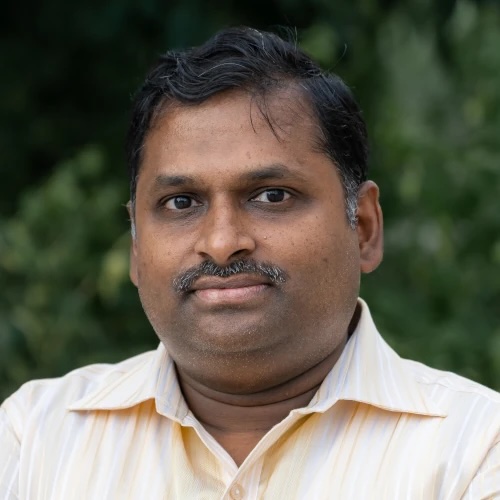
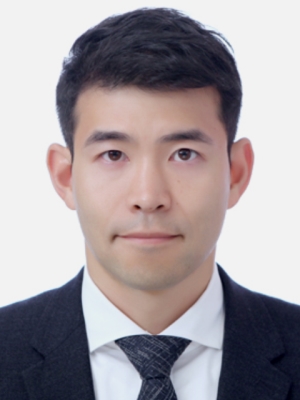
Dr. Anthony Phillips is a Lecturer in Condensed Matter and Materials Physics at the School of Physics and Astronomy, Queen Mary University of London. His research focuses on advanced materials, particularly ferroelectrics, barocalorics, and perovskites, using neutron scattering and computational methods like reverse Monte Carlo modeling.
Laureate Professor Kevin Galvin is a leading chemical engineer at the University of Newcastle's School of Engineering. His research focuses on mineral processing, fluidization, and separation technologies, particularly the Reflux Classifier, which revolutionized particle separation in the mining industry. He holds positions as Director of the Centre for Critical Minerals and Urban Mining and the ARC Industrial Transformation Research Hub for Advanced Technologies for Australian Iron Ore. His career spans over three decades, including roles at BHP Research and Imperial College. He has developed groundbreaking technologies like the Reflux Classifier and Reflux Flotation Cell, achieving global commercial success with installations across over a dozen countries. His work has been recognized with prestigious awards, including the Clunies Ross Award and Fellowship in the Australian Academy of Science. Research interests include interfacial phenomena, multiphase processes, and novel agglomeration techniques. He collaborates with industry partners like FLSmidth and Ludowici, emphasizing practical applications of academic research. His team at the Newcastle Institute for Energy and Resources (NIER) continues to innovate in energy and resources engineering.
Dania Olmos Diaz is Associate Professor at Universidad Carlos III de Madrid, specializing in polymeric nanocomposites and advanced manufacturing techniques. Leads research in the Polymer Composites and Interphases group. Key research areas: Solution blow spinning for biomedical materials Antibacterial polymer systems Nanocomposite consolidation techniques for heritage conservation Flexoelectric and piezoelectric material development Structure-property relationships in multiphase composites Recent publications focus on PLA-based fibrous materials for medical applications, airbrushed coatings for archaeological conservation, and ternary nanocomposites with enhanced electrical properties. Patents include innovations in material processing and characterization methods. Principal investigator for projects on sustainable packaging materials funded by Spanish research agencies. Research collaborations extend to industrial partners including Hempel A/S for coatings characterization and IMDEA Materials Institute for advanced microscopy.
Nimish Pujara serves as an Assistant Professor in the Department of Civil & Environmental Engineering within the College of Engineering at the University of Wisconsin-Madison, with additional affiliations in Mechanical Engineering. His research laboratory investigates fluid mechanics phenomena critical to environmental processes through integrated experimental, theoretical, and numerical approaches. His academic credentials include a PhD from Cornell University (2015), and dual BA Hons and MEng degrees from the University of Cambridge (2010). These qualifications underpin his expertise in complex fluid dynamics across multiple environmental scales. Dr. Pujara's research program focuses on environmental fluid mechanics, with specialized investigations in nearshore hydrodynamics, turbulent multiphase flows, flow-biota interactions, water wave mechanics, and coastal processes. His experimental methodologies bridge fundamental physics with practical environmental challenges, particularly examining how fluid motion influences ecological systems and coastal morphology. Current projects explore microplastic transport mechanisms, wave-particle interactions, and biological responses to turbulent flows. Analysis of his recent publications reveals dominant themes in coastal fluid dynamics and environmental transport phenomena. His work consistently connects laboratory-scale experiments with real-world environmental systems, demonstrating particular innovation in modeling wave-driven particle transport, microplastic sedimentation, and biological adaptations in turbulent flows. The research portfolio shows strong interdisciplinary collaboration across fluid dynamics, ecology, and environmental engineering. His scientific recognition includes these major awards: NSF CAREER Award (2024) National Academies Gulf Research Program Early-Career Fellowship (2023) U.S. National Committee for Theoretical and Applied Mechanics Hughes Fellowship (2021) Madison Teaching and Learning Excellence Fellowship (2018) Dr. Pujara actively mentors graduate students through thesis supervision (CIV ENGR 990, M E 890) and research courses, with his NSF CAREER award providing significant research funding. His teaching portfolio spans undergraduate fluid mechanics (CIV ENGR 310) to specialized graduate courses like Turbulent Heat and Momentum Transfer (CIV ENGR 775). His experimental laboratory employs advanced wave tanks and turbulence facilities to investigate phenomena from microscopic flow-biota interactions to large-scale coastal processes, supporting both fundamental research and practical environmental applications.
Francesco Profumo serves as Rector of Polytechnic University of Turin since 2005 and previously as Dean of the Faculty of Engineering (2003-2005). He holds a Professorship in Electrical Machines and Drives at the same institution since 1996, following a professorship at University of Bologna (1994-1996). His international experience includes Visiting Professorships at University of Nagasaki (1996-1997) and University of Wisconsin, Madison (1986-1988). Prof. Profumo's research focuses on advanced electrical machine systems and power electronics, specializing in high-power devices, novel electrical machine structures, integrated electromechanical design, and power conversion technologies. His work particularly addresses high-response servo drives, fuel cell power conditioning, and energy-saving applications in electrical plants. This research bridges theoretical innovation with industrial implementation in automotive traction, renewable energy systems, and industrial motor drives. His publication record from 2002-2008 demonstrates consistent contributions to dual three-phase motor drives, sensorless control techniques, and multiphase drive systems. Key thematic areas include thermal management in integrated drives, fault-tolerant control architectures, and energy-efficient electrical plant design, with publications predominantly appearing in IEEE Transactions journals. Major recognitions include multiple honorary doctorates from Technical University of Riga, Politechnica of Bucharest, and University of Miskolc, alongside IEEE-IAS paper prizes (1991, 1992, 1997) and IIEE-IPEC first prize (2005). Additional distinctions comprise honorary professorships at University of Cordoba and Jiao Tong University, and the Signum Aureum award from University of Miskolc. No information regarding student advising or research grants appears in the source materials. Similarly, laboratory affiliations or team leadership details beyond administrative roles are not documented.
Dr. Rashid Jamshidi is a Senior Lecturer in the Department of Engineering at Manchester Metropolitan University (MMU) within the Faculty of Science and Engineering. He holds Chartered Engineer (CEng) status and is a Fellow of the UK Higher Education Academy (FHEA). His academic career includes roles as a Postdoctoral Research Associate at UCL’s Department of Chemical Engineering (2014-2019) and Lecturer/Senior Lecturer at MMU (2019-present). His research focuses on computational methods and AI applied to multiphase flows, digital manufacturing, and sonochemical reactors. Key projects include digital twin development for additive manufacturing (3D printing), continuous sonochemical reactor modeling with Rawwater Ltd., and CFD-based vocalization studies for tracheostomy patients with Manchester University NHS Foundation Trust. He has secured grants from Innovate UK, EPSRC, and the Royal Academy of Engineering, including a 2021 Best Sustainable Innovation Award for fume cupboard optimization. Teaching includes modules on thermodynamics, fluid dynamics, and computational engineering at both undergraduate and postgraduate levels. Rashid supervises postgraduate students in digital manufacturing and additive manufacturing and collaborates with institutions like the Royce Institute and University of Surrey on advanced engineering projects. His expertise spans roles as a journal reviewer (e.g., Physics of Fluids ), guest editor, and contributor to professional networks like the UK Acoustics Network+. Education: Postgraduate Certificate in Learning & Teaching in Higher Education (PGCLTHE) Professional Activities: Peer Review College (UKRI), Engineering Professors Council, The Alan Turing Institute’s Simulation-Based Science Group Lab/Team Affiliations: Collaborations with Royce Institute, University of Surrey, and Manchester University NHS Foundation Trust
Subith Vasu is a Professor in the Department of Mechanical and Aerospace Engineering at the University of Central Florida (UCF), leading the VASU Lab. His research focuses on combustion diagnostics, shock tubes, laser spectroscopy, and sustainable energy systems. Vasu earned his Ph.D. from Stanford University (2010) and B.Tech from IIT Madras (India), with postdoctoral training at Sandia National Labs. His lab employs 12 PhD students, 1 graduate student, and 3 postdocs, producing over 70 journal articles and 150 conference papers. Research emphasizes advanced combustion systems using shock tubes and laser diagnostics to study ignition delays, reaction kinetics, and emissions. Key applications include power generation, propulsion, and spacecraft air quality monitoring. Vasu’s work bridges experimental and computational fluid dynamics, validating models for industries and academia. Education: Ph.D. Stanford University (2010), B.Tech IIT Madras (India) Affiliations: Center for Advanced Turbomachinery and Energy Research (UCF), American Institute of Aeronautics and Astronautics (Associate Fellow) His research group has secured prestigious awards including the DARPA Young Faculty Award (2018), SAE Ralph R. Teetor Award (2018), and ASME Dilip Ballal Early Career Award (2017). Notable projects include collaborations with NASA on sustainable aviation fuels and hydrogen safety, featured in UN OPCW documentaries and media coverage. Vasu’s lab develops novel optical sensors for harsh environments and contributes to decarbonization strategies through ammonia-hydrogen blends and supercritical CO₂ systems. He mentors students advancing to leadership roles in industry, national labs, and academia, embodying UCF’s commitment to impactful engineering solutions.
Domenikos Rafael serves as a Research Fellow holding dual appointments: Postdoctoral Researcher at Stevens Institute of Technology (2023–present) specializing in Artificial Intelligence for Renewable Energy Systems, and Research Associate at the Laboratory of Applied Thermodynamics, Cooling Technology & Refrigerated Vehicles of the National Technical University of Athens (2022–present). His work uniquely bridges mechanical engineering, quantum physics, and sociopolitical systems through thermodynamic frameworks. He completed his Doctorate in Mechanical Engineering at the National Technical University of Athens in 2022, establishing foundational expertise in cryogenic systems and thermodynamic modeling. Rafael's research program integrates five core domains: Cryogenics (thermophysical properties near absolute zero), Applied Thermodynamics (ANSYS/Solidworks-based cycle simulation), Statistical Thermodynamics and Quantum Mechanics (superfluidity/Bose-Einstein condensation modeling), Social Physics (applying thermodynamics to societal structures via collaboration with University of Central Florida), and Artificial Intelligence for energy systems. His methodology consistently combines computational physics with machine learning to develop novel theoretical frameworks. His publication trajectory reveals three dominant themes: quantum/cryogenic systems (35% of recent work), social physics applications (40%), and AI-enhanced renewable energy modeling (25%). Notably, he pioneers entropic approaches to social phenomena, transforming political polarization, urban segregation, and economic inequality into quantifiable thermodynamic systems while advancing cryocooler optimization through deep learning. His scientific recognition includes: Edward F. Obert Award 2022 from ASME for outstanding thermodynamics publication Rafael operates within NTUA's School of Mechanical Engineering Laboratory of Applied Thermodynamics, which recently acquired Carrier's R290 heat pump educational unit and Thermogas's 5.5kW system. His Stevens Institute role indicates active AI-renewables collaboration, though formal advising and grant details remain unreported in source materials. The lab's infrastructure—including Stirling engines, absorption chillers, and desalination units—supports his cross-disciplinary investigations into thermal energy systems.
Yuan Chen is a researcher at the Institute of Science Tokyo , focusing on advanced measurement techniques for nuclear engineering and environmental applications. Their work integrates Laser-Induced Breakdown Spectroscopy (LIBS) and Ultrasonic Velocity Profiler (UVP) for remote elemental analysis and flow visualization. Primary focus on nuclear reactor inspection and soil analysis Collaborations with Hiroshige Kikura, Hideharu Takahashi, and international teams Developing robotic systems for hazardous environments Research Trends : Recent publications (2022-2025) emphasize: Remote sensing for nuclear fuel debris analysis LIBS-UVP hybrid systems for multiphase flow measurement Soil elemental analysis for smart agriculture Robotic arms equipped with advanced sensors Key techniques: Laser spectroscopy, ultrasonic imaging, flow visualization algorithms, sensor fusion. Applications span nuclear decommissioning (e.g., Fukushima) and environmental monitoring.
Frederick Stern serves as the George D. Ashton Professor of Hydroscience and Engineering and Professor in the Department of Mechanical Engineering at the University of Iowa's College of Engineering. He additionally holds a Faculty Research Engineer position at IIHR—Hydroscience and Engineering, where he directs the Stern Lab. With over 40 years of continuous service since joining the institution in 1983, Stern maintains active leadership in naval architecture and marine engineering research. Education PhD in Naval Architecture & Marine Engineering, University of Michigan, 1980 MSE in Naval Architecture & Marine Engineering, University of Michigan, 1977 BSE in Naval Architecture & Marine Engineering, University of Michigan, 1975 Research Focus Stern's work centers on computational and experimental fluid dynamics with specialized expertise in ship hydrodynamics , cavitation phenomena , and fluid-structure interaction . His research program bridges high-fidelity CFD simulations with physical towing tank experiments, particularly for high-speed craft and naval vessels. Significant contributions include 6DOF viscous ship hydrodynamics modeling , towing tank maneuvering test methodologies , and multi-criteria optimization for ship design . Stern actively integrates advanced simulation technologies into undergraduate engineering education. Publication Trends Recent publications (2022-2025) demonstrate three converging research trajectories: (1) Multi-fidelity modeling for weight reduction and performance optimization of high-speed small craft, (2) Advanced CFD techniques for free-running vessel simulations in waves including fluid-structure interaction, and (3) Data-driven approaches using machine learning (DMD, RNNs) for ship motion forecasting. These works consistently emphasize validation through experimental data and address practical naval architecture challenges. Professional Recognition Fellow of the American Society of Mechanical Engineers (ASME) Professional Engagement Stern maintains active memberships in the American Society for Engineering Education (ASEE) and Society of Naval Architects and Marine Engineers (SNAME). He serves as Secretary of the Maneuvering Committee for the 24th International Towing Tank Conference, reflecting his leadership in experimental hydrodynamics standardization. His research collaborations include major international workshops such as the Tokyo 2015 CFD Workshop for ship hydrodynamics. Research Infrastructure Stern directs the Stern Lab within IIHR—Hydroscience and Engineering, leveraging the university's Stanley Hydraulics Laboratory facilities including towing tanks and advanced measurement systems. His team develops integrated computational-experimental frameworks like the towing tank maneuvering test flow-map measurement system, supporting both fundamental research and practical naval design applications.
Rafid Al-Khoury is a Senior Researcher at the Faculty of Civil Engineering and Geosciences, Delft University of Technology. His work focuses on computational poromechanics, geothermal systems, and CO2 geosequestration, utilizing advanced finite element and spectral methods. He leads the Computational Mechanics chair within the Applied Mechanics section. Education: Ph.D. (Cum Laude) in Computational Mechanics, M.Sc. (Distinction) in Civil Engineering, and B.Sc. in Civil Engineering. Research: Specializes in mesh-independent finite element schemes, inverse problems, and spectral analysis for geothermal and CO2 storage applications. His publications address transient heat flow, fracturing porous media, and energy pile dynamics. Key contributions include books on Computational Modeling of Shallow Geothermal Systems (2012) and Computational Models for CO2 Geo-sequestration & Compressed Air Energy Storage (2014). He has chaired program committees for major conferences like InterPore.
Shumo Cui is an Assistant Professor in the Department of Mathematics at Southern University of Science and Technology (SUSTech), where he has been employed since September 2019. He is also affiliated with the International Center for Mathematics (Gelmanov Mathematical Center) at SUSTech. His educational background includes: Ph.D. in Mathematics from Tulane University (2015) B.S. in Applied Mathematics from Tongji University (2010) Dr. Cui's research focuses on computational mathematics with applications in traffic flow modeling and simulation, numerical solutions of partial differential equations, and computational finance. His work bridges theoretical mathematics with practical applications, particularly in the emerging field of autonomous vehicle traffic control. His research has led to significant contributions in understanding and mitigating traffic waves through the strategic deployment of autonomous vehicles, as well as developing advanced numerical methods for fluid dynamics and financial modeling. His publications demonstrate a strong interdisciplinary approach, combining mathematical rigor with real-world applications. The research spans from theoretical numerical methods for PDEs to practical implementations in traffic engineering and financial modeling. His recent work has particularly focused on applying mathematical models to traffic flow problems, with several publications on autonomous vehicle control in traffic systems. Dr. Cui teaches courses including MATLAB Programming and Application (MA1103) and Partial Differential Equations (MA303).
Professor Saravanan B. is affiliated with the Indian Institute of Technology Hyderabad in the Department of Mechanical and Aerospace Engineering . His academic career spans from 2014 to 2024 at IIT Hyderabad, where he has progressed from Assistant Professor to full Professor. Education: PhD in Engineering from INSA of Rouen, France M. Tech in Mechanical Engineering from Indian Institute of Technology Madras B.E. in Mechanical Engineering from Bharathiar University His research focuses on combustion science , laser diagnostics , and alternative fuel applications in IC engines and gas turbines . Key themes include flame dynamics, droplet evaporation, and biofuel combustion analysis. Recent publications highlight experimental studies on hydrogen-LPG-methane flame blending, ethanol engine calibration, nanofluid droplet behavior, and biofuel development. These works demonstrate his expertise in combustion optimization , fuel alternatives , and fluid mechanics . He has led DST-SERB funded projects on flex-fuel engine mapping and turbulent dimethyl ether flames, aligning with his technical specialization in energy systems and combustion engineering . Contact: saravananb@mae.iith.ac.in | Office: Academic Block C, IIT Hyderabad, Telangana, India
Dr. Chaitanya Kumar Rao serves as an Assistant Professor in the Department of Aerospace Engineering at the Indian Institute of Technology Kanpur. His research focuses at the intersection of fluid dynamics, combustion science, and laser physics, with particular emphasis on droplet and bubble phenomena. His research interests include liquid atomization, evaporation and combustion, laser-fluid interaction, evaporation and combustion of fuel droplets, laser-induced evaporation and atomization of droplets, pulse laser-induced atomization of droplets, and femtosecond laser-induced bubble dynamics . His work bridges fundamental fluid mechanics with practical applications in propulsion and energy systems. Dr. Rao's recent publications demonstrate a consistent research trajectory in laser-induced droplet and bubble dynamics, with a focus on femtosecond laser applications. His work spans experimental fluid dynamics, combustion science, and laser-matter interactions, contributing significantly to the understanding of multiphase flow phenomena under extreme conditions. His professional journey includes postdoctoral positions at the Department of Physics, University of Gothenburg, Sweden (March 2021-July 2022) and the Department of Mechanical Engineering, Indian Institute of Science Bangalore, India (August 2018-March 2021). Dr. Rao's educational background includes a PhD in Aerospace Engineering from IIT Kharagpur (2018), an ME in Rocket Propulsion from BIT Mesra (2014), and a BTech in Aeronautical Engineering from the Institute of Aeronautical Engineering (2012).
Taehwan Ahn is a Researcher at ETH Zurich in the Nuclear Safety & Multiphase Flows group. His work focuses on nuclear safety and multiphase flow phenomena in thermal hydraulics and reactor systems. Key research areas include: Nuclear Engineering Multiphase Flow Dynamics Thermal Hydraulics Reactor Safety Fluid Dynamics Nuclear Safety Analysis Contact: taeahn@ethz.ch