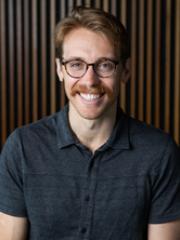
Dr. Yuchen Dai is a Postdoctoral Research Fellow at the School of Chemical Engineering, University of Queensland (UQ), with expertise in computational fluid dynamics (CFD), microfluidics, and non-linear dynamic systems. He previously worked at Griffith University and the Queensland Micro&Nanotechnology Centre (QMNC) until 2023. PhD in Mechanical Engineering (2021), University of Queensland His research spans heat & mass transfer, fluid mechanics, and analytical methods, focusing on microfluidic devices for biomedical applications. Recent publications highlight innovations in droplet generation, cell separation, and viscoelastic fluid behavior. Dr. Dai has authored 10 journal articles (2018–2025) and 1 conference paper, covering topics like microfluidic particle manipulation , double emulsion stability , and liquid marble mixing . He is currently available for supervision.
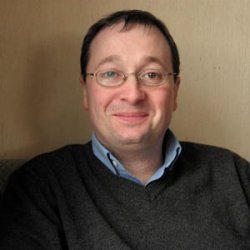
Dr. Travis Mitchell is a Lecturer at the School of Mechanical and Mining Engineering , The University of Queensland , and an affiliate of the Centre for Multiscale Energy Systems . He holds a PhD in Multiphase Computational Fluid Dynamics and dual degrees in Mechanical Engineering (BE Hons) and Mathematics (BSc). Education: PhD in Multiphase Computational Fluid Dynamics, The University of Queensland BE (Hons) in Mechanical Engineering, The University of Queensland BSc in Mathematics, The University of Queensland Research Interests focus on numerical modeling of multiphase fluid dynamics in porous media , with applications spanning CO2 electrolysis , hydrogen production via methane pyrolysis , biomedical fluid-structure interaction , and geomechanical fracture analysis . His methodological expertise includes Lattice Boltzmann techniques and high-performance computing . Recent Work Trends encompass multiphase transport in fractured media , gas diffusion electrode optimization , fiber-based air filter design , and thermocapillary flow modeling , reflecting his interdisciplinary impact in energy, health, and resource engineering. Scientific Recognition includes the ICMMES-CSRC Award for multiphase lattice Boltzmann research and an EAIT Citation for Excellence in Student Learning (2023) . Teaching Portfolio includes coordination of MECH2700: Computational Engineering and Data Analysis and lectures in MECH3780: Computational Mechanics and MECH6480: Computational Fluid Dynamics .
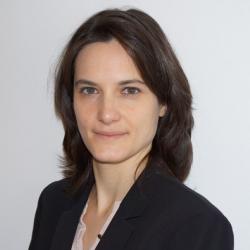
Marica Pelanti is an Assistant Professor at the Department of Mechanical Engineering (UME) of ENSTA Paris , part of the Institut Polytechnique de Paris . She works on Computational Fluid Dynamics and Multiphase Compressible Flows , focusing on numerical modeling of liquid-vapor flows with phase transfer processes, particularly cavitation for industrial applications. Doctorate in Applied Mathematics (2005, University of Washington) Master in Aerospace Engineering (1999, Politecnico di Milano) Her research employs Finite Volume Schemes and advanced Riemann solvers like HLLC and Roe for low Mach number preconditioning. She leads funded projects on multiphase flow modeling and has extensive publication records in journals like J. Comput. Phys. and Int. J. Multiphase Flow .
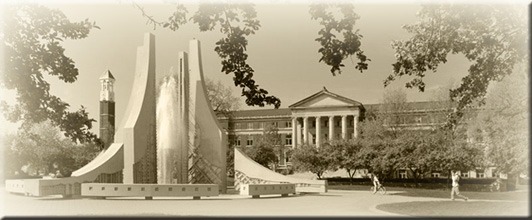
Jun Chen serves as Professor and Associate Head for Facilities and Operations at Purdue University's School of Mechanical Engineering. His career spans experimental fluid dynamics research, academic leadership, and global engineering initiatives focused on sustainable energy solutions for underserved communities. Education: PhD in Mechanical Engineering, Johns Hopkins University (2005) MS in Aerospace Engineering, Beijing University of Aeronautics & Astronautics (1997) BS in Aerospace Engineering, Beijing University of Aeronautics & Astronautics (1994) Professor Chen's research centers on experimental fluid dynamics with emphasis on flow diagnostic techniques including digital holography, tomographic PIV, and interferometry. His work spans fundamental turbulence studies in stratified environments and applied energy systems for wind, hydrokinetic, and cardiovascular applications. Key innovation areas include multiphase flow measurement, low-Mach-number aeroacoustics, and wind energy conversion systems. His 15 most recent publications reveal consistent focus on advanced optical diagnostics for complex flows, with growing emphasis on renewable energy applications (wind/hydrokinetic systems) and biomedical fluid dynamics . The research demonstrates methodological evolution from fundamental turbulence characterization toward practical implementations in energy and healthcare. Scientific Awards: 2018 ASCE Sustainable Development Award for African grain storage system 2016 EPA P3 YCOSST Award for off-grid wind energy in Africa 2014 ASME Robert T. Knapp Award for holography uncertainty quantification 2005 Measurement Science Outstanding Paper Award for PIV peak-locking elimination Professor Chen actively mentors graduate students (16 theses supervised) and leads global engineering initiatives through Purdue's GEPP program, having conducted multiple field deployments in Cameroon for rural energy solutions. His research portfolio includes significant grants from NSF, DOE, and industry partners focused on fluid diagnostics and sustainable energy. His laboratory work integrates optical diagnostics with field-deployable energy systems , maintaining strong industry partnerships while advancing fundamental fluid mechanics knowledge. Current projects emphasize scalable solutions for resource-constrained environments through the Purdue Global Design Teams.
Chris Breward is a Professor at the Mathematical Institute, University of Oxford, and serves as Co-Director of the EPSRC Centre for Doctoral Training in Industrially Focused Mathematical Modelling (InFoMM CDT). His work bridges industrial problem-solving and bioscience applications through advanced mathematical techniques. His academic credentials include: MA MSc DPhil Professor Breward specializes in fluid mechanics with emphasis on surfactant behavior, tear film dynamics, and polymer-surfactant mixtures. His research develops asymptotic models for complex industrial and biological systems, focusing on stability analysis and reaction kinetics in multiphase flows. Current projects address ocular surface mechanics and industrial decontamination processes. Analysis of his publication record (2009-2025) reveals consistent application of fluid mechanics to porous media, surfactant solutions, and industrial material processing. Recent work (2023-2025) emphasizes contaminant transport in drying media and metallurgical processes, while earlier studies (2009-2011) established foundational models for tear films, micellar solutions, and liquid film stability. As InFoMM CDT Co-Director, Breward oversees doctoral training programs that connect academic research with industrial partners through EPSRC-funded projects. He actively mentors students in mathematical modelling for real-world applications. He contributes to the Oxford Centre for Industrial and Applied Mathematics (OCIAM), collaborating on industrially relevant mathematical challenges across multiple sectors.
Michael Vynnycky is an Affiliated Professor at KTH Royal Institute of Technology , specializing in mathematical modeling and numerical analysis of industrial metallurgical processes. His research focuses on continuous casting , electromagnetic stirring , and fluid-structure interactions in manufacturing systems. Key Research Areas: Continuous casting of metals, fluid dynamics, heat transfer, computational methods (FEM, CFD), inverse Stefan problems, and oscillation mark formation. Collaborations: Frequent collaboration with researchers like H. Fredriksson, B. Glaser, and A. Safavi Nick. Applications: Steel production, die casting, redox flow batteries, and polymer electrolyte fuel cells. Recent publications highlight work on blast furnace dynamics , muon radiography for structural analysis, and asymptotic modeling of gas-solid flows. His methodologies emphasize mathematical rigor and industrial relevance , as seen in studies on macrosegregation and electromagnetic flow control. Techniques: Leverages asymptotic analysis multiphysics simulation finite element methods computational fluid dynamics boundary reconstruction algorithms experimental validation to solve complex industrial problems. Email Contact: michaelv@kth.se
Alexander Bußmann is a Researcher at the Chair of Aerodynamics and Fluid Mechanics at the Technical University of Munich . His work focuses on nanoshock phenomena and multiphase flow analysis , particularly through numerical simulations of cavitation dynamics and interface tracking. Research Highlights: Development of hybrid WENO5IS-THINC schemes for compressible multiphase flows Analysis of micro-jet formation via cavitation bubble interactions Investigation of particle deposition in thermal-spray gun nozzles Publications span topics in fluid mechanics, computational physics, and photonics, with a focus on cavitation dynamics, numerical methods, and multiphase flow modeling. Key collaborations include work with Stefan Adami and Nikolaus A. Adams .
Professor Laura Torrente Murciano leads the Process Integration and Catalysis Group at the University of Cambridge's Department of Chemical Engineering and Biotechnology. Her research focuses on sustainable chemical processes, particularly integrating reaction and separation steps for green technologies. Reaction engineering with 3D-printed microdevices Nanoparticle synthesis for catalytic applications Ammonia production as a hydrogen vector Low-temperature activation of methane and CO2 Her work spans multiphasic systems, metallic membranes, and nanostructured materials like ceria and titanate. Recent publications highlight techno-economic analyses of green ammonia, dynamic energy integration, and catalytic process innovations. Key themes across her research include: Process optimization for renewable energy storage Development of sustainable hydrogen production methods Design of tuneable nanoparticle catalysts Structure-property relationships in catalytic supports Life cycle analysis of green technologies Photocatalytic and electrochemical material applications
Yuan Chen is a researcher at the Institute of Science Tokyo , focusing on advanced measurement techniques for nuclear engineering and environmental applications. Their work integrates Laser-Induced Breakdown Spectroscopy (LIBS) and Ultrasonic Velocity Profiler (UVP) for remote elemental analysis and flow visualization. Primary focus on nuclear reactor inspection and soil analysis Collaborations with Hiroshige Kikura, Hideharu Takahashi, and international teams Developing robotic systems for hazardous environments Research Trends : Recent publications (2022-2025) emphasize: Remote sensing for nuclear fuel debris analysis LIBS-UVP hybrid systems for multiphase flow measurement Soil elemental analysis for smart agriculture Robotic arms equipped with advanced sensors Key techniques: Laser spectroscopy, ultrasonic imaging, flow visualization algorithms, sensor fusion. Applications span nuclear decommissioning (e.g., Fukushima) and environmental monitoring.
Hassan Shirvani is a Professor of Engineering Design and Simulation at the School of Engineering and the Built Environment, Anglia Ruskin University. He serves as Director of the Engineering Analysis Simulation and Tribology (EAST) Research Group, focusing on industry collaborations to solve engineering challenges. PhD in Mechanical Engineering, University of Bath MSc in Mechanical Engineering, University of Birmingham Member, Institute of Mechanical Engineers (IMechE) His research spans mechanical engineering, artificial intelligence, and biomedical applications, including: Thermal system optimization Machine learning in clinical decision-making Composite metal foil manufacturing Virtual reality medical training systems Flow dynamics in heat exchangers and nozzles AI-assisted diagnostics Hybrid manufacturing processes Hassan's publications reflect expertise in computational modeling, multi-physics simulations, and industrial applications. Notable areas include deep learning for suicide prediction, thermodynamic analysis of sustainable energy systems, and tribology in mechanical components.
Professor Mathieu Lucquiaud serves as Professor of Clean Energy with Carbon Capture and Storage (CCS) in the Department of Mechanical Engineering at the University of Sheffield's School of Mechanical, Aerospace and Civil Engineering. He joined Sheffield in 2022 after 12 years at the University of Edinburgh, where he progressed from post-doctoral Research Associate (2010) to Royal Academy of Engineering Research Fellow (2012), Senior Lecturer (2016), and Reader (2019). His academic foundation includes a first degree in Energy and Environmental Engineering from INSA Lyon (2004) and a PhD in Mechanical Engineering from Imperial College London (2010). INSA Lyon: Energy and Environmental Engineering (2004) Imperial College London: PhD Mechanical Engineering (2010) Lucquiaud's research pioneers climate change mitigation technologies for zero-carbon societies, integrating techno-economic modeling , experimental validation , and pilot-scale demonstration at Sheffield's Translational Energy Research Centre. His work targets carbon capture, zero-carbon electricity/hydrogen production, and industrial decarbonisation through direct air capture, waste-to-energy integration, and solvent innovation. Recent projects include FOCUS (solvent storage for flexible capture) and NEWEST-CCUS (waste sector negative emissions). Analysis of his 15 most recent publications reveals three dominant trends: cost reduction pathways for zero-carbon hydrogen/electricity, waste-to-energy decarbonisation with carbon capture, and operational flexibility solutions for CCS integration. His work consistently bridges fundamental engineering with real-world deployment challenges across power, hydrogen, and waste sectors. Key recognition includes: Royal Academy of Engineering Research Fellowship (2012) He actively shapes CCS education through his globally influential MOOC (25,000+ participants from 150+ countries) and teaches Advanced Engineering Thermodynamic Cycles. His supervision spans final-year undergraduate projects, with research funded through industry partnerships and UKRI grants focused on CCS commercialisation. The Translational Energy Research Centre serves as his primary experimental hub for pilot-scale carbon capture validation.
J. Westerweel is a Professor in the Department of Fluid Mechanics at Delft University of Technology, School of Mechanical Engineering. His research focuses on experimental fluid dynamics, particularly in Particle Image Velocimetry (PIV) , turbulent flow , and microfluidic systems . He has contributed extensively to understanding coherent structures , drag forces , and flow measurement methodologies . Research Trends: Recent works emphasize 3D flow reconstruction , microbubble dynamics , programmable hydrodynamics , and industrial fluid applications such as gypsum slurry flow optimization. His studies span both fundamental turbulence analysis and applied techniques in rowing propulsion , compliant coatings , and cavitation mitigation . Editorial Contributions: He has served as an editor for Experiments in Fluids and Flow, Turbulence and Combustion , ensuring quality in experimental methods across fluid mechanics.
Cari Dutcher is a Professor in the Department of Mechanical Engineering and the Department of Chemical Engineering and Materials Science at the University of Minnesota's College of Science and Engineering. Her research focuses on complex fluids and multiphase flows, with current projects spanning atmospheric aerosols, agricultural sprays, and biomedical applications. Her research interests include Multiphase Flows , Complex Fluids , Interfacial Phenomena , Microfluidics , and Rheology . She employs macro- and micro-scale flow measurements and mathematical modeling to study systems such as aerosol suspensions, emulsions, foams, and polymeric solutions, with emphasis on dynamic surface tension, phase change, and surfactant transport mechanisms. Professor Dutcher leads the Multiphase Flows Research group supported by the dedicated Multiphase Flows Research Fund within the College of Science and Engineering. Her laboratory utilizes advanced microfluidic platforms and custom-built equipment including Taylor-Couette geometry for emulsion studies, focusing on experimental validation of polymer-particle interactions and encapsulation techniques for biomedical applications.
Filippo Coletti is an Adjunct Associate Professor in the Department of Mechanical Engineering at the University of Minnesota. His research bridges fundamental and applied aspects of experimental fluid dynamics. Focuses on dispersed multiphase flows, particularly solid particles in turbulent fluids Investigates bio-fluid mechanics in respiratory and cardiovascular systems Utilizes advanced measurement techniques: Particle Image Velocimetry (PIV), Magnetic Resonance Imaging (MRI) Applications include environmental processes like atmospheric precipitation and pollution transport
Assistant Professor Radojica Pešić is affiliated with the Department of Chemical Engineering at the Faculty of Technology and Metallurgy, University of Belgrade. With expertise in chemical engineering and environmental applications, his work focuses on reactor design, mass transfer, and sustainable process optimization. Research spans environmental remediation , process design , and transport phenomena Active in bubble column reactors , CO2 capture , and industrial water treatment Supervised 10+ final theses in chemical engineering processes and environmental systems Recent publications highlight trends in electrochemical pollutant degradation , fluidized bed thermal dynamics , and sustainable material design . His teaching involvement includes Chemical Engineering Laboratory and Process Design courses. Advised research on distillation process optimization (2021), industrial water quality (2020), and PINCH methodology for mass integration (2018) Key methodologies: linear mass balance models , absorption column design , and quality control systems Contact: rpesic@tmf.bg.ac.rs | Office 37, TMF Building | Phone: +381 11/3303611