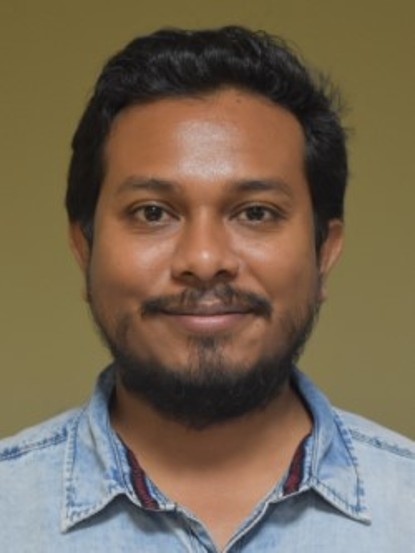
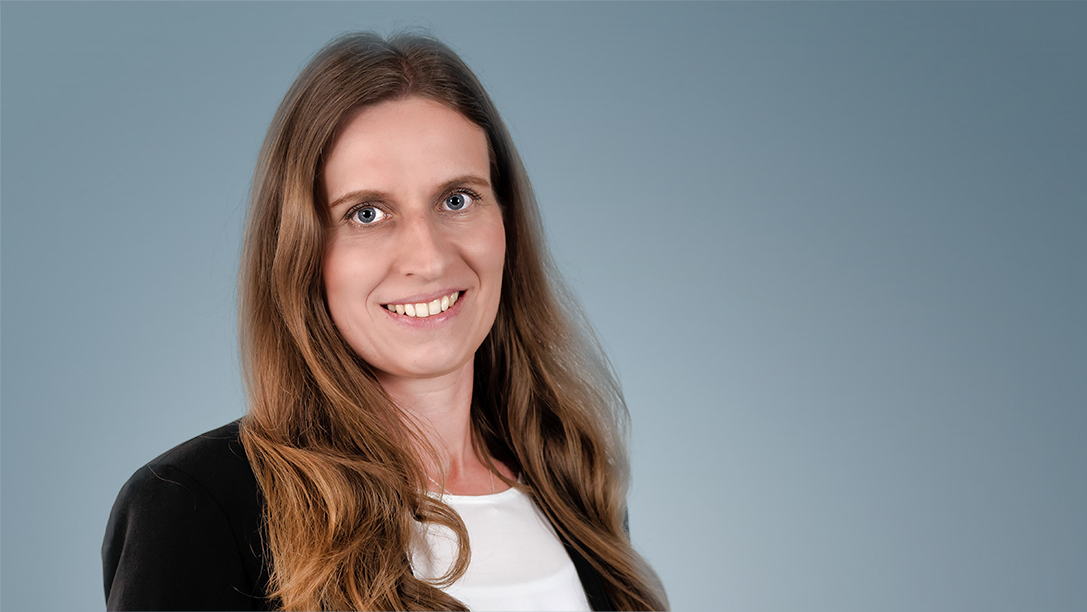
Santanu Kumar Das is a Researcher affiliated with Technische Universität Darmstadt, Germany. His work focuses on fluid dynamics, nonlinear systems, and applied mathematical methods. He has contributed to understanding viscoelastic fluid behavior under electric fields, viscous fingering phenomena in Hele-Shaw cells, and drop impact dynamics. Research interests include electrohydrodynamics, structural dynamics of beams, and numerical techniques for solving nonlinear oscillator problems. His articles span experimental and computational approaches to multiphase flows, instability mechanisms, and analytical methods for engineering systems. No academic awards or grants explicitly mentioned in the provided texts. No advising or team/laboratory affiliations detailed in the current data.
Dr. Pavan Laxmipathy Veluvali is a Computational Materials Scientist currently working as a Postdoctoral Researcher at the Max Planck Institute for Dynamics of Complex Technical Systems in Magdeburg, Germany. He is a member of Prof. Dr. Peter Benner's group focused on Computational Methods in Systems and Control Theory. His work integrates numerical mathematics and materials science to advance computational workflows. His educational background includes: Ph.D in Computational Materials Science, Karlsruhe Institute of Technology, 2021 Master of Science (M.Sc) in Materials Science and Simulation, Ruhr Universitaet Bochum, 2016 Bachelor of Technology (B.Tech) in Metallurgical and Materials Engineering, Jawaharlal Nehru Technological University, 2013 Dr. Veluvali's research focuses on computational materials science, particularly phase-field modeling of solidification microstructures. His work investigates the role of diffusive-convective regimes on solidification phenomena including grain boundary grooves, dendritic growth, tip splitting, and poly-phase microstructures in binary alloys. He has expanded his expertise to include alloy solidification, electrochemistry, thin-film coatings, multiphase flows, and additive manufacturing. Recently, he has been working on computational workflows that integrate numerical mathematics and materials science, with a focus on FAIR (Findable, Accessible, Interoperable, Reusable) data principles. His publication record demonstrates a strong focus on phase-field modeling applications in materials science, with recent work shifting toward computational workflows and data infrastructure. The earlier publications (2018-2021) primarily address fundamental materials science questions using phase-field methods, while more recent work (2022-2025) shows increasing emphasis on computational frameworks, metadata abstraction, and FAIR data principles in computational science. Dr. Veluvali serves as a peer reviewer for several prestigious journals including Journal of Applied Physics, Journal of Phase Equilibria, and Journal of Physics: Condensed Matter. Currently, he is a Teaching Assistant for the Scientific Computing-I course at Otto-von-Guericke-Universität Magdeburg, where he guides students through practical implementation of numerical algorithms, shell scripting, and memory management. He is an active participant in the research community, regularly presenting his work at conferences including SIAM CSE, DMV Annual Meeting, and MaRDI workshops. His research is supported by the Max Planck Institute and likely through collaborative projects with academic and industry partners.
Stefan Adami is an Adjunct Professor at the Institute of Aerodynamics and Fluid Mechanics, Technical University of Munich (TUM), where he leads the 'Nanoshock' research group. He holds a Ph.D. in Mechanical Engineering from TUM and was awarded habilitation in 2022, followed by appointment as Privatdozent in 2023. His academic career at TUM includes roles as research associate, Akademischer Rat, and group leader. Research Interests: Compressible and multiphase flows Numerical modeling and simulation Smoothed Particle Hydrodynamics (SPH) High-speed aerodynamics and shock wave dynamics Applications in additive manufacturing and biomedical fluid mechanics His recent research employs advanced solvers like ALPACA for high-resolution simulations of bubble dynamics, shock interactions, and interfacial flows. He has contributed to modeling in laser-based 3D printing and cavitation-based drug delivery systems. Recent Publication Trends: His 2023–2025 publications emphasize compressible multiphase flows, high-order numerical schemes (WENO-THINC), and applications in materials processing and biomedical engineering. He frequently collaborates on solver development and benchmarking, including large-scale datasets for Riemann problems. Teaching: Lecturer for 'Numerical Methods for Conservation Laws' (Winter Semester) Lecturer for 'Turbulent Flows' (Summer Semester) Previously served as Teaching Assistant for Continuum Mechanics and Computational Solid and Fluid Dynamics Research Leadership: Leader of the 'Nanoshock' research group since 2015 Key contributor to the development of the ALPACA solver for compressible multiphase flows Active in interdisciplinary projects involving fluid-structure interaction and industrial applications
Alexander Bußmann is a Researcher at the Chair of Aerodynamics and Fluid Mechanics at the Technical University of Munich . His work focuses on nanoshock phenomena and multiphase flow analysis , particularly through numerical simulations of cavitation dynamics and interface tracking. Research Highlights: Development of hybrid WENO5IS-THINC schemes for compressible multiphase flows Analysis of micro-jet formation via cavitation bubble interactions Investigation of particle deposition in thermal-spray gun nozzles Publications span topics in fluid mechanics, computational physics, and photonics, with a focus on cavitation dynamics, numerical methods, and multiphase flow modeling. Key collaborations include work with Stefan Adami and Nikolaus A. Adams .
Dr. Yixiang Liao is a researcher in the Computational Fluid Dynamics (CFD) department at the Helmholtz-Zentrum Dresden-Rossendorf (HZDR) . His work focuses on advanced numerical modeling of multiphase flows, particularly in nuclear engineering and thermal-hydraulics contexts. Key areas include bubble dynamics, two-phase flow regimes, turbulence modeling, and phase change phenomena. He has contributed extensively to CFD applications in reactor safety, flashing flows, and industrial systems. His research integrates experimental validation with computational methods, addressing challenges in modeling bubble-induced turbulence, surfactant effects, and complex flow behaviors in confined geometries. He has published widely on topics like pool scrubbing, nozzle dynamics, and vane-type separators, leveraging hybrid models and population balance approaches. Dr. Liao's work spans both fundamental and applied aspects, with outputs informing reactor design, safety analysis, and process optimization. His studies often emphasize closure model development for RANS-based simulations and the validation of Eulerian-Eulerian frameworks.
Simon Gabriel is a researcher affiliated with the Institute for Analysis and Numerical Analysis at the University of Münster. His work focuses on applied mathematics, calculus of variations, and partial differential equations with applications in material science and micromagnetism. He investigates phenomena such as magnetic skyrmions, phase transformations in shape memory alloys, and energy minimization problems in thin films. His research combines rigorous mathematical analysis with interdisciplinary applications in physics and engineering. He collaborates with institutions like the Applied Analysis group and contributes to projects exploring rigidity phenomena and microstructure formation. His teaching includes advanced seminars on geometric measure theory and calculus of variations. Affiliations : Institute for Analysis and Numerical Analysis, Faculty of Mathematics and Computer Science Research Interests : Micromagnetism, nonlocal isoperimetric problems, mean curvature flow, and variational methods in material science Key contributions include studies on magnetic skyrmions under confinement, rigidity in phase transformations, and convergence analysis of phase field models. His work bridges mathematical theory with practical applications in understanding material behavior at micro and nano scales.
Sebastian Hensel is a Researcher at the Hausdorff Center for Mathematics (HCM) at the University of Bonn since September 2021, under the mentorship of Prof. Tim Laux. He holds a PhD in Mathematics from the Institute of Science and Technology Austria (IST Austria), where he studied under Prof. Julian Fischer. His research focuses on partial differential equations, particularly interface evolution problems, fluid mechanics, stochastic homogenization, and stochastic PDEs. He has contributed to topics like mean curvature flow, free boundary problems, and weak-strong uniqueness principles. Education includes a PhD (2021, IST Austria), Master of Science in Mathematics (2017, Humboldt-Universität zu Berlin), and Bachelor degrees in Mathematics (2015, Freie Universität Berlin) and Business Administration (2013, Freie Universität Berlin). His work explores geometric PDEs, including multiphase systems, contact angle dynamics, and stochastic influences. Key contributions include stability analyses of evolving interfaces and convergence studies of phase-field models. His articles often bridge analytical rigor and applied mathematics, addressing challenges in nonlinear dynamics and calculus of variations. He has presented research at international conferences such as FBP 2020, SIAM MS20, and Equadiff 2019. His academic activities include seminars at institutions like TU Chemnitz, University of Regensburg, and Max-Planck Institute for Mathematics in the Sciences, Leipzig.
Dr.-Ing. Alexander Schwarz is a Senior Academic Councillor at the Institute of Mechanics, Faculty of Engineering, University of Duisburg-Essen, Germany. He is actively involved in research and teaching in computational mechanics, with a focus on finite element methods, particularly least-squares formulations for solid and fluid mechanics. He has served as Course Director of the International Master's Program in Computational Mechanics since 2011. PhD in Engineering, University of Duisburg-Essen (2009) Diploma in Civil Engineering, University of Essen and University of Adelaide (2004) Research Assistant, Institute of Mechanics (2005–2009) Academic Councillor (2010), Senior Academic Councillor (since 2013) His research interests center on the development and analysis of mixed finite element methods, especially least-squares approaches, applied to problems in solid mechanics (hyperelasticity, elasto-plasticity, finite deformations), fluid dynamics (incompressible Navier-Stokes), fluid-structure interaction, and porous media. His work emphasizes numerical stability, accuracy, and efficient implementation. The recent publications highlight a strong trend in advancing least-squares finite element formulations for both fluid and solid mechanics. His work spans theoretical development, numerical implementation, and comparative studies, with applications in incompressible flow, hyperelasticity, plasticity, and multi-physics problems like FSI and phase change. The use of stress-velocity or stress-displacement formulations is a recurring theme, aiming to improve conservation properties and solution accuracy. No scientific awards are listed in the provided information. Dr. Schwarz has supervised numerous master’s and bachelor’s theses in computational mechanics, particularly on finite element formulations for Navier-Stokes equations, plasticity, and hyperelasticity. His collaborations with prominent researchers like Jörg Schröder, Carina Nisters, and Solveigh Averweg indicate strong integration into an active research group. While no specific grants are mentioned, his sustained publication output and leadership in the master’s program suggest ongoing research funding and academic responsibility. He is a core member of the Institute of Mechanics at the University of Duisburg-Essen, contributing to both research and academic leadership. His team focuses on advanced computational methods in mechanics, with a strong emphasis on finite element technology and its application to complex material and fluid behavior.
Dr. Thomas Höhne is a researcher at the Helmholtz-Zentrum Dresden-Rossendorf (HZDR), working within the Institute of Fluid Dynamics and the Department of Computational Fluid Dynamics. His work focuses on advanced simulations of fluid flow phenomena, particularly in safety-critical engineering systems such as nuclear reactors. His research interests include Computational Fluid Dynamics (CFD) , Multiphase Flow , Thermal-Hydraulics , and Nuclear Reactor Safety . His expertise lies in developing and validating high-fidelity numerical models to simulate complex fluid behavior under extreme conditions. While no recent publications are listed in the provided text, his affiliation with HZDR—a leading German research center—indicates active involvement in large-scale scientific projects related to energy and safety engineering. There are no scientific awards mentioned in the available information. Dr. Höhne contributes to collaborative research efforts and likely supervises junior researchers or students, though no formal advisees are listed. He is involved in research projects requiring advanced computational modeling and experimental validation. He is part of the Computational Fluid Dynamics team at HZDR, which conducts cutting-edge research in fluid dynamics with applications in energy technology and industrial safety.
David H. Rogers is a Researcher affiliated with Los Alamos National Laboratory , specializing in Scientific Visualization and Data Analysis . His work focuses on Exascale Computing , Color Mapping , and In Situ Visualization to enhance large-scale scientific data workflows. His research explores methods for Lossy Data Reduction , 3D Streamline Visualization , and Perceptual Uniformity in Color Sequences . He has contributed to frameworks like VTK-m and CinemaScience , enabling efficient data exploration and domain-specific visualization. David collaborates extensively with institutions such as University of Utah , Oak Ridge National Laboratory , and University of Oregon , addressing challenges in High-Performance Computing and Visual Analytics . His publications highlight interdisciplinary efforts in Computer Graphics , Flow Dynamics , and Scientific Data Management .
Dr. Maria Gracka is a postdoctoral researcher at the Chair of Methods for Model-based Development in Computational Engineering at RWTH Aachen University, Faculty of Mechanical Engineering. Her work focuses on advanced numerical simulations of blood flow using multiphase modeling techniques to study hemodynamics in the aorta, coronary arteries, and microfluidic systems. Her research aims to preserve individual blood component properties—such as plasma and red blood cells—to analyze their velocity, volume fraction, and interactions within vascular structures. This approach enables the identification of regions prone to atherosclerotic plaque development and assesses the impact of myocardial bridges on coronary flow. Future work will expand to simulate blood flow through the aortic valve, with a focus on red blood cell behavior under complex flow conditions. Dr. Gracka was awarded the Alexander von Humboldt Fellowship in 2024, recognizing her outstanding research contributions and potential. She actively contributes to the advancement of model-based computational engineering methods in biomedical applications. Alexander von Humboldt Fellowship (2024) She has advised no formal students to date. Her research is supported by her postdoctoral fellowship and institutional resources at RWTH Aachen. Dr. Gracka is affiliated with the Chair of Methods for Model-based Development in Computational Engineering, where she contributes to developing cutting-edge simulation frameworks for complex engineering and biomedical problems.
Sauro Succi is a Researcher and Research Director at the Istituto dei Sistemi Complessi (CNR, Rome, Italy), concurrently serving as a Research Associate at Harvard University's Physics Department. He holds a visiting fellowship at the Freiburg Institute for Advanced Studies (FRIAS) within the School of Soft Matter Research. His expertise spans computational modeling of complex systems, with emphasis on fluid dynamics across scales—from quantum flows to biopolymer translocation and nanoscale phenomena. Education: BSc in Nuclear Engineering from the University of Bologna, PhD in Plasma Physics from École Polytechnique Fédérale de Lausanne (1987). He has held visiting positions at institutions including Yale, University of Paris, and Queen Mary College London. Research focuses on lattice Boltzmann methods, multiscale simulations, and soft matter physics. Key projects include modeling biological nanopore translocation, carbon nanotube gas flows, and micro-emulsion rheology. His work bridges mesoscopic theory with practical applications in biophysics and nanotechnology. Scientific recognition includes Fellow of the American Physical Society, Alexander von Humboldt Award, and Killam Award. His 200+ publications include seminal works on lattice Boltzmann equations and multiscale fluid dynamics.
Destgeer Ghulam is a Tenure Track Assistant Professor in the Department of Electrical and Computer Engineering at Technische Universität München (TUM), leading the 'Control and Manipulation of Microscale Living Objects' research group. His work focuses on developing microfluidic 'lab-on-a-chip' platforms using MHz-frequency acoustic waves for the manipulation of cells, particles, and microorganisms, as well as pioneering 'lab-on-a-particle' technology for rapid single-cell/molecule analysis. He holds a PhD in Acousto-Microfluidics from KAIST (2018) and conducted postdoctoral research at UCLA's Di Carlo Lab. Research Interests : His research spans acoustofluidics, microscale object manipulation, and biomedical applications. Key areas include the design of amphiphilic particles for droplet templating, acoustic-based separation techniques, and miniaturized diagnostic systems. Awards : Brain Korea 21 Plus Fellow (2018), Best Paper Awards (2014–2016). Labs/Teams : Directs the TUM-based research group focused on integrating microfluidics with acoustic technologies for biomedical innovation. His publications emphasize advancements in droplet acoustofluidics, acoustic wave applications, and lab-on-a-chip systems, reflecting a strong focus on both fundamental science and translational medicine.
Lena Baumann is a Researcher at the Chair of Mathematics VI (Mathematics in the Natural Sciences) at the University of Würzburg. She is affiliated with the Institute of Mathematics and focuses on mathematical fluid mechanics and kinetic theory. Her work combines numerical methods with reduced-order modeling. Education: PhD Candidate (since 2021), University of Würzburg, supervised by Prof. Dr. Christian Klingenberg M.Sc. Mathematics (2018-2021), University of Würzburg B.Sc. Mathematics (2015-2018), University of Würzburg with Erasmus+ exchange at Universidad de Salamanca Research Interests: Numerical solutions of inverse problems in kinetic equations, low-rank approximation techniques, and interplay between kinetic and macroscopic models. Her work emphasizes energy stability and computational efficiency in fluid dynamics and plasma physics. Recent Work Trends: Recent publications focus on dynamical low-rank methods applied to kinetic models like the Su-Olson problem and Boltzmann-BGK equation. These address stability, conservation properties, and parameter identification in fluid mechanics. Teaching Experience: Tutor for Analysis courses (2016-2020) Student assistant roles under PD Dr. Jürgen Grahl and Prof. Dr. Alfio Borzi Labs/Teams: Member of the Mathematical Fluid Mechanics group, collaborating with researchers like Lukas Einkemmer and Jonas Kusch on kinetic theory projects.
Dr. Katharina Jasch is a Senior Research Manager and Researcher at the Institute for Chemical and Thermal Process Engineering, Technische Universität Braunschweig, within the Faculty of Mechanical Engineering. She leads the research group on 'Technologies of Heat and Mass Transfer' and specializes in thermal separation processes, heat exchangers, and energy-efficient process design. Her work integrates experimental and computational methods to improve industrial processes. Education: Completed Bioengineering studies at TU Braunschweig (2000–2006). Career highlights include roles as Research Assistant (2006–2012), Post-Doctoral Researcher (2012–2013, 2017–present), and Senior Research Manager since 2018. She has contributed to projects funded by DFG, BMWK, BMBF, and others, focusing on fouling mitigation, energy efficiency, and process intensification. Research interests span thermal systems optimization, fluid dynamics in heat exchangers, and sustainable industrial processes. Notable achievement: GVT Project of the Year 2025 for 'Wertstoffrückgewinnung mittels Dünnschichtverdampfung'. Advising and Grants: Leads multiple collaborative projects with industry partners, emphasizing practical applications of her research. Supervises courses on thermal separation technologies and microprocess engineering. Labs/Teams: Active in the Institute's core research areas, particularly in heat and mass transfer technologies, with contributions to equipment design and digitalization in process industries.