Dr. Primoz Skraba is a Professor in Applied and Computational Topology at the School of Mathematical Sciences, Queen Mary University of London. As Deputy Head of the Centre for Probability, Statistics and Data Science, he bridges theoretical topology with practical applications in data analysis, machine learning, and optimization. Education : PhD in Electrical Engineering from Stanford University (2009) Prior Roles : Positions at INRIA, France; Jozef Stefan Institute, Slovenia; University of Primorska; University of Nova Gorica His research focuses on applying topological methods to analyze complex data. Key areas include: Stability of persistence diagrams for quantitative control in finite sampling Variants of persistence (zig-zag, robustness, multiparameter) Algorithmic Complexity in computational topology Stochastic Topology for random geometric models (Poisson, Boolean) Recent publications emphasize persistent homology in random geometric complexes, universality theorems, and integrating topological methods into machine learning. He received grants from the Leverhulme Trust, EPSRC, and Alan Turing Institute for projects on topological universality and AI foundations. His advisee Gabryel Mason-Williams explores wireless sensor network applications of homology.
Magnus Bakke Botnan is an Assistant Professor at the Department of Mathematics, Vrije Universiteit Amsterdam, holding a VIDI career grant (€850,000) since 2018. His research bridges pure and applied mathematics within topological data analysis (TDA), focusing on multiparameter persistence, computational topology, and applications to sciences. PhD in Mathematics, Norwegian University of Science and Technology (NTNU), 2015 Postdoc at TU Munich, 2016-2018 His research group includes postdocs Hannah Rocio Santa Cruz Baur and Rui Dong, and PhD student Enes Devecioğlu. Recent work involves signed barcodes, rank decompositions, and stability of persistence modules. He co-authored the first comprehensive tutorial on multiparameter persistence with Mike Lesnick. Notable contributions include proving the NP-hardness of computing interleaving distance, establishing universality of bottleneck distance for extended persistence diagrams, and developing computational methods for non-branching complexes. Publications span journals like Foundations of Computational Mathematics , Discrete & Computational Geometry , and conferences SoCG, NeurIPS, and ICRA. Scientific Awards: VIDI Career Grant (€850,000) He has taught courses including Complex Analysis, Calculus, Topological Data Analysis, and seminars on analysis and dynamical systems. Actively organizes Applied Topology Days and collaborates on projects integrating TDA with physics, computer science, and statistics.
Tamal K. Dey is a Professor of Computer Science at Purdue University, specializing in Computational Geometry and Topology with applications to topological data analysis, geometric modeling, and computer graphics. He holds ACM and IEEE Fellowships and has authored/co-authored over 200 publications, including influential books like Curve and Surface Reconstruction and Computational Topology for Data Analysis . His research group, CGTDA, focuses on theoretical and applied aspects of geometry and topology in data science. Education: B.E. from Jadavpur University (1985), M.E. from Indian Institute of Science (1987), Ph.D. from Purdue University (1991). Postdoctoral work at University of Illinois (1992). Previously led the Jyamiti group at Ohio State University (1999–2020) and served as interim department chair (2019–2020). Major contributions include foundational work on 3D reconstruction, mesh generation, and topological algorithms. His awards include ACM Fellow (2018), IEEE Fellow, and Solid Modeling Association Fellow. Advised numerous PhD students and postdocs, with ongoing projects in persistent homology and TDA applications.
Leila De Floriani is a Professor at the University of Maryland, with appointments in the Department of Geographical Sciences and the University of Maryland Institute for Advanced Computer Studies (UMIACS). She previously served as a professor at the University of Genova (Italy) since 1990, where she developed Italy's first undergraduate and graduate curricula in computer graphics and directed the Ph.D. program in Computer Science for eight years. Her professional activities include serving as the 2020 President of the IEEE Computer Society and currently as IEEE Division VIII Director for 2023-24. Professor De Floriani's research spans geometric modeling, data visualization, spatial data representation and processing, computer graphics, shape analysis, and topological data analysis. Her work focuses on developing mathematical models and algorithms for representing, analyzing, and visualizing complex spatial data, particularly through hierarchical models, mesh-based representations, and topology-based approaches. Her research group, the GeoVis group, investigates applications in terrain modeling, environmental data analysis, and forest structure mapping using LiDAR technology. Analysis of her recent publications reveals a strong focus on terrain representation and processing, with increasing emphasis on topological data analysis, machine learning integration, and efficient algorithms for large-scale spatial data. Her work bridges theoretical foundations in computational topology with practical applications in geospatial sciences, demonstrating consistent innovation in data structures and visualization techniques. Scientific Awards & Recognitions Fellow of IEEE (2016) for contributions to geometric modeling and scientific visualization Fellow of International Association for Pattern Recognition (IAPR) (1998) for contributions to geometric modeling and image analysis Fellow of Eurographics Association (2020) for outstanding contributions to computer graphics and visualization Pioneer of Solid Modeling Association (2017) for seminal work in solid and feature-based modeling Inducted Member of IEEE Visualization Academy (2020) IEEE Computer Society Golden Medal Award (2018) Inducted Member of IEEE Honor Society Eta Kappa Nu (2019) Multiple best paper awards at major conferences including Shape Modeling International (2015), IEEE/EG Symposium on Volume and Point-Based Graphics (2008), and ACM SIGSPATIAL (2008) Professor De Floriani has successfully advised numerous PhD students including Xin Xu, Yunting Song, and Noel Dyer, whose recent dissertations focused on topology-based individual tree mapping, efficient terrain analysis, and bathymetric data visualization respectively. Her research has been funded by prestigious agencies including the National Science Foundation, NASA, and the European Commission. As the leader of the UMD GeoVis group, she oversees a research program that develops open-source tools for spatial data analysis available on GitHub, with current projects focusing on forest point cloud processing and topology-based geospatial data visualization. The GeoVis group, affiliated with the Department of Geographical Sciences, UMIACS, and the Center for Geospatial Information Sciences, maintains a strong collaborative environment with ongoing projects in geometric modeling, spatial data structures, topology-based machine learning, and mesh-based terrain modeling. The group has received recent funding from NASA's HPOSS program for developing an open-source library for forest point cloud processing based on topological data analysis.
Christian Pascal Hirsch is an Associate Professor for Data Science and Statistics at the Department of Mathematics, Aarhus University. His research focuses on random networks inspired by biology and health sciences, utilizing techniques from topological data analysis and stochastic geometry. He is affiliated with the Stochastics group, AU DIGIT Centre, and AU Quantum Campus. Research Interests: Topological data analysis, large deviations theory, spatial random networks, and stochastic geometry. His work includes studies on percolation theory, Gibbs measures, and applications to neural networks and geometric functionals. Publications span journals such as the Journal of Applied and Computational Topology, Journal of Statistical Physics, and Stochastic Processes and Their Applications, covering topics from network topology to Poisson approximation.
Paweł Pilarczyk is an Associate Professor at the Institute of Applied Mathematics within the Faculty of Applied Physics and Mathematics at Gdańsk University of Technology, where he has been employed since 2018. His research spans multiple mathematical disciplines with applications across various scientific fields. Dr. Pilarczyk's research interests include dynamical systems , computational topology , rigorous numerics , and applications of advanced computational techniques . His work bridges theoretical mathematics with practical applications in neuroscience, cardiology, ecology, and epidemiology. Analyzing his publication record from 2025 back to 2007 reveals a consistent focus on rigorous mathematical approaches to understanding complex systems. His recent work shows increasing interdisciplinary applications, particularly in medical diagnostics (sleep apnea detection, heart rate variability analysis) and neuroscience (neuron modeling), while maintaining strong foundations in pure dynamical systems theory. As project manager for the OPUS-funded "Topological and numerical methods in dynamical systems" (since 2022), he leads significant research initiatives at the Department of Differential Equations and Mathematical Applications. Dr. Pilarczyk maintains an active research program with collaborators across multiple institutions, evidenced by his extensive publication record and research data sets available through Gdańsk Tech's Bridge of Knowledge platform.
Magnus Botnan is an Assistant Professor at the Department of Mathematics, Vrije Universiteit (VU) Amsterdam. He held a tenure-track position from 2018-2022, was a postdoc at TU Munich (2016-2018) under Ulrich Bauer, and earned his PhD at NTNU in 2015 under Nils A. Baas. His research spans topological data analysis, bridging pure mathematics (representation theory of quivers) with computational and applied aspects (persistent homology, data signatures). Education: PhD in Mathematics at Norwegian University of Science and Technology (NTNU) Research Grants: VIDI career grant (€850,000) Research Collaborations: with Mike Lesnick, Ulrich Bauer, S. Oppermann, and S. Oudot His recent work includes extremal Betti numbers, bottleneck stability, and signed barcodes for multiparameter persistence. He co-organized applied topology meetings in the Netherlands and supervises graduate students in computational topology. Key scientific contributions: Advances in Mathematics Journal of Applied and Computational Topology SoCG conference proceedings He teaches courses such as Calculus 2, Complex Analysis, and Topological Data Analysis at VU Amsterdam and Mastermath, with past courses in Differential Equations, Linear Algebra, and Modelling of Dynamical Systems.
Bart De Moor is a Full Professor at the Department of Electrical Engineering, KU Leuven, Belgium, and a guest professor at the University of Siena. He leads the STADIUS research group and has supervised 85 PhD students. His roles include chairman of Health House (2016–present), member of the Board of VIB (Biotech Institute), and former Vice-Rector for International Policy (2009–2013). Education: Master Degree in Electrical Engineering (1983), KU Leuven PhD in Engineering (1988), KU Leuven Research Interests: His work spans numerical linear algebra, optimization, algebraic geometry, systems and control theory, data-driven AI, machine learning, and applications in process industry and biomedical big data. He has contributed to subspace identification, tensor decomposition, bioinformatics, and quantum computing. Publications Trends: His publications highlight subspace identification methods, tensor decomposition, bioinformatics, and biomedical data analysis. These reflect interdisciplinary advancements in control theory, quantum physics, and mathematical engineering, with applications in industrial and healthcare domains. Scientific Awards and Honors: Leslie Fox Prize (1989) Laureate of the Belgian Royal Academy of Sciences (1992) Bi-annual Siemens Award (1994) Fellow of IEEE (since 2004) Member of the Royal Academy of Belgium for Science and Arts (since 2000) Fellow of IFAC (since 2022) Commander in the Order of King Leopold I (2020) Fellow of SIAM (since 2017) FWO Excellence Award (2010) Advising and Grants: He has led a research group of 20 PhD students and postdocs, co-founded 8 spinoff companies, and secured the ERC Advanced Grant ‘Back to the roots’ (2020–2025). He also co-holds the KU Leuven Chair on healthcare systems (2018–present). Labs and Organizations: Active in the STADIUS research group (KU Leuven), he has served on boards of the Flemish Interuniversity Institute for Biotechnology (VIB), the Alamire Foundation, and the Health Tech Experience Center Health House. His spinoffs include Trendminer, Cartagenia, and Ugentec.
Federica Mucci is an Associate Professor of International Law at the University of Rome Tor Vergata, affiliated with the Department of History, Humanities and Society. She specializes in international protection of cultural heritage, European Union law, and treaty law. Her teaching includes courses on cultural heritage protection and EU law for programs in Education and Tourism. Legal Expert: Italian Ministry of Foreign Affairs UNESCO Delegation Member: Contributed to the 2005 UNESCO Convention on cultural diversity and its implementation. Her research focuses on international law frameworks for cultural heritage, maritime law, treaty interpretation, and environmental protection. Key publications include monographs on cultural heritage law (2012) and a PhD thesis on EU copyright law (1998). Publications span interdisciplinary topics such as topological data analysis, though the majority of her work aligns with legal and humanities disciplines. Awards: No specific prizes are mentioned, but her scholarly output includes influential books and articles on international law. Advising/Grants: No formal student advisees or grant details provided in text. Labs/Teams: No specific lab affiliations mentioned, though her role at UNESCO implies collaboration with international bodies.
Martin Frankland is an Associate Professor in the Department of Mathematics and Statistics at the University of Regina, affiliated with the Topology and Geometry research group. His work focuses on algebraic topology and homotopy theory, particularly cohomology operations and their applications to operads and motivic homotopy theory. He holds a Ph.D. in algebraic topology from MIT (2010), advised by Haynes Miller. Prior to his current position, he held postdoctoral roles at institutions including the University of Western Ontario and the University of Illinois at Urbana-Champaign. Research Interests: Algebraic Topology Homotopy Theory Cohomology Operations Motivic Homotopy Theory Higher Category Theory Publications Trends: His recent work explores advanced structures in homotopy theory such as secondary cohomology operations, n-angulated categories, and multiparameter persistence modules. He frequently addresses foundational questions in algebraic topology, including realization problems for Π-algebras and the dual motivic Steenrod algebra. Grants & Advising: While specific grants are not listed, his research supervision spans undergraduate and graduate projects, including directed reading initiatives and thesis guidance in algebraic topology. He maintains active collaborations with international researchers like Markus Spitzweck and Oliver Röndigs. Labs/Teams: Active member of the Topology and Geometry group at the University of Regina, contributing to seminars and collaborative research in pure mathematics.
Steve Oudot is a Senior Researcher (Directeur de Recherche) at Inria where he leads the GeomeriX research group, and serves as an Adjunct Professor at École Polytechnique. His research focuses on topological and geometric approaches to data analysis. Research Interests: Primarily works on persistence theory and its connections to homological algebra and representation theory, topological data analysis with applications to statistics and machine learning, multimodal time series analysis, and manifold learning/sampling theory. His research bridges theoretical mathematics with computational applications in data science. Publication Trends: Recent works (2024-2025) focus on multiparameter persistence theory, stability analysis of topological descriptors, and computational methods for persistence module decomposition. His publications demonstrate strong emphasis on theoretical foundations with algorithmic implementations for geometric data analysis. Student Advising: Currently supervising 3 PhD students (Michel, Li, Mordacq) and has graduated 7 doctoral students since 2014. Alumni now hold positions in academia (Lacombe at LIGM, Carrière at Inria) and industry (Berkouk at CNIL, Solomon at Deep Detection). Teaching: At École Polytechnique, teaches courses on topological data analysis (INF556), algorithms for data analysis (INF442), and computational geometry/topology (MPRI). Also taught at international schools in Luxembourg (2018), TUM (2016), and La Marsa (2016).
Takashi Owada is an Associate Professor in the Department of Statistics at Purdue University , with a courtesy appointment in the College of Science and Mathematics. His research bridges probability theory and topological data analysis , focusing on understanding the structure of complex stochastic systems through geometric and topological methods. Education Ph.D. , Operations Research (Applied Probability & Statistics concentration), Cornell University, 2013 M.A. , Economics, University of Tokyo, 2004 B.A. , Economics, University of Tokyo, 2002 Research Interests Owada’s work lies at the intersection of extreme value theory , heavy-tailed processes , and random topology , with applications to topological data analysis and random geometric graphs . He investigates limit theorems, large deviation principles, and persistent homology in systems with hyperbolic geometry and long-range dependence . His research also extends to infinitely divisible processes and stable stochastic models in high-dimensional settings. The trends in Owada’s recent work emphasize the interplay between algebraic topology and probability theory to analyze the structure of complex networks using topological invariants and geometric functionals . His studies often incorporate extreme-value behavior and heavy-tailed distributions in random simplicial complexes , hyperbolic graphs , and stochastic point processes . Scientific Awards Regina and Norman F. Carroll (Col. USAF) Research Award, 2021, 2023 Department of Statistics Outstanding Assistant Professor Teaching Award, 2021 Excellent Research Paper Award, 2018 Korean Mathematical Society Best Paper Award, 2018 Institute of Mathematical Statistics (IMS) Travel Award, 2014 Grants and Teaching Owada has secured significant funding, including the Air Force Office of Scientific Research (AFOSR) grant for studying complex stochastic networks (2022–2025) and a National Science Foundation (NSF) grant on Random Algebraic Topology (2018–2022). His teaching portfolio includes graduate and undergraduate courses such as Probability Theory , Elements of Stochastic Processes , and Basic Probability and Applications , reflecting his expertise in probability and stochastic modeling.
Anna Schenfisch is a Research Fellow in the Faculty of Mathematics and Computer Science at Eindhoven University of Technology (TU/e), working within the Applied Geometric Algorithms research group. Her primary affiliation is with the university's mathematics department, and she can be contacted at a.k.schenfisch@tue.nl. Her research focuses on the intersection of algebraic topology and computational geometry, with significant contributions to topological data analysis. Her core research interests center on K-theory applications to persistence modules, simplicial complex reconstruction, and topological descriptors. She investigates how algebraic structures like monoids and parameter spaces interact with geometric representations, particularly through zig-zag persistence frameworks. Her work on faithful sets of verbose persistence diagrams addresses fundamental questions about minimality and optimality in topological data representations. Current projects involve developing theoretical frameworks for multiparameter persistence modules and their computational implementations. Analysis of her 15 most recent publications (2022-2025) reveals a strong trajectory in applying algebraic topology to computational problems. Her research demonstrates increasing sophistication in bridging abstract K-theory with practical geometric algorithms, particularly in simplicial complex reconstruction and descriptor optimization. The work consistently targets foundational questions in topological data analysis while developing novel computational approaches. Scientific Awards: No specific awards, fellowships, or medals are mentioned in the provided sources. Advising and Grants: Anna has supervised at least one academic work as indicated by "Supervised Work (1)" in her institutional profile. The nature of this supervision (e.g., thesis advising) isn't specified. No grant funding sources are explicitly referenced in the available materials. Labs and Teams: She is an active member of the Applied Geometric Algorithms research group at TU/e, which focuses on computational topology and geometric data analysis. This group serves as her primary research environment for developing algorithms related to persistence modules and topological descriptors.
Nello Blaser is a postdoctoral research fellow at the Department of Mathematics, University of Bergen. He holds a PhD in mathematical modeling and biostatistics from the University of Bern and an undergraduate degree in mathematics from ETH Zürich, with a focus on probability theory and stochastic processes in mathematical finance. His current research bridges topological data analysis, statistics, and machine learning, emphasizing practical applicability in biomedical sciences. Blaser’s work focuses on advancing topological methods for large datasets, integrating them into biostatistical workflows, and validating their use with supervised learning techniques. His recent publications span deep learning, parameterized complexity theory, and computational topology, with applications in biomedical data analysis, network modeling, and medical imaging. His research includes 15 recent publications (2022–2025) on topics such as rotation-equivariant neural networks, bifiltration stability, and HIV/TB modeling. Key trends involve topological data analysis, uncertainty quantification in machine learning, and multi-dimensional biomedical data validation.
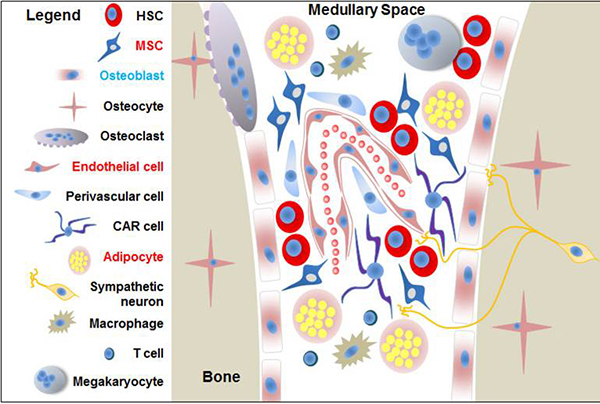
Laura M. Calvi, M.D. is a Professor in the Department of Endocrinology and Metabolism at the University of Rochester School of Medicine and Dentistry, where she serves as SKAWA Foundation Professor in Endocrinology and Metabolism and Vice Chair for Basic & Translational Science in the Department of Medicine. She leads the Cancer Microenvironment Research Program at Wilmot Cancer Center and directs the Calvi Lab focused on bone marrow microenvironment research. Dr. Calvi earned her BA in Biological Science from Union College (1990) and her MD from Harvard Medical School (1995). She completed her internal medicine residency and endocrinology fellowship at Massachusetts General Hospital, specializing in neuroendocrinology and pituitary tumor management. At Rochester, she co-founded the Multidisciplinary Neuroendocrinology Clinic. Her research centers on the bone marrow microenvironment's role in regulating hematopoietic stem cells (HSC), with four major projects: Identification and manipulation of HSC niche components (osteolineage cells, endothelial cells, mesenchymal stem cells) Aging effects on the bone marrow microenvironment and hematopoietic function Microenvironmental regulation of malignancies like leukemia and myelodysplastic syndromes Mitigation strategies for radiation-induced hematopoietic injury Her lab demonstrated that osteoblastic activation by Parathyroid Hormone expands HSC and improves recovery from myeloablation. Analysis of her 15 most recent publications (2023-2025) reveals consistent focus on bone marrow niche dynamics, with particular emphasis on taurine metabolism in leukemia, inflammatory regulation of stromal cells in aging, and therapeutic targeting of microenvironmental pathways. Key trends include single-cell analysis of niche components, metabolic reprogramming in malignancy, and radiation injury mitigation strategies. Dr. Calvi received the 2017 Davey Award in Cancer Research for her contributions to understanding the hematopoietic stem cell niche. Her patents on hematopoietic stem cell expansion demonstrate translational impact of her basic research. She mentors numerous graduate students and postdoctoral fellows through the Toxicology Ph.D. Program, Pathology - Cell Biology of Disease program, and Medical Scientist Training Program. Current lab members include Catherine Caballero, Zhiming Sam Jin, and Noah Salama, while alumni include Benjamin Frisch and Jason Mendler who now hold faculty positions. The Calvi Lab utilizes advanced techniques including intravital 2-photon imaging, mass cytometry (CyTOF), multiparameter flow cytometry, and RNA sequencing to study microenvironmental regulation of stem cells in murine models and primary human samples. The lab maintains affiliations with the James P. Wilmot Cancer Center, Center for Musculoskeletal Research, and NIH T32 Training Grant in Immunology.