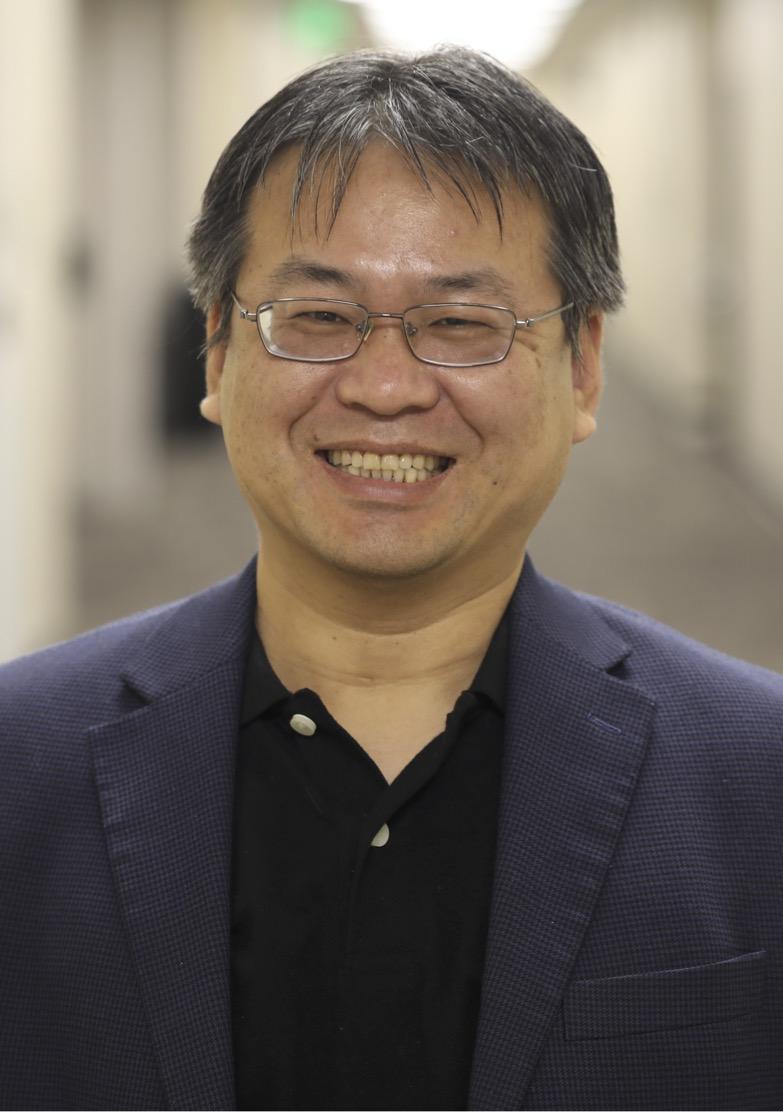
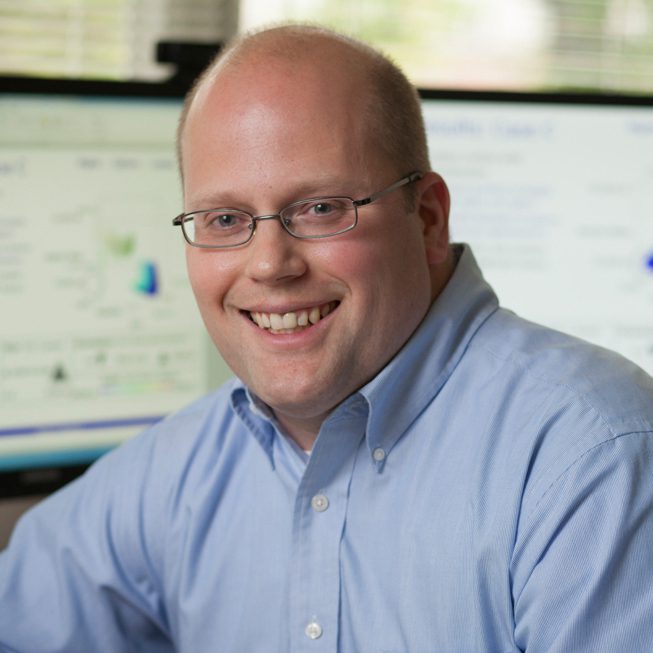
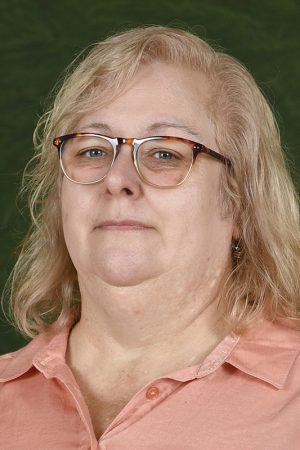
Xiaozhi Gao is a Professor at the School of Computing, University of Eastern Finland (UEF), within the Faculty of Science, Forestry and Technology. His research focuses on computational intelligence, optimization algorithms, neural networks, and their applications in domains such as energy forecasting, cybersecurity, and healthcare. He has authored and edited numerous international journal articles and conference proceedings. Research Interests: Dr. Gao's work spans machine learning, evolutionary algorithms, deep learning architectures, and their implementation in real-world problems like trajectory prediction, resource allocation, and medical diagnostics. His recent studies emphasize lightweight neural networks for railway safety and multi-objective optimization in dynamic environments. Publications: His 2025 articles include advancements in audio-visual deep networks for climate forecasting, constraint-based optimization models, and edge computing security frameworks. He has also co-edited conference volumes on advanced informatics and computing research. Awards & Grants: No specific awards or grants mentioned in the provided text. Labs/Teams: Active in interdisciplinary collaborations on AI-driven solutions for energy systems, robotics, and smart infrastructure. His research contributes to UEF's strategic focus on digital innovation and sustainability.
Vitor Basto Fernandes is an Associate Professor with tenure at Iscte - University Institute of Lisbon, affiliated with the Department of Information Science and Technology (ISTA) and ISTAR-Iscte research center. His career spans academic, research, and industry roles across institutions like University of Minho, University of Trás-os-Montes, and Polytechnic Institute of Leiria. PhD in Informatics (2006), University of Minho Postgraduate in Mobile Computing (2005), University of Minho Postgraduate in Distributed Systems (1997), University of Minho BSc in Information Systems Management (1995), University of Minho His research focuses on Evolutionary Multiobjective Optimization , Search-Based Software Engineering , and Cyber Security , with applications in healthcare systems, cloud computing, and anti-spam technologies. He has coordinated academic programs, led international research projects, and served as principal investigator for FCT-funded initiatives. Recent publications highlight expertise in cybersecurity risk analysis , ontological knowledge management , and multiobjective evolutionary algorithms . He organizes international conferences and mentors graduate students in fields like cloud infrastructure and data science . As an Integrated Researcher at ISTAR-Iscte, he contributes to projects involving semantic web technologies , enterprise application integration , and dimensionality reduction for spam filtering.
Giancarlo Bigi is an Associate Professor of Operations Research in the Department of Computer Science at the University of Pisa, Italy. He has been a faculty member since 2000, advancing from Assistant Professor to Associate Professor in 2017. He holds a Ph.D. in Mathematics from the University of Pisa and has achieved national habilitations for both full and associate professorship in Operations Research and Mathematical Methods of Economics. His research is centered on optimization and equilibrium problems, with a strong focus on variational inequalities, game theory, multiobjective optimization, and nonlinear programming. He develops theoretical frameworks and algorithmic solutions for complex equilibrium models, including applications in economics and energy markets. The recent publications highlight a consistent trend in developing and analyzing gap functions, descent algorithms, and penalization techniques for equilibrium and hierarchical programming problems. His work bridges theoretical optimization with practical applications, particularly in modeling oligopolistic markets and decentralized energy systems. Associate Professor, Department of Computer Science, University of Pisa (2017–present) Assistant Professor, Department of Computer Science, University of Pisa (2000–2017) Ph.D. in Mathematics, University of Pisa (1997–2003) Bigi has no explicitly listed scientific awards in the provided material. He has not published any acknowledgments of grants, but his sustained research output suggests ongoing funding support. He collaborates extensively with researchers such as Mauro Passacantando, Marco Castellani, and Massimo Pappalardo. He is affiliated with the Operations Research Group within the Department of Computer Science at the University of Pisa, contributing to a collaborative research environment focused on optimization and decision-making models.
Dr. Henry Han is a Professor and holds the McCollum Family Chair in Data Science at Baylor University’s Hankamer School of Business, Department of Data Science. His interdisciplinary research spans data science, fintech, artificial intelligence, bioinformatics, health informatics, cybersecurity, and quantum computing. PhD, Applied Mathematical & Computational Sciences, University of Iowa (2004) MS, Computer Science, University of Iowa (2001) MS, Applied Mathematics, University of Iowa (2001) Dr. Han’s research integrates advanced machine learning, optimization, and data analytics techniques to solve complex problems in finance, healthcare, and cybersecurity. His work emphasizes manifold learning , deep neural networks , evolutionary computation , and graph-based learning for real-world applications such as high-frequency trading, automobile damage classification, and single-cell genomics. He applies these methods across domains including financial modeling, biomedical data analysis, and sports forecasting. His recent publications demonstrate a strong trend toward interdisciplinary machine learning , with applications in computational finance, bioinformatics, and intelligent systems. Many of his works utilize optimization-based deep learning and unsupervised representation learning to extract meaningful patterns from high-dimensional data. Dr. Han has received recognition through prestigious appointments: McCollum Family Chair in Data Science He actively collaborates on research projects and has secured funding for advanced data science initiatives, though specific grant details are not listed. His work supports both academic advancement and practical innovation in data-driven decision-making. He advises graduate students and contributes to the development of next-generation data science methodologies. Dr. Han is a key member of the data science research team at the Hankamer School of Business, contributing to interdisciplinary labs and research groups focused on fintech, AI, and health informatics.
M. Wright is an Associate Professor of Graphic Design at The University of Tulsa's Kendall College of Arts & Sciences, and serves as Creative Director of the Third Floor Design Studio. She holds an MFA in visual communication design from the School of the Art Institute of Chicago and an A.B. in comparative literature from Princeton University. MFA, School of the Art Institute of Chicago A.B., Princeton University Her research focuses on visual communication design, typography, independent publishing, socially engaged design, activist art and design, and feminist/queer histories. Wright has built a 20-year creative practice centered on collaborations with artists and cultural institutions, with work featured in major exhibitions across North America and Europe. The 15 most recent articles from the scraped data (primarily in computer science and mathematical optimization) span topics like genetic algorithms, path planning, and combinatorial optimization, reflecting applications in robotics, network design, and parallel computing. Scientific Awards AIGA 50 Books | 50 Covers American Association of Museums Award Association of University Presses Book Show Chicago Book Clinic Award Communication Arts Typography Annual Presidential Distinction Award for Excellence in Teaching (Texas State University) Wright co-founded the queer-feminist art collective AK/OK and co-directs OK Stamp Press in Montreal, emphasizing social justice and sustainable artistic publishing. Her work resides in permanent collections at the National Design Archives and Columbia University's Rare Book and Manuscript Collection.
Associate Professor Andres Villegas Ramirez is affiliated with the University of New South Wales (UNSW) in the UNSW Business School , specifically the School of Risk and Actuarial Studies . He is also an Associate Investigator at the ARC Centre of Excellence in Population Ageing Research (CEPAR) , where he was previously a Research Fellow. Education: Doctoral studies at Bayes Business School (formerly Cass), London, focusing on mortality modelling and projection MSc in Industrial Engineering from Universidad de Los Andes, Colombia Research Interests: Andres specializes in mortality modelling , longevity risk management , and the application of analytics techniques in actuarial science and finance . His recent publications emphasize age-period-cohort models, actuarial valuation of insurance products, and demographic risk analysis. Key trends include interdisciplinary work combining actuarial science with public health and machine learning methodologies. Selected Publications (2025-2018): 2025: Return smoothing in pooled annuity products 2025: Age-Period-Cohort claims reserving models 2025: Socioeconomic mortality differentials in England 2024: Multi-state long-term care insurance valuation 2024: Variable annuity scenario selection via LASSO regression 2024: U.S. mortality improvement drivers 2022: Affine mortality models for age-cohort analysis 2022: Stacked regression ensembles for mortality forecasting 2022: Volatility management in pooled annuities 2022: Regularization approaches for age-period-cohort mortality projections 2021: Robustness in mortality improvement rate modelling 2020: Deprivation impacts on adult mortality inequalities 2020: NDC pension schemes and longevity heterogeneity 2018: Cause-specific mortality by socioeconomic factors 2018: Multiobjective reinsurance optimization with evolutionary algorithms Associated Institutions: ARC Centre of Excellence in Population Ageing Research (CEPAR) Bayes Business School (PhD alma mater) Universidad de Los Andes (MSc alma mater)
Patrick Michael Reed is the Joseph C. Ford Professor of Engineering at Cornell University's School of Civil and Environmental Engineering. He holds a B.S. in Geological Engineering from the University of Missouri (1997), an M.S. and Ph.D. in Civil and Environmental Engineering from the University of Illinois (1999, 2002). Before joining Cornell in 2013, he spent 11 years at Penn State University. His research focuses on sustainable water management, multiobjective decision analytics, and infrastructure adaptation to climate change. He leads the Decision Analytics for Complex Systems Research group and has developed widely used open-source decision support tools. Awards include the AGU Fellow (2022), Paul A. Witherspoon Lecture Award (2019), and ACM's 'Humies' Gold Medal (2020). Education: B.S. (MU, 1997), M.S./Ph.D. (UIUC, 1999/2002) Research: Multiobjective optimization, climate change adaptation, water-energy nexus Service: Editorial roles in Earth's Future , AGU, and DOE committees Grants: $1.4M DOE grant for human-natural system modeling His work integrates computational methods with real-world challenges, such as hydropower impacts on ecosystems and water scarcity ripple effects. Recent projects address multi-sector dynamics, economic water scarcity impacts, and climate policy unintended consequences.
Konstantinos Liagouras serves as an Assistant Professor in the Department of Informatics at the University of Piraeus, specializing in Intelligent Systems for Operational and Financial Resources. His academic career spans teaching and research at both undergraduate and graduate levels, with extensive participation in research programs aligned with computational finance and artificial intelligence. His educational foundation includes: Bachelor's and PhD in Informatics from the University of Piraeus MSc in Computer Systems and Networking from London South Bank University MPhil in International Finance from the University of Glasgow Dr. Liagouras' research integrates computational intelligence with financial systems, focusing on evolutionary algorithms for portfolio optimization and decision support frameworks. His work bridges machine learning, fuzzy systems, and multiobjective optimization to solve complex resource allocation problems in business contexts, demonstrating significant interdisciplinary synergy between computer science and financial engineering. No scientific awards were documented in the source materials. He has supervised coursework across Enterprise Resource Planning (ERP) systems, Project Management, Business Analytics, and Big Data analytics. While specific grant details remain unspecified, his research program consistently targets operational and financial resource optimization through computational methods, with office hours conducted by email appointment between 10:00-16:00.
Dr. Agnes Galambosi Ozelkan serves as a Lecturer and Academic Advisor in the Department of Industrial and Systems Engineering within the College of Engineering at the University of North Carolina at Charlotte. She teaches core courses including Engineering Experimental Design (SEGR 4141), System Design & Deployment (SEGR 3110), Operations Management (OPER 3100), Computational Methods for Engineers (MEGR 2240), and Decision Analysis in Healthcare (HADM 6081), impacting both undergraduate and graduate engineering education. Her academic credentials include: Ph.D. in Systems and Industrial Engineering from The University of Arizona M.S. in Systems Engineering from The University of Arizona B.S. in Meteorology from Eotvos Lorand University Dr. Galambosi Ozelkan's research integrates Environmental systems modeling with Industrial Engineering methodologies, specializing in Lean systems optimization, Supply chain risk analysis , and Climate-impact assessment . Her work employs advanced techniques like fuzzy logic and multiobjective classification to address sustainability challenges in manufacturing and atmospheric systems, with particular emphasis on ENSO-driven precipitation modeling and RFID technology adoption frameworks. Analysis of her 2008 publications reveals a cohesive research trajectory applying operations research to environmental and supply chain resilience, bridging climatology with industrial engineering through climate-risk modeling and lean manufacturing innovation. Key thematic areas include sustainable operations, atmospheric pattern classification, and technology-driven supply chain transformation. As an Academic Advisor, she provides structured guidance to engineering students navigating curriculum requirements and career pathways. Her departmental role encompasses developing pedagogical strategies for complex systems courses while maintaining active research in interdisciplinary environmental-engineering domains.
Paweł Jarosz serves as an Assistant Professor in the Department of Computer Science at the Faculty of Computer Science and Telecommunications , Cracow University of Technology. His work bridges computational intelligence with engineering applications. Academic Rank: Assistant Professor Department: Computer Science Faculty: Computer Science and Telecommunications University: Cracow University of Technology Research focuses on game theory, evolutionary algorithms, and multi-objective optimization, particularly in: Development of immune-inspired game-theoretic optimization methods Multi-criteria decision-making systems MEMS design optimization Biologically-inspired algorithmic frameworks Sustainable transportation modeling Distributed computing environments His publications (2010-2024) demonstrate sustained research in combining game theory with artificial immune systems for complex optimization challenges across various domains including microactuator design and spatial data analysis.
Manuel Lopez-Ibanez is a Professor of Optimisation in the Department of Management Sciences at the University of Manchester. His research contributes to the UN Sustainable Development Goals through advancements in optimization and decision analytics. He actively collaborates on international projects in multiobjective optimization and evolutionary computation. Research areas: Optimisation, Evolutionary Computation, Multi-criteria Decision Making, Machine Learning, Operations Research External affiliations: Institute of Electrical and Electronics Engineers (IEEE), ACM SIGEVO, editorial boards of Evolutionary Computation and Operations Research Perspectives
Christiane Tammer is a full Professor at the Institute of Mathematics , Faculty of Natural Sciences II, Martin Luther University Halle-Wittenberg. Her research spans variational methods, optimization, nonlinear functional analysis, approximation theory, duality principles, location theory, and inverse problems. She is actively involved in editorial roles as Editor-in-Chief of Optimization and serves on multiple journal editorial boards. Current affiliation: Theodor-Lieser-Str. 5, Halle (Saale), Germany Email: christiane.tammer@mathematik.uni-halle.de Her funded research includes projects on novel algorithms for combined tour and location optimization and multicriteria stochastic optimization and stochastic control theory . Recent publications focus on vector optimization under uncertainty, nonconvex separation techniques, and proximal gradient methods for multiobjective problems.
Alvaro Garcia Piquer is an Assistant Professor in the Engineering Department at La Salle Digital Engineering School. He is an active member of the Research Group on Smart Society and contributes to major research initiatives including the LHCb experiment at CERN. His work bridges computer science and physics, with a strong focus on machine learning, data mining, and astrophysical applications. Research Interests: Machine Learning and Artificial Intelligence in scientific domains Data Mining and Genetic Algorithms for industrial applications Exoplanet detection using Radial-Velocity Method Particle identification in high-energy physics experiments Sentiment analysis and soft skills assessment in digital education His recent publications reflect a multidisciplinary approach, combining computational techniques with applications in astrophysics and education. Articles published in Science and Astronomy & Astrophysics highlight his contributions to exoplanet discovery, while his work in AI conferences underscores his role in advancing machine learning methods. Scientific Recognition: Over 1,700 citations across 33 research outputs Active participation in high-profile collaborations such as CARMENES and LHCb Principal Investigator on AGAUR-funded research projects ORCID: 0000-0002-6872-4262 Research and Advising: Dr. Garcia Piquer leads and participates in multiple research projects focused on intelligent systems and data challenges in particle physics. While no formal advisees are listed, his role as PI indicates leadership in guiding research teams. He is involved in both fundamental and applied research, contributing to policy-influencing science and widely covered discoveries. Labs and Research Groups: He is affiliated with the Research Group on Smart Society and contributes to the Grup de Recerca en Sistemes Intel.ligents (GRSI), focusing on case-based reasoning and multiobjective optimization.
Professor Alireza Maheri is a Personal Chair in the School of Engineering at the University of Aberdeen, where he has been a faculty member since 2016. He previously served as a Senior Lecturer at Northumbria University and held a research position at the University of Bristol. His academic journey includes a BSc from Shiraz University, an MSc from Amirkabir University of Technology, and a PhD from UWE Bristol, all in Mechanical Engineering. BSc in Mechanical Engineering, Shiraz University MSc in Mechanical Engineering - Energy Conversion, Amirkabir University of Technology PhD in Mechanical Engineering - Design and Simulation of Adaptive Aero-structures, UWE Bristol His research focuses on renewable and sustainable energy systems, with key interests in wind energy, hybrid renewable energy systems (HRES), multidisciplinary design optimization, offshore wind farm decommissioning, and smart energy systems. He leads several high-impact research projects funded by EU-InterReg, Net Zero Technology Centre, and Innovate UK, among others. His work integrates advanced computational methods with real-world energy challenges, particularly in off-grid and island communities. The 15 most recent publications reflect a strong trend in optimization of hybrid energy systems, decommissioning cost modeling, decision support platforms, and algorithmic development for renewable integration. His research spans both technical innovation—such as ant colony algorithms and metaheuristic assessments—and practical implementation, including hydrogen production and load planning for machinery. Professor Maheri has received recognition through research grants, including a project funded by the Royal Aeronautical Society. He has also secured substantial funding from national and international bodies, demonstrating sustained excellence and impact. Net Zero Technology Centre: 'Data for Net Zero (D4NZ)', £992k, 2022–2025, CoI EU-InterReg: 'DecomTools', £240k, 2018–2023, PI National Decommissioning Centre PhD Studentship: 'DSS for Oil & Gas Decommissioning', £72k, 2019–2022, PI Scottish Funding Council SPRe-Industrial Collaboration: £78k, 2019–2023, PI Carnegie Trust PhD Scholarship: 'Wind Turbine Smart Blades', £60k, 2019–2022, Principal Supervisor He supervises a wide range of PhD students on topics including smart blades, hydrogen systems, energy management, and decommissioning. He is also actively involved in teaching, particularly as Course Coordinator for Energy Systems Integration (EG554T and EG554U). His leadership extends to editorial roles in journals such as Energies and Renewable Energy , and he has chaired multiple international conferences. He serves on research proposal review panels for EPSRC, Royal Society, and DAAD, and has acted as an external examiner for MSc programs at Cranfield University. Professor Maheri leads the Applied Dynamics and Structures Research Group and is affiliated with the Centre for Energy Transition. He collaborates with institutions and industries across the UK, Europe, China, Mauritius, and Jordan, fostering international research partnerships in sustainable energy and engineering design.
Jacek Boroń, PhD, is a researcher at the Department of Building Engineering within the Faculty of Civil Engineering at Wrocław University of Science and Technology. His work bridges theoretical and applied aspects of structural and multidisciplinary optimization in civil engineering. His research interests include structural optimization , building envelope protection against mold growth , mathematical programming in construction management , and induced seismicity in mining areas . He applies optimization techniques to industrial construction problems such as stacks, cooling towers, and machine foundations. The recent publications reflect a strong focus on engineering optimization , thermal performance of buildings , and modernization of civil engineering education . His work often combines computational methods with practical applications in construction and mining environments. Scientific Awards: No awards listed in the provided text. Advising and Grants: No information available on students or grants. However, he has collaborated with researchers such as Paweł Bartyla, Maciej Minch, and Aleksander Trochanowski on various projects related to optimization and building technology. Labs and Teams: Affiliated with the Department of Building Engineering, Faculty of Civil Engineering. Specific lab or research team names are not mentioned, but his work suggests involvement in structural optimization and building physics research groups.