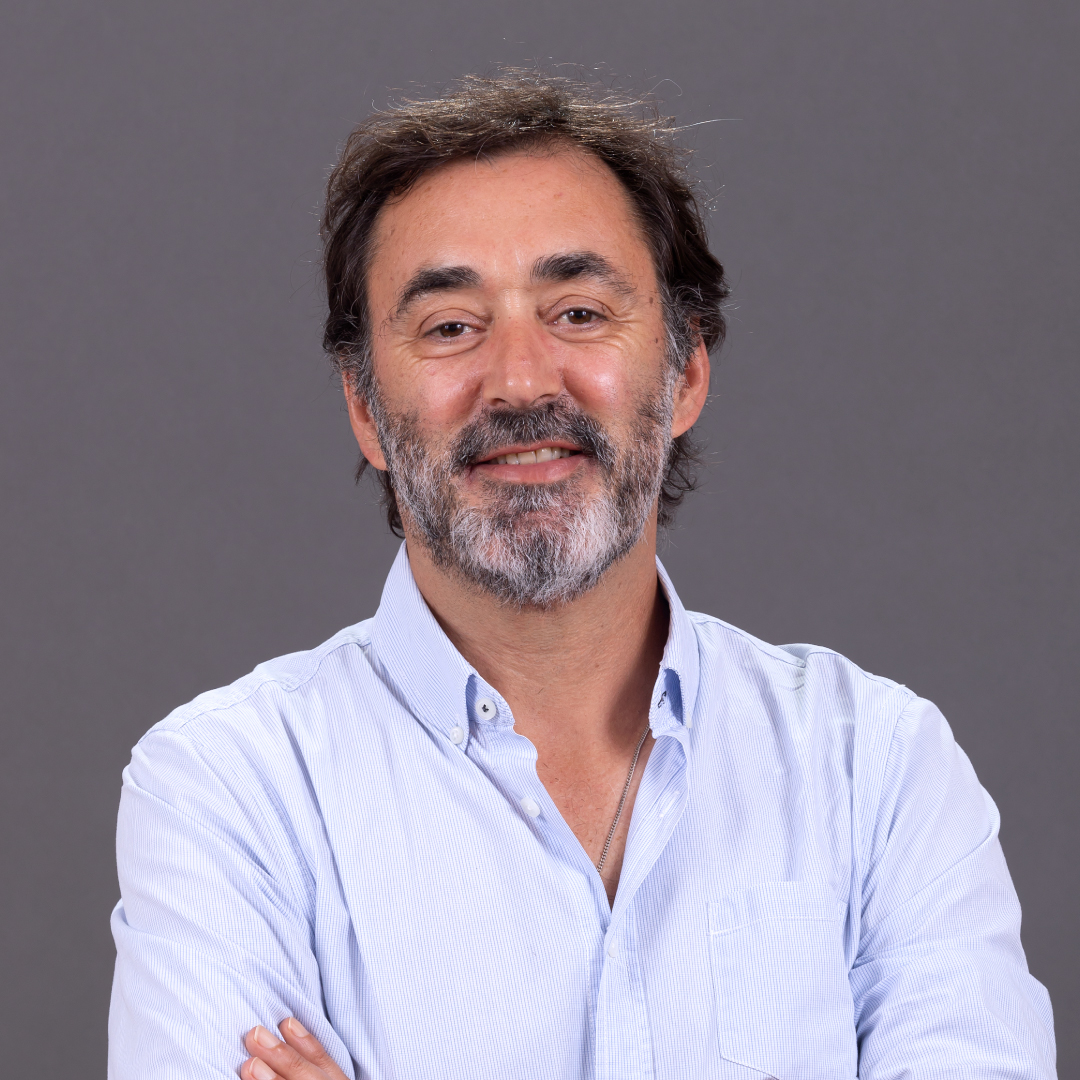
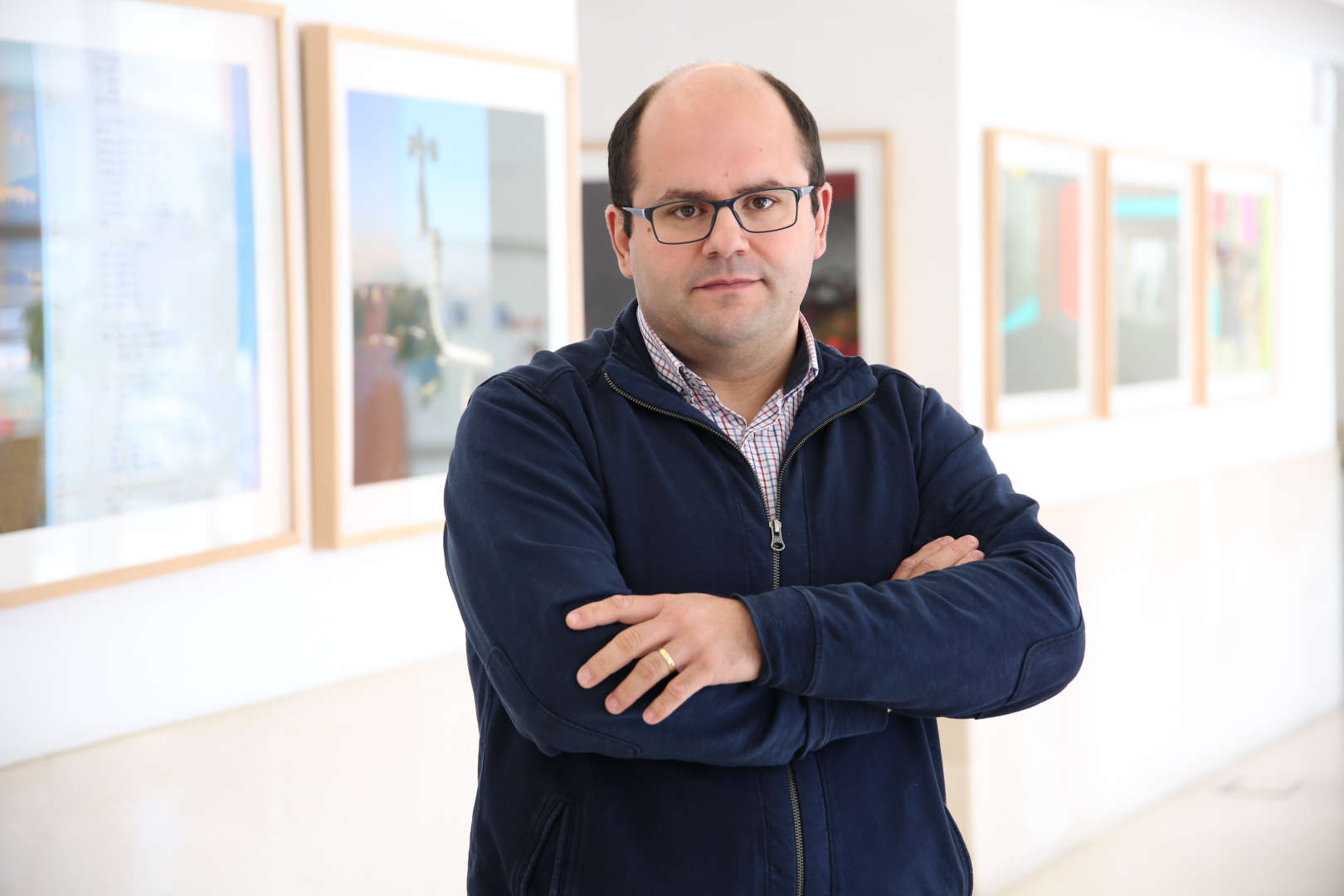
Ana Luísa Custódio is an Associate Professor (with tenure) at the Department of Mathematics, Nova School of Science and Technology, Nova University of Lisbon. She is a researcher at the Centre for Mathematics and Applications (NOVA Math), part of the Operations Research group. Currently, she serves as Coordinator of NOVA Math and as an Associate Editor for the Journal of Optimization Theory and Applications and Optimization Methods and Software . Her educational background includes a PhD in Mathematics (Nova School of Science and Technology), an MSc in Operations Research and Systems Engineering (Instituto Superior Técnico), and a BSc in Mathematics (Nova School of Science and Technology). Her research focuses on Nonlinear Optimization, particularly Derivative-free Optimization, alongside contributions to Multiobjective and Global Optimization. She has developed state-of-the-art computational codes as part of her research. She actively participates in scientific projects and has contributed to educational resources such as problems collections and classes. No specific scientific awards are listed in the provided information. Her work includes collaborations on computational tools and editorial roles, reflecting her leadership in the field of mathematical optimization.
Ana Amaro is an Associate Professor at NOVA School of Business and Economics (NOVA SBE) in Portugal. She specializes in interdisciplinary research at the intersection of environmental management, operations research, and public administration, with a focus on watershed planning and water resource optimization. Primary Affiliation: NOVA School of Business and Economics Email: ana.amaro@novasbe.pt Research Interests: Multiobjective programming applications in environmental planning Water resource management and watershed systems Client satisfaction metrics in public service delivery Professionalism in environmental governance Her scholarly work demonstrates a commitment to integrating mathematical optimization techniques with real-world water management challenges, as evidenced by her early research on Algarve watershed planning (1985). This work established foundational frameworks for balancing ecological and socio-economic objectives in water resource allocation.
Carlos José Lúcio Martins is a faculty member at the School of Economics and Management, University of Lisbon (ISEG). He has significant contributions to Operations Research and Logistics, focusing on optimization problems in supply chains and transportation. Research: Specializes in multiobjective optimization, vehicle routing, and sustainable supply chain network design. Teaching: Coordinates the Operations Research course in undergraduate and master's programs in Economics and Management. Professional Experience: Served as Director of Systems and Operations at ISEG from 2019 to 2022. His publications address complex real-world problems like food bank network optimization and multi-trip vehicle routing with temporal constraints.
Carlos Moreira is a Senior Researcher at INESC TEC and an Assistant Professor at the Department of Electrical Engineering, University of Porto (FEUP). He has held his current academic position since 2009 and leads the "Network Studies and RES & DER Integration" area at INESC TEC's Centre for Power and Energy Systems since 2015. His research focuses on renewable energy integration, power system dynamics, and microgrid operations. Education: Bachelor's in Electrical Engineering, FEUP (2003) PhD in Power Systems, University of Porto (2008) Research Interests: Large-scale renewable integration in isolated/interconnected grids, grid stability in high-renewable scenarios, hydropower flexibility, and smart grid technologies. His work addresses challenges such as converter placement, power quality conditioning, and frequency control in evolving energy systems. Projects: Technical leader in EU-funded initiatives including MICROGRIDS, MORE-MICROGRIDS, MERGE, TWENTIES, HYPERBOLE, and EU-SysFLEX. These projects focus on grid resilience, renewable integration tools, and hydropower optimization. Consultancy: Provides expertise on wind farm grid connections and large-scale renewable integration in isolated systems, addressing dynamic stability and transient issues. His work bridges academia and industry, emphasizing practical grid solutions. Advising & Labs: Supervised five PhD/MSc theses on topics like grid-forming converters and PV system integration. Active in FEUP's Doctoral Programs in Sustainable Energy Systems and Electrical & Computer Engineering.
Cristiana J. Silva is an Assistant Professor (with Habilitation) in the Department of Mathematics at Iscte – Instituto Universitário de Lisboa (ISTA), Portugal. She holds a PhD in Mathematics from the University of Aveiro and Université d'Orléans, and a Bachelor's in Mathematics from the University of Coimbra. Her research focuses on mathematical epidemiology, optimal control theory, and biomathematical modeling with applications to public health and disease dynamics. She teaches courses such as Computational Optimization (Master in Artificial Intelligence), Differential Calculus, and Mathematics for Management programs. Silva has supervised multiple doctoral and master's students, including Ana Pedro Lemos-Paiao (2019), Zaitri Mohamed Abdelaziz (2020), and Sergio Punishment (ongoing). Her postdoctoral supervision includes Asmae Tajani (2023–2025). Her work emphasizes HIV/AIDS, cholera, and Zika virus modeling, with notable contributions to fractional calculus applications in epidemiology. She has developed compartmental models for infectious diseases like the SIQRB delayed cholera model and a hybrid model analyzing human behavior impacts on epidemics. Recent research includes optimizing control strategies for pandemics such as Portugal's sanitary deconfinement during the COVID-19 pandemic. Her publications span journals like Mathematical Biosciences and Engineering , AIMS Mathematics , and Scientific Reports , with over 2,100 Google Scholar citations. Silva collaborates internationally, contributing to interdisciplinary projects involving complex networks and optimal intervention strategies for public health crises.
Leandro dos Santos Coelho serves as Associate Professor in the Department of Electrical Engineering at the Federal University of Paraná (UFPR), Brazil, while founding ALLIA Consulting and Mentoring to deliver data science and AI solutions to global enterprises including PETROBRAS, Volvo Powertrain, and Siemens. His academic foundation includes: B.S. in Computer Science and Electrical Engineering from Federal University of Santa Maria (UFSM) M.S. in Computer Science from Federal University of Santa Catarina (UFSC) Doctoral degree in Electrical Engineering from UFSC Post-doctoral research in Information Engineering at Universitá degli Studi di Padova, Italy His research integrates theoretical and applied dimensions across artificial intelligence, machine learning, and optimization domains, with emphasis on industrial implementations in forecasting, anomaly detection, and control systems. This dual academic-industry focus enables real-world translation of complex computational methods. He holds Brazil's CNPq PQ-1B Research Productivity Scholarship, reflecting national recognition of his scholarly impact evidenced by h-index scores of 69 (Scopus) and 82 (Google Scholar). Through ALLIA Consulting, he directs high-impact projects for Electrolux Italia, Bosch, BRF, and Banco Bari in recommender systems and time series analysis, demonstrating consistent industry relevance. His collaborative network extends to INESC TEC in Portugal, as indicated by his institutional email affiliation. Current initiatives focus on advancing multiobjective optimization frameworks and neuro-inspired computing models within his UFPR research group, targeting next-generation industrial automation challenges.
Vitor Basto Fernandes is an Associate Professor with tenure at Iscte - University Institute of Lisbon, affiliated with the Department of Information Science and Technology (ISTA) and ISTAR-Iscte research center. His career spans academic, research, and industry roles across institutions like University of Minho, University of Trás-os-Montes, and Polytechnic Institute of Leiria. PhD in Informatics (2006), University of Minho Postgraduate in Mobile Computing (2005), University of Minho Postgraduate in Distributed Systems (1997), University of Minho BSc in Information Systems Management (1995), University of Minho His research focuses on Evolutionary Multiobjective Optimization , Search-Based Software Engineering , and Cyber Security , with applications in healthcare systems, cloud computing, and anti-spam technologies. He has coordinated academic programs, led international research projects, and served as principal investigator for FCT-funded initiatives. Recent publications highlight expertise in cybersecurity risk analysis , ontological knowledge management , and multiobjective evolutionary algorithms . He organizes international conferences and mentors graduate students in fields like cloud infrastructure and data science . As an Integrated Researcher at ISTAR-Iscte, he contributes to projects involving semantic web technologies , enterprise application integration , and dimensionality reduction for spam filtering.
João Manuel Coutinho Rodrigues serves as a Full Professor in the Department of Civil Engineering at the University of Coimbra, with research spanning decision support systems, multicriteria analysis, network optimization, and GIS applications in urban, transportation, and environmental engineering contexts. Education: First degree in Civil Engineering (1980) MSc in Computer Science (1986) PhD in Civil Engineering, University of Coimbra (1993) Research Focus: His work bridges methodological innovations—including network optimization algorithms and multiattribute/multiobjective modeling—with practical applications in urban, regional, environmental, and transportation planning. This dual emphasis on theoretical advancement and real-world problem-solving defines his interdisciplinary approach to civil engineering challenges. Affiliations: He maintains a primary appointment in the Department of Civil Engineering at the University of Coimbra and is actively associated with INESC Coimbra (Instituto de Engenharia de Sistemas e Computadores de Coimbra), a research institute specializing in systems and computer engineering. Advising and Grants: While specific advising roles and grant details are not documented in the provided text, his position implies involvement in academic mentorship and research funding typical of senior faculty. Labs and Teams: His research activities are conducted through INESC Coimbra, where he contributes to projects integrating computational methods with civil engineering applications, as indicated by his project URL (http://kreation.dec.uc.pt/projects/).
António Ismael Freitas Vaz serves as Associate Professor with Habilitation at the School of Engineering, University of Minho, and holds a Senior Researcher position at the ALGORITMI Research Centre. As a core member of the SEOR (Systems Engineering and Operations Research) R&D Group, he directs research in mathematical optimization methodologies with applications spanning energy systems, additive manufacturing, and biomedical engineering. His institutional profile includes verified metrics: h-index 17, 1,505 citations, and 41 publications including 34 in Q1/Q2 journals. His research program centers on developing advanced optimization frameworks including multi-objective, derivative-free, and semi-infinite programming techniques. Key application domains feature renewable energy integration (demand-response co-optimization, cost-effectiveness analysis), 5-axis 3D printing (curved layer path planning, build orientation optimization), and medical diagnostics (automated tumor detection in wireless capsule endoscopy). Methodological innovations focus on particle swarm optimization, DC programming, and gradient descent complexity for complex constrained problems. Analysis of his 15 most recent publications (2018-2022) reveals three dominant research thrusts: energy systems optimization (33% of output), additive manufacturing (33%), and medical imaging (13%), with foundational optimization theory comprising the remainder. This distribution demonstrates strategic application of core methodologies to high-impact engineering challenges, particularly in sustainable energy transition and advanced manufacturing. The consistent publication in top-tier venues like Renewable and Sustainable Energy Reviews and Applied Energy underscores disciplinary influence. Scientific Awards: No specific awards, fellowships, or medals were documented in the provided profile information. Regarding academic advising, the source material contains no listings of PhD or Master's students supervised. The funding section explicitly indicates zero recorded projects ("Fundings (0)"), suggesting either institutional management of grants outside individual reporting or incomplete profile documentation. His h-index and publication volume imply significant research leadership despite absent grant details. As an integral contributor to the SEOR R&D Group at ALGORITMI, Vaz participates in a cross-disciplinary research ecosystem focused on operational research applications. The group maintains industry partnerships in energy, manufacturing, and healthcare sectors, facilitating translation of optimization algorithms into practical solutions for industrial partners and public administration through the Centre's thematic lines.