Jie Hao is a researcher at the Information Security Center of Beijing University of Posts and Telecommunications , with a focus on interdisciplinary applications spanning Bioinformatics , Artificial Intelligence , and Medical Informatics . His work bridges computational methods with real-world challenges in healthcare, ecology, and network optimization. Recent publications highlight his contributions to Single-cell RNA sequencing deconvolution (2025) AI-driven intergenerational communication in VR (2025) Digital health applications for COPD management (2025) Deep reinforcement learning for vehicle routing (2025) His methodological innovations include adaptive attention mechanisms for object detection (2025), memory-efficient DNN accelerators (2025), and bilevel optimization algorithms with unbounded smoothness (2024). Collaborations span institutions like University of Melbourne and Chinese Academy of Sciences , reflecting his cross-disciplinary impact.
Sebastian Peitz is Professor (previously Assistant Professor) at Paderborn University's Department of Computer Science, leading the Data Science for Engineering group. He obtained his PhD in Multiobjective Optimization from Paderborn University and MSc in Mechanical Engineering from RWTH Aachen. His research develops computational methods for multiobjective optimization, optimal control, and machine learning with applications in fluid dynamics, autonomous systems, and industrial processes. He leads the BMBF-funded Multicriteria Machine Learning group. Research trends show consistent focus on Koopman operator theory, reinforcement learning applications in control systems, and physics-informed machine learning across publications. Achievements include the 2019 PRECEDE Best Paper Award and leadership in international optimization conferences.
Michael Kartmann is a doctoral student and Research Assistant at the Department of Mathematics and Statistics, University of Konstanz, Germany, since October 2022. His work is funded by the BMBF ElAN project, focusing on efficient local waste heat utilization in low-temperature networks, and he collaborates with the YMMOR group (Young Mathematicians in Model Order Reduction). Research Interests: His work centers on adaptive reduced-order modeling, PDE-constrained optimization, optimal control, and domain decomposition methods for nonlinear preconditioning, with applications in switched low-temperature heat networks and large-scale dynamical systems. He also explores reinforcement learning for optimization problems. Publications: Recent submissions include methods for model predictive control of switched systems and L1-regularized optimal control. His 2024 published work details adaptive trust region reduced basis approaches for parameter identification, with a 2022 master thesis on hierarchical multiobjective optimization. Scientific Contributions: He presented talks at conferences including MORE24, IFIP24, and EUCCO23. His software contributions are available on GitHub. Teaching Roles: He supervises courses such as 'Numerical Mathematics,' 'Proper Orthogonal Decomposition for Linear-Quadratic Optimal Control,' and 'PDE-constrained Optimization' at the University of Konstanz, collaborating with Professors Stefan Volkwein, Behzad Azmi, and others since 2022.
Prof. Dr.-Ing. Florian Holzapfel holds the professorship in Flight System Dynamics at the Technical University of Munich (TUM), affiliated with the TUM School of Engineering and Design. His academic journey includes a doctorate at TUM under Prof. Gottfried Sachs, followed by industry experience at IABG before joining TUM in 2007. He is an Associate Fellow of the AIAA and a DGLR member. Research focuses on flight control systems, trajectory optimization, sensor technology, avionics, and safety-critical systems, with emphasis on collaboration with Bavarian aerospace SMEs. Key contributions include adaptive control strategies, eVTOL trajectory optimization, and urban air mobility applications. Education: Bachelor/Master in Aerospace Engineering from TUM Doctorate (Dr.-Ing.) at TUM's Chair of Flight Mechanics and Flight Control Awards include the AIAA 2004 Best Paper Award and the Willy Messerschmitt Prize. His work bridges industry-academia gaps, addressing practical challenges in flight dynamics and advanced air mobility. Labs/Teams: Leads research in eVTOL trajectory generation, flight control architectures, and safety-critical system design. Grants/Awards: Extensive contributions to AIAA conferences and industry-funded projects.
Sven O. Krumke is a Professor in the Department of Mathematics at the Rheinland-Pfälzische Technische Universität Kaiserslautern-Landau (RPTU), where he has been a faculty member since 2004. He currently serves as the Dean of the Faculty of Mathematics, overseeing academic and administrative affairs. His research is centered in combinatorial optimization and algorithmic game theory, with strong applications in logistics, emergency response, and network design. PhD, University of Würzburg (1997) Habilitation, Technical University of Berlin (2002) Professor, RPTU Kaiserslautern-Landau (since 2004) His research interests include combinatorial optimization, approximation and online algorithms, robust scheduling, algorithmic game theory, and graph-theoretic applications. He has led major interdisciplinary projects such as GRK 2982: MIMO (Mathematics of Interdisciplinary Multiobjective Optimization) and ONE PLAN , focusing on optimizing emergency medical services in Rhineland-Palatinate. His work often bridges theoretical computer science and real-world decision-making systems. His recent publications (2016–2022) emphasize robust optimization , pandemic response logistics , decision-support systems in healthcare , and online routing . These works span domains such as vaccine location strategies, ambulance dispatch, car-sharing relocation, and scheduling under uncertainty. The recurring themes are efficiency, resilience, and algorithmic fairness in dynamic environments. Notable scientific contributions include work on network design, flow problems with budget constraints, and game-theoretic models of routing. While no specific awards are listed, his leadership in DFG-funded research groups underscores his academic standing. He actively supervises bachelor's and master's theses and teaches courses such as Grundlagen der Mathematik I: Analysis . He has collaborated with researchers across Germany and internationally, particularly in algorithmic game theory and optimization under uncertainty. Dr. Krumke leads and contributes to research teams in: AG Optimierung (Optimization Research Group) at RPTU GRK 2982: MIMO – interdisciplinary multiobjective optimization ONE PLAN – optimization in emergency medical response
Professor Heike Trautmann is a distinguished academic at Paderborn University, where she serves as Professor of Machine Learning and Optimisation in the Department of Computer Science within the Faculty of Computer Science, Electrical Engineering and Mathematics. Since April 1, 2025, she also holds the position of Vice President for International Relations at the university. Her academic career spans prestigious institutions including the University of Münster, where she was Professor of Data Science: Statistics and Optimization from 2013 to 2023, and the University of Twente, where she serves as Guest Professor of Data Science until February 2026. Dr. Trautmann's educational background includes: University Studies in Statistics (Diploma), TU Dortmund, Germany (1997-2000) University Studies in Economic Mathematics (First Diploma), TU Dortmund, Germany (1996-1998) PhD student at Graduate School of Production Engineering and Logistics, TU Dortmund University (2002-2004) Habilitation in Statistics, TU Dortmund University, Germany (April 15, 2013) Professor Trautmann's research program centers on cutting-edge topics in artificial intelligence and optimization. Her primary research interests include (Trustworthy) Artificial Intelligence, Machine Learning, Data Science, Automated Algorithm Selection and Configuration, Exploratory Landscape Analysis, (Multiobjective) Evolutionary Optimisation, and Data Stream Mining. She leads the Machine Learning and Optimisation research group at Paderborn University, which develops innovative approaches for understanding and improving optimization algorithms through landscape analysis and automated configuration techniques. Her work bridges theoretical foundations with practical applications, particularly in the domains of trustworthy AI and algorithm selection. Her extensive publication record reveals a clear trajectory toward increasingly sophisticated integration of deep learning with traditional optimization techniques. Recent work demonstrates a strong focus on multi-objective optimization problems, exploratory landscape analysis using deep learning methods, and the development of automated algorithm configuration systems. A notable trend is the application of transformer architectures to landscape analysis, as seen in her Deep-ELA work, which represents a significant innovation in the field. Her research consistently addresses the challenge of characterizing complex optimization problems to enable better algorithm selection and configuration. Professor Trautmann has received notable recognition for her scholarly contributions, including: GECCO Best Paper Award for "Deep reinforcement learning for instance-specific algorithm configuration" As an academic leader, Professor Trautmann has secured significant research funding for projects including "Towards Robustness of Disinformation Campaign Detection Algorithms in Open Online Media in the Context of Trustworthy AI" and "Automated rail transport as a backbone for sustainable, networked mobility in rural areas." She actively mentors students through her teaching of advanced courses in machine learning, optimization, and data science. Her industry connections, stemming from her previous work as an Analytics Consultant at Roland Berger Strategy Consulting, enable her to bridge academic research with practical applications. Professor Trautmann leads the Machine Learning and Optimisation research group at Paderborn University, which collaborates extensively with international partners. She is a key supporter of the Confederation of Laboratories for Artificial Intelligence Research in Europe (CLAIRE) and a member of the European Research Center for Information Systems (ERCIS). Her group maintains strong connections with research centers across Europe, particularly through her involvement with the Transregional Collaborative Research Centre 318.
Ralf Borndörfer is a Professor and Head of the Network Optimization Department at the Zuse Institute Berlin (ZIB) , a leading research institution in mathematical algorithmic intelligence. His work focuses on optimizing complex transportation systems, particularly in railway operations, public transit, and air cargo logistics. He leads projects like Timetabling with Duality and Zonotopes, Symmetric Line Planning, and WILSON-LEARN, which address challenges in train scheduling, electric vehicle integration, and predictive maintenance. Key Research Areas : Mathematical optimization, railway timetabling, public transport planning, game theory for toll enforcement, and electric vehicle scheduling. Notable Collaborations : Projects with Deutsche Bahn, BIFOLD, and MATH+ Cluster of Excellence. His recent publications (2023-2025) explore: Non-linear battery modeling in electric bus scheduling Predictive maintenance integration in rolling stock rotations Logic-constrained shortest paths for flight planning Price-sensitive routing in public transport He has contributed to algorithmic frameworks like the Restricted Modulo Network Simplex Method and Bayesian rolling horizon approaches, emphasizing computational efficiency and real-world applicability.
Ofer M. Shir is a faculty member affiliated with Tel-Hai College and MIGAL - Galilee Research Institute in Israel. His primary research focuses on evolutionary algorithms, multi-objective optimization, and their applications in quantum control, machine learning, and computational science. He has collaborated extensively with institutions and researchers globally, contributing to advancements in optimization theory and practical problem-solving through evolutionary computation. Shir's work spans theoretical foundations, such as covariance-Hessian relations in evolution strategies, to applied domains like quantum control experiments and algorithmic-guided discovery of viral epitopes. He has developed and benchmarked algorithms like the CMA-ES and SMS-EMOA, emphasizing their performance in complex, real-world scenarios. His contributions also include methodologies for sequential experimentation and improving model accuracy through techniques like batch normalization. Shir has published extensively in top-tier venues such as IEEE Transactions on Evolutionary Computation, Genetic Programming and Evolvable Machines, and the GECCO conference series. His research bridges theoretical computer science with practical applications, impacting fields from bioinformatics to engineering.
Volkmar Sauerland is a Researcher in the Biogeochemical Modelling Unit at GEOMAR Helmholtz Centre for Ocean Research Kiel. He has been working at GEOMAR since November 2022 (with a brief gap between March and October 2022), focusing on algorithms for discrete and continuous optimization problems applied to biogeochemical ocean models. Prior to this, he spent seven years (2013-2020) as a PostDoc and Research Associate in the Discrete Optimization Group at Christian-Albrechts-Universität zu Kiel (CAU). Dr. Sauerland completed his PhD in 2012 at CAU with a thesis titled "Algorithm Engineering for some Complex Practice Problems: Exact Algorithms, Heuristics and Hybrid Evolutionary Algorithms" and earned his Diploma in 2003 with research on "Mathematical optimization in the design of cosine-modulated filter banks." His educational background reflects the dual focus that characterizes his research career spanning both mathematical optimization and oceanographic applications. Sauerland's research interests bridge two distinct domains: mathematical optimization and marine biogeochemistry. His work focuses on developing and adapting algorithms for parameter optimization and calibration of biogeochemical ocean models. He is currently involved in the EU project OceanICU "Understanding Ocean Carbon," which examines the ocean's role in the global carbon cycle. His research combines theoretical work in optimization algorithms with practical applications in ocean modeling, creating a unique interdisciplinary niche. Analysis of his publication record reveals a clear trajectory from purely theoretical optimization work toward increasingly ocean-focused applications. His earlier publications (2007-2013) focus primarily on combinatorial optimization, permutation problems, and evolutionary algorithms. Starting around 2015, his work shifts toward oceanographic applications, with nearly all recent publications (2017-2023) addressing biogeochemical modeling challenges. The most recent papers demonstrate sophisticated approaches to model calibration, parameter estimation, and uncertainty analysis in complex marine systems. Dr. Sauerland has been involved in significant research projects including the EU's OceanICU initiative and has presented his work at major conferences such as the Ocean Sciences Meeting 2020 in San Diego and the Ocean Deoxygenation conference in Kiel. His collaborative work spans multiple institutions, with frequent co-authorship with researchers from GEOMAR and CAU. While specific grant information isn't detailed in the provided text, his ongoing EU project involvement suggests successful grant acquisition. Based at GEOMAR's Kiel facility, Sauerland works within the Marine Biogeochemistry research division, specifically in the Biogeochemical Modelling Unit. His office is located in Room 5.506, Tower 5, Floor 5 at GEOMAR's Wischhofstraße 1-3 address. His research contributes to GEOMAR's broader mission of understanding ocean processes and their role in Earth's climate system, particularly through the development of advanced computational methods for model calibration and evaluation.
Sabine Attinger is a Professor (W3) at the University of Potsdam and Head of the Department of Computational Hydrosystems at the Helmholtz Centre for Environmental Research (UFZ) . Her research focuses on multi-scale terrestrial systems , stochastic hydrological modeling , and geostatistical characterization of subsurface processes. She leads projects like 4DHydro (EO-data integration) and natESM (national Earth system modeling). Key research themes include groundwater dynamics , compound environmental risks , and smart monitoring systems . Her scientific awards feature the 2023 ASCE-EWRI Best Case Study Award 2017 UFZ Research Award She collaborates with institutions like ETH Zurich , Stanford University , and CASUS . Her work bridges hydrological modeling , contaminant transport , and climate adaptation strategies through projects like DestinE (EU digital twin) MOSES (mobile observation systems) TERENO (environmental observatories)
Holger Hoos is a Professor in the Department of Methodology of Artificial Intelligence at RWTH Aachen University. His research spans artificial intelligence, automated algorithm configuration, and machine learning robustness, with applications in optimization, earth observation, and quantum computing challenges. Research Focus: His work emphasizes: Robustness verification and efficiency improvements in neural networks Automated Machine Learning (AutoML) frameworks and benchmarking Multi-objective optimization and algorithm configuration AI applications in remote sensing, time-series analysis, and recommender systems Recent publications (2024-2025) show a dominant trend toward enhancing AI reliability through rigorous verification methods, scalability solutions for large-scale problems, and adaptable frameworks for dynamic data environments. Quantum computing applications and energy-efficient AI also feature prominently. He leads research initiatives at RWTH Aachen focusing on methodological advances in AI, though specific labs/teams are not detailed.
Prof. Dr. Oliver Stein is a faculty member at the Karlsruhe Institute of Technology within the School of Business , specifically the Department of Operations Research . His research focuses on Continuous Optimization , Non-smooth Optimization , and Multiobjective Optimization , with applications in Operations Research , Game Theory , and Engineering Design . Stein has contributed extensively to semi-infinite programming , bilevel optimization , and mixed-integer nonlinear optimization . His work includes theoretical advancements in constraint qualifications , projected gradient flows , and epigraph reformulations , alongside practical applications in gemstone cutting and modular system design . His 15 most recent publications span topics such as non-convex Nash equilibrium problems , granularity in polynomial optimization , and branch-and-bound algorithms , reflecting a blend of theoretical rigor and real-world impact. Stein has received prestigious awards including the Heisenberg fellowship (2005-2006) and Feodor Lynen fellowship (1999-2000). He serves on editorial boards of journals like the Journal of Global Optimization and Optimization .
Rudolf Vetschera is a full-time Professor at the University of Vienna's Faculty of Business, Economics and Statistics, Department of Business Administration. His research focuses on Decision Support Systems, Multi-Criteria Decision Analysis, and behavioral aspects of cooperation and negotiations. His publications span cross-cultural studies in computer-mediated negotiations, preference modeling under uncertainty, and algorithmic approaches to decentralized planning. Key contributions include feedback-oriented GDSS frameworks and sensitivity analysis techniques for multi-criteria models. Recent works analyze cultural impacts on web-based negotiation support systems, knowledge management in network organizations, and strategic preference manipulation in group decisions. Earlier works established foundational methods for interactive multi-attribute decision-making and volume-based sensitivity metrics.
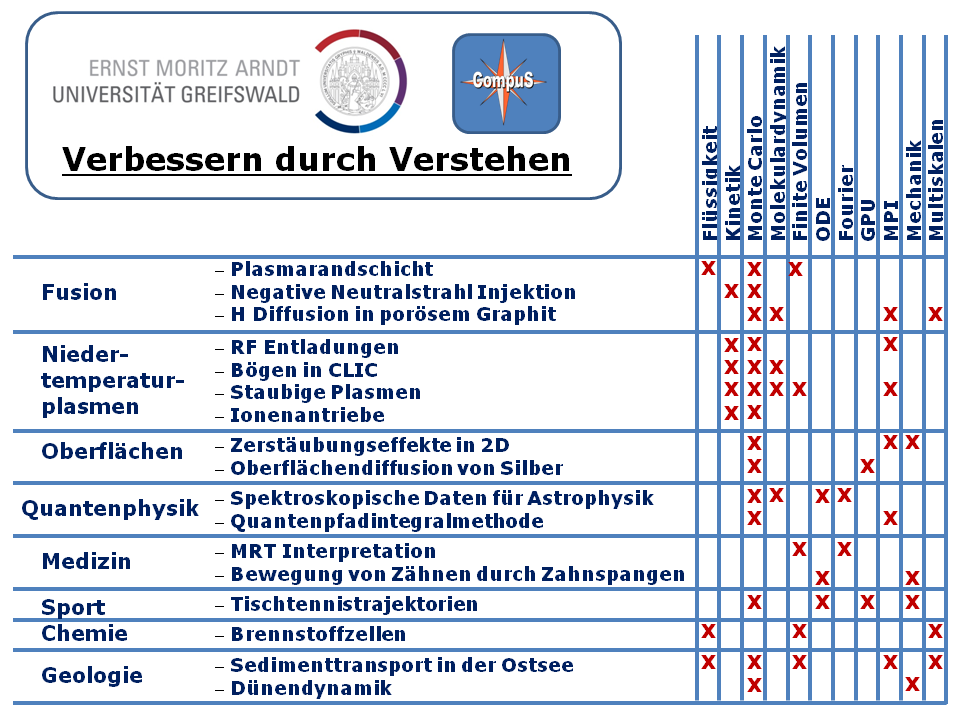
Prof. Dr. Ralf Schneider is a leading academic at the Ernst Moritz Arndt University , where he heads the Computational Sciences group at the University Computing Center. His work bridges computational physics with interdisciplinary applications in chemistry, medicine, meteorology, and biology. Affiliation: Computational Sciences Group, University Computing Center, Ernst Moritz Arndt University Rank: Professor Research Interests Prof. Schneider specializes in computational physics , with a focus on plasma physics and astrophysics . He develops complex numerical models for ion thrusters, stellarators, and climate simulations, while extracting simplified analytical frameworks. His interdisciplinary collaborations span molecular dynamics, quantum chemistry, and population dynamics. Publications Trends His recent work (2019–2023) emphasizes ion thruster design , kinetic analysis , and particle-in-cell simulations for space propulsion systems. He also explores applications of physics in sports, such as table tennis dynamics. Scientific Awards Recipient of the Greifswald Research Award 2019 for his application-oriented computational research. Greifswald Research Award 2019 Advising & Collaborations Supervises doctoral students like Stefan Kemnitz and Lars Lewerentz . Leads the EU-funded HEMPT-NG project under HORIZON 2020, focusing on advanced propulsion systems. Labs & Teams Manages the Computational Sciences (CompuS) group , which collaborates with Transregio 24 and other university departments on plasma modeling, climate simulations, and cross-disciplinary numerical methods.
Prof. Dr. Stefan Ruzika is a full professor (W3) in the Department of Mathematics at the Rheinland-Palatinate Technological University Kaiserslautern-Landau. He leads the Competence Center for Mathematical Modelling in MINT Projects in Schools (KOMMS) and chairs the DFG-funded Graduate School 'Mathematics of Interdisciplinary Multiobjective Optimization' (MIMO), starting in 2024. His research focuses on multi-criteria optimization, integer programming, mathematical modeling, and network optimization. He teaches courses such as 'Multicriteria Optimization' and supervises Bachelor’s and Master’s theses. Education: PhD (2007, TU Kaiserslautern), Master of Science (2002, Clemson University), Diplom in Mathematics (2003, TU Kaiserslautern). Positions include professorships at TU Kaiserslautern (2017–present) and University of Koblenz-Landau (2012–2017), and postdoctoral roles at TU Kaiserslautern (2003–2007). Research interests include optimization on networks, approximation algorithms, and decision support systems for sustainable urban planning. Projects include 'Ageing Smart' (decision support for elderly quality of life) and 'GRK 2982: MIMO' (multiobjective optimization research).