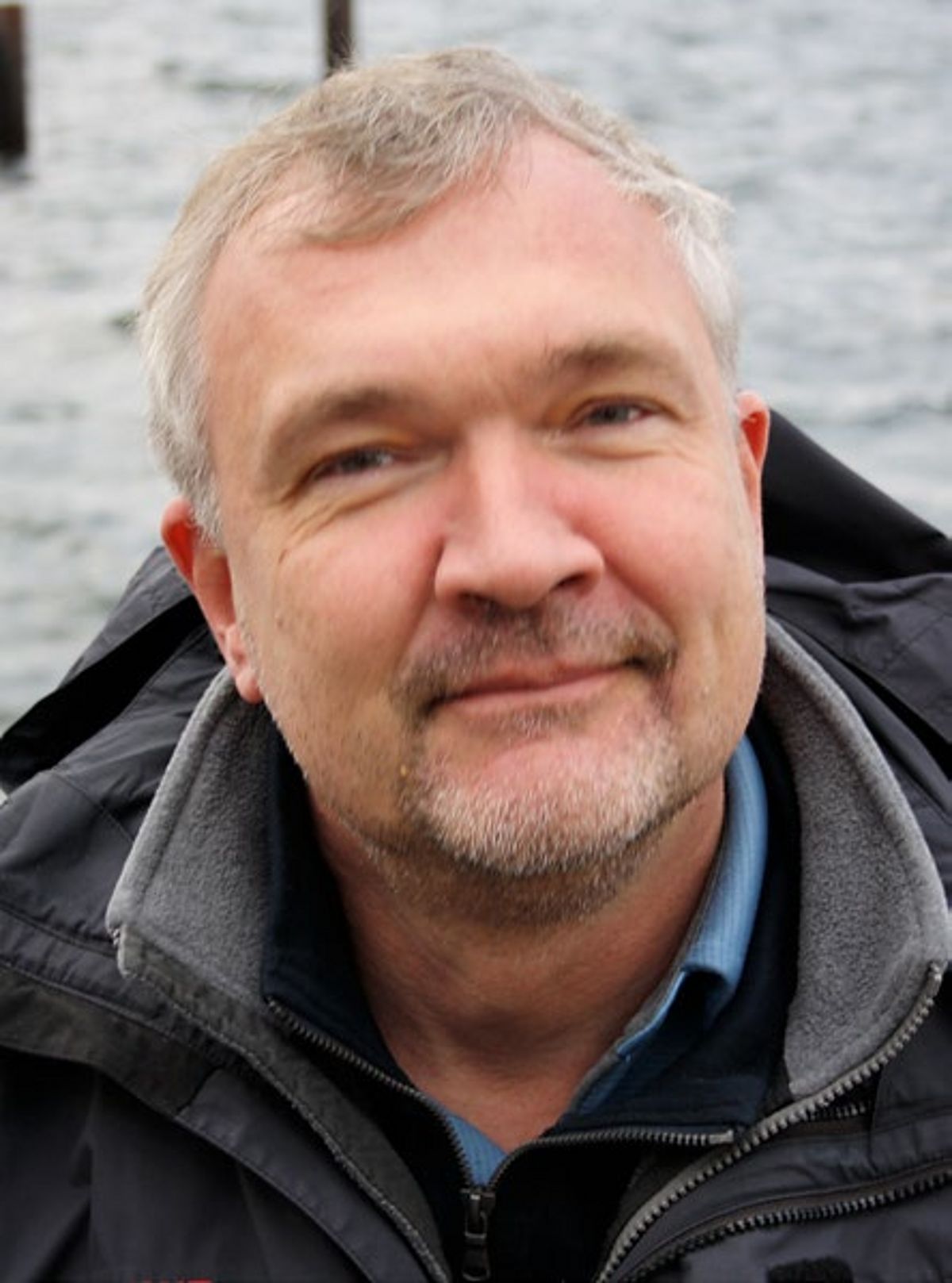
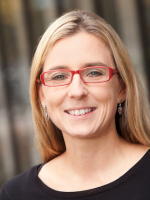
Lakhmi C. Jain is a distinguished academic affiliated with the University of South Australia. As a Professor, she has made significant contributions to the fields of Artificial Intelligence, Computational Intelligence, and Fuzzy Systems. Her research spans neural networks, decision support systems, robotics, and data analysis, with a focus on interdisciplinary applications. Her career includes over 445 publications, including books like Complex Networks in Software, Knowledge, and Social Systems (2019) and E-Learning Systems - Intelligent Techniques for Personalization (2017). She has held editorial roles in journals such as the International Journal of Intelligent Decision Technologies (IDT) and the Journal of Intelligent & Fuzzy Systems. Jain's work emphasizes practical applications of computational intelligence, including efforts in software development, biomedical signal processing, and multi-agent systems. She has collaborated extensively with researchers globally, contributing to advancements in AI-driven technologies and decision-making frameworks.
Lakhmi C. Jain is a distinguished academic affiliated with the University of South Australia. They specialize in Artificial Intelligence, Neural Networks, Fuzzy Logic, and Intelligent Systems, with a focus on applications in robotics, data mining, and biomedical engineering. Their work often bridges theoretical advancements and practical implementations, contributing to fields like computational intelligence, decision-making systems, and multi-agent frameworks. As an editor for multiple journals, including the International Journal of Intelligent Decision Technologies, Jain has significantly shaped academic discourse in AI and related domains. Roles: Editor-in-Chief for several journals, researcher in AI and computational intelligence. Affiliations: University of South Australia. Research interests include neural networks, fuzzy logic systems, and their applications in robotics, biomedical signal processing, and smart technologies. Their publications emphasize interdisciplinary approaches to solving complex problems in engineering and computer science. Articles highlight contributions to multi-agent systems, decision support systems, and risk assessment models, reflecting a commitment to both theoretical rigor and practical relevance. Despite extensive contributions, no specific awards or student advisees are explicitly documented in the provided data.
Prof. Dr.-Ing. Christian Grimme is an Associate Professor and Extraordinary Professor in the Department of Information Systems at the University of Münster. He leads the Computational Social Science and Systems Analysis research group. His roles include acting professorships, research group leadership, and academic co-direction of the ERCIS Competence Center for Social Media Analytics. He holds a Dr.-Ing. in Computer Science and has extensive postdoctoral and habilitation experience. Education Timeline: 2015–2018: Habilitation and venia legendi in Information Systems 2006–2012: PhD in Computer Science (Dr.-Ing.) 1999–2006: Diploma in Computer Science Research Interests focus on Multiobjective Evolutionary Computation, Social Media Analysis, Disinformation Detection, and AI Ethics. His work bridges algorithmic innovation (e.g., optimization algorithms) with societal challenges (e.g., automated propaganda detection). Recent projects include analyzing Large Language Models' role in disinformation mitigation and real-time social media content analysis using human attention mechanisms. Awards include the Best Teaching Award (2024), PPSN XIV Best Paper Award (2016), and multiple travel grants from ACM and DAAD. He actively participates in conferences like GECCO and EMO, contributing to both theoretical and applied research. Advising and grants highlight his role in guiding over 20 theses, spanning Master's and Bachelor's projects in IS/WI. Notable grants include DAAD-funded collaborations and internal university funding for projects like MODERAT! (moderation tools) and ERCIS SMA Competence Center. Labs/Teams: Leads the Computational Social Science & Systems Analysis group, collaborating with global partners via ERCIS. Engages in initiatives like CLAIRE and the Integrity & Security Initiative to address AI ethics and information security challenges.
Prof. Dr. Martin Middendorf is a faculty member at the Department of Computer Science , Faculty of Mathematics and Computer Science , Leipzig University , Germany. He leads the Swarm Intelligence and Complex Systems Group and focuses on interdisciplinary research at the intersection of computational methods and biological systems. Fields of Interest Swarm Intelligence Bioinformatics Genome Rearrangement Analysis Combinatorial Optimization Evolutionary Algorithms Task Allocation in Multi-Agent Systems His recent research emphasizes mitochondrial genome annotation , predator-prey dynamics in swarm systems , and metaheuristic algorithms for dynamic optimization . Key trends include de-Bruijn graph applications , pheromone-dependent movement modeling , and automated behavior tracking in social insects . Supervised Students Dr. Nicolas Wieseke Dr. Hoang Thanh Le Dr. Fatma Turna Tobias Jagla Carsten Seemann Prof. Middendorf's group develops tools like DeGeCI 1.1 for mitochondrial gene annotation and explores swarm-controlled emergence in ant clustering systems. They apply swarm intelligence principles to solve real-world problems in vehicle routing , sewer network design , and biomedical signal processing .
Prof. Günter Rudolph is a Professor of Algorithmic Foundations and Education in Computer Science at the Technical University of Dortmund's Department of Computer Science. He leads Chair 11: Algorithm Engineering, focusing on Computational Intelligence (CI), Evolutionary Algorithms, and their applications in optimization and gaming. His research emphasizes theoretical analysis of CI methods, practical guidelines for operationalization, and applications in engineering, energy systems, and entertainment. Key research areas include multi-objective optimization, evolutionary robotics, and computational intelligence in games such as StarCraft and car racing simulations. He has advised numerous students on topics ranging from autonomous driving systems to procedurally generated game content. Rudolph collaborates internationally, including with CINVESTAV-IPN (Mexico) on multiobjective control methods and BMWi-funded projects on energy systems and forming process predictions. His work spans academic publications in journals like Genetic Programming and Evolvable Machines and conferences such as IEEE CIG. Notable projects include developing adaptive car racing controllers, optimizing energy supply systems in industrial parks, and advancing AI strategies in real-time strategy games. Rudolph's group actively contributes to game AI research through competitions like the StarCraft AI Competition and the Simulated Car Racing Championship, emphasizing the intersection of computational intelligence and entertainment.
Jie Hao is a researcher at the Information Security Center of Beijing University of Posts and Telecommunications , with a focus on interdisciplinary applications spanning Bioinformatics , Artificial Intelligence , and Medical Informatics . His work bridges computational methods with real-world challenges in healthcare, ecology, and network optimization. Recent publications highlight his contributions to Single-cell RNA sequencing deconvolution (2025) AI-driven intergenerational communication in VR (2025) Digital health applications for COPD management (2025) Deep reinforcement learning for vehicle routing (2025) His methodological innovations include adaptive attention mechanisms for object detection (2025), memory-efficient DNN accelerators (2025), and bilevel optimization algorithms with unbounded smoothness (2024). Collaborations span institutions like University of Melbourne and Chinese Academy of Sciences , reflecting his cross-disciplinary impact.
Professor Heike Trautmann is a distinguished academic at Paderborn University, where she serves as Professor of Machine Learning and Optimisation in the Department of Computer Science within the Faculty of Computer Science, Electrical Engineering and Mathematics. Since April 1, 2025, she also holds the position of Vice President for International Relations at the university. Her academic career spans prestigious institutions including the University of Münster, where she was Professor of Data Science: Statistics and Optimization from 2013 to 2023, and the University of Twente, where she serves as Guest Professor of Data Science until February 2026. Dr. Trautmann's educational background includes: University Studies in Statistics (Diploma), TU Dortmund, Germany (1997-2000) University Studies in Economic Mathematics (First Diploma), TU Dortmund, Germany (1996-1998) PhD student at Graduate School of Production Engineering and Logistics, TU Dortmund University (2002-2004) Habilitation in Statistics, TU Dortmund University, Germany (April 15, 2013) Professor Trautmann's research program centers on cutting-edge topics in artificial intelligence and optimization. Her primary research interests include (Trustworthy) Artificial Intelligence, Machine Learning, Data Science, Automated Algorithm Selection and Configuration, Exploratory Landscape Analysis, (Multiobjective) Evolutionary Optimisation, and Data Stream Mining. She leads the Machine Learning and Optimisation research group at Paderborn University, which develops innovative approaches for understanding and improving optimization algorithms through landscape analysis and automated configuration techniques. Her work bridges theoretical foundations with practical applications, particularly in the domains of trustworthy AI and algorithm selection. Her extensive publication record reveals a clear trajectory toward increasingly sophisticated integration of deep learning with traditional optimization techniques. Recent work demonstrates a strong focus on multi-objective optimization problems, exploratory landscape analysis using deep learning methods, and the development of automated algorithm configuration systems. A notable trend is the application of transformer architectures to landscape analysis, as seen in her Deep-ELA work, which represents a significant innovation in the field. Her research consistently addresses the challenge of characterizing complex optimization problems to enable better algorithm selection and configuration. Professor Trautmann has received notable recognition for her scholarly contributions, including: GECCO Best Paper Award for "Deep reinforcement learning for instance-specific algorithm configuration" As an academic leader, Professor Trautmann has secured significant research funding for projects including "Towards Robustness of Disinformation Campaign Detection Algorithms in Open Online Media in the Context of Trustworthy AI" and "Automated rail transport as a backbone for sustainable, networked mobility in rural areas." She actively mentors students through her teaching of advanced courses in machine learning, optimization, and data science. Her industry connections, stemming from her previous work as an Analytics Consultant at Roland Berger Strategy Consulting, enable her to bridge academic research with practical applications. Professor Trautmann leads the Machine Learning and Optimisation research group at Paderborn University, which collaborates extensively with international partners. She is a key supporter of the Confederation of Laboratories for Artificial Intelligence Research in Europe (CLAIRE) and a member of the European Research Center for Information Systems (ERCIS). Her group maintains strong connections with research centers across Europe, particularly through her involvement with the Transregional Collaborative Research Centre 318.
Ofer M. Shir is a faculty member affiliated with Tel-Hai College and MIGAL - Galilee Research Institute in Israel. His primary research focuses on evolutionary algorithms, multi-objective optimization, and their applications in quantum control, machine learning, and computational science. He has collaborated extensively with institutions and researchers globally, contributing to advancements in optimization theory and practical problem-solving through evolutionary computation. Shir's work spans theoretical foundations, such as covariance-Hessian relations in evolution strategies, to applied domains like quantum control experiments and algorithmic-guided discovery of viral epitopes. He has developed and benchmarked algorithms like the CMA-ES and SMS-EMOA, emphasizing their performance in complex, real-world scenarios. His contributions also include methodologies for sequential experimentation and improving model accuracy through techniques like batch normalization. Shir has published extensively in top-tier venues such as IEEE Transactions on Evolutionary Computation, Genetic Programming and Evolvable Machines, and the GECCO conference series. His research bridges theoretical computer science with practical applications, impacting fields from bioinformatics to engineering.
Volkmar Sauerland is a Researcher in the Biogeochemical Modelling Unit at GEOMAR Helmholtz Centre for Ocean Research Kiel. He has been working at GEOMAR since November 2022 (with a brief gap between March and October 2022), focusing on algorithms for discrete and continuous optimization problems applied to biogeochemical ocean models. Prior to this, he spent seven years (2013-2020) as a PostDoc and Research Associate in the Discrete Optimization Group at Christian-Albrechts-Universität zu Kiel (CAU). Dr. Sauerland completed his PhD in 2012 at CAU with a thesis titled "Algorithm Engineering for some Complex Practice Problems: Exact Algorithms, Heuristics and Hybrid Evolutionary Algorithms" and earned his Diploma in 2003 with research on "Mathematical optimization in the design of cosine-modulated filter banks." His educational background reflects the dual focus that characterizes his research career spanning both mathematical optimization and oceanographic applications. Sauerland's research interests bridge two distinct domains: mathematical optimization and marine biogeochemistry. His work focuses on developing and adapting algorithms for parameter optimization and calibration of biogeochemical ocean models. He is currently involved in the EU project OceanICU "Understanding Ocean Carbon," which examines the ocean's role in the global carbon cycle. His research combines theoretical work in optimization algorithms with practical applications in ocean modeling, creating a unique interdisciplinary niche. Analysis of his publication record reveals a clear trajectory from purely theoretical optimization work toward increasingly ocean-focused applications. His earlier publications (2007-2013) focus primarily on combinatorial optimization, permutation problems, and evolutionary algorithms. Starting around 2015, his work shifts toward oceanographic applications, with nearly all recent publications (2017-2023) addressing biogeochemical modeling challenges. The most recent papers demonstrate sophisticated approaches to model calibration, parameter estimation, and uncertainty analysis in complex marine systems. Dr. Sauerland has been involved in significant research projects including the EU's OceanICU initiative and has presented his work at major conferences such as the Ocean Sciences Meeting 2020 in San Diego and the Ocean Deoxygenation conference in Kiel. His collaborative work spans multiple institutions, with frequent co-authorship with researchers from GEOMAR and CAU. While specific grant information isn't detailed in the provided text, his ongoing EU project involvement suggests successful grant acquisition. Based at GEOMAR's Kiel facility, Sauerland works within the Marine Biogeochemistry research division, specifically in the Biogeochemical Modelling Unit. His office is located in Room 5.506, Tower 5, Floor 5 at GEOMAR's Wischhofstraße 1-3 address. His research contributes to GEOMAR's broader mission of understanding ocean processes and their role in Earth's climate system, particularly through the development of advanced computational methods for model calibration and evaluation.
Holger Hoos is a Professor in the Department of Methodology of Artificial Intelligence at RWTH Aachen University. His research spans artificial intelligence, automated algorithm configuration, and machine learning robustness, with applications in optimization, earth observation, and quantum computing challenges. Research Focus: His work emphasizes: Robustness verification and efficiency improvements in neural networks Automated Machine Learning (AutoML) frameworks and benchmarking Multi-objective optimization and algorithm configuration AI applications in remote sensing, time-series analysis, and recommender systems Recent publications (2024-2025) show a dominant trend toward enhancing AI reliability through rigorous verification methods, scalability solutions for large-scale problems, and adaptable frameworks for dynamic data environments. Quantum computing applications and energy-efficient AI also feature prominently. He leads research initiatives at RWTH Aachen focusing on methodological advances in AI, though specific labs/teams are not detailed.
Prof. Heike Trautmann is a Professor of Data Science: Statistics and Optimization at the University of Münster, holding the Chair of Statistics and Optimization within the Department of Information Systems and Statistics, School of Business & Economics. She also serves as Vice Dean for Internationalization at the School. Her academic career includes roles such as Pascal Professor at Leiden University (2017) and a visiting position at the University of Twente (2021–2026). She earned her PhD (2004) and Habilitation (2013) in Statistics from TU Dortmund, focusing on optimization methodologies. Her research interests span Multiobjective Optimization, Evolutionary Algorithms, Automated Algorithm Selection, Data Stream Mining, and Social Media Analytics. Notable projects include the COSEAL consortium for algorithm selection, the Benchmarking Network for optimization heuristics, and the ERCIS Social Media Analytics Competence Center addressing online disinformation. She has led initiatives like MODERAT! (automated comment moderation) and Algorithmisierung und gesellschaftliche Interaktion (societal impact of algorithms). Awarded multiple best paper prizes, including at CBI 2019 and PPSN XIV 2016, she emphasizes interdisciplinary collaboration. Her work bridges technical advancements with societal implications, reflected in contributions to AI ethics and platform regulation. Active in international conferences (e.g., EMO, GECCO), she maintains roles in program committees and advisory boards such as CLAIRE and ACM SIGEVO. Funded projects include EU initiatives on algorithm configuration and DAAD collaborations on platform regulation. Her research outputs span over 50 peer-reviewed articles since 2012, focusing on algorithmic innovation and real-world applications in optimization and digital media.