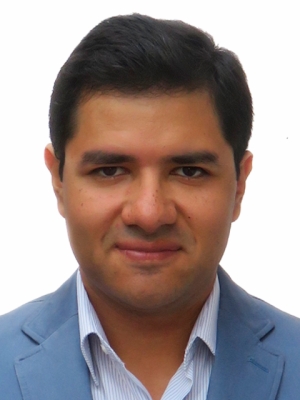
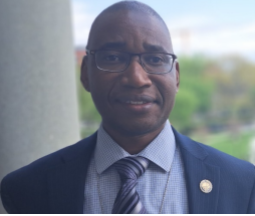
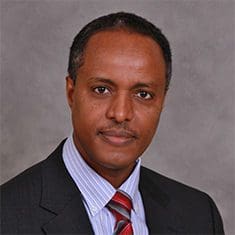
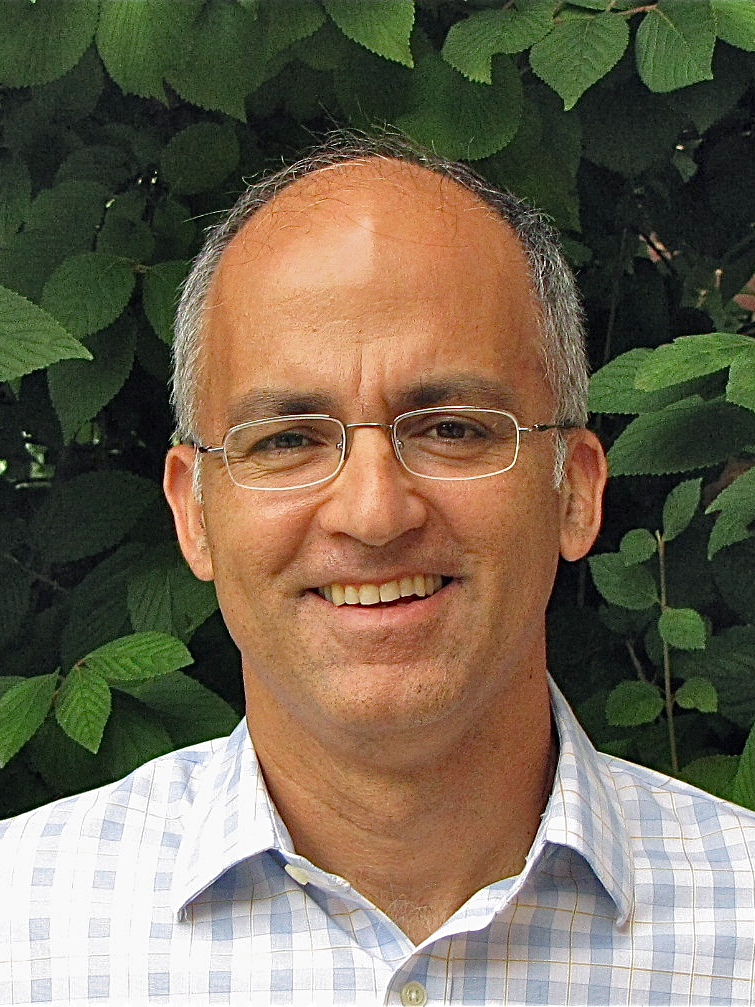
MaoMao Liang is a Doctoral Researcher at the Faculty of Information Technology , University of Jyväskylä, Finland. Their work focuses on multiobjective optimization and decision analytics, particularly in interactive evolutionary methods. Affiliation: Multiobjective Optimization Group Project: Decision Analytics utilizing Causal Models and Multiobjective Optimization (DEMO) Research interests include improving decision-making in scenarios with conflicting objectives. Their 2024 publication on a modified hypervolume indicator reflects expertise in computational intelligence and preference-based optimization. Contact: maomao.m.liang@jyu.fi
Andreas Stephan serves as the Acting Dean (Prodean) of the School of Business and Economics at Linnaeus University, a position he has held since May 2023. He is affiliated with the Department of Forestry and Wood Technology and actively participates in multiple research centers including the Linnaeus University Centre for Data Intensive Sciences and Applications (DISA), the Linnaeus University Centre for Equality of Opportunity and Big Data Policy Analysis, and The Bridge—a unique partnership between Södra, IKEA, and Linnaeus University focused on innovation and sustainability in forestry and wood. Stephan holds a master's degree in industrial engineering and management from Technical University in Berlin and a PhD in Economics from Humboldt University Berlin. His research spans forest industry analytics, ESG and financial markets, green investment and finance, with particular focus on how innovation facilitates the green transition of industries. He has published extensively across economics, finance, and sustainability journals, with recent work examining sustainable finance, green bonds, forest economics, and the impact of environmental policies on business performance. His research portfolio includes significant projects such as TallBoard (exploring tall oil application in industrial fiberboards) and investigating the green transformation of the Swedish pulp and paper industry. Stephan serves as an associate editor for the journals Eurasian Economic Review and Business Strategy and the Environment, demonstrating his scholarly leadership in sustainable economics and finance. His recent publications show a strong trend toward integrating environmental considerations with financial decision-making, particularly in portfolio optimization and sustainable investment frameworks. Stephan is deeply embedded in Linnaeus University's research ecosystem, leading and participating in multiple research groups including Deterministic and Stochastic Modelling, Forest Economics, Forest Management, and Small-scale Forestry. His work bridges theoretical economic modeling with practical applications in sustainable industry transformation, reflecting Linnaeus University's commitment to addressing global sustainability challenges through interdisciplinary research.
Concepcion Paralera Morales is an Associate Professor at the Universidad Pablo de Olavide, affiliated with the Department of Economics, Quantitative Methods and Economic History. Her research focuses on Quantitative Methods for Business and Economics within the "Quantitative Methods in Business and Economics" research group. PhD in Economics from Universidad Pablo de Olavide (2005) Supervised by Dr. Rafael Caballero Fernández and Dr. Flor María Guerrero Casas Her work primarily addresses multiobjective optimization problems in operational research, particularly location routing and waste management. She has applied metaheuristics like tabu search to real-world case studies in Andalusia, incorporating both economic and social criteria in decision-making processes. Key trends in her publications (2005-2007) include: multicriteria approaches for infrastructure location, integration of equity considerations in risk assessment, and combinatorial optimization techniques. Her research intersects operations research (90-XX) with applications in environmental policy and industrial logistics.
Halvard Arntzen is an Associate Professor at Molde University College, affiliated with the Faculty of Logistics and the Department of Logistics. He currently serves as the acting Dean for the Department of Logistics. His academic background includes a Cand. Scient. in Mathematics from the University of Oslo (1994) and extensive experience in logistics and operations research, including roles as a scientific assistant at the University of Oslo (1994–2000) and faculty member at Molde University College since 2000. Research Interests: Applied mathematics, statistical modeling, econometrics, operations research, planning, optimization, decision support systems, and sport analytics. His work spans topics such as stochastic vehicle routing, team sports outcome prediction, and heuristic algorithms for complex optimization problems. Teaching: Courses include Log 708 - Applied Statistics and Mat 210 - Statistics II , focusing on practical applications of statistical methods and regression analysis. Research Groups: Member of the Planning, Optimization and Decision Support research group. Publications: Over 15 peer-reviewed articles, including influential works on sport analytics, stochastic vehicle routing, and optimization algorithms. His research addresses real-world challenges in logistics, healthcare, and sports through data-driven methodologies.
Kalyanmoy Deb is a University Distinguished Professor and holds the Dr. Herman E. and Ruth J. Koenig Endowed Chair at the Department of Electrical and Computer Engineering in the College of Engineering at Michigan State University. His research focuses on evolutionary algorithms, multi-objective optimization, machine learning, robotics, and environmental engineering. He has contributed to advancements in algorithm design, decision-making frameworks, and applications in fields like watershed management and robotics. Deb’s work emphasizes solving complex optimization problems through innovative methods such as NSGA-II, EvoSort, and frameworks leveraging surrogate models and innovization. He has explored applications in energy systems, large-scale watershed planning, and adversarial robustness in neural networks. His research bridges theoretical advancements with practical solutions, addressing challenges in computational efficiency, scalability, and decision support. Key Research Contributions: Development of many-objective optimization algorithms (e.g., MaNSGA-II) Integration of machine learning with evolutionary computation Optimization of robotic systems (e.g., NAO robot gait) Environmental decision-making frameworks for watershed management Deb has been recognized with prestigious awards, including the 2022 ACM Fellow distinction, reflecting his impactful contributions to computational intelligence and optimization. His work spans interdisciplinary collaborations, addressing real-world problems through algorithmic innovation. Recent Trends in Publications: Focus on scalable algorithms for high-dimensional optimization (e.g., parallel and surrogate-assisted methods) Exploration of visualization techniques for multi-criterion decision-making Development of frameworks for automated algorithm design (e.g., Moaz) His current research continues to push boundaries in evolutionary computation, machine learning applications, and real-world optimization challenges, with a particular emphasis on sustainability and decision support systems.
Orlando Marcel Roman Garcia is a Lecturer in Infrastructure Management at ETH Zürich. With a BSc in Civil Engineering from Pontificia Universidad Católica del Peru and an MPhil in Engineering for Sustainable Development from the University of Cambridge, his work focuses on adaptive infrastructure planning under uncertainty. Research encompasses: Sustainable infrastructure systems in coastal regions Multi-objective decision analytics for urban development Uncertainty quantification in transport planning Publications demonstrate consistent focus on infrastructure optimization under uncertainty, with recent work on transport gateways and surrogate modeling. Awards include the "Presidente de la Republica" Scholarship and Knight Piesold Consulting's Best Technical Submission Award. Professional experience includes 7 years in engineering consultancy for structural/geotechnical analysis and research at the University of Oxford on water infrastructure optimization.
Moayed D Daneshyari is an Associate Professor in the Department of Computer Science at California State University, East Bay. His research focuses on optimization algorithms, neural networks, and computational intelligence, with particular emphasis on cultural-based particle swarm optimization (PSO), multiobjective optimization, and nonlinear dynamics. He has contributed to applications in dynamic systems, pattern recognition, and biomedical signal processing. His work integrates evolutionary algorithms, swarm intelligence, and chaos theory to address complex optimization challenges. Recent studies include cultural frameworks for constrained optimization, inter-swarm communication strategies, and the analysis of epileptic EEG data using nonlinear methods. No scientific awards or grants are explicitly mentioned in the provided text. His teaching and advising activities are not detailed here, but he maintains an office in SF 544 and can be reached via email at moayed.daneshyari@csueastbay.edu .
Dr. Otsebele E. Nare is an Associate Professor of Electrical and Computer Engineering at Hampton University, located in the School of Engineering, Architecture and Aviation. He holds positions as Interim Department Chair, Program Director, and Principal Investigator for various initiatives. His expertise spans Integrative STEM Education, System Level Synthesis, Multiobjective Optimization, and Energy Systems. Nare received his B.S., M.Eng., and D.Eng. in Electrical Engineering from Morgan State University. He is an active member of ASEE, IEEE, ITEEA, and Tau Beta Pi. Research focuses on improving STEM education through collaborative online instruction, engineering ethics integration, and multi-objective optimization applications. Recent work includes pandemic impact analysis on ECE programs and multi-university collaboration models. His 2019 E. L. Hamm Teaching Award reflects dedication to pedagogical innovation. Career contributions include advising on STEM pipeline initiatives and leading experiment-centric pedagogy projects across 13 HBCUs. Collaborations involve diverse stakeholders from industry and academia, emphasizing practical skill development for underrepresented students. Current activities include advancing energy systems research and interdisciplinary curriculum design.
Wubeshet Woldemariam is an Associate Professor of Civil Engineering at Purdue University Northwest, specializing in transportation and infrastructure systems. His research focuses on smart cities, connected and autonomous vehicles, infrastructure network optimization, and sustainable transportation solutions. He holds a Ph.D. in Civil Engineering from Purdue University, an M.S. from Purdue, and an M.Tech. in Civil Engineering from the Indian Institute of Technology Bombay. Education: Ph.D. – Civil Engineering, Purdue University M.S. – Purdue University M.Tech. – Civil Engineering, Indian Institute of Technology Bombay His research emphasizes developing decision-making frameworks for equitable and sustainable transportation systems, including infrastructure cost prediction, low-volume road prioritization, and network performance analysis. Key projects include frameworks integrating stakeholders' preferences and network accessibility metrics. Recent work explores deep learning applications for predicting electric vehicle charging demand and transformer-based models for urban infrastructure challenges. His publications appear in journals like Transportation Letters , Sustainability , and Computers & Aided Civil and Infrastructure Engineering . Woldemariam's work addresses pressing issues such as traffic congestion reduction, accident mitigation, and infrastructure resilience through system-level approaches and technological integration.
Qian ZHAO is a Researcher at the Department of Engineering Sciences and Methods, University of Modena and Reggio Emilia. Their research focuses on industrial systems optimization, decision-making under uncertainty, logistics management, and educational technology. They teach courses such as 'Advanced Design and Management of Automated Plants' and 'Logistics and Production Management', emphasizing simulation-based learning and industrial case studies. Research interests include consensus reaching models, failure mode analysis, robust multicriteria decision methods, and ergonomic risk assessment through machine learning. Teaching methodologies involve AutoMod simulation software, Python, and collaborative learning platforms like Microsoft Teams. Publications span applications in supply chain procurement, risk analysis, and educational frameworks, reflecting expertise in operations research and systems engineering.
Captain Zakirul Bhuiyan is an Associate Professor and Senior Lecturer at the School of Maritime Science and Engineering, Southampton Solent University. He leads the MSc Maritime Transport and Operations unit and serves as Head of the Warsash Maritime Technology and Innovation Research Centre. His roles include Course Leader for Bridge Simulation and Research and Innovation Coordinator. With over 30 years of maritime industry experience, Bhuiyan specializes in maritime education, autonomous systems, and regulatory compliance. He has led EU-funded projects like STM, MariEMS, and Innovate UK’s MAXCMAS, focusing on autonomous navigation and energy management. He contributes to international bodies such as the UK’s Marine Autonomous Systems Regulatory Working Group (MASRWG) and the IMO HTW Sub-Committee. His research emphasizes simulation-based training, cloud simulation tools, and COLREG-compliant path planning for autonomous vessels. Awards include Fellowships from the Nautical Institute and UK Higher Education Academy. Bhuiyan’s publications span e-Navigation, deep learning in education, and maritime safety innovations.
Lauri Neuvonen is a Visiting Professor at the Department of Information and Service Management, Aalto University. His work focuses on multiobjective optimization and decision-making frameworks, particularly in healthcare contexts. He holds a PhD in Business Administration (2024), Master's and Bachelor's degrees in Engineering and Technology from Aalto University (2011). Research interests include strategic decision analysis under uncertainty, healthcare system optimization, and the application of decision programming models. His recent work addresses colorectal cancer screening programs, multiobjective strategy selection, and complex decision problems in healthcare. He has presented at international conferences on topics like COVID-19 control strategies and colorectal cancer screening optimization. Collaborations involve healthcare institutions and operational research networks. His doctoral thesis (2024) explores practical tools for multiobjective decision support in healthcare. Lauri has been actively involved in academic organizing roles, including the European Conference on Operational Research (2021–2022). His research contributes to UN Sustainable Development Goal (SDG) 3: Good Health and Well-being through improved healthcare decision frameworks.
Dr. Chen Liu is a Research Fellow at the School of Engineering, RMIT University. His research focuses on energy systems, smart grids, optimization algorithms, and the integration of renewable energy technologies. He is particularly interested in battery energy storage systems, electric vehicle (EV) infrastructure, and machine learning applications in power systems. Dr. Liu has contributed to advancing SCADA alarm management, real-time grid monitoring, and multi-objective optimization techniques. He is open to supervising Masters and PhD students in areas such as accelerated learning for neural networks and big data applications. His work emphasizes practical solutions for sustainable energy challenges, including optimal placement of EV charging stations, solar-PV integration, and frequency control in grids with high renewable penetration. Dr. Liu's research also explores data-driven approaches for energy market forecasting and grid reliability enhancement. He has published extensively in top journals and conferences, addressing topics ranging from quantum genetic algorithms to distributed training of neural networks.
Dr. Alfredo Garcia is a Professor of Industrial & Systems Engineering at Texas A&M University, holding the Mike and Sugar Barnes Professorship III. His expertise lies in game theory, dynamic optimization, and their applications in electricity and communication networks. He has published extensively in top journals like IEEE Transactions and Operations Research. Education: Ph.D. (1997) in Industrial & Operations Engineering from the University of Michigan; DEA (1992) in Industrial Automation & Computer Science from Université de Toulouse III. Research focuses on distributed optimization algorithms, incentive-compatible market mechanisms, and AI-driven models for autonomous systems. Recent work explores active inference frameworks for driver behavior modeling and federated learning in networked systems. His research bridges theoretical advancements with real-world applications in energy markets, transportation systems, and materials science. Key achievements include developing iterative mechanisms for electricity market coupling and contributions to decentralized optimization on manifolds. Collaborations span academia and industry, addressing challenges in smart grids and autonomous vehicle safety.
Angel Manuel González Rueda is an Assistant Professor at the University of Santiago de Compostela (USC), affiliated with the Department of Statistics, Mathematical Analysis and Optimization, part of the Higher Technical School of Engineering. He is a member of the MODESTYA research group (Optimization, decision, statistical models and applications) and the Galician Mathematical Research and Technology Center (CITMAga). His research focuses on optimization algorithms, energy networks, and decision models, with notable work on gas transmission systems, home care scheduling, and polynomial optimization tools like RAPOSa. He holds a Doctorate from USC (2017), completing his thesis on Gas transmission networks optimization algorithms and cost allocation methodologies , supervised by Dr. Julio González Díaz. His expertise spans mathematical modeling, computational optimization, and game theory applications in energy and logistics systems. Key research trends in his articles include: (1) Development of hybrid optimization algorithms for differential equations and network problems, (2) Multiobjective scheduling in healthcare and retail logistics, and (3) Fair cost allocation mechanisms in energy and gas networks using cooperative game theory. His RAPOSa software has become a notable open-source tool for polynomial optimization. Rueda has contributed to over 15 peer-reviewed articles since 2014, addressing topics ranging from wildfire suppression modeling to decentralized energy markets. Though no formal awards are listed, his work demonstrates significant innovation in applied mathematical optimization. He has advised no doctoral students listed here but collaborates extensively with industry partners on network optimization challenges. His affiliations include the Interuniversity Research Center CITMAga, emphasizing applied mathematics in technology, and the MODESTYA group, which bridges theoretical optimization with real-world applications in engineering and economics.