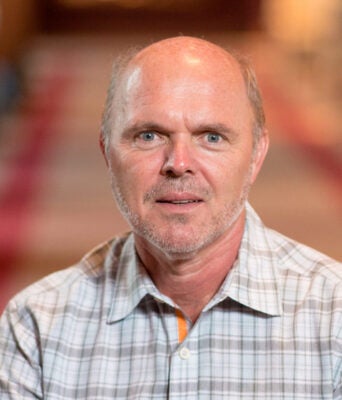
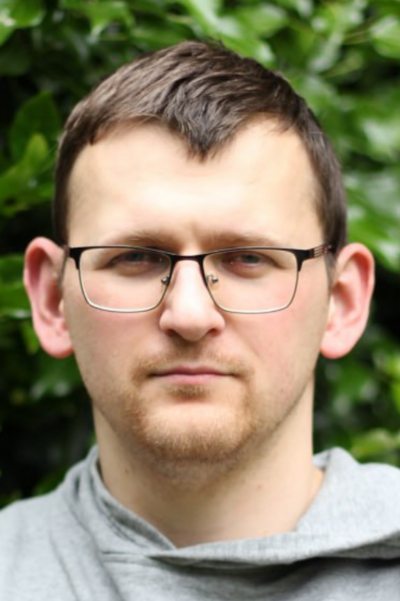
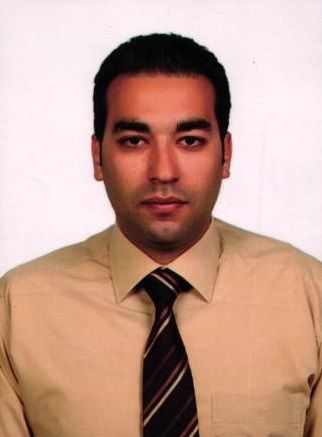
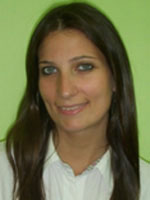
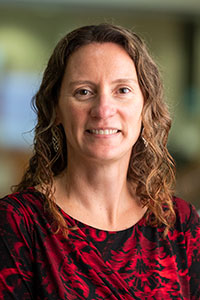
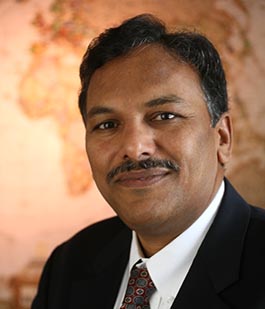
Minsi Chen is a Researcher at the University of Huddersfield , affiliated with the School of Computing and Engineering and the Department of Computer Science . They serve as Subject Area Leader (CIS - U/G) and are a member of the Centre for Industrial Analytics and Centre for Sustainable Computing . Their work spans interdisciplinary research with a focus on computer science, augmented reality, and medical applications. Research Interests : Minsi Chen's research expertise includes real-time rendering , volume rendering , augmented reality , multimodal sensing data fusion , and visualization of large datasets . They have contributed to advancements in medical imaging , hybrid system modeling , and graph neural networks , with applications in trauma surgery simulation , automotive systems , and industrial analytics . Collaborative Activity : Recent research outputs indicate strong collaborations with institutions such as University of Huddersfield , CERN , and University of Leeds . Their work intersects with UN Sustainable Development Goals related to good health , industry innovation , and climate action through sustainable computing initiatives.
Dr. Anil K. Patnaik is an Associate Professor of Physics at the Air Force Institute of Technology (AFIT). His research focuses on fundamental laser-matter interactions, quantum optics, and advanced laser diagnostics for plasmas and combustion processes. He has led numerous federally funded projects (AFRL, AFOSR, DOE) and holds an h-index of 22 with over 250 publications. Education: Post-Doctoral Research Associate, Texas A&M University (2003-2005) JSPS Post-Doctoral Research Associate, University of Electro-Communication, Tokyo (2001-2003) PhD in Physics, Physical Research Laboratory, India (1995-2001) MS in Physics, Utkal University, India (1990-1995) Research Interests: Dr. Patnaik's work bridges theory and experimentation in quantum optics, nonlinear optics, and laser-based diagnostics. His innovations include fiber-based slow light systems, ultrafast laser-plasma diagnostics, and machine learning-enhanced spectral analysis. Recent projects involve kHz-rate table-top accelerators and quantum photonics under atmospheric turbulence. Awards: AFIT Dean’s Distinguished Teaching Professor Award (2021) Editor’s pick and cover page in High Power Laser Science and Engineering (2024) Recipient of JSPS Post-Doctoral Fellowship (2001-2003) Grants & Advising: He has secured multi-million dollar grants as PI/co-PI and advised numerous doctoral and master’s students. His lab (QuOTe) develops cutting-edge optical diagnostics for military and aerospace applications. Labs/Teams: Director of the QuOTe (Quantum Optics & Technology) laboratory at AFIT, focusing on quantum photonics and advanced laser systems.
Col Nathan B. Terry, PhD, is a Senior Military Professor and Director of the Center for Space Research and Assurance at the Air Force Institute of Technology (AFIT). He holds a PhD in Physics from AFIT (2007) and has extensive military and academic experience, including roles as Assistant Professor at the U.S. Air Force Academy, Research Physicist, and Program Manager for high-energy laser initiatives. His research spans lasers, educational psychology, nuclear deterrence, plasma physics, and precision navigation technologies. Col Terry has authored over a dozen peer-reviewed publications and received multiple military awards. Education: Bachelor of Science, Brigham Young University (2000) Master of Science, Brigham Young University (2001) PhD in Physics, AFIT (2007) Completed Air Command & Staff College and Air War College Research Focus: Terry's work emphasizes interdisciplinary applications of physics, including laser technology for defense systems, improving STEM education through empirical studies, and advancing nuclear deterrence strategies. His educational research explores learning gaps and homework efficacy in physics education. Publications Trends: His articles highlight laser dynamics, semiconductor device modeling, and pedagogical innovations. Recent work examines hypersonic technology's implications for nuclear weapons systems and SRS beam cleanup in fiber optics. Awards: Meritorious Service Medal (2x) Air Force Commendation Medal (2x) Joint Service Achievement Medal Current Roles: Leads AFIT's space research initiatives and oversees transition of defense technologies from basic research to practical applications. Previously managed the High Energy Laser Scaling Initiative and served in OSD's Defense Research and Engineering division.
Harald Sontheimer, Ph.D., is Professor and Chair of the Department of Neuroscience at the University of Virginia School of Medicine. He joined UVA in 2021 after prior leadership roles at Virginia Tech and the University of Alabama at Birmingham. His research focuses on glial cells in neurological diseases and brain cancer. Education: Ph.D. in Biophysics and Cellular & Molecular Neuroscience, University of Heidelberg (1989) Masters in Evolutionary Comparative Neuroscience, University of Heidelberg (1986) Dr. Sontheimer’s research explores the role of glial support cells in health and disease, particularly in epilepsy, Alzheimer’s disease, and malignant gliomas. His lab uses electrophysiology, multi-photon microscopy, and molecular techniques to study glial-vascular interactions, ion homeostasis, and tumor-induced neurodegeneration. He discovered that aberrant glutamate release from brain tumors causes tumor-associated epilepsy, leading to clinical trials. His recent publications reveal trends in neuroengineering, glial biology, and brain tumor metabolism, with innovations in fiber-based neural interfaces, perineuronal net dynamics, and amino acid transport in glioblastoma. His work bridges basic science and translational applications. Scientific Awards: PROSE Award for Diseases of the Nervous System , an award-winning textbook Dr. Sontheimer has trained over 50 graduate students and postdoctoral fellows. He has secured significant research funding and leads major initiatives, including founding the Center for Glial Biology in Medicine and the nation’s first School of Neuroscience at Virginia Tech. He serves on advisory boards for the NIH, Dana Foundation, and American Brain Tumor Association. His lab, the Sontheimer Lab, continues to investigate glial contributions to neurological disorders and develop novel therapeutic strategies for brain cancer and epilepsy.
Dr.-Ing. Maxim N. Cherkashin is a Researcher at the Photonics and Terahertz Technology Team within the Faculty of Electrical Engineering and Information Technology at Ruhr University Bochum. His work focuses on advancing optical and biomedical imaging techniques through innovative uses of ultrasonics and wavefront shaping. Research interests include: Ultrasound-guided light manipulation in scattering media Photoacoustic imaging and wavefront shaping for medical diagnostics Development of multimode fiber-based sensing systems Recent articles emphasize breakthroughs in: Enhancing fluorescence detection in hidden targets via ultrasound waveguiding Reconfigurable ultrasound systems for deep-tissue optical imaging Optical fiber integration with ultrasonic sensors His team collaborates on projects like "Ultrasonic wave guidance of light deep into scattering media" , advancing applications in biomedical optics and photonics. Labs/Teams: Active member of the Photonics & Terahertz Technology research group, contributing to state-of-the-art imaging systems and sensor development.
Katrin Amunts is a University Professor at the Cécile and Oskar Vogt Institute for Brain Research of Heinrich-Heine-University Düsseldorf and heads the Institute for Neuroscience and Medicine (INM-1) at Forschungszentrum Jülich. Her research focuses on creating multi-level brain atlases through cytoarchitectonic, molecular, and fiber architecture analysis. Director of the Cécile and Oskar Vogt Institute for Brain Research Head of INM-1 at Forschungszentrum Jülich Pioneered the BigBrain ultra-high-resolution 3D human brain model Research Interests: Combining image analysis, high-performance computing, and big data analytics to map brain structure-function relationships, intersubject variability, and interspecies differences. Her work underpins the Human Brain Project. Key Publications: Her research output includes probabilistic cytoarchitectonic atlases, comparative studies of avian and human brain circuits, and ultra-high-resolution models. These focus on cortical organization, receptor mapping, and neuroethical frameworks.
Gabriel Gomila Lluch is a Full Professor at the University of Barcelona's Department of Electronics and Group Leader at the Institute for Bioengineering of Catalonia (IBEC). His research at the Nanoscale Bioelectrical Characterization group integrates Scanning Probe Microscopy, Artificial Intelligence, and Organic Bioelectronics to advance label-free characterization tools for Life Sciences and nanomedical diagnostics. PhD in Physics (University of Barcelona, 1997) Ramón y Cajal Fellowship recipient (2001) ICREA Academia awardee (2014) His research spans: Bioelectrical characterization of cells, bacteria, and nanocarriers Autonomous microscopy systems with AI integration Organic Bioelectronics for biosensing and signal transduction Cable bacteria conduction mechanisms Scientific contributions include: First supervised machine learning algorithm for Scanning Dielectric Microscopy data Breakthrough in confined water dielectric constant measurement (Science 2018) Pioneering work on nanoscale capacitance microscopy Key innovation areas: High-throughput multimodal characterization Autonomous probe microscopy systems Dielectric nanotomography Protein nanowire conductivity analysis
Pratik Mukherjee, MD, PhD, is a Professor in Residence in the Department of Radiology and Biomedical Imaging at the University of California, San Francisco (UCSF) School of Medicine. He holds dual appointments in Radiology and Biomedical Imaging and serves as an attending neuroradiologist at UCSF. Dr. Mukherjee directs the Center for Imaging of Neurodegenerative Disease (CIND) based at the San Francisco VA Medical Center and the Neural Connectivity Laboratory (NCL) at UCSF China Basin. Dr. Mukherjee received his B.A. in Computer Science & Psychology from Yale University (1988), PhD in Neuroscience from Rockefeller University (1994), and MD from Cornell University (1995). He completed his internship in Internal Medicine at New York Hospital - Cornell Medical Center, followed by residency in Radiology and fellowship in Neuroradiology at Washington University Medical Center (completed 2002). His primary research focuses on neurodevelopmental disorders and traumatic brain injury (TBI) using advanced MRI techniques. His work centers on technical development, neuroscience, and clinical applications of imaging methods for mapping brain structure and function, with special emphasis on diffusion MRI for assessing white matter development and integrity and mapping axonal fiber pathways. His recent publications show a strong concentration on connectomics, biomarkers for TBI, and advanced neuroimaging techniques. Dr. Mukherjee has served as Principal or Co-Principal Investigator for numerous NIH-funded projects including TRACK-VA, Neural Mechanisms of Sensory OverResponsivity, and MRI Corticography. His research has also been supported by the Department of Defense, Simons Foundation, McDonnell Foundation, Dana Foundation, Wallace Research Foundation, GE Healthcare, and the GE-NFL Head Health Initiative. Medical Scientist Training Program Grant, National Institutes of Health (1988-95) S. Koide Memorial Fellowship, Rockefeller University (1994) Roentgen Resident/Fellow Research Award, Radiological Society of North America (1999) Berlex/ASNR Award in Basic Science Research, American Society of Neuroradiology (2001) As Principal Investigator of multiple major grants and co-investigator in the TRACK-TBI consortium, Dr. Mukherjee has mentored numerous researchers and secured over $10 million in research funding. His work with the Center for Imaging of Neurodegenerative Disease involves a multidisciplinary team of neuroscientists, radiologists, and engineers developing next-generation imaging techniques for neurodegenerative conditions. Future research directions include advancing ultra-high field MRI technologies and developing personalized connectomic approaches for neurological disorders.
Mehmet Çağatay Akbolat serves as Assistant Professor at Gaziantep University's Faculty of Aeronautics and Astronautics, Department of Aeronautics and Astronautics Engineering, specializing in composite structural integrity for aerospace applications with focus on failure mechanisms in carbon/epoxy systems. His academic credentials include: Doctorate (2018-2022) from The University of Manchester, England Master's degree (2017-2018) from Brunel University, England Bachelor's in Mechanical Engineering (2008-2012) from Karadeniz Technical University, Turkey Research centers on interlaminar fracture behavior, impact response, and innovative toughening methodologies for aerospace composites. Key investigations examine hybrid approaches combining core-shell rubber nanoparticles with thermoplastic veils to enhance damage tolerance, alongside studies on hygrothermal aging effects and binder influences on fracture mechanics. This work directly addresses critical challenges in lightweight aircraft and spacecraft structural design requiring improved crashworthiness and fatigue resistance. Publication trends (2021-2025) reveal consistent advancement in understanding R-curve behavior and interlaminar crack propagation through systematic experimental analysis. His seven high-impact journal articles demonstrate methodical progression from fundamental fracture characterization (2021) to complex hybrid toughening mechanisms (2025), primarily published in Q1 composite science journals like Composites Part A/B. Recurring themes include comparative analysis of veil materials (carbon vs PPS), multimode fracture evaluation, and environmental degradation effects. No information exists regarding supervised students or secured research funding. International collaboration patterns indicate strong ties with UK institutions, particularly The University of Manchester and Brunel University, suggesting participation in shared experimental facilities for advanced composite testing including in-situ SEM and impact characterization rigs.
Professor Kishan Dholakia is a distinguished academic at the University of St Andrews, holding positions at the School of Physics and Astronomy, Sir James Mackenzie Institute for Early Diagnosis, Centre for Biophotonics, Institute of Behavioural and Neural Sciences, and Biomedical Sciences Research Complex. With a career spanning decades, he has established himself as a leading researcher in optical physics and biophotonics. His research interests focus on the application of shaped laser beams to trap, analyze and manipulate colloidal particles, cells and tissue. His work encompasses optical tweezers and particle rotation with applications in biophotonics, studies of novel light beams (including Bessel beams, Airy beams, Laguerre-Gaussian beams), shaping light through disordered materials, advanced imaging, Raman analysis, and cell nanosurgery. His research has significant industrial relevance in single and multi-beam optical traps, drug delivery, gene therapy, cancer research, and Raman analysis. Professor Dholakia's recent publications demonstrate a consistent focus on advancing optical manipulation techniques, precision measurement, and imaging technologies. His work increasingly integrates machine learning with traditional optical methods, as seen in applications ranging from whisky identification to embryo development analysis. The research spans fundamental physics of light-matter interaction to practical biomedical applications. 2017 Thomas Young Medal and Prize 2018 SPIE Dennis Gabor Award Fellow of the Royal Society of Edinburgh (2007) Fellow of the Optical Society of America Fellow of SPIE EPSRC Public Understanding of Science Award (2004) Photonics Club of Excellence Prize USA (2005) Professor Dholakia is deeply committed to teaching and science communication, having instigated and delivered two lecture courses at St Andrews: "Biophotonics" and "Applications of Quantum Physics." He has also designed optical trapping systems for undergraduate and Masters course laboratories. His research is supported by numerous projects including European Commission grants (PROSCOPE, DynAMic) and EPSRC funding (TRAFIX, Prosperity Partnership). He leads research within the Centre for Biophotonics at St Andrews, where his group develops cutting-edge optical manipulation and imaging technologies, with strong connections to biomedical applications and commercial translation through various partnerships.
Dr. Ana Simovic is an Assistant with a doctorate at the Institute of Physics, Faculty of Science and Mathematics, University of Kragujevac. She holds a position in the Physics department and has been contributing to the academic community since completing her doctorate in 2014. Dr. Simovic completed her undergraduate studies in 2008 and earned her doctorate in 2014. While specific details of her educational institutions are not provided in the available information, her academic journey has led her to a faculty position at the University of Kragujevac. Dr. Simovic specializes in Atomic, molecular and optical physics , with a specific research focus on Testing the transmission characteristics of multimode optical fibers with a W-shaped refractive index . Her work sits at the intersection of optical physics and fiber optics engineering, contributing to advancements in optical communication technologies. Her research interests span multiple areas including Optical Physics, Fiber Optics, Atomic Physics, Molecular Physics, Optical Engineering, and Refractive Index Studies. This multidisciplinary approach allows her to address complex problems in photonics and optical transmission systems. Based at office V-0-14 in the Institute of Physics, Dr. Simovic is an active member of the physics research community at the University of Kragujevac. Her work contributes to the broader research efforts in optical physics within the institution.
Melissa Skala, Ph.D., is the Carol Skornicka Chair of Biomedical Imaging at the Morgridge Institute for Research and a full Professor of Biomedical Engineering & Medical Physics at the University of Wisconsin–Madison. Her laboratory pioneers label-free optical imaging technologies—most notably fluorescence-lifetime microscopy and optical coherence tomography—to quantify metabolic heterogeneity in cancer, immune cells and engineered tissues, with direct translation to cell-therapy manufacturing and personalized cancer medicine. Education Ph.D. Biomedical Engineering, 2007, Duke University M.S. Biomedical Engineering, 2004, University of Wisconsin–Madison B.S. Physics, 2002, Washington State University Research Focus The Skala lab develops and applies cutting-edge photonics platforms—including autofluorescence lifetime imaging, optical redox ratio mapping, second-harmonic generation, and light-sheet microscopy—to interrogate metabolic states of single cells and organoids in vitro and in vivo . Major thrusts include: Cancer metabolism and immunotherapy response Immune cell activation and exhaustion Stem-cell and CAR-T manufacturing quality control Micro-physiological disease models Machine-learning–driven image analysis Publication Trends Across >250 peer-reviewed papers since 2004, she has progressed from foundational studies on NAD(P)H/FAD redox imaging in epithelial tissues to recent landmark reports defining metabolic biomarkers for T-cell activation, immune-cell subtyping, and patient-derived cancer organoid drug response. A 2025–2024 cluster emphasizes label-free metabolic monitoring of stem-cell-derived cardiomyocytes, neutrophil functional states, and collagen remodeling during immunotherapy. Scientific Honors Fellow, OSA, SPIE, AIMBE (2019) Carol Skornicka Chair, Morgridge Institute (2022) Daniel M. Albert Chair, Retina Research Foundation (2021) Stand Up To Cancer – Sharp Collaboration Award (2017) NSF CAREER Award (2016) NIH/NCI Pathway to Independence Award (K99/R00) (2010) Grants & Team Mentorship Dr. Skala directs multiple active NIH grants (R01, R35, P30) totaling several million dollars, focusing on metabolic imaging for cancer immunotherapy, stem-cell manufacturing, and infectious disease models. The Skala Laboratory actively recruits and mentors graduate students and post-doctoral researchers, fostering interdisciplinary collaborations across engineering, oncology and immunology. Laboratory & Infrastructure The Skala Lab is equipped with custom-built multimodal optical systems, high-throughput microfluidic platforms, and dedicated animal-imaging suites. Core capabilities include time-correlated single-photon counting, hyperspectral imaging, and AI-driven single-cell analytics.
Dr. Rytis Butkus is an Associate Professor and Senior Researcher at the Laser Research Center (LRC) of Vilnius University, specializing in Laser Physics , Nonlinear Optics , and Fiber Optics . His research focuses on advanced optical parametric amplification techniques, femtosecond laser interactions, and coherence analysis in optical systems. Key research trends from his publications include innovations in bandwidth optimization for optical parametric amplifiers, spectral broadening of ultrafast laser pulses in atmospheric conditions, and diffraction-driven enhancements in white-light filamentation. His work bridges theoretical and applied laser physics, with applications in quantum electronics and photonics. Professional Affiliations : Vilnius University, Faculty of Physics Laser Research Center (LRC)
Arthur GOETSCHY is a Lecturer at ESPCI Paris and an active researcher at the Langevin Institute, focusing on wave propagation phenomena in complex and disordered media. His work bridges theoretical physics with practical applications in optics, quantum information, and biomedical imaging. He maintains an office at Room R52 with contact number 01 80 96 39 46. GOETSCHY's research centers on coherent control of wave propagation in disordered environments, with particular emphasis on optimization of transmission, absorption, and focusing. His scientific activities span microscopic theory of random lasers , quantum information propagation in complex media, photon-phonon dynamics in optomechanical networks, light propagation in cold atomic gases , and advanced random matrix theory applications. His work demonstrates how wave interference effects can be harnessed to control light in scattering environments. Analysis of his publication record from 2017-2025 reveals a consistent focus on wave control in disordered systems, with increasing sophistication in manipulating light for practical applications. His recent work (2023-2025) shows strong emphasis on broadband light delivery, multi-region control, and quantum aspects of wave propagation. A notable trend is the progression from fundamental theoretical understanding toward applications in biomedical imaging and telecommunications. At the Langevin Institute, GOETSCHY contributes to research on wave phenomena in complex media, collaborating with physicists working on multiple scattering, quantum optics, and nanophotonics. His theoretical work complements experimental efforts at the institute, particularly in wavefront shaping techniques and characterization of light propagation through turbid media.
Vinayak P. Dravid serves as the Abraham Harris Chaired Professor of Materials Science and Engineering at Northwestern University's McCormick School of Engineering. He directs both the Northwestern University Atomic and Nanoscale Characterization Center (NUANCE) and the Soft and Hybrid Nanotechnology Experimental (SHyNE) Resource, an NSF-NNCI Node. His leadership spans multiple institutional initiatives including the Global McCormick Initiative (GMI) and the International Institute for Nanotechnology (IIN). Dr. Dravid's research focuses on nanoscale solutions to global challenges in energy, environment, and sustainability. His group pursues two primary themes: seeing and sensing the invisible through advanced multimodal imaging across length scales (from atomic to organismal), and hard metrology in soft matter for quantitative characterization of biological and soft materials. Key application areas include environmental remediation (e.g., OHM Sponge technology for oil/water separation), biomedical diagnostics, quantum materials, and energy storage systems. His recent publications reveal strong trends in in-situ/operando electron microscopy for dynamic process observation, nanocomposite design for environmental applications, and quantum material characterization . The work spans interdisciplinary domains including environmental engineering, quantum computing hardware, catalysis, and biophotonics, with increasing integration of AI/ML for image analysis and materials discovery. Fellow, Royal Microscopical Society (2017) IIT Bombay Distinguished Alumnus Award (2012) AAAS Fellow (2010) NSF Young Investigator Award (1993–1998) Highly Cited Researcher designation Dr. Dravid actively mentors graduate students through the VPD Group's structured subgroup system (Environmental, Hybrid Microscopy, Quantum/Energy) and has secured significant NSF, DOE, and NIH funding. His NUANCE and SHyNE centers provide critical infrastructure for over 500 researchers annually. Current projects include commercialization of sponge-based pollution remediation technology through MFNS-Tech and development of AI-driven microscopy techniques inspired by astronomical imaging algorithms.