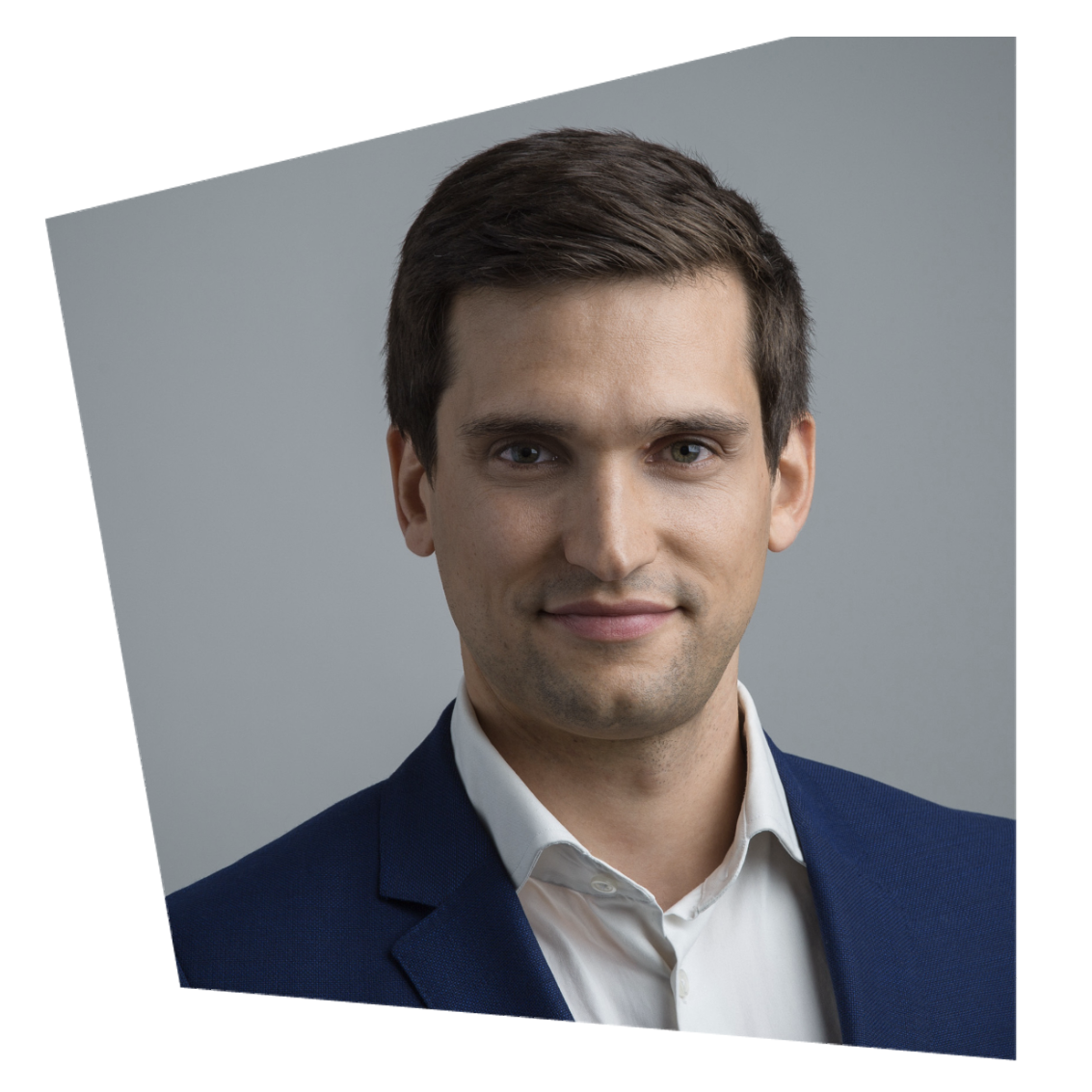
Jacek Gwizdka is an Associate Professor and Director of the Information eXperience Lab at the University of Texas at Austin's School of Information (iSchool). His research focuses on human-computer interaction, cognitive psychology applied to information retrieval, and neuro-physiological methods to assess cognitive processes during information search. He holds a PhD in Industrial Engineering from the University of Toronto and has held academic roles since 2005, including visiting appointments at Rutgers University and the University of Toronto. Affiliations: ACM Senior Member, ASIS&T Distinguished Member Key Projects: NeuroIS initiatives, health misinformation research, eye-tracking and EEG studies Research Interests: Cognitive load measurement, implicit assessment of information relevance, and neuro-physiological tools for studying human-information interaction. Active in conference organization (CHIIR, SIGIR) and editorial roles (Interacting with Computers). Recent Awards: Distinguished Fellow of the Kosciuszko Foundation, 2025 h-index=42 (Google Scholar). Grants: Google Faculty Award (2020), UT VPR grant on health search behavior & cognitive impairment. Supervises research in areas like generative AI, EEG-text bridging, and health misinformation correction. Labs/Teams: Information eXperience Lab, collaborations with UT’s Communication Sciences & Nursing departments on health search studies.
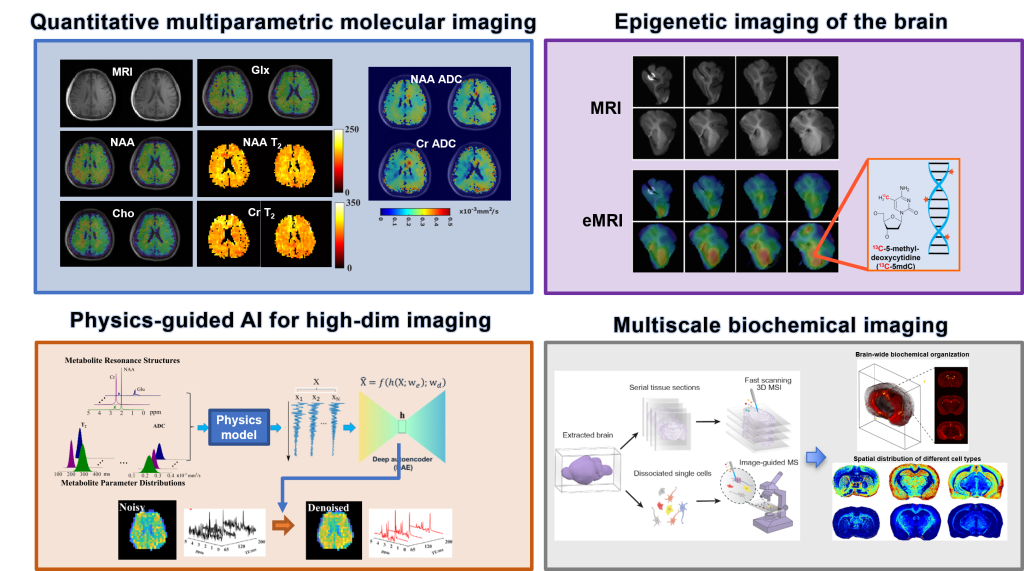
Fan Lam is an Associate Professor in the Department of Bioengineering at the University of Illinois Urbana-Champaign (UIUC), affiliated with the Grainger College of Engineering. He also directs the MS in Biomedical Image Computing (MS-BIC) program. His primary research focuses on developing advanced imaging techniques such as biomedical imaging, MRI, molecular imaging, and image reconstruction to study brain function and diseases. Lam holds a Ph.D. in Electrical and Computer Engineering from UIUC (2015), an M.S. in the same field from UIUC (2011), and a B.S. in Biomedical Engineering from Tsinghua University (2008). He is affiliated with multiple institutes, including the Carle-Illinois College of Medicine, the Carl R. Woese Institute for Genomic Biology, and the Beckman Institute for Advanced Science and Technology. Lam serves as a journal editor for Frontiers in Physics , Medical Physics , and IEEE Transactions on Medical Imaging . His work bridges engineering and neuroscience, with grants from NIH and other agencies supporting Alzheimer’s research and imaging innovations. Research highlights include epigenetic MRI, high-resolution volumetric MRI, and integrating AI with imaging methods. Lam’s team collaborates across disciplines to address challenges in medical imaging and brain mapping. His lab, the Quantitative Multiscale Imaging Group, develops tools for molecular and biochemical analysis of the brain.
Sezer Karaoglu is a Lecturer and part-time postdoctoral researcher at the Computer Vision Group, Informatics Institute, University of Amsterdam. He is also the CTO and Co-Founder of 3DUniversum, a technology spin-off of the University of Amsterdam that provides state-of-the-art 2D/3D computer vision solutions. Additionally, he has co-founded other startups including Scanm and 3DHealthScan. Dr. Karaoglu received his PhD from the Computer Vision Group, Informatics Institute, University of Amsterdam, with research funded by the COMMIT project. His educational background includes a double master's degree: an optics, image and vision master's degree from University Jean Monnet in France and a media technology master's degree from Gjovik University College in Norway. He completed his undergraduate studies with honors at Istanbul Technical University in Telecommunication Engineering. His research focuses on Artificial Intelligence and 3D Computer Vision, with specific interests in SLAM, re-localization, 3D reconstruction, 3D object detection and segmentation, synthetic media, generative AI, deep fake creation and detection, and VR/AR technologies. His work has significant applications in healthcare, particularly in using deepfake technology for therapy for victims of sexual violence-related PTSD and moral injury, as documented in a Frontiers in Psychiatry article. Analyzing his recent publications reveals a strong trend toward neural scene reconstruction, intrinsic image decomposition, and the application of diffusion models to computer vision problems. His research increasingly integrates 3D scene understanding with language models, as evidenced by his work on language-to-3D scene generation. The applications span from healthcare (deeptherapy.ai) to media authenticity (deepfake detection) and industrial applications. ICT.OPEN Poster Award (3rd Position), Oct'13 Pascal VOC'12 Classification challenge, 2nd Position, Sep'12 Pascal VOC'12 Detection challenge, 3rd Position, Sep'12 Best project award at Nokia and CIMET project competition Outstanding reviewer at CVPR'21 PROVADA Future Startup Battle winner Best Dutch AI startup by Valuer Dr. Karaoglu has supervised numerous PhD, Master's, and Bachelor's students, demonstrating his commitment to academic mentorship. His research has attracted significant media attention, with features on Dutch national TV programs including NPO, VPRO, RTL, and international outlets like BBC News. He has received research funding through the COMMIT project during his PhD studies and has successfully translated his research into commercial applications through his startups. His work on deepfake technology has been applied in innovative therapeutic contexts through DeepTherapy.ai, showing the real-world impact of his research. Dr. Karaoglu leads research efforts at the Computer Vision Group Amsterdam and through his company 3DUniversum, which has developed applications like weScan, DeepTherapy, and FairFake.ai. His team collaborates with various institutions including the Netherlands Film Academy for grief therapy applications using deepfake technology. The DeepTherapy project represents a particularly impactful application of his work, using deepfake technology to help victims of sexual violence confront perpetrators in therapeutic settings.
Malihe Alikhani is an Assistant Professor at Khoury College of Computer Sciences , Northeastern University , a Visiting Fellow at the Brookings Institution specializing in AI policy, and serves as the Ethics Chair of the Association for Computational Linguistics . She is also a member of the Northeastern Ethics Institute . Her research focuses on developing AI systems that enhance communication, decision-making, and knowledge-sharing through rigorous integration of cognitive and social sciences with machine learning. Her work spans academic, policy, and applied research domains, emphasizing contextual AI systems. She leads the Contextual AI Lab , which develops models capturing human interpretation to support collaborative meaning construction between humans and machines. Her recent publications address uncertainty modeling in dialogue systems, bias mitigation in sign language processing, and ethical AI frameworks. Key contributions include: Advancing sign language understanding in NLP Developing uncertainty-aware dialogue systems Creating discourse-coherent task-oriented dialogue frameworks Formalizing equity in text generation Scientific Awards: Best Theme Paper Award (ACL 2021) Best Paper Award (UAI 2022) She mentors students and researchers in areas spanning sign language processing, dialogue systems, and ethical AI. Her lab collaborates with Deaf and Hard-of-Hearing communities and cognitive science experts to ensure inclusive AI development.
Matt Brehmer is an Assistant Professor at the University of Waterloo's School of Computer Science, specializing in Human-Computer Interaction (HCI) and Data Visualization. He directs the ubietous Information Experiences research group. Previously, he was a Lead Researcher at Tableau and part of the EPIC HCI group at Microsoft Research. His work emphasizes novel methods for data communication and collaboration, particularly in spatial computing and multimodal interaction. Research interests include data visualization design, mobile visualization, and expressive storytelling through timelines and dynamic interfaces. He has contributed to tools like Timeline Storyteller and Charticulator, focusing on user-centered design and accessibility. His awards include the IEEE VIS Test of Time Award (2023) and Best Paper Honorable Mentions at ACM UIST and IEEE VIS. Brehmer actively serves on program committees for IEEE VIS, CHI, and Computation + Journalism, and leads initiatives to bridge academic research with industry needs. His recent work explores gesture-aware augmented reality for remote presentations, emoji-based data visualization, and flexible timeline authoring. Brehmer collaborates with institutions globally, including organizing workshops on multimodal data communication and contributing to visualization standards through IEEE.
Dr. Tao (Kevin) Huang is a researcher at James Cook University's College of Science and Engineering, with expertise spanning autonomous driving, wireless communication systems, and medical imaging applications. His work integrates machine learning, sensor fusion, and multimodal data analysis to address complex challenges in vehicular networks, environmental monitoring, and healthcare technology. Research Interests: Dr. Huang's research focuses on Autonomous driving perception systems IoT-enabled vehicular networks AI for medical diagnostics and environmental sensing Signal processing and privacy-preserving communication protocols Recent Publications: His 2025 work emphasizes advancements in V2X cooperative perception, radar-LiDAR-camera fusion, and diffusion models for medical imaging. Key trends include cross-modal robustness, real-time processing for autonomous systems, and AI applications in sustainability.
Dr. Iulia Ionescu is a Senior Lecturer and Programme Director for Creative Computing and Robotics postgraduate courses at UAL's Creative Computing Institute, with additional Visiting Senior Lecturer appointments at Royal College of Art and Imperial College London. She holds a Microsoft-sponsored PhD in AI design from RCA, complemented by an MA in Design (RCA), MSc in Mechanical Engineering (Imperial College), and BArch (Nottingham University). Her interdisciplinary research examines social phenomena in algorithmic societies, focusing on co-construction of meaning in human-AI interaction and anthropomorphism in technology design. Core interests include technology-mediated social dynamics, perceptual interfaces, and ethical implications of autonomous systems. Recent publications demonstrate consistent focus on human-centered technology design across robotics, linguistics, and interaction paradigms, with emerging patterns in embodied cognition and generative systems. Teaching includes course leadership for MA/MSc Creative Computing and development of 'Methods 1: Creative Computing Research Methods' curriculum.
Timothy Verstynen is a Professor of Psychology and Neuroscience Institute at Carnegie Mellon University, affiliated with the Dietrich College of Humanities and Social Sciences. His research focuses on cognitive neuroscience, cognitive science, computational modeling, and learning science. He investigates how neural pathways regulate action planning, skill learning dynamics, and structure-function relationships in the brain. His work integrates psychophysics, computational models, and neuroimaging techniques (fMRI, TMS, diffusion imaging). Key research themes include: 1) Action selection and stopping mechanisms under sensory input; 2) Neurobiological bases of skill acquisition timelines; 3) White matter architecture's role in cognitive functions. Recent studies explore links between brain structure, cardiovascular health, and decision-making processes using multimodal imaging and machine learning. Notable publications address cortico-basal ganglia-thalamic circuits' role in decision policies, stress-brain connectivity, and reward-based learning. His CoAx Lab develops tools like CBGTPy for modeling decision-making systems. Research spans neuroimaging methodological advancements (e.g., local connectome fingerprinting) and translational health neuroscience projects.
John Guttag is the Dugald C. Jackson Professor in Electrical Engineering and Computer Science at MIT. His work focuses on AI-driven healthcare solutions, biomedical systems, and advanced computer vision applications. He leads research in medical image analysis, machine learning reliability, and healthcare equity. Guttag's contributions include innovative frameworks like MultiMorph and Scale-Space Hypernetworks, addressing challenges in medical imaging and clinical decision-making. Affiliations: MIT Electrical Engineering & Computer Science Department (EECS) Research emphasizes AI for healthcare, particularly in segmentation, predictive analytics, and ethical algorithm design. Notable projects include real-time fraud detection systems and studies on racial disparities in clinical risk scores. His work bridges computer science with clinical practice through tools like Voxelmorph for medical image registration and ScribblePrompt for interactive biomedical segmentation. Recent publications highlight advancements in uncertainty-aware AI, contrastive learning, and scalable medical data processing. Guttag’s methodologies prioritize practical clinical applications, aiming to improve diagnostics and healthcare workflows. His lab develops open-source tools and frameworks that enhance accessibility to advanced medical imaging technologies.
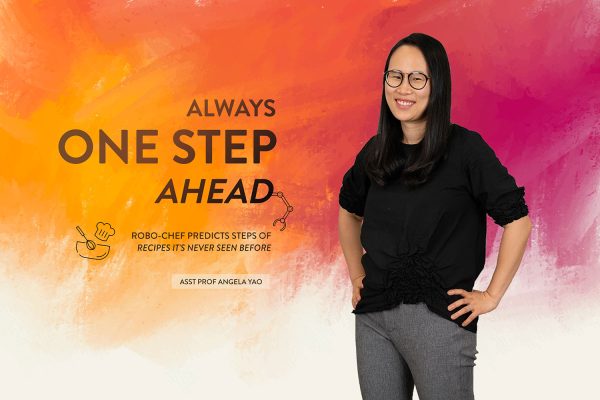
Angela Yao is a Dean's Chair Associate Professor and Assistant Dean of Research at the National University of Singapore's School of Computing, Department of Computer Science. She leads the Computer Vision and Machine Learning Group and specializes in visual perception of people, focusing on both high-level semantics of human actions and lower-level physical modeling. Her research interests span Computer Vision , Machine Learning , and Artificial Intelligence , with specific expertise in human action recognition, 3D human modeling, video understanding, and small data AI. Dr. Yao's work bridges theoretical advances with practical applications, particularly in activity anticipation and human-computer interaction. Dr. Yao's publication trends reveal a strong focus on zero-shot learning for activity anticipation, 3D human modeling, and techniques for working with limited training data. Her research has evolved from foundational work in 3D pose estimation to more recent innovations in diffusion models and cross-modal learning, demonstrating consistent contributions to advancing computer vision capabilities. NRF Fellowship for Artificial Intelligence (2019) German Pattern Recognition (DAGM) Award (2018) Dr. Yao has successfully mentored PhD students including Fadime Sener and secured significant research funding including the NRF Fellowship. Her research group focuses on developing AI systems capable of understanding and anticipating human activities with applications in robotics and human-computer interaction. She teaches CS4243 Computer Vision and Pattern Recognition and leads the Computer Vision and Machine Learning Group at NUS Computing.
Hao-Wen Dong is an Assistant Professor in the Department of Performing Arts Technology at the University of Michigan, with an affiliation to the Computer Science and Engineering Department. His research focuses on Human-Centered Generative AI for content creation, emphasizing music, audio, and video domains. He holds a Ph.D. in Computer Science from UCSD, advised by Julian McAuley and Taylor Berg-Kirkpatrick. Affiliations: University of Michigan (Primary), UCSD (Ph.D.), National Taiwan University (B.S.) Research Pillars: Generative AI models for new domains, AI-assisted creative tools, and multimodal content creation His work spans music generation (e.g., MuseGAN), audio synthesis (e.g., ViolinDiff), and multimodal systems (e.g., TeaserGen). He has led over 25+ publications in top venues like ISMIR, ICASSP, and ICLR. He advises students in interdisciplinary projects and teaches courses on AI Music and Generative AI for Music/Audio Creation. Notable awards include the Doctoral Award for Excellence in Research (2024) and Rising Stars in AI (2024).
Dr Miao Xu is a Research Fellow at the University of Queensland (UQ), affiliated with the School of Electrical Engineering and Computer Science within the Faculty of Engineering, Architecture and Information Technology. She holds an Australian Research Council DECRA Fellowship (ARC DECRA), recognizing her early-career research excellence. Her research focuses on machine learning, data science, and time series analysis, with applications in healthcare, materials science, and algorithmic fairness. Dr Xu's work addresses challenges in noisy label handling, unlearning mechanisms, and adaptive modeling for irregular data. Education: She earned a Doctor of Philosophy (PhD) from Nanjing University. She is actively involved in supervising research and contributes to the Centre for Enterprise AI at UQ. Research Interests: Dr Xu’s expertise spans machine learning , time series analysis , deep learning , and unsupervised learning . Her recent work emphasizes robust learning with noisy or incomplete labels, model unlearning, and applications in alloy design and medical informatics. She explores methods like instance-attention GNNs for irregular time series and confidence-guided techniques for adversarial attack detection. Publications: Her recent work includes advancements in GNN-based time series modeling, bias mitigation in text classification, and active learning for alloy design. Key themes include improving generalization, reducing algorithmic bias, and enhancing model transparency. Awards: Her ARC DECRA fellowship (202X–202X) supports her research on data-driven methodologies. Supervision & Grants: Available for PhD supervision in machine learning and data science. Her grants include funding for projects in unlearning mechanisms and spatiotemporal modeling. Labs/Teams: Affiliated with the Centre for Enterprise AI at UQ, collaborating on enterprise-scale AI applications and interdisciplinary research.
Raquel Coelho is an Assistant Professor at the University of Pittsburgh's School of Computing and Information (SCI) and a Research Scientist at the Learning Research and Development Center (LRDC). She holds a PhD in Learning Sciences and Technology Design from Stanford University, with a focus on human-centered applications of emerging technologies in learning environments. Her joint appointments include senior researcher roles at the University of Bergen's SLATE and Columbia University's TLTL, alongside her founding role in Learning Sciences Brazil Affiliate. Education: PhD in Learning Sciences and Education Data Science (Stanford University), postdoctoral research at University College London and University of Bergen, and teaching at University of Nottingham's Learning Sciences Research Institute. Research Interests: Proleptic thinking in technology design, leveraging future-oriented frameworks to shape present-day educational systems. Focus areas include AI ethics in education, data visualization for learning, and culturally responsive pedagogical practices. Her lab, ProlepSys, emphasizes 'prolepsis'—imagining future possibilities to guide current design decisions—integrating human-machine collaboration for developmental advancements. Teaching Philosophy: Project-based, ungraded doctoral and undergraduate courses emphasizing design thinking, critical discourse, and practical research skills. Courses include INFSCI 3350 (Learning Sciences & Technology Design) and INFSCI 0410 (Human-Centered Systems Design). Lab & Collaborations: ProlepSys lab members include Cassandra Kelley (project coordinator) and undergrad researchers (Eliza Callahan, Erick Makita, etc.). The lab prioritizes equitable technology integration, avoiding 'lock-ins,' and maintaining human agency through design principles like 'use is design' (Pea) and Bruner's 'back and forward between possible and actual.'
Andreas Hein is an Assistant Professor of IT Management at the University of St. Gallen's Institute of Information Systems and Digital Business (IWI-HSG). His research focuses on digital services, AI literacy, conversational agents, and ethical design in education and business contexts. He holds a PhD (summa cum laude) from the University of Kassel and has led projects funded by SNSF and Innosuisse. Hein is an AIS Distinguished Member Cum Laude and has received numerous awards for research and academic service, including the AIS Best Conference Paper Award (2024) and Best Paper Awards at DESRIST (2023) and HICSS (2020). His work bridges design science and interdisciplinary collaboration, addressing topics like privacy nudges, gamification in learning, and lawful technology development. Hein actively contributes to academic communities, serving as associate editor for ECIS, ICIS, and AOM divisions, and has organized conferences like the Wirtschaftsinformatik-Nachwuchs-Treffen 2023. His teaching spans undergraduate to graduate levels, emphasizing data-driven service innovation and research practices. Hein's research has been published in top journals (ISR, JAIS, EJIS) and frequently recognized for innovation and impact. Education: PhD in Business Information Systems (Kassel University, 2018), Master of Arts in Communication Management, Diplom in Economic Sciences (Kassel University). Key Achievements: Over €2.2m in third-party funding, 60+ co-authors, and impactful contributions to digital education and AI ethics. His work on privacy nudges and conversational agents has been featured in leading conferences and journals.
Dorsa Sadigh is an Associate Professor of Computer Science and Electrical Engineering at Stanford University, and a Senior Fellow at the Stanford Institute for Human-Centered AI. Her work focuses on advancing robotics , particularly in areas such as human-robot collaboration , reinforcement learning , and vision-language models . She explores how robots can learn from human demonstrations, adapt to dynamic environments, and safely interact with humans in caregiving and assistive tasks. Her research interests span autonomous systems , improving robot generalization , and foundation models for robotics . Key projects include developing policies for dexterous manipulation, proactive human-robot teamwork, and scalable data collection methods. She emphasizes ethical considerations in robotics, including perceived safety and human trust. Recent work highlights include the ProVox framework for personalized collaboration, HoMeR for mobile manipulation, and Octo —an open-source generalist robot policy. Her contributions bridge theoretical advances in AI with real-world robotic applications, leveraging large language models and vision-language integration. Dr. Sadigh’s research is funded by grants from NSF, DARPA, and industry partnerships. She collaborates with interdisciplinary teams to address challenges in assistive robotics, autonomous driving, and socially intelligent AI systems.