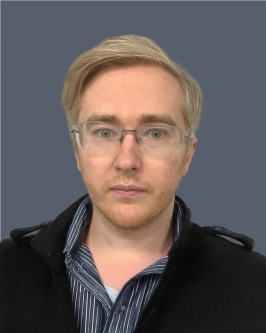
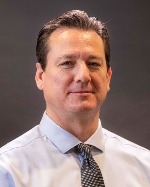
Kaixuan Chen is a Researcher at the Department of Computer Science within The Technical Faculty of IT and Design at Aalborg University , Denmark. His work focuses on AI-driven systems for human activity recognition, trajectory analysis, and deep learning optimization. Research Interests: Chen's research spans Artificial Intelligence , Deep Learning , and Data Engineering . Key areas include Knowledge Graph Embedding , Neural Signal Processing , and Context-aware Spatial Crowdsourcing . Recent Publications demonstrate expertise in contrastive learning , BCI systems , and automated design of lightweight AI models . His work integrates multimodal data for superior performance in dynamic environments. Collaborations include international partnerships in AI and energy systems. Supervised 1 PhD student and contributed to 15+ publications since 2018.
Professor Julie Wall is a faculty member at the University of West London, serving as Professor of AI and Advanced Computing in the School of Computing and Engineering. She is actively engaged in research, teaching, and professional service, including her role as an expert at the British Standards Institution (BSI) in the domain of artificial intelligence. Research Interests: Julie Wall's research is centered on the design and application of intelligent systems for processing and modeling temporal data, particularly in speech and language. She leverages neural network architectures—ranging from biologically inspired models to computationally efficient deep learning systems—to analyze diverse data types such as audio, video, images, tabular data, and 3D features. Her work extends to developing production-grade deep learning and natural language understanding systems for immersive environments like virtual and augmented reality. Publications and Research Trends: Her body of work, comprising over 50 high-quality papers and multiple patents, reflects a strong trajectory in AI systems that integrate multimodal data with temporal dynamics. The research spans core areas of machine learning, natural language processing, and applied AI, with increasing focus on real-world deployment, efficiency, and intelligent interaction in extended reality platforms. Scientific Awards: US Patent UK Patent Advising and Grants: Julie Wall supervises research students across disciplines including forensic science and artificial intelligence. She contributes extensively to academic programs, teaching courses such as BSc and MSc in Computer Science, Artificial Intelligence, Data Science, and specialized AI programs in cybercrime and criminal justice. While specific grant details are not listed, her patent holdings and publication volume suggest sustained research funding and project leadership. Labs and Teams: As a leading researcher in AI and advanced computing, she is likely involved in or leads research groups focused on intelligent systems, deep learning, and multimodal AI at the University of West London, though specific lab names are not mentioned in the text.
Pari Delir Haghighi is a Senior Lecturer in the Department of Human Centred Computing at Monash University's Faculty of Information Technology. She holds a PhD in Computing (2010) and a Bachelor of Computer Science (Honours) from Monash University (2004). Her research focuses on ubiquitous computing, context-aware systems, mobile health, and AI-driven decision support. She has pioneered solutions for chronic disease management, emergency response systems, and healthcare data integration. Notable projects include developing the DO4MG ontology for emergency management, AI-powered construction safety systems, and mobile interventions for eating disorders. She has led 13 research projects, including collaborations on digital health, safety engineering, and body image interventions. Her work aligns with UN Sustainable Development Goals related to health and education. Teaching contributions include awards for Honours supervision (2014) and student learning excellence (2020). She teaches courses such as Mobile and Distributed Computing Systems and Systems Analysis and Design. Pari actively organizes conferences like the International Conference on Advances in Mobile Computing and Multimedia. Her lab, the Data Visualisation and Immersive Analytics Research Lab, explores innovative visualisation techniques. Current research emphasizes culturally inclusive digital health interventions, LLM auditing for harmful content detection, and IoT middleware benchmarking. She advises on interdisciplinary projects, fostering collaboration between IT and healthcare sectors.
Renan Guarese is a Postdoctoral Researcher in Human-Computer Interaction at KTH Royal Institute of Technology , Sweden, focusing on AR/VR applications for pharmaceutical manufacturing through the SMART Industry project with AstraZeneca. He holds a Ph.D. from RMIT (Australia) and M.Sc. from UFRGS (Brazil), with expertise in assistive technologies, situated data visualization, and accessibility. His roles include teaching assistant for courses like Advanced Graphics and Multimodal Interaction, and M.Sc. thesis supervision. He has over 10 years of academic experience across institutions like RMIT, Halmstad University, and UFRGS, with projects ranging from assistive AR for visually impaired individuals to educational AR platforms. Research Interests: Human-Computer Interaction (HCI), Augmented and Virtual Reality (AR/VR), assistive technologies, situated visualization, and accessibility design. He specializes in applications like sonified AR interfaces, industrial training, and empathy-building experiences for marginalized users. Awards: Best Doctoral Thesis (SVR 2024) Finalist, Cross-Reality Systems Competition (IEEE ISMAR 2023) Nomination for Best Paper Award (IEEE VR 2023) Latin American PhD Scholarship (ATN grant) Advising & Grants: Supervising 3 current M.Sc. theses (2025) and co-authoring grants focused on conversational AI in industrial training and predictive maintenance. His work bridges HCI with real-world industry needs, emphasizing accessibility and immersive solutions. Labs/Teams: Active in KTH's Digital Futures initiative and collaborates with AstraZeneca on pharmaceutical AR/VR applications. Engages in international conferences like IEEE VR, ISMAR, and CHI through peer reviewing, workshop organizing, and panel participation.
Roberto Javier López Sastre is an Associate Professor of Signal Theory and Communications at the University of Alcalá. He holds a Ph.D. from the same institution (2010), focusing on 'Visual vocabularies for category-level object recognition' under Dr. Saturnino Maldonado Bascón's supervision. His research spans machine learning, computer vision, robotics, and astrophysics. Key areas include Bayesian neural networks for stellar dating, semantic navigation in robotics, and AI-driven medical assistive technologies. Affiliation: Department of Signal Theory and Communications, University of Alcalá Research Group: GRAM (Multisensorial Recognition and Analysis Group) His work interfaces computational methods with real-world applications, such as assistive robotics for neurodevelopmental disorder patients and deep learning models for astrophysical parameter estimation. Recent contributions include semantic segmentation-driven navigation systems and Bayesian approaches to black hole solutions. Publications emphasize interdisciplinary applications of AI, including live video processing, continual learning frameworks, and physics-informed neural networks. Ongoing research explores the intersection of robotics, healthcare, and astrophysics through collaborative projects. López Sastre's GRAM group focuses on multisensory data analysis for recognition and navigation challenges. His technical expertise spans signal processing, probabilistic modeling, and embedded AI systems.
Prof. Dr. Boris Jutzi is a leading academic in photogrammetry and remote sensing, currently serving as Professor at Karlsruhe Institute of Technology (KIT) and acting head of the Chair of Photogrammetry and Remote Sensing at Technical University of Munich (TUM). His research focuses on active optical sensors, computer vision, laser scanning, and 3D reconstruction techniques. He holds a diploma in electrical engineering from University of Kaiserslautern, a PhD from TUM, and venia legendi from KIT. Affiliations: KIT Institute of Photogrammetry and Remote Sensing, TUM Chair of Photogrammetry and Remote Sensing Education: Diploma in Electrical Engineering (University of Kaiserslautern) Doctorate (TUM) Venia Legendi (KIT) His research interests include: Neural Radiance Fields (NeRF) for 3D reconstruction LiDAR technology and applications UAV-based remote sensing Geospatial data fusion Computer vision in environmental monitoring Awards: Faculty Teaching Award (2020) Best Paper Awards (2019, 2016, 2014, 2006) His work emphasizes novel sensor integration and automated scene analysis , with contributions to urban and environmental 3D modeling. Current projects include underwater scene reconstruction via NeRFs and large-scale digital twin datasets (e.g., TUM2TWIN).
Associate Professor Javid Atai is affiliated with the School of Electrical and Computer Engineering at the University of Sydney. His expertise lies in fiber-optics and photonics engineering, with a focus on Bragg gratings, nonlinear optics, and optical solitons. He holds a BSc (Hons.) from the University of Western Australia and a Ph.D. from the Australian National University. Research interests include the dynamics of solitons in Bragg gratings, nonlinear wave propagation, and advanced optical fiber technologies. His work spans applications in optical networks, biosensors, and terahertz wave propagation. Key contributions include studies on soliton stability, format conversion using fiber Bragg gratings, and plasmonic biosensors. He has led grants such as the 2012 Biomedical Devices project and contributed to the 2009 Advanced Facility for Optical Fibre Technologies.
Dr. Alan William Dougherty is a Lecturer at the School of Computing and Data Science, University of Hong Kong. He holds an MEng in Electronic Engineering from King’s College London (2013) and a PhD from Hong Kong Polytechnic University (2019), where he received the prestigious Hong Kong PhD Fellowship. His professional background includes engineering roles in compiler design for edge AI on FPGAs, autonomous robotic systems, and computer vision applications such as human emotion classification and 3D mesh generation from single images. Affiliations: School of Computing and Data Science (HKU) Research Interests: Computer Vision, Machine Learning, Medical Robotics, Edge AI, Autonomous Systems His research spans interdisciplinary areas including immersive online learning systems, human pose estimation using transformers, and computational material science for energy applications. Notable contributions include the SAILS platform for young learners and advanced catalyst discovery methodologies. He integrates practical engineering challenges with theoretical research to address real-world problems. Dr. Dougherty has been recognized for his work with awards such as the Hong Kong PhD Fellowship. His teaching philosophy emphasizes bridging theory and practice, fostering critical thinking in emerging tech fields.
Dr. Yi Lu Murphey is a Professor in the Department of Electrical and Computer Engineering at the University of Michigan-Dearborn's College of Engineering and Computer Science. She directs the Intelligent Systems Lab and holds editorial responsibilities at the Journal of Pattern Recognition. Ph.D. in Computer/Information/Control Engineering (1989) from University of Michigan M.S. in Computer Science (1983) from Wayne State University Her research focuses on machine learning applications for: Automotive diagnostics and prognostics Vehicle power management optimization Robotic vision systems Driver behavior analysis Medical data processing Recent publications demonstrate expertise in: Deep learning architectures Autonomous vehicle systems Biomedical signal processing Power electronics optimization Multimodal data fusion Intelligent transportation Scientific honors include: IEEE Fellow Major funding sources: National Science Foundation National Institutes of Health Toyota Research Institute Ford Motor Company Nissan USA Her lab develops technologies for: Driver workload estimation Pedestrian detection Personalized route prediction Vehicle context detection Electric vehicle energy management
Professor Saturnino Luz Filho is a Professor of Digital Biomarkers and Precision Medicine at the University of Edinburgh , affiliated with the Centre for Medical Informatics within the College of Medicine and Veterinary Medicine . With a background in computer science (PhD, MSc, BSc), he develops machine learning and signal processing techniques for behavioral analysis in healthcare, particularly focusing on digital biomarkers for neurodegenerative diseases. Current research spans Alzheimer's disease, speech analytics, and global health applications Created the ADReSS Challenge for standardized dementia detection Collaborates with institutions in Taiwan, Norway, and Bulgaria His recent publications emphasize speech-based diagnostics , low-cost health monitoring , and multilingual validation of biomarkers. He supervises PhD students working on cognitive robotics and communication analytics, and leads projects funded by the Sony Research Award Programme and Leverhulme Fund . Professor Luz Filho is also active in open science initiatives , healthcare AI standardization , and community-based health technology deployment. His lab's work on Active Data Representation (ADR) and VOCALDIA models has advanced scalable diagnostics in both high-income and low-income settings.
Philippe Cudré-Mauroux is a Full Professor at the University of Fribourg, Switzerland , where he leads the eXascale Infolab . He has held visiting researcher positions at MIT and Microsoft CISL , and serves on the Research Council of the Swiss National Science Foundation and the Scientific Advisory Board of the CHIST-ERA EU Research Programme . Research Interests: His work spans exascale information management , big data , AI , knowledge graphs , linked data , time series data repair , and emergent semantics . He focuses on building scalable, intelligent data systems that integrate storage, computation, and semantics. Publication Trends: His recent work emphasizes schema-aware knowledge graph completion , time series imputation and benchmarking , hardware-accelerated data systems , and large language models for data cleaning . His research bridges database systems, AI, and systems architecture, often targeting high-performance, real-world applications. Scientific Awards: ERC Consolidator Grant (2016) Google Faculty Research Award (2013) Verisign Internet Infrastructures Award (2012) Best Paper Awards at VLDB (2020), AAMAS (2019), and Swiss Data Science Conference (2020) EPFL Doctorate Award and Press Mention (2007) Best Mentor Award at ISWC (2010) Advising and Grants: He mentors a large group of researchers and students, many of whom are co-authors on his publications. He has secured significant funding, including a €2M ERC Grant and multiple Google and Amazon grants, supporting a vibrant research lab focused on next-generation data infrastructure. Labs and Teams: He leads the eXascale Infolab at the University of Fribourg, a dynamic research group actively publishing in top-tier venues and developing innovative tools for data management and AI integration.
Dr. Ahmed J. Afifi is a postdoctoral researcher specializing in Deep Learning and Computer Vision. He earned his Ph.D. (Dr.-Ing.) from Technische Universität Berlin in 2021 and currently works at Helmholtz Institute Freiberg for Resource Technology. Ph.D. in Deep Learning & Computer Vision Current Postdoctoral Researcher at Helmholtz Institute Freiberg His research focuses on 3D Object Reconstruction from single images and Medical Image Analysis , particularly retinal imaging. He has contributed to multimodal hyperspectral data analysis and sensor fusion applications. Recent publications include work on mineral classification using multi-stream neural networks (2024), 3D hyperspectral point cloud segmentation benchmarks (2023), and retinal lesion segmentation architectures (2023). Collaborations span geoscience and biomedical domains. Key research areas include: Deep Learning Applications 3D Reconstruction Techniques Hyperspectral Imaging Systems Medical Image Processing
Bhaskaran Raman is a Professor in the Department of Computer Science and Engineering at the Indian Institute of Technology Bombay, where he leads research in networking systems with a focus on practical applications in developing regions. His work spans wireless networking, sensor systems, and mobile computing, with recent expansion into AI-assisted educational technologies. His research interests include wireless mesh networks for rural connectivity, transportation systems monitoring, mobile sensing applications, and educational technology. Notably, his lab has developed innovative solutions like Road-RFSense for traffic estimation in developing regions, FullStop for monitoring unsafe bus stopping behavior, and more recently, AI systems for automatic short answer grading with feedback. Analysis of his publication trends shows a consistent focus on practical networking challenges with strong emphasis on real-world deployment, particularly in resource-constrained environments. In recent years, he has expanded his research to include AI applications in education while maintaining his core expertise in systems research. Raman has mentored numerous graduate students who have become active researchers in networking and systems areas, with many continuing to collaborate with him on publications. His research has been supported by various grants focused on networking for developing regions and smart transportation systems. His lab at IIT Bombay focuses on building practical networking solutions with real-world impact, particularly for transportation safety and educational applications. The team combines expertise in wireless systems, mobile computing, and increasingly, artificial intelligence to address complex challenges in these domains.
Mats Erling Høvin is an Associate Professor at the University of Oslo's Department of Informatics, affiliated with the Robotics and Intelligent Systems (ROBIN) research group. His academic work focuses on generative design, CAD/CAM systems, rapid prototyping, and evolutionary robotics. Previously, he conducted significant research in Delta-Sigma noise shaping for analog-to-digital converters. Research Interests: Generative design methodologies for manufacturing Computer-Aided Design (CAD) and Computer-Aided Manufacturing (CAM) systems Rapid prototyping and additive manufacturing techniques Evolutionary algorithms applied to robotics and optimization problems Delta-Sigma modulation for analog/digital signal conversion Robotic locomotion and control systems His publications demonstrate a consistent focus on optimization techniques applied to robotics, signal processing, and manufacturing systems. Recent work explores physics-based simulations for medical robotics and generative design for structural optimization. Earlier contributions established foundations in evolutionary robotics, motion capture filtering, and analog circuit design. Høvin teaches courses including IN5590 and IN1080, and leads research in the ROBIN group focusing on intelligent systems development. His work bridges theoretical computer science with practical engineering applications in robotics and manufacturing.
Dr. Brent Harper is an Associate Professor in the Department of Physical Therapy at Crean College of Health and Behavioral Sciences, Chapman University , with over 15 years of academic and clinical experience. His work bridges clinical practice, research, and education in physical therapy, focusing on sports injury prevention, concussion assessment, and chronic ankle instability. Education: Doctor of Science (Andrews University), Doctor of Physical Therapy (Western University of Health Sciences), Master of Physical Therapy (Loma Linda University), and dual Bachelor degrees (Southern College) Research Interests revolve around: Concussion diagnostics using neurocognitive and autonomic assessments Biomechanical analysis of dynamic balance and postural control Manual therapy applications for vestibular and chronic pain conditions Technology integration in portable reaction time and gait analysis tools Publication Trends show a focus on musculoskeletal injury prediction through movement screening, sex-specific performance differences , and multimodal concussion testing . Recent work explores non-invasive neuromodulation and cost-effective diagnostic methods . Academic Contributions include: Key studies on chronic ankle instability and postural control Pioneering research using stroboscopic glasses and smartphone apps for balance assessment Critical appraisals of manual therapy efficacy and dry cupping interventions Prominent presentations at APTA , ACSM , and CPTA conferences