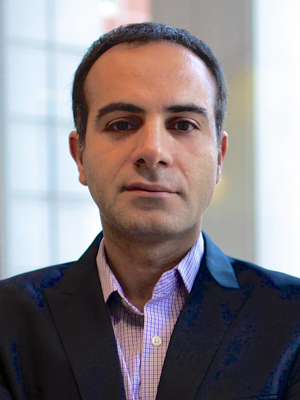
Prof. Dr. Otmar Hilliges is a Full Professor at the Department of Computer Science at ETH Zurich. He leads the AIT lab and serves as the head of the Institute of Intelligent Interactive Systems. His research focuses on spatio-temporal understanding of human movement and interaction, leveraging algorithms and representations from videos, images, and sensor data for applications in Augmented Reality (AR), Virtual Reality (VR), and Human-Robot Interaction. Education: Diplom (MSc) in Computer Science, Technical University of Munich (TUM), Germany PhD in Computer Science, Ludwig Maximilian University of Munich (LMU), Germany (2009) Research Interests: Hilliges' work spans computer vision, robotics, and human-computer interaction. He develops methods for 3D human pose estimation, generative models for realistic avatar creation, and physically plausible simulation of human-object interactions. His research emphasizes practical applications in AR/VR and assistive robotics, aiming to bridge the gap between perception and action. Grants & Contributions: ERC Consolidator Grant (2022-2027): 'AI-Perceive: Robust Human-Centric Computer Vision for Advanced AI-Agents' Google Research Agreement (2020-2025): 'Generative Modelling of Humans' Microsoft Research Grants: Focus on human-centric robotics and interactive technologies Labs & Teams: Leads the AIT Lab at ETH Zurich, which pioneers research in intelligent interactive systems, emphasizing human-centric AI and robotics. The lab collaborates on projects ranging from drone cinematography to haptic feedback systems.
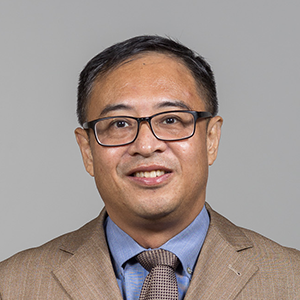
Professor Winston Hsu is a distinguished faculty member in the Department of Computer Science and Information Engineering at National Taiwan University, where he has served as a full professor since 2015. He is the co-director of the Communications and Multimedia Laboratory (CMLab) and founder of the MiRA (Multimedia indexing, Retrieval, and Analysis) research group. Additionally, he serves as the Founding Director for NVIDIA AI Lab at NTU, the first such lab in Asia. Professor Hsu received his Ph.D. in Electrical Engineering from Columbia University in 2007 under the supervision of Professor Shih-Fu Chang. Prior to his academic career, he was a founding engineer and research manager at CyberLink Corp., now a public image/video software company. National Taiwan University (2007-Present): Professor (2015-Present), Assistant/Associate Professor (2007-2015) MobileDrive (2021-2024): CTO and Vice President (Joint Venture between Foxconn and Stellantis) IBM TJ Watson Research Center (2016-2017): Visiting Scientist Microsoft Research Redmond (2014): Visiting Researcher Columbia University (2007): Ph.D. in Electrical Engineering Professor Hsu's research focuses on machine learning, computer vision, large-scale image and video search and recognition, and embedded AI. His work spans from fundamental research in visual recognition to practical applications in automotive systems, medical imaging, and e-commerce. He has pioneered work in disguised face recognition, low-resolution face hallucination, 3D model search, and virtual try-on systems. His current research emphasizes Embodied AI, integrating perception, action, and learning technologies for applications in automotive and robotics domains. His research group has produced numerous influential publications, particularly in top computer vision and multimedia conferences like CVPR, where they won first place in the Disguised Face Recognition competition in 2018. Their work spans diverse application areas including security, medical diagnostics, automotive systems, and e-commerce solutions, demonstrating strong translation from academic research to real-world impact. IBM Research Pat Goldberg Memorial Best Paper Award (2018) First Place, IARPA Disguised Faces in the Wild Competition (CVPR 2018) Best Brave New Idea Paper Award, ACM Multimedia 2017 NVIDIA AI LAB Award (First in Asia, 2016) First Place, MSR-Bing Image Retrieval Challenge (2013) World's Top 2% Scientists (2023) Professor Hsu actively mentors students and researchers, with his group consistently recruiting PhD students, postdocs, and research assistants. He has successfully bridged academia and industry through multiple collaborations, including his role as CTO at MobileDrive (a joint venture between Foxconn and Stellantis) from 2021-2024. His research has been supported by significant industry partnerships with Microsoft, IBM, and NVIDIA, as well as government grants from Taiwan's Ministry of Science and Technology. His laboratory, the Communications and Multimedia Laboratory (CMLab), maintains strong industry connections and focuses on cutting-edge research in visual AI. The lab has produced numerous award-winning projects and maintains active collaborations with global technology companies, particularly in the automotive and consumer electronics sectors.
Professor Alexandra Birch serves as Chair of Multilingual Natural Language Processing at the Institute for Language, Cognition and Computation (ILCC) within the School of Informatics at the University of Edinburgh. She is a leading member of the StatMT group and Edinburgh Natural Language Processing group, while also co-founding and serving as Chief Scientist of Aveni.ai, a fintech company delivering GenAI solutions to the UK finance sector. Her research centers on advancing multilingual natural language processing with applications that improve people's lives. Professor Birch has made significant contributions to the paradigm shift toward neural networks and large language models in NLP, with expertise spanning multilingual and multimodal processing, ethical considerations, model explainability, and computational efficiency. Her work addresses critical challenges in making language technologies accessible across diverse linguistic contexts. Professor Birch's publication record includes over 100 peer-reviewed papers that demonstrate strong trends in multilingual machine translation, low-resource language processing, and ethical AI frameworks. Her research bridges theoretical advances with practical implementations, particularly evident in her current leadership of the FinLLM project for the financial sector. As a research leader, she has secured and directed major EU-funded projects including EuroLLM (developing a large language model for European languages), UTTER (creating a multilingual meeting assistant), and GoURMET (focusing on low-resource machine translation for media content). Her industry collaboration through Aveni.ai demonstrates successful translation of academic research into commercial applications, particularly in the financial services domain. Professor Birch maintains active leadership in both academic and industry communities, with her current work on domain-specific language models representing an important direction in adapting general-purpose LLMs to specialized professional contexts while addressing multilingual challenges.
Professor Haijiang Li is a Chair in BIM for Smart Engineering at Cardiff University's School of Engineering. His roles include leading the Computational Mechanics and Engineering AI Research Group, directing the BIM for Smart Engineering Centre, and overseeing the BIM MSc programme. He holds editorial roles for journals like Construction Innovation and Automation in Construction , and chairs the European Group of Intelligent Computing in Engineering (EG-ICE). Research focuses on smart computational engineering platforms integrating BIM, AI, and big data for sustainable infrastructure. Key areas include digital twins, disaster management, and resilient urban systems. He has secured £40M in research funding, including £9M as PI, and led over 70 research staff and students. Prof. Li is a Standards Committee Technical Executive at buildingSMART, driving international BIM standards. His work includes co-authoring a book on BIM standards across China, the US, and the UK. Awards include Fellowships from the British Computer Society (FBCS) and the Higher Education Academy (FHEA). His research outputs span over 250 publications, covering topics like AI-driven bridge maintenance, ontology-based decision-making, and energy-efficient urban systems. Collaborations with industry and global partners emphasize practical applications of BIM and smart technologies.
Mark Yatskar is an Assistant Professor in the Department of Computer and Information Science at the University of Pennsylvania. His research focuses on the intersection of natural language processing, computer vision, and fairness in machine learning. He earned his PhD from the University of Washington under advisors Luke Zettlemoyer and Ali Farhadi, and previously worked as a Young Investigator at the Allen Institute for Artificial Intelligence. Education: PhD in Computer Science, University of Washington (Advisor: Luke Zettlemoyer & Ali Farhadi) Research Interests: Yatskar's work explores how language can structure visual perception and mitigate human biases in machine learning systems. Key themes include: Natural language as a scaffold for visual intelligence Bias characterization and control in machine learning systems His lab currently investigates projects like language-guided bottlenecks, annotator cognitive heuristics, and gender bias amplification. Teaching: CIS 5300: Computational Linguistics (2021-2024) CIS 7000: Language and Vision (2020) CIS 6300: Efficient NLP (2023, 2025) Awards: Best Paper Award at EMNLP (Gender Bias Amplification Research) Advising & Grants: Yatskar advises a team of PhD/Master's students and actively seeks motivated researchers. His group has explored funding in areas like interpretable AI, multimodal reasoning, and dataset bias mitigation. Labs/Teams: Leads the Penn NLP & Vision Lab, focusing on projects like MolMo/PixMo open models, ViUniT visual unit tests, and bias mitigation frameworks.
Navid Azizan is the Alfred H. (1929) and Jean M. Hayes Career Development Assistant Professor at Massachusetts Institute of Technology (MIT), holding dual appointments in the Department of Mechanical Engineering (in Control, Instrumentation & Robotics) and the Schwarzman College of Computing's Institute for Data, Systems & Society (IDSS). He is also a Principal Investigator in the Laboratory for Information & Decision Systems (LIDS), and a faculty member of the MIT Statistics and Data Science Center, the Center for Computational Science and Engineering, and the Operations Research Center. Dr. Azizan received his PhD in Computing and Mathematical Sciences from the California Institute of Technology (Caltech) in 2020, his MSc in Electrical Engineering from the University of Southern California in 2015, and his BSc in Electrical Engineering with a minor in Physics from Sharif University of Technology in 2013. Prior to joining MIT, he completed a postdoc at Stanford University's Autonomous Systems Laboratory and was a research scientist intern at Google DeepMind. His research spans the intersection of machine learning, systems and control, mathematical optimization, and network science. Dr. Azizan's work focuses on developing principled learning and optimization algorithms for reliable intelligent systems, with applications to autonomy and sociotechnical systems. His research has significant implications for creating trustworthy AI systems that can operate effectively in complex, uncertain environments. Dr. Azizan's recent publications demonstrate a strong focus on uncertainty quantification, reliable AI systems, constrained optimization, and control-oriented learning. His work bridges theoretical foundations with practical applications, particularly in autonomous systems where safety and reliability are paramount. His research group has made notable contributions to areas including neural network verification, multi-agent reinforcement learning, and adaptive inference techniques for large language models, with several papers featured on MIT News and selected for oral presentations at top conferences. Alfred H. (1929) and Jean M. Hayes Career Development Professorship (2025-present) Frank E. Perkins Award for Excellence in Graduate Advising (2025) List of Outstanding Academic Leaders in Data from the CDO Magazine (2024, 2023) Amazon Science Hub Research Award (2023) Outstanding UROP Faculty Mentor (2023) Esther and Harold E. Edgerton (1927) Career Development Chair (2022-2025) Information Theory and Applications (ITA) Gold Graduation Award (2020) Dr. Azizan has been recognized for his excellence in graduate advising, receiving the Frank E. Perkins Award for Excellence in Graduate Advising in 2025. During the pandemic, he founded and co-organized the 'Control meets Learning' virtual seminar series, connecting researchers across disciplines. His work has attracted significant research funding from industry partners including Google, Amazon, and MathWorks, supporting both fundamental research and practical applications in reliable intelligent systems. The Azizan Lab at MIT brings together researchers from mechanical engineering, computer science, and applied mathematics to tackle challenges at the intersection of learning and control. The lab emphasizes both theoretical foundations and practical implementations, with a particular focus on developing algorithms that provide guarantees of performance and safety. Current research directions include uncertainty quantification in AI systems, constrained optimization for neural networks, and control-oriented learning for autonomous systems, with applications spanning robotics, transportation, and complex sociotechnical systems.
Fei-Fei Li is the Sequoia Capital Professor in Computer Science at Stanford University and Founding Co-Director of the Stanford Institute for Human-Centered AI (HAI). She holds courtesy appointments in the Graduate School of Business and is a Senior Fellow at HAI. Her work bridges AI research with interdisciplinary applications in healthcare, robotics, and policy. Dr. Li pioneered the ImageNet dataset, instrumental in the AI revolution, and co-founded World Labs to advance spatial intelligence and generative AI. Education: B.A. in Physics, Princeton University (1999) Ph.D. in Electrical Engineering, Caltech (2005) Doctorate (Honorary), Harvey Mudd College (2022) Research Interests: AI ethics, computer vision, robotic learning, healthcare applications, and human-AI collaboration. Her teams developed frameworks like MOMA for activity recognition and BEHAVIOR for embodied AI benchmarks. She advocates for diversity in tech and co-founded AI4All to mentor underrepresented students. Key Contributions: ImageNet and ImageNet Challenge Stanford Vision and Learning Lab (SVL) Policy advisory roles for U.S. Senate, UN Secretary-General, and California Governor Labs & Initiatives: Leads the People, AI & Robots Group (PAIR), Partnership in AI-Assisted Care (PAC), and the Human-Centered AI Institute. Her work emphasizes ethical AI deployment and societal impact. Awards: VinFuture Prize (2024), IEEE Fellow, National Academy memberships (Engineering, Medicine, Arts & Sciences), and recognition as one of Time’s AI100 Influencers.
Jeannette Bohg is an Assistant Professor of Computer Science at Stanford University, directing the Interactive Perception and Robot Learning Lab. Previously, she was a group leader at the Autonomous Motion Department (AMD) of the MPI for Intelligent Systems (2012-2017). She holds a PhD from KTH Royal Institute of Technology (Stockholm) and degrees from Chalmers University and TU Dresden. Her research focuses on perception, learning, and real-time multi-modal methods for autonomous robotic manipulation and grasping, aiming to bridge principles of human sensorimotor coordination with robotic implementation. Education: PhD in Robotics (KTH), MSc in Art & Technology (Chalmers), Diploma in Computer Science (TU Dresden) Research interests include developing goal-directed, real-time robotic systems capable of meaningful feedback for execution and learning. Key areas are dexterous manipulation, imitation learning, and cross-embodiment policy transfer. Notable contributions include the TidyBot platform and work on force-aware surgical robotics. Awards include the 2019 IEEE ICRA Best Paper Award, 2019 IEEE RA Early Career Award, and 2020 RSS Early Career Award. Her lab explores intersections of robotics, ML, and computer vision. Advising: Actively mentoring students/postdocs in manipulation, perception, and learning. Grants and collaborations span NSF, Stanford AI Lab, and industry partnerships. Future work emphasizes robust real-world deployment and human-robot collaboration. Labs/Teams: Leads the Interactive Perception and Robot Learning Lab, contributing to Stanford’s AI ecosystem. Previously managed the MPI AMD group, fostering interdisciplinary research in autonomous systems.
Shiri Azenkot is an Associate Professor at the Jacobs Technion-Cornell Institute at Cornell Tech and Cornell University, affiliated with the Information Science Department and Technion’s Computer Science Department. Her research focuses on accessibility innovations in emerging technologies, particularly addressing needs of people with vision impairments and neurodiverse populations. She holds a PhD from the University of Washington, advised by Richard Ladner and Jacob Wobbrock, and has been recognized with prestigious awards including the NSF Graduate Research Fellowship. Education: PhD in Computer Science & Engineering from University of Washington (advisors: Richard Ladner, Jacob Wobbrock). Research interests include VR/AR accessibility, assistive technology design, inclusive education tools, and ethical AI applications. Current projects explore social VR avatars for invisible disabilities, AR navigation aids, and AI moderation systems against ableist hate speech. Her work is funded by NSF, AOL, Verizon, and Facebook. Recent publications address video accessibility for ADHD users, AI-driven scene descriptions for blind users, and tactile learning materials co-designed with educators. She leads the XR Access initiative promoting inclusive virtual/augmented reality. Awards include the UW Graduate Medal (2020), NSF CRII Award (2017), and AT&T Labs Fellowship (2014). Her research bridges academic innovation with industry impact through collaborations with tech companies and disability advocacy groups.
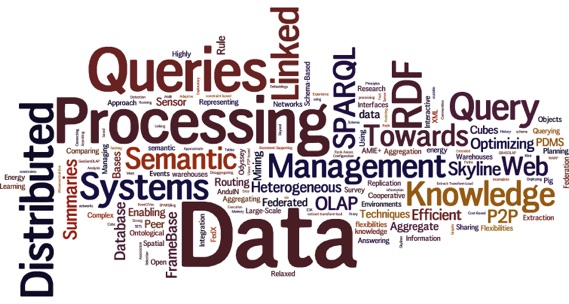
Katja Hose is a Full Professor of Data Management at TU Wien's DBAI research unit, heading the Data Management and Knowledge-Driven AI Lab. She previously held a Poul Due Jensen Foundation Professorship at Aalborg University. Her research focuses on data and knowledge engineering, including graph databases, knowledge graphs, querying, analytics, and machine learning, with interdisciplinary applications in bioscience, healthcare, and environmental assessment. Education: PhD in Computer Science (Ilmenau University of Technology, 2009), Postdoc at Max Planck Institute for Informatics (2009–2012). Academic roles include Program Co-Chair for ISWC 2024 and EDBT 2023, and editorial board membership at VLDBJ and TGDK. She leads projects like TARGET (health virtual twins) and ARMADA (data management). Research Interests: Knowledge Graphs, Semantic Web, Big Data, Machine Learning, Data Integration, and Provenance Systems. Key contributions include SHACL shape extraction, conversational data analytics, and environmental knowledge graphs. Awards include the 2025 Distinguished Meta-Reviewer Award and 2024 Manfred Paul Award. Advising and Grants: Supervised students including E. Pürmayr (Diploma Thesis 2025). Active in EU projects (TARGET, ARMADA) and grant coordination. Labs/Teams: DMKI Lab at TU Wien, collaborating with interdisciplinary teams in healthcare and environmental science.
Dr. Emily Wall is an Assistant Professor in the Department of Computer Science at Emory University, leading the CAV Lab (Cognition and Visualization). She earned her Ph.D. in Computer Science from Georgia Tech (2020) and completed a postdoctoral fellowship at Northwestern University before joining Emory. Ph.D., Computer Science, Georgia Tech (2020) Postdoctoral Researcher, Northwestern University Current: Assistant Professor, Emory University Her research focuses on enhancing human decision-making through data visualization and visual analytics by addressing cognitive limitations and biases. Key areas include metacognition promotion, computational strategies for bias mitigation, and human-AI collaboration in data analysis. She combines cognitive psychology principles with technical implementation using tools like D3.js and Tableau. Recent publications highlight her work on LLM applications in visual analytics, cognitive bias interventions, and trust calibration in AI systems. Current students like Mengyu Chen, Shiyao Li, and Zhongzheng Xu are presenting at top conferences such as CHI and IEEE VIS. She also explores educational applications through interactive visualization pedagogy and innovative assessment methods. Dr. Wall actively engages in academic service through graduate mentorship, conference judging, and diversity initiatives. Her lab emphasizes both technical proficiency and social justice implications in visualization design, reflected in course projects that merge artistic expression with data-driven storytelling.
Nima Mesgarani is an Associate Professor of Electrical Engineering at Columbia Engineering, Columbia University, affiliated with the Sense, Collect and Move Data Committee. His research bridges engineering and neuroscience through reverse-engineering neural signal processing mechanisms, leading to advancements in brain-machine interfaces, neural prosthetics, and speech processing algorithms. He received his PhD in Electrical Engineering from the University of Maryland and completed postdoctoral training at Johns Hopkins University's Center for Language and Speech Processing and UC San Francisco's Neurosurgery Department. Research Focus Professor Mesgarani's lab integrates computational neuroscience and engineering to study acoustic signal processing. Key areas include: Neural decoding of speech and auditory attention in multi-talker environments Development of brain-controlled hearing technologies Novel speech separation and synthesis algorithms inspired by cortical processing Cross-modal learning between auditory and visual systems Applications of large language models in neural signal interpretation Publication Trends Analysis of his 15 most recent articles (2025) reveals dominant themes: neural decoding techniques using intracranial EEG, brain-inspired speech separation models (e.g., Mamba architectures), applications of large language models in auditory neuroscience, cross-modal distillation methods, and clinical translation of audio processing algorithms. A strong emphasis emerges on real-time brain-computer interfaces and noise-robust speech processing. Laboratory and Collaborations Mesgarani directs an interdisciplinary lab developing neurotechnology for hearing restoration. His team collaborates with neurosurgery departments and speech processing centers, focusing on translating theoretical models into clinical brain-machine interfaces. The lab's work has yielded patents for brain-informed speech separation systems and attention-decoding frameworks.
Prof. Bernt Schiele is a Max Planck Director at the Max Planck Institute for Informatics and holds a Professorship at Saarland University. His research focuses on understanding multimodal sensor data, with key areas in computer vision, 3D object recognition, and machine learning. He leads the Computer Vision and Machine Learning group, addressing challenges in sensor fusion, scene understanding, and human activity recognition. Schiele has held academic roles at TU Darmstadt, ETH Zurich, and MIT, and contributes to top journals like IEEE Transactions on PAMI and conferences like ECCV. His work emphasizes robust models, interpretability, and domain adaptation for real-world applications. Education: PhD (1997, Grenoble), MSc (1994 Karlsruhe/1993 Grenoble) Key Positions: MIT (1997-2000), ETH Zurich (1999-2004), TU Darmstadt (2004-2010) Research interests span 3D scene understanding, multimodal sensor processing, and machine learning techniques for large-scale data. His recent work advances robust object detection, explainable AI, and domain-invariant training methods. He also chairs major conferences like ECCV 2018 and co-chairs ICCV 2011. Publications highlight innovations in interpretable vision transformers, certified explanations, and test-time adaptation. Despite no listed awards, his contributions shape foundational areas of computer vision and multimodal AI.
Danai Koutra is an Associate Professor in Computer Science and Engineering at the University of Michigan, Ann Arbor, and an Amazon Scholar. Her research focuses on large-scale graph mining, graph neural networks, and interpretable machine learning methods for understanding complex networks. Key roles include leading the GEMS Lab and contributing to projects like DeltaCon (graph similarity) and VoG (graph summarization). She holds a PhD from Carnegie Mellon University and has authored over 80 publications in top venues like KDD, SDM, and NeurIPS. Educations: PhD in Computer Science, Carnegie Mellon University (2015) MS in Computer Science, Carnegie Mellon University (2015) Diploma in Electrical & Computer Engineering, National Technical University of Athens (2010) Research Interests: Her work spans graph mining, anomaly detection, knowledge graph completion, and applications in neuroscience, healthcare, and social networks. Recent projects include MAGNET (multi-agent graph networks) and GT2VEC (multimodal graph-text encoders). Grants & Awards: Recipient of the 2025 PECASE award, NSF CAREER Award (2019), and the 2016 ACM SIGKDD Dissertation Award. Active in organizing conferences like KDD and ECML/PKDD. Labs & Teams: Directs the GEMS Lab, collaborating on projects like FIDDLE (clinical data preprocessing) and SpecGreedy (dense subgraph detection). Engages in interdisciplinary efforts, including M-DICE (urban mobility analysis with Detroit).
Zhiyong Huang is an Associate Professor at the National University of Singapore (NUS) School of Computing. He holds multiple leadership roles, including Deputy Director of the NUS Business Analytics Centre, Director of the Computing Translational Research & Development (C-TReND) Centre, and Assistant Dean (Industry Relations). He is also a Senior Principal Investigator at the NUS Chongqing Research Institute. Education: PhD in Computer Science from École Polytechnique Fédérale de Lausanne (EPFL), MEng and BEng in Computer Engineering from Tsinghua University. Leadership: Senior Member of ACM and IEEE, Pioneer Member of ACM SIGGRAPH, and Chair of the Singapore ACM SIGGRAPH Chapter. Research Interests: His work spans Data Analytics, Machine Learning, Computer Vision, Human-Robot Interaction, and Computer Graphics. Key projects include the NUS Digital Twin initiative and secure data analytics pipelines. Article Trends: Recent publications focus on time series generation, cryptocurrency benchmarks, medical image registration, and phishing detection. These works integrate machine learning, computer vision, and multimodal systems. Scientific Awards: Finalist, World Technology Summit & Awards (Entertainment, 2010) Bronze, National Science and Technology Progress Award (1992) Tsinghua 12.9 Distinguished Young Teacher Award (1989) Grants & Service: Extensive involvement in Singapore's IT Standards Committee, review panels for EDB SIIRD projects, and editorial roles. He has served as PC co-chair, local chair, and reviewer for numerous conferences and journals.