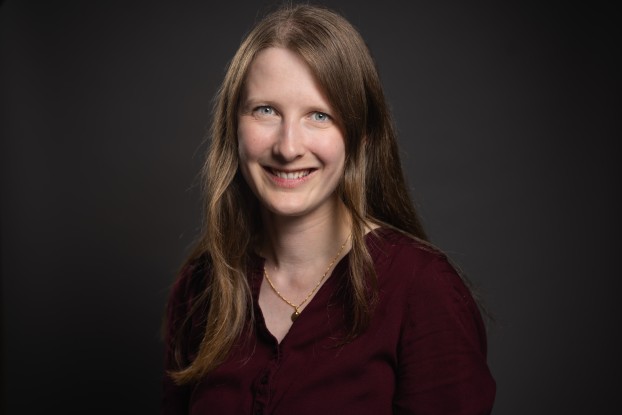
Simone Schaub-Meyer is an Assistant Professor at the Technical University of Darmstadt, affiliated with the Hessian Center for Artificial Intelligence (hessian.AI). Her research focuses on developing efficient, robust, and interpretable methods for image and video analysis, particularly in neural networks and explainable AI. She leads her own research group, funded by the DFG Emmy Noether Programme, and previously held postdoctoral positions at TU Darmstadt’s Visual Inference Lab and ETH Zurich’s Media Technology Center. Her doctoral work at ETH Zurich, advised by Prof. Markus Gross, earned the ETH Medal for contributions to motion representation and video frame interpolation. Education : Doctoral Degree in Computer Science, ETH Zurich (2016-2020) Collaboration with Disney Research Zurich Research Interests : Her work bridges theoretical advancements and practical applications in computer vision, including interpretable neural networks , video frame interpolation , style transfer , and explainable AI . She emphasizes creating algorithms that are both high-performing and transparent, ensuring trustworthiness in critical applications. Publications : Her recent work explores object-centric learning (CVPR 2025), attribution quality benchmarks (NeurIPS 2024), and synthetic dataset design (ICCV 2023). These contributions highlight her focus on advancing both technical performance and interpretability. Awards & Grants : Emmy Noether Programme (ENP) Fellowship, DFG (2024) ETH Medal for Doctoral Thesis (2020) Advising & Grants : As group leader, she oversees research in interpretable AI and video analysis. Her Emmy Noether grant supports foundational work in dense image/video analysis. Labs & Teams : She directs her own research group at TU Darmstadt and collaborates with the Visual Inference Lab. Her team contributes to open-source tools and benchmarks like the FunnyBirds dataset.
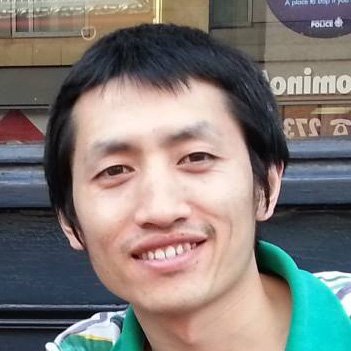
Dr. Jingjing Deng is an academic member of the Department of Computer Science at Swansea University since 2018. His research focuses on machine learning and artificial intelligence, spanning theoretical foundations to practical biomedical applications. He is affiliated with the Computer Vision and Machine Learning group (CSVision) and contributes to interdisciplinary projects. Key research areas include federated learning, medical image processing, graph neural networks, and AI-driven biomedical solutions. Recent work emphasizes secure federated learning frameworks, 3D medical image compression, and directed graph CNNs for fault detection. His contributions bridge theory and application, addressing challenges in healthcare and computer vision. Publications highlight innovations in federated learning vulnerabilities (GRNN attack), medical imaging compression (MedZip), and temporal link prediction. Supervised PhD topics include federated learning leakage defense and graph-based deep learning. Collaborations span academia and industry, with a focus on practical AI implementations. Participates in the School of Mathematics and Computer Science at Swansea, contributing to teaching and research leadership in AI and computational methods.
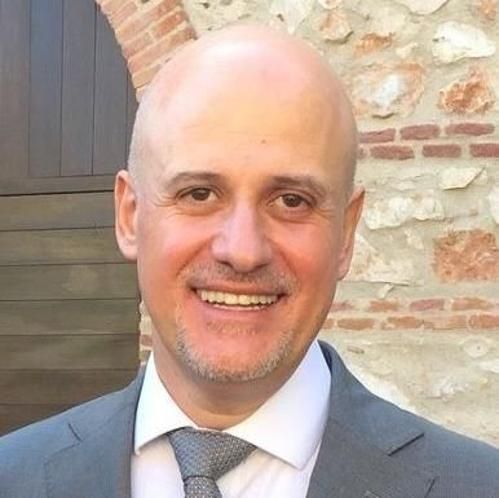
Luis Miguel Bergasa Pascual is a Professor specializing in autonomous driving, robotics, and artificial intelligence. His work focuses on bridging simulation-to-reality gaps for autonomous systems, with particular emphasis on control algorithms, motion prediction, and V2X communication integration. His research spans Reinforcement Learning , Semantic Segmentation , and Hybrid Decision-Making Systems to enhance autonomous navigation in complex urban scenarios. Recent projects explore ROS-based modular architectures and social behavior modeling for vehicle motion prediction. Publications reveal a strong focus on Computer Vision , Intelligent Transportation Systems , and Simulation Testing , particularly using the CARLA simulator. Key trends include multimodal sensor fusion, synthetic data training, and safety validation protocols. While specific awards and students are not listed, his contributions to point cloud segmentation , deep learning control systems , and collaborative planning highlight his role in advancing autonomous vehicle technologies.
David Fuentes Jiménez is a Researcher at the Department of Electronics, Universidad de Alcalá, Spain. He is affiliated with the GEINTRA research group focusing on Electronic Engineering applied to Intelligent Spaces and Transport. His doctoral thesis (2021) explored deformable object reconstruction using deep learning techniques, supervised by Dr. Daniel Pizarro Pérez. His research spans computer vision, biomedical signal processing, and smart environments. Key research interests include neural radiance fields in surgery, photoplethysmographic signal dynamics for physiological assessment, and real-time action recognition using depth data. He has contributed to EU projects like GEMS through sensory module development (Ruby). His work integrates deep learning with 3D reconstruction, wearable sensors, and overhead camera systems. Publications highlight innovation in medical imaging, stress detection via PPG signals, and robust people detection algorithms. His work frequently appears in top venues, showcasing interdisciplinary approaches between computer science, biomedical engineering, and robotics. Active in open datasets like GOTPD1, he bridges theory and practical applications in smart spaces and healthcare technology. Education: PhD in Electronics Engineering (2021), Universidad de Alcalá Labs/Teams: GEINTRA Group
Javier Macías Guarasa is an Associate Professor in the Department of Electronics at the University of Alcalá. His primary research focuses on intelligent systems for infrastructure monitoring, human activity analysis, and acoustic/sensor-based surveillance. He leads the GEINTRA research group dedicated to applications in smart spaces and transportation. He earned his PhD from the Universidad Politécnica de Madrid with a thesis on speech recognition architectures. His work integrates machine learning, fiber optics, and sensor networks to address challenges in pipeline integrity, environmental sustainability education, and assistive technologies. Key research areas include distributed acoustic sensing in optical fibers, automated evaluation of human functional limitations, and hybrid models for threat detection. His recent projects emphasize real-world deployments of smart surveillance systems and educational analytics. Publications highlight advancements in fiber optic-based pipeline surveillance, multimodal activity recognition, and acoustic localization techniques. He collaborates on EU initiatives like the PIT-STOP project for infrastructure protection.
Christoph Dold is a Researcher affiliated with the Institute of Cartography and Geoinformatics at Leibniz University Hannover. His work focuses on terrestrial laser scanning, 3D city modeling, and geodata fusion. He contributed to Prof. Brenner's Volkswagen Foundation-funded research group, specializing in automatic registration of laser scanner data. Key research interests include automated processing of point clouds, planar structure analysis, and integration of airborne and terrestrial data. His 2010 monograph on layer-based registration methods is a seminal work in the field. He received a best paper award in 2007 for work on laser scan orientation algorithms. His publications span peer-reviewed journals and conferences like ISPRS and SilviLaser, addressing urban environment modeling, 3D reconstruction, and sensor fusion techniques. Current affiliations include the Faculty of Civil Engineering and Geodetic Science, where he contributes to advancements in geoinformatics and geodesy.
Ásgerdur Arna Pálsdóttir serves as a Postdoctoral Research Fellow at Aalborg University's Department of Health Science and Technology within the Faculty of Medicine. Her work focuses on neurorehabilitation robotics, developing innovative tongue-based control systems for assistive robotic manipulators to enhance mobility for individuals with severe disabilities. As an active participant in the Center for Rehabilitation Robotics and principal investigator for the Tongue Control project, she bridges engineering and clinical applications to translate technical innovations into practical rehabilitation solutions. Her research expertise spans neurorehabilitation robotics , adaptive semi-automation , and tongue-based human-computer interfaces . She investigates control frameworks that combine tongue and brain signals for users with conditions like amyotrophic lateral sclerosis (ALS), emphasizing user-centered design for wheelchair-mounted robotic arms and underactuated grippers. Her work addresses critical challenges in slip detection, visual guidance systems, and real-world implementation of assistive technologies for daily living activities. Recent publications reveal a strong trend toward multimodal control systems that adapt to user capabilities, with increasing focus on hybrid tongue-brain interfaces and safety-critical functions like transparent object manipulation. Her research consistently prioritizes clinical validation with disabled individuals, demonstrating measurable improvements in task completion and user autonomy through adaptive automation. Dr. Pálsdóttir has secured significant research funding through the Independent Research Fund Denmark's MultiRob project (2018-2022) and currently contributes to the active Center for Rehabilitation Robotics. Her grant work fosters cross-disciplinary collaboration between engineers, clinicians, and end-users to develop practical assistive technologies. She actively organizes academic events including the Aalborg Symposium in Advances in Rehabilitation Robotics (2023) and annual Girls' Day in Science initiatives (2020-2023), promoting STEM education and interdisciplinary dialogue within the rehabilitation robotics community.
Dr. Sadeque Hamdan is a Senior Lecturer in Data Analytics at Bangor Business School, Bangor University, UK. His academic work focuses on optimization problems in sustainable transportation and supply chain management, with applications in both theoretical and practical domains. Education Postgraduate Certificate in Higher Education, University of Kent (2023) PhD in Complex Systems Engineering, University of Paris-Saclay (2020) MSc in Engineering Management, University of Sharjah (2015) BSc in Civil Engineering, University of Sharjah (2013) Research Focus Dr. Hamdan's research spans several interconnected domains: sustainable supply chain operations, transportation management, and operational research applications. His work employs advanced data analytics to solve complex optimization problems in logistics, aviation management, and green transportation systems. Publication Trends Recent publications (2023-2025) demonstrate a strong focus on sustainable transportation optimization, particularly electric vehicle charging systems, maritime logistics, and air traffic management. Methodologically, Dr. Hamdan frequently applies heuristic algorithms, multi-objective optimization, and combinatorial approaches to solve complex supply chain and transportation problems. Projects & Advising Dr. Hamdan leads the ongoing research project 'Sustainable Aviation and Emerging Technologies: Maximizing Operational and Resource Efficiency' (2025-2026). He actively supervises postgraduate students, though specific student names are not listed in available materials.
Dr. Mingyu Guo is a Senior Lecturer in the Department of Computer Science at the University of Adelaide, within the School of Computer and Mathematical Sciences. His research focuses on interdisciplinary areas including cybersecurity, mechanism design, artificial intelligence, network optimization, and game theory. He is actively involved in supervising students at the Masters and PhD levels, as indicated in his profile. Key research interests include: Cybersecurity defense mechanisms for Active Directory systems using reinforcement learning and graph neural networks Automated mechanism design frameworks with applications in auctions and public projects Optimization of energy systems, particularly battery storage and renewable energy integration Multi-document summarization techniques in natural language processing Evolutionary algorithms for diversity optimization and network analysis Recent publications emphasize innovative solutions for dynamic network security, VCG redistribution mechanisms, and interdisciplinary applications of AI. He maintains an academic homepage at https://mingyuguo.github.io/ .
Dr. Richard Palmer is a Researcher at Curtin University, affiliated with the School of Earth and Planetary Sciences (EPS) within the Faculty of Science and Engineering. He holds a portfolio role in the Office of the Provost, demonstrating leadership in academic governance. His research focuses on innovative applications of 3D facial analysis for rare disease diagnosis, treatment monitoring, and public health initiatives. Key collaborations include the CLINIFACE project, which integrates non-rigid registration techniques for phenotypic visualization. Palmer’s work spans clinical research, medical imaging, and interdisciplinary projects such as the Western Australian Undiagnosed Diseases Program. His expertise bridges computer science, genetics, and public health, addressing challenges like autism spectrum disorder analysis and hereditary conditions like Silver Russel syndrome and hereditary angioedema. He has pioneered open-source tools for 3D facial growth curves and mobile-based 3D facial reconstruction. His publications emphasize methodological advancements in 3D modeling, algorithmic comparisons for spatial analysis, and the impact of BMI on facial clustering studies. Collaborators include institutions like the Human Phenotype Ontology consortium and global medical research networks. Palmer actively contributes to precision medicine through both technological innovations and policy-driven healthcare solutions.
Anjany Sekuboyina is a Postdoctoral Researcher at ETH Zurich's Department of Quantitative Biomedicine, focusing on medical image analysis using machine learning. Her work emphasizes deployable solutions for hospitals, including probabilistic ML, generative models, and relational ML/graph-based approaches. She co-developed the VerSe dataset, a large-scale CT spine segmentation benchmark, and contributed to projects like MedShapeNet and GenerateCT. Research Interests: Medical Image Segmentation (e.g., vertebrae, spine, and vascular structures) Generative Models for Medical Imaging Synthesis Relational Machine Learning and Graph Neural Networks Automated Clinical Workflow Integration Labs/Teams: Bjoern Menze Team at ETH Zurich. Active contributor to open-source repositories like VerSe (234 stars) , focusing on medical imaging challenges and datasets.
Plinio Moreno López is a Researcher at the Faculty of Engineering , University of Lisbon . His work spans robotics, computer science, and neurotechnology, focusing on human-robot interaction, 3D perception, and EEG-based systems. Active in robotics and artificial intelligence research Specializes in multimodal sensing and action recognition Develops socially interactive robotic systems Research interests center around human-robot interaction , deep learning , and 3D object detection . His recent publications demonstrate expertise in knowledge distillation for autonomous systems, cross-view action recognition, and EEG-based interaction models. Collaborations span both robotics and healthcare domains with emphasis on sensor networks and temporal resolution. Scientific contributions include: Advancing social robotics through engagement models Developing EEG-based anticipation frameworks Optimizing 3D perception via knowledge distillation Creating fall detection systems using wrist sensors Building mutual information metrics for robot adaptation Pioneering exocentric-to-egocentric view transitions
Dr. Marco Pavone is an Associate Professor of Aeronautics and Astronautics at Stanford University, directing the Autonomous Systems Laboratory and the Center for Automotive Research at Stanford (CARS). He is also a Distinguished Research Scientist at NVIDIA leading autonomous vehicle research. He holds courtesy appointments in Electrical Engineering and Computer Science, and affiliations with HAI and ICME. His research focuses on autonomous systems, including self-driving cars, aerospace vehicles, and mobility systems, emphasizing control methodologies and system design. Education: Ph.D. in Aeronautics and Astronautics from MIT (2010). Former roles include Research Technologist at NASA JPL and participation in the National Academy of Engineering’s Frontiers program. He teaches courses on optimal control, robotics, and autonomous systems. Research Interests: Development of methodologies for analysis/design/control of autonomous systems, with emphasis on self-driving cars, aerospace vehicles, future mobility systems, and integration with energy networks. His work spans robotics, AI, control theory, and transportation systems. Publications reflect expertise in autonomous vehicle coordination, energy systems optimization, real-time perception, and multimodal decision-making. Recent work explores generative models for scenario analysis, transformer-based control, and safety-critical systems. Awards: PECASE (2017), ONR YIP (2017), NSF CAREER (2015), NASA Early Career (2012), Hellman Scholar (2012) Labs: Autonomous Systems Laboratory (ASL) and CARS Grants: Extensive funding from NSF, ONR, NASA, and industry partnerships Students: Mentors over 30 graduate students and postdocs, focusing on robotics, control, and AI
Professor Jean-Christophe Nebel is a Professor of Computer Science at Kingston University , Faculty of Science, Engineering and Computing, Computing and Information Systems Department. He holds a PhD in Computing Science from the University of St-Etienne (1997), an MSc in Computing Science (University of Lyon), an MScEng in Electronics & Signal Processing (CPE Lyon), and a Postgraduate Certificate in Higher Education Learning & Teaching. His research focuses on Artificial Intelligence, Machine Learning, Pattern Recognition, Computer Vision , and Bioinformatics , with applications in renewable energy , ecology , and genomics-inspired surveillance . PhD in Computing Science, University of St-Etienne MSc in Computing Science, University of Lyon MScEng in Electronics & Signal Processing, CPE Lyon Postgraduate Certificate in Learning & Teaching, Kingston University His work bridges AI and interdisciplinary domains , including protein structure prediction, human action recognition, and AI-driven environmental monitoring. Key projects include a stochastic context-free grammar framework for proteomics, manifold-based modeling of multivariate sequences, and game-theoretic optimization for smart grids and PPE management during the pandemic. Recent articles explore deepfake detection , air pollution analytics , and honeybee health monitoring via acoustic signals. Notable scientific awards include the IEE Reeve Premium (2004) , Senior Fellow of the Higher Education Academy (SFHEA) , and Senior Member of the IEEE . He led an Innovate UK-funded Knowledge Transfer Partnership (KTP) with Instinet Global Services, achieving the highest "Outstanding" grade. At REF2014, he contributed to a 3* Impact Case Study on pedestrian tracking technology commercialized by Ipsotek and BAe Systems, benefiting entities like the London Eye and the Australian Government. As Director of Kingston University’s Knowledge Exchange & Research Institute for Cyber, Engineering & Digital Technologies , he coordinated the REF2021 submission for Computer Science & Informatics, which achieved 73% world-leading/internationally excellent research. He serves on editorial boards of BMC Bioinformatics , PLOS ONE , and Pattern Analysis & Applications , and evaluates proposals for the EPSRC , NSERC , and international councils.
Professor Gianluca Demartini is a Professor in Data Science and an ARC Future Fellow at the School of Electrical Engineering and Computer Science, Faculty of Engineering, Architecture and Information Technology at the University of Queensland, Australia. He also serves as an affiliate of the Centre for Enterprise AI. His research focuses on human-in-the-loop artificial intelligence systems with applications for public good, bridging structured knowledge graphs and unstructured text analytics to address societal challenges. Dr. Demartini earned his Ph.D. in Computer Science from Leibniz University of Hannover in Germany in 2011, with a focus on Semantic Search. His academic journey includes positions as a Lecturer at the University of Sheffield (UK), post-doctoral researcher at the eXascale Infolab at the University of Fribourg (Switzerland), visiting researcher at UC Berkeley, junior researcher at the L3S Research Center (Germany), and intern at Yahoo! Research (Spain). His research interests span four major interconnected domains: Misinformation (studying human interaction with misinformation and AI-based mitigation strategies), Crowdsourcing and Human Computation (improving efficiency of human-in-the-loop systems), Big Data Analytics (designing scalable algorithms for large datasets), and AI for Public Good (applying AI for societal and environmental benefits). His work consistently addresses real-world challenges in information quality, human-AI collaboration, and ethical technology deployment. Analysis of Professor Demartini's recent publications reveals a clear trajectory toward addressing misinformation through sophisticated human-AI collaboration frameworks, with increasing emphasis on cognitive aspects of fact-checking, data bias management, and strategic application of large language models. His research bridges theoretical advances in information retrieval with practical applications for societal challenges, particularly in media literacy, online safety, democratic discourse, and environmental conservation. Professor Demartini has received numerous prestigious awards recognizing the quality and impact of his work: Best Paper Award at ACM SIGIR International Conference on the Theory of Information Retrieval (ICTIR) in 2023 Best Paper Award at AAAI Conference on Human Computation and Crowdsourcing (HCOMP) in 2018 Best Paper Awards at European Conference on Information Retrieval (ECIR) in 2016 and 2020 Best Demo award at International Semantic Web Conference (ISWC) in 2011 Honorable Mention Award at CSCW 2020 (Top 2% of submissions) As an active supervisor, Professor Demartini currently guides PhD students working on cutting-edge topics including Retrieval Augmented Generation, Human-in-the-Loop Decision Systems for Online Safety, Human-Centred Artificial Intelligence for Democracy, and Bias in Data Pipelines. His research program is generously funded through multiple major grants: ARC Future Fellowships (2025-2028): PBIAS - A Principled Approach to Data Bias Management Swiss National Science Foundation (2022-2025): Large-Scale Political Participation: Issue Identification, Deliberation, and Co-creation ARC Training Centre for Information Resilience (2021-2026) Previous funding from Wikimedia Foundation, Meta, Google, and Facebook for projects on misinformation detection and human-AI collaboration Professor Demartini's work sits at the critical intersection of human computation, information retrieval, and AI ethics. Through extensive collaborations with industry partners including Facebook, Google, Microsoft, Yahoo!, IBM, SAP, and The National Archives (UK), he has developed practical systems that address real-world challenges in misinformation detection, data quality, and human-AI collaboration. His research group actively explores how to make AI systems more transparent, accountable, and beneficial for society through principled human-in-the-loop approaches that leverage both machine intelligence and human expertise.