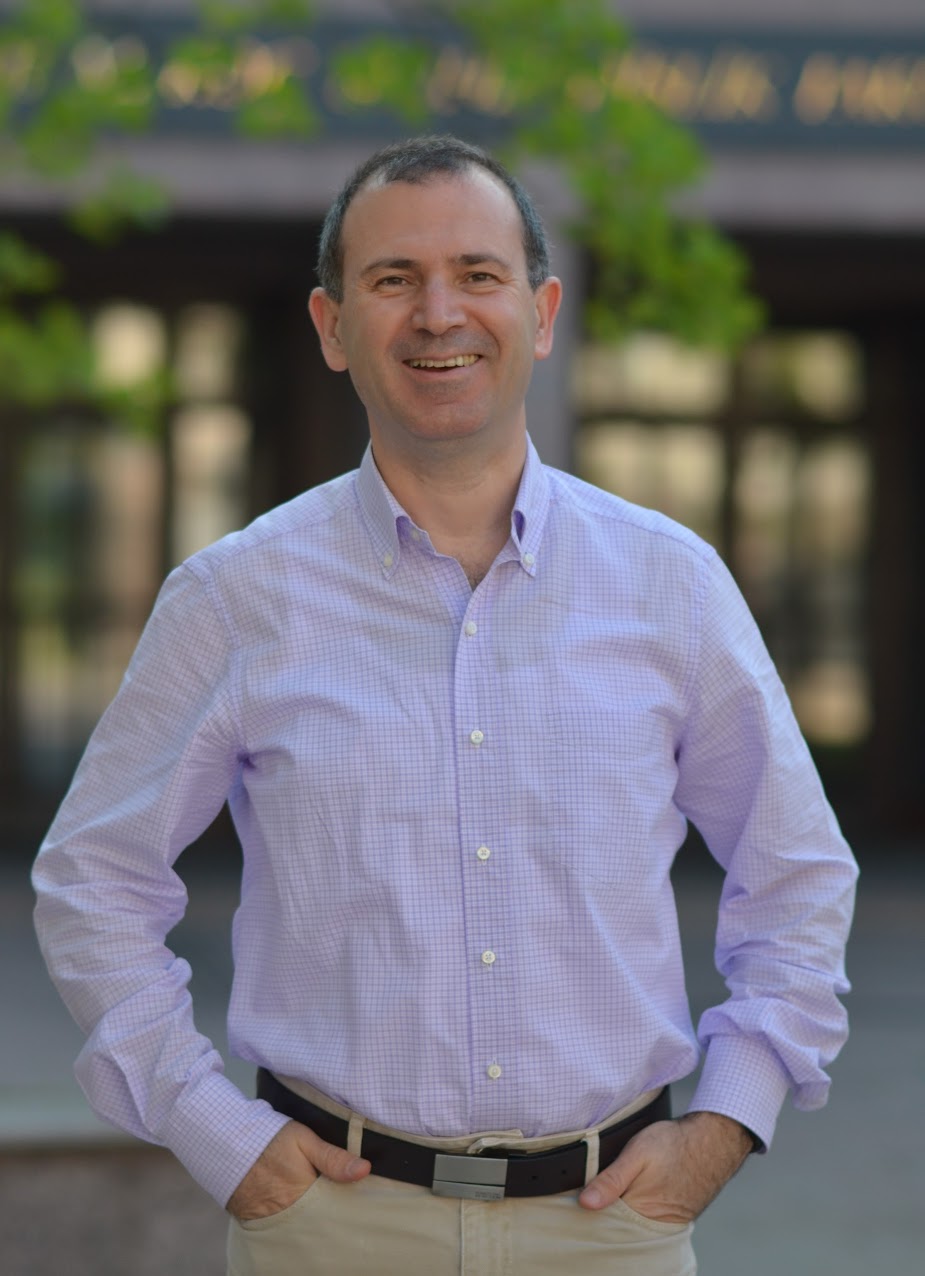
Jure Leskovec is a Professor of Computer Science at Stanford University, affiliated with the Stanford AI Lab, Machine Learning Group, and the Center for Research on Foundation Models. He holds academic appointments in the Department of Computer Science and is a member of Bio-X, the Institute for Human-Centered Artificial Intelligence (HAI), and the Wu Tsai Neurosciences Institute. Leskovec earned his BSc from the University of Ljubljana (2004), PhD from Carnegie Mellon University (2008), and postdoctoral training at Cornell University. His research focuses on social networks, data mining, machine learning, and computational biomedicine, with contributions to graph neural networks, drug discovery, and AI applications in healthcare. His work has been applied to combat the COVID-19 pandemic and integrated into products at major tech companies. Leskovec’s publications reflect his expertise in network analysis, medical AI, and biological systems. His recent work includes foundational contributions to graph neural networks (e.g., PyG) and medical AI frameworks. His research has garnered numerous awards, including the Microsoft Research Faculty Fellowship and ICDM Research Contributions Award. Leskovec advises numerous doctoral and postdoctoral researchers, contributing to over 200 publications. His interdisciplinary collaborations span computational biology, healthcare analytics, and social systems, with a focus on leveraging AI to address real-world challenges.
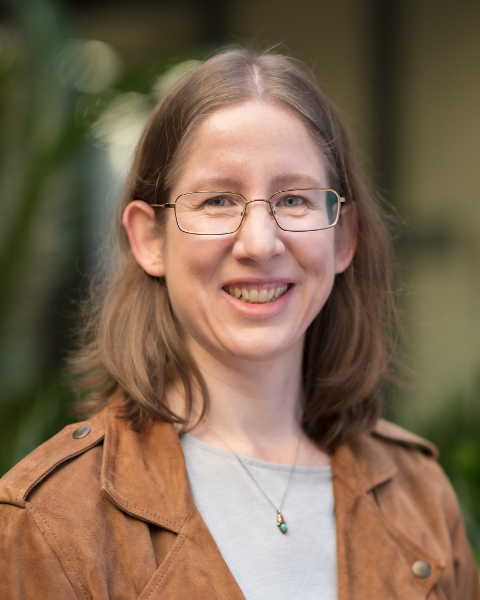
Krista A. Ehinger is an Associate Professor and co-lead of the AI group at the University of Melbourne's School of Computing and Information Systems. She holds a PhD from MIT and has held postdoctoral positions at York University and Harvard Medical School. Her research focuses on the intersection of human and computer vision, including scene recognition, visual search, and depth perception. Methodologically, she combines Bayesian models, deep learning, and behavioral experiments like eye tracking. Current projects explore AI applications in space systems (e.g., SpIRIT satellite) and ethical implications of workplace surveillance via computer vision. Recent work emphasizes amodal completion (e.g., reconstructing occluded objects) and AI reasoning systems. She collaborates on medical imaging (TCAM-Diff model), autonomous driving (truck speed detection), and 3D reconstruction. Her lab actively engages in open-source tools like the SUN Database for scene understanding. Professional activities include AI ethics discussions and academic service. She advises students on Masters/PhD projects and contributes to conferences like CVPR and NeurIPS.
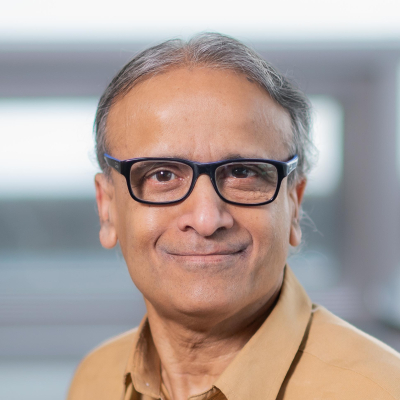
Dr. Amal Zouaq is a Full Professor in the Department of Computer Engineering and Software Engineering at Polytechnique Montréal. She holds the FRQS (Dual) Chair in AI and Digital Health, serves as Director of the LAMA-WeST research laboratory, and is an Associate Member of MILA. Her work bridges artificial intelligence with applications in digital health, cultural heritage, and educational technologies, positioning her at the forefront of interdisciplinary AI research in Canada. Her research focuses on Artificial Intelligence , particularly Natural Language Processing and the Semantic Web . Specific interests include knowledge representation, ontology learning, SPARQL query generation, bias mitigation in language models, and clinical text processing. Her work spans multiple domains including healthcare, cultural heritage, and educational technology, with emphasis on developing practical AI solutions that address real-world challenges in knowledge management and information extraction. Analysis of her recent publications reveals a strong trajectory in advancing NLP techniques for knowledge-intensive applications. Her work increasingly focuses on domain-specific applications in healthcare and cultural heritage, with growing emphasis on ethical AI considerations like bias mitigation. The research demonstrates progression from foundational semantic web technologies toward more sophisticated neural approaches while maintaining strong theoretical grounding in knowledge representation. Scientific Recognition: Holder of the FRQS (Dual) Chair in AI and Digital Health Dr. Zouaq has supervised 23 graduate students to completion, including 1 PhD and 22 Master's theses, with research spanning ontology learning, knowledge representation, and NLP applications. Her supervision record demonstrates consistent mentorship in cutting-edge AI research with practical applications across multiple domains. She actively serves on program committees for major conferences in knowledge engineering, data mining, and semantic web technologies. She directs the LAMA-WeST (Web, Semantics and Text) laboratory , which specializes in natural language processing and artificial intelligence research. The lab focuses on knowledge representation, semantic technologies, and their applications in healthcare, cultural heritage, and educational contexts. As a member of IVADO and MILA, she collaborates with leading AI researchers across Montreal's vibrant AI ecosystem.
Kobus Barnard is a Professor in the Department of Computer Science at the University of Arizona, with his office located in GS 708. His research bridges computer vision, machine learning, and interdisciplinary scientific applications across diverse domains. Education: Ph.D. from Simon Fraser University (1999) His research interests focus on extracting meaningful insights from complex data through computer vision and probabilistic modeling. Key areas include machine learning for environmental monitoring (flood detection, plant disease analysis), social dynamics (interpersonal coordination, emotional coregulation), astronomy (transient classification), and multimodal learning (visual-linguistic integration). His work consistently applies deep learning to real-world problems requiring high-resolution data interpretation. Analysis of his 2022-2025 publications reveals three dominant trends: (1) Environmental applications using satellite imagery for flood mapping and agricultural monitoring, (2) Cognitive modeling of human teams and emotional dynamics through probabilistic frameworks, and (3) Astronomical data analysis leveraging host galaxy properties for transient classification. These threads demonstrate his commitment to solving practical scientific challenges through computational innovation. While scientific awards aren't documented in available sources, his leadership in projects like FloodPlanet and ToMCAT indicates significant contributions to data infrastructure. His advising and grant activities remain unreported in the source material, though his extensive interdisciplinary collaborations suggest substantial mentorship impact. Barnard's work operates at the intersection of multiple scientific communities, evidenced by applications spanning neuroscience, agriculture, astronomy, and social science. His current focus on high-resolution data fusion and multimodal modeling positions him at the forefront of real-world AI deployment.
Saptarashmi Bandyopadhyay is a Tenure-Track Assistant Professor of Computer Science at the City College of New York and the Graduate Center at the City University of New York (CUNY). Her research focuses on Artificial Intelligence Agents and Autonomous Decision Making, with special emphasis on Multi-Agent Reinforcement Learning, Multi-Agent Imitation Learning, and related paradigms. She has established significant collaborations with leading institutions including Google DeepMind, Carnegie Mellon University, Oxford University, and MIT. Dr. Bandyopadhyay received her PhD from the University of Maryland, College Park, where she was advised by Professor John Dickerson and Professor Tom Goldstein. Prior to that, she graduated from Penn State in 2020 with a thesis on Multimodal Computer Vision in Medical Domain advised by Prof. William Evan Higgins. Her research expertise spans multiple domains of AI including Multi-Agent Systems, Reinforcement Learning, Imitation Learning, and Multimodal Perception. She specializes in developing AI agents for applications in climate conservation, economic systems, and AI safety. Her work integrates techniques from computer vision, natural language processing, and robotics to create more robust and explainable AI systems that can operate effectively in complex, real-world scenarios. Current work includes improving explainable AI, developing Multimodal LLM/VLM/Robotic Agents, and creating libraries to speed up Multi-Agent evolutionary training with JAXMARL. Analysis of Dr. Bandyopadhyay's publication record reveals a clear progression from foundational work in medical imaging and natural language processing toward increasingly sophisticated multi-agent AI systems. Her recent publications demonstrate a strong focus on Multi-Agent Reinforcement Learning frameworks like JAXMARL, with applications spanning from supply chain orchestration to climate conservation. The interdisciplinary nature of her work is evident in publications spanning computer vision, NLP, and multi-agent systems conferences including AAAI, NeurIPS, AAMAS, EMNLP, and ACL. DoGood Fellow (2022) UMD Dean's Summer Fellow (2021) Dr. Bandyopadhyay has been actively involved in securing research funding from major agencies including NSF, NIH, DoD, and ARL. She served as the lead PhD student RA in a DoD project for Multi-Agent Explainable AI to improve AI trustworthiness. Her service to the academic community includes membership on program committees for major conferences including IJCAI 2024, KDD 2024, ACL 2024, and AAMAS 2023-2024. She has also created the AI Agents Seminar Series at UMD in 2022 with over 1,000 participants from six continents. Currently, Dr. Bandyopadhyay leads research on improving explainable AI, developing Multimodal LLM/VLM/Robotic Agents, and creating libraries to speed up Multi-Agent evolutionary training with JAXMARL. Her lab collaborates prominently with researchers from Google DeepMind, Carnegie Mellon University, Oxford University, University of Sheffield, Waymo, Meta AI, and MIT, with special focus on Dr. Jakob Foerster's and Dr. Robert Loftin's groups.
Engin Erzin is a Professor at Koç University's College of Engineering, leading the KUIS AI Lab and Multimedia, Vision and Graphics Lab . His research focuses on AI-driven human-centric systems, affective computing, and multimodal interaction analysis. He has contributed extensively to robotics, speech processing, and human-robot interaction through over 70 peer-reviewed publications since 2008. Research interests include: Affective computing and emotion recognition from speech/gestures Human-robot interaction and socially engaging agents Speech-driven animation and gesture synthesis Multimodal data fusion for interaction analysis Deep learning applications in robotics and biomedical engineering Recent work emphasizes: Developing adaptive pHRI controllers for manufacturing tasks Creating engagement measurement frameworks for human-machine interfaces Advancing Turkish speech recognition through self-supervised learning Designing multimodal databases for interaction studies Labs: KUIS AI Lab : Focuses on AI applications in robotics and human-computer interaction Multimedia Lab : Specializes in vision, graphics, and audiovisual analysis
Raghavendra Ramachandra is a Professor at the Department of Information Security and Communication Technology (IIK) , within the Faculty of Information Technology and Electrical Engineering at the Norwegian University of Science and Technology (NTNU) in Gjøvik. His research focuses on biometric systems, particularly in face, fingerprint, and finger vein recognition, with emphasis on presentation attack detection, morphing attack detection, and deep learning applications. Current research projects include: SALT (2022-2026) : Developing privacy-preserving facial biometric authentication systems. OffPAD (2022-2025) : Creating cryptographic tools and presentation attack detection for fingerprint biometrics. SWAN (2015-2020) : Developing biometric countermeasures against presentation attacks. His recent publications demonstrate technical expertise in: Face morphing attack detection using vision transformers and point cloud networks Image fusion techniques for multispectral biometrics GAN-based synthetic data generation for security evaluation Explainable AI approaches for biometric verification Professor Ramachandra also supervises PhD and Master’s students, and has extensive experience in leading national and EU research initiatives.
Jose Luis Cantero Lorente is a University Professor in the Department of Physiology, Anatomy and Cell Biology at Pablo de Olavide University, specializing in neuroscience with a primary focus on Alzheimer's disease and neurodegenerative disorders. His work bridges electrophysiology, neuroimaging, and biomarker discovery to understand cognitive decline in aging. Education: Doctorate from the University of Seville (1999) with thesis: "Electrophysiological characterization of alpha activity in three states of brain activation in human subjects: relaxed wakefulness, drowsiness and REM phase", supervised by Dr. Carlos María Gómez González. Research Interests: Dr. Cantero Lorente's research spans Alzheimer's Disease , Neuroscience , and Biomarkers , with emphasis on early detection mechanisms through salivary, blood, and CSF analysis. He investigates sleep-memory interactions , metabolic drivers of neurodegeneration (e.g., insulin resistance), and neuroinflammatory pathways using multimodal approaches including proteomics, lipidomics, and functional MRI. His pioneering work established salivary lactoferrin as a diagnostic tool for Alzheimer's. Publication Trends: His 2022-2025 publications reveal a strategic shift toward multimodal biomarker integration , combining amyloid-beta, tau, and metabolic markers for early Alzheimer's detection. Key themes include Parkinson's disease proteomics (e.g., candesartan neuroprotection), herpes virus-amyloid links in aging, and intracortical myelin alterations as precursors to cognitive decline. Recent work increasingly incorporates machine learning for database analysis and explores angiotensin-based neuroprotective strategies. Scientific Awards: No awards were specified in the source material. Advising and Grants: He supervises doctoral candidates in the Biotechnology, Biomedicine and Health Sciences program at Pablo de Olavide University, specifically guiding the "Early Detection of Alzheimer's Disease" track. His research is supported by Spain's PAIDI framework (Health Science and Techniques), with projects focusing on interdisciplinary audiological databases and neural network alterations in mild cognitive impairment. Labs and Teams: As leader of the LNF Functional Neuroscience research group, he directs studies on electrophysiological correlates of cognitive decline, utilizing EEG, MRI, and molecular techniques to map structural-functional brain changes in Alzheimer's progression. The group collaborates extensively on national initiatives for biomarker validation in neurodegenerative diseases.
Francesca Spezzano is an Associate Professor in the Computer Science Department at Boise State University, part of the College of Engineering. She holds a Ph.D. in Computer Science Engineering from the University of Calabria, Italy (2012), with postdoctoral research at the University of California Santa Cruz and the University of Maryland Institute for Advanced Computer Studies. Her research focuses on social network analysis, misinformation detection, information diffusion, and national security, with emphasis on applying machine learning and graph-based methods to combat online deception. Education: Ph.D. in Computer Science Engineering, University of Calabria, Italy (2012) Visiting Scholar, UC Santa Cruz Database Group (2010–2011) Postdoctoral Research Associate, University of Maryland (2013–2015) Research Interests: Misinformation detection and mitigation Social network analysis and mining Graph databases and link prediction National security applications Awards & Grants: NSF CAREER Award (2020) for studying misinformation diffusion Funding from the National Science Foundation, U.S. Army Research Office, and National Security Agency Service & Leadership: General Chair of WSDM 2026, CIKM 2024, and MISDOOM 2022 PC Co-Chair of ASONAM 2019 and FOSINT-SI 2020 Recipient of the Best Paper Award at FOSINT-SI 2018
Włodzimierz Kasprzak is a Professor at the Institute of Control and Computation Engineering, Faculty of Electronics and Information Technology, Warsaw University of Technology. His research focuses on computer vision, robotics, human-computer interaction, and machine learning. He has contributed to advancements in human action classification, skeleton-based feature analysis, and multimodal interface design. Research Highlights: Development of lightweight classification models for human actions in video using skeleton-based features. Advances in multi-stream fusion techniques for image and video analysis. Design of embodied agent systems for cybersecurity event visualization and control. Awards and Recognition: 2024: Individual First Class Rector's Award for Scientific Achievements (2022-2023) 2021: Medal of the Commission of National Education 2011: Golden Cross of Merit His work integrates theoretical contributions with practical applications in robotics, surveillance systems, and human-centered technologies.
Maurice van Keulen is an Associate Professor affiliated with the University of Twente's research institutes including Datamanagement & Biometrics, Digital Society Institute, and TechMed Centre. His multidisciplinary work bridges computer science, healthcare, and social systems. Research Focus: Van Keulen specializes in artificial intelligence applications with emphasis on: Data management (quality, integration, probabilistic databases) Explainable AI and interpretable machine learning models Healthcare informatics (cancer prediction, medical imaging, outcome analysis) Natural language processing and social media analytics His recent work explores dynamic sparse training, meta-learning for data imputation, and ethical AI frameworks. Publication Trends: Recent articles (2023-2025) show strong focus on: Interpretable AI methods in healthcare diagnostics Robust machine learning under data corruption Meta-learning approaches for data preprocessing 3D medical imaging and reconstruction techniques Awards: Beste paper award (2018) for work on probabilistic data conditioning Supervision & Activities: Has supervised 14 research projects and serves on executive boards including EDBT (Extending DataBase Technology) and IFIP WG 2.6. Leads research on ethical dimensions of AI systems.
Afsah Anwar is a tenure-track Assistant Professor in the Department of Computer Science at the University of New Mexico (UNM), Albuquerque, leading the Beyond Defense Lab focused on Internet security, malicious activity analysis, and incident response frameworks. Her work bridges technical cybersecurity research with societal impact assessment. Her research spans Malware Analysis, Threat Intelligence, and Vulnerability Management, with specialized expertise in Machine Learning-based defenses for IoT/mobile platforms, Internet censorship measurement, space security, and web fraud detection. The lab emphasizes real-world applicability through tools that address concept drift in malware detection and robustness against adversarial attacks. Analysis of her 2020-2025 publications reveals dominant themes: IoT malware robustness under adversarial conditions (40% of output), Internet measurement studies including censorship and routing security (30%), and vulnerability database refinement (15%). Key methodologies integrate graph-based analysis, time-series measurement, and multimodal LLMs for interpretable security reasoning. Scientific Awards: Best Paper Award at WISE 2024 Research Grants: NSF SaTC Medium grant (August 2025) on VPN security with Roya Ensafi (UMich) and Jed Crandall (ASU) Advising: PhD Students: Enrique Sobrados (Mobile Security), Ramsha Anwar (Mobile Security/Privacy), Dheeman Saha (Censorship/Internet Measurement; co-advised) Master's: Jack Vanlyssel (NSF SFS Scholar, Space Security), Muhammad Danish (Web Security; CRA Outstanding Undergraduate) Undergraduate: Muneeb Ahmad (AI/Cybersecurity) Mentorship: Weekly CTF events, Sandia National Labs collaborations (Ross, Doakes, Hassan), and dedicated support for students from Bihar, India The Beyond Defense Lab operates from Farris Engineering Center #2150, hosting industry experts (e.g., Meta's Dr. Abusnaina, X's Dr. Saad) and developing healthcare security frameworks with Dr. Sazzadur Rahman. Current projects include Russian censorship analysis using time-series methods and multimodal LLMs for vulnerability reasoning (LLaVul).
Chenjuan Guo is an Associate Professor at the Department of Computer Science, Aalborg University, within The Technical Faculty of IT and Design. She is affiliated with the Data Engineering, Science and Systems group and the AI for the People initiative, and is part of the Daisy - Center for Data-intensive Systems. Her research focuses on machine learning, data engineering, spatio-temporal data analysis, and time series forecasting. Key projects include the Villum Foundation-funded 'Explainable AI for Complex Microbial Community Interactions and Predictions' (2021-2024) and the Astra project on time series analytics in spatial networks (2018-2021). Her research interests span representation learning, autoencoders, path representation, outlier detection, trajectory data analysis, and time series modeling. She has supervised 3 PhD students and contributed to over 60 publications, with a recent emphasis on transformer-based forecasting, neural architecture search, and continuous learning frameworks for spatio-temporal data. Her work bridges theoretical advancements with practical applications in environmental science, cloud computing, and urban mobility systems. Key achievements include developing frameworks like AutoCTS++ for automated time series forecasting and LightGTS for lightweight models. She actively collaborates internationally, contributing to conferences like ECML PKDD and CVPR. Her research is supported by grants from the Villum Foundation and other institutions.
Laks V.S. Lakshmanan is a Professor in the Department of Computer Science at the University of British Columbia (UBC), within the Faculty of Science. His research focuses on data management, graph computing, machine learning, and algorithms, with notable contributions to dense subgraph discovery, influence maximization, and healthcare informatics. He teaches advanced courses on databases and data management, including CPSC 404 (Advanced Relational Databases) and CPSC 534L (Topics in Data Management). His awards include the ACM SIGMOD Research Highlight Award, the IEEE Data Science Best Paper Award, and recognition as an ACM Distinguished Scientist (2016). His work bridges theoretical algorithm design with practical applications in social networks, bioinformatics, and healthcare. Key research themes include optimizing graph algorithms for large-scale data, combating misinformation through network analysis, and developing efficient methods for subgraph enumeration and influence propagation. His recent publications explore topics like clinical event prediction (TRACE), cost-effective LLM selection (ThriftLLM), and cross-modal consistency in AI systems. Education: Details not explicitly provided in sources. Grants & Funding: Recipient of NSERC Discovery Accelerator Supplements. Labs/Teams: Engaged in UBC's data management research groups and collaborative initiatives with industry partners.
Josh Reiss is a Professor of Audio Engineering at Queen Mary University of London (QMUL), part of the School of Electronic Engineering and Computer Science . He holds additional roles including President-Elect and Fellow of the Audio Engineering Society (AES), and Visiting Professor at Birmingham City University. His research focuses on audio signal processing, procedural audio, and intelligent music production. He earned degrees including BSc in Physics, BSc in Mathematics, and a PhD. Research & Awards : Reiss has published over 200 papers, authored books like Intelligent Music Production , and received awards such as the AES Board of Governors Award (2009, 2010) and Best JAES Paper 2016. His work spans sound synthesis, dynamic range compression, and live audio systems. Teaching & Industry : Teaches modules like Artificial Intelligence and Sound Design. Co-founded startups LandR (AI mixing), Tonz, and Nemisindo. Leads the Centre for Digital Music at QMUL, advancing research in audio technology. Labs & Teams : Active in the Centre for Digital Music, collaborating on projects like the Open Multitrack Testbed and semantic audio evaluation tools.