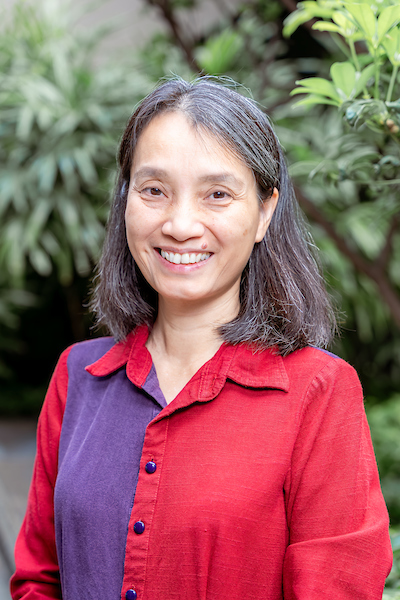
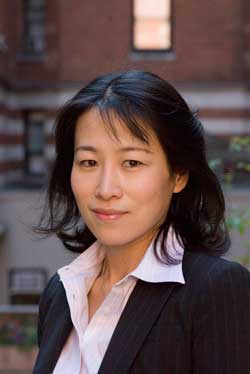
Aya Khalaf is an Associate Research Scientist at the Yale School of Medicine, affiliated with the Blumenfeld Lab and the Janeway Society. Her research focuses on understanding neural mechanisms of consciousness, brain-computer interfaces, and machine learning applications in healthcare. She collaborates with leading institutions and researchers globally on studies involving EEG, fTCD, and neuroimaging techniques. Key research interests include auditory and visual perception networks, impaired consciousness in epilepsy, and hybrid BCI systems. Her work bridges cognitive neuroscience with engineering, aiming to translate findings into clinical tools. Notable collaborations include projects with Hal Blumenfeld, Dennis Spencer, and international teams testing consciousness theories. Publications highlight advancements in neural activity analysis, BCI calibration optimization, and multimodal signal processing. Her contributions span theoretical neuroscience frameworks and applied biomedical engineering solutions.
Marcus Specht is a Professor affiliated with Delft University of Technology and Leiden University, Netherlands. His research focuses on Educational Technology, Learning Analytics, and Artificial Intelligence in Education. He has contributed to projects involving agent-based social skills training, hybrid intelligence for cognitive process analysis, and computational thinking assessment in higher education. His work spans mobile learning, collaborative learning analytics, and gamification in MOOCs. He collaborates extensively with researchers like Marco Kalz, Roland Klemke, and Hendrik Drachsler. Notable contributions include the Presentation Trainer for public speaking feedback and the DojoIBL platform for inquiry-based learning. His research emphasizes multimodal learning systems, including AR/VR applications and sensor-based training tools. He explores the integration of AI into educational platforms, as seen in projects like JELAI and the ARTES architecture for social skills training.
Prof. Dr. Bernd Wollscheid is a Lecturer at the Department of Health Sciences and Technology (D-HEST) at ETH Zurich, Switzerland. He leads the Wollscheid Lab and the Proteomics Plattform D-HEST , focusing on decoding the extracellular interactome and the cell surfaceome's nanoscale organization. His work bridges biology, chemistry, medicine, and bioinformatics, developing cutting-edge technologies like LUX-MS and TRICEPS-based LRC to study cellular communication and signaling pathways. Research interests include understanding how the surfaceome influences cellular functions, particularly in disease contexts such as cancer and metabolic disorders. Key projects involve creating resources like the Cell Surface Protein Atlas and PROTTER , tools for visualizing proteoforms and analyzing multi-omics datasets. His lab also explores precision medicine applications, including biomarker discovery and tumor profiling for clinical decision support. Publications highlight advancements in multi-omics integration, drug repurposing, and functional proteomics. The lab collaborates on initiatives like the Swiss Personalized Health Network (SPHN) and the Personalized Health and related Technologies (PHRT) strategic focus area. Funding comes from public grants and strategic partnerships. Recruitment for motivated researchers is ongoing, emphasizing contributions to molecular health and surfaceome research.
Bharat Biswal is a Distinguished Professor in the Department of Bio-Medical Engineering at New Jersey Institute of Technology (NJIT), serving as Director of the Center for Brain Imaging. His primary affiliation is with the College of Engineering, where he leads neuroimaging research initiatives. Biswal’s work focuses on functional magnetic resonance imaging (fMRI), brain connectivity analysis, and translational applications in neuropsychiatric disorders. Research Interests: Functional and Resting-State fMRI Methodology Neurovascular Coupling Mechanisms Connectomics and Network Neuroscience Clinical Applications in ADHD, OCD, and Neurodegenerative Diseases Post-COVID Neuroimaging White Matter Function Grant Activity: NIH-funded projects on laminar-specific connectivity (2022–2025) National Science Foundation MRI infrastructure grants (2019–2021) Longitudinal HIV brain studies (2015–2018) Recent Articles Highlight: Biswal’s 2025 work advances understanding of cocaine use disorder neurobiology, obsessive-compulsive disorder network dysregulation, and standardized PET nomenclature. His lab also innovates in AI-driven defect detection and transcriptomic-neuroimaging integrations. Awards: Recipient of NJIT’s 2024 Excellence in Research Award for pioneering contributions to resting-state fMRI and brain connectivity research. Labs/Teams: Leads the Center for Brain Imaging at NJIT, collaborating internationally on neuroimaging standards and translational neuroscience projects.
Georg Groh is an Adjunct Professor at the Technical University of Munich (TUM), affiliated with the TUM School of Computation, Information and Technology . His research focuses on modeling social context, social interaction mediated by IT systems, and ML-based natural language processing. He holds a doctorate (2005) and habilitation (2012) from TUM, with prior studies in physics and computer science. Key research areas include social signal processing, network analysis, and bias detection in AI systems. Notable awards include the 2019 Supervisory Award and 2016 Honorary Teaching Certificate. His work bridges computational methods with societal impacts, particularly in health informatics and ethical AI. Recent projects explore LLM hallucination detection, bias profiling, and cross-lingual text classification. Education: PhD in Computer Science (2005), TUM Habilitation in Computer Science (2012), TUM Studies in Physics (University of Kaiserslautern) and Computer Science (Universities of Hamburg, Kaiserslautern, TUM) Research Interests: Groh’s work spans social computing, NLP, and ethical AI . Current projects address bias in language models, hate speech detection, and data-driven health interventions. His methodologies emphasize contextual analysis of social interactions, leveraging ML and graph-based techniques. Awards: 2nd place Supervisory Award (2019) Best Paper Awards (2016, 2008) Advising & Grants: Advised on projects like Nutrilize (nutrition recommender system) and contributed to EU-funded initiatives on mHealth systems. Active in designing AI systems for dietary logging and stress management.
Benjamin Bach is a Lecturer in the School of Computer Science at the University of St Andrews, specializing in data visualization and visual analytics. His research focuses on creating interactive systems that enhance how people understand and engage with complex data through visualization. Dr. Bach's research interests span data visualization, information visualization, interactive systems, human-computer interaction, visual analytics, responsive design, and collaborative visualization. His work bridges theoretical foundations with practical applications, developing novel techniques for data exploration and communication that have implications across various domains including scientific research, education, and decision-making processes. His recent publications demonstrate a strong focus on responsive visualization design, collaborative storytelling through data, and the integration of narrative techniques with visualization. Notably, his work on 'Visualization Atlases' and 'Discursive Patinas' explores how to create more engaging and meaningful visualization experiences that support both individual exploration and group discussion. Dr. Bach's research has appeared in top-tier visualization venues including IEEE Transactions on Visualization and Computer Graphics (TVCG), demonstrating both the quality and impact of his contributions to the field. His work often involves interdisciplinary collaborations, as evidenced by his participation in projects spanning from immunology to cultural heritage. Within the visualization research community, Dr. Bach is recognized for his methodological rigor and innovative approaches to visualization design challenges, particularly in the areas of responsive design for diverse devices and facilitating collaborative engagement with visualized data.
Soon Lay Ki is an Associate Professor at the School of Information Technology, Monash University Malaysia, where she also serves as Associate Head (Graduate Research) since November 2018. Her academic journey began with roles at Multimedia University (MMU), where she was a Senior Lecturer and Deputy Dean (Research and Innovation) from 2016 to 2018. PhD in Web Engineering, Soongsil University, Korea Master of Science in Database, Universiti Putra Malaysia Bachelor of Computer Science, Universiti Putra Malaysia Her research centers on applied natural language processing and data management , with a focus on analyzing domain-specific and social media content. Her work spans aspect-based sentiment analysis , cyberbullying detection , misinformation detection , and relation extraction from conversational texts. Recently, her research has expanded into digital health , particularly emotion-aware mental health chatbots and emotion detection via video data. The most recent articles highlight a strong trend in AI for social good , including legal reasoning, mental health, accessibility, and public health. Her publications appear in high-impact journals and conferences such as Artificial Intelligence and Law , IEEE Transactions on Dependable and Secure Computing , and ACL-affiliated workshops. She has received notable scientific awards, including: ITEX'24 Silver Award for 'MOBOT' mental health chatbot (2024) Silver Medal at Malaysia Technology Expo 2023 for the same innovation The Incubator Grant: Bolster Category (2023) Dr. Soon has graduated seven PhD and three Master’s students, one of whom received the MMU Best Master Thesis Award in 2015. She leads multiple research grants, including FRGS-funded projects and industry collaborations with Telekom Malaysia and Intel . She is currently a Chief Investigator or Primary Chief Investigator on six active projects, including WHinc, WAge, and Epsilon, often in collaboration with Monash Australia and SEACO. She is part of key research teams such as the Action Lab at Monash University Australia and the South East Asia Community Observatory (SEACO) , contributing to inclusive research infrastructure and public health data access initiatives.
Michael Alexander Riegler is a full-time Professor at Oslo Metropolitan University's Faculty of Social Sciences, specifically in the Department of Social Work, Child Welfare and Social Policy. While his formal academic affiliation focuses on social sciences, his research interests span interdisciplinary domains including computer technology, information and communication systems, medical technology, and mathematics/natural sciences. Current research projects: Strengthening solidarity for democratic unity across border (SOLIDEM) addressing trust erosion in European welfare states, and Artificial intelligence in assisted reproduction technology improving embryo/sperm selection Recent publications (2025) focus on AI applications in healthcare (wearable sensors, ECG reconstruction), anomaly detection in time-series data, multimodal healthcare data analysis, and psychiatric motor activity datasets
Hanh Thi Nguyen is a Professor of Applied Linguistics in the Department of English and Applied Linguistics at Hawaii Pacific University, College of Liberal Arts. She earned her Ph.D. in English Language and Linguistics from the University of Wisconsin-Madison and holds a B.A. from the University of Hue, Vietnam. Her research centers on conversation analysis, interactional competence, second language acquisition, pragmatics, classroom and workplace discourse, learner identity, and Vietnamese linguistics . She explores how language learners develop communicative abilities across contexts, from classrooms to professional settings, using detailed interactional data. Her work bridges theory and pedagogy, informing language teaching and assessment practices. Dr. Nguyen has published extensively, including books such as Developing Interactional Competence at the Workplace (2024) and Developing Interactional Competence: A Conversation Analytic Study of Patient Consultations in Pharmacy (2012), and co-edited volumes on conversation analysis and Vietnamese pragmatics. Her recent articles examine epistemic stance, language ideologies in family talk, and computer-mediated language learning, showing a growing interest in longitudinal development and multimodal interaction. She has received numerous awards and grants, including the Golden Apple Award for Excellence in Scholarship (2019), multiple Faculty Development Grants, and a 2024 U.S. Department of State grant as Principal Investigator. She has served on editorial boards for journals such as RELC Journal and TESOL International Journal . Dr. Nguyen mentors students and collaborates widely, with frequent co-authorship with scholars like Taiane Malabarba and Minh Thi Thuy Nguyen. She teaches courses in sociolinguistics, discourse analysis, corpus linguistics, and language assessment. She also leads research labs and teams focused on conversation analysis and language socialization, and continues to present at major international conferences through 2025.
Prof. Dr. Andreas Bulling is Full Professor of Computer Science at the University of Stuttgart , leading the Collaborative Artificial Intelligence research group at the Institute for Visualization and Interactive Systems. He is also a founding director of the Stuttgart ELLIS Unit and serves on multiple prestigious boards including IEEE Transactions on Visualization and Computer Graphics . Education: MSc in Computer Science (KIT), PhD in Information Technology (ETH Zurich) Research Interests: Human-Computer Interaction, Eye Tracking, Wearable Computing, Computer Vision, and Privacy-Preserving AI Scientific Leadership: UbiComp Steering Committee member, ACM ETRA General Chair (2020), and extensive editorial/guest editor roles Key Awards: ERC Starting Grant (2018), Henriette Herz Scout (2024), and multiple best paper awards at CHI, ETRA, and UIST Technical Contributions: Developed datasets (LPW, VisRecall++), created novel methods for gaze estimation, mental face reconstruction, and saliency prediction in visualizations His work bridges AI and Human-Computer Interaction with applications in immersive systems and healthcare technologies.
Michael Sedlmair is a Professor at the Institute for Visualization and Interactive Systems (VIS) within the College of Engineering at the University of Stuttgart. He serves as Managing Director of VIS and leads research in augmented reality (AR), virtual reality (VR), human-computer interaction, and visualization. His work spans collaborative fabrication, motion guidance systems, educational AR/VR applications, and situated analytics. Research Themes : AR/VR for industrial tasks, haptic feedback systems, situated visualization, cross-reality transitions, music composition tools, and inclusive avatar design. Recent Articles : Focus on AR for collaborative tasks, motion guidance feedback, molecular structure learning in AR, music visualization, and accessibility studies in VR environments. His team collaborates with institutions like Mercedes-Benz AG, IMPRS-IS, and ACM/IEEE conferences. No specific awards or student advisories are mentioned in the provided texts.
Dr. Marcus Handte is a Senior Researcher at the University of Duisburg-Essen, focusing on networked embedded systems, context-aware computing, and sustainable mobility. His academic journey includes a Habilitation in Computer Science (2013) and a PhD in Natural Sciences (2009) from Universität Stuttgart, alongside a Master's degree from Georgia Institute of Technology (2002). Research Interests Context-aware applications Localization and location-based systems Sustainable mobility solutions Internet of Things (IoT) Smart city infrastructure Privacy-preserving technologies His recent work involves developing platforms for multimodal mobility analysis (MOBYDEX), wireless EV charging systems (TALAKO, FAIR), and innovative approaches to indoor localization. Publications span journals like Machine Vision and Applications and conferences in pervasive computing. Scientific Recognition Best Poster Award at ACM KMIS 2023 Dr. Handte has contributed to projects such as ATMo2, INNAMORUHR, and GAMBAS, and maintains active collaborations across institutions. His expertise in adaptive middleware and distributed systems continues to shape research in smart mobility and ambient intelligence.
Kelly Hogan is a Professor of Practice in the Department of Biology at Duke University's Trinity College of Arts & Sciences, serving as Director of Undergraduate Studies since 2023. She holds a PhD from the University of North Carolina at Chapel Hill (2001) and a B.S. from Trenton State College (1996). Her research focuses on improving STEM education through inclusive pedagogy, active learning strategies, and self-regulated learning. She co-designed courses like the 'College Thriving' initiative to support student transition to research universities, and has pioneered methods integrating citizen science into biology curricula. Dr. Hogan teaches courses including BIOLOGY 150 (Teaching Internship), BIOLOGY 201L (Molecular Biology), and BIOLOGY 493 (Research Independent Study). Her work emphasizes fostering equity in STEM through evidence-based practices like learning analytics and inclusive course design. External collaborations include partnerships with Pearson Education and West Virginia University Press. Her research spans topics such as cognitive engagement with instructional videos, predictive analytics for student performance, and motivational frameworks in undergraduate STEM education. Recent publications highlight strategies to retain diverse student populations and address systemic inequities in academic settings.
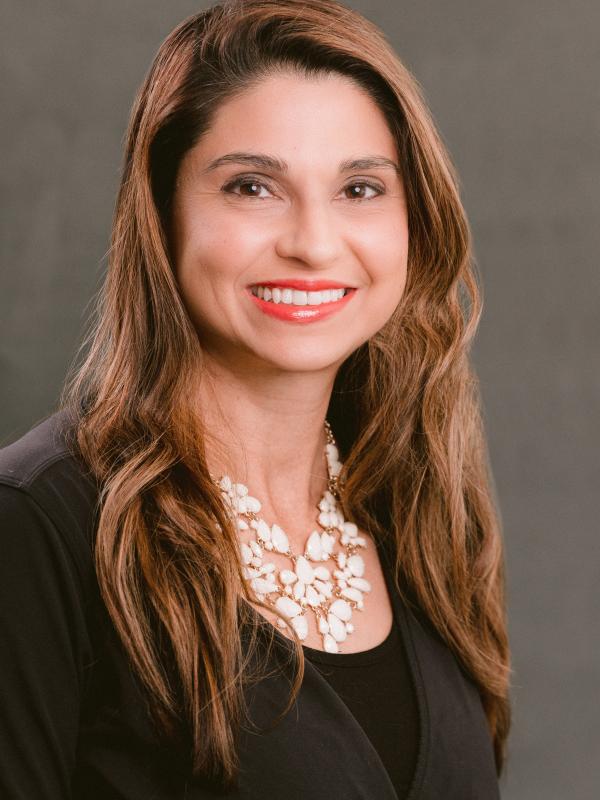
Dr. Jasmeet Hayes is an Associate Professor in Clinical Psychology and Cognitive Neuroscience at The Ohio State University's Department of Psychology (College of Arts and Sciences). Their research focuses on neurodegenerative consequences of trauma, leveraging MRI techniques to study brain changes linked to PTSD and Alzheimer’s disease. Hayes leads the MINDSET lab, examining genetic/epigenetic moderators of injury outcomes and aging processes. They hold a PhD from the University of Arizona and undergraduate degrees from UC Berkeley. Educational Background: PhD, University of Arizona, 2006 MA, University of Arizona, 2002 BA, University of California, Berkeley, 2000 (with High Honors) Research Interests: Investigates chronic effects of brain injury/TBI, neurodegenerative disease pathways, and psychological stress impacts using advanced neuroimaging. Key areas include: Neuroinflammation mechanisms Epigenetic biomarkers for PTSD Alzheimer’s risk modification via trauma exposure Cognitive/attentional neural correlates Notable Findings: Recent work reveals associations between blast exposure and systemic inflammation, identifies blood-based epigenetic PTSD biomarkers, and demonstrates cortical thickness changes linked to genetic Alzheimer’s risk in TBI survivors. Their 2021 Brain Communications study used machine learning to predict functional decline in aging populations. Awards: 2023 Scarlet & Gray Midcareer Professorship 2022 Fred Brown Research Award 2017 International Brain Injury Association honors Advising/Grants: Leads TRACTS longitudinal veteran cohort study. Active in NCAA-DoD concussion research consortia. Has received funding from NSF, DoD, and institutional grants. Labs/Teams: Directs the MINDSET Lab, part of Ohio State's robust neuroscience infrastructure. Collaborates internationally through ENIGMA-PTSD and PGC consortia.
Sandra Okita is an Associate Professor at Teachers College, Columbia University , where she serves as Program Director in the Communication, Media, and Learning Technologies Design program within the Department of Mathematics, Science and Technology . She holds dual PhDs from Stanford University (Learning Sciences) and Keio University (Human-Computer Interaction). Research Focus : Developing pedagogical agents and virtual environments that enhance learning through social interaction Designing sociable robots as peer learners to study cognition and collaborative learning Exploring virtual reality and mixed reality for science education Theoretical work on self-other monitoring , learning by teaching , and recursive feedback Publication Trends : 15+ publications (2004-2022) on robotics in education, virtual learning environments, and social learning theories Key areas: Human-Robot Interaction , STEM Education , Metacognition , and Technology-Enhanced Learning Notable works: Learning by Teaching , Recursive Feedback Mechanisms , and Therapeutic Robots Awards & Grants : 15+ research grants (2001-2026) from NSF , Google VR Research Program , and Honda Research Institute Recipient of Dean's Faculty Diversity Research Award (2011-2012) 2008 Best Paper Award at International Conference of the Learning Sciences