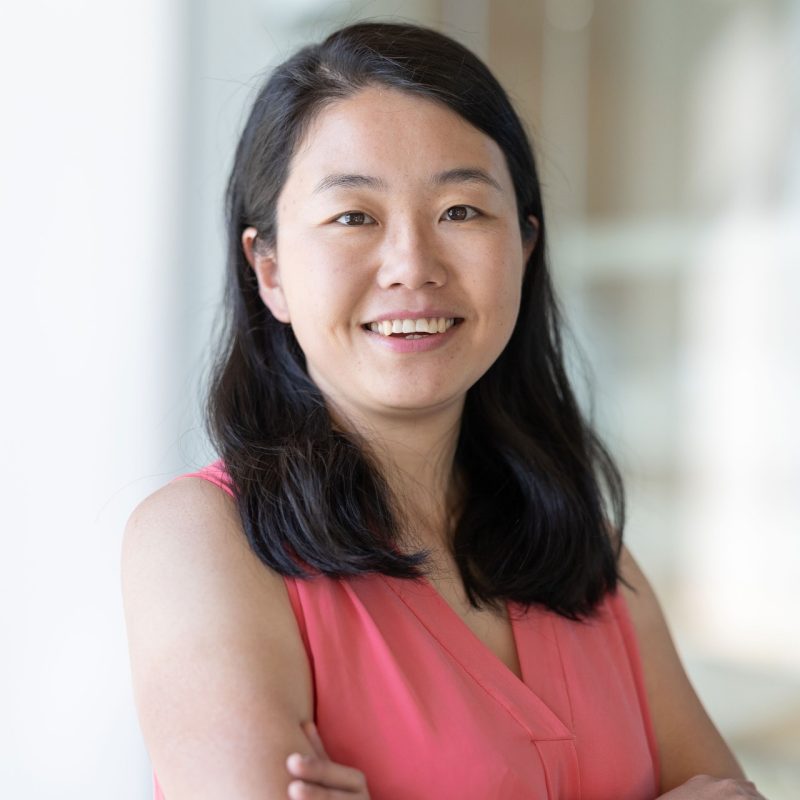
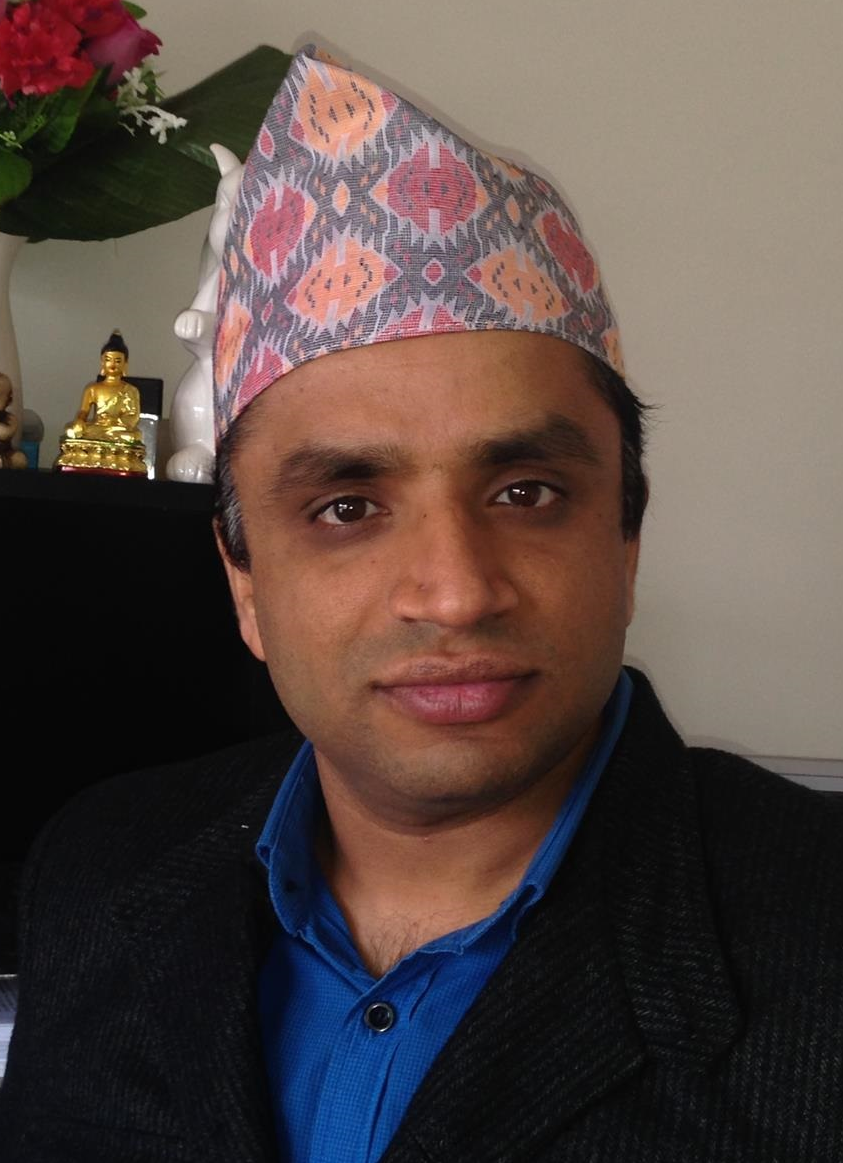
Kun Gao is an Assistant Professor at the Department of Architecture and Civil Engineering at Chalmers University, leading the Urban Mobility Systems research group. His work bridges transportation engineering and data science to develop sustainable mobility solutions through electrification, shared systems, and connected infrastructure. Research Focus: Electric vehicle integration, charging infrastructure optimization, multimodal mobility systems Funding: Supported by JPI Urban Europe, FORMAS, Swedish Innovation Agency, Swedish Energy Agency, and Chalmers AoA Transport/Energy Methods: Machine learning, big data analytics, system optimization His recent publications emphasize autonomous vehicle safety , renewable energy integration , and equity in mobility systems . Current work explores AI-driven infrastructure planning and coupled transportation-energy systems.
Måns Magnusson is an Associate Professor at the Department of Statistics, Uppsala University, with affiliations at the Institute for Analytical Sociology (Linköping University) and the Institute for Future Studies. His work bridges Bayesian statistics, probabilistic machine learning, and textual analysis, focusing on model evaluation, diagnostics, and inference algorithms. He contributes to computational social science and digital humanities through text-as-data methods. Research Themes: Bayesian inference, probabilistic machine learning, statistical inference from textual data Key Applications: Sociology, political science, law, education statistics, public health Current Projects: Improving probabilistic programming generalizability (Swedish Research Council grant), SWERIK research infrastructure (Riksbankens jubileumsfond) His recent publications emphasize text mining, model comparison, and legal data challenges. He has developed tools for national ID number validation, hate crime estimation, and parliamentary corpus construction. Notable awards include the Cramér Prize (2018), Statistician of the Year (2023), and membership in the Swedish Young Academy (2023) and ELLIS (2024). Scientific Contributions: Botten Ada Bayesian election model, 'loo' package for cross-validation Collaborative Work: AI4Research sabbatical (2024), Riksbankens jubileumsfond funding Industry Background: Statistician roles at Swedish Agency for Education, Crime Prevention, and Public Health
Oliver Bringmann is a full Professor and head of the Chair of Embedded Systems at the University of Tübingen, Germany, and a member of the board of directors at the FZI Research Center for Information Technology. His research integrates embedded-system design, energy-efficient AI accelerators, dependable automotive perception, and medical AI for capsule endoscopy. Education & Career Ph.D. in Computer Science, University of Tübingen, 2001 Diploma in Computer Science, University of Karlsruhe (KIT) Head, Chair of Embedded Systems, University of Tübingen (since 2012) Deputy spokesperson & spokesperson, Dept. of Computer Science, University of Tübingen (2014-2022) Board of Directors, FZI Research Center for Information Technology Research Interests Bringmann’s group pioneers hardware/software co-design for ultra-low-power Edge-AI , developing RISC-V based accelerators, compiler-aware neural-architecture search, and real-time perception systems for autonomous driving and medical devices. Key topics include: Energy-efficient AI architectures (“Edge AI”) and custom accelerator generation Robust collective perception under adverse weather (LiDAR, camera, V2X fusion) Timing/power-predictable embedded software and system-on-chip design automation Hardware-assisted security and safety for automotive & IoT systems AI-driven capsule endoscopy localization and anomaly detection Recent Publication Trends His 2024-2025 articles reveal a strong shift toward robust multimodal perception for automated driving (snow, fog, collective LiDAR fusion) and Edge-AI medical devices (capsule endoscopy with multi-task CNNs). Core contributions span dataset generation (SCOPE, SnowyLane), safety metrics (LSM), and fast performance modeling for DNN accelerators. Professional Service & Projects Executive/Steering Committees: IEEE/ACM DATE, CODES+ISSS, CASES, ITSS conferences EU CATRENE EDA roadmap chapter lead (Embedded Software & ESL-to-RTL) Principal investigator in Scale4Edge, OCEAN12, enerDAG and other national projects on energy-efficient sensorics and secure energy trading. His group maintains extensive collaborations with automotive and semiconductor industry, focusing on dependable, energy-aware embedded intelligence.
Flavio Giobergia is a Researcher at the Department of Control and Computer Science (DAUIN) within Politecnico di Torino . His work spans applied artificial intelligence , with a focus on deep learning and machine learning applications. Research Interests : Machine learning under limited label availability, LLM-assisted code refactoring, subgroup performance analysis in ASR models, exoplanet atmospheric reconstruction, and predictive maintenance systems. Teaching : Course owner for Data Science and Machine Learning Lab and Large Language Models at Politecnico di Torino. Projects : Scientific head for the MAD – STANDARD BANKING project (2025–2026) and ImEDA (2023–2024), focusing on anomaly detection and model efficiency. Publications : 15+ recent works on topics including machine unlearning benchmarks, synthetic data for hallucination detection, and drift detection limitations, presented at top conferences like KDD, Interspeech, and IEEE AICT. Collaborations : Active in the SmartData@PoliTO center and co-author with Elena Baralis, Alkis Koudounas, and others.
Patrizia Scandurra is an Associate Professor at the Department of Management, Information and Production Engineering, University of Bergamo, Italy. Her academic appointment in Computer Science (01/B1) spans from 2022 to 2033. She previously held roles as a researcher at the University of Bergamo (2009-2017) and postdoctoral fellow at the University of Milan (2006-2008). She earned her PhD in Computer Science (2006) and Bachelor's degree (2002) from the University of Catania. Research Focus : Software architectures and formal methods for modeling, validation, and verification of software-intensive systems. Specializations : Runtime analysis of self-adaptive, autonomous, and uncertain systems including IoT-Edge-Cloud applications, embedded systems, and system-on-chip. Collaborations : STMicroelectronics, Atego, Bialetti, and ENEA. Conference Involvement : Program/organizing committees for ICSE, ASE, ISSRE, ICSA, ECSA, SEAMS@ICSE, ABZ, SA-TTA@SAC, FAACS@ECSA. Research Projects : Model-driven development for robotics, adaptive architectures for pervasive systems, big data in smart cities, and digital twins for medical systems. Notable Contributions : Development of the ASMETA formal method community tools and frameworks for rigorous system design. She has published over 100 peer-reviewed works in international journals and conferences.
Ruoxi Jia is an Assistant Professor in the Bradley Department of Electrical and Computer Engineering at Virginia Tech, affiliated with the Sanghani Center for Artificial Intelligence and Data Analytics. She holds a Ph.D. from UC Berkeley and a B.S. from Peking University. Her research focuses on machine learning, security, privacy, and cyber-physical systems, with recent emphasis on data-centric AI and trustworthy machine learning. Education: Ph.D., Electrical Engineering and Computer Sciences, UC Berkeley (2018) B.S., Peking University Research interests include adversarial machine learning, AI safety, data valuation, and privacy-preserving techniques. Her work addresses challenges in AI ethics, backdoor detection, and scalable model security. Recent publications explore topics like defense mechanisms against poisoning attacks, large model safety surveys, and red teaming strategies. She actively seeks students (PhD, Masters, interns) and emphasizes collaboration through her group. Her work bridges theoretical foundations and practical applications in AI and cybersecurity, with contributions to both technical and ethical dimensions of modern machine learning systems.
Amine Mhedhbi is an Assistant Professor at Polytechnique Montréal in the Department of Computer Engineering and Software Engineering. He is affiliated with the Institute for Data Valorization (IVADO) and the Software Engineering for Machine Learning Applications (SEMLA) group. His research focuses on data management systems, particularly graph-structured databases, multimodal data engineering, and AI-driven query optimization. Ph.D. in Computer Science from University of Waterloo Former technical advisor to enterprise companies Prior applied research leadership at Distyl AI and internships at Microsoft Research His recent work explores integrating large language models (LLMs) into database systems, optimizing SQL generation, and advancing graph database architectures. Key projects include GraphflowDB and FlockMTL , addressing scalability and declarative semantic applications. Scientific awards include: NSERC Discovery Grant with Discovery Launch Supplement (2025) Cheriton School Distinguished Dissertation Award (2024) Microsoft Research Ph.D. Fellowship (2020) VLDB Best Paper Award (2018) He supervises graduate students in database systems and machine learning applications and serves on program committees for top-tier conferences like VLDB and SIGMOD.
Dimah Dera is an Endowed Assistant Professor at the Chester F. Carlson Center for Imaging Science, College of Science, Rochester Institute of Technology (RIT). She holds a Ph.D. and M.S. in Electrical and Computer Engineering, and an M.A. in Mathematics from Rowan University. Her research focuses on robust and trustworthy machine learning, integrating Bayesian theory and statistical signal processing into modern ML frameworks for healthcare, remote sensing, and surveillance systems. She is an NVIDIA Deep Learning Institute University Ambassador and active in IEEE Signal Processing and ACM SIGHPC. Dr. Dera has received prestigious awards including the NSF CRII Award (2023), NSF REU Supplement (2024), and IEEE Benjamin Franklin Key Award (2021). Her work emphasizes Bayesian uncertainty propagation for robust AI systems, with applications in sequential time-series analysis and medical imaging. Her scholarly contributions span robust image classification, uncertainty-aware neural networks, and Bayesian vision transformers. Teaching includes courses like Mathematical Methods for Imaging and Image Processing & Computer Vision II . She actively mentors students and leads research initiatives funded by NSF and industry collaborations.
Patrick Keating is Professor of Communication at Trinity University, where he teaches courses in film studies and video production. He currently serves as chair of the interdisciplinary minor in Film Studies and chairs the University's committee on Advising and Registration. Keating earned his B.A. in Film Studies from Yale University, M.F.A. in Film Production from the University of Southern California, and Ph.D. in Communication Arts from the University of Wisconsin-Madison. A native of Los Angeles, his academic journey reflects a deep commitment to both the theoretical and practical aspects of cinema. His research spans multiple dimensions of film studies with particular focus on cinematography, Hollywood cinema history, and narrative structure. Keating has established himself as a leading scholar in lighting techniques and camera movement in classical Hollywood cinema, with significant contributions to understanding film noir aesthetics. His work increasingly explores the intersection of traditional scholarship with digital media through videographic criticism, representing an innovative approach to film analysis. Analysis of Keating's recent publications reveals a consistent focus on visual storytelling techniques, with a notable shift toward digital scholarship methods in the last five years. His work maintains strong connections between historical film practices and contemporary analytical approaches, demonstrating how classical Hollywood techniques continue to inform modern cinematic expression. Frederick Burkhardt Residential Fellowship for Recently Tenured Scholars, American Council of Learned Societies (2014) Early Career Faculty Award for Distinguished Teaching and Research, Trinity University (2013) Academy Film Scholar, Academy of Motion Picture Arts and Sciences (2011) Best First Book Award, Society of Cinema and Media Studies (2011) Student Writing Award, Society of Cinema and Media Studies (2003) Keating actively mentors students through the Film Studies minor program and has contributed significantly to curriculum development in film and media studies. His research has been supported by prestigious fellowships including the Frederick Burkhardt Residential Fellowship, which enabled him to spend a year at the Radcliffe Institute for Advanced Study. His work bridges academic scholarship with creative practice, particularly through his video essays which have gained recognition in the field.
Sunil Aryal is an Associate Professor of Data Science at the School of Information Technology, Faculty of Science Engineering and Built Environment, Deakin University, Australia. He received his PhD and Master by Research degrees from Monash University Australia and has published over 70 papers in top-tier international venues in Artificial Intelligence, Machine Learning and Data Mining. Dr. Aryal's educational background includes: Graduate Certificate of Higher Education Learning and Teaching, Deakin University (2020) PhD in Computer Science, Monash University (2017) Master of Information Technology (Research), Monash University (2012) Master of Information Technology (Coursework), University of Southern Queensland (2008) Bachelor of Information Technology, Purbanchal University, Nepal (2005) His primary research interests focus on making Machine Learning and Data Mining algorithms robust and flexible to handle heterogeneous, noisy and uncertain data in real-world problems. His work spans across several specific areas including anomaly detection, clustering, kernel/similarity-based learning, ensemble methods, learning from limited data, reinforcement learning, natural language processing, and computer vision. Dr. Aryal is particularly interested in applying these techniques to solve challenges in Defence, National Intelligence, Engineering, Manufacturing, Healthcare and Education. Dr. Aryal co-leads the Machine Learning for Decision Support (MLDS) Research Group at Deakin University and has secured over AUD 4.5 million in external research funding. His research is supported by diverse organizations including US and Australia Defence Agencies, the Australian Office of National Intelligence, Worksafe Victoria, the Victorian State Department of Education and Training, the Technology Innovation Institute (TII) UAE, and Table Tennis Australia (TTA). His notable awards include multiple Deakin University research and teaching awards, the Australian Postgraduate Award for his PhD studies, and several student travel awards during his doctoral candidature. Dr. Aryal actively supervises numerous PhD and Master's students and has contributed significantly to teaching in various courses at Deakin University and previously at Federation University. He serves on several university committees and contributes to the research community as a reviewer, program committee member, and editor for various journals and conferences.
Professor Yuan Miao is a distinguished academic at Victoria University (VU), serving as Professor in the College of Arts, Business, Law, Education & IT and Head of the Information Technology Program. With a PhD from Tsinghua University's Automation Department, his academic journey spans prestigious institutions including the University of Melbourne and Nanyang Technological University in Singapore before settling at VU where he has been Professor since January 2010, following his Associate Professorship from August 2004 to December 2009. Education: BSc, Shandong University, China MEng, Tsinghua University, China PhD, Tsinghua University, Automation Department, China Professor Miao's research centers on Large Language Models (LLMs) and Generative AI, where he has identified critical barriers in practical applications including limited memory length in systems like ChatGPT and Gemini, contradictory explanations, lack of local knowledge integration, and significant errors in text-data hybrid reasoning (up to 38%). His innovative solutions involve cognitive map graphs and rational intelligence models to create customized AI systems. His work spans diverse application areas including human knowledge modeling, multimodal interaction, healthcare analytics (particularly dementia detection), cybersecurity, and robotics powered by rational intelligence. Analysis of Professor Miao's recent publications reveals a strong focus on integrating LLMs with specialized knowledge domains across healthcare, cybersecurity, and social media analysis. His research consistently addresses practical limitations of current AI systems while developing novel frameworks for more reliable and context-aware applications. The interdisciplinary nature of his work is evident in publications spanning medical informatics, cybersecurity analytics, and educational technology. Scientific Recognition: Two articles in fuzzy cognitive map modeling ranked among top 10 most cited works since 2000 (Google Scholar 2000-2016) Development of adversarial dataset based on SQuAD 2.0 that reduced BERT and ELECTRA accuracy from ~90% to ORCID identifier 0000-0002-6712-3465 with 138 peer-reviewed publications Professor Miao actively supervises PhD and Master's students across diverse research topics including access control systems, healthcare analytics, cybersecurity, and social behavior analysis. His research has secured substantial funding from both industry giants (Microsoft, Amazon, Oracle, Google) and government bodies (Australia Research Council, Data61, Singapore's NRF), with recent projects including Digital Transformation for Construction Industry ($1.258 million), Western Health SharePoint Development ($68,000), and Big Data Analysis for Domestic Violence Research (US$100,000). His current grant portfolio demonstrates strong industry-academia collaboration addressing real-world challenges. Professor Miao leads research teams focused on rational intelligence systems that overcome current LLM limitations, with particular emphasis on creating practical AI solutions for healthcare, cybersecurity, and smart city applications. His work with Maribyrnong City Council on the Smart City at Footscray Park project ($850,000) exemplifies his commitment to applying advanced AI research to community-level challenges.
Shui Yu is a Professor of the School of Computer Science in the Faculty of Engineering and Information Technology at the University of Technology Sydney (UTS), where he also serves as the Deputy Chair of the UTS Research Committee. His academic career spans over 20 years in Australia and 7 years in China, with additional teaching experience in Hong Kong and Indonesia. He has developed more than 10 units in cybersecurity, computer science, data analytics, and computer games, serving as the Course Director for Computer Science undergraduate programs. Professor Yu's research interests center on cybersecurity, privacy, networking aspects of Big Data, and applied mathematics for computer science. He pioneered the field of 'networking for big data' in 2013 and edited the seminal book 'Networking for Big Data' published in 2015. His work has practical applications in industry, including Amazon Cloud's auto-scale strategy against distributed denial-of-service attacks. Current research focuses include privacy and security concerns associated with big data, security issues in smart grids, anonymous transactions on Blockchain, and anonymous communication for web browsing privacy. Analysis of his recent publications reveals a strong research trajectory spanning cybersecurity, privacy-preserving technologies, networking for big data, and applied mathematics. His work shows increasing focus on quantum-resistant cryptography, federated learning security, and adversarial robustness in AI systems. The interdisciplinary nature of his research bridges theoretical foundations with practical applications in IoT, blockchain, and cloud environments. Fellow of IEEE (2023) Distinguished Lecturer of IEEE Communications Society (2018-2021) Distinguished Visitor of IEEE Computer Society (2022-2024) Professor Yu has secured numerous research grants from the Australian Research Council, including current projects on privacy and fairness in high intelligence models (DP240100955), improved security and privacy for online platforms (LP220200808), and secure blockchain for financial applications (LP220100453). He has served on editorial boards of multiple IEEE journals including IEEE Communications Surveys and Tutorials, IEEE Communications Magazine, and IEEE Internet of Things Journal. His service extends to organizing major conferences such as IEEE Globecom 2015 and IEEE INFOCOM 2016-2017.
Iwan Schie serves as Working Group Leader at the Leibniz Institute of Photonic Technology (Leibniz-IPHT) in Jena, Germany, where he leads the Spectroscopy / Imaging Multimodal Instrumentation research group. His work bridges analytical chemistry, biomedical engineering, and clinical applications with a focus on developing Raman spectroscopy-based diagnostic tools. Dr. Schie maintains an active research program with numerous publications in high-impact journals across multiple disciplines. Dr. Schie's research centers on Raman spectroscopy applications in medical diagnostics and environmental monitoring. His work demonstrates particular expertise in developing multimodal imaging systems that combine Raman spectroscopy with complementary techniques like optical coherence tomography and fluorescence imaging. His research spans both fundamental methodological development and clinical translation, with several studies focusing on cancer diagnostics across multiple organ systems including head and neck, bladder, and colon cancers. The environmental applications of his work include microplastic detection and pollen analysis. Analysis of Dr. Schie's publication record reveals a clear trajectory toward clinical implementation of Raman spectroscopy technologies. His recent work increasingly focuses on regulatory-compliant medical device development, with multiple studies conducted in accordance with European Medical Device Regulation standards. The publications demonstrate progression from ex vivo validation studies to in vivo clinical applications, with particular emphasis on workflow integration within surgical settings. His collaborative approach is evident through extensive co-authorship networks spanning physics, engineering, and clinical medicine. Dr. Schie has made significant contributions to advancing Raman spectroscopy methodology, with publications addressing critical challenges in device stability, spectral analysis, and multimodal integration. His work on establishing clinical workflows represents important steps toward routine clinical adoption of these technologies. The practical impact of his research is demonstrated through development of systems like the invaScope Raman endoscopy platform for bladder tumor diagnosis. As Working Group Leader at Leibniz-IPHT, Dr. Schie oversees research activities in spectroscopy and multimodal imaging instrumentation. His team develops advanced optical systems for biomedical applications with particular focus on real-time tissue characterization during surgical procedures. The research environment supports both fundamental methodological development and applied clinical translation, with strong emphasis on regulatory compliance for medical device development.
Mengdi Huai is an Assistant Professor in the Department of Computer Science at Iowa State University. She earned her Ph.D. in Computer Science from the University of Virginia under Prof. Aidong Zhang. Her research focuses on trustworthy AI, including explainable machine learning, adversarial robustness, privacy preservation, and fairness. She holds grants such as an NSF award for security in machine unlearning and has been recognized with the AAAI New Faculty Highlights (2024), Rising Star awards in EECS and Data Science (2021), and the John A. Stankovic Research Award (2021). Her educational background includes a Ph.D. from UVA (2021) and earlier degrees from institutions like the University of Science and Technology of China. She teaches courses like Machine Learning (COM S 573) and Advanced Topics in Computational Intelligence (COM S 672). Dr. Huai’s research spans security/privacy in machine unlearning, adversarial attacks on diffusion models, and attention mechanisms in vision transformers. Her work has been published in top venues like ICML, AAAI, KDD, and NeurIPS. She serves on program committees for AAAI, IJCAI, CVPR, and others, and reviews for journals like IEEE Transactions on Neural Networks and TKDE. Her lab focuses on advancing AI systems that are robust, interpretable, and privacy-aware. Recent grants include NSF support for machine unlearning security. She advises numerous students in these areas and collaborates internationally on projects like predictive diffusion models for healthcare and federated learning robustness.
Ling Liu is a Professor in the School of Computer Science at Georgia Institute of Technology's College of Computing. She directs the Distributed Data Intensive Systems Lab (DiSL) and conducts research in big data systems, cloud computing, distributed systems, privacy, and trust. An IEEE Fellow and recipient of the IEEE Computer Society Technical Achievement Award, Liu has published over 300 papers with best paper awards at major conferences. Her research develops scalable systems for AI and data analytics with emphasis on performance, security, and privacy. Current projects include federated learning, adversarial robustness, and trustworthy distributed AI. Liu has served as Editor-in-Chief for IEEE Transactions on Service Computing and ACM Transactions on Internet Technology.