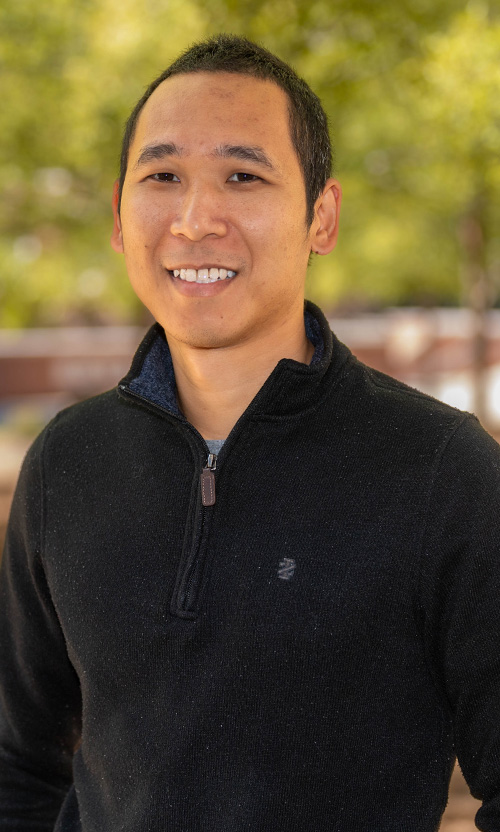
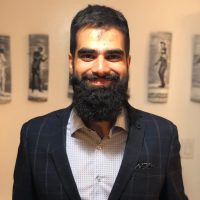
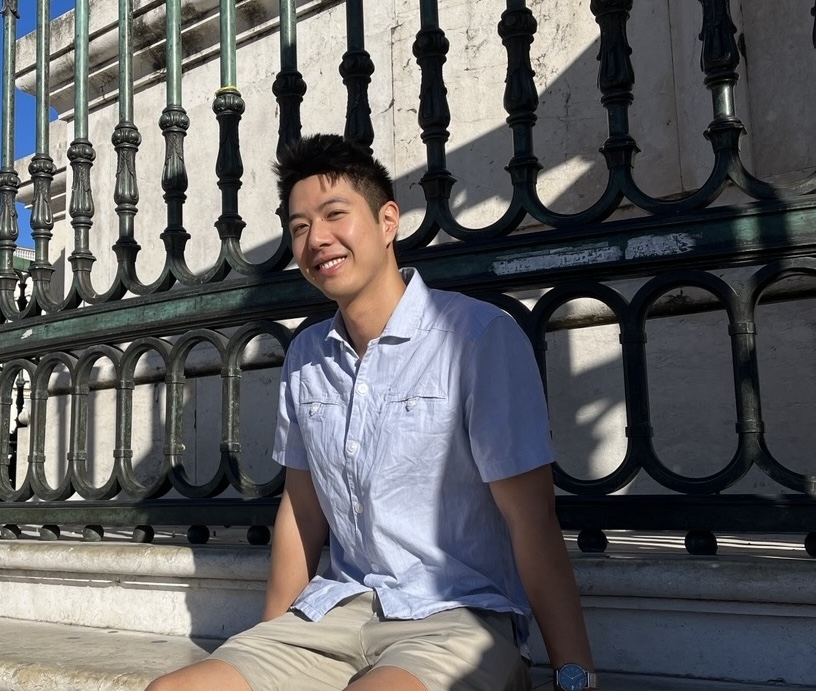
Dr. Yang Deng is a tenure-track Assistant Professor at the School of Computing and Information Systems, Singapore Management University, and a Lee Kong Chian Fellow. Previously, he was a Postdoctoral Research Fellow at NExT++ (National University of Singapore). His research focuses on Natural Language Processing, Information Retrieval, and Large Language Models, with special interests in Proactive Conversational AI, Trustworthiness of LLMs, and Human-Centered Information Seeking. He has published over 40 papers in top-tier venues including ACL, EMNLP, WWW, and SIGIR. PhD from The Chinese University of Hong Kong (2023) Research Advisor to CHEANG Chi Seng Research Domains: Natural Language Processing Information Retrieval Large Language Models Human-Agent Interaction Digital Transformation Trustworthy AI Scientific Recognition: Lee Kong Chian Fellowship Google South Asia & Southeast Asia Research Awards 2024 EMNLP 2024 Outstanding Area Chair NeurIPS 2024 Best Reviewer
Li Yi is a Professor in the Department of Computer Science at Tsinghua University's School of Information Science and Technology, where they lead cutting-edge research at the intersection of computer vision, 3D graphics, and robotics. Their work focuses on advancing neural rendering, point cloud processing, and embodied AI with applications in human-object interaction and robotic manipulation. Research interests span Computer Vision , 3D Graphics , Robotics , Point Cloud Processing , Neural Rendering , and Human-Object Interaction . Recent work explores language-grounded spatial reasoning, dexterous manipulation, and 4D dynamic content generation, with publications appearing in top venues like CVPR, ICCV, and NeurIPS. Their research bridges theoretical advances with practical applications in embodied AI systems. The publication trends reveal a strong focus on neural rendering techniques (particularly NeRF variants), embodied AI for robotic manipulation , and multimodal understanding integrating vision, language, and action. Recent work increasingly incorporates large language models and focuses on generalizable approaches that transfer from simulation to real-world settings. As an advisor, Professor Li has mentored numerous students including Yunze Liu, Xueyi Liu, Zekun Qi, and Runpei Dong, who frequently appear as first authors on collaborative publications. Their research has been supported by significant grants enabling work on human-robot interaction, 3D scene understanding, and embodied AI systems. Professor Li leads a research group focused on developing comprehensive frameworks for spatial reasoning, object manipulation, and dynamic scene understanding. The team works on creating benchmarks like TACO for tool-action-object understanding and developing systems like MobileH2R for human-robot handover tasks. Current work emphasizes real-world applicability with a focus on generalizable solutions that work across diverse settings.
Richard Harvey is a Professor in the School of Computing Sciences at the University of East Anglia (UEA), holding additional roles as Honorary Professor and Academic Director for Admissions and Internationalisation. His academic background includes a PhD in statistical estimation theory applied to synthetic aperture problems, with early career work in signal processing and acoustics. He transitioned to Computer Vision and AI, pioneering novel image analysis algorithms like 'sieves' and focusing on lip-reading research. His external roles include Former Livery Professor of IT at Gresham College and Fellowships at Gresham College and the British Computer Society. Research interests span computer vision, artificial intelligence, and lip-reading, with contributions to automated systems for security (e.g., baggage scanning) and accessibility (e.g., navigation aids for visually impaired individuals). Key projects include the AgriFoRwArdS CDT and collaborations with industry. He has led initiatives such as the Low Carbon Innovation Fund (LCIF) Investment Committee. His work integrates machine learning, pattern recognition, and multimodal data analysis, with publications in journals like Applied Sciences and Speech Communication. Awards include recognition for his contributions to computing and education.
Mel Chekol is an Assistant Professor at Utrecht University, affiliated with the Data Intensive Systems group within the Science faculty. He holds a PhD from INRIA Rhône-Alpes and a double MSc from Vienna University of Technology and Free University of Bozen-Bolzano. His research focuses on knowledge graphs, spatio-temporal data integration, probabilistic inference, and scalable machine learning applications. Previously, he worked at institutions including INRIA Nancy Grand Est, University of Mannheim, and the National Institute of Informatics in Tokyo. Key research interests include reasoning in knowledge graphs, temporal data modeling, and applying language models to enhance knowledge representation. He contributes to projects like the Utrecht Platform for Applied Data Science and has collaborated on frameworks such as the EXMO and WAM teams. His work emphasizes practical applications of AI and data science in governance and sustainability. Mel has published extensively in venues like VLDB Journal, ISWC, and AAAI, focusing on topics like rule learning, temporal knowledge graphs, and scalable inference systems. His research bridges theoretical advancements with real-world data challenges.
Davide Mottin is an Associate Professor at the Department of Computer Science, Aarhus University. His primary research focuses on graph theory, machine learning, and data mining, with significant contributions to knowledge graphs, algorithm design, and interdisciplinary applications in drug discovery and material science. He holds a leadership role in large international conferences such as CIKM 2024 as a Program Chair. His research explores scalable graph algorithms (e.g., subgraph matching, alignment), robust knowledge graph cleaning, and leveraging large language models for scientific tasks. Mottin has pioneered work on spectral methods for graph analysis (e.g., NetLSD, VERSE embeddings) and developed frameworks for interactive data exploration (e.g., X2Q, MetaExp systems). Key contributions include FUGAL for graph alignment and Ucode for community detection Active in reproducibility efforts, as seen in retraction notices and algorithmic redesigns Focus on practical applications in drug discovery via evolution-based models (EvolMPNN) He has authored over 60 peer-reviewed publications and holds grants supporting interdisciplinary research at the intersection of computer science and life sciences. Mottin is affiliated with the university's AI and data science initiatives, contributing to both theoretical advancements and real-world system implementations.
Pan He is an Assistant Professor in the Department of Computer Science and Software Engineering at Auburn University, part of the Samuel Ginn College of Engineering. His research focuses on developing deep learning techniques for real-time AI applications in infrastructure systems, including computer vision, 3D point cloud processing, and intelligent transportation. Education: Ph.D. in Computer Science, University of Florida B.E. in Software Engineering, Sichuan University (2015) His research interests include deep learning, computer vision, LiDAR, 3D perception, and adversarial machine learning. He develops AI techniques to empower downstream applications such as traffic signal control, anomaly detection, and infrastructure monitoring. Much of his work involves unsupervised and self-supervised learning on spatiotemporal data. His recent publications span top venues like TPAMI, ICLR, NeurIPS, CVPR, and IEEE T-ITS, focusing on topics such as explainable video anomaly detection, backdoor attacks in 3D detection, and efficient LiDAR annotation. These works demonstrate a strong trend toward robust, real-time, and interpretable AI systems for real-world infrastructure. Scientific Awards: 2025 ORAU Ralph E. Powe Junior Faculty Enhancement Award CVPR'22 and ICCV'21 Doctoral Consortium Awards Multiple Gartner Group Graduate Fellowships (2020–2022) Dean’s Award for Innovation and Creativity (SIAT, 2016) Best Bachelor Thesis Award (Sichuan University, 2015) Pan He advises students who have earned recognitions such as the CRA Outstanding Undergraduate Researcher Honorable Mention and the Wolotsz Graduate Fellowship. He has secured research grants and is actively recruiting PhD, Master’s, and undergraduate students. He has served as an Associate Editor for IEEE TNNLS and has taught courses on deep learning and computer vision. He leads a research group focused on foundational AI for pervasive computing and infrastructure intelligence.
Dr. Tim Welschehold is a Junior Research Group Leader and former Substitute Professor at the Department of Computer Science, University of Freiburg, Germany. He is affiliated with the Faculty of Engineering and conducts research in the Robot Learning Lab and Autonomous Intelligent Systems group. He completed his PhD in Computer Science under Prof. Wolfram Burgard and has held senior research and leadership roles since 2020. Research Interests: His work centers on reinforcement learning, imitation learning, mobile manipulation, and dynamical systems. He explores how robots can learn complex manipulation tasks from human demonstrations and improve autonomy through deep learning and adaptive policies. His research integrates perception, reasoning, and action for real-world robotic applications. The recent publications highlight a strong trend in mobile manipulation, with a focus on learning from demonstrations, uncertainty-aware perception, and task-driven co-design of robotic systems. His work frequently appears in top-tier robotics conferences such as ICRA, IROS, CoRL, and RA-L, often in collaboration with Prof. Abhinav Valada and other members of the Freiburg robotics community. Scientific Awards: Best Paper Award, IROS 2022 Workshop on Mobile Manipulation and Embodied Intelligence Advising and Grants: Dr. Welschehold has co-supervised several Master’s students, including Abdelrahman Younes, Erick Rosete-Beas, and Iman Nematollahi. His research has been supported by major funding bodies such as the German Research Foundation (DFG), NVIDIA, Toyota Motor Europe, and the Carl Zeiss Foundation through projects like ReScale and BrainLinks-BrainTools. Labs and Teams: He is a key member of the Robot Learning Lab and the Autonomous Intelligent Systems group at the University of Freiburg, contributing to projects such as OpenDR, OML, and ReScale, which aim to advance scalable and responsible learning for assistive robotics.
Arvind Satyanarayan is an Associate Professor of Computer Science at the Massachusetts Institute of Technology (MIT), where he leads the Visualization Group at MIT CSAIL. His research centers on interactive data visualization as a mechanism for intelligence augmentation—enhancing human cognition and creativity while preserving agency. Education PhD in Computer Science, Stanford University (advised by Jeffrey Heer, UW Interactive Data Lab) His research spans four primary themes: Visualization Authoring Tools , where he develops languages and systems (e.g., Vega-Lite extensions) to democratize visualization creation; Interpretability & Alignment , focusing on metrics and interfaces to align ML models with human expectations; Accessible Data Representations , co-designing non-visual displays with blind collaborators using alt text, screen readers, and tactile graphics; and Sociocultural Design , studying visualizations as social artifacts that shape norms and propagate misinformation. His work on Animated Vega-Lite , Bluefish , and Tactile Vega-Lite exemplifies his focus on expressive, usable, and inclusive tools. His recent publications show a strong trend toward AI-human collaboration , accessibility , and cultural interpretability of LLMs , with frequent appearances at top venues like ACM CHI, IEEE VIS, ACL, and UIST. Key topics include semi-formal programming, generative AI agency, tactile chart prototyping, and saliency evaluation frameworks. Scientific Awards & Recognition NSF CAREER Award Alfred P. Sloan Research Fellow (2024) Best Paper Honorable Mention, ACM CHI 2021 Outstanding Paper Award, ACL 2023 Apple Scholars in AIML (advised student) Forbes 30 Under 30 (advised student) He advises a vibrant group of PhD, MEng, and postdoctoral researchers, with alumni now faculty at MIT, Brown, and Utah. His group has secured significant recognition and impact, with tools widely used in industry, Wikipedia, and the Jupyter/Python data science communities. He collaborates across disciplines, including anthropology (Graham M. Jones), medicine, and social science. The Visualization Group at MIT CSAIL is actively developing next-generation tools for semi-formal programming with foundation models, accessible multimodal representations, and culturally grounded AI evaluation frameworks.
Chao Li is a Researcher and Postdoctoral Fellow at the Bureau of Economic Geology within the Jackson School of Geosciences at The University of Texas at Austin. His primary research focuses on advancing generative AI, diffusion models, and multimodal understanding through innovative machine learning techniques. He is affiliated with the Bureau of Economic Geology and holds an office at the Petroleum Institute of Texas (PIC KLE). His work emphasizes cutting-edge contributions to generative models, including advancements in 3D shape synthesis, multimodal systems, and efficient diffusion processes. Recent publications highlight breakthroughs in rectified flow models, reinforcement learning for LLMs, and model compression techniques. Chao's research bridges theoretical foundations with practical applications in vision-language models and large-scale data processing. Chao's technical contributions include frameworks like SlimFlow for model efficiency and DISCS for discrete sampling benchmarks. His lab affiliations and collaborations underscore a commitment to interdisciplinary geoscience applications, though his core technical focus remains in AI-driven computational methods.
Shenglong Wang is an Assistant Professor in the Department of Computer Science at the University of Illinois Urbana-Champaign (UIUC), affiliated with the Computer Vision @ UIUC, Illinois Robotics Group, and Center for Immersive Computing. He holds a PhD from the University of Toronto and previously worked at Uber ATG. His research focuses on 3D computer vision and robotics, particularly in 3D perception for navigation, digital scene replication, and simulation techniques for autonomy and climate change applications. Education: PhD, Computer Science, University of Toronto Research Scientist, Uber Advanced Technologies Group (ATG) Research Interests: 3D Perception and Reconstruction Generative Models for Simulation Autonomous Systems and Robotics Immersive Computing Applications Recent Article Trends: His work emphasizes realistic 3D modeling, physics-informed simulation, and cross-domain applications like agriculture and climate change. Key topics include generative models (e.g., PhysGen3D), LiDAR simulation (LidarDM), and interactive systems (Video2Game). Scientific Awards: Dean's Award for Excellence in Research (2025) NSF CAREER Award (2024) Amazon Research Award (2022) Advising & Grants: Supervises ~20 graduate and undergraduate researchers. Recent grants include Meta-sponsored research on generative models for immersive computing (2024) and Airbrush funding (2025). Labs & Teams: Leads the 3D Vision and Robotics group, collaborating with industry (Intel, Waabi) and academia (UPenn, Tsinghua University).
Dr. Rejwanul Haque is a Lecturer in the Department of Computing at South East Technological University (SETU), Carlow, Ireland. He holds a PhD in Computer Science and Engineering from Dublin City University (DCU), where he was supported by an SFI PhD Fellowship (2008–2011). His career spans industry and academia: he contributed to MT systems at Lingo24 and Applied Language Solutions, developed cloud-based MT solutions like SmartMATE, and led industry-oriented research at ADAPT Centre for Huawei Noah’s Ark. He was a Research Fellow at ADAPT (2019–2021) with Marie Sklodowska-Curie Fellowship funding, and Programme Director for MSc AI at National College of Ireland (2020–2022). His research focuses on AI, NLP, and machine translation challenges, including low-resource translation, ethical MT use, and adaptive systems. He has published 70+ peer-reviewed papers and collaborates with institutions like DCU, Trinity College Dublin, and French universities. He currently supervises two PhD students at SETU and secured funding for SETU’s PhD programme. Education: PhD in Computer Science and Engineering (Dublin City University, 2011) Research Interests: Dr. Haque’s work addresses cutting-edge NLP topics such as interactive machine translation, fairness in AI, domain adaptation, and sustainable MT models. He explores applications in biomedical translation, social media analytics, and question-answering systems. His recent projects include developing adaptive MT systems using large language models and improving low-resource language translation through novel techniques. Grants & Collaborations: He secured €189,924 via a Marie Sklodowska-Curie Fellowship and attracted SETU PhD scholarships (2023–2024). Collaborators include Microsoft Ireland, ADAPT Centre, and researchers from University Saint-Etienne, La Rochhelle University, and TCD. His work on the Citizen’s Assembly for COVID-19 earned the ADAPT Recognition Award (2020). Labs/Teams: Active contributor to the ADAPT Centre’s NLP initiatives and collaborates with DCU’s MT group. Engages in cross-institutional projects with French academic partners to advance multilingual systems and ethical AI practices.
Milton Halem is a Research Professor in the Department of Computer Science and Electrical Engineering at the University of Maryland, Baltimore County (UMBC), affiliated with the College of Engineering and Information Technology. He also holds an Emeritus position as Chief Information Research Scientist at NASA Goddard Space Flight Center's Earth Sciences Directorate. His expertise spans machine learning, quantum computing, atmospheric science, and climate modeling. Halem's research focuses on integrating AI with environmental systems, including wildfire digital twins, planetary boundary layer estimation, and climate forecasting. Key research interests include applying deep learning to wildfire prediction, developing quantum algorithms for optimization, and advancing climate observation systems. His work bridges disciplines like remote sensing, cybersecurity, and geophysical data analytics. Awards include NASA's Exceptional Scientific Achievement Medal (2022), Outstanding Leadership Medal (2018), and the Distinguished Service Medal (1996). Affiliations: UMBC CSEE, NASA Goddard (Emeritus) Notable Projects: Wildfire Digital Twin Initiative, SOAR atmospheric radiances system, AI-enhanced air quality forecasting Publications emphasize machine learning applications in climate science, quantum computing, and environmental monitoring. Collaborations include NASA, NOAA, and academic partners worldwide. Current projects explore AI-driven climate models and real-time wildfire impact assessment systems.
Anh Nguyen is an Associate Professor in the Department of Computer Science and Software Engineering at Auburn University, affiliated with the Samuel Ginn College of Engineering. His work focuses on deep learning, computer vision, and explainable AI. He holds a Ph.D. from the University of Wyoming and a B.S. from Assumption University. Research highlights include developing methods to improve AI robustness, analyzing biases in large language models, and creating tools for visual correspondence in image processing. He leads the Center for Artificial Intelligence and Cybersecurity Engineering and directs Auburn's first K-6 AI education program through his AI Club after-school initiative. Recipient of a $460,736 NSF CAREER Award for AI innovation Developed the AI@AU lecture series and multiple benchmark datasets (e.g., ImageNet-Hard) Collaborates with industry partners on real-world AI applications Recent projects explore multimodal model limitations (Zerobench), medical imaging (LiteGPT for chest X-rays), and interactive AI systems that incorporate human feedback. His work bridges theoretical advancements with practical implementations in healthcare, wildlife monitoring, and education.
Dr. David M. Sidhu is an Assistant Professor in the Department of Psychology at Carleton University, affiliated with the Faculty of Arts and Social Sciences. He holds a Ph.D. from the University of Calgary and completed a postdoctoral fellowship at University College London, funded by SSHRC. His research focuses on multimodal language processing, sound symbolism, and embodied cognition, exploring how language sounds connect to sensory and conceptual meanings. Education: Ph.D. in Psychology, University of Calgary Postdoctoral Research, University College London (SSHRC-funded) Research Interests: Sound symbolism and iconicity in language Cross-modal associations (e.g., shape-sound mappings) Embodied cognition and conceptual metaphor theory Name symbolism and social perception Language evolution and lexical development Funded by NSERC and SSHRC, his CLaSSI Lab investigates topics like the bouba/kiki effect, vowel symbolism in size perception, and the cognitive mechanisms behind name stereotypes. Recent work includes studies on temporal semantics and affective sound congruence. Lab & Collaborations: Director of the CLaSSI Lab, collaborating with institutions internationally. Research emphasizes experimental methods and large-scale language analyses.
Minh Duc Bui is a PhD candidate in Natural Language Processing (NLP) at the Johannes Gutenberg University Mainz (Germany), advised by Prof. Dr. Katharina von der Wense. His research focuses on cross-cultural NLP, model efficiency, fairness, and transfer learning. He holds an M.Sc. in Data Science (University of Mannheim) and a B.Sc. in Mathematics in Economics. Current projects include curATime (data-independent acquisition in medicine), Emergent AI , and TOPML (trade-offs in machine learning properties). Past roles include a Data Scientist at Bosch (Stuttgart) and research at the University of Hamburg under Prof. Dr. Anne Lauscher. Key achievements include the Outstanding Paper Award at NAACL 2025 for Multi³Hate , a multimodal hate speech detection system. His work emphasizes cultural sensitivity and global inclusivity in AI applications.