Dr. Kieran O'Halloran is a Reader in Applied Linguistics at King's College London, based in the School of Education, Communication & Society within the Faculty of Social Science & Public Policy. He holds a BA from the University of Cambridge and a PhD in Applied Linguistics from University College London. His research focuses on critical thinking, posthumanism, and digital pedagogy, integrating corpus linguistics and posthumanist theory. Key interests include creative teaching methods, digital text analysis, and the intersection of technology with education. He teaches modules such as 'Critical Posthumanism, Digital Data' and 'Film, Poetry, Style' in the BA English Language and Linguistics program. O'Halloran's work emphasizes innovative approaches to literary interpretation using AI and digital tools, as seen in his recent articles on AI-driven creative analysis and posthumanist stylistics. He leads initiatives like the King’s Festival of Artificial Intelligence, exploring AI's role in education and creativity. His research is affiliated with the Research Centre for Language, Discourse & Communication, focusing on descriptive linguistics and applied linguistic practices. Publications include books like Posthumanism and Deconstructing Arguments (2017) and Posthumanism and Corpus Linguistics (2022), alongside peer-reviewed articles in Language and Literature and Discourse, Context & Media . His pedagogical contributions highlight digital literacy and creative problem-solving in higher education.
Arash Eshghi is an Assistant Professor in the School of Mathematical & Computer Sciences at Heriot-Watt University, specializing in the Department of Computer Science. His research focuses on multimodal interaction, embodied AI, and dialogue systems, with applications in human-AI collaboration, vision-language models, and incremental processing. He leads projects like the EMMA and AlanaVLM frameworks, which explore embodied agents in 3D environments and egocentric video understanding. His work emphasizes ethical considerations in conversational AI, including dementia-friendly voice assistants and faithfulness in large language models. He collaborates internationally, with contributions to benchmarks like the BURCHAK corpus and the Block World repair framework. Eshghi’s research bridges computational linguistics, cognitive science, and robotics, addressing challenges in ambiguity resolution, spatial reasoning, and incremental dialogue processing. Key collaborations involve institutions like the University of Edinburgh and MIT, focusing on multimodal learning, dynamic syntax, and interactional semantics. His lab develops tools for grounded language learning and real-time interaction, with a focus on systems that adapt to human feedback and contextual dynamics.
Kaidi Xu is an Assistant Professor in the Department of Computer Science at Drexel University's College of Computing & Informatics. His research focuses on Trustworthy AI, with expertise in formal verification of neural networks, adversarial attacks (especially in the physical world), and certified defenses. He actively publishes in top-tier conferences including NeurIPS, ICML, ICLR, CVPR, and AAAI, and leads the award-winning research team 'alpha-beta-crown'. PhD in Computer Science, Northeastern University (2021) MS in Computer Science, University of Florida (2017) BS in Computer Science, Sichuan University (2015) Dr. Xu's research spans critical areas in AI security and robustness. He investigates formal methods to verify neural network behavior, develops techniques to defend against real-world adversarial manipulations (such as the famous 'Adversarial T-shirt'), and explores model compression and explainability. His work bridges theoretical guarantees with practical applications in healthcare, material science, and autonomous systems. His recent publications reflect a strong trend toward certified robustness, interdisciplinary applications, and formal verification across vision, language, and multimodal systems. He has consistently published at NeurIPS, ICML, CVPR, and ACL, demonstrating sustained impact in both machine learning and computer vision communities. Winner of VNN-COMP'21 with highest score Three-time VNN-COMP champion (2021–2023) with team alpha-beta-crown Faculty Research Excellence Award, CCI@Drexel (2024) Recipient of multiple Carleone Faculty Awards (2025) NSF grant recipient for projects on transit systems and material synthesis Dr. Xu advises PhD students, including Jinhao, and has secured significant external and internal funding, including multiple NSF grants and Drexel internal awards. He is actively recruiting motivated students with strong machine learning backgrounds. He also contributes to the academic community as an Area Chair for NeurIPS 2025, organizer of workshops like GenAI4Health@AAAI 2025, and frequent program committee member. He leads the 'alpha-beta-crown' research team, known for its leadership in neural network verification and repeated success in the VNN-COMP competitions. The team focuses on developing scalable, sound, and complete verification tools for deep learning models, pushing the frontier of AI safety and reliability.
Michael Krauthammer is a Professor of Medical Informatics and Chair of the Department of Quantitative Biomedicine at the University of Zurich, affiliated with the University Hospital of Zurich. His lab focuses on Clinical Data Science and Translational Bioinformatics, leveraging AI and machine learning to address healthcare challenges. Key areas include cancer genomics, federated learning, and automated medical imaging analysis. Education and affiliations: Krauthammer leads an interdisciplinary team supported by major funding agencies. His research spans bioinformatics, clinical decision support systems, and multimodal data integration. Notable projects include AI-assisted diagnosis in rheumatology and prime editing efficiency prediction. Recent work emphasizes longitudinal cfDNA analysis, drug interaction modeling, and personalized oncology. The lab collaborates across disciplines, with projects funded by Swiss and international grants. Students and postdocs work on topics like machine learning for radiology reports, longitudinal disease trajectories, and protein design. Key projects include the NTCIR-18 RadNLP challenge, prime editing prediction models (Nature Biotechnology 2024), and vision transformers for capillaroscopy analysis. The lab advocates for reproducible data science and ethical AI in healthcare.
Jeremy I. Borjon is an Assistant Professor in the Department of Psychology at the University of Houston, affiliated with the College of Liberal Arts and Social Sciences. He leads the Developing Systems Laboratory, focusing on infant cognitive, sensorimotor, and autonomic development. His research is supported by an NICHD R00 award and integrates multimodal technologies such as eye-tracking, motion capture, and wireless physiological sensors. Education: A.B. in Psychology and Neuroscience, Princeton University Ph.D. in Psychology and Neuroscience, Princeton University Dr. Borjon's research centers on how infants coordinate internal states with emerging cognitive and motor systems during the first two years of life. He investigates how visual, motor, and autonomic processes interact in real time, particularly during naturalistic caregiver interactions. His work emphasizes ecological validity by studying infants in dynamic, real-world contexts. He is particularly interested in sustained attention, language development, and how caregiver behaviors shape infant cognition. His recent publications reflect a strong trend in using dense, naturalistic behavioral sampling to understand developmental processes. The articles highlight interdisciplinary approaches combining developmental psychology, neuroscience, and engineering to study real-time cognitive and physiological dynamics in infants. Topics include physiological synchrony, attention regulation, and sensorimotor integration. Scientific Awards and Honors: R00 Pathway to Independence Award, NICHD K99 Pathway to Independence Award, NICHD NSF Postdoctoral Research Fellowship NICHD T32 Postdoctoral Fellowship 2019 Small Grant for Early Career Scholars, SRCD NSF Graduate Research Fellowship Princeton President’s Fellowship Simons Fellow in Computational Neuroscience Dr. Borjon has been actively involved in mentoring and is currently reviewing graduate applications for the Developmental, Cognitive, & Behavioral Neuroscience Program. His research is supported by federal grants, indicating active funding and research productivity. He previously held postdoctoral fellowships at Indiana University and positions at Yale and Emory. He directs the Developing Systems Laboratory, which employs cutting-edge technology to study infant behavior in naturalistic settings. The lab integrates head-mounted eye-tracking, wireless cardiorespiratory sensors, motion capture, and audiovisual recording to examine how cognitive achievements emerge within the context of a developing body and social environment.
Kathrin Siebold is a Professor at the Institute for German Linguistics of Philipps-Universität Marburg , specializing in German as a Foreign and Second Language (DaF/DaZ) . She leads the German as a Foreign and Second Language Working Group and oversees multiple MA and teacher training programs , including international double degree collaborations with institutions in China, France, and Spain. Contact: +49 6421 28-24892 | Email | Room B213, Marburg Educational Background includes a Dr. phil. (2007) from Universidad de Sevilla for her dissertation on speech acts and verbal politeness, with distinctions like Doctorado Europeo and Premio extraordinario del Doctorado . She earned her Magister Artium in German and Romance Studies from Philipps-Universität Marburg (1998) and Ludwig Maximilians-Universität München (1993–1997). Research Interests center on contrastive and intercultural pragmatics , focusing on speech acts, politeness, discourse markers, and interactional competences in L2. She explores empirical classroom research , video-based observation (VEO), and pedagogical innovations like Virtual Exchange and Tandem Learning . Her projects address multilingualism , language policy , and professional development of DaF/DaZ educators. Scientific Contributions include co-founding the open-access journal ZIAF (Zeitschrift für Interaktionsforschung in DaFZ) and organizing conferences such as the International Conference on German as a Foreign Language and the Marburger FaDaF-Thementage . Her recent 15 publications (2025–2023) analyze classroom interaction, discourse markers, and international educational collaborations. Awards: Premio extraordinario del Doctorado (2007) | Doctorado Europeo (2007) Professional Leadership involves coordinating research projects like DaF im iberoamerikanischen Kontext (DAAD-funded 2025–2027), Stark nach Corona in DaFZ (2023–2024), and Videobasierte Unterrichtsbeobachtung mit VEO (2023–2025). She collaborates with universities in Chile, Argentina, Spain, and Poland through Germanistische Institutspartnerschaften .
Thea Williamson is an Assistant Professor in the Department of English at Old Dominion University’s College of Arts & Letters. A bilingual literacy educator and former teacher of multilingual learners in Miami, New York City, Austin, and Maryland’s Eastern Shore, she focuses on writing as a tool for thinking, creative expression, and social change. Her teaching emphasizes critical theories like decolonization and critical race theory to explore literacy pedagogy and adolescent learning. Education Ph.D. in Curriculum & Instruction, University of Texas at Austin (2018) M.Ed. in Curriculum & Instruction, University of Texas at Austin (2012) B.A. in Spanish & Comparative Literature, Haverford College (2004) Research Interests Williamson investigates the sociopolitical dimensions of English Language Arts in culturally and linguistically diverse secondary schools, combining critical race theory, translanguaging, and discourse analysis. Her work highlights linguistic justice, anti-oppressive writing pedagogies, and the role of literacy in resolving alienation in educational spaces. Publication Trends Her recent publications explore critical race curriculum analysis, translanguaging in ELA classrooms, and adolescent writing identity. Key themes include racial equity in literature teaching, multimodal literacy engagement, and the role of self-reflection in empowering multilingual students.
Rabih Geha, MD is an Associate Professor of Medicine at the University of California, San Francisco (UCSF) School of Medicine. Based at the San Francisco VA Medical Center, he serves as the Director of Education for the Emergency Department, overseeing the education of Psychiatry, Emergency Medicine, and Internal Medicine residents. Clinically, Dr. Geha splits his time between the emergency room and the inpatient teaching wards, bringing practical experience to his educational roles. Dr. Geha completed his medical education at Alpert Medical School of Brown University in Providence, RI (MD, 2014), followed by residency training at UCSF (2017) and a chief residency at UCSF (2018). His educational background has provided a strong foundation for his current roles in medical education and clinical practice. Dr. Geha's research and professional interests center on clinical reasoning, diagnosis, medical education, and diagnostic schema development. He is particularly focused on innovative approaches to teaching diagnostic reasoning and improving medical decision-making processes. His work addresses critical challenges in medical education, including developing tolerance for ambiguity among medical students, addressing cognitive biases in clinical reasoning, and creating effective frameworks for diagnostic problem-solving. Dr. Geha is passionate about anti-racism initiatives in medicine and promoting women in medicine through his educational platforms. Analysis of Dr. Geha's publication record reveals a consistent focus on clinical reasoning education and diagnostic challenges. His work spans various medical specialties including internal medicine, hospital medicine, dermatology, endocrinology, and infectious diseases, demonstrating his broad clinical expertise. A notable trend in his research is the development of innovative educational tools and frameworks for clinical reasoning, including the exploration of natural language processing applications for case library development. His publications frequently address cognitive aspects of medical decision-making, diagnostic errors, and strategies for improving diagnostic accuracy. Dr. Geha is the co-founder of Clinical Problem Solvers, a multimodal medical education venture run by a global and diverse team. This initiative hosts a weekly podcast covering topics such as diagnostic reasoning, anti-racism, and women in medicine, along with virtual morning reports and a clinical reasoning training academy. Through this platform, he has significantly impacted medical education beyond the UCSF campus, reaching a worldwide audience of medical learners and educators.
Dr. Richard Segall is a Professor in the Department of Information Systems and Business Analytics at Arkansas State University , affiliated with the Beck College of Sciences & Mathematics . He is also affiliated faculty in the Master of Engineering Management (MEM) Program , the Environmental Sciences Program , and serves on thesis committees at the University of Arkansas at Little Rock (UALR) . Education: Ph.D. in Operations Research, University of Massachusetts at Amherst (1984) M.S. in Operations Research and Statistics, Rensselaer Polytechnic Institute (1975) M.S. in Mathematics, Rensselaer Polytechnic Institute (1973) B.S. in Mathematics, Rensselaer Polytechnic Institute (1971) Dr. Segall's research spans data mining, text mining, web mining, big data analytics, bioinformatics, supercomputing applications, and mathematical modeling . His work bridges business analytics and computational biology , with a focus on transdisciplinary applications in agriculture, healthcare, and space systems. His recent publications emphasize genomic data analysis , plant disease diagnostics , AI-driven healthcare solutions , and space technology forecasting . The integration of machine learning , data visualization , and open-source tools is a recurring theme across domains. Scientific Awards & Grants: Three research awards from the National Research Council (NRC) Software grants from Oracle Corporation and SAS Institute, Inc. Dr. Segall has served on the editorial boards of the International Journal of Data Science , International Journal of Data Mining, Modelling and Management , and International Journal of Fog Computing . He previously contributed to the Arkansas Center for Plant-Powered Production (P3) and currently participates in the Center for No-Boundary Thinking (CNBT) .
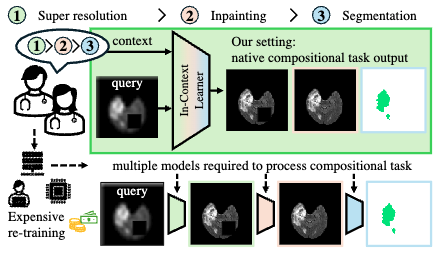
Prof. Dr. Erik Rodner is a faculty member at the University of Applied Sciences Berlin (HTW Berlin), where he serves as a Professor for Machine Learning and Data Science. He also contributes to the School of Engineering Sciences - Technology and Life. His research spans computer vision, machine learning, and biomedical applications, with a focus on learning with limited data, robust visual recognition models, and medical image analysis. He has developed innovative methods for medical diagnostics, industrial classification, and anomaly detection. Recent publications (2025-2016) highlight his expertise in visual in-context learning, semi-weakly segmentation, and active learning frameworks. He has collaborated with institutions such as ZEISS Group, Friedrich Schiller University Jena, and UC Berkeley. Scientific Awards: Award for Excellent Teaching (2023)
Jill M Castek is Professor of Literacy, Technology & Bi/multilingual Learners & STEM Education in the Department of Teaching, Learning, and Sociocultural Studies at the University of Arizona's College of Education. As Graduate Advisor for the Second Language Acquisition and Teaching (SLAT) program and Co-Director of the Digital Innovation and Learning Lab (DIALL), she bridges research and practice in digital literacy development. Dr. Castek earned her PhD in Education Psychology (Cognition and Instruction) from the University of Connecticut as a Neag fellow in the New Literacies Research Lab, followed by postdoctoral work at UC Berkeley's Lawrence Hall of Science. Her research examines how digital, visual, and audio storytelling fosters literate capacities across print and digital forms in classrooms and community spaces. Her work centers on digital problem solving , critical media literacy , and equity-centered making practices in STEM education. She investigates intersections of disciplinary literacy, new media, and learning for bi/multilingual students, with strong emphasis on community-based applications through libraries and non-profits like Literacy Connects where she serves on the board. Recent publications (2022-2025) reveal growing focus on AI-era teacher education , digital health literacy , and misinformation challenges , while maintaining core commitments to collaborative problem solving and expansive literacies frameworks. Her scholarship consistently addresses K-12 and adult learning contexts through interdisciplinary lenses. Scientific recognition includes: Neag fellowship during doctoral studies As Principal Investigator on NSF and IMLS grants, Dr. Castek advances digital equity through projects like the Making Equity Network (broadening STEM participation for underrepresented groups) and library-focused digital problem-solving initiatives serving economically vulnerable adults. Her leadership in the Technology Enhanced Language Learning (TELL) cluster hire demonstrates institutional impact. Through DIALL, she cultivates innovations connecting digital storytelling with self-expression at individual and community levels, promoting workforce readiness via creative problem-solving approaches. Her board membership with Literacy Connects extends this community-engaged scholarship to Tucson-based literacy initiatives.
Hao Yang is an Assistant Professor in the Department of Civil and Systems Engineering at Johns Hopkins University, with dual affiliations at the Johns Hopkins Data Science and AI Institute and the Johns Hopkins Institute for Assured Autonomy. His research develops Trustworthy Machine Learning methods to enhance urban mobility systems, focusing on traffic safety, equity, and sustainability through ethical AI and human-machine cooperative systems. Yang earned dual bachelor's degrees in Electrical and Computer Engineering from Beijing University of Posts and Telecommunications and the University of London, followed by a Ph.D. in Civil Engineering (Transportation) from the University of Washington. His educational background bridges telecommunications, electrical engineering, and transportation systems. His research integrates spatio-temporal modeling, assured autonomous systems, and multimodal representation learning to address transportation equity and safety. Key projects include edge-AI-powered traffic surveillance, real-time crash identification, and cooperative signal assistance for vulnerable road users. His work emphasizes ethical AI deployment in cyber-physical infrastructure to create sustainable urban mobility solutions. Recent publications reveal a strategic shift toward large language models and multimodal AI for transportation challenges, with strong emphasis on explainability, reliability, and equity in traffic crash prediction, flow forecasting, and autonomous driving systems. This evolution demonstrates his commitment to adapting cutting-edge AI for real-world transportation problems. Yang's scientific contributions have earned significant recognition: Michael Kyte Outstanding Student of the Year Award (2022) High-Value Research Award from AASHTO (2022) Best Paper Award from TRB Information Systems Committee (2023) Best and Outstanding Dissertation Awards (2024) IEEE DTPI Outstanding Paper Award (2022) TRANSFOR22 Data Competition 2nd place (2022) ASCE Bridges Photo Contest First Place (2021) He actively mentors graduate researchers and seeks 2-3 PhD students for Fall 2025 to advance trustworthy AI in transportation. His research is supported by NSF, USDOT, and AASHTO grants including the Real-Time Truck Parking Information System project that received the High-Value Research Award. Current work focuses on edge-AI for traffic safety and multimodal data integration. Yang leads research within Johns Hopkins' Data Science and AI Institute and Institute for Assured Autonomy, collaborating with Transportation Research Board committees. His lab develops real-time perception systems using edge computing and representation learning, with active projects on non-motorized user safety and equitable traffic management for people with disabilities.
Wei Gao is an Associate Professor at the Swanson School of Engineering, University of Pittsburgh. His research focuses on the design, deployment, analysis and measurement of on-device AI architectures and algorithms on mobile, embedded and networked systems. He has strong interests in unveiling analytical principles underneath practical AI deployment problems, and designing systems based on these principles. The developed AI and system solutions are widely applied to various application scenarios, including Internet of Things, edge computing and smart health. Dr. Gao received his PhD from Pennsylvania State University in 2012 and his B.E. from the University of Science and Technology of China in 2005. Dr. Gao's research spans across Cyber-Physical Systems , Infrastructure Security , High Performance Computing , and the Distributed Governance of Information . His work particularly emphasizes on-device AI architectures and algorithms for mobile and embedded systems. He explores how to deploy AI efficiently on resource-constrained devices, with applications in Internet of Things, edge computing, and smart health. His research aims to bridge theoretical principles with practical system implementations, focusing on creating efficient, secure, and reliable AI solutions for real-world deployment scenarios. His recent work has increasingly focused on bringing Large Language Models to edge devices while maintaining performance and security. Analysis of Dr. Gao's recent publications (2021-2025) reveals a strong focus on on-device AI, particularly around Large Language Models for resource-constrained environments. His work addresses critical challenges including model personalization, security against illegal adaptation, sparse activation techniques, and physics-grounded generation. Much of his research targets making AI more efficient, secure, and practical for deployment on edge devices with limited computational resources, while also exploring applications in health monitoring and power systems. Dr. Gao has received significant recognition for his research, including: NSF Faculty Early Career Development (CAREER) Award (2016) Dr. Gao mentors numerous graduate students who contribute to his research in mobile computing, embedded systems, and on-device AI. His research has been supported by various grants, most notably the NSF CAREER award, enabling his team to explore innovative approaches to mobile and embedded AI systems. His lab investigates how to optimize AI for resource-constrained environments while maintaining performance and security, with particular focus on balancing computational efficiency with model accuracy. Dr. Gao leads a research group focused on mobile and embedded AI systems, with particular emphasis on making AI practical for deployment on everyday devices. His team explores novel techniques for model compression, efficient inference, and secure deployment of AI models on edge devices, with applications ranging from health monitoring to smart infrastructure.
Panagiotis Papapetrou is a Professor of Data Science and Deputy Head of Department at the Department of Computer and Systems Science , Stockholm University (since 2017). He also serves as Head of the Data Science Research Group and holds an Adjunct Professor position at Aalto University (Finland). As a Board Member of the Swedish Association for Artificial Intelligence (SAIS) , he contributes to shaping AI research directions in Sweden. Research Pillars: Algorithmic data mining, interpretable machine learning, time series classification, and health informatics Key Projects: AI for societal fairness, digital twins for smart buildings, EXTREMUM for explainable medical AI, and e-learning personalization Teaching Legacy: Developed courses in Data Mining (HT2013-2022), Machine Learning (VT2022-2024), and Health Informatics (VT2018-2021) His work focuses on interpretable AI for healthcare applications, particularly through counterfactual explanations for time series classification and forecasting. This includes developing methods like Glacier for constrained counterfactuals and Ijuice for k-justified explanations. His research also explores multimodal clustering of sepsis patient records and federated learning approaches for ICU mortality prediction. Recent scientific contributions include: CounterFair (2024): Group fairness analysis via counterfactual burden metrics M-ClustEHR (2024): Multimodal clustering for electronic health records COMET (2024): Constraint-based glucose forecasting explanations Temporal pattern mining (2024-2025): Enhanced forecasting models through decomposition Z-Time (2024): Interpretable multivariate time series classification His editorial leadership includes: Action Editor at Machine Learning Journal (since 2024) Action Editor at Data Mining and Knowledge Discovery (since 2018) Guest Editorial Board for ECML/PKDD Journal Track (2014-2019)
Haley De Korne is a Professor at the University of Oslo's Institute for Literature, Area Studies and European Languages within the Faculty of Humanities. Her academic work spans the intersections of linguistics, education, and anthropology, focusing on multilingual education contexts with particular attention to minoritized and indigenous languages. Dr. De Korne holds a PhD in Educational Linguistics from the University of Pennsylvania, an MA in Applied Linguistics from the University of Victoria, and a BA (Hons) in Combined Social Sciences from Durham University. Her academic journey reflects a strong foundation across multiple disciplines that inform her interdisciplinary approach to language research. PhD Educational Linguistics, University of Pennsylvania, USA MA Applied Linguistics, University of Victoria, Canada BA Hons Combined Social Sciences, Durham University, UK Her research interests focus on critical language awareness among teachers, social change imaginaries in multilingual regions, and pedagogies for language reclamation. She specializes in minoritized languages in education, multilingual education policy and pedagogy, language politics, indigenous language reclamation & revitalization, and language ideologies, with specific expertise in Isthmus Zapotec (Mexico) and Anishinaabemowin (US & Canada). Her methodological approach combines ethnography and interactional sociolinguistics within linguistic anthropology. Analysis of Dr. De Korne's recent publications reveals a consistent focus on language revitalization, particularly examining how educational contexts can support or hinder minoritized language maintenance. Her work increasingly addresses global North-South perspectives on language education, with attention to place-based pedagogy and critical language awareness. A significant thread throughout her research examines translanguaging practices and how they challenge traditional monolingual approaches to language education. Her scholarship demonstrates strong community engagement, particularly with Zapotec-speaking communities in Mexico. Dr. De Korne serves on the editorial board of Multilingua - Journal of Cross-cultural and Interlanguage Communication (2023-2025) and is an active member of the Norwegian Academy for Young Researchers (2021-2025). She also chairs the American Association of Applied Linguistics Committee for Online Education and Outreach Webinar subcommittee. Member, Norwegian Academy for Young Researchers (2021-2025) Editorial board member, Multilingua Journal (2023-2025) Chair, AAAL Committee for Online Education and Outreach (2023) Partner, Multilingualism in Transitions Research Project (2021-2025) Affiliated researcher, MultiNor Research Group At the University of Oslo, Dr. De Korne teaches courses including MULTI 4150 Project-based research in multilingualism, NOAS 4102 Additional language learning in socio-cognitive and sociocultural perspectives, and several linguistics courses on language acquisition, multilingualism, and research methods. She also leads PhD courses on communication in multilingual workplaces and revitalization of indigenous and minority languages. Her current research projects include FOSTERLANG (Indigenous language resilience), Language and culture maintenance in Wilamowice, and Linguistics and Sustainability.