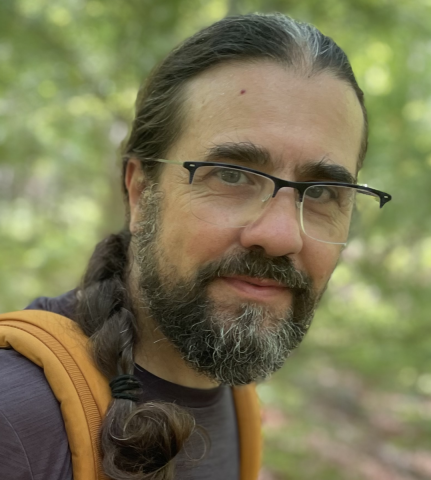
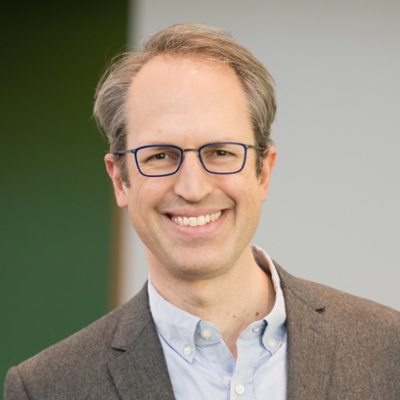
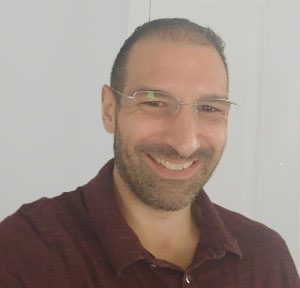
Johan Mårtensson is a Senior Lecturer at Lund University , affiliated with the Department of Logopedics, Phoniatrics and Audiology and Lund University Humanities Lab . His research focuses on brain plasticity during learning, combining longitudinal cognitive testing with Magnetic Resonance Imaging (MRI) . He explores language acquisition mechanisms, game-based interventions for children with reading difficulties, and virtual reality applications in adult language learning.
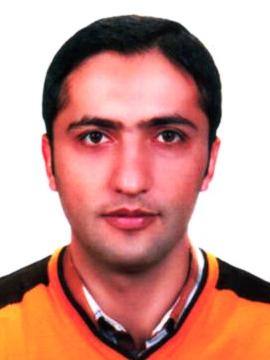
Hasan Kurnaz is an Associate Professor at the Department of Turkish and Social Sciences Education , Nizip Faculty of Education , Gaziantep University . With a career spanning institutions like Inonu University and Siirt University, his expertise lies in Turkish language education, reading comprehension, and vocabulary teaching. PhD in Turkish Education (2018), Inonu University MA in Turkish Education (2013), Inonu University BA in Turkish Language Teaching (2009), Erciyes University His research focuses on critical reading , literacy strategies , media literacy , and educational technology . He has developed assessment tools like the Critical Reading Self-Efficacy Scale and Intrinsic Reading Motivation Scale , contributing to educational measurement. Kurnaz's publications include 11 book chapters and 15 peer-reviewed articles analyzing Turkish textbooks, reading education paradigms, and PISA literacy trends. His work often explores intersections between student motivation , cognitive strategies , and educational policy in language teaching contexts. He has supervised three graduate theses on topics including EBA usage by teachers , values education in literary works , and relationship between writing attitude and skill . His conference presentations address contemporary issues like teaching Turkish to Syrian refugees and media literacy for teacher candidates .
Dr. Julia Dillmann is an Academic Councillor in the Department of Developmental Psychology at Justus Liebig University Giessen, Germany. She specializes in studying motor-cognitive development in infants with developmental conditions and cross-modal perception in monolingual/bilingual infants, particularly examining pandemic impacts on social-emotional development. B.Sc. and M.Sc. in Psychology from Justus Liebig University Giessen Doctorate (Dr. rer. nat.) with summa cum laude distinction (2019) Her research focuses on developmental psychology, with emphasis on: Motor and cognitive outcomes in children treated for idiopathic clubfoot Visual-spatial abilities in infants with internal strabismus Multimodal perception (face/speech integration) Parental stress effects during the COVID-19 pandemic Longitudinal developmental assessments Early childhood intervention efficacy Recent publications analyze gaze cue utilization in uncertain situations, pandemic-related developmental disruptions, and cross-racial perception in infants. She has presented findings at major conferences like Society for Research in Child Development (SRCD) and German Psychological Society (DGPs) meetings. Scientific recognition includes: Summa cum laude doctorate Active member of German Society for Psychology (DGPs) Participant in the Division of Developmental Psychology of the DGPs Membership in Center for Mind, Brain and Behavior (CMBB) Teaching responsibilities include: Seminar 'Basics of developmental psychology' (winter/summer) Lecture 'Introduction to Psychology' for minor students Lecture 'Basics of developmental psychology part 1' She collaborates with Prof. Gudrun Schwarzer's team in studying developmental trajectories and participates in the doctoral committee for natural sciences.
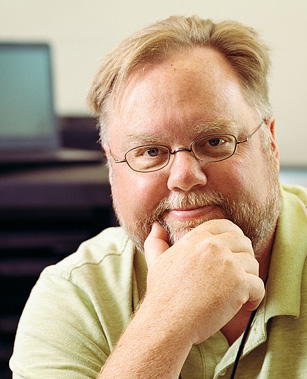
Rich Rice is a Professor in the Department of English specializing in Technical Communication & Rhetoric at Texas Tech University. He serves as Director of the Center for Global Communication and Director/Judge of UIL Ready Writing. His scholarly work spans composition and rhetoric, new media, and intercultural communication with a strong focus on practical applications in educational settings. Ph.D. from Ball State University (2002) Professor Rice's research focuses on contemporary composition and rhetoric, new media, problem-based learning, portfolio assessment, intercultural communication, online writing instruction, and service-learning. His work bridges theoretical frameworks with practical applications, particularly in how digital technologies transform writing instruction and global communication. He has developed innovative approaches to portfolio assessment and has been at the forefront of integrating intercultural communication competence into writing pedagogy. His recent work has increasingly focused on the ethical integration of artificial intelligence in writing education, examining how emerging technologies reshape literacy instruction across global contexts. Rice's scholarly output demonstrates a consistent trajectory from traditional composition studies toward increasingly global and technology-mediated approaches to writing instruction. His early work focused on portfolio assessment and writing pedagogy, which evolved into exploring online writing environments and intercultural communication. More recently, his research has addressed the challenges and opportunities presented by generative AI in writing education, while maintaining his commitment to intercultural communication and global perspectives. His publications reveal a scholar deeply engaged with both theoretical developments in rhetoric and composition and practical applications in the classroom. TTU Libraries' 2024 Advocacy for Open Access Award Schovanec Teaching Development Scholarship (2024) Empowering educators: Strategies for multicultural communication and modern teaching (2024) TTU Faculty International Scholarship Global Vision Award (runner-up, 2018) U.S. Fulbright Scholar South and Central Asia Regional Travel Program (2014) U.S. Fulbright-Nehru Scholars Award (2014) Professor Rice has secured significant grant funding for international educational initiatives, including projects in India and China. He serves as Director of the Center for Global Communication and sponsors international scholars. His work extends beyond traditional academic boundaries through community engagement as a Board Member of Community Assistance Volunteers and through directing the UIL Ready Writing program. His recent grants focus on multicultural communication, global film series, and developing cultural empathy in university settings. Rice has developed innovative approaches to global communication through projects like the "Smart" Connect-Exchange Study Abroad Model and through his leadership of the Center for Global Communication. His work with new media exhibits, including the Synoptics Wordscape Exhibition at the TTU Museum, demonstrates his commitment to exploring the intersection of digital technology and communication in creative ways.
Mark Sicoli is an Associate Professor at the University of Virginia , where he serves as Director of the Interdepartmental Program in Linguistics and Associate Editor of Language Documentation and Description . His work spans Zapotec-speaking communities in Mexico (since 1997) and Virginia Tribal Nations like the Nottoway (since 2020). As a Fellow of the UVA Institute for Advanced Technologies in the Humanities (IATH), he leads the Data Back! project (2025-2027) , focusing on digital infrastructure for community-driven language documentation. Specialties: Multimodality, Embodied Interaction, Community-Engaged Research, Video Analysis, Ethnography, Semiotic Theory Research Themes: Language in Human Evolution, Human Social Organization, Anarchist Theory, Language Contact, Documentary Linguistics His scholarship critiques evolutionary progress narratives through anarchist theory and interactional analysis , arguing that language evolved via mutual aid rather than self-interest. He has conducted NSF-funded projects on Zapotec and Chatino language surveys and whistled speech documentation, co-directing initiatives that trained 23 native speakers. His teaching includes collaborative courses like Language Revival in the Eastern Tribes with Nottoway citizens. Key publications include Saying and Doing in Zapotec (2020), exploring how language emerges through joint action, and a 2025 chapter on Zapotec perception categories in the Oxford Handbook of the Languages of Perception . His work emphasizes decolonizing linguistics and empowering Indigenous communities in language preservation. Scientific Awards: Fellow, UVA Institute for Advanced Technologies in the Humanities (IATH)
Marie Bourjade is a Lecturer in Developmental Psychology at the Cognition, Languages, Language, Ergonomics Laboratory (CLLE, UMR 5263) of Toulouse Jean Jaurès University . She leads research on multimodal communication systems , with a focus on human-primate comparative analysis and language evolution through her MODAL project. HDR in 2022: 'Bridges between gesture and voice in primate species' Junior Member of Institut Universitaire de France since 2020 Previously held postdoctoral positions at Max Planck Institute and Aix-Marseille University Her research explores interspecific communication mechanisms , combining developmental psychology , experimental linguistics , and primate behavioral ecology . Recent publications examine attention-sensitive communication in human infants and olive baboons , revealing evolutionary continuities in multimodal signaling. She supervises master's theses in evolutionary psychology and teaches across L1-L3 psychology curricula , including developmental psychology history, observation techniques, and comparative psychology courses. Collaborations include institutions like University of California San Diego , University of St Andrews , and Tilburg University .
Dr. Oiwi Parker Jones is a Hugh Price Fellow in Computer Science at Jesus College, University of Oxford, and Principal Investigator leading the Parker Jones Neural Processing Lab (PNPL) at the Oxford Robotics Institute. Their research focuses on neural speech prosthetics, combining machine learning with neuroscience to develop technologies for speech restoration. They hold an honorary fellowship in the Nuffield Department of Clinical Neurosciences and teach in Engineering Science, Computer Science, and Neuroscience, including roles as a stipendiary lecturer in neuroscience and medical teaching at St Peter’s and Oriel Colleges. Jones’ work spans robotics, neural decoding, and endangered language preservation, with a particular emphasis on Hawaiian linguistics. Their lab develops large-scale machine learning methods for neural data analysis and collaborates on interdisciplinary projects involving clinical neuroimaging and AI ethics. Jones is also engaged in cultural preservation efforts through computational linguistics and has published widely on language contact, phonology, and indigenous protocols in technology. Education: Doctoral research in NLP and machine learning at Oxford Neuroscience training at UCL and Oxford Research Interests: Neural prosthetics, speech decoding, small-data machine learning, robotics, and endangered language preservation. Current projects include non-invasive brain-to-text systems, clinical fMRI applications, and computational tools for Hawaiian linguistic analysis. Teaching Contributions: Undergraduate lectures on generative deep learning and robotics, postgraduate supervision in DPhil projects across Engineering, Computer Science, and Neuroscience. Known for interdisciplinary teaching methods integrating neuroscience and AI. Awards & Recognition: No explicit awards listed, but recognized for innovative interdisciplinary research and leadership in neural engineering. Labs & Teams: Leads PNPL, collaborates with Oxford Robotics Institute and Applied Artificial Intelligence Lab. Active in global networks for clinical neuroimaging and indigenous AI ethics.
Professor Markus Damian is a faculty member at the University of Bristol, holding the position of Professor of Psychology of Language within the School of Psychological Science. His research focuses on language production, bilingualism, and cognitive control mechanisms. Damian has expertise in experimental methods such as mouse tracking and ERP studies, and his work often explores phonological and semantic processes in language processing. He has collaborated with scholars like Jeffrey Bowers and Colin Davis, contributing to advancements in understanding lexical competition, bilingual lexicons, and the neural underpinnings of speech planning. Education: M.A. and Ph.D. from Rice University. Research interests include the interplay between orthography and phonology in language production, cognitive control in bilingual speakers, and developmental aspects of speech perception in children with hearing impairments. His publications span over two decades, demonstrating sustained contributions to psycholinguistics and cognitive psychology. Key methodological innovations include the use of mouse-tracking paradigms to study real-time cognitive processes and the development of adaptive tests for assessing vocabulary size. Damian’s work bridges theoretical linguistics with experimental psychology, emphasizing both behavioral and neurophysiological evidence.
Liangyan Gui is a Research Assistant Professor at the University of Illinois at Urbana-Champaign, affiliated with the Department of Computer Science within the College of Engineering. His research focuses on cutting-edge topics in Artificial Intelligence, particularly in computer vision, 3D modeling, human motion prediction, and robotics. He teaches courses such as CS 446 (Machine Learning) and CS 598 GUI (Efficient & Predictive Vision). Gui's research interests span 3D scene understanding, human-object interaction, and generative models. He explores AI-driven solutions for tasks like motion editing, physics-based simulation, and multimodal reasoning. His work bridges computer vision and robotics, with applications in 3D reconstruction, animation, and AI for dynamic environments. Recent publications highlight advancements in 3D photo editing, human-object interaction generation, and self-supervised learning. His research often integrates textual inputs with visual data to enhance AI systems' capabilities in reasoning and generation. Gui has been involved in initiatives such as the AICE Center grants (as part of a team), though specific grant details are not explicitly attributed to him in the provided text. His contributions extend to foundational AI models and their practical implementations in real-world scenarios.
Brygg Ullmer is a Professor at Clemson University's School of Computing and Chair of the Human-Centered Computing Division. He leads the Tangible Visualization group, focusing on Tangible User Interfaces (TUIs) Computational Genomics Interactive Computational STEAM Rapid Physical/Electronic Prototyping Computationally-Mediated Art and Design His work bridges physical and digital domains, with applications in K-12 education, high-performance computing, and culturally-rooted design. Research trends from his 15 most recent articles show a focus on Generative AI for cyberphysical systems Shape-changing interfaces Token+Constraint interaction models Genomics data visualization Hybrid tangible-gestural interfaces Multi-display collaboration These span both theoretical and applied work in computer science, biology, and design. Ullmer has held significant roles including Postdoctoral work at Zuse Institute Berlin Associate Professor at Louisiana State University (CCT & Computer Science) Visiting Lecturer at Hong Kong Polytechnic University Contributions to IBM Systems Journal and special editions of Springer's Personal and Ubiquitous Computing He has also co-edited journal special issues and served on conference committees. His scientific contributions include co-invented U.S. patents (6164541, 6263507, 6259441) related to Invisible hyperlinking Audiovisual data browsing Digital video time-shifting These patents reflect early innovations in tangible interface technology that have influenced modern interactive systems.
Thomas Hellström is a Professor at the Department of Computing Science at Umeå University and is also affiliated as a professor at the Centre for Transdiciplinary AI. He leads the Intelligent Robotics group, focusing on the application of artificial intelligence for developing robots for social and industrial applications, with a particular emphasis on Human-Robot Interaction (HRI). His research spans multiple domains including social robotics, field robotics, and robot ethics. Hellström's research interests center around making robots more understandable and effective in human environments. His work in Human-Robot Interaction explores how robots can communicate their intentions and actions clearly to humans, while his field robotics research focuses on unmanned forest vehicles and agricultural robotics. He has made significant contributions to robot ethics, particularly regarding military applications of robotics, and has published extensively on bias in machine learning. His approach combines theoretical frameworks with practical implementations, often resulting in tangible robotics systems. The analysis of Hellström's recent publications reveals a consistent focus on making robotic systems more transparent, understandable, and socially competent. His work increasingly integrates multiple modalities of interaction, combines cognitive models with practical robotics, and addresses the ethical implications of deploying AI systems in real-world contexts. There's a clear trajectory toward more sophisticated human-robot collaboration frameworks that respect social norms while maintaining technical effectiveness. Hellström has successfully supervised numerous PhD students including Michele Persiani, Ahmad Ostovar, Benjamin Fonooni, Mostafa Pordel, and Ola Ringdahl, while also serving as co-supervisor for several others. His research has been generously funded through multiple EU projects including INTRO (2010-2014), SOCRATES (2016-2020), CROPS, and SWEEPER, along with grants from Vetenskapsrådet, VINNOVA, and various foundations. At Umeå University, Hellström leads the Intelligent Robotics group which maintains strong connections with both academic and industrial partners. The group has developed notable systems including an intelligent rollator for stroke patients and harvesting robots for agricultural applications. Their work often bridges theoretical AI research with practical implementations in real-world environments, particularly in healthcare and agriculture.
Joseph Schmidt is an Associate Professor of Psychology at the University of Central Florida, where he directs the Attention and Memory Laboratory. His research integrates eye-tracking and EEG/ERP methodologies to study attention-memory interactions. Key focus areas include: Neural and behavioral correlates of visual working memory Attention guidance in real-world contexts Visual search errors in medical imaging Oculomotor patterns in neurological disorders His work bridges cognitive psychology and neuroscience, examining how memory representations shape attentional selection. Current projects investigate cognitive expectations in visual search, EEG classification methods, and attentional deficits in clinical populations.
Cora Brasfield Causey is an Assistant Professor in the Department of Curriculum and Instruction at the University of Alabama at Birmingham (UAB) School of Education. With appointments since 2014, she specializes in early childhood education, focusing on logical reasoning development, literacy, mathematics, and science instruction. Her work bridges theory (particularly Piagetian frameworks) with classroom practice, including ESL contexts and international collaborations. Doctor of Philosophy in Early Childhood Education and Teaching (UAB, 2016) Master of Education in Early Childhood Education (UAB, 1992) Bachelor of Science in Mathematics and Early Childhood Education (Birmingham-Southern College, 1990) Her research explores curiosity and logical reasoning in young children, with fieldwork conducted both locally and internationally (e.g., Uganda, global media studies). She applies these insights to teacher education through undergraduate honors programs and graduate courses on Piaget, assessment, and curriculum design. Her peer-reviewed work spans journals like Thinking Skills and Creativity , WAESOL Educator , and Childhood Education , emphasizing inquiry-based learning and technology integration. Key grants include funding for the Peabody Picture Vocabulary Test (PPVT) assessments, Birmingham Talks - The Overton Project, and UAB CCLC Literacy Development initiatives. She received the Distinguished Education Article Award (2015) and participated in Harvard's Critical Explorers Summer Workshop (2018). Her teaching portfolio covers courses such as EEC672 (Piaget & Perspectives Learning), EEC415 (Learning Environment Support), and ECE332 (Children's Literature), with recent offerings in Fall 2024. Peer Reviewer, NAEYC Accreditation & CAEP Founder/Director, UAB Undergraduate Honors Program Site Director, Urban Summer Enrichment Program Doctoral Committee Member, UAB
Dr. Maria Mos is an Associate Professor at Tilburg University's Tilburg School of Humanities and Digital Sciences (TSHD) within the Department of Communication and Cognition. Her research focuses on linguistic mental representations, particularly frequency-driven and context-dependent structures, and their role in language processing and evaluation. She examines how implicit/explicit knowledge of word usage influences interpretation and judgment, with applications to bilingualism, second language acquisition, and digital communication. Her expertise spans morphology, cognitive linguistics, and language transfer. Current projects include studies on open access publishing ethics, valence framing in social media, and originality in online dating profiles. She supervises four PhD students: Marie Barking, Julie Han, Véronique Verhagen, and Tess van der Zanden. Key research areas include: Language transfer mechanisms in bilinguals Morphological awareness interventions Perception of linguistic errors in digital contexts Affordances of multimodal communication Usage-based linguistic theories Recent work highlights innovative approaches to corpus-based judgment analysis and experimental designs combining psycholinguistic methods with social perception studies. Her research often integrates data from diverse populations, including unaccompanied refugee minors and language learners.
Silvia Bruti is a Professor of English Language and Translation at the University of Pisa's Department of Philology, Literature and Linguistics. She directs the University Language Centre and researches audiovisual translation, cross-cultural pragmatics, and corpus linguistics. She holds a PhD in English Studies from the University of Pisa. Research focuses on pragmatic aspects of audiovisual translation, including politeness strategies, conversational routines, dialect representation, and speech act translation in dubbed and subtitled content. Additional interests include corpus-based translation studies, media discourse analysis, and using audiovisual materials in language teaching. Publications examine diverse topics including impoliteness in translated dialogue, teen language innovation in media, environmental communication for children, and representation of non-standard accents. Research demonstrates consistent methodological approach combining corpus analysis with pragmatic theory. Professor Bruti has led multiple national research projects on corpus linguistics applications in translation studies and media analysis. She serves on editorial boards of translation studies journals and actively contributes to international scholarly associations.