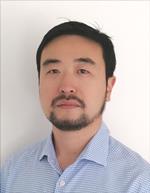
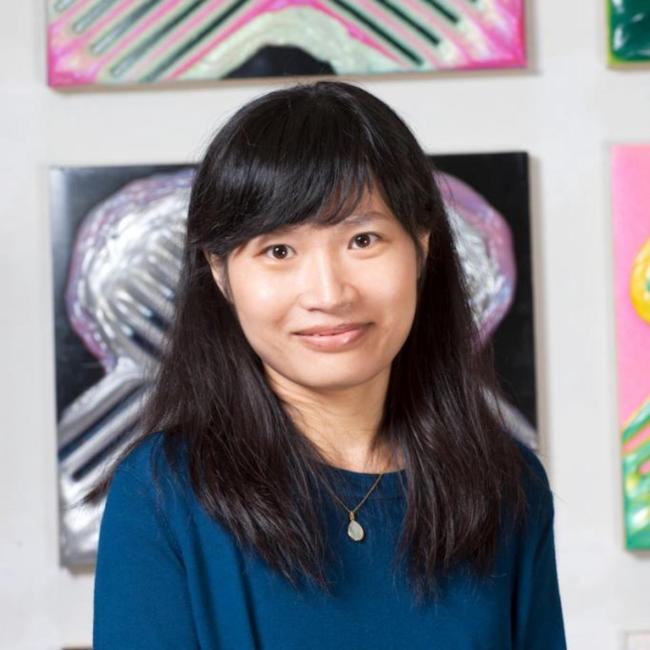
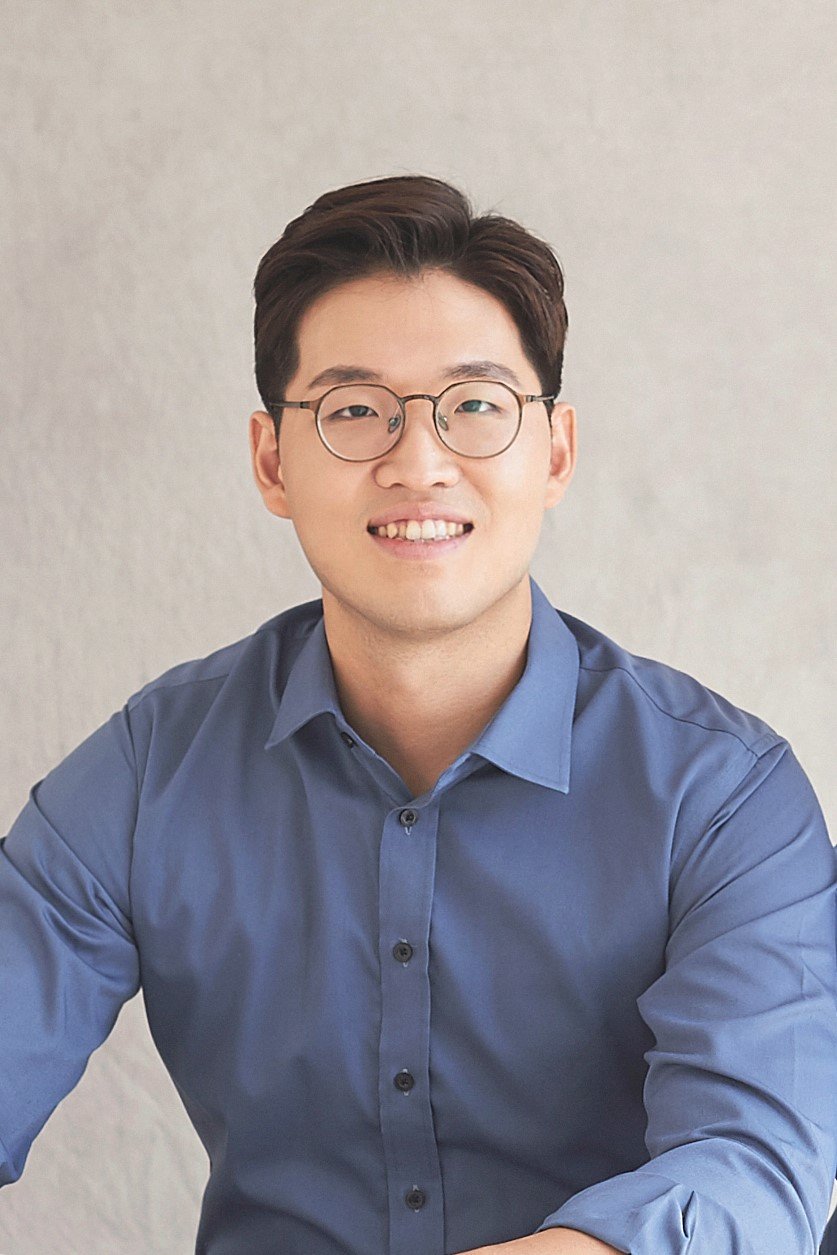
Jiaxiang Zhang is Professor of Artificial Intelligence in the Department of Computer Science at Swansea University's Faculty of Science and Engineering. He holds a PhD in Computational Neuroscience from the University of Bristol and previously held positions at the University of Birmingham, MRC Cognition and Brain Sciences Unit (Cambridge), and Cardiff University where he founded the Cognition and Computational Brain Lab. Zhang's research integrates computational modeling, machine learning, brain imaging (MEG/EEG/fMRI), and experimental approaches to study human cognition, aging, and neurological disorders. Key focus areas include: Neural mechanisms of decision-making and problem-solving Computational models of cognitive processes AI applications in healthcare diagnostics and neuroimaging Brain network dynamics in neurological conditions Recent publications emphasize deep learning models for neural data, multimodal brain connectivity, decision-making impairments in Parkinson's disease, and neuroinformatics tools. His work shows strong clinical translation through epilepsy biomarker development and emergency department outcome prediction. Zhang has led research grants from ERC, MRC, BBSRC, and Wellcome Trust. As primary investigator for multiple projects, he oversees significant computational neuroscience initiatives. He is available for postgraduate supervision.
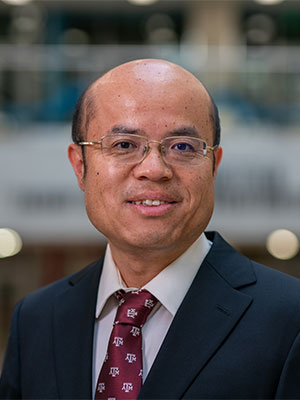
Shuiwang Ji is a Professor and Truchard Family Endowed Chair in the Department of Computer Science & Engineering at Texas A&M University, where he also holds Presidential Impact Fellow and Chancellor EDGES Fellow titles. He specializes in machine learning, AI for science/engineering, and language models/agents. His research bridges theoretical advances and practical applications in materials science, quantum chemistry, and biomedical engineering. Education: Ph.D. in Computer Science from Arizona State University (2010). Research focuses on equivaraint neural networks for symmetry-aware learning, graph-based molecular modeling, and generative AI for scientific discovery. He develops algorithms that integrate physics principles with deep learning, addressing challenges in materials design, PDE solving, and biomolecular structure prediction. Publications emphasize symmetry-aware architectures (e.g., equivariant Fourier neural operators), efficient interatomic potential computations, and diffusion models for protein/DNA design. Recent work explores trustworthiness in LLMs and causal reasoning in graph neural networks. Awards include NSF CAREER Award (2014), IEEE Fellow (2023), and Texas A&M teaching excellence awards. His work has been recognized in top venues like NeurIPS, ICML, and ICLR. His research group collaborates on projects funded by NSF, NIH, and industry partners, advancing AI applications in healthcare, robotics, and environmental science.
Jiří Muryc is a researcher at the Department of Slavonic Studies, Faculty of Arts, University of Ostrava. He specializes in Polish-Czech language contact, bilingualism, and sociolinguistic dynamics of the Czech-Polish borderlands. His work spans translation studies, orthographic interference, and linguistic landscapes. Position: Head of Department International Affiliation: Collaborated with Vytautas Magnus University, University of Wrocław, and other institutions His research focuses on multilingual environments, Polish language visibility in Czech public spaces, and cross-border language policy. He explores code-switching, hybrid lects, and ethnolinguistic identity in bilingual communities. Muryc's publications analyze Polish-Czech legal terminology, phraseological dictionaries, and translation challenges between typologically close languages. He emphasizes practical applications in interpreter training and digital language platforms like Polski.info . He supervises theses on topics ranging from Polish literature in Czech translations to Czech-Polish business phraseology and UNESCO heritage linguistics. His projects include Erasmus+ initiatives for Polish language e-learning and sociolinguistic studies of Zaolzie.
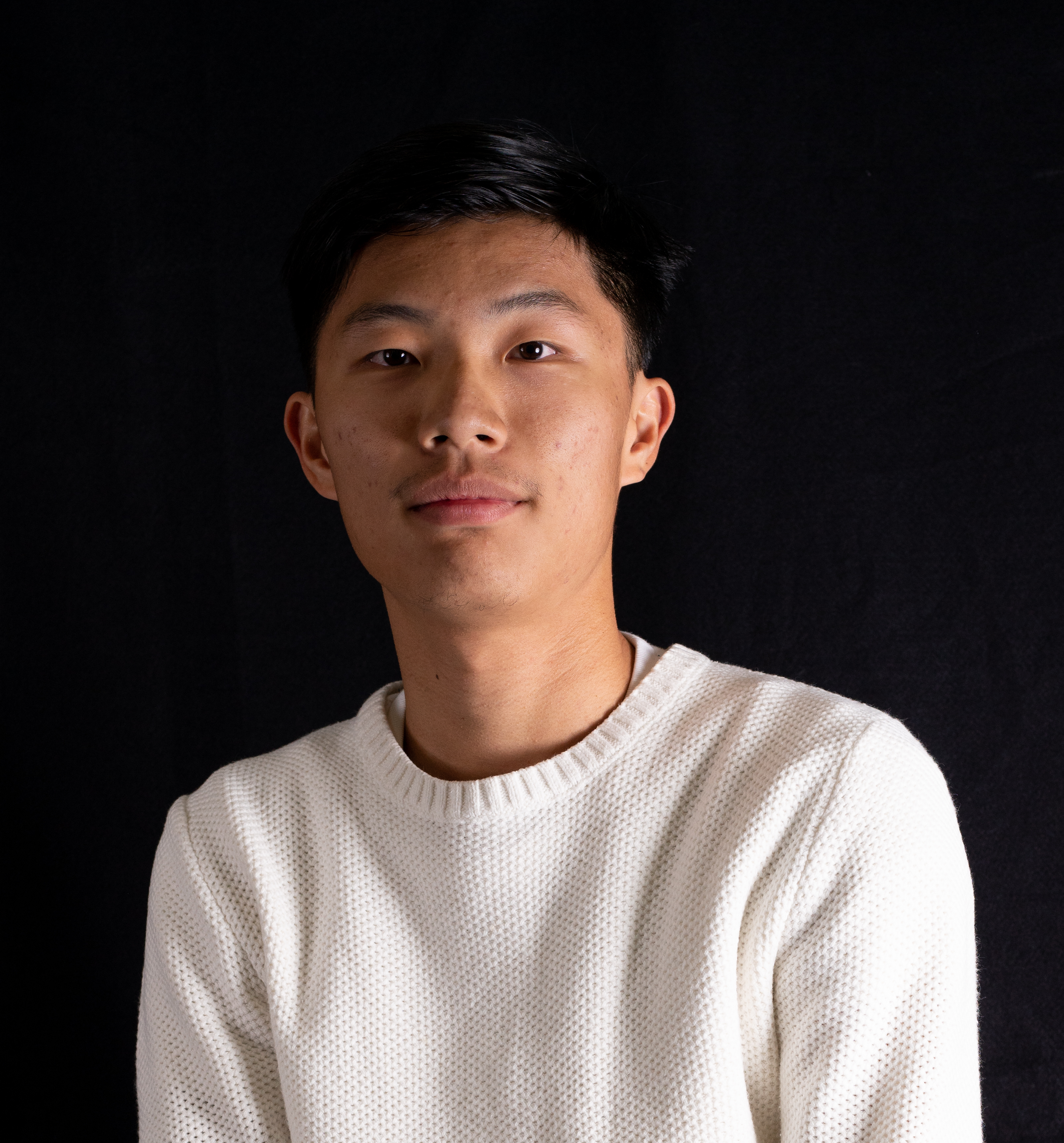
Liang-Yuan 'Leo' Wu is a Researcher at the University of Michigan's Computer Science and Engineering department, working with Prof. Dhruv 'DJ' Jain in the Soundability Lab at the AI Laboratory. He recently completed his Master's degree in Computer Science & Engineering at the University of Michigan. His educational background includes: Master of Science in Computer Science & Engineering, University of Michigan (2022-Present) University of Edinburgh (2021) Bachelor's degree, National Taiwan University (2017-2021) Wu's research centers on human-centered AI solutions for auditory accessibility, with deep collaboration with the Deaf and Hard of Hearing (DHH) community. He develops technologies that leverage multimodal AI and large language models to interpret soundscapes, generate personalized audio descriptions, and enhance captioning systems—particularly in challenging environments like clinical settings where communication accuracy is critical. His work bridges technical innovation with real-world user needs through mixed-methods UX research. His publication trajectory reveals a strategic focus on applying cutting-edge AI models to solve accessibility gaps in sound interpretation and captioning, with increasing emphasis on healthcare applications and community-driven design principles. This represents a significant shift toward context-aware, deployable accessibility tools rather than theoretical frameworks. Wu's research impact is recognized through: BEST POSTER AWARD at ASSETS 2024 for CARTGPT Google Academic Research Award for 'Audio Scene Understanding' proposal While not yet mentoring formal advisees, Wu secures competitive research funding through awards like Google's Academic Research Award and actively collaborates with interdisciplinary teams across HCI, AI, and accessibility domains. His work in the Soundability Lab emphasizes community co-creation with DHH individuals to ensure technologies address authentic user needs rather than theoretical scenarios. The Soundability Lab serves as Wu's primary research environment, focusing on making sound universally accessible through AI-driven innovation. The lab maintains direct partnerships with the DHH community throughout the research lifecycle—from problem identification to solution validation—ensuring technologies are both technically robust and socially impactful.
Ying Wang is an Associate Professor in English linguistics at Karlstad University since 2020, specializing in English for academic purposes, applied corpus linguistics, and second language writing. She holds a PhD from Uppsala University (2013) and has taught courses at both undergraduate and graduate levels focusing on academic writing, second language pedagogy, and corpus methodology. Her research explores rhetorical structures in disciplinary genres, evaluative language resources, and the impact of extramural English activities on L2 writing development. Notable projects include the Swedish Learner English Corpus (SLEC) initiative and analyses of predatory publishing practices in political science. She has also examined government communication strategies during the UK's COVID-19 pandemic response through corpus-assisted discourse studies. Key research contributions span formulaic language use in ELF contexts, methodological innovations in corpus linguistics, and linguistic comparisons between well-established and predatory journals. Her work bridges theoretical linguistics with practical applications in education and scholarly publishing ethics. Publications span prestigious journals like English for Specific Purposes , Text & Talk , and Journal of Second Language Writing , reflecting her interdisciplinary approach to language studies. Current projects emphasize corpus-driven research on academic communication practices and their pedagogical implications.
Jordan Boyd-Graber is a Professor in the Department of Computer Science at the University of Maryland's College of Computer, Mathematical, and Natural Sciences. He serves as a leading researcher in Natural Language Processing with significant contributions across multiple NLP subfields. His work bridges theoretical advances with practical applications requiring human-AI collaboration. His research interests span Natural Language Processing , Question Answering systems , Human-AI collaboration , Machine Translation , and Topic Modeling . He focuses on developing systems that work effectively with humans rather than replacing them, emphasizing interpretability and user-centered design. His work often involves creating evaluation frameworks that better capture real-world utility rather than just technical metrics. His publication record shows consistent leadership in the field, with numerous papers at top venues including ACL, EMNLP, and NAACL. Recent work (2023-2024) demonstrates strong engagement with LLMs, human evaluation methodologies, and practical applications in health and translation domains. His research often involves student collaborators, indicating active mentorship. ACL Fellow (2021) Program Chair for ACL 2023 Organizer of prompt hacking competition Leader in human-centered NLP evaluation Boyd-Graber has secured substantial funding for his research, particularly in projects involving human-AI collaboration and question answering systems. His work often involves interdisciplinary teams spanning computer science, linguistics, and domain-specific applications. He has mentored numerous graduate students who have gone on to successful careers in academia and industry. He leads research groups focused on developing interpretable NLP systems that work effectively with humans, particularly in high-stakes domains like healthcare and education. His lab frequently develops novel evaluation methodologies that better capture real-world utility rather than just technical metrics.
Snigdha Chaturvedi is an Associate Professor in the Department of Computer Science at the University of North Carolina at Chapel Hill. She previously held faculty positions at the University of California, Santa Cruz, and has conducted postdoctoral research at the University of Pennsylvania and University of Illinois, Urbana-Champaign. PhD in Computer Science from University of Maryland, College Park Bachelor's degree in Computer Science and Engineering from Indian Institute of Technology (IIT) Kanpur Her research spans Natural Language Processing with emphasis on Narrative Understanding , Text Summarization , and Socially Aware Language Generation . She advances Fairness in AI through ethical NLP applications in Mental Health and Educational Technology . Recent work focuses on 2025 publications in ACL and NAACL journals, alongside 2024 contributions to EMNLP Findings and ICLR . Earlier projects include the NarraSum dataset (2022) and MOOC forum analysis (2020). Scientific recognitions include: ACM Student Research Competition First Place (2014) IBM PhD Fellowship (2014-2015, renewed in 2015) Kulkarni Summer Research Fellowship (2015) WPI STEM Faculty Launch Program Participant (2015) Her team has advised 13 PhD and Master's students with notable placements at Bloomberg, AI2, and University of Southern California. Research integrates Accessibility challenges through collaborations with Google and IBM labs.
Kishlay Jha is an Assistant Professor at the University of Iowa's College of Engineering in the Department of Electrical and Computer Engineering. He is also a researcher at the Center for Bioinformatics and Computational Biology and the Iowa Initiative for Artificial Intelligence. PhD in Computer Science from University of Virginia (2022) Email: kishlay-jha@uiowa.edu Office: 3320 Seamans Center, Iowa City, IA 52242 Phone: (319) 467-0096 His research focuses on data science and artificial intelligence with emphasis on data mining, machine learning, and their applications in biomedical domains. He develops methodologies for transforming heterogeneous clinical, genomic, and bibliographic data into actionable knowledge for scientific advancement. Recent work includes: Semantic knowledge integration in biomedical language models Dynamic representation learning for evolving systems Hypergraph-based contrastive learning for healthcare applications Continual learning frameworks for time-sensitive domains Knowledge-guided representation learning Biomedical hypothesis generation He leads the Data Mining and Machine Learning Laboratory, where his team develops innovative tools for both biomedical discovery and general AI applications.
Mahdi Soltanolkotabi is a Professor in the Departments of Electrical and Computer Engineering, Computer Science, and Industrial and Systems Engineering at the University of Southern California's Viterbi School of Engineering. He serves as the inaugural Director of the USC Center on AI Foundations for Science (AIF4S). His academic journey includes a Ph.D. in Electrical Engineering from Stanford University (2014) under Emmanuel Candes, followed by a postdoctoral position at UC Berkeley's AMPLAB mentored by Ben Recht and Martin Wainwright. Dr. Soltanolkotabi's research spans both theoretical and applied dimensions of data science. On the theoretical side, he develops mathematical foundations for modern data science, focusing on generative AI, deep learning, machine learning, signal processing, and computational imaging. His work draws upon nonconvex optimization, high-dimensional probability, statistical estimation, empirical processes, and learning theory. On the applied side, he develops reliable AI systems for healthcare and scientific applications, collaborating with physicians and domain scientists to enhance AI reliability, develop new architectures, and create rigorous evaluation frameworks. His recent publications demonstrate strong focus on medical AI applications, image reconstruction, and theoretical foundations of deep learning. His work bridges the gap between theoretical guarantees and practical implementations, particularly in medical imaging where reliability is critical. His research group has made significant contributions to understanding the behavior of nonconvex optimization algorithms in high-dimensional settings. David and Lucile Packard Fellow Information Theory Society Best Paper Award NIH Director's new innovator award Sloan Research Fellowship NSF Career award Airforce Office of Research Young Investigator award (AFOSR-YIP) Viterbi school of engineering junior faculty research award Faculty awards from Google and Amazon Dr. Soltanolkotabi has received multiple research grants including Amazon Research Awards for projects on "Artificial intelligence for fast and portable medical imaging" and "Reliable AI for Generation of Medical Reports from MRI Scans." He actively collaborates with medical professionals and leads educational outreach initiatives with local schools through USC's Viterbi Adopt-a-School program. His work demonstrates a strong commitment to translating theoretical advances into practical healthcare solutions while maintaining rigorous mathematical foundations.
Dr. Zhenghao Chen is a Lecturer in Data Science at the University of Newcastle, affiliated with the School of Information and Physical Sciences. He earned his Ph.D. from the University of Sydney in 2022, following a B.Eng. H1 degree from the same institution in 2017. Prior to his current position, Dr. Chen served as a Postdoctoral Research Fellow at the University of Sydney (2022-2024), a Research Engineer at TikTok (2024), and as a Visiting Research Scientist at Microsoft Research and Disney Research (2022-2023). Dr. Chen's educational background includes: Doctor of Philosophy, University of Sydney (2022) Bachelor of Information Technology (B.Eng. H1), University of Sydney (2017) Dr. Chen's research spans multiple domains within artificial intelligence, with particular expertise in Computer Vision, Natural Language Processing, and Machine Learning. His work in Generative AI has garnered significant recognition, with applications in both academic and industrial settings. His research interests are reflected in his Fields of Research percentages: Deep Learning (30%), Computer Vision (30%), Natural Language Processing (20%), and Multimodal Analysis and Synthesis (20%). His publications in top-tier venues like CVPR, ICCV, ECCV, and journals like IEEE TPAMI demonstrate the breadth and impact of his work. Analysis of Dr. Chen's recent publications (2022-2025) reveals a consistent focus on neural compression techniques, 3D perception, and multimodal AI systems. His work spans medical imaging (CXR bone suppression), video compression, point cloud processing, and neural surface reconstruction. A notable trend is his exploration of efficient AI systems that work well under resource constraints, as evidenced by his involvement in the EMCLR workshop. His research often bridges theoretical advances with practical applications across multiple domains. Dr. Chen has received several prestigious awards: Microsoft Research Asia StarTrack Fellowship (2025) ACM SIGMM Award for Outstanding PhD Thesis in Multimedia Computing (2024) Australia Government Research Training Program (RTP) Fellowship (2019) Google Australia Prize for Excellence in Computer Science (2017) Dr. Chen is actively involved in the academic community, serving on the Program Committee for major AI conferences including CVPR, ICCV, ECCV, SIGGRAPH, AAAI, and others. He also organizes workshops in Multimedia and ICCV conferences, and serves as a reviewer for prestigious journals. His teaching responsibilities include courses on Intelligent Visual Signal Understanding, Video Intelligence and Compression, Database and Information Management, and Computing Fundamentals at both the University of Sydney and University of Newcastle.
Farah Kamw is an Assistant Professor in the Department of Computer Science at Wayne State University. With a PhD in Computer Science (2019) from Kent State University, her expertise spans 18 years of software development, academic teaching, and research in information visualization and database management. Education : PhD (Kent State), MSc (University of Zakho), BSc (University of Baghdad) Her research focuses on Information Visualization and Visual Analytics of spatial-temporal data, particularly through 8 publications (2013-2021) addressing urban mobility patterns, trajectory analysis, and geospatial data integration. She has developed several open-source visual analytics tools including TrajAnalytics and SparseTrajAnalytics, applying both document and graph database techniques. Farah teaches core Computer Science courses such as Algorithm Design , Programming Languages , and Database Systems . Her technical skills include Python, C++, Java, SQL, NoSQL databases, and GIS technologies.
Seongjin Choi is an Assistant Professor in the Department of Civil, Environmental, and Geo-Engineering at the University of Minnesota, Twin Cities , where he began his role in January 2024. His research bridges Urban Mobility Data Analytics , Spatiotemporal Modeling , and Deep Learning to advance transportation systems. Affiliated with the Center for Transportation Studies , Minnesota Robotics Institute , and Data Science Initiative , he leads the Choi Research Group . Education: Ph.D., Civil and Environmental Engineering, Korea Advanced Institute of Science and Technology (KAIST), 2021 M.S., Civil and Environmental Engineering, KAIST, 2017 B.S., Civil and Environmental Engineering, KAIST, 2015 His research focuses on Urban Mobility Data Analytics and Deep Learning to optimize transportation systems. Key areas include: Spatiotemporal Data Modeling for forecasting and imputation Generative AI applications in transportation data Reinforcement Learning for Connected Automated Vehicles (CAV) Cooperative Intelligent Transport Systems (C-ITS) Recent publications in Transportation Science and Transportation Research Part C highlight his work on probabilistic traffic forecasting , deep generative models , and vision-language-action frameworks for autonomous systems. His methodologies often combine AI-driven analytics with real-time mobility optimization . Dr. Choi serves as: Associate Editor of The Journal of the Korean Society of Transportation (JKST) , 2023–Present Guest Editor for Journal of Advanced Transportation special issue on "Advanced Data Intelligence Theory and Practice in Transport 2023", 2023–2024 He actively seeks PhD students/postdocs for 2025 cohorts focused on machine learning for transportation challenges. Current projects include AI-enhanced traffic forecasting, CAV control, and urban air mobility (UAM) integration studies.
Arnab Nandi is a Professor of Computer Science and Engineering at The Ohio State University, with a courtesy appointment in Biomedical Informatics. He holds leadership roles including Steering Committee Member for the Human-in-the-Loop Data Analytics (HILDA) Workshop and has served as Workshops co-chair for SIGMOD 2025-26 and Demonstrations co-chair for SIGMOD 2024. His research focuses on bridging human interaction and data infrastructure, spanning database systems, human-in-the-loop data analytics, and next-generation query interfaces. Nandi's work emphasizes interactive data exploration through projects like DICE (Distributed Interactive Cube Exploration), GestureDB (Querying Beyond Keyboards), and Omni (Multimodal Data Exploration). His recent research explores integrating LLMs into database education, augmented reality interfaces for data analytics, and multimodal approaches to video querying. Nandi has received numerous honors including the NSF CAREER Award, Google Faculty Research Award, IEEE TCDE Early Career Award, and the University's Alumni Award for Distinguished Teaching. He was also named to Columbus Business First's '40 under 40' and became an ACM Distinguished Member in 2024. As an educator, he teaches courses including CSE 3241 (Introduction to Database Systems), CSE 5242 (Advanced Database Systems), and CSE 5251 (Introduction to Software Startups). His educational innovations include DBTutor, which integrates LLMs into database systems education. At Ohio State, Nandi co-founded the OHI/O Program, which fosters tech culture through hackathons, and The STEAM Factory, an interdisciplinary research collaboration network. Prior to academia, he was founder and CEO of Mobikit, a connected vehicles data analytics startup acquired by Azuga Inc. (a Bridgestone company). His research has been supported by the NSF and industry partnerships, with applications spanning precision agriculture (CropFusion), clinical data pipelines (ICARUS), and interactive visualization systems (Perceptvis).
Steven Laureys, MD, PhD, is a Professor at the University of Liège where he leads the Coma Science Group within GIGA Consciousness. He holds dual prestigious appointments as Canada Excellence Research Chair in Integrative Neuroscience for Sustainable Mental Health and Canada Excellence Research Chair in Neuroplasticity. His clinical roles include neurologist and clinical professor at the Centre du Cerveau of the CHU of Liège, and Director of Research at the FNRS. Laureys' research focuses on alterations in consciousness across multiple states including coma, vegetative state, minimally conscious state, locked-in syndrome, anesthesia, sleep, meditation, and hypnosis. His work integrates multimodal neuroimaging (fMRI, PET, EEG), electrophysiology, and behavioral assessments to develop diagnostic and prognostic tools for disorders of consciousness (DOC). Key methodological approaches include brain connectivity mapping, metabolic analysis, and AI-driven modeling of neural dynamics. His publication portfolio reveals a strong emphasis on brain connectivity dynamics (42% of recent articles), AI applications in consciousness assessment (23%), and translational neurorehabilitation (18%). The work consistently bridges fundamental neuroscience with clinical applications, particularly in developing individualized diagnostic frameworks and neuromodulation therapies for DOC patients. Major scientific recognition includes: Francqui Prize (2017), Belgium's highest scientific honor Generet Prize (2019) Appointment as Editor-in-Chief of Brain Connectivity journal (2024) Two Canada Excellence Research Chairs (2023-2024) Laureys directs the internationally recognized Coma Science Group, which operates within the GIGA Consciousness research center. The group maintains extensive international collaborations across Europe, North America, and Asia, with particular focus on developing standardized assessment protocols and innovative neuromodulation approaches for disorders of consciousness. Current research directions emphasize neuroplasticity mechanisms, meditation's impact on brain health, and sustainable mental health frameworks through integrative neuroscience approaches.
Dr. Yanjie Fu is an Associate Professor in the School of Computing and AI at Arizona State University, part of the Ira A. Fulton Schools of Engineering. He maintains his office in BYENG 506 at the Tempe campus and can be reached at yanjie.fu@asu.edu. Dr. Fu received his Ph.D. from Rutgers University in 2016, the B.E. degree from the University of Science and Technology of China, and the M.E. degree from the Chinese Academy of Sciences. His industry research experience includes positions at Microsoft Research Asia and IBM Thomas J. Watson Research Center. His research focuses on developing disruption-robust machine intelligence that can handle imperfect and complex data. Dr. Fu's work spans two major efforts: Data for AI (D4AI), exploring how structure knowledge of data can guide AI, and AI for Data (AI4D), investigating how AI can augment, reprogram, and knowledgeize data. His current research interests include space-time intelligence, data-centric AI, sim2decision, multimodal reasoning, and LLM with agentic AI. His lab has contributed projects including D4AI-spatial, D4AI-timeseries, D4AI-causal outliers, AI4D-RL, AI4D-Gen, and AI4D-LLM. Dr. Fu's recent publications reveal a strong trend toward integrating causal reasoning with deep learning for robust anomaly detection, advancing time series forecasting with novel normalization techniques, and applying generative AI to urban planning. His work increasingly bridges traditional machine learning with large language models, particularly focusing on data-centric approaches for tabular data transformation and feature engineering. US NAE FOE early career engineer (2023) US NSF CAREER (2021) NSF CRII (2018) ACM KDD18 Best Student Paper Finalist IEEE ICDM Best Paper Finalist (2014, 2021, 2022) ACM SIGSpatial Best Paper Runner-up (2020) 2022 Baidu Scholar global top Chinese young scholars in AI 2021 Aminer.org AI 2000 Most Influential Scholar Award Honorable Mention Dr. Fu has successfully mentored multiple Ph.D. students who have secured tenure-track faculty positions at prestigious institutions including University of Kansas, Chinese Academy of Sciences, Great Bay University, Portland State University, and University of Macau. His research has been supported by significant grants including the NSF CAREER award, and he currently serves as Associate Editor of ACM Transactions on Knowledge Discovery from Data. He is also a senior member of both ACM and IEEE. Dr. Fu leads a research group focused on developing trusted and safe machine intelligence. The lab connects computing issues across representation learning, self-supervised learning, interactive learning, adaptive learning, and stream learning to build disruption-robust frameworks. The group executes two key steps: data representation construct (integrating structure knowledge, self-optimization, explainability) and learning strategy construct (integrating robust representations with adaptive and interactive learning).