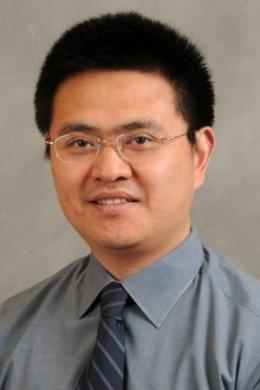
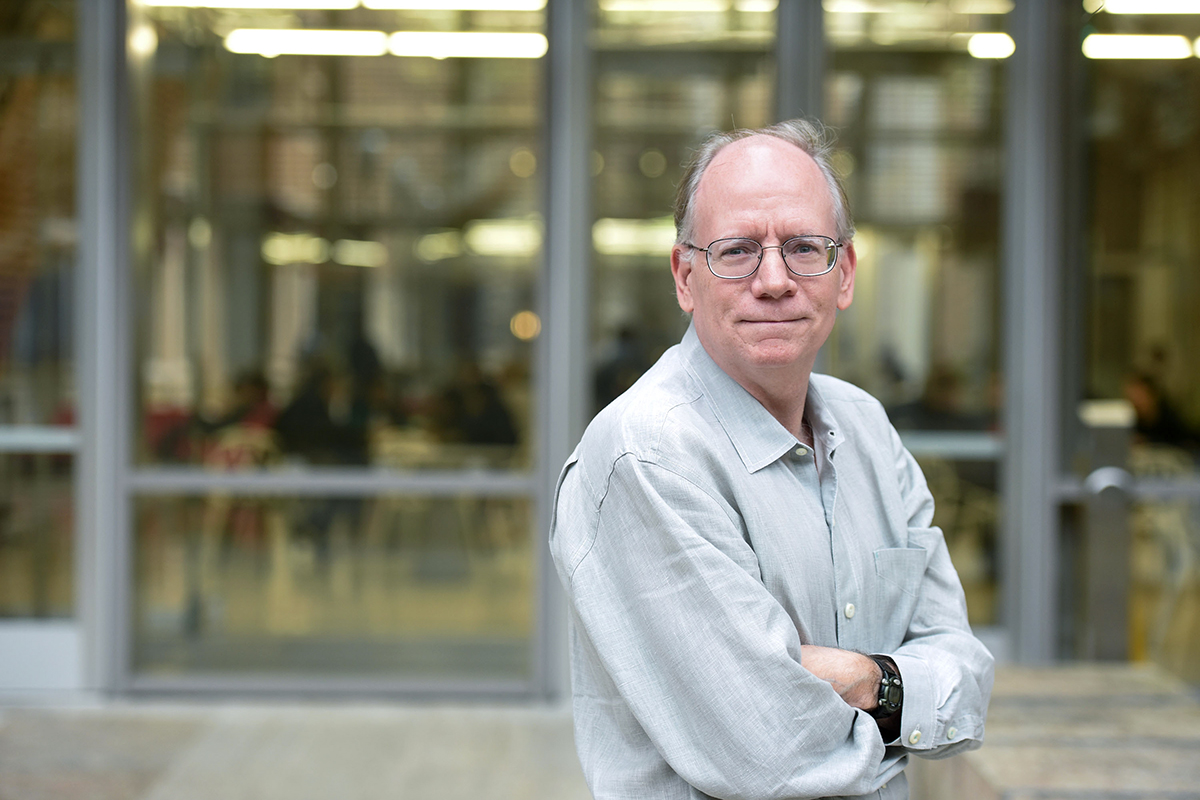
Zaiqiao Meng is a Lecturer (Assistant Professor) at the University of Glasgow's School of Computing Science, affiliated with the Information Retrieval Group and IDA section. He also holds an Affiliated Lecturer position at the University of Cambridge's Language Technology Lab. His research focuses on the intersection of machine learning, knowledge graphs, and NLP, particularly in biomedical applications. Key areas include AI agents, large language models, and healthcare informatics. Current roles include co-leading the Glasgow AI4BioMed Lab, which develops AI solutions for biomedical knowledge extraction. He has extensive postdoctoral and visiting research experience, including at KAUST's MINE lab. Meng has published widely in top conferences like ACL and EMNLP, with over 40 publications since 2019. His work spans topics such as drug-target interaction prediction, clinical summarization, and knowledge graph construction. Teaching includes courses on Recommender Systems and Data Science at both undergraduate and graduate levels. He advises multiple PhD students on projects involving LLMs, biomedical entity representation, and conversational agents.
Dr. Anett Hoppe is a research staff member at the Leibniz Information Centre for Science and Technology (TIB) in Hannover, Germany, where she works in the Visual Analytics research group. Her research focuses on the intersection of artificial intelligence, education technology, and information science, with particular emphasis on how people learn through search processes and educational video consumption. Dr. Hoppe completed her academic journey with: Ph.D. in Semantic Web technologies for online user profiles from the University of Burgundy, Dijon, France Her primary research interests span Search as Learning, software-based support for scientific reproducibility, and ethical considerations in computer-based decision making. She investigates how visual elements, reading sequences, and AI technologies impact knowledge acquisition during web search and educational video consumption. Her work bridges human-computer interaction, educational psychology, and information retrieval to create more effective learning experiences, with recent publications examining the role of large language models, vision-language models, and visual complexity in educational contexts. Analysis of her recent publications (2024-2025) reveals a strong interdisciplinary focus combining computer science, educational psychology, and information science. Her research examines video-based learning effectiveness, knowledge gain prediction, educational resource discovery, and the impact of visual elements on learning outcomes. She consistently explores how AI technologies can be leveraged to enhance educational experiences while maintaining attention to ethical considerations and scientific reproducibility. Dr. Hoppe maintains active collaborations with researchers across multiple institutions, with frequent co-authorship patterns indicating strong research partnerships, particularly with Ralph Ewerth and other members of the Visual Analytics group at TIB. Her work supports TIB's mission to advance knowledge infrastructure and scholarly communication through innovative technological solutions while directly addressing practical challenges in educational technology and information retrieval.
Joakim Nivre is a Professor at Uppsala University's Department of Linguistics and Philology. He is a leading researcher in computational linguistics, with a focus on dependency parsing, Universal Dependencies (UD) framework development, and multilingual NLP applications. His recent work explores LLMs in climate change discourse analysis, pharmacovigilance explainability, and historical text processing. Key research areas: Dependency parsing theory, Universal Dependencies standardization, LLM evaluation Collaborations: SweSAT-1.0 benchmark development, ClimateEval project, PARSEME integration His 2025-2023 publications demonstrate expertise in explainable AI for healthcare, synthetic data generation for idioms, and multilingual benchmark design. Notably, he co-developed SweSAT-1.0 to evaluate Swedish LLMs and contributed to typology-informed UD revisions. Despite extensive work in NLP, no scientific awards are mentioned in available texts.
Siyu Tang is an Assistant Professor in the Department of Computer Science at ETH Zürich, where she leads the Computer Vision and Learning Group (VLG) at the Institute of Visual Computing. Her research focuses on computational models for human perception and digitalization through computer vision and machine learning. Her educational background includes: PhD in Computer Science, Max Planck Institute for Informatics (2017), supervised by Prof. Bernt Schiele Master of Science in Media Informatics, RWTH Aachen University Bachelor of Science in Computer Science, Zhejiang University, China Dr. Tang specializes in human-centric computer vision, developing statistical models for motion analysis, pose estimation, and digital human creation. Her work integrates machine learning with optimization techniques to enable machines to interpret human activities from visual data, with applications spanning virtual reality, healthcare, and human-computer interaction. Key research thrusts include generative models for content creation, egocentric vision, and human motion synthesis. Her recent publications (2024-2025) demonstrate intense focus on 3D human modeling and neural rendering, with Gaussian splatting emerging as a dominant technique for efficient avatar creation and scene reconstruction. Significant themes include text-driven motion synthesis using diffusion models, relightable avatars, surgical training applications, and egocentric multimodal pretraining. This work bridges computer vision, graphics, and machine learning to advance human digitalization. No scientific awards were mentioned in the provided text. Dr. Tang leads the VLG research group at ETH Zürich, mentoring PhD and Master's students in human-centric AI. She previously secured an early career research grant from the Max Planck Institute for Intelligent Systems to establish her independent research program. Her group actively pursues funding for projects in human motion analysis, 3D reconstruction, and generative modeling, with strong industry and clinical collaborations. The Computer Vision and Learning Group (VLG) operates within ETH's Institute of Visual Computing, maintaining dedicated facilities for motion capture, 3D scanning, and high-performance computing. The team collaborates internationally with institutions like the Max Planck Society and focuses on scalable solutions for real-world human digitalization challenges, including surgical training systems and immersive virtual environments.
Tariq Iqbal is an Assistant Professor at the University of Virginia , with joint appointments in the Department of Systems and Information Engineering and Department of Computer Science . He leads the Collaborative Robotics Lab (CRL) , specializing in human-robot teams and embodied AI . Previously, he was a Postdoctoral Associate at MIT's CSAIL , advised by Prof. Julie Shah , and earned his Ph.D. in Computer Science from University of California San Diego (UCSD) under Prof. Laurel Riek . Ph.D. in Computer Science, University of California San Diego (2017) M.S. in Computer Science, University of Texas at El Paso (2012) B.S. in Computer Science and Engineering, Bangladesh University of Engineering and Technology (2007) His research lies at the intersection of artificial intelligence and robotics , focusing on human-robot collaboration in dynamic environments. Key areas include motion prediction , multimodal fusion , trust modeling , and collaborative learning . His work integrates cognitive science and deep learning to enhance robotic fluency in naturalistic settings. Recent publications (2023–2025) highlight advancements in human-robot team dynamics , multimodal dataset creation , and motion prediction algorithms . Notable works include Energy-Based Transformers for scalable AI, PoseTron for motion prediction, and Accessible Navigation Mapping for assistive robotics. These contributions span trust modeling , cloud robotic infrastructure , and safety in close-proximity collaboration . National Science Foundation (NSF) CAREER Award Air Force Office of Scientific Research (AFOSR) Young Investigator Program (YIP) Award Commonwealth Center for Advanced Manufacturing (CCAM) Innovation Award As faculty, he has secured grants from NSF and AFOSR , mentored research students, and taught courses like Stochastic Modeling I (SYS 6005) and Robots and Humans (SYS 4582/6465, ECE 4502/6465, CS 6465) . His prior industry roles at IBM Watson Lab and Grameenphone Ltd. inform his applied research in telecom infrastructure and cognitive robotics . He leads the Collaborative Robotics Lab (CRL) at UVA, which develops multimodal datasets , real-time coordination algorithms , and adaptive pathfinding systems . Current projects explore human motion prediction , team synchrony , and embodied question-answering , reflecting his commitment to advancing human-robot fluency and contextual AI .
Barbara Plank is a full professor and chair for AI and Computational Linguistics at Ludwig Maximilian University of Munich (LMU), where she heads the Munich AI and NLP (MaiNLP) lab and co-directs the Center for Information and Language Processing (CIS). She additionally serves as a visiting full professor at the IT University of Copenhagen, maintaining active dual institutional affiliations in computational linguistics and NLP research. Her research focuses on human-centric natural language processing challenges, particularly learning under sample selection bias (domain adaptation, transfer learning) and annotation bias, learning with limited data through continual/semi-supervised/weakly-supervised methods, multimodal learning at language-vision-speech interfaces, and fortuitous supervision for variety-space aware language understanding. She pioneers methodologies addressing human label variation as a critical factor in model robustness rather than mere noise. Recent publications (2024-2025) reveal dominant trends in modeling human label variation across NLP tasks, especially natural language inference and entity recognition, alongside dialectal language processing and LLM evaluation frameworks. Her work systematically investigates how human disagreement in annotations can be leveraged to build more robust, adaptable systems rather than treated as errors. Scientific recognition includes: ERC Consolidator Grant for the DIALECT project advancing natural language understanding for non-standard languages and dialects ACL 2024 Area Chair Award for the paper 'VariErr NLI: Separating Annotation Error from Human Label Variation' Leading the MaiNLP lab at CIS (LMU), she directs research integrated with MCML (Munich Center for Machine Learning), Munich Intelligent Robotics, ELLIS Unit Munich, UniDive, and COST action. Current projects include ERC-funded DIALECT and KLIMA-MEMES, focusing on human-facing NLP solutions for real-world language diversity challenges. She actively shapes the field through ACL leadership as VP-Elect and numerous keynotes emphasizing human-centric approaches. The MaiNLP lab at Akademiestr. 7, 80799 Munich, drives innovation in computational linguistics through interdisciplinary collaboration, maintaining strong ties with European research networks while developing practical applications for language variation and robust NLP systems. The lab's work directly informs her teaching in LMU's Computational Linguistics programs, bridging research and education in cutting-edge NLP methodologies.
Dr. Jay Pujara is a Research Associate Professor of Computer Science at the University of Southern California (USC) and Director of the Center on Knowledge Graphs. He is also a Principal Scientist at the Information Sciences Institute (ISI) and leads research teams in data science and AI. Ph.D., University of Maryland, College Park (2016) M.S. and B.S. in Computer Science, Carnegie Mellon University Research Interests include artificial intelligence, probabilistic models, knowledge graph construction, statistical relational learning, NLP, and streaming inference. His work focuses on scalable algorithms for big data and uncertainty modeling in dynamic environments. Recent Publications highlight advancements in knowledge graphs, LLM reasoning, and table understanding. Notable topics include non-verbal abstract reasoning , faithful conversational datasets , and KGQA re-ranking . Scientific Awards : SWSA Ten-Year Award (2023), Outstanding Paper (IUI 2019), Top Reviewer (NeurIPS 2018), Best Paper (SRL Workshop 2016) Advising & Grants : Mentored 12+ graduate students, including Ph.D. advisees on topics like causal modeling and neuro-symbolic tasks. Secured NSF funding for table understanding in paleoclimate studies.
Andrew Lan is an Associate Professor in the College of Information and Computer Sciences at the University of Massachusetts Amherst, where he also serves as the CS Undergraduate Program Director. He was granted tenure by the UMass Board of Trustees in June 2025 and is currently on leave through Spring 2026. His research focuses on developing human-in-the-loop machine learning methods to enable scalable, effective, and personalized learning experiences in education. Dr. Lan received his BS in Physics and Mathematics from the Hong Kong University of Science and Technology, followed by his MS (2014) and PhD (2016) in Electrical and Computer Engineering from Rice University. He completed postdoctoral research at Rice University (2016) and Princeton University's EDGE Lab (2017-2018). His research spans artificial intelligence for education, with particular expertise in educational data mining, knowledge tracing, personalized learning systems, and human-AI collaboration in educational contexts. Dr. Lan's work leverages massive and multimodal learner and content data collected from both traditional classrooms and online learning platforms to develop systems that deliver high-quality, affordable, and personalized learning experiences. He has made significant contributions to areas including computerized adaptive testing, math word problem generation, student affect detection, and automated grading systems. His recent work increasingly focuses on leveraging large language models for educational applications while maintaining rigorous scientific validation of these approaches. Best Student Paper Award at the 2024 AIED Conference (with Alexander Scarlatos) Best Paper Nominee at LAK 2021 Best Student Paper Award at IEEE Big Data 2020 NAEP Math Automated Scoring Challenge Grand Prize Winner Dr. Lan actively mentors graduate students and postdoctoral researchers, with several of his advisees receiving recognition for their work. He has secured substantial funding from the National Science Foundation, including a $90M grant for the SafeInsights project, a secure cyberinfrastructure for educational research. His research group collaborates with institutions including Worcester Polytechnic Institute, University of Pennsylvania, and Rice University. He teaches undergraduate and graduate courses including COMPSCI 240 (Reasoning under Uncertainty) and COMPSCI 590OP (Applied Numerical Optimization), with a focus on the practical application of theoretical concepts in machine learning and artificial intelligence. His educational philosophy emphasizes bridging the gap between theoretical foundations and real-world implementation in educational technology.
Alan Ritter is an Associate Professor at the School of Interactive Computing, Georgia Institute of Technology (Georgia Tech), affiliated with the Machine Learning Center (ML@GT). His research focuses on natural language processing (NLP), machine learning, and robust computational models. He completed his Ph.D. at the University of Washington and a postdoctoral fellowship at Carnegie Mellon University's Machine Learning Department. Education : - Ph.D. in Computer Science, University of Washington - Postdoctoral Research, Machine Learning Department, Carnegie Mellon University Research Interests : Ritter's work emphasizes developing models that operate across domains and languages with minimal supervision. His projects include systems analyzing social media data for cybersecurity threats, cultural bias in LLMs, and privacy-preserving dialogue agents. His group also explores efficient fine-tuning of language models and cross-lingual information extraction. Recent Activities & Awards : - NSF CAREER Award - Amazon Research Award - Best Social Impact Paper Award (ACL 2024) - Program Chair for NAACL 2025 Advising & Students : Ritter advises Ph.D. and M.S. students in Georgia Tech's ML and CS programs. Notable advisees include Yang Chen (Ph.D. 2024, now at NVIDIA) and Fan Bai (Ph.D. 2023). Labs & Affiliations : - Machine Learning Center (ML@GT) - Collaborations with institutions like AI2, Stanford, and Microsoft Research
Mikko Kurimo is a Full Professor at Aalto University's Department of Information and Communications Engineering, School of Electrical Engineering. He earned his M.Sc., Lic.Tech., and D.Sc.(Tech.) from Helsinki University of Technology (1992, 1994, 1997) and pioneered neural networks for automatic speech recognition (ASR) in his PhD thesis. After research roles at IDIAP (Swiss AI center) and visiting positions at University of Colorado, Edinburgh, SRI, ICSI, and Nitech, he leads Aalto's ASR group since 2000. His work focuses on unsupervised subword modeling for morphologically complex languages (Finnish, Estonian, Turkish, Arabic) and large speech foundation models. PhD in Neural ASR (Helsinki University of Technology, 1997) Research Scientist at IDIAP (Switzerland) Visiting Fellow at University of Colorado, Edinburgh, SRI, ICSI, Nitech Head of Aalto ASR Group (2000-present) His research spans deep learning for ASR, spoken language modeling , and low-resource language solutions . Recent work explores continued pre-training of self-supervised models, multimodal emotion recognition, and pronunciation assessment using LLMs. He led the winning team in the 2017 Multi-Genre Broadcast challenge and secured competitive funding in Tekes Challenge Finland and EC's H2020-ICT-2017. Key article trends include: Advancements in children's speech recognition and dysarthric speech processing Integration of generative AI for language learning feedback Specialization in low-resource Uralic languages (Finnish, Northern Sámi) Development of robust ASR systems for complex phonetic environments Scientific Awards ACM Multimedia 2023 Computational Paralinguistics Challenge Prize First place in MGB3 2017 Arabic ASR Challenge ISCA Best Student Paper Award (2011) Professeur Invité at Université de Saint-Etienne (2005-2006) Royal Society International Short Visit Fellowship (2004) Professor Kurimo leads the Speech Recognition Group at Aalto, collaborating with COIN (Centre of Excellence in Computational Inference) and AIRC (Adaptive Informatics Research Centre). His projects like CaptainA mobile app demonstrate practical applications of ASR in language education. He has supervised numerous publications with co-authors in domains spanning bandwidth extension, stuttering detection, and speech sound disorder assessment.
Yading Yuan, PhD is an Associate Professor of Radiation Oncology (Physics) at Columbia University Irving Medical Center and a member of the Data Science Institute. He holds a PhD in medical physics from the University of Chicago (2010) and completed clinical residency at Harvard Medical Physics Program (2013). His research focuses on AI-driven innovations in radiation oncology, including automated medical image analysis systems, federated learning frameworks for tumor segmentation, and data-driven approaches to personalized cancer treatment. He is certified by the American Board of Radiology and licensed in New York State. Education: PhD in Medical Physics (University of Chicago, 2010); Clinical Residency (Harvard Medical Physics Program, 2013). Research interests include: automated knowledge-based treatment planning, large-scale clinical AI systems, medical image reconstruction algorithms, and panomics integration for precision oncology. His work emphasizes translating data science advancements into clinical practice to improve patient outcomes. Key trends in his publications include federated learning for privacy-preserving medical AI, tumor segmentation in multi-modal imaging (PET/CT, MRI), and AI-driven prediction of treatment outcomes and recurrence risks. Recent work emphasizes decentralized learning architectures and cross-institutional collaboration systems. Scientific Awards: Distinguished Reviewers 2013 (selected by peer review committees) Advising/grants: No specific student names or grant details listed in provided text. His work is supported through institutional and collaborative research initiatives. Labs/teams: Active member of Columbia's Data Science Institute and Radiation Oncology department, contributing to interdisciplinary medical AI research groups.
Raymond J. Mooney is a Professor in the Department of Computer Science at the University of Texas at Austin, where he has been a faculty member since 1987. He is the Director of the UT Artificial Intelligence Laboratory and affiliated with multiple research groups including the Machine Learning Research Group, UT Computational Linguistics Lab, and the UT Center for Computational Biology and Bioinformatics. He holds a B.S., M.S., and Ph.D. in Computer Science from the University of Illinois at Urbana-Champaign, where his thesis was supervised by Gerald DeJong. His research spans diverse areas in artificial intelligence, machine learning, and natural language processing: Natural Language Learning Connecting Language and Perception Statistical Relational Learning Information Extraction Transfer and Active Learning Abductive Reasoning Text Mining and Clustering Recommender Systems Knowledge-Base Refinement Recent publications highlight trends in grounded language processing, human-robot interaction, and multimodal reasoning. He has been recognized with prestigious fellowships including ACL (2014), ACM (2010), and AAAI (2005). Scientific awards: Fellow of the Association for Computational Linguistics (2014) Fellow of the Association for Computing Machinery (2010) Fellow of the American Association for Artificial Intelligence (2005) Classic Paper Award (2019) Best Paper Awards (2007, 2004, 1996) He teaches graduate courses like CS 371R: Information Retrieval and Web Search (Fall 2025) and CS 395T: Grounded Natural Language Processing (Spring 2025). His research labs include: UT Artificial Intelligence Laboratory Machine Learning Research Group UT Computational Linguistics Lab UT Center for Computational Biology and Bioinformatics
Birgitta König-Ries is a Professor at the Department of Computer Science, University of Jena, Germany. She is a leading researcher in semantic technologies, ontology engineering, and knowledge graph management for biodiversity and life sciences. Her work focuses on reproducibility, provenance tracking, and data integration using semantic approaches. Research Interests: Semantic Web, Ontology Engineering, Knowledge Graphs, Biodiversity Informatics, Reproducibility of Scientific Experiments Key Collaborations: Sheeba Samuel, Nora Abdelmageed, Samira Babalou, Alsayed Algergawy, Felicitas Löffler, Vamsi Krishna Kommineni Her recent publications emphasize automated knowledge graph construction, domain-specific language models (e.g., BiodivBERT), benchmarking semantic table interpretation (KG2Tables, BiodivTab), and tools for provenance management (MLProvLab, MLProvCodeGen). She contributes to FAIR data principles and interdisciplinary research, particularly in biodiversity and public administration transparency. Her work bridges theoretical advances with practical implementations, including open-access benchmarks (tFood, tBiodiv, tBiomed) and collaborative platforms like BiodivPortal and fusion-jena. Notable Tools & Benchmarks: BiodivBERT, KG2Tables, BiodivTab, MLProvLab, tBiodiv, tBiomed
Michael C. Hughes ("Mike") is an Assistant Professor in the Department of Computer Science at Tufts University's School of Engineering, where he develops statistical machine learning methods for healthcare applications. His work focuses on building predictive models that extract actionable insights from complex clinical data, including electronic health records and medical imaging. PhD, Computer Science, Brown University (2016) MS, Computer Science, Brown University (2012) BS, Computer Science, Franklin W. Olin College of Engineering (2010) Research interests center on: Bayesian hierarchical models for documents, sequences, and medical images Optimization algorithms for approximate inference Model fairness and interpretability in clinical contexts Semi-supervised learning for medical diagnostics Recent publications demonstrate these capabilities through applications in cardiovascular disease diagnosis, opioid overdose forecasting, and ICU risk prediction. His lab emphasizes reproducibility through open datasets like TMED-2 and open-source tools like BNPy. Grants include NIH R01 funding for heart valve disease detection, NSF CAREER support for model interpretability, and NSF GCR funding for educational uncertainty research. Scientific awards include: NIH R01 Award (PI) for heart valve disease detection (2025) NSF CAREER Award (2024) NSF GCR Grant (2024) Best Poster Award at Time Series Workshop (ICML 2021) Top 10% Reviewer Awards at AISTATS (2023, 2022) Teaching activities include courses on Bayesian Deep Learning, Introduction to Machine Learning, and Statistical Pattern Recognition. He previously served as postdoctoral fellow at Harvard SEAS.
Dr. Cheng Ouyang is a Departmental Lecturer at the University of Oxford's Institute of Biomedical Engineering, part of the Department of Engineering Science. Affiliated with St. Peter's College, his research focuses on developing data-efficient, robust machine learning approaches for medical imaging and signal analysis. Key interests include domain generalization, few-/zero-shot learning, uncertainty modeling, and multimodal learning applied to medical data such as ultrasound and MRI. Prior to Oxford, he conducted postdoctoral research in cardiac imaging at Imperial College London, where he also earned his PhD in Computing. His work emphasizes practical medical applications, such as accelerating MRI reconstruction and enhancing ECG classification through multimodal techniques. Recent contributions include the CMRxRecon2024 dataset for cardiac MRI and federated learning approaches for low-dose CT denoising. His methods address challenges in generalizability, stability, and user interaction in clinical AI systems. Awards and recognitions are pending explicit mentions in the text. Dr. Ouyang's research spans foundational machine learning theory and applied biomedical engineering, with a focus on bridging gaps between algorithmic innovation and clinical utility. His lab collaborates across disciplines to advance medical imaging analysis and decision support systems.