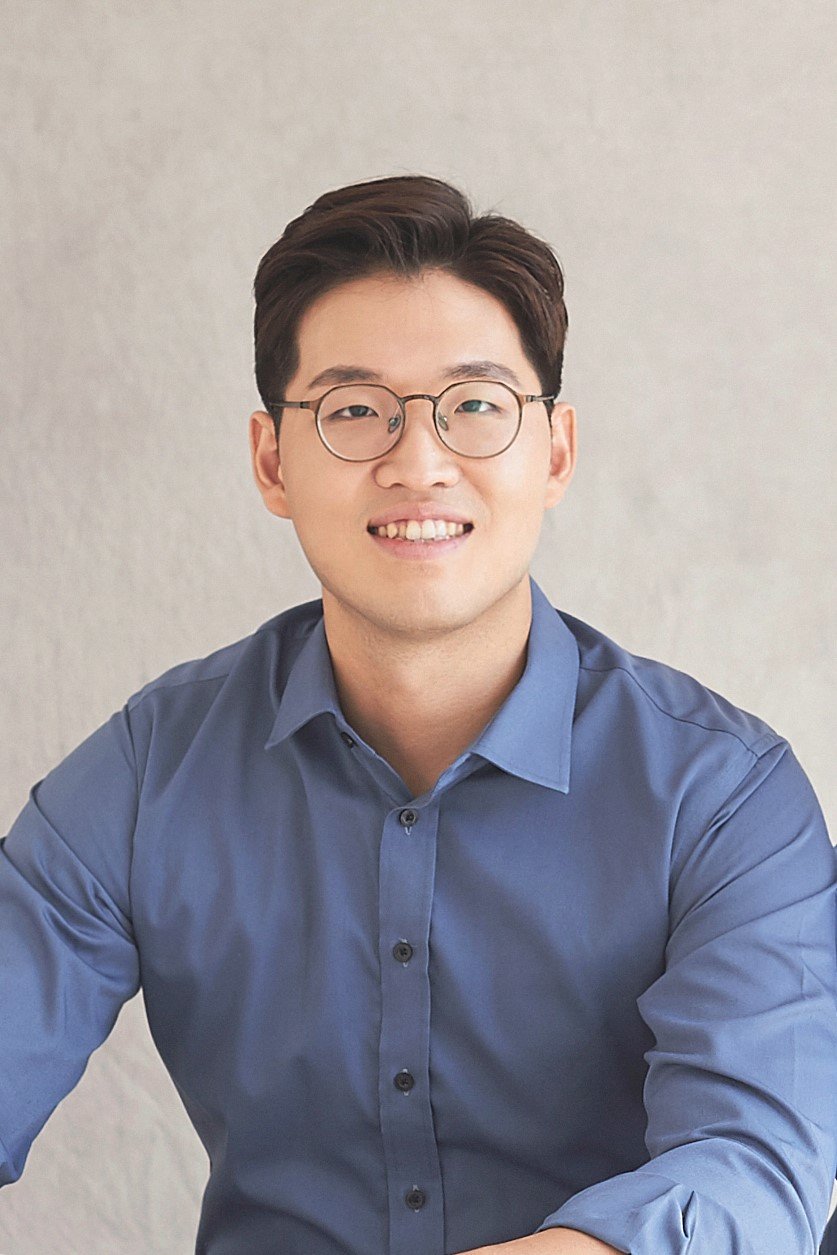
Kishlay Jha is an Assistant Professor at the University of Iowa's College of Engineering in the Department of Electrical and Computer Engineering. He is also a researcher at the Center for Bioinformatics and Computational Biology and the Iowa Initiative for Artificial Intelligence. PhD in Computer Science from University of Virginia (2022) Email: kishlay-jha@uiowa.edu Office: 3320 Seamans Center, Iowa City, IA 52242 Phone: (319) 467-0096 His research focuses on data science and artificial intelligence with emphasis on data mining, machine learning, and their applications in biomedical domains. He develops methodologies for transforming heterogeneous clinical, genomic, and bibliographic data into actionable knowledge for scientific advancement. Recent work includes: Semantic knowledge integration in biomedical language models Dynamic representation learning for evolving systems Hypergraph-based contrastive learning for healthcare applications Continual learning frameworks for time-sensitive domains Knowledge-guided representation learning Biomedical hypothesis generation He leads the Data Mining and Machine Learning Laboratory, where his team develops innovative tools for both biomedical discovery and general AI applications.
Mahdi Soltanolkotabi is a Professor in the Departments of Electrical and Computer Engineering, Computer Science, and Industrial and Systems Engineering at the University of Southern California's Viterbi School of Engineering. He serves as the inaugural Director of the USC Center on AI Foundations for Science (AIF4S). His academic journey includes a Ph.D. in Electrical Engineering from Stanford University (2014) under Emmanuel Candes, followed by a postdoctoral position at UC Berkeley's AMPLAB mentored by Ben Recht and Martin Wainwright. Dr. Soltanolkotabi's research spans both theoretical and applied dimensions of data science. On the theoretical side, he develops mathematical foundations for modern data science, focusing on generative AI, deep learning, machine learning, signal processing, and computational imaging. His work draws upon nonconvex optimization, high-dimensional probability, statistical estimation, empirical processes, and learning theory. On the applied side, he develops reliable AI systems for healthcare and scientific applications, collaborating with physicians and domain scientists to enhance AI reliability, develop new architectures, and create rigorous evaluation frameworks. His recent publications demonstrate strong focus on medical AI applications, image reconstruction, and theoretical foundations of deep learning. His work bridges the gap between theoretical guarantees and practical implementations, particularly in medical imaging where reliability is critical. His research group has made significant contributions to understanding the behavior of nonconvex optimization algorithms in high-dimensional settings. David and Lucile Packard Fellow Information Theory Society Best Paper Award NIH Director's new innovator award Sloan Research Fellowship NSF Career award Airforce Office of Research Young Investigator award (AFOSR-YIP) Viterbi school of engineering junior faculty research award Faculty awards from Google and Amazon Dr. Soltanolkotabi has received multiple research grants including Amazon Research Awards for projects on "Artificial intelligence for fast and portable medical imaging" and "Reliable AI for Generation of Medical Reports from MRI Scans." He actively collaborates with medical professionals and leads educational outreach initiatives with local schools through USC's Viterbi Adopt-a-School program. His work demonstrates a strong commitment to translating theoretical advances into practical healthcare solutions while maintaining rigorous mathematical foundations.
Dr. Zhenghao Chen is a Lecturer in Data Science at the University of Newcastle, affiliated with the School of Information and Physical Sciences. He earned his Ph.D. from the University of Sydney in 2022, following a B.Eng. H1 degree from the same institution in 2017. Prior to his current position, Dr. Chen served as a Postdoctoral Research Fellow at the University of Sydney (2022-2024), a Research Engineer at TikTok (2024), and as a Visiting Research Scientist at Microsoft Research and Disney Research (2022-2023). Dr. Chen's educational background includes: Doctor of Philosophy, University of Sydney (2022) Bachelor of Information Technology (B.Eng. H1), University of Sydney (2017) Dr. Chen's research spans multiple domains within artificial intelligence, with particular expertise in Computer Vision, Natural Language Processing, and Machine Learning. His work in Generative AI has garnered significant recognition, with applications in both academic and industrial settings. His research interests are reflected in his Fields of Research percentages: Deep Learning (30%), Computer Vision (30%), Natural Language Processing (20%), and Multimodal Analysis and Synthesis (20%). His publications in top-tier venues like CVPR, ICCV, ECCV, and journals like IEEE TPAMI demonstrate the breadth and impact of his work. Analysis of Dr. Chen's recent publications (2022-2025) reveals a consistent focus on neural compression techniques, 3D perception, and multimodal AI systems. His work spans medical imaging (CXR bone suppression), video compression, point cloud processing, and neural surface reconstruction. A notable trend is his exploration of efficient AI systems that work well under resource constraints, as evidenced by his involvement in the EMCLR workshop. His research often bridges theoretical advances with practical applications across multiple domains. Dr. Chen has received several prestigious awards: Microsoft Research Asia StarTrack Fellowship (2025) ACM SIGMM Award for Outstanding PhD Thesis in Multimedia Computing (2024) Australia Government Research Training Program (RTP) Fellowship (2019) Google Australia Prize for Excellence in Computer Science (2017) Dr. Chen is actively involved in the academic community, serving on the Program Committee for major AI conferences including CVPR, ICCV, ECCV, SIGGRAPH, AAAI, and others. He also organizes workshops in Multimedia and ICCV conferences, and serves as a reviewer for prestigious journals. His teaching responsibilities include courses on Intelligent Visual Signal Understanding, Video Intelligence and Compression, Database and Information Management, and Computing Fundamentals at both the University of Sydney and University of Newcastle.
Seongjin Choi is an Assistant Professor in the Department of Civil, Environmental, and Geo-Engineering at the University of Minnesota, Twin Cities , where he began his role in January 2024. His research bridges Urban Mobility Data Analytics , Spatiotemporal Modeling , and Deep Learning to advance transportation systems. Affiliated with the Center for Transportation Studies , Minnesota Robotics Institute , and Data Science Initiative , he leads the Choi Research Group . Education: Ph.D., Civil and Environmental Engineering, Korea Advanced Institute of Science and Technology (KAIST), 2021 M.S., Civil and Environmental Engineering, KAIST, 2017 B.S., Civil and Environmental Engineering, KAIST, 2015 His research focuses on Urban Mobility Data Analytics and Deep Learning to optimize transportation systems. Key areas include: Spatiotemporal Data Modeling for forecasting and imputation Generative AI applications in transportation data Reinforcement Learning for Connected Automated Vehicles (CAV) Cooperative Intelligent Transport Systems (C-ITS) Recent publications in Transportation Science and Transportation Research Part C highlight his work on probabilistic traffic forecasting , deep generative models , and vision-language-action frameworks for autonomous systems. His methodologies often combine AI-driven analytics with real-time mobility optimization . Dr. Choi serves as: Associate Editor of The Journal of the Korean Society of Transportation (JKST) , 2023–Present Guest Editor for Journal of Advanced Transportation special issue on "Advanced Data Intelligence Theory and Practice in Transport 2023", 2023–2024 He actively seeks PhD students/postdocs for 2025 cohorts focused on machine learning for transportation challenges. Current projects include AI-enhanced traffic forecasting, CAV control, and urban air mobility (UAM) integration studies.
Arnab Nandi is a Professor of Computer Science and Engineering at The Ohio State University, with a courtesy appointment in Biomedical Informatics. He holds leadership roles including Steering Committee Member for the Human-in-the-Loop Data Analytics (HILDA) Workshop and has served as Workshops co-chair for SIGMOD 2025-26 and Demonstrations co-chair for SIGMOD 2024. His research focuses on bridging human interaction and data infrastructure, spanning database systems, human-in-the-loop data analytics, and next-generation query interfaces. Nandi's work emphasizes interactive data exploration through projects like DICE (Distributed Interactive Cube Exploration), GestureDB (Querying Beyond Keyboards), and Omni (Multimodal Data Exploration). His recent research explores integrating LLMs into database education, augmented reality interfaces for data analytics, and multimodal approaches to video querying. Nandi has received numerous honors including the NSF CAREER Award, Google Faculty Research Award, IEEE TCDE Early Career Award, and the University's Alumni Award for Distinguished Teaching. He was also named to Columbus Business First's '40 under 40' and became an ACM Distinguished Member in 2024. As an educator, he teaches courses including CSE 3241 (Introduction to Database Systems), CSE 5242 (Advanced Database Systems), and CSE 5251 (Introduction to Software Startups). His educational innovations include DBTutor, which integrates LLMs into database systems education. At Ohio State, Nandi co-founded the OHI/O Program, which fosters tech culture through hackathons, and The STEAM Factory, an interdisciplinary research collaboration network. Prior to academia, he was founder and CEO of Mobikit, a connected vehicles data analytics startup acquired by Azuga Inc. (a Bridgestone company). His research has been supported by the NSF and industry partnerships, with applications spanning precision agriculture (CropFusion), clinical data pipelines (ICARUS), and interactive visualization systems (Perceptvis).
Steven Laureys, MD, PhD, is a Professor at the University of Liège where he leads the Coma Science Group within GIGA Consciousness. He holds dual prestigious appointments as Canada Excellence Research Chair in Integrative Neuroscience for Sustainable Mental Health and Canada Excellence Research Chair in Neuroplasticity. His clinical roles include neurologist and clinical professor at the Centre du Cerveau of the CHU of Liège, and Director of Research at the FNRS. Laureys' research focuses on alterations in consciousness across multiple states including coma, vegetative state, minimally conscious state, locked-in syndrome, anesthesia, sleep, meditation, and hypnosis. His work integrates multimodal neuroimaging (fMRI, PET, EEG), electrophysiology, and behavioral assessments to develop diagnostic and prognostic tools for disorders of consciousness (DOC). Key methodological approaches include brain connectivity mapping, metabolic analysis, and AI-driven modeling of neural dynamics. His publication portfolio reveals a strong emphasis on brain connectivity dynamics (42% of recent articles), AI applications in consciousness assessment (23%), and translational neurorehabilitation (18%). The work consistently bridges fundamental neuroscience with clinical applications, particularly in developing individualized diagnostic frameworks and neuromodulation therapies for DOC patients. Major scientific recognition includes: Francqui Prize (2017), Belgium's highest scientific honor Generet Prize (2019) Appointment as Editor-in-Chief of Brain Connectivity journal (2024) Two Canada Excellence Research Chairs (2023-2024) Laureys directs the internationally recognized Coma Science Group, which operates within the GIGA Consciousness research center. The group maintains extensive international collaborations across Europe, North America, and Asia, with particular focus on developing standardized assessment protocols and innovative neuromodulation approaches for disorders of consciousness. Current research directions emphasize neuroplasticity mechanisms, meditation's impact on brain health, and sustainable mental health frameworks through integrative neuroscience approaches.
Waël Jaafar is a Professor in the Department of Software Engineering and IT at École de technologie supérieure (ETS), a constituent school of the Université du Québec system in Montreal, Canada. His research spans multiple critical domains in modern communications and computing infrastructure, with a particular focus on next-generation wireless networks and intelligent systems. Dr. Jaafar holds a B.Eng. from Sup'Com Tunisie, and both M.Sc.A. and Ph.D. degrees from Polytechnique Montréal. His academic background provides a strong foundation for his interdisciplinary research that bridges theoretical concepts with practical engineering solutions. His research interests center around wireless communications systems, with particular emphasis on 5G/6G networks, UAV communications, space telecommunications, and machine learning applications for networking. He has developed significant expertise in federated learning techniques for distributed networks, cybersecurity applications for next-generation mobile systems, and edge computing architectures. His work frequently explores the intersection of communication theory, artificial intelligence, and network security, with applications ranging from industrial IoT to public safety communications. Analysis of his recent publications reveals a strong trend toward integrating artificial intelligence with wireless networking infrastructure, particularly focusing on UAV-assisted communications, federated learning approaches for distributed networks, and security enhancements for 5G/6G systems. His research demonstrates increasing emphasis on practical implementation challenges including energy efficiency, communication overhead reduction, and reliability in non-ideal network conditions. As an academic supervisor, Dr. Jaafar actively mentors numerous graduate students across various projects. He currently supervises doctoral candidates working on blockchain-enhanced security for 5G networks, green network slice orchestration, and federated learning approaches for Open RAN architecture. His master's students are engaged in diverse topics including LiDAR-based power line monitoring, multimodal behavioral authentication, and 5G/6G security using AI techniques. Dr. Jaafar is affiliated with two prominent research laboratories at ETS: LASI (Computer System Architecture Research Laboratory) and LACIME (Communications and Microelectronic Integration Laboratory). At LASI, he contributes to research in AI-based systems engineering, resource orchestration in edge/cloud environments, and intelligent network design. Through LACIME, he engages with broader communications research spanning from microelectronic components to complex communication systems, with particular focus on wireless networks and signal processing applications.
Dr. Yanjie Fu is an Associate Professor in the School of Computing and AI at Arizona State University, part of the Ira A. Fulton Schools of Engineering. He maintains his office in BYENG 506 at the Tempe campus and can be reached at yanjie.fu@asu.edu. Dr. Fu received his Ph.D. from Rutgers University in 2016, the B.E. degree from the University of Science and Technology of China, and the M.E. degree from the Chinese Academy of Sciences. His industry research experience includes positions at Microsoft Research Asia and IBM Thomas J. Watson Research Center. His research focuses on developing disruption-robust machine intelligence that can handle imperfect and complex data. Dr. Fu's work spans two major efforts: Data for AI (D4AI), exploring how structure knowledge of data can guide AI, and AI for Data (AI4D), investigating how AI can augment, reprogram, and knowledgeize data. His current research interests include space-time intelligence, data-centric AI, sim2decision, multimodal reasoning, and LLM with agentic AI. His lab has contributed projects including D4AI-spatial, D4AI-timeseries, D4AI-causal outliers, AI4D-RL, AI4D-Gen, and AI4D-LLM. Dr. Fu's recent publications reveal a strong trend toward integrating causal reasoning with deep learning for robust anomaly detection, advancing time series forecasting with novel normalization techniques, and applying generative AI to urban planning. His work increasingly bridges traditional machine learning with large language models, particularly focusing on data-centric approaches for tabular data transformation and feature engineering. US NAE FOE early career engineer (2023) US NSF CAREER (2021) NSF CRII (2018) ACM KDD18 Best Student Paper Finalist IEEE ICDM Best Paper Finalist (2014, 2021, 2022) ACM SIGSpatial Best Paper Runner-up (2020) 2022 Baidu Scholar global top Chinese young scholars in AI 2021 Aminer.org AI 2000 Most Influential Scholar Award Honorable Mention Dr. Fu has successfully mentored multiple Ph.D. students who have secured tenure-track faculty positions at prestigious institutions including University of Kansas, Chinese Academy of Sciences, Great Bay University, Portland State University, and University of Macau. His research has been supported by significant grants including the NSF CAREER award, and he currently serves as Associate Editor of ACM Transactions on Knowledge Discovery from Data. He is also a senior member of both ACM and IEEE. Dr. Fu leads a research group focused on developing trusted and safe machine intelligence. The lab connects computing issues across representation learning, self-supervised learning, interactive learning, adaptive learning, and stream learning to build disruption-robust frameworks. The group executes two key steps: data representation construct (integrating structure knowledge, self-optimization, explainability) and learning strategy construct (integrating robust representations with adaptive and interactive learning).
Dacia Dressen-Hammouda is a Professor of Universities at Université Clermont Auvergne, affiliated with the ACTé Laboratory (Activity, Knowledge, Transmission, Education). She co-leads Theme 1 ( Situations of knowledge transmission and learning ) and has held significant educational responsibilities since 2007, including designing and managing the Multilingual Technical Documentation Engineering and Multilingual Information Design programs. Her research spans English for Specific Purposes (ESP) , multimodality , indexicality , and intercultural rhetoric , with a focus on digital communication and AI integration in education. Research Themes include: Digital and multimodal supports in specialized English Genre-based pedagogies for professional and academic writing Intercultural challenges in second-language politeness negotiation Recontextualization of expert knowledge in digital media Indexicality as a framework for disciplinary identity analysis Article Trends highlight her work on multimodal literacy through instructional videos, indexicality in professional writing , and digital science communication . She explores how digital tools reshape genre mastery and how intercultural exchanges influence academic writing practices. Scientific Contributions include collaborations with researchers like Ciara R. Wigham and Susan Birch-Becaas , with projects such as the DILAN Project (Digital Language and Communication Training for EU Scientists). She has supervised PhD candidates Hamza Miftah and Nedjah Zerrouki , focusing on AI-driven writing support and multimodal travel blogs. Lab Engagement : As co-responsible for Theme 1 at the ACTé Laboratory, she integrates activity theory and ethnographic approaches to study writing as a social and pedagogical activity.
Taein Kwon is a postdoctoral research fellow at the Visual Geometry Group (VGG) within the Department of Engineering Science at the University of Oxford, working under Prof. Andrew Zisserman. Previously, he completed his PhD at ETH Zurich under Prof. Marc Pollefeys and earned master's and bachelor's degrees from UCLA and Yonsei University, respectively. His educational background includes: Bachelor's in Electrical Engineering from Yonsei University, Seoul, Korea Master's degree from UCLA PhD from ETH Zurich (defended July 2024) His research spans Egocentric Vision, Action Recognition, Hand-object Interaction, Video Understanding, AR/VR, and Multi-modal Learning, with emphasis on first-person perspective analysis for AI assistants and human-computer interaction. His work integrates 3D reconstruction, pose estimation, and multimodal signals to model complex human activities and physical interactions. Analysis of his 2021-2025 publications reveals a consistent focus on egocentric vision datasets (H2O, HoloAssist, EgoPressure) and novel frameworks for hand-object interaction, action recognition, and gesture understanding. His research demonstrates strong interdisciplinary connections between computer vision, robotics, and human-centered AI, with increasing emphasis on pressure sensing, co-speech gestures, and cross-modal alignment. His scientific recognition includes: CVPR Egovis 2022/2023 Distinguished Paper Award for HoloAssist (July 2024) SNSF Postdoc.Mobility fellowship (May 2024) He actively mentors students on egocentric vision projects, supervising master's theses, semester projects, and collaboration initiatives leading to publications at top conferences. His research is supported by the SNSF fellowship and industry collaborations with Meta Reality Labs and Microsoft Research. As part of Oxford's Visual Geometry Group, he contributes to cutting-edge computer vision research while maintaining strong ties with ETH Zurich's computer vision community through ongoing collaborations and dataset development efforts.
Marco Ghislieri is an Assistant Professor at the Department of Electronics and Telecommunications (DET) of Politecnico di Torino, Italy. He is a member of the Interdepartmental Center PolitoBIOMed Lab and teaches in the Biomedical Engineering program, including courses like Neuroengineering and Design of Programmable Biomedical Devices . His research spans Artificial Intelligence, Biomedical Signal Processing, Neuroscience, and Rehabilitation Engineering . PhD in Bioengineering and Medical-Surgical Sciences (2017-2021) at Politecnico di Torino Thesis: Muscle Synergy Assessment during Cyclic and Non-Cyclic Movements His research focuses on muscle synergy analysis in Parkinson’s Disease (PD) patients post- Deep Brain Stimulation (DBS) , AI-driven gait analysis for fall prevention, and wearable sensor applications for stress-cognitive decline monitoring. He leads the S-CoDe and OMNIA-PARK projects, and contributes to PRIN as a team member. Recent publications highlight advancements in machine learning for intraoperative DBS targeting , statistical gait analysis , and neurorehabilitation tools . He serves as Associate Editor for Scientific Reports and Applied Bionics and Biomechanics , and Guest Editor for Frontiers in Neural Circuits . Awards include the Carlo J. De Luca Award (2022) , GNB Doctoral Award (2022) , and the Best Poster Award at M. Grattarola Summer School (2022) . He supervises Fabrizio Sciscenti (PhD candidate) and collaborates on neuroengineering and biomedical device design courses. His work addresses Goal 3 (Good Health) and Goal 4 (Quality Education) of the UN SDGs.
Xuesong Zhou is a Professor of Transportation Systems at the School of Sustainable Engineering and the Built Environment , Arizona State University (ASU). He leads the ASU Transportation+AI Lab and develops open-source tools like DTALite, NEXTA, and OSM2GMNS with over 100,000 downloads. His research focuses on multimodal transportation planning , dynamic traffic assignment , and rail scheduling with methodological contributions to traffic flow theory and operations research . Dr. Zhou's research bridges transportation system operations , computer applications for ITS , and logistics optimization . His work on differentiable programming reformulations and state-space-time network modeling has advanced real-time traffic prediction and multi-echelon facility scheduling . Scientific awards include: 2022 Elsevier Multimodal Transportation Best Article Award 2018 Transportation Research Part C Best Associate Editor Award 2012 INFORMS Railway Applications Section Best Paper Award He has advised 9 PhD students and 6 postdoctoral researchers to completion, with mentees now at institutions like Georgia Institute of Technology and Michigan State University. Current projects include NSF CONNECT and DOE Argonne collaborations on multi-scale traffic simulation and smart campus cyberinfrastructure .
Michihiro Yasunaga is an Assistant Professor in the Department of Computer Science at Stanford University's School of Engineering. He received his PhD in Computer Science from Stanford, advised by Percy Liang, Jure Leskovec, and Chris Manning. Prior to his faculty position, he worked as a researcher at Google DeepMind and Meta. His research focuses on building LLMs and agents that assist humans in diverse tasks, with particular expertise in post-training techniques (RL, reward models, and evaluation), reasoning systems (AnalogicalReasoner), retrieval and tool use for LLMs (LinkBERT, QAGNN, DRAGON, REPLUG, HippoRAG), and multimodality (RA-CM3, Med-Flamingo, Transfusion). His work spans both theoretical foundations and practical applications of large language models. Yasunaga's publication record demonstrates significant contributions to the field of AI, with 15 recent articles (2023-2025) covering diverse aspects of language model development, evaluation, and application. His research shows a clear trajectory toward building more capable, efficient, and reliable multimodal AI systems, with particular emphasis on knowledge integration and robust evaluation frameworks. Among his notable achievements is the Best Paper Award at AAAI 2023 Deep Learning on Graphs Workshop for the DRAGON paper. He has also been deeply involved in major benchmarking efforts including HELM and HEIM, which provide comprehensive evaluation frameworks for language and vision-language models. Yasunaga actively contributes to the research community through service roles including Organizing Committee for the Workshop on Knowledge-Augmented Methods for NLP (ACL 2024), Workshop on Structured and Unstructured Knowledge Integration (NAACL 2022), and the Workshop on Scientific Document Summarization (SIGIR 2017-2020). He has also served on program committees for top conferences including NeurIPS, ICML, ICLR, ACL, EMNLP, CVPR, and ICCV from 2020-2025.
Xuming He is an Associate Professor at the School of Information Science and Technology (SIST), ShanghaiTech University, where he leads the PLUS Lab. His research spans computer vision and machine learning with a focus on developing algorithms that operate effectively under limited supervision and evolving data conditions. His core research interests include weakly-supervised and few-shot learning for scenarios with sparse annotations, continual learning frameworks for knowledge retention during sequential task acquisition, semantic segmentation techniques for scene understanding, and multimodal vision-language representations. He emphasizes interpretable machine learning to build transparent AI systems capable of human-understandable reasoning, addressing critical challenges in model trustworthiness and deployment reliability. Recent publications reveal strong trends toward novel class discovery in long-tailed recognition scenarios, physics-informed generative modeling for scientific applications, and robust segmentation under distribution shifts. His work increasingly integrates large language models for multimodal reasoning while maintaining focus on efficiency in resource-constrained environments like robotic grasping and medical imaging analysis. He actively mentors students, having supervised Qian He to PhD completion and Chuanyang Hu to Master's degree in 2023. He welcomes prospective graduate students through ShanghaiTech's Computer Science & Technology program and offers undergraduate research projects requiring minimum six-month commitments. The PLUS Lab under his direction drives innovation in learning under supervision constraints, with recent work spanning medical tumor analysis, cross-view geolocation, photonic computing, and semiconductor design verification. The lab's research bridges theoretical advances with practical applications across healthcare, robotics, and scientific discovery domains.
Fabrizio Falchi is a researcher at the Artificial Intelligence for Media and Humanities (AIMH) Lab of the Institute of Information Science and Technologies (ISTI) within Italy's National Research Council (CNR). He also maintains an associate position at the Biorobotics Institute of Scuola Superiore Sant'Anna. His work focuses on developing advanced multimedia retrieval systems, with the VISIONE platform being his most notable contribution, which has won international competitions including the Video Browser Showdown in 2024 and placed second in 2023. Falchi's educational background includes: Ph.D. in Information Engineering from University of Pisa (Italy) Ph.D. in Informatics from Faculty of Informatics of Masaryk University of Brno (Czech Republic) M.B.A. from Scuola Superiore Sant'Anna in Pisa His research spans deep learning, convolutional neural networks, deep features extraction, similarity search algorithms, distributed indexing systems, multimedia information retrieval, computer vision applications, and peer-to-peer systems. Falchi has made significant contributions to fine-grained visual understanding, cross-modal retrieval (particularly image-text matching), and robustness of deep learning systems against adversarial attacks. His work demonstrates a strong focus on practical applications of these technologies, particularly in video retrieval systems and safety monitoring solutions. Analysis of Falchi's recent publications reveals a strong focus on video and image retrieval systems, with the VISIONE platform being central to his work. His research shows increasing emphasis on fine-grained understanding in computer vision, cross-modal retrieval, and addressing practical challenges like cross-resolution face recognition. Recent work demonstrates innovation in making these systems more efficient through techniques like knowledge distillation (ALADIN) and leveraging virtual worlds for training data. His publications consistently bridge theoretical advances with practical applications in surveillance, safety monitoring, and multimedia search. Falchi's work has received significant recognition: Best paper award at CBMI 2024 for 'Is ClLIP the main roadblock for fine-grained open-world perception?' VISIONE 2024 won the Video Browser Showdown competition in Amsterdam VISIONE obtained second place at Video Browser Showdown 2023 in Bergen Best Paper Award for 'Learning Safety Equipment Detection using Virtual Worlds' at CBMI 2019 Falchi collaborates extensively with researchers at ISTI-CNR, particularly within the AIMH Lab. His work on VISIONE involves collaboration with Giuseppe Amato, Paolo Bolettieri, Fabio Carrara, Claudio Gennaro, Nicola Messina, Lucia Vadicamo, and Claudio Vairo. As co-chair of Ital-IA 2023, the 3rd National Conference on Artificial Intelligence, he plays an active role in the academic community. He is a member of ACM (since 2012), the Computer Vision Foundation, the Italian Association for Computer Vision Pattern Recognition and Machine Learning (CVPL), and the CINI Lab on Artificial Intelligence and Intelligent Systems. Falchi is a key member of the Artificial Intelligence for Media and Humanities (AIMH) Lab at ISTI-CNR, where he leads research on video retrieval systems. The lab has developed the award-winning VISIONE platform, which combines multiple scientific results in content-based video retrieval. His team focuses on developing systems that enable users to search for target videos using textual prompts, drawing objects and colors, or images as query examples. The lab's work demonstrates strong interdisciplinary collaboration, bridging computer science with practical applications in media, safety monitoring, and urban environments.