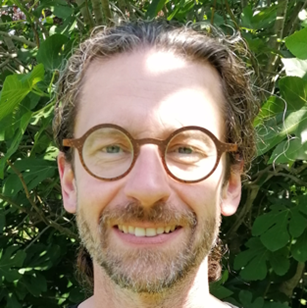
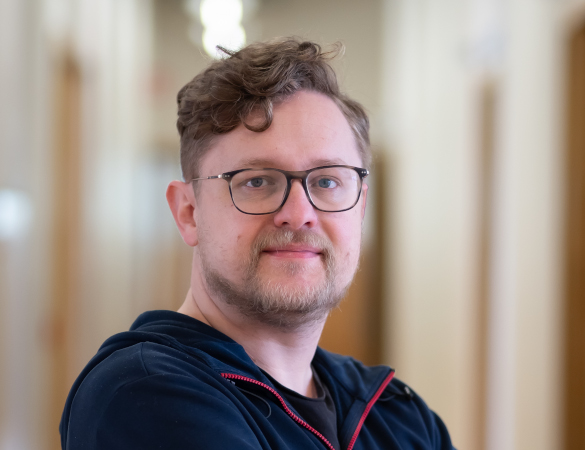
Prof. dr. Nico Van de Weghe is a full Professor of GIScience at the University of Ghent (UGent), affiliated with the CartoGIS research unit. His work bridges computer science, social science, and natural science through geospatial information studies, focusing on enabling machines to reason spatially (GeoAI). Since 2004, he has specialized in knowledge-based AI, particularly spatiotemporal reasoning and moving object analysis, with applications in animal behavior, criminology, healthcare, mobility, and sports. Van de Weghe's research emphasizes hybrid GeoAI systems combining knowledge-driven and data-driven approaches. Keywords include GeoAI, GIScience, Spatiotemporal Analysis, Moving Objects, and Data Mining. Recent publications highlight urban road network analysis, hybrid trajectory modeling, BIM semantic enrichment, and cycling safety studies using virtual reality.
David Martens is a Professor of Data Science at the University of Antwerp , where he directs the Applied Data Mining Research Group within the Faculty of Business and Economics . He also serves as Chair of the Department of Engineering Management and Director of the Antwerp Center on Responsible AI . His academic work spans data mining , interpretable machine learning , and the societal impact of AI . PhD in Applied Economic Sciences (KU Leuven, 2008) Director, Antwerp Center on Responsible AI Chair, Department of Engineering Management Martens' research focuses on responsible AI and data ethics , with applications in finance, public policy, and behavioral analysis. His recent publications emphasize counterfactual explanations , LLM interpretability , and privacy implications in AI systems. His articles reveal trends in Explainable AI (XAI) , including narrative-driven explanations , graph neural networks , and ethical challenges like monetization risks and algorithmic bias. Keywords span Computer Science , Artificial Intelligence , and Behavioral Data . Martens is a leading voice in data science ethics , authoring the book Data Science Ethics: Concepts, Techniques, and Cautionary Tales (Oxford University Press, 2022). He combines academic rigor with industry experience, having consulted for banks, telecom firms, and startups in fraud detection and digital advertising .
Matthew B. Blaschko is a Professor in the Department of Electrical Engineering at KU Leuven, Belgium. He serves as director of the KU Leuven ELLIS unit and is a fellow in the ELLIS Health program. He is a Core PI in the Flanders AI Research Program, working as a workpackage lead for Decision Support Systems and Medical Imaging. Blaschko is also a member of the KU Leuven Institute for Artificial Intelligence and one of the leaders of the working group on Machine Learning and Data Science. Professor Blaschko received his B.S. from Columbia University, M.S. from the University of Massachusetts Amherst, and Dr. rer. nat. from Technische Universität Berlin (awarded for work at Max Planck Institutes Tübingen). He was a Newton International Fellow at the University of Oxford and received his Habilitation (HDR) from École Normale Supérieure de Cachan. Prior to joining KU Leuven, he was a Permanent Research Scientist in the INRIA Saclay Research Center and a Faculty Member at Ecole Centrale Paris. His research focuses on machine learning techniques applied to visual data, with particular emphasis on calibration in deep learning, medical image analysis, and federated learning. Blaschko's work bridges theoretical foundations with practical applications, as evidenced by technology developed in his research being incorporated into MONA, software for ophthalmic image analysis. His research group has made significant contributions to the fields of model calibration, uncertainty estimation, and medical imaging analysis, with recent publications showing strong trends toward improving reliability of AI systems in medical contexts and advancing theoretical understanding of calibration metrics. Professor Blaschko has been recognized with several awards including the Université Paris-Saclay STIC Doctoral School Best Scientific Contribution Award, Best Paper Award at CVPR 2008, Main Award at DAGM 2008, and Best Student Paper Award at ECCV 2008. Professor Blaschko has supervised numerous PhD and Master's students, with current and former students including Deniz Soysal, Claire Marchal, Dongli Xu, Sebastian Gruber, Jiameng Li, Marco Mezzina, and many others working on diverse topics from Alzheimer's disease analysis to surgical phase recognition. His research has been supported by various funding sources including the Flanders AI Research Program. He has co-organized several influential workshops including the "Another Brick in the AI Wall: Building Practical Solutions from Theoretical Foundations" at CVPR 2025, Commands 4 Autonomous Vehicles workshop at ECCV 2020, and the Learning from Limited Labeled Data workshop series at NIPS 2017 and ICLR 2019. His laboratory focuses on machine learning for medical image analysis, with applications in ophthalmology, neurology, and surgical robotics. The group maintains active collaborations with medical institutions and participates in international challenges such as the KNee OsteoArthritis Prediction (KNOAP2020) challenge.
Tim Van de Cruys is a Senior Lecturer at the Faculty of Arts, KU Leuven, serving as Head of the Centre for Computational Linguistics (CCL). He maintains significant affiliations with LECTIO (KU Leuven Institute for the Study of the Transmission of Texts, Ideas and Images), Leuven.AI (KU Leuven Institute for Artificial Intelligence), and LILI (KU Leuven Interdisciplinary Language Institute). His work bridges computational linguistics, artificial intelligence, and humanities research with practical applications across multiple disciplines. Dr. Van de Cruys specializes in computational semantics and creative language generation, with particular expertise in applying NLP techniques to historical and classical texts. His research spans multiple domains including: Natural Language Processing for ancient languages (Latin, Ancient Greek) Computational approaches to lexical and compositional semantics Large language models and their applications in humanities research Creative language generation and human-AI collaboration Named entity recognition and disambiguation in historical contexts Non-autoregressive modeling for sequential generation tasks His recent publications demonstrate a strong focus on applying cutting-edge NLP techniques to humanities challenges, particularly in processing ancient languages. He frequently employs transformer models to address named entity recognition, word sense discrimination, and semantic analysis in low-resource language contexts. His work consistently bridges formal linguistic theory with practical computational applications, creating valuable tools for digital humanities scholars. As promotor and co-promotor on numerous research projects extending through 2029, Dr. Van de Cruys supervises PhD students working at the AI-humanities intersection. His current major projects include "Living Corpora" (exploring human-AI collaboration in digital humanities), "Stochastic processes and non-autoregressive models for sequential generation," and "NIKAW" (exploring knowledge networks from classical antiquity). These projects demonstrate his commitment to advancing both theoretical understanding and practical applications of computational linguistics. He teaches various courses including Computational Linguistics, Scripting Languages, Programming for Humanities, Computational Creativity, and AI for Humanities, training students to work at this critical interdisciplinary crossroads. His leadership of the Centre for Computational Linguistics positions him at the forefront of computational linguistics research in Belgium, where he continues to expand the boundaries of what's possible at the intersection of language, computation, and humanistic inquiry.
Véronique Hoste is Senior Full Professor of Computational Linguistics at Ghent University's Faculty of Arts and Philosophy, where she serves as Department Head of Translation, Interpreting and Communication and Director of the LT3 language technology research team. She also holds the position of Research Director for the Faculty of Arts and Philosophy. Her educational background includes a PhD in Computational Linguistics from the University of Antwerp (2005) focused on optimization in machine learning for coreference resolution. Key research areas encompass machine learning for natural language processing, semantic and discourse modeling, including specialized work in event detection, entity/event coreference resolution, irony detection, and emotion analysis. Hoste's publication trends reveal strong interdisciplinary focus, with recent work bridging NLP with crisis communication, digital humanities, and ethical AI. Her team develops high-quality datasets (e.g., EmoTwiCS for emotion trajectories) and collaborates extensively with commercial partners on projects like SentEMO for aspect-based sentiment analysis. Current research emphasizes multimodal emotion analysis, fuzzy rough set methods for sentiment detection, and cross-document event coreference. Elected member of the Royal Flemish Academy of Belgium for Science and the Arts (KVAB) Francqui Chair appointment by Université Libre de Bruxelles (2023-2024) Co-founded LT3 spin-off AlfaSent (2024) for customer feedback analysis Authored first Dutch-language book on NLP: "Taaltechnologie ontrafeld" She actively supervises multiple PhD students on projects including Common-sense knowledge in irony detection (Common-sense), cross-document event coreference (Encore), and empathy modeling in conversational agents (FlandersAI). Her team secures funding through interdisciplinary collaborations like NewsDNA for news recommendation and METRICS for emotion trajectory analysis. Hoste also engages in public outreach through the "AI at school" initiative and advises on language technology integration in high school curricula. The LT3 laboratory under her leadership maintains strong industry partnerships and develops practical NLP tools including EmotioNL and Automatic Term Extraction systems, while advancing core research through projects like CLARIAH-VL for data curation.
Maarten De Vos is a Professor at the Department of Electrical Engineering (ESAT) , KU Leuven , with dual appointments in the Faculty of Medicine and Faculty of Engineering Science . He leads interdisciplinary research at the intersection of artificial intelligence and biomedical signal processing.
Orphée De Clercq is an Assistant Professor at Ghent University, specializing in language technology for educational applications. Her research focuses on leveraging Natural Language Processing (NLP) and Machine Learning (ML) to enhance computer-assisted language learning , readability prediction , and automated writing evaluation . She also explores sentiment analysis , emotion detection , and event coreference resolution in Dutch and multilingual contexts. Education : PhD in 2015 with groundbreaking work in readability prediction and fine-grained sentiment analysis for Dutch. Research Trends in her recent publications emphasize: Readability across domains and languages Emotion Detection using transformers and affect lexica Event Coreference in cross-document news Automated Writing Evaluation through NLP Implicit Sentiment Analysis in user-generated content Cross-Lingual Transfer with multilingual datasets She co-supervises four PhD students and contributes to interdisciplinary projects like Steunpunt Toetsen , SentEMO , and NewsDNA . Her teaching includes courses on digital communication and Computer-Assisted Language Learning .
Maxime Gobert is a researcher at the University of Namur's Faculty of Computer Science, specializing in database systems and software engineering. Having completed his PhD in March 2023 titled 'Design, Manipulation and Evolution of Hybrid Polystores,' Gobert has established himself as an expert in hybrid database systems, particularly focusing on the HyDRa framework for modeling and evolving polystores. His research interests span database systems, hybrid polystores, database schema evolution, software engineering, data-intensive systems, and static program analysis. Gobert's work bridges theoretical database concepts with practical applications, particularly in NoSQL databases like MongoDB and complex hybrid data storage environments. His publication record demonstrates a clear trajectory from his 2013 Master's thesis on database reverse engineering through to his recent work on database testing best practices and sign language processing applications. His research shows strong collaboration with colleagues at the University of Namur, particularly with Professor Cleve A., and extends to international collaborations as evidenced by his 2016 guest researcher position at the University of Geneva. Best New Idea and Emerging Results (NIER) Paper Award at the 20th IEEE Working Conference on Source Code Analysis and Manipulation (SCAM 2020) Jean Fichefet 2013 award Gobert has contributed significantly to the development of the HyDRa framework for hybrid polystore management and has extended his research into sign language processing through collaborative projects creating bilingual sign language dictionaries and parallel corpora. His work demonstrates both technical depth in database systems and a commitment to applying this expertise to accessibility-focused applications.
Els Lefever is an Associate Professor at Ghent University, where she works with the LT3 (Language and Translation Technology) research team. Her position focuses on computational linguistics and natural language processing research, with strong ties to both theoretical and applied aspects of language technology. Dr. Lefever earned her PhD in Computer Science from Ghent University in 2012 with her dissertation titled "ParaSense: Parallel Corpora for Word Sense Disambiguation." Her academic journey began as a computational linguist at the R&D department of Lernout & Hauspie Speech Products before transitioning to academia. Els Lefever's research spans multiple areas within computational linguistics with particular expertise in multilingual natural language processing. Her work focuses on computational semantics, cross-lingual word sense disambiguation, and multilingual terminology extraction. Recent research directions include automatic detection of irony in online text, argumentation mining in social media, sentiment analysis of financial news, language modeling for low-resourced languages, and computational approaches to Byzantine Greek epigrams. Her research demonstrates a consistent pattern of bridging theoretical computational linguistics with practical applications across diverse language domains and historical periods. Professor Lefever actively supervises PhD research on several cutting-edge topics including terminology extraction from comparable corpora, event extraction and sentiment mining of financial news, language modeling for low-resourced languages, argumentation mining in social media, and the automatic detection of links between Byzantine Greek epigrams. Her supervision portfolio demonstrates her commitment to advancing multiple frontiers of computational linguistics simultaneously. As an educator, Professor Lefever teaches courses in Terminology and Translation Technology, Language Technology, Localisation, Digital Text Analysis, and Digital Humanities. Her teaching reflects her research interests, providing students with both theoretical foundations and practical skills in language technology applications. The LT3 research group, where Professor Lefever is a key member, maintains strong connections with both academic and industry partners. The group has participated in numerous international conferences and shared tasks including SemEval competitions across multiple years, demonstrating consistent contributions to benchmark datasets and evaluation methodologies in natural language processing.
Bénédicte Dubois is a full professor at the Faculty of Medicine, KU Leuven , leading the Experimental Neurology Research Group and the Laboratory for Neuroimmunology . She is also a member of the KU Leuven Brain Institute and KU Leuven Cancer Institute , focusing on neuroimmunology and multiple sclerosis (MS) research. Researcher - Experimental Neurology Research Group, KU Leuven Chair - Academic Consultants for Medicine, KU Leuven Research Interests : Her work spans neuroimmunology , multiple sclerosis , and neuroinflammation , with expertise in single-cell transcriptomics , microglial activation , and Epstein-Barr virus interactions in MS. Key projects include: Exploring exosomal miRNA and Epstein-Barr virus mechanisms in MS Decoding pathogenetic pathways in MS using multimodal single-cell analysis Investigating natural killer cell subsets in MS brain pathology Validating MRI-based brain atrophy measurements for MS patients Publications : Recent studies highlight her contributions to MS prognosis via biomarkers like CHIT1, optical coherence tomography as a predictive tool, and genetic mosaicism in immune cells. Her work is frequently presented at major conferences like the Joint ECTRIMS-ACTRIMS meeting. Academic Contributions : She supervises numerous PhD students, serves on institutional councils (including the Faculty Council of Medicine ), and leads multidisciplinary collaborations. Her research integrates clinical neurology , genomics , and immunology to advance MS understanding.
Dante Mantini is a full professor at the KU Leuven , affiliated with the Faculty of Movement and Rehabilitation Sciences and the Department of Movement Sciences . He serves as the department chair and leads the Movement Control & Neuroplasticity Research Group , while also holding interim leadership at the Bakala Athletic Performance Facility. Research focuses on neural engineering , neuroinformatics , and neuroscience , particularly brain-muscle interactions, movement-related neural dynamics, and neuroprosthetic development. Active projects include multimodal studies on stroke recovery , gait impairments , sleep's impact on motor performance , and neuroprosthetic device fabrication via advanced printing techniques. He contributes to European College of Sport Science and collaborates internationally, notably with Italy's G.D’Annunzio University on brain imaging in athletes. Teaching responsibilities include Research Topics in Motor Control , Advanced Medical Imaging , and Master’s thesis guidance in human movement sciences. His work is funded by the Bijzonder Onderzoeksfonds (BOF), with a sabbatical focused on expanding mobile EEG applications for dynamic movement studies.
Jeroen Vandaele is a Professor at Ghent University's Department of Translation, Interpreting and Communication , where he teaches Literary Translation and Hispanic Literatures. Previously, he served as a professor of Spanish at the University of Oslo (2008-2017), and held visiting positions at the Universitat Autònoma de Barcelona (2012) and the Universidad Autónoma de Madrid (doctoral guest researcher). In 2023, he was a Mare Balticum Fellow at Rostock University. His research spans ideology in translation under Francoism, comedy and humor studies , cognitive literary theory , and narratology (including film). He explores how textual details and cultural context intersect in translation, particularly in politically sensitive works. Recent publications (2024) focus on transmedial humor, part-whole thinking in translation, and fascism's impact on film translation. His work bridges theoretical and practical translation studies , emphasizing human agency over mechanical approaches. Notable projects include DELIAH (Democratic literacy and humor, 2025-2029) and HACIDA (Humor in digital conflicts, 2022-2024). Editorial roles include the Target International Journal of Translation Studies and advisory positions for journals like Actio Nova and Textus . He supervised Miguel Ángel Guerra Blázquez's PhD (2024) on literary translation reception in Francoist Spain.
Prof. Dieter De Witte serves as a Professor at Ghent University, dedicating 50% of his time to the Internet Technology and Data Science Lab (IDLab) while simultaneously contributing 50% to the Royal Museums of Fine Arts Belgium (RMFAB) in Brussels through a FED-tWIN mandate from Belspo. At RMFAB, he spearheads the strategic overhaul of digital infrastructure toward FAIR-compliant and data-driven systems, while at Ghent University he collaborates with Prof. Steven Verstockt on applied AI projects across heritage, mental healthcare, and education domains. His academic foundation includes a Master's in Engineering Physics from Ghent University (2008) followed by doctoral research on Big Data technologies and FAIR data for life sciences. Prior to returning to academia in 2021, he gained industry experience as an AI consultant and team lead at Telenet and Ordina. De Witte's research centers on AI-driven transformation of cultural heritage through FAIR data publication , collection enrichment , and intuitive querying interfaces . His technical expertise spans multimodal algorithms, image segmentation, pose estimation, large language models (LLMs), and semantic technologies including SPARQL and IIIF. Current projects focus on human-in-the-loop AI systems that combine diverse AI building blocks for practical heritage applications. Analysis of his 15 most recent publications reveals a clear trajectory from early bioinformatics work (2007-2018) on genomic motif discovery and life sciences data infrastructure toward contemporary cultural heritage applications (2023-2024). Recent outputs demonstrate innovative fusion of pose estimation, linked data frameworks, and multimodal AI for museum contexts, highlighting increasing specialization in AI enrichment of digital collections while maintaining core expertise in FAIR data principles. His FED-tWIN grant enables critical knowledge transfer between academic research and cultural heritage institutions, supporting development of next-generation digital infrastructure at RMFAB. Current projects involve creating AI tools for intuitive collection exploration and systematic enrichment of heritage assets through advanced computational methods. De Witte operates within Ghent University's Internet Technology and Data Science Lab (IDLab), participating in interdisciplinary teams developing applied AI solutions. His work bridges technical innovation with practical implementation in cultural institutions, focusing on sustainable, interoperable systems that enhance public access to digital heritage collections through cutting-edge AI interaction paradigms.
Dr. Alexander Bertrand is a Professor at the Faculty of Engineering Sciences , KU Leuven, heading the Dynamic Systems, Signal Processing and Data Analysis (STADIUS) division. He leads the Department of Electrical Engineering (ESAT) and contributes to Leuven.AI institute, with expertise spanning wireless sensor networks, brain-computer interfaces (BCI), and biomedical signal processing. Research Focus : Wireless acoustic/EEG sensor networks, distributed signal enhancement, adaptive filtering, neural decoding of auditory/visual attention, and AI-driven time series analysis. Key Projects : EEG-Linx platform for modular brain recordings (2025-2027) Calibration-free BCI systems (2025-2029) AI quality assessment for time series data (2024-2028) Wireless EEG patches for hearing technology (2024) Publications (2023-2025) demonstrate leadership in distributed signal processing , auditory attention BCI , and scalable sensor architectures , with applications in education, healthcare, and wearable tech. Teaching includes courses on digital signal processing, biomedical data analysis, and medical technology design.
Jitka Annen is a Postdoctoral Researcher at the Coma Science Group within the Faculty of Medicine at the University of Liège, Belgium. Her work focuses on multimodal neuroimaging approaches to study brain structure-function relationships in disorders of consciousness and space neuroscience applications. Education: PhD in Biomedical Sciences and Pharmaceutics (Multimodal Neuroimaging in Patients with Disorders of Consciousness), University of Liège, Belgium (2019) MSc in Biomedical Sciences, Neurobiology, University of Amsterdam, The Netherlands (2014) BSc in Psychobiology, Neurobiology, University of Amsterdam, The Netherlands (2012) Her research integrates neuroimaging and neurophysiology across spatio-temporal scales to investigate consciousness mechanisms, brain connectivity in pathological states, and the effects of extreme environments like zero gravity on neural systems. She employs complementary data acquisition techniques to study disorders of consciousness, including coma, unresponsive wakefulness syndrome, minimally conscious state, and locked-in syndrome, with recent work extending to cosmonaut brain adaptations. Analysis of her publication record reveals consistent focus on advancing neuroimaging methodologies for consciousness assessment, developing computational models of brain dynamics in pathological states, and exploring novel therapeutic interventions including neuromodulation and psychedelic compounds. Her work bridges clinical applications with fundamental neuroscience questions about consciousness mechanisms. Research Leadership: Active member of Coma Science Group at GIGA research institute Collaborator on international space neuroscience projects studying brain changes in cosmonauts Contributor to development of standardized assessment protocols for disorders of consciousness