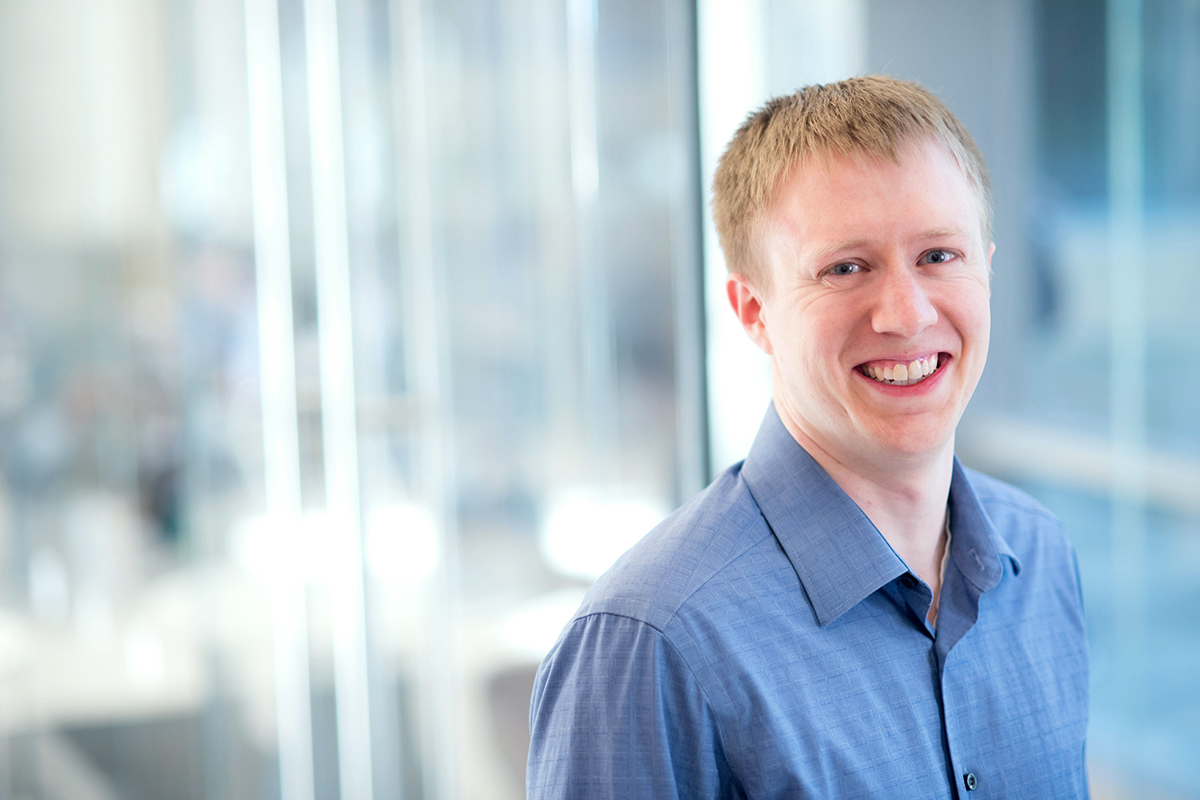
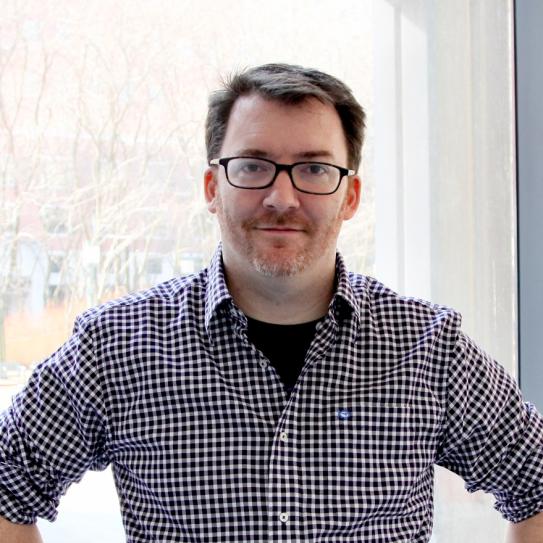
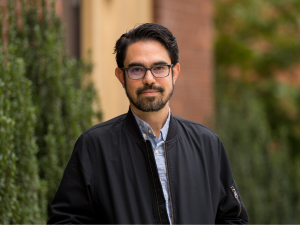
Greg Durrett is an Associate Professor in the Department of Computer Science at University of Texas at Austin, leading the TAUR Lab (Text Analysis, Understanding, and Reasoning ). His research focuses on advancing Large Language Models (LLMs) for knowledge-intensive tasks in medical information processing scientific discovery legal reasoning . He received his B.S. in Computer Science and Mathematics from MIT (2010) and Ph.D. in Computer Science from UC Berkeley (2016). His work develops techniques to train LLMs with new capabilities augment models for reliability assess model outputs improve reasoning frameworks . His 15 most recent publications (2021-2025) span knowledge propagation in LLMs chain-of-thought reasoning code generation benchmarks multi-modal reasoning fact verification discourse analysis . Scientific honors include NSF CAREER Award (2024) NSF grants (2018, 2024) Bloomberg Data Science Grant (2017) Facebook Fellowship (2014) Best Paper Finalist (EMNLP 2013) . Teaching: CS388: Natural Language Processing (graduate) CS371N: NLP (undergraduate) High school NLP module .
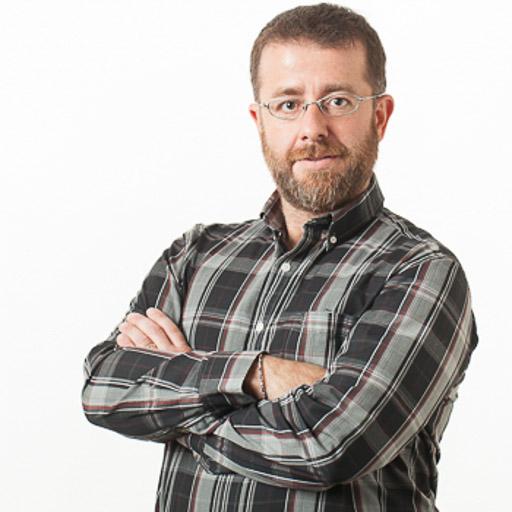
Dr. Joey Paquet is a Tenured Associate Professor and Department Chair in the Department of Computer Science and Software Engineering at Concordia University in Montreal, Canada. He holds a PhD and specializes in research areas including Design and Implementation of Programming Languages, Context-Driven Computing, and Demand-Driven Computing. His work focuses on advancing programming paradigms and their applications in cybersecurity, distributed systems, and autonomic computing. Dr. Paquet is actively involved in thesis supervision across Computer Science and Software Engineering programs at both master's and doctoral levels. Research interests are centered around programming language design, particularly in demand-driven and context-aware systems. His contributions include frameworks like GIPSY and OpenISS, enabling scalable data processing and forensic computing. Recent work explores autonomic intent-driven networking, real-time gesture recognition, and IoT forensics. These efforts highlight his expertise in both theoretical constructs and practical implementations. His advising role supports students in MCompSc, MASc, and PhD programs. While specific grants are not detailed, his projects often involve interdisciplinary collaboration. Dr. Paquet is affiliated with platforms like LinkedIn and ResearchGate, reflecting an active academic presence. Key technical contributions include pioneering work on forensic computing backends, intent expression languages, and multimodal interaction systems. His research addresses challenges in cybersecurity, distributed systems, and service composition, with a focus on resilience and scalability.
Maureen Kendrick is a Professor and Deputy Department Head in the Department of Language & Literacy Education at the University of British Columbia's Faculty of Education. Her research examines literacy and multimodality as integrated communicative practices, addressing social and cultural issues in diverse contexts with particular emphasis on visual communication and refugee/migrant education. Her research interests span digital literacies, multiliteracy and multimodality, and international perspectives on literacy education. She investigates how youth from refugee backgrounds use multimodal approaches to construct identities and engage with learning, often through digital storytelling and visual methodologies. Her work extends to health literacy in Ugandan contexts and the role of play in early childhood literacy development across Canada, Kenya, and Uganda. Analysis of her recent publications reveals consistent focus on refugee/migrant education, digital storytelling, and multimodal literacy. She examines how digital tools empower marginalized youth to express identities while addressing challenges in language learning and cultural integration. Her research also explores HIV/AIDS education through makerspaces and the intersection of arts-based practices with science literacy. Dr. Kendrick's scientific recognition includes: Canadian Committee for Graduate Students in Education (CCGSE) Mentorship Award (2024) Killam Teaching Prize (2012-13) Alan C. Purves Award (2013) She actively supervises graduate students across doctoral and master's programs, with current research focusing on refugee education and multilingual learners. Her SSHRC-funded projects include the 2025-2029 grant 'Digital Multimodal Composing-To-Learn' and the 'Language and Literacy Learning Among Refugee and Migrant Background Children' initiative, involving collaborators from UBC, York, and Western universities. Dr. Kendrick leads international research teams across Canada, Uganda, and Kenya, developing community-engaged approaches to literacy education that bridge academic research and classroom practice.
Max Planck Institute of Colloids and InterfacesGermany
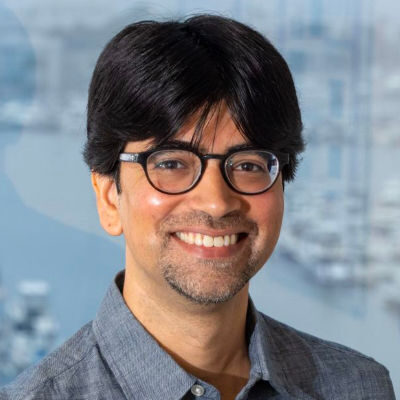
Dr. Jay Pujara is a Research Associate Professor of Computer Science at the University of Southern California (USC) and Director of the Center on Knowledge Graphs. He is also a Principal Scientist at the Information Sciences Institute (ISI) and leads research teams in data science and AI. Ph.D., University of Maryland, College Park (2016) M.S. and B.S. in Computer Science, Carnegie Mellon University Research Interests include artificial intelligence, probabilistic models, knowledge graph construction, statistical relational learning, NLP, and streaming inference. His work focuses on scalable algorithms for big data and uncertainty modeling in dynamic environments. Recent Publications highlight advancements in knowledge graphs, LLM reasoning, and table understanding. Notable topics include non-verbal abstract reasoning , faithful conversational datasets , and KGQA re-ranking . Scientific Awards : SWSA Ten-Year Award (2023), Outstanding Paper (IUI 2019), Top Reviewer (NeurIPS 2018), Best Paper (SRL Workshop 2016) Advising & Grants : Mentored 12+ graduate students, including Ph.D. advisees on topics like causal modeling and neuro-symbolic tasks. Secured NSF funding for table understanding in paleoclimate studies.
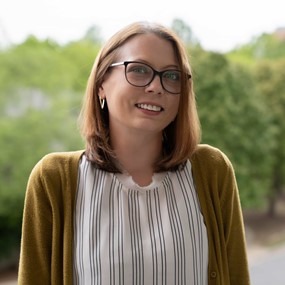
Leigh Gruwell is an Associate Professor in the Department of English at Auburn University's College of Liberal Arts. She specializes in composition and rhetoric, with a focus on digital and multimodal rhetorics, feminist methodologies, and composition pedagogy. Her research explores intersections between feminist theory, material rhetorics, and digital spaces. Education: PhD in Composition and Rhetoric, Miami University (2015) MA in English, Florida State University BA in English, Florida State University Research Focus: Gruwell's work interrogates how digital technologies shape feminist rhetorical practices, particularly in contexts of harassment and ethical access. Her recent studies emphasize materialist approaches to digital rhetoric and methodological innovations in feminist research. Article Trends: Her publications span digital humanities, feminist rhetorical methodologies, and critical analyses of online spaces. Recent work (2022-2024) prioritizes trauma-informed research practices and interdisciplinary bridging of rhetorical theory. Awards/Grants: No specific awards listed, though her research demonstrates sustained innovation in feminist digital studies. Advising & Labs: Advises graduate students in composition studies and rhetoric. No dedicated lab mentioned, but collaborates on digital humanities projects and feminist pedagogy initiatives.
R. Luke DuBois is an Associate Professor and Co-Chair of the Technology, Culture and Society Department at the NYU Tandon School of Engineering, where he also directs the Integrated Design & Media program and the Brooklyn Experimental Media Center. He holds a DMA in music composition from Columbia University and is a renowned artist, composer, and performer whose work explores intersections between technology, sound, and visual media. His research focuses on digital media, human-computer interaction, and emerging technologies applied to artistic expression and accessibility. Key roles include directing the SONYC initiative (addressing urban noise pollution via AI) and leading the NYU Ability Project (advancing disability studies through technology). He has collaborated with institutions like the Smithsonian and artists such as Maya Lin, and his work has been exhibited globally, including at the Sundance Film Festival and the Aspen Institute. DuBois co-developed the Jitter software suite for real-time data manipulation and performs in avant-garde groups like Bioluminescence and Fair Use. His artistic practice combines time-lapse phonography, interactive installations, and interdisciplinary projects that critique cultural ephemera while advancing accessibility in STEM and the arts. Recent contributions include browser-based tools for accessible music notation (SoundCells) and sonification techniques for calculus education. He serves on the Board of the ISSUE Project Room and has been featured in major publications like the New York Times and TED Conference talks.
Rich Shivener is an Associate Professor in the Writing Department at York University's Faculty of Liberal Arts & Professional Studies (LA&PS). He holds a PhD from the University of Cincinnati and an MA from Northern Kentucky University. His research focuses on digital media composing practices, emotions in rhetoric, and the intersections of technology and communication. He has served as a section editor for Kairos: A Journal of Rhetoric, Technology, and Pedagogy from 2016 to 2024. Before academia, he worked in journalism and technical writing, contributing to local newspapers, national magazines, and software documentation. Shivener's recent work explores virtual reality (VR) writing, remote collaboration in game development, and environmental rhetoric in digital infrastructure. His articles analyze topics such as affective labor in online spaces, infrastructural storytelling for environmental justice, and pandemic-era remote work adaptations. He teaches in the digital authoring stream, emphasizing multimodal and hybrid approaches to writing. His research trends highlight a focus on emerging technologies’ impact on communication practices, with particular attention to equity, emotion, and sustainability. He has contributed to discussions about digital authorship, technical communication ethics, and the rhetorical dimensions of webcomics and gaming communities. Shivener’s career reflects a commitment to bridging academic and applied contexts, leveraging his industry experience to inform teaching and research. He remains active in methodological innovations, such as discourse-based interviews and infrastructural narrative analysis, to explore tacit knowledge and systemic inequities in technical fields.
Dr. Lori McKee is an Associate Professor and Graduate Chair in the Department of Curriculum Studies at the University of Saskatchewan's College of Education. With 20 years of elementary teaching experience, her work bridges classroom practice and academic research in literacies, pedagogies, and teacher professional learning. She specializes in multimodal pedagogies, intergenerational learning, and equity-centered literacy instruction. Education: Ph.D. in Multimodal Pedagogies, Western University (2018) M.Ed. in Multiliteracies and Multilingualism, Western University (2013) B.Ed. in Primary-Junior Education, Queen’s University (1997) B.A.Sc. in Child Studies, University of Guelph (1996) Research Interests: Dr. McKee’s research focuses on literacies education across diverse contexts, including: Intergenerational learning programs connecting elders and children Equitable pedagogical strategies for literacy instruction Professional development for teacher educators Integration of digital and multimodal tools in teaching Teaching Contributions: She teaches graduate courses in curriculum research and project design, as well as undergraduate courses in elementary English Language Arts and literacy assessment. Her pedagogy emphasizes reflective practice and adapting instruction to contemporary educational challenges. Collaborations: Engages with schools, elder care facilities, and teacher communities to co-design curricula. Active in national and international research networks, including the Reading Pedagogies of Equity Project.
Dr. Shiyan Jiang is an Assistant Professor in the Learning Design and Technology Program at North Carolina State University’s College of Education . She joined NC State in 2019 and specializes in integrating digital literacy into STEM education, particularly through AI-driven curriculum design and technology-enhanced interdisciplinary learning. Her work emphasizes empowering K-12 students with tools like narrative modeling, data visualization, and machine learning to explore STEM identities and career pathways. Education : Dr. Jiang holds a Ph.D. in Teaching and Learning (Specialization: Technology-Enhanced STEM Education) from the University of Miami (2018). Research Focus : Her research centers on: AI and data science education in K-12 classrooms Multimodal composing environments for STEM identity development Technology-mediated interdisciplinary learning Epistemic agency and data literacy Key Achievements : Recipient of NSF Awards #1949110 (2019) and #2241671 (2022) for AI-in-education projects Co-chair of the Technology Committee at the International Society of the Learning Sciences (ISLS) Editorial board member of Journal of Educational Technology Research and Development and Journal of Science Education and Technology Teaching : Courses include Data Visualization, Machine Learning, and Text Mining in Education, alongside doctoral seminars in Learning Sciences. Grants & Outreach : Collaborates with educators and institutions to design AI-infused curricula, such as the i-SAIL (integrated Science and AI Learning) program. She also develops tools like StoryQ for K-12 machine learning education. Labs & Teams : Active in the Friday Institute for Educational Innovation and the Belk Center, focusing on scalable educational technologies.
University of Music, Drama and Media HanoverGermany
Aaron Cassidy is an American composer and conductor based in Berlin and Hannover. He serves as Professor of Composition and Director of Incontri – Institut für neue Musik at the Hochschule für Musik, Theater und Medien Hannover. His work emphasizes innovative graphical notations prioritizing physical sound production and non-geometrical rhythm theory. Cassidy’s compositions have been performed globally across 29 countries, with 12 commercial recordings on major labels like Kairos and NEOS. As a conductor, he specializes in contemporary and historical repertoire, leading over 100 world premieres with ensembles such as Ensemble Musikfabrik and ELISION. Notable engagements include the Munich Biennale and Melbourne Recital Centre. His recent research includes a 2025 reflection on non-geometrical rhythm and collaborative Erasmus+ residencies in Klagenfurt. Current projects include works for bassoon, violin-piano duet, and ANAM residency with ELISION in Melbourne (2025). Cassidy’s academic focus bridges compositional theory and performance practice. His research explores notation’s role in shaping musical interpretation, with particular attention to rhythm’s non-metric frameworks. Recent works like Reassessing Non-Geometrical Rhythm (2025) synthesize a decade of theoretical development. His teaching integrates experimental techniques and historical context, fostering innovation in Hannover’s new music institute.
Xiao Tan serves as an Assistant Professor in the English Department of the College of Arts & Sciences at Utah State University, specializing in writing pedagogy and multimodal composition within second language contexts. Research expertise includes: Second Language Writing Development Generative AI Integration in Academic Writing Multimodal Literacy Pedagogy ESL Writing Assessment Teacher Cognition in Technology Adoption Tan's scholarly output (2023-2025) demonstrates concentrated investigation into generative AI's impact on L2 writing classrooms, examining teacher perceptions of ChatGPT, student transparency practices, and voice construction in AI-assisted multimodal texts. This body of work bridges composition theory with emerging technologies, revealing critical tensions between pedagogical innovation and academic integrity while establishing Tan as a significant contributor to technology-enhanced writing education research.
Kelly Wissman serves as Associate Professor and Co-Chair of the Department of Literacy Teaching & Learning within the University at Albany's School of Education. She additionally directs the Capital District Writing Project (CDWP), a National Writing Project site recognized with a 2020 President’s Award for Exemplary Public Engagement, and leads the Freedom Dreaming for Educational Justice public engagement research initiative. Her academic credentials include: PhD from the University of Pennsylvania Dr. Wissman's research investigates how children's literature, writing practices, and arts integration foster equitable educational spaces, emphasizing sociocultural writing frameworks, practitioner inquiry, and the intersections of literacy, identity, and justice. Through collaborative ethnographic and arts-based methodologies, she examines multimodal composing practices that humanize learning environments for diverse student populations, positioning educators as agents of systemic change. Her scholarly contributions have been honored with: Selma Greenberg Dissertation Award (2006) Virginia Hamilton Essay Award Honor Certificate (2010) Excellence in Full-Time Teaching Award (UAlbany) Educator of Excellence (New York State English Council) President’s Award for Excellence in Teaching (2016) Chancellor’s Award for Excellence in Teaching (2017) Jerry Johns Outstanding Teacher Educator in Reading (2021) As CDWP Director, she coordinates K-16 educator networks to transform writing instruction across Capital Region schools, while her Freedom Dreaming project mobilizes coalitions of educators, students, mental health professionals, and community artists to co-create multimedia visions of educational justice. These initiatives demonstrate sustained commitment to public scholarship and teacher development. Dr. Wissman's collaborative teams include the Capital District Writing Project network and Freedom Dreaming coalition—spanning K-12 educators, pre-service teachers, teaching artists, and community stakeholders—united in reimagining equitable pedagogical practices through arts-infused writing approaches and critical literacy frameworks.
Brad Osborn is an Associate Professor of Music Theory at the University of Kansas, specializing in the analysis of popular music, particularly within the realms of music video aesthetics, electronic dance music (EDM), and rock genre studies. His research interrogates the intersections of sound, visual narrative, and cultural meaning in post-MTV era media. Research Focus: Music Video Analysis, Rock Harmonic Systems, EDM Structural Functions, Film/TV Music Theory Notable Themes: Through-composed Forms in Post-Rock, Timbre in Icelandic Music, Cognitive Salience in Audiovisual Media Recent publications examine terminally climactic forms in modern rock, transmedia analysis of music videos, and the subdominant tritone in visual media scoring. Osborn advocates for innovative pedagogical approaches integrating music video analysis and digital resources.
Maria Argyriou is an Associate Lecturer for Applied Music Preschool Education in the Department of Preschool Education & Educational Design at the School of Humanities, University of the Aegean (Rhodes, Greece). She holds a postdoctoral degree in Practical Aspects and Praxial Philosophy of Music Education from the same institution, a PhD in Music Studies from Ionian University specializing in cultural policy and music education, and two Master's degrees in Education from The Open University of Greece. PhD: Department of Music Studies, Ionian University (specializing in cultural policy and music education) Postdoctoral Degree: Practical Aspects and Praxial Philosophy of Music Education, University of the Aegean Master of Education: The Open University of Greece Second Master in Education: Specialization in education leadership and school unit assessment Argyriou's research focuses on the intersection of music education, cultural policy, and early childhood development. Her work explores praxial philosophy in music education, interdisciplinary connections between music and other subjects (particularly language and mathematics), and innovative approaches to music teaching in preschool settings. She has developed significant contributions to understanding how music can serve as a tool for cognitive development, emotional expression, and cultural citizenship in young children. Her recent publications demonstrate a clear trend toward multimodal and technology-enhanced music education approaches, with increasing focus on praxial philosophy applications in digital learning environments. Her work consistently bridges theoretical frameworks with practical classroom applications, particularly in early childhood settings. Scientific Awards: Kiveli-Y. Horn scholarships/Special Grants 2024 for archival research at The Music Library of Greece—Lilian Voudouri Argyriou actively participates in multiple professional organizations including the International Society of Music Education (member of SIG Practice and Research Group in Integrated Music Education, PRIME), European Music Council (EMC), European Association for Music in School (EAS), and serves as chairperson of the Greek Association of Primary Music Education Teachers (GAPMET). She has made significant contributions to educational materials as author of official Greek Music Education textbooks for School-Age 6-8 and as editor for multiple academic journals. She co-edits the open-access 'Hellenic Journal of Music, Education, and Culture' (HeJMEC) and serves as editor for the open-access journal 'Music in the First Grade' published by her department. Her current research focuses on archival work with children's songs from the Minos Dounias collection at The Music Library of Greece.
Zachary Wallmark is an Associate Professor of Musicology and Area Chair of Musicology and Ethnomusicology at the University of Oregon's School of Music and Dance. His interdisciplinary research bridges musicology, cognitive science, and sound studies, with a particular focus on musical timbre and its relationship to emotion, meaning, and cultural context. Wallmark maintains a joint affiliation with the Center for Translational Neuroscience at the University of Oregon, reflecting his cross-disciplinary approach. His research interests span popular music studies, timbre analysis, music cognition, and sound studies, with particular attention to how musical timbre functions in emotional response, aesthetic judgment, and music sociology. Wallmark's work explores these themes across diverse musical contexts including American popular music, free jazz, extreme heavy metal, and traditional Japanese music. Wallmark's publications reveal a consistent focus on timbre as a critical yet undertheorized dimension of musical experience. His work spans empirical studies of timbre perception, corpus analyses of timbre semantics, interdisciplinary investigations of timbre's role in meaning-making, and theoretical explorations of timbre's relationship to cultural and social contexts. Recent publications increasingly integrate cognitive neuroscience methodologies with traditional musicological approaches. GRAMMY Museum Foundation Scientific Research Grant UO Presidential Fellowship in Humanistic Study AMS Ruth A. Solie Award Social Sciences and Humanities Research Council (SSHRC) of Canada Partnership Grant National Endowment for the Humanities (NEH) Fellowship Wallmark's research has received significant external funding from prestigious organizations including the NEH and the GRAMMY Museum Foundation. He is active in the Analysis, Creation, and Teaching of Orchestration (ACTOR) group, an international research partnership funded by the Canadian Social Sciences and Humanities Research Council. His work has been presented at major international conferences including the American Musicological Society (AMS), Society for Music Perception and Cognition (SMPC), Society for Music Theory (SMT), and Society for Ethnomusicology (SEM). Wallmark has also been invited to lecture at notable venues including the National Academy of Sciences in Washington, D.C. Beyond his academic work, he is a published composer, commercial musician, jazz bassist, and performer of the Japanese shakuhachi flute.