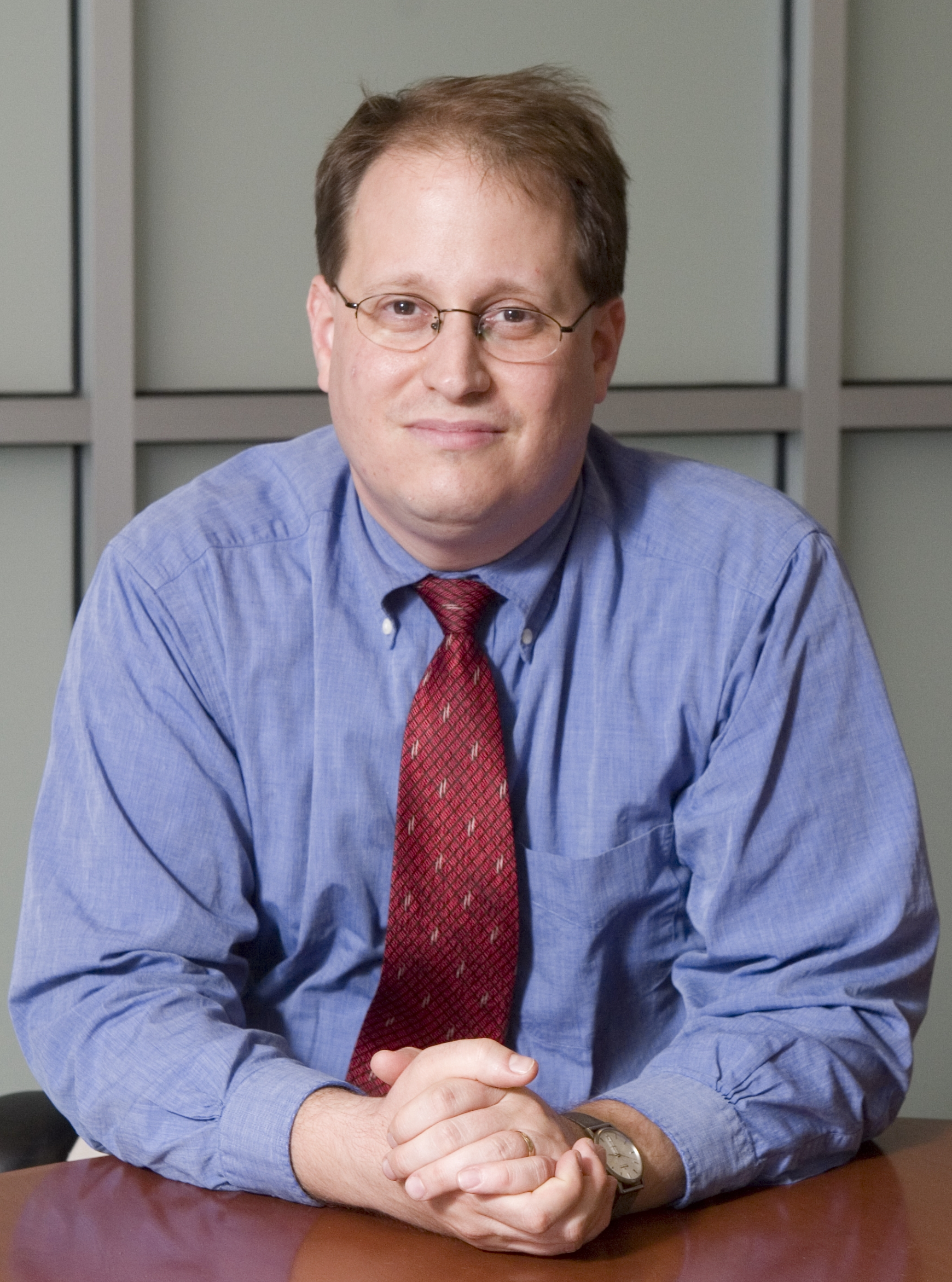
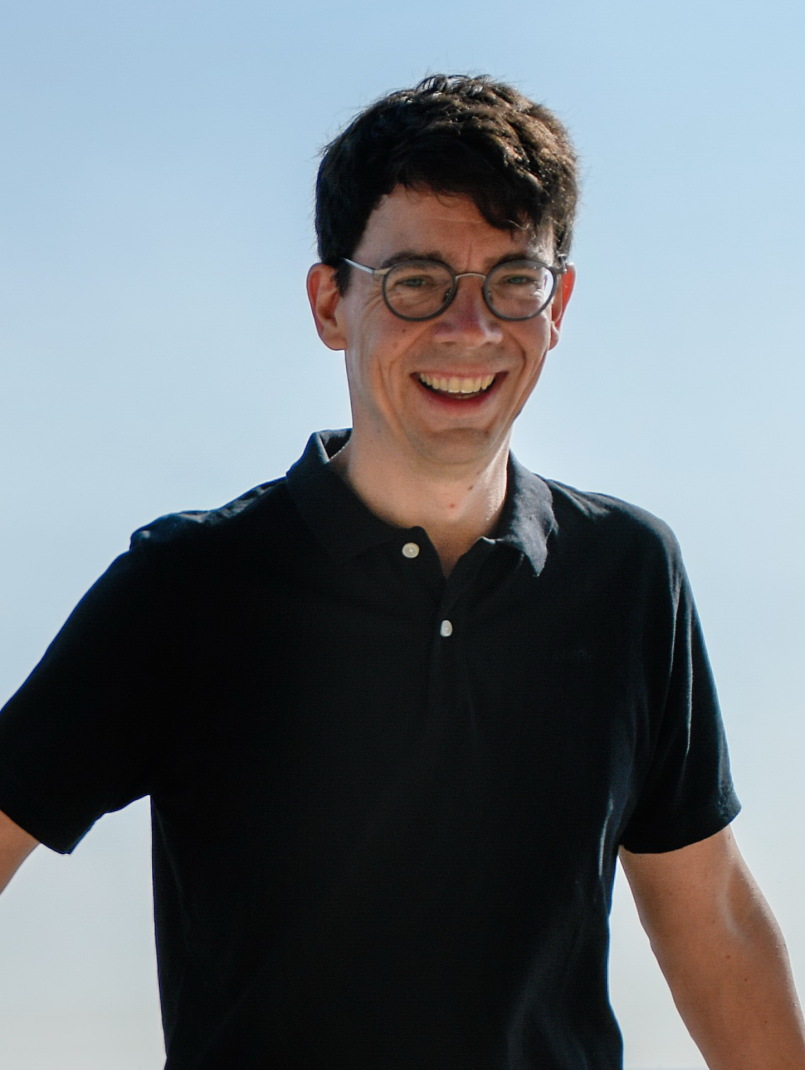
Eric Miller is a Professor of Electrical and Computer Engineering at Tufts University's School of Engineering. He also holds adjunct professorships in Computer Science, Biomedical Engineering, and Mathematics. His academic roles include serving as Chair of the Electrical and Computer Engineering department and leading the Lab for Imaging Science Research (LaISR). Miller earned his SB, SM, and PhD in Electrical Engineering from MIT (1990–1994). His research focuses on signal and image processing, particularly inverse problems, tomographic imaging, and applications in medical imaging, environmental monitoring, and security screening. He has pioneered methods like the parametric level-sets (PaLEnTIR) for reconstruction and shape-based inversion algorithms. His work integrates physics-based modeling with computational techniques, addressing challenges in subsurface sensing, biomedical diagnostics, and materials science. Miller is a Fellow of IEEE and a member of honor societies like Tau Beta Pi and Phi Beta Kappa. Over 489 publications reflect his contributions to imaging science, with recent advancements in AI-driven pedestrian behavior analysis and X-ray anomaly detection.
Dr. Matthew Leporati is an Associate Professor of English at the University of Mount Saint Vincent, where he has held a tenured position since 2016. He specializes in British Romanticism, epic poetry, and James Joyce studies, with a focus on integrating scholarship and teaching. His research explores intersections between literature and empire, mindfulness in pedagogy, and digital-age adaptations of classic texts. Dr. Leporati earned his PhD and MA from Fordham University and a BA from St. John’s University. His teaching spans undergraduate levels, including HEOP pre-first-year seminars, Honors Program courses, and English capstone classes. He emphasizes close reading, writing pedagogy, and mindfulness to foster critical thinking. His scholarly achievements include the book *Romantic Epics and the Mission of Empire* (Cambridge University Press, 2023) and numerous articles on William Blake, James Joyce, and pedagogical innovation. He co-edited a special cluster on mindfulness in *Modern Language Studies* (2022). His blog *The Suspended Sentence* explores *Finnegans Wake* and memetic communication. Dr. Leporati’s work bridges scholarship and practice, addressing contemporary challenges like AI’s impact on education. His research and teaching reflect the University’s mission to foster academic excellence and social responsibility.
Anastasiia Lopukhina is a Postdoctoral Research Fellow at the Department of Psychology, Royal Holloway, University of London. Her research focuses on reading development, language acquisition, and bilingualism in children. Research output includes two peer-reviewed articles (2023, 2025) Principal Investigator for the project 'Do same language subtitles help children learn to read?' Her work explores the intersection of developmental psychology and educational technology, with a particular emphasis on how children interact with multimedia learning tools. Analysis of her publications reveals trends in cognitive modeling, syntax acquisition, and eye-tracking methodologies applied to literacy studies. As of now, no scientific awards are documented. She collaborates with researchers like K. Rastle and W. van Heuven on projects related to language learning and educational development.
Prof. Yavuz Akpınar at Boğaziçi University is a leading academic in Educational Technology and Interactive Learning Environments . His career spans over two decades of research and development in technology-enhanced education. Ph.D. : Design and Validation of Interactive Learning Environments (University of Leeds, UK) M.A. : Graphical Environments for Understanding School Science (University of Leeds, UK) B.S. : Measurement and Evaluation in Education (Hacettepe University, Türkiye) His research focuses on serious games , computer-based learning , and multimedia pedagogy , with particular emphasis on self-regulated learning and programming education in K-12 contexts. Recent publications highlight a consistent focus on serious game design , flipped classroom modalities , and argumentation-based learning tools . His work bridges STEM education and educational technology validation . Professor Akpınar's email address is akpinar@bogazici.edu.tr .
Elzbieta Tabaka serves as a Senior Lecturer in Slavic Studies at the University of Salzburg, focusing on innovative pedagogical approaches within Slavic language education and intercultural communication. Her research centers on language acquisition through multimedia tools, particularly film-based projects that bridge cultural gaps, alongside analyzing systemic shifts in academic education during global crises. She actively develops curricula integrating digital resources to enhance linguistic competences in multilingual contexts. Her publications reveal a consistent trajectory toward educational technology adoption, emphasizing film as a catalyst for intercultural understanding in Slavic studies and documenting pandemic-driven transformations in teaching methodologies across humanities disciplines. No scientific awards were mentioned in the source materials. No information regarding student advising or research grants was provided in the available documentation. Tabaka spearheads the "Film series Slawistyka, Slavistika, Clavistika" initiative and organizes academic study trips including visits to Kraków and Auschwitz, creating experiential learning opportunities that connect historical context with contemporary Slavic cultural studies.
Assoc. Prof. Mevlüt Gülmez is a faculty member at Akdeniz University, Faculty of Education, Turkish and Social Sciences Education Department . He holds a Doctorate in New Turkish Language from Selçuk University (2013) and has been actively contributing to Turkish language education since 2000. 2007-2013: Doctorate in New Turkish Language, Selçuk University 2000-2004: Postgraduate in Turkish Language and Literature, Selçuk University 1996-2000: Undergraduate in Turkish Language and Literature, Selçuk University His research focuses on Language Pedagogy, Philology, and Turkish Language History , with significant work on: Textbook Analysis through Bloom's Taxonomy Augmented Reality Applications in Reading Comprehension Second Language Acquisition for Turkish Historical Linguistics of Turkish Disability-Inclusive Language Education Comparative Dialect Studies Recent publications include studies on 2024 AR-based Reading Comprehension , 2023 Derebucak Folk Healing Practices , and 2022 Argumentation Pedagogy . He has supervised 11 graduate theses and participated in 4 funded projects related to international student mobility and dialect documentation.
Fatma KİMSESİZ is a lecturer in the Department of Foreign Language Education at the Faculty of Education, Kirsehir Ahi Evran University. She holds a PhD in English Language Education from Atatürk University (2017) and has over 15 years of experience in EFL instruction and curriculum development. PhD: English Language Education (Atatürk University, 2014-2017) MSc: English Language Education (Atatürk University, 2009-2012) BA: English Language Education (Atatürk University, 2003-2007) Her research focuses on digital language learning tools, vocabulary acquisition strategies, intercultural communication in language education, and comparative analysis of translation accuracy. She has published extensively on topics including: Digital mind mapping techniques Infographic-based grammar instruction Project-based learning (PBL) Authentic material implementation Proverb equivalence analysis Rebus storytelling applications Key trends in her publications show increasing emphasis on technology-integrated language pedagogy, with 2023-2024 works focusing on digital storytelling, vlog-based intercultural learning, and AI translation comparisons. Scientific Recognition: 2211 Domestic Doctorate Scholarship from TÜBİTAK (2014) She currently serves as Department Head at Kirsehir Ahi Evran University while maintaining active teaching roles in both undergraduate and preparatory programs.
Louise Barkhuus is a Professor at the IT University of Copenhagen, affiliated with the Theoretical Computer Science Center for Information Security and Trust. Her research spans across social science studies of technology, privacy, and human-computer interaction, with a particular focus on qualitative and quantitative methods in examining mobile social technologies. Her research interests include: Social science studies of technology and its societal implications Privacy concerns in digital environments, particularly in health contexts and contact tracing Human-computer interfaces with emphasis on gender differences and inclusive design Hybrid work technologies and the challenges of maintaining equitable collaboration Mobile social technologies and their impact on everyday life Professor Barkhuus's recent work shows a strong trend toward understanding the social dynamics of technology use in various contexts. Her publications over the last five years reveal a focus on hybrid work challenges, gender differences in computing education, privacy in health technologies, and the design of inclusive technological experiences. She has made significant contributions to understanding how people interact with technology in work, educational, and health contexts, with particular attention to the social and ethical implications of these interactions. Her notable scientific contributions include: Research on collocated distance as a fundamental challenge in hybrid work technologies Studies on gender differences in CS1 project group dynamics Investigations into privacy concerns around mobile COVID-19 tracing applications Work on designing for shared remote video experiences Professor Barkhuus has been actively involved in several significant research projects including DIREC: REWORK (2022-2024) focusing on digital research in Denmark, DIREC: SoftwareIn for teaching at scale (2021-2025), and research on encouraging grade school girls' interest in computer programming funded by Mozilla Corporation (2018-2019). She has also contributed to the academic community through media appearances discussing YouTube's impact on public domain content, generative AI regulation, and digital age verification policies. Her work bridges computer science with social sciences, creating meaningful insights into how technology intertwines with human experiences across various contexts including work, education, and healthcare.
Prof. Dr. Michael Seufert is a Full Professor and Chairholder at the University of Augsburg since October 2023, leading the Chair of Networked Systems and Communication Networks within the Faculty of Applied Computer Science. Previously, he served as a Private Lecturer at the University of Würzburg and completed his Habilitation in Computer Science there in 2023. His academic journey includes a PhD in Computer Science from the University of Würzburg (2017) with a thesis on Quality of Experience and Access Network Traffic Management of HTTP Adaptive Video Streaming, which earned him two prestigious Best Dissertation Awards. His research focuses on Quality of Experience (QoE) of Internet applications, artificial intelligence and machine learning for communication networks, measurement and analytics of encrypted network traffic, and data-driven proactive user-centric network management solutions. His work bridges theoretical foundations with practical applications in network monitoring, security, and performance optimization. Recent research has increasingly incorporated machine learning techniques to address challenges in network management, traffic analysis, and user experience assessment. Prof. Seufert's publication record shows a clear evolution from foundational work on QoE modeling and HTTP adaptive streaming toward more sophisticated applications of machine learning in network operations. His recent publications (2023-2025) demonstrate a strong emphasis on practical ML applications for network monitoring, security, and optimization, with particular attention to real-world constraints and performance requirements. The research spans multiple subfields including encrypted traffic analysis, explainable AI for network management, edge computing, and quality assessment for emerging applications. CNOM Young Professional Award of the IEEE Communications Society (ComSoc) Technical Committee on Network Operations & Management (CNOM) (2024) Best Dissertation Award 2018 of KuVS (Communication and Distributed Systems) special interest group Best Dissertation Award of the IEEE Communications Society (ComSoc) Technical Committee on Network Operations & Management (CNOM) Prof. Seufert actively supervises research projects and advises students through thesis projects and practical modules. His teaching portfolio includes Communication Systems, Management of Communication Networks, Practical Introduction to Internet-Technologies, and seminars on Networked Systems. He leads a research group focused on networked systems and communication networks, with current projects exploring machine learning applications in networking, as evidenced by the organization of the 3rd International Workshop on Machine Learning in Networking (MaLeNe 2025).
Professor Nancy Allen at the University of Utah College of Nursing (ORCID: 0000-0001-7358-2265) is a leading researcher in diabetes care, health equity, and care partner dynamics. Holding a PhD in Nursing from the University of Massachusetts (2005) with postdoctoral training at Yale University (2009), she has maintained continuous faculty appointments since 2020. PhD, Nursing - University of Massachusetts (2005) Postdoctoral Fellowship - Yale University (2009) Clinical Instructor to Professor at University of Utah (1992-2025) Her research spans multiple disciplines, focusing on diabetes management for vulnerable populations, health insurance literacy , and medical technology adaptation . Key projects include the Share Plus intervention for CGM data sharing between older adults and care partners, and the Deaf Diabetes Can Together program creating ASL-accessible diabetes education. Recent publications in The Lancet Diabetes & Endocrinology and Diabetes Spectrum examine deprescribing strategies for elderly diabetes patients and accessibility barriers in deaf communities. Funded by HRSA, Sorenson Legacy Foundation, and diabetes technology companies, her work emphasizes health equity and collaborative care models . HRSA grants for SDoH training (2022-2025) NIH-funded diabetes technology studies Dexcom research support for CGM interventions Current teaching includes DNP scholarly projects and thesis advising, with a focus on translational research methods applying to diabetes care. She maintains active collaborations with community health advisors and multidisciplinary teams across nursing, medicine, and public health.
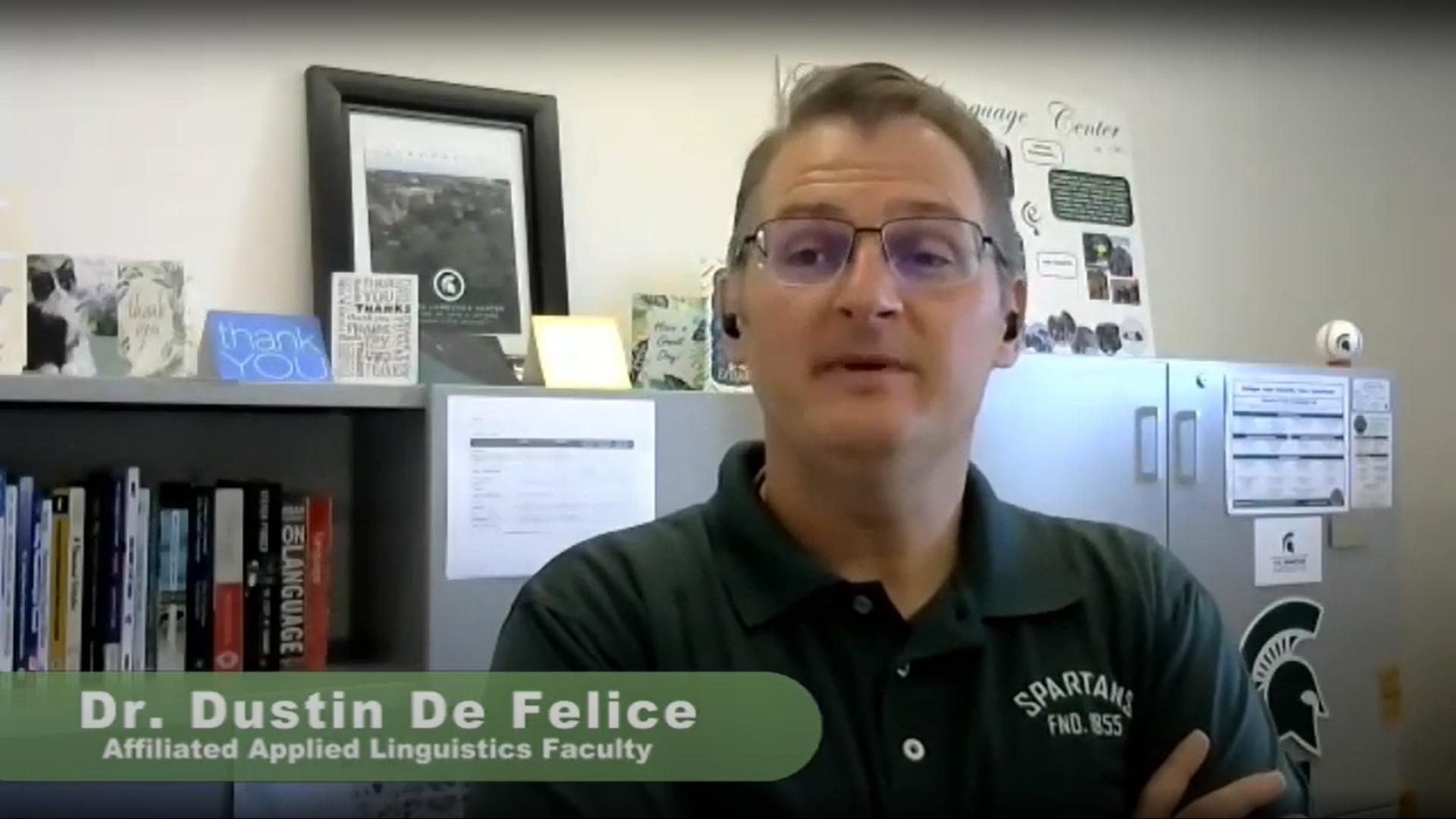
Dustin De Felice is an Associate Professor and Director of the English Language Center at Michigan State University’s College of Arts & Letters. With over two decades of experience, he specializes in second language studies, technology integration in language education, and program administration. PhD in Second Language Acquisition and Instructional Technology, University of South Florida M.A. in Linguistics (TESL concentration), Northeastern Illinois University B.A. in Speech Communication with minors in Spanish and Linguistics, Northeastern Illinois University Research Interests : Dustin’s work focuses on technology-driven language pedagogy, intercultural communication, and qualitative methodologies like phenomenology. He explores digital media’s impact on oral proficiency, collaborative networks for teacher training, and endangered language preservation online. Publication Trends : His recent articles emphasize telecollaboration, digital storytelling, and socially mediated networks. Earlier works address sociolinguistic competence in virtual classrooms, spreadsheet-based qualitative analysis, and Nahua/Mayan language education. Technology and intercultural competence are recurring themes. Scientific Recognition : 2017: AT&T Award of Excellence for technology contributions Leadership & Advising : As Director of the English Language Center, he has shaped language education policies and advocated for non-tenure-track faculty inclusion. While no direct advisees are listed, his teaching spans the U.S. and Mexico. Labs & Teams : He leads the English Language Center at Michigan State University, fostering innovative language programs and research initiatives.
Óscar Ferreiro-Vázquez is a full-time Lecturer in the Department of Translation and Linguistics at the University of Vigo , where he teaches at undergraduate, postgraduate, and doctoral levels. He coordinates the Excellent University Master's Degree in Translation for International Communication (MTCI) and co-directs the Specialist Title in Translation for the Video Game Industry (ETIV), while promoting the ETIV-UVigo awards for video game localization. Born in Fribourg, Switzerland PhD in Translation and Interpreting with International Mention (2016, University of Vigo) Sworn translator qualified by Galicia's Language Policy Secretariat External evaluator for Erasmus Accreditation applications (KA120) His research focuses on historical translation practices during the Spanish conquest , hip-hop as a globalizing cultural expression , and ideological aspects of fascist paratranslation . His recent publications analyze paratranslation in X-Men comics, video game localization ethics, and gender representation in gaming industries. He leads the Translation & Paratranslation (T&P) research group and has conducted studies in French, Portuguese, Polish, Romanian, and Belgian institutions. Scientific Awards : Extraordinary Doctoral Award, University of Vigo (2016) With over 1,500 hours of professional training experience and five years leading translation teams for 100+ companies, Ferreiro-Vázquez bridges academic research with industry applications through projects like Avoo for game accessibility and ETIV-UVigo for industry translation awards. His work combines traditional translation history with contemporary digital media analysis.
Prof. Dr. Hendrik Härtig is a faculty member at the University of Duisburg-Essen, affiliated with the Faculty of Physics and Department of Physics Education. His academic career spans roles such as Chair of Physics Education (since 2016), Junior Professorship at the Leibniz Institute for Science and Mathematics Education (2011–2016), and postdoctoral research at UDE (2010–2011). Doctorate in physics education (2010, University of Duisburg-Essen) Studied physics at University of Bonn (2001–2003) Graduate of physics, educational sciences, and social sciences (2003–2006, UDE) His research focuses on: Interplay between literacy and physics competency acquisition Experimental skills development in science education Impact of answer formats on assessment performance School-to-vocational transition in technical fields Analysis of his 15 most recent publications reveals trends in: Meta-analytical studies on text comprehension in STEM Cognitive strategies for problem-solving instruction Media integration in science classrooms Control-of-variables strategy (CVS) training Comparative studies of narrative vs. expository texts Accessibility of scientific language ("leichte Sprache") He leads the Härtig group on Physics Education and contributes to institutional governance via memberships in the Senate of the University of Duisburg-Essen and the Faculty Council of Physics. He also chairs the scientific advisory board of the Junior University Essen and the Institute for Key Scientific Competencies (IwiS).
Dr. Sanghoon Park serves as Associate Professor and Learning Design and Technology program coordinator at the University of South Florida's College of Education. He teaches graduate courses including 'Current trends of Instructional Technology,' 'Interactive Media,' and 'Motivational Design in Learning Technology,' focusing on creating optimal learning environments through integrated teaching, research, and service. His research centers on enhancing educational experiences through instructional design and emerging technologies. Primary focus areas include motivational interventions for online learners, multimedia technology in K-16 STEAM education, and applications of augmented reality, virtual simulations, and AI-chatbots. This work drives innovations in learning experience design while addressing challenges in engagement and accessibility across diverse educational contexts. Recent publications (2023-2025) reveal strong trends in immersive technology applications for teacher training, AI-driven student support systems, and motivational design frameworks. Key thematic clusters include VR/AR simulation development, cognitive load management in immersive environments, and chatbot implementations for academic advising and regulatory support. Dr. Park's scientific recognition includes: Multiple Outstanding Publication awards from AERA and AECT Crystal award and Best Practice award Immersive Learning award and Young Researcher award USF Innovation in Online Design and Teaching award (2023) He has mentored approximately 100 doctoral students and over 200 master's/specialist students while coordinating USF's Master of Science in Learning Design and Technology. Current grant activities include Florida Department of Education-funded projects on civics literacy excellence through emerging technologies, alongside international collaborations with South Korean researchers on virtual teaching simulations and Learning Experience Analysis (LxA) frameworks. Dr. Park actively collaborates within USF's College of Education and maintains international research partnerships, particularly with Korean institutions. He contributes to professional communities through leadership roles in AECT, AERA, and AACE, including editorial boards, program committees, and special interest group coordination focused on advancing educational technology research and practice.
Assoc. Prof. Ayşe Nur Kutluca Canbulat is a faculty member at Akdeniz University, Faculty of Education, Department of Classroom Teaching since 2019. She previously held the position of Assistant Professor at the same institution from 2013-2018 and served as a Research Assistant at Bolu Abant İzzet Baysal University (2002-2013). Her work focuses on elementary education, writing instruction, language learning, and teacher training . Doctorate: Curriculum and Instruction, Bolu Abant İzzet Baysal University (2010) Masters: Classroom Teaching, Bolu Abant İzzet Baysal University (2004) Bachelors: Classroom Teaching, Bolu Abant İzzet Baysal University (2002) Her research examines student writing anxiety, digital writing, bilingual education, and teacher self-efficacy . Recent publications analyze immigrant students' language attitudes, music's impact on writing fluency, and self-regulated writing processes. She has supervised 12 postgraduate theses on topics like virtual reality in writing education and multilingual students' language skills. Scientific Contributions: Recipient of TÜBİTAK Bilim Teşvik Ödülü (2012) 43 WoS publications, 5 H-Index (WoS), 6 H-Index (Scopus)